
‘MySpace’
Gunpowder & Sky


MySpace, which launched 2003, ushered in a joyous time for social media, where users discovered their favorite new band and debuted their angular new haircut for their friends.
The story of the site, which was subsequently bought by Rupert Murdoch’s News Corp in 2005, is told in MySpace, a documentary directed by Tommy Avallone and produced by Gunpowder & Sky, the company founded by former MTV boss Van Toffler.
The film, which premieres today at the HotDocs festival, explores the rise of the site, which introduced Top 8 friendships, and how it helped launch the careers of the likes of Katy Perry, Taylor Swift and Dane Cook, and influencers such as Jeffree Star and Tila Tequila.
It was launched by Tom Anderson, otherwise known as everybody’s first friend, and Chris DeWolfe.
DeWolfe spoke with Deadline ahead of the documentary’s premiere. He said that the idea for MySpace was to be a place where users could “connect” and “express yourself.” “Your profile would be very much like your apartment or like your dorm room, that would have the music you like playing in the background and would have your top eight friends,” he said. “It really covered everything culturally from art to music to games.”
MySpace broke through in a way that no other social media site had previously done. DeWolfe admitted that it was a “wild” period.
“There’s a certain amount of fame and attention that you get for building the largest website in the world, that comes from out of nowhere that you have to deal with, along with building a very large company and expanding and selling the company and dealing with the political measures of a large company like News Corporation and Rupert Murdoch,” he added. “Most people settle into that over a 20-year time period and it all happened to me in probably less than six months to a year.”
DeWolfe said that MySpace had a “serendipity” that he believes it “almost impossible to replicate today.” He highlighted people being able to discover new musicians through the pages of friends or strangers. “It was social, it was a community, and you felt comfortable even talking to people you didn’t know, because you truly had something in common. It wasn’t a machine telling you to visit someone’s profile. You actually discovered it and felt like you had something in common,” he said.
“You were able to share those feelings or empathy, and that doesn’t really happen today. Today, it’s more of almost like a broadcast medium where everything is fed to you based on algorithms, as opposed to a certain intentionality that you would have on MySpace,” he added.
There were a couple of moments where MySpace and Facebook could have been part of the same company, talks that are documented in the documentary.
“There’s a lot of what ifs,” admitted DeWolfe. “Facebook could have gone the exact opposite direction if we had bought it after we were acquired by News Corp. If we had acquired it before we were bought by News Corp, I don’t know, maybe the culture’s would have worked together or maybe they wouldn’t have.”
He said that Facebook started out with a “very different vision” than MySpace but soon became a competitor.
‘MySpace’
Gunpowder & Sky
DeWolfe also admitted that, in hindsight, he does regret selling the company to News Corp in 2005 for $580 million. “There’s a lot of amazing experiences that I had at News Corp. I have great respect for Rupert Murdoch as an entrepreneur and everything he built, and I’ve learned a lot from him personally. I think with a large company, you don’t understand the ups and downs of every company,” he said. “I think if there had been more autonomy during the whole MySpace News Corp acquisition, we could have kept growing. I’m pretty self-reflective during that time of the mistakes that I made; we expanded too quickly into too many different areas, so I felt like we had a little bit of the peanut butter effect spread out into too many different ways, not focusing on the core areas.”
Murdoch had set aggressive revenue targets for MySpace including an aim for $1 billion in advertising revenue by the end of 2008. This was a different strategy from Facebook and YouTube, which had been acquired by Google in 2006 and which didn’t have the pressure to monetize.
He compared it to a similar situation with AI companies now.
“The whole question is when do you turn on the monetization engine? For Facebook, it wasn’t for many, many years. For YouTube, it wasn’t for many, many years. Now, YouTube sort of owns the media landscape, and YouTube really built its business off of the back of users pasting their videos onto their MySpace profiles,” he said.
In terms of the documentary, Van Toffler, who runs Gunpowder & Sky with Floris Bauer, was part of the Viacom team that wanted to acquire MySpace but lost out to News Corp.
DeWolfe said that he’d stayed in touch with Toffler, who approached him four or five years ago about making a documentary. The film was made with The Documentary Group; Toffler produces alongside Trent Johnson with Ronald Frankel, Bauer, Joanna Zwickel, Barry Barclay and Tom Yellin as exec producers and DeWolfe as a consulting producer alongside Josh Brooks.
DeWolfe admitted that he was initially hesitant to tell the story; he later founded successful video game company Jam City.
“My MySpace memories will always be huge. It basically defined social networks in terms of what they are today from digital distribution and music to the beginning of influencers. I’m very proud of all of those things but I’ve kind of moved on and am not living in the past,” he said.
But as the film shows, MySpace had a rocketing rise and DeWolfe noted people like Perry, Kid Rock and Christina Aguilera coming into the office, and appearing on shows with Charlie Rose and Barbara Walters.
“You kind of forget about those things, and you say, ‘Did that really happen?’ It’s kind of cool to reminisce about those things and remember that they happened,” he said. “Why were we considered fascinating in any way? It just doesn’t really make any sense to me. But fun to remember. It’s fun to reminisce, but yeah, for like five minutes.”
>

As we draw closer to another awards season, ASIFA-Hollywood has penciled in a new FYC campaign. The group behind the Annie Awards has revealed ASIFA-Showcase, a two-day event of screenings, panels and presentations set for next month in Los Angeles.
Billed as bringing together some of the biggest names in animation, ASIFA-Showcase runs November 14-15 at the Audrey Irmas Pavilion as part of the four-day Infinity Festival Hollywood. The goal is to give ASIFA-Hollywood members an inside look at the films, TV shows and creative talent shaping the year in animation.
ASIFA-Showcase Attendees can see the latest toon features and TV programs amd hear directly from the filmmakers and creative teams behind them as they delve into the artistry, storytelling and shaping animation this awards season. From major studio productions to independent animation, the event is designed to create a place where the animation community can discover new work, exchange ideas and celebrate the artists who bring these stories to life.
Studios in the mix include Apple TV, Crunchyroll, Disney/Pixar, Disney Television, IFC, LAIKA, Marvel Animation, Netflix Animation, Paramount+, Sony Pictures Animation, Tierney Corp, Universal Pictures/DreamWorks Animation and Warner Bros. Animation
“We wanted to create an event that belongs to the animation community and gives the incredible work being produced across our industry a place to be seen, discussed and celebrated as awards season begins,” said Aubry Mintz, Executive Director of ASIFA-Hollywood. “The Showcase has drawn an extraordinary lineup in its very first year, and we’re excited to bring so many parts of our animation community together in one place.”
ASIFA-Hollywood produces the Annie Awards, the annual celebration of animation whose 2026 ceremony saw eventual Best Animated Feature Oscar winner Kpop Demon Hunters sweep all 10 of the categories for which is was nominated.
The broader Infinity Festival Hollywood features programming across entertainment, animation, gaming, sports and emerging media.
>
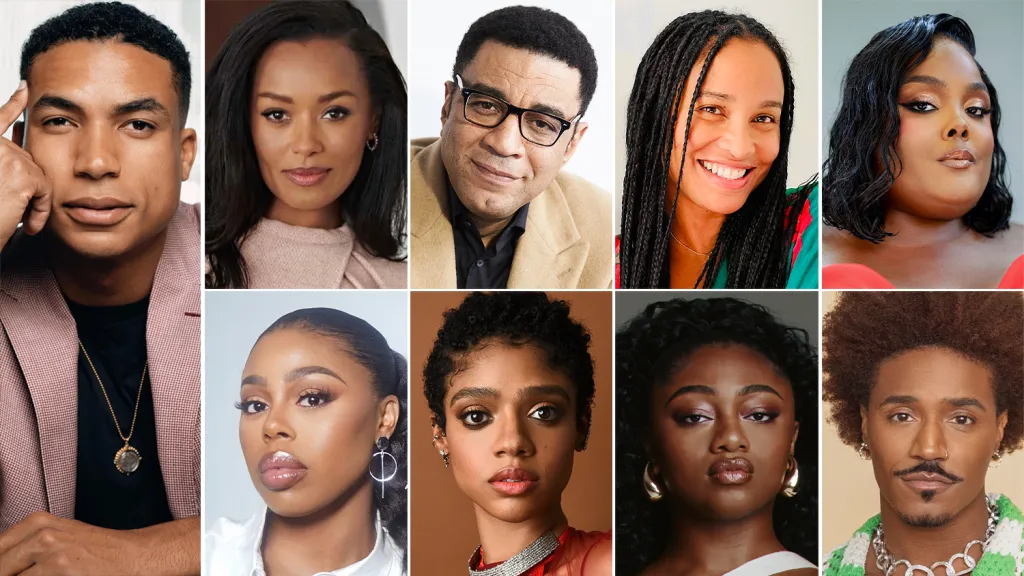
EXCLUSIVE: Women Like Us, the Netflix film from the Obamas’ Higher Ground and Charles D. King’s Macro Film Studios, has rounded out its cast with nine additions: Greg Tarzan Davis (Top Gun), Melanie Liburd (Bad Boys: Ride or Die), Harry Lennix (The Blacklist), Joy Bryant (Parenthood), Danielle Pinnock (Ghosts), Dewayne Perkins (The Studio), six-time Grammy winner Samara Joy, Tiffany Boone (Mufasa: The Lion King) and Gail Bean (The Drop: A Snowfall Saga).
Character details haven’t been disclosed. Announced in July, the film is led by Vivica A. Fox, Vanessa Williams, Jenifer Lewis and Whoopi Goldberg.
Women Like Us is the story of a recently widowed woman is dragged to the Hamptons by her lifelong best friends and sister on what should have been her 30th anniversary. The weekend becomes a reckoning with grief, with marriage, with the sisterhood that’s carried them throughout the years, and with the realization that dreams don’t have an expiration date.
Tasha Smith is directing from a script by Ali Kinney, with writing from Tracy Oliver. James Lopez and Poppy Hanks are producing for Macro, whose founder King is exec producing. Anikah McLaren and Mark R. Wright are producing for Higher Ground, whose Michelle Obama is exec producing.
Women Like Us is the latest of many projects stemming from a partnership between Netflix and Higher Ground, which won an Oscar for its work on their doc American Factory. Others upcoming include the series The Altruists and All the Sinners Bleed, as well as an untitled mother-daughter comedy starring Julianne Moore.
Davis is repped by CAA, Untitled, and Hansen, Jacobson, Teller; Liburd by Accelerate, Independent Artist Group, Untitled, and Christopher D. Abramson, P.C.; Lennix by Innovative Artists and Untitled; Bryant by Gersh, Principal Entertainment LA, and Schreck Rose Dapello; Pinnock by IAG, Mainstay Entertainment, and Hansen, Jacobson; Perkins by CAA, Artists First, and Schreck Rose Dapello; Boone by CAA, Vault Entertainment, and Toczek Suddleson; and Bean by Innovative, Echo Lake Entertainment, and The Hay Law Group.
>
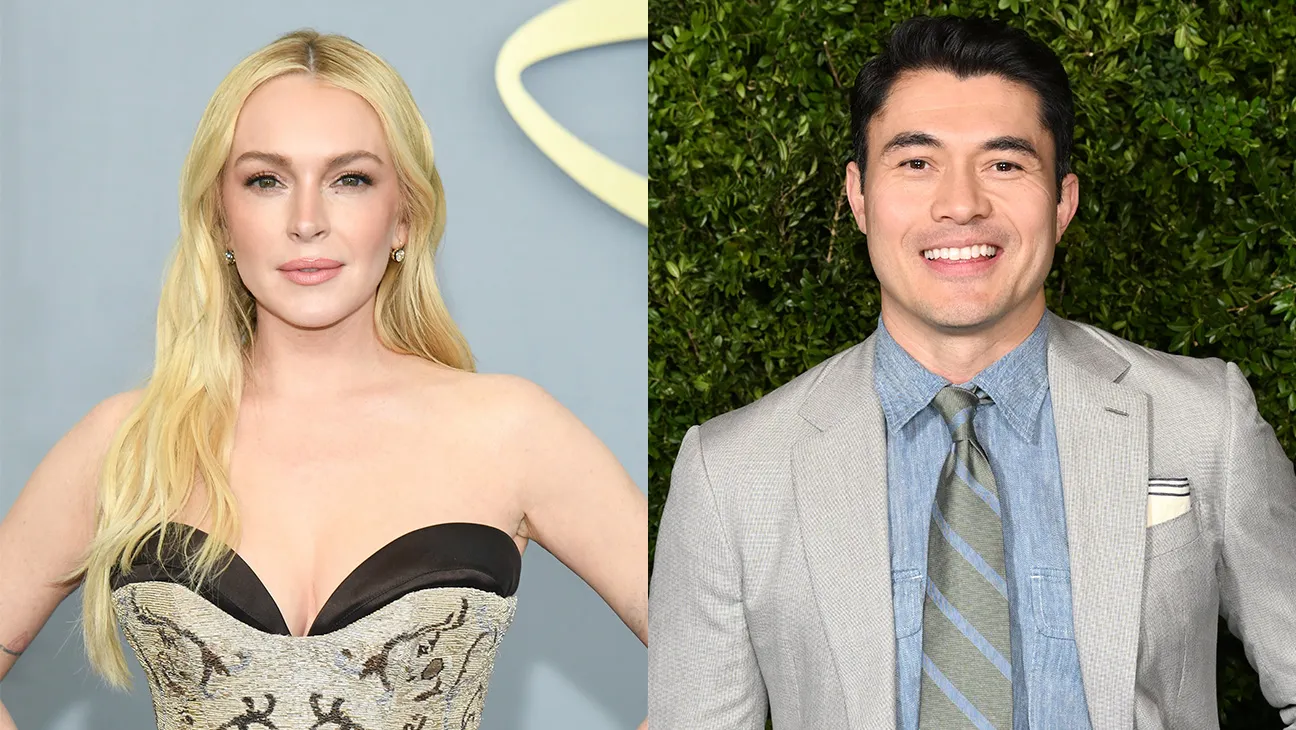
For her next lead role, Lindsay Lohan is embracing nostalgia with a very important DVD.
Lohan and Henry Golding are set to star in the Netflix romantic feature Return to You. Lohan also serves as a producer for the film that Mark Waters will direct from a script by Eric Champnella.
Set in 2008, Return to You stars Lohan as a high-powered but lonely attorney who mistakenly receives a heartfelt DVD from a dying woman to her husband. Lohan’s character uses clues from the recording to attempt to track down the husband.
Lohan and Brad Krevoy serve as producers for the movie that counts Olivia Krevoy, Jimmy Townsend and Galen Fletcher as executive producers.
For Lohan, Return to You marks a reunion with Waters, her director on two hit films — 2003’s Freaky Friday and 2004’s Mean Girls — that helped propel her to Hollywood stardom. Lohan reprised her role as Freaky Friday’s Anna Coleman in 2025 sequel Freakier Friday opposite co-star Jamie Lee Curtis, but that feature had Nisha Ganatra in the director’s chair.
Waters’ recent projects include last year’s Netflix romantic comedy La Dolce Villa and the forthcoming biopic Hershey.
Lohan can soon be seen starring on the Hulu series Count My Lies, alongside Shailene Woodley and Kit Harington. Golding is set to star with Brie Larson and Lily Collins in the Amazon MGM Studios comedy Close Personal Friends.
During a recent cover story for Vogue Arabia, Lohan discussed having become more vocal throughout her career. “With age comes a different kind of confidence,” she said. “When I was younger, I wasn’t so comfortable saying how I felt about a character and being involved with the process of it. And I love that part now.”
>


Search For Canadian TV Actor Stewart McLean Now Homicide Investigation


These ’90s fashion trends are making a comeback in 2017
According to Dior Couture, this taboo fashion accessory is back
Model Jocelyn Chew’s Instagram is the best vacation you’ve ever had
Emily Ratajkowski channels back-to-school style
9 Celebrities who have spoken out about being photoshopped


Rurouni Kenshin: Hokkaido Arc Manga Takes 1-Issue Break – News


HIDIVE to Stream English Dubs for The World Is Dancing, The Forsaken Saintess and Her Foodie Roadtrip in Another World, The Dangers in My Heart: The Movie Anime – News