
Entertainment
Stephen King Rips Trump for Calling on ABC to Fire Kimmel


Stephen King is a legendary wordsmith, and the picture he painted with his fiery take on Trump’s call for ABC to fire Jimmy Kimmel from late night was particularly poetic.
“People who live in glass houses shouldn’t throw s–t,” the author of “Carrie” and “The Shining” wrote on X Monday afternoon.
Melania Trump says Jimmy Kimmel should be canceled. Last week her husband commented on Robert Mueller’s death: “Good. I”m glad he’s dead.”
Said Pretty much the same about my old friend Rob Reiner.
People who live in glass houses should’t throw shit.— Stephen King (@StephenKing) April 27, 2026
The social media missive came after the president and First Lady Melania Trump each said ABC should cancel the “Jimmy Kimmel Live!” host for joking Thursday evening — two nights before an attempted assassin threw the annual White House Correspondents’ Dinner into chaos — that Melania looked like an “expectant widow.”
“Look at Melania, so beautiful,” Kimmel said in his Thursday monologue, putting on a mock WHCD hosting bit. “Mrs. Trump, you have a glow like an expectant widow.”
The remark has made Kimmel the target of outrage from multiple MAGA figures, including First Lady Melania, who took to X early Monday to denounce the host’s joke and to demand that ABC fire him.
“Kimmel’s hateful and violent rhetoric is intended to divide our country. His monologue about my family isn’t comedy- his words are corrosive and deepens the political sickness within America,” the first lady wrote on X. “People like Kimmel shouldn’t have the opportunity to enter our homes each evening to spread hate.”
“A coward, Kimmel hides behind ABC because he knows the network will keep running cover to protect him,” her post continued. “Enough is enough. It is time for ABC to take a stand. How many times will ABC’s leadership enable Kimmel’s atrocious behavior at the expense of our community.”

President Donald Trump followed shortly after with a post on Truth Social, decrying that Kimmel should be “immediately fired” by ABC and that “this is something far beyond the pale.”
Fast forward to Monday afternoon, and King was quick to point out the contradictory nature of the Trumps’ outcry, highlighting that the president has celebrated others’ deaths in the not-so-distant past.
“Melania Trump says Jimmy Kimmel should be canceled,” King wrote. “Last week her husband commented on Robert Mueller’s death: ‘Good. I’m glad he’s dead.’ Said pretty much the same about my old friend Rob Reiner. People who live in glass houses should’t throw s–t.”
The literary icon is one of several prominent media figures who defended free speech in the wake of Kimmel’s “widow” joke, among them Mehdi Hasan, comedian Loni Love and David Axelrod.
FCC Commissioner Anna M. Gomez, meanwhile, said that Saturday’s attack cannot not “become a pretext for silencing speech, even speech we find objectionable.”
“My thoughts are with the Secret Service officer injured Saturday night, and I’m grateful no lives were lost in what should have been a celebration of the free press,” she wrote on X. “In moments like this, we should all reflect on the words we use and the climate they may create.
“As we have seen after previous acts of political violence, we cannot allow this tragedy to become a pretext for silencing speech, even speech we find objectionable. An event meant to honor the freedom of the press must never become a justification for undermining it.”
Read more reactions and defenders of Kimmel’s free speech below:
“People like Kimmel shouldn’t have the opportunity to enter our homes each evening”
The wife of the president is saying a comedian should be banned from TV, is calling on ABC to fire Kimmel for a joke she didn’t like.
And the GOP have the nerve to say they support free speech! https://t.co/v2hsVKahVc
— Mehdi Hasan (@mehdirhasan) April 27, 2026
They literally don’t understand comedy or free speech.
We are governed by snowflake morons. https://t.co/nGBnES8HA2
— Mehdi Hasan (@mehdirhasan) April 27, 2026
I like @jimmykimmel. He’s funny & courageous at a time when there has been too much cowardice.
That said, this WAS a tasteless joke.
The WH will use any issue to demand he be fired because his satire touches a nerve, and ABC is right to resist.
But he’d be right to apologize. https://t.co/qfAN6ySaQh— David Axelrod (@davidaxelrod) April 27, 2026
Dear @Flotus
STFU
This country has been divided with violent rhetoric by your evil, insane husband
This is Donald Trump’s America. If you find its tone of discourse unsatisfactory, fix it, take it up with the mindless creature you have enabled – or just leave
Signed,
America pic.twitter.com/OmW1d2hksP
— Keith Olbermann (@KeithOlbermann) April 27, 2026

>
>
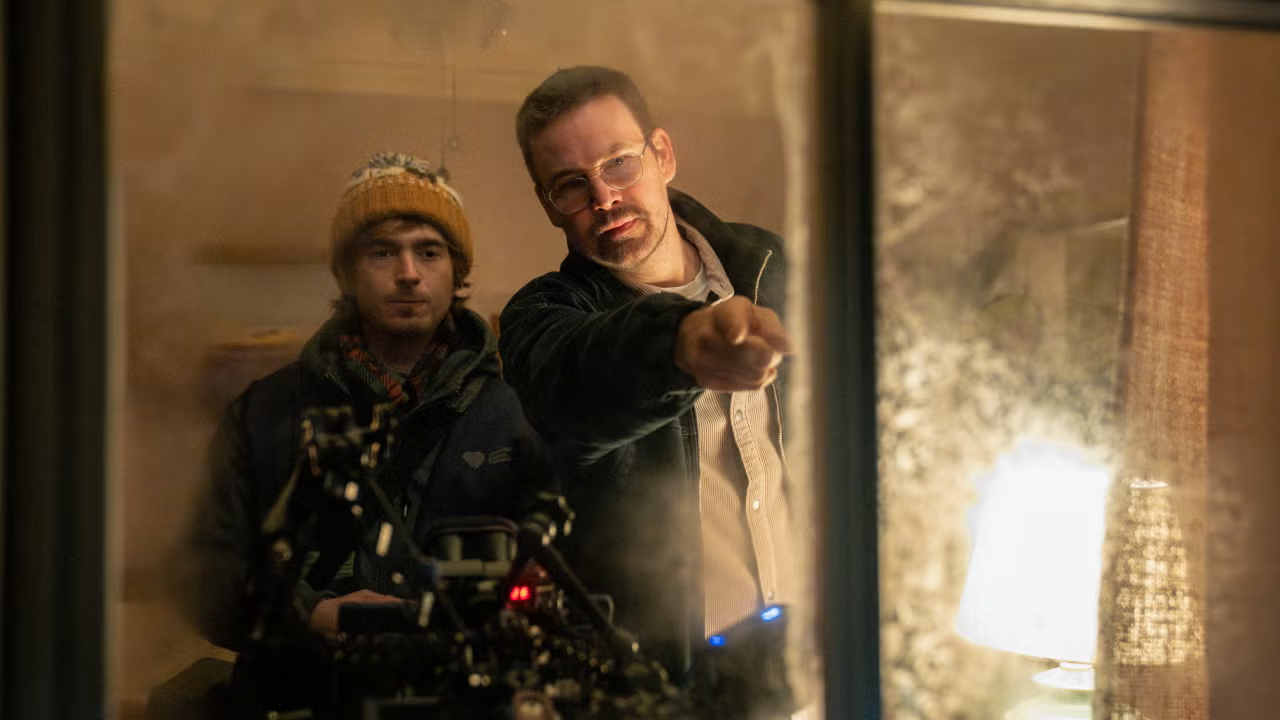
Zach Cregger’s “Resident Evil,” in a little more than two weeks, has already amassed nearly $200 million at the global box office.
Instead of a straight adaptation of the long-running video game series (or an extension of the already-existing film franchise), Cregger chose to tell a new story within the world of the games – a story that follows a hapless medical courier named Bryan (played by Austin Abrams), who is sent on a desperate mission to the heart of Raccoon City during a zombie outbreak. It is an all-gas, no-brakes rollercoaster ride that is carried along by Abrams’ performance – vulnerable, hilarious, inquisitive, the perfect audience surrogate. Even when things get weird, really weird, Abrams’ oddly emotional performance keeps us engaged.
Abrams said that Cregger first mentioned the project while the two were working on “Weapons,” which would go on to be a box office hit and an unlikely Oscar winner. But Cregger didn’t say anything specific about Abrams joining the project.
“It wasn’t until he was in post-production for ‘Weapons’ that he called and wanted me to read the script basically,” Abrams said. He hadn’t played the games (“Other than seeing it and being too afraid to play it”) but once he got the part it emboldened him to play horror/survival games that had a similar spirit.
Whereas “Weapons” was an ensemble piece, with Abrams portraying an unforgettable character (a junkie/thief who stumbles upon the mystery of a missing classroom of kids), with “Resident Evil” he would take center stage. The movie is him. And that left him a little nervous.
“You never know if you can do something until it’s done. It’s huge question marks. I feel personally like we’re going to be interested enough in watching this person,” Abrams said. “Not that everyone could feel that way. Or are they going to be like, I don’t really care about this guy that much. I don’t really want to watch this movie? It could happen. There’s a lot of feelings of the unknown came up.”
While shooting the movie, Abrams started to get the impression that it was going to be okay. “You catch the vibe of the people around you and they’re seeming to be into the character and that helps. You’re not getting like red lights. You keep going,” he added.
And while Abrams knew that he would be the audience stand-in, crafting a character through physicality rather than dialogue (“It feels good being in the body and using it as a tool,” he said) there were still some pretty radical changes to the final film, like when Cregger admitted that, after a test screening, he went through the movie and pulled out most of the jokes.

“There were some asides where I was like, ‘Are you going to keep that?’ Or ‘maybe check that out again.’ There was a bunch of stuff like that where we would take it to a place that was too far, really for our own enjoyment. And you never really know, until you get in the edit, how much you’re going want or not,” said Abrams. ”Especially for like this, where it’s a straight shot and there aren’t all these other characters that you’re interacting with. You want options. I don’t think it would be as enjoyable to watch if it was just straight through. If there wasn’t any laughs in it, I think it would be too unrelenting. Adding comedy, which is what I think Zach is so smart about too, really helps the enjoyment of it and relieves some of the pressure.”
One thing scarier than zombies or plague-infested monsters was the response of the die-hard Resident Evil fans to Cregger making a movie that eschewed the classic characters and established lore of the series. They were very upset about his approach.
Abrams was sympathetic. “I read a book that I love and then they’re going to do another one or make it into a different one. You don’t want someone to f–k it up. You have a personal connection with it. I get what that feeling is like. There’s that passion there,” Abrams said.
He said that he and Cregger “did the best job we could.” “We had a strong base of love and I think our best shot at making something that they would enjoy,” Abrams said. Cregger is a huge fan of the games and has played them all, including this year’s Resident Evil: Requiem. Their approach? “Make what you dig and then hope that other people dig it,” said Abrams.
Fan service was not something that they were interested in (Abrams said it doesn’t work in “a meaningful way”). “If you’re going to end up making something that feels fresh, I think that’s the best shot you have making something interesting,” he said. But still, he said, “I only send love to all those people.”
Before he started working with Cregger, Abrams was a fan of “Barbarian,” his debut feature. He remembers thinking, I love whoever’s made this movie, because they have guts and extreme talent and skill, and a comedic understanding that is really rare and that I relate to. Meeting him, Abrams found that they were perfectly in sync.
“We connect on many other levels, aspiring for the same thing and we have a similar level of what we deem to be the work that we want to make,” Abrams said. “I think that helps us to push each other. We both understand what it is we’re trying to make and have a similar sensibility.”
“He is a total dream to work with. I mean, truly a dream, and he is a beautiful, kind person. And he’s such a formidable actor. He’s so good at whatever he tries to do. I have yet to see him find his limit. That guy’s range is miraculous,” said Cregger. “When it was time to go and put this one together, it was like there wasn’t even a decision. There was not a moment of like, Well, who else could we? No, it’s Austin.”

There isn’t a role for Abrams in Cregger’s upcoming sci-fi freakout “The Flood” (which just cast Jennifer Lawrence in the lead role), but when we asked Abrams if he was the Kurt Russell to Cregger’s John Carpenter, he smiled wide and said, “Hey, you said it. I didn’t say it.”
When it came to – spoilers ahoy! – Abrams’ monstrous transformation towards the end of the film, he said that he actually found the motion-capture process enjoyable.
“I was shocked at like how minimal they needed to be able to capture everything,” said Abrams. “It’s all those other guys. You see them in a room, just imagining all this stuff.”
And given the open-endedness of the movie (and the fact that the video game series has been running for so long), we had to ask if Cregger had said anything to him about coming back for another installment. Another entry seems more and more likely, especially as its box office tally continues to grow.
“We’ve had the smallest of discussions. I also don’t want to go into it too much at all because I don’t know how things would play,” said Abrams.
Still, it’s very clear – if Cregger has an idea for how to bring Bryan back to snowy Raccoon City, Abrams would be there. In whatever shape – monstrous or otherwise – that would take.
“Resident Evil” is in theaters now.

>
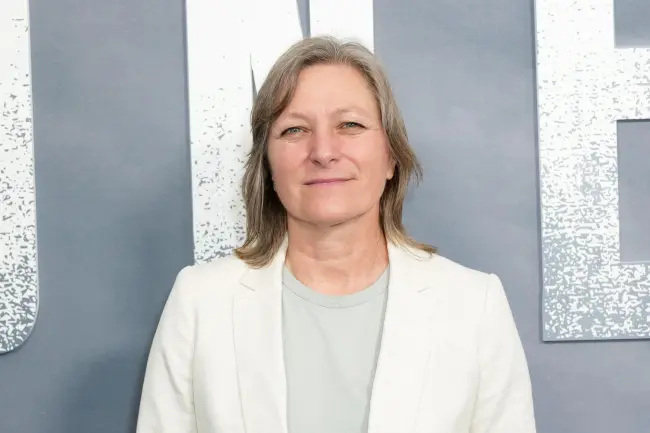
Cindy Holland, the chair of Paramount‘s direct-to-consumer division overseeing the company’s streaming plans, announced in a memo to staff that she’s exiting the company, according to reports in Variety and Deadline. The move most likely paves the way for Casey Bloys, who leads HBO and HBO Max at Warner Bros. Discovery, to lead streaming, something Holland hinted at in her exit memo. Today, September 29, is her last day at Paramount.
Holland’s exit provides some clarity for Paramount’s streaming vision. While Holland’s memo didn’t mention Bloys by name, it hints that “David is optimizing for HBO stability as we move into this next chapter, and I fully support that.” Bloys became president of HBO programming in 2016 and his role has only expanded since then to encompass HBO Max and other aspects of Warner Bros. Discovery.


Holland joined Paramount in January 2025 and described in her memo that she was tasked with reviving Pluto TV as well as integrating Paramount+ and advising on the WBD merger, and she helped grow Paramount+ to 79.6 million subscribers. She also was a pivotal force in the early days of Netflix’s expansion into original streaming programming with shows like “House of Cards” and “Stranger Things,” and she ultimately spent 18 years at Netflix.
While Bloys coming aboard isn’t official, nor has the merger itself closed just yet, it could be solidified in a matter of days. And what happens to HBO and HBO Max, how it’s integrated into Paramount+ or whether it stands alone, are big questions that remain. Bloys, though, has as good a track record as anyone in town. Consider HBO’s continued dominance at the Emmys and how the brand has sustained over the years even as Paramount’s own premium cable brand Showtime has dwindled, ultimately becoming integrated into Paramount+.
Unanswered still is what will be the fate of Warner Bros. Pictures executives Mike DeLuca and Pam Abdy and what their role would be in a combined WarnerMount. Paramount still needs to deliver on an aggressive slate of 30 movies per year across the two studios, so there’s plenty of opportunity to go around.
>

Kuri Hime Ayakashi Yobanashi Manga Ends on October 28 – News

Trent Alexander-Arnold ‘always believed’ he would play for England again after first start in over two years | Football News
How to watch the men's Rakuten Japan Open Tennis Championships: Streaming options for the Round of 32
-

 movies4 months ago
Search For Canadian TV Actor Stewart McLean Now Homicide Investigation
-

 Fashion9 years ago
These ’90s fashion trends are making a comeback in 2017
-
Fashion9 years ago
According to Dior Couture, this taboo fashion accessory is back
-
Fashion9 years ago
Model Jocelyn Chew’s Instagram is the best vacation you’ve ever had
-
Fashion9 years ago
Emily Ratajkowski channels back-to-school style
-
Fashion9 years ago
9 Celebrities who have spoken out about being photoshopped
-

 Anime4 months ago
Rurouni Kenshin: Hokkaido Arc Manga Takes 1-Issue Break – News
-

 Anime3 months ago
HIDIVE to Stream English Dubs for The World Is Dancing, The Forsaken Saintess and Her Foodie Roadtrip in Another World, The Dangers in My Heart: The Movie Anime – News