
Sports
Will NBA’s proposed draft lottery reform stop tanking? Maybe, but it’s risky

The NBA has its newest proposed solution to tanking, and unsurprisingly, it has been met with significant questions.
In what is being referred to as the “3-2-1″ system,” the league presented a draft lottery reform proposal to all 30 teams on Tuesday that could go into effect for 2027 if approved. Teams that don’t qualify for the playoffs or Play-In Tournament but avoid finishing with one of the three worst records would get three lottery balls (or an 8.1 percent chance at winning the lottery). Teams that finish in the bottom three, as well as the ninth and 10th Play-In seeds in each conference, would receive two lottery balls (a 5.4 percent chance at winning the lottery). The losers of the Play-In games between the seventh and eighth seeds in each conference would receive just one lottery ball (or a 2.7 percent chance at winning the lottery).
The lottery would expand to 16 teams. Other new rules would include that no team could pick in the top five in three consecutive years and that the bottom three teams couldn’t fall below 12th in the draft order.
I’ll run through the biggest impacts of these proposals, but first, I want to discuss a common complaint/question that I see from fans: Why don’t other leagues make such a big deal about teams losing at the end of the year or care about tanking when there is so much focus on it in the NBA?
The reality is that a single player can change the fortunes of an NBA franchise so much more drastically than in other sports. For Major League Baseball teams, a batter will get, at most, 750 plate appearances in a season, or a pitcher will throw, at most, 230 innings. In the NHL, the best players outside of the fickle goaltending position will play, at most, 25 minutes per game. Even in the NFL, quarterbacks are on the field for only half of the game.
In the NBA, the best player is on the court for well over 75 percent of the game and can, theoretically, operate every moment offensively on the ball if he’s that good. Defensively, he can control the game on the interior. See how Victor Wembanyama’s presence has transformed the San Antonio Spurs after he was taken No. 1 in 2023.
That’s what makes this problem unique to the NBA. Because you must havtheathletic.com/wp/wp-admin/post.php?post=7239211&action=edite a top-five player in the league to win the title — something that I don’t believe to be true in baseball, football or hockey — the incentive to try to acquire one of those talents by whatever means necessary is more urgent.
That’s why the NBA needs to be more vigilant in protecting its competitive integrity. When there is serious incentive to lose — especially in a draft like 2026 that features potential stars such as AJ Dybantsa, Darryn Peterson and Cameron Boozer, among others — the league must make some sort of shift to incentivize winning.
But is this new proposal the right approach? Let’s talk it through:
Biggest adjustment is not for the No. 1 pick
Over the last five years, NBA teams have tanked to maximize their chances at the No. 1 pick. But by and large, the main goal of runaway tanking is not necessarily to get the first selection. Even the worst team only had a 14 percent chance to get that pick — hardly a percentage that teams could count on. Rather, the goal was to create a floor for where your team would select on draft night. If by finishing last in the league you couldn’t fall outside of the top five and maximized your chances of picking even higher, that was a huge win.
This notion is often undervalued. Under the new proposal, that floor no longer exists in the same way. In theory, the worst team in the league could drop all the way to No. 12 on draft night, a huge value difference from picking in the top five. This is realistically what will likely curb the worst impulses of tankers. If you lose 65 games and end up with the 10th pick in the draft, it’s going to be awfully difficult to sell to your fans that the season was worth it.
In that vein, I think that the league succeeded in its goal, which was to create more variance and potentially punitive results for teams that attempt to lose games on purpose. But does it actually help with the main issue?
Does this hurt smaller markets?
The entire reason to have a draft is to create parity. It’s an opportunity for fans of bad teams and in certain markets to have hope and not become bleakly pessimistic. Drafts generally work well in that respect and keep fan bases engaged even as their teams hemorrhage losses.
In this case, the NBA is essentially removing that primary goal from the equation in favor of attempting to create more competitive games at the end of the season. I think some sort of adjustment is the right call. Multiple executives and scouts I’ve spoken with over the last four months have noted that it’s hard to even assess talent in the league at the end of the season because of how non-competitive the games are.
Yet I worry that the NBA has gone too far with this proposal.
By going down this road, the league would make it harder for the markets that are, let’s say, less than desirable for players to live and play in. This reform wouldn’t take building through the draft completely off the table — half the league’s All-Stars this season were selected outside of the top-five picks in their respective drafts — but it would make it more difficult for some markets to get star players. And given that free agency has essentially turned into pre-agency, with the best players often either signing extensions or dictating their desired landing spot via trade before hitting the open market, the avenues to go out and get the talent you need to contend are becoming harder to find.
I’m worried that long-term adoption of this draft lottery solution may turn the league into a set of haves and have-nots, where the bigger markets have an even greater advantage than they currently do.
That being said, there are two important points worth bringing up…
This is a temporary solution
Myriad NBA sources I’ve spoken with over the last four months — including multiple heads of basketball operations who have been on virtual meetings to address tanking — have emphasized that this is a short-term fix. Commissioner Adam Silver and league officials felt that they needed to address tanking in some manner after the blatant tactics of this season. However, the proposal contains a sunset provision — the league will take a look at this again in 2029 and could vote to extend it or adopt a new plan.
I’ve heard several creative ideas from general managers about how to adjust the lottery beyond what the league has proposed here, and I’m sure those ideas will get raised again if we find that this plan (again, if approved) isn’t achieving the desired results.
The second important thing worth noting is…
The next two NBA Drafts could be rough
I recently attended the Nike Hoop Summit and talked to dozens of scouts who were watching many of the best prospects in the 2026 recruiting class. There was not much enthusiasm for the top of the 2027 NBA Draft. There is even less enthusiasm right now for the 2028 draft class.
Because of that, the tanking issue might have sorted itself out for the next two years without the implementation of aggressive reform. That’s not to say that players won’t emerge from those classes and become All-Stars; undeniably, some will. Rather, the players in those classes are just much more incomplete right now than many top prospects in the last decade. I think teams would have been much less brazen with their attempts to tank in the next two years than they were this past year.
If there is less of a delta regarding top-end talent as compared to talent in the middle of the lottery over the next two classes, then the worst teams dropping from No. 1 to No. 8 or so in the draft order may not make a big difference. And another offshoot of that issue, as well as what this lottery reform will bring, is…
Scouting, player evaluation are now more important
If the NBA essentially removes the ability to tank for the best players in the draft, teams will have to get much more creative in how they attack improving their roster. Obviously, teams are going to have to get stronger at evaluating the draft to hit on players in the middle of the lottery. It’s much harder to find elite talent the further you go into the draft class.
I also wonder if we’ll start to see teams get more aggressive in trying to acquire buy-low candidates whom they like on other NBA teams. If this type of lottery reform had been in place five years ago, could a team have decided to try to pluck, say, Jalen Brunson away from the Dallas Mavericks to find out if he was a star? Would someone have been more forceful than the Portland Trail Blazers in trying to acquire Deni Avdija? Would someone look at the Boston Celtics’ Payton Pritchard as a potential starter and overpay to find out?
If your team needs a star and you can’t rely on the draft or free agency to go and get one, you’re going to have to do it by making stronger, more informed bets via trade. In that vein, this kind of lottery reform may create more excitement in the offseason and before the trade deadline.
I wonder if we’ll see teams start investing more of their front-office resources into pro personnel scouting. Even as someone whose job it is to evaluate draft prospects, get intel and slot them onto a board, I’m always surprised by how much manpower front offices put into that part of the equation as opposed to the pro personnel side. One team that has invested substantially in scouting current pros is the Indiana Pacers. They reaped the benefits by acquiring Tyrese Haliburton, Pascal Siakam, Aaron Nesmith and Obi Toppin and nearly won the NBA title last year.
Yes, teams are going to have to take chances and hit in the draft on upside swings more consistently. But one of the biggest marginal advantages that teams have had the last three years has been strong pro scouting departments. Now, I would imagine that every team will start to beef up those departments to try to uncover diamonds in the rough who have not gotten more run with their current NBA teams.
Is this reform a net positive for the NBA?
That’s the nine-figure question. Will this matter, and will it work?
I think there were better options to solve the tanking crisis. Namely, instead of taking away hope from fans of bad teams, the goal should have been to incentivize winning as opposed to disincentivize losing. I’m still partial to the idea that I suggested about a month ago, which was to tie wins and losses to the distribution of basketball-related income. If you win more games, those players and owners make more money. If you lose more games, those players and owners lose money.
You’re not taking money out of the pot for either of those parties; you’re simply redistributing it and rewarding players and owners who win games. If you start stacking up years in which owners lose $20 million to $30 million per season based solely on their team not being good enough, I guess that they’d start to force their front offices to pivot. And if you involve the players, you essentially create a player participation policy, because no star player is going to want to lose multiple millions of dollars per year by sitting and not competing.
But because the 2027 and 2028 drafts look weak, I don’t think this plan will be that detrimental. The real risks here are that fans of teams just beginning the rebuilding process lose faith, and that smaller markets with smaller fan bases become disengaged because they believe that there is no hope to contend. That’s exactly what the league is trying to avoid. If we start to see the same teams at the bottom over and over again because they simply can’t acquire the talent required to get better, then failure could become a self-perpetuating cycle.
If this is truly a short-term solution, it’s probably going to turn out OK. But the league should be careful about taking the results of the next two years as representative of long-term solutions and should clearly continue working over that time to find a better fix for the problem.
>
The Arsenal forward and the Manchester United midfielder scored the two goals that won England the 2022 European Championship.
>
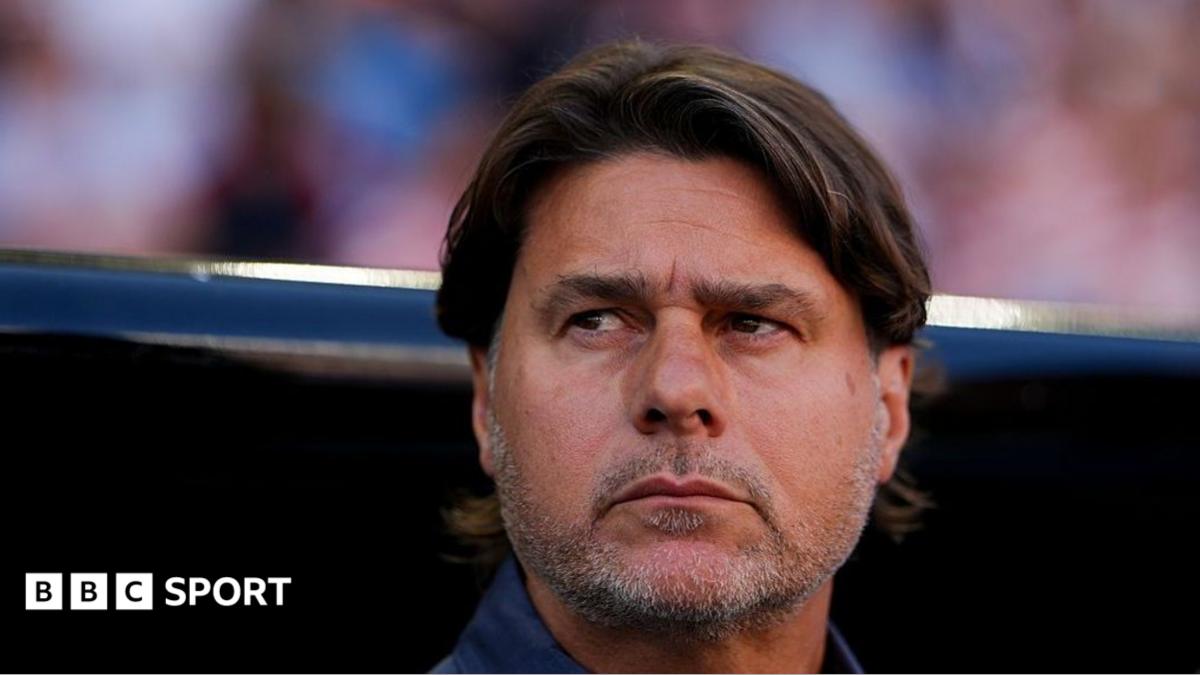
Former Tottenham and Chelsea manager Mauricio Pochettino says “we have lived through a period of deception” after Manchester City were found guilty of breaking the majority of the charges brought against them by the Premier League.
An independent panel found City to be guilty of a wide range of financial rule breaches, with the Athletic, external reporting on Friday that 114 of the 115 charges against them have been upheld.
Sanctions are yet to be announced, but City plan on appealing against the decision.
The charges relate to a period from 2009-10 to 2017-18, while they were accused of a failure to co-operate with Premier League investigations between December 2018 to February 2023.
United States manager Pochettino managed three clubs in the Premier League during that time, with the 54-year-old spending 15 months at Southampton, five years at Tottenham and a single season with Chelsea.
“Whatever punishment [they choose], it’s impossible to turn back time,” said Pochettino.
“It’s done a lot of damage. Many clubs followed the rules and some didn’t.
“Maybe they thought that the punishment [wouldn’t come for a lot of years] – what are they going to do? An economic punishment? Docking points? It’s really hard.
“It is a huge sadness. We get into a situation where what got celebrated wasn’t that real, what seemed good maybe wasn’t so good, what didn’t look good maybe was good but couldn’t be good because of what happened.
“We went through something where sporting fairness didn’t exist. So, how do you repair everything that was damaged because of that, if it’s true all of the 114 rules that were broken, we’ve lived through a period of deception.”
>
Enjoy the postseason while it’s happening, even with the lockout looming above it, Ghiroli writes.
>
Chloe Kelly, Ella Toone left out of England squad for World Cup play-off vs. Greece

Mauricio Pochettino on Man City charges: ‘We lived through period of deception’
DealHub AI Ranked #1 Quote-to-Billing Platform in Digital Journal’s 2026 Review
-

 movies4 months ago
Search For Canadian TV Actor Stewart McLean Now Homicide Investigation
-

 Fashion9 years ago
These ’90s fashion trends are making a comeback in 2017
-
Fashion9 years ago
According to Dior Couture, this taboo fashion accessory is back
-
Fashion9 years ago
Model Jocelyn Chew’s Instagram is the best vacation you’ve ever had
-
Fashion9 years ago
Emily Ratajkowski channels back-to-school style
-
Fashion9 years ago
9 Celebrities who have spoken out about being photoshopped
-

 Anime4 months ago
Rurouni Kenshin: Hokkaido Arc Manga Takes 1-Issue Break – News
-

 Anime3 months ago
HIDIVE to Stream English Dubs for The World Is Dancing, The Forsaken Saintess and Her Foodie Roadtrip in Another World, The Dangers in My Heart: The Movie Anime – News