
Sports
McLaren Golf: Why is an F1 team making $485 golf clubs and is it a risk for Justin Rose?

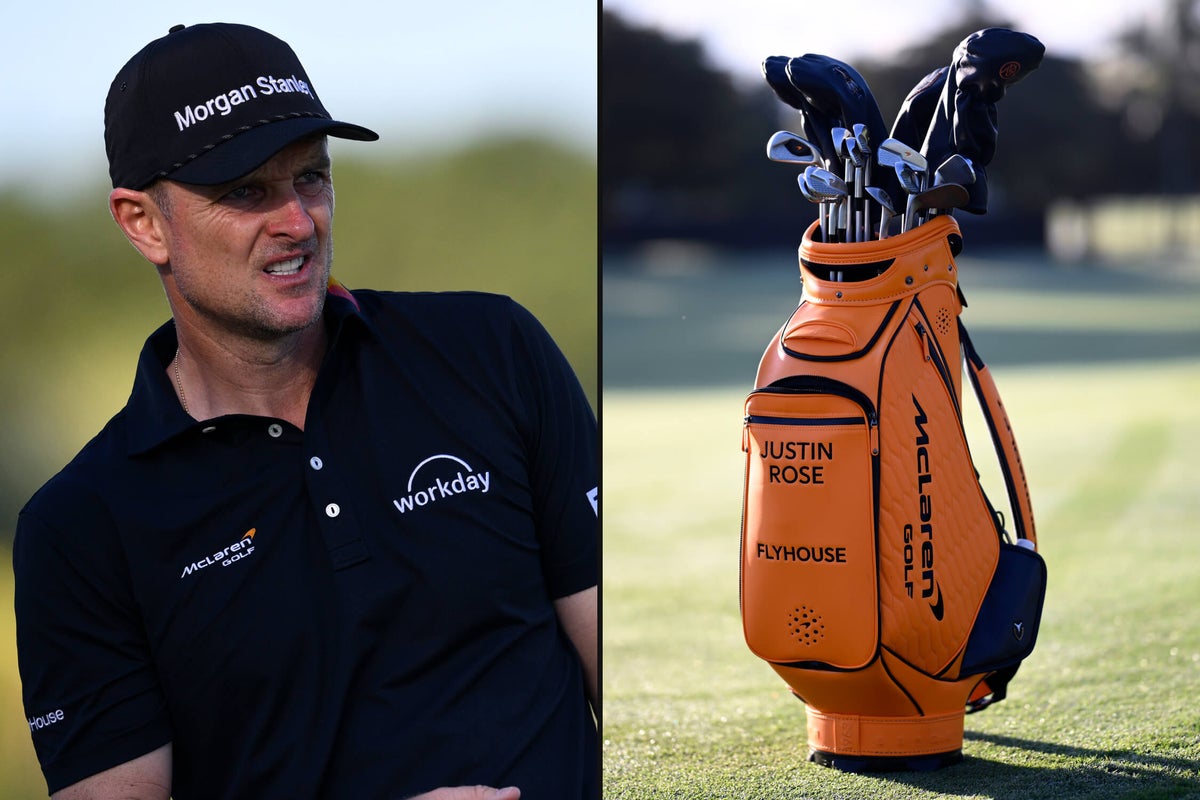
There is a new player in golf — but with a familiar name.
McLaren Golf formally launched yesterday, with Justin Rose, the 2013 U.S. Open winner, becoming the first to confirm that he will be playing with its clubs this week at the PGA Tour’s Cadillac Championship.
With the Miami Grand Prix taking place a few miles from where Rose will debut a new set of irons at Trump National Doral, McLaren, best known for its Formula 1 team and luxury cars, appears to be leveraging the global spotlight for maximum impact.
On Wednesday, the company formally revealed a line of golf clubs aimed at competing with well-known, established brands. Ryder Cup hero and LIV golfer Ian Poulter has also hinted he could join alongside Michelle Wie West, the 2014 U.S. Women’s Open winner, who was announced on Tuesday.
Landing Rose as a partner and investor is the real statement of intent but the timing raises questions. The 45-year-old has enjoyed a recent resurgence, rising to No 5 in the world rankings and pushing Rory McIlroy to the wire at the Masters this month.
The Athletic analyses McLaren’s move, whether it is likely to pay off and what the risks could be for Rose.
What is McLaren doing?
The British brand is best known for winning 23 world championships in F1 but in the words of its launch press release, it wants to “extend McLaren’s DNA” by moving into golf.
Players of all levels are constantly seeking any edge and McLaren Golf claims it will “push the boundaries of design and manufacturing to unlock new levels of precision”. A team of engineers has been working on the range and Rose has contributed at different stages during the past year.
“I’ve had the opportunity to be involved from the outset — working with the team, testing the clubs and helping shape what they’ve become,” Rose said on Tuesday.
Why has Rose decided to use McLaren’s clubs — and is it a risk?
The English golfer has a long-standing relationship with Zak Brown, McLaren Racing’s CEO, and is a regular golf partner of F1 world champion Lando Norris, both of whom were at the golf range’s formal launch in Miami on Wednesday.
Yet the timing of Rose’s switch has raised eyebrows.
He is having a fine season: he leads the PGA Tour standings in greens in regulation (reaching the putting surface at least two strokes under par) and is seventh in strokes gained approach (an advanced metric that measures a player’s game against the baseline). He performed admirably at the Masters, where he has now finished second three times, and is just two weeks away from the PGA Championship.

Justin Rose impressed again at this year’s Masters (Maddie Meyer/Getty Images)
Changing equipment at a pivotal moment in the season is a gamble, especially for a 45-year-old who may not have many realistic shots left at major wins.
Golfers adjust their equipment and move between manufacturers all the time, but this is a drastic switch to a company with no history or experience in producing clubs, especially given Rose’s history. In 2019, he signed with the Japanese brand Honma, but quickly abandoned the clubs when his form deteriorated rapidly.
This year, he has been using a mixed bag of clubs, but his status as an equipment free agent will change this week. He is expected to use a combo set of McLaren Series 1 irons 5-PW, with a Series 3 4-iron (slightly easier to hit) in Miami, while keeping the rest of his bag unchanged.
Rose says the Homna experience has helped him focus on getting everything right during the design and build stage at McLaren, where he has been hands-on during a year-long process. “They’ve given me a fantastic feeling,” he told reporters before the Cadillac Championship. “And it’s outperforming what I have.”
Testing the irons in a tournament will be the next step.
Are McLaren’s clubs really any different from other ones?
First of all, they’re going to be one of the most expensive sets on the market as McLaren are charging a whopping £360 ($485) per club. That’s £2,520 for a traditional set of seven irons, a figure considerably higher than the top-tier sets from rival brands.
Rather than producing all types of clubs, McLaren have initially stuck to two sets of irons — one for lower-handicap players, and others who need a little more forgiveness. There’s no woods, hybrids, putters or wedges on offer at present, and just a handful of accessories, including towels, gloves and bags.
Determining how the clubs stack up will take some time, but the spotlight will be on Rose’s performance.

Justin Rose plays with his new clubs in Miami (Orlando Ramirez/Getty Images)
The most striking features of McLaren’s clubs are the hexagonal milling on the rear top edge, alongside the McLaren Papaya Speedmark logo.
Rose is literally invested in the project, so he is only going to say positive things about them at this stage. “They (McLaren) want to be the best,” he said on Tuesday. “They want to operate in the high-end, high-performance category and the focus is on creating a really great product.”
Poulter also sounded impressed. “The Series 1 irons are a modern tour blade, super clean profile inspired by a muscle back,” he told fan media account Flushing It. “But the difference is beneath the surface, you have proprietary metal blends and internal weighting that enhances consistency and stability.”
How they compare to some of the best-performing irons on the market, from brands such as Titleist, Mizuno and TaylorMade, will be the deciding factor in whether the brand truly takes off.
How difficult is it to crack the world of golf club manufacturing?
Long-established brands have dominated the market for decades and even Nike, the previous sponsor of Tiger Woods, failed to disrupt the pack. It stopped producing clubs in 2016.
Historically, around 90 per cent of the market for drivers is controlled by five companies: TaylorMade, Callaway, Ping, Titleist and Cobra. Alongside these ‘big five’ are others, including Mizuno, Wilson, Srixon and Cleveland, leaving McLaren with a lot of competition.
Having brand ambassadors playing on the PGA and LIV tours will help, as will signing Wie West. The 36-year-old has not entered a tournament since the 2023 U.S. Open but recently announced she would return, and she remains a big commercial draw.

Michelle Wie West has also signed up to McLaren (Michael Reaves/Getty Images)
Convincing club golfers to change from brands they’ve used for so long may prove trickier.
Has a company associated with another sport tried to break into golf before?
Nike is the best example. The American sportswear brand signed huge names in golf, including Woods, McIlroy, Wie West and Brooks Koepka, and had some initial success, especially as it produced everything from drivers, hybrids, irons, wedges and putters to hats, shoes and everything in between. Declining sales forced a rethink, though, and Nike switched focus to golf footwear and clothes rather than equipment.
McLaren’s launch also has echoes of Parsons Xtreme Golf, known better as PXG, which came out of nowhere in 2014, aiming to design and develop the “finest golf clubs ever played”.
Others have tried to enter at a lower scale or collaborate with existing manufacturers. JLindeberg, a Swedish fashion brand that has made huge strides in the golf clothing sector, recently teamed up with Vega to produce a set of limited-edition irons.
Can anyone buy these clubs and how much do they cost?
McLaren Golf irons are only available at select fitting centres within the UK. Pre-orders have started and will be shipped out by June. At £360 a club, many golfers will be priced out, but expect to see a huge marketing push in the months ahead.
>
Sports
England vs Sri Lanka: Tom Banton notches maiden ODI century as Harry Brook’s side secure series victory after tourists collapse | Cricket News
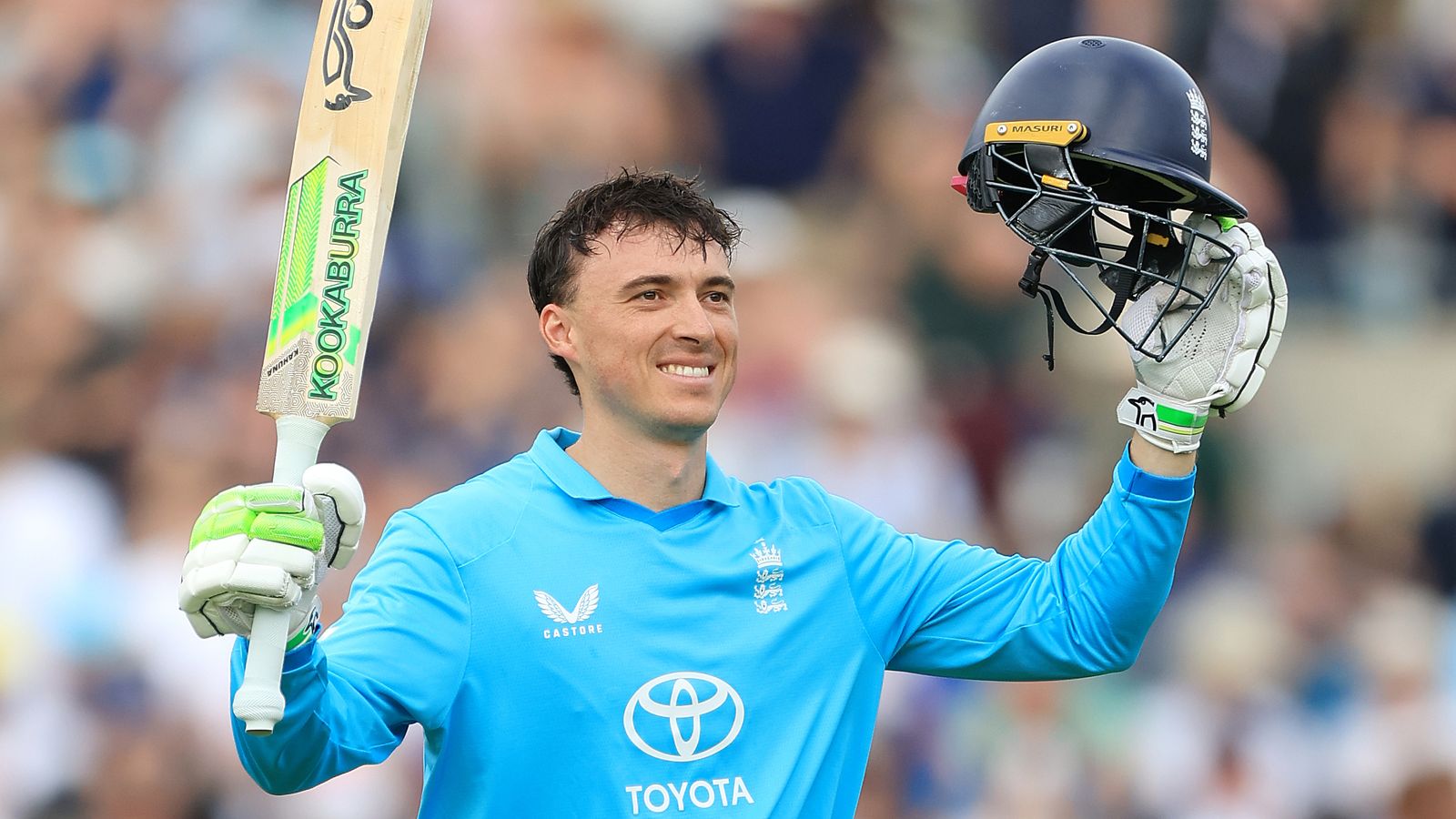
Tom Banton posted an imperious 126 off just 105 balls to guide England to a dominant 223-run win in the third ODI against Sri Lanka to secure a 2-1 series victory at the Oval.
Banton top scored with his career-best but was aided by sizeable contributions by skipper Harry Brook (77 off 66) and the in-form Jordan Cox (76 off 52) as the batting side set the tourists a mammoth target of 356 after their 50 overs, with Dilhara Fernando (3-52) the pick of the bowlers – albeit with two of his wickets coming with the final two balls of the innings.
That target loomed even larger over Sri Lanka’s innings when Sonny Baker nicked off Pathum Nissanka (1) for his maiden ODI wicket with just the eighth ball of their innings.
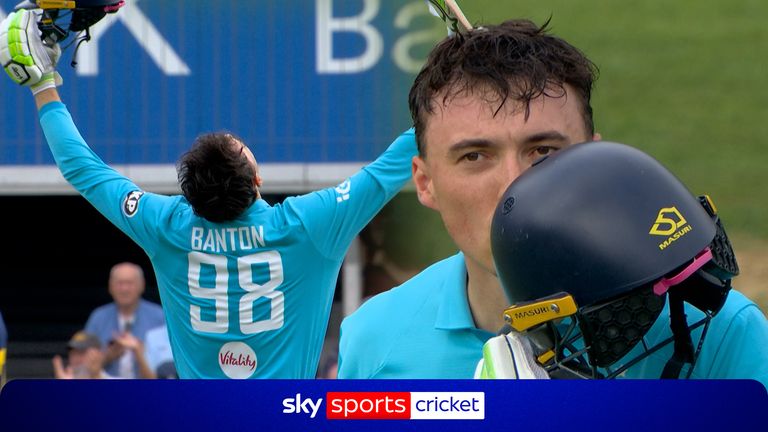
Watch every boundary from Tom Banton’s maiden ODI century
From there the wickets started to tumble for Sri Lanka who – despite the best efforts of captain Kusal Mendis (35 off 26) – went from 36-1 to 82-6 in just 10 overs, including the confusing run-out dismissal of Pavan Rathnayake (18), which was still given as out despite Jordan Cox taking the bails off before Archer’s direct-hit throw dismantled the stumps.
The impressive bowling of Liam Dawson (3-17) and Gus Atkinson (2-26) then ensured Sri Lanka’s tail went out with a 50-run whimper, handing England the series victory and marking a successful end of the home summer for Brendon McCullum’s side after 12 wins in 14 white-ball games.
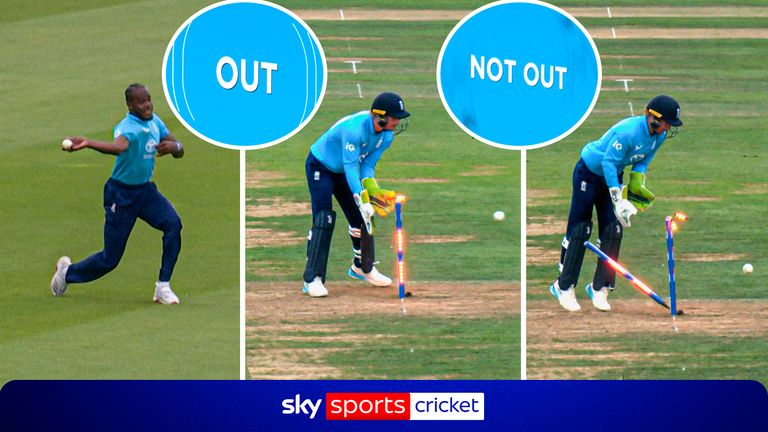
Pavan Rathnayake was run out by Jofra Archer after confusion reigned as Jordan Cox broke the stumps early
Banton brilliance headlines complete England performance
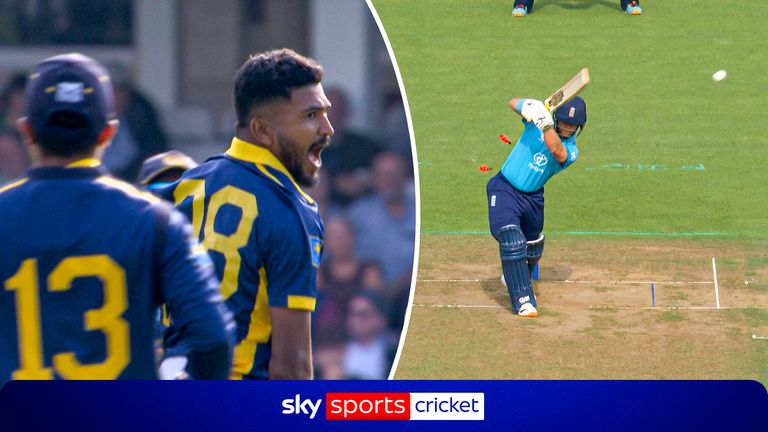
Ben Duckett went early for England as Sri Lanka’s Dilshan Madushanka smashed the stumps
Despite England’s eventual victory, it took just eight balls for Sri Lanka to take their first wicket as Ben Duckett (0) was clean bowled by Dilshan Madushanka (1-49), before Joe Root was dismissed by Janith Liyanage in an uncharacteristically stiff cameo that saw him notch just 18 off 37 balls.
It was then the partnership of Brook and player-of-the-match Banton that made the difference for England, putting on 150 runs in a lucrative partnership that was eventually ended when the former was caught on the boundary by Dunith Wellalage.
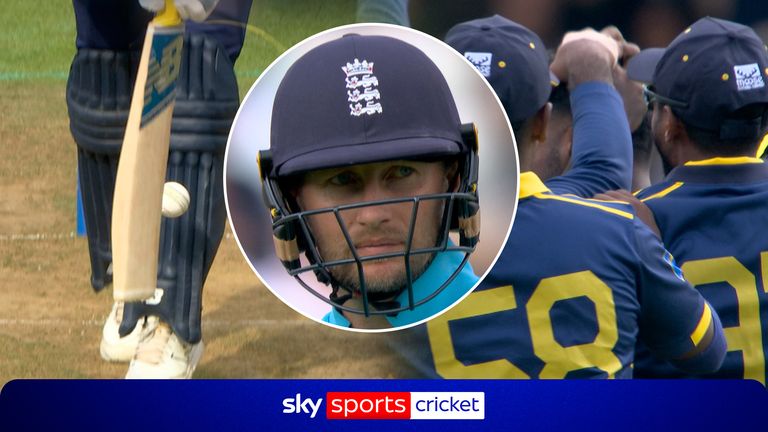
Joe Root fell leg before as Sri Lanka claimed their second wicket against England in their third ODI
Banton’s majestic innings – featuring 21 boundaries and including five sixes – came to a conclusion when his effort to hit a sixth maximum was caught by Malinga at long-on.
But England were not done there – alongside Will Jacks (25 off 21), Cox spearheaded a late flurry of runs, notching his half-century off 42 balls before Fernando took his and Dawson’s wickets with the final two balls of the 49th over, leaving England in the ascendancy after posting a formidable score of 355-7.
Sri Lanka were immediately left reeling after Baker’s early wicket and found it difficult to recover, with no batter scoring above 20 bar their captain Mendis, with their woes being immediately compounded by the controversial run out of Pavan Rathnayake.
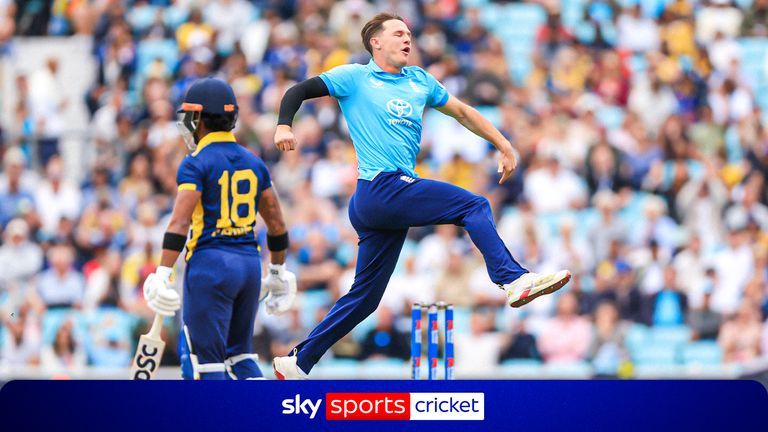
Sonny Baker got an early wicket within his first two balls for England against Sri Lanka in their 3rd ODI clash
Cox appeared to have made a mishap after taking the bails off the stumps before he was in control of the ball, but – after a near five-minute period of discussion involving both umpires and players – Archer’s direct-hit throw uprooting the stump was ruled legitimate.
His dismissal was followed by that of Charith Asalanka and Wellalage within the next eight balls, leaving Sri Lanka on the brink of defeat at 82-6 with no recognised batters left, before the excellent work of Dawson – taking three of the last four Sri Lanka wickets – ensured England’s dominant victory was confirmed with 21.5 overs to spare.
Brook: That was a near-perfect performance
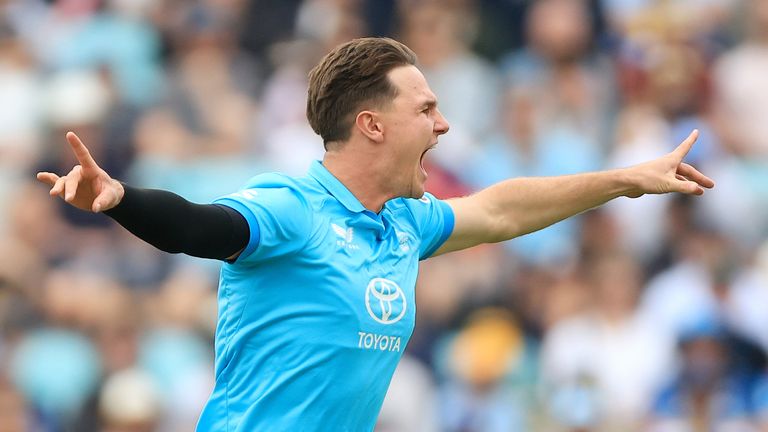
Baker took his maiden ODI wicket
England captain Harry Brook, speaking to Sky Sports:
“I thought that was a near-perfect performance there – I thought everyone chipped in and it was an exceptional win.
“There was some tough periods, but I thought the patience we showed, it was exceptional.
“We want to be able to adapt to conditions every game. Every surface has been slightly different. That is the side we want to be – we want to win when they are not in our favour and when they are, we want to nail sides.
“We are building towards a squad where someone can come into roles and fill it exceptionally well. We are building to a strong squad and I have full trust in anyone who comes in.”
Mendis: We made too many mistakes
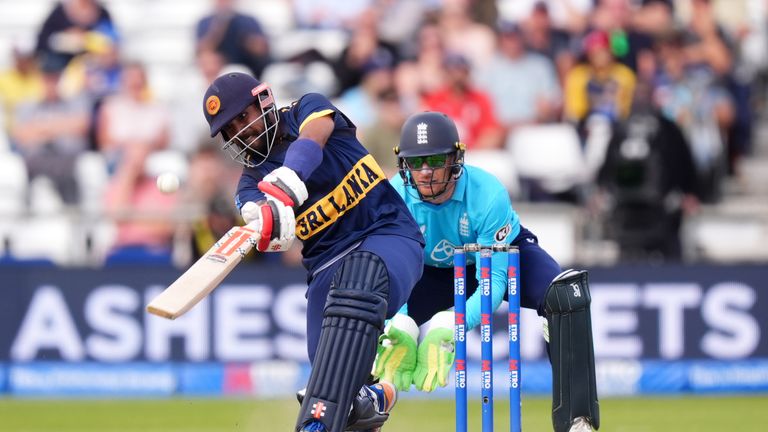
Mendis top scored for Sri Lanka for the second successive game
Sri Lanka captain Kusal Mendis:
“We struggled with the batting and then we made some mistakes in the field, including me.
“I think we played good cricket in the second ODI and when go to Pakistan after this, we need to be better.
“We made too many mistakes.”
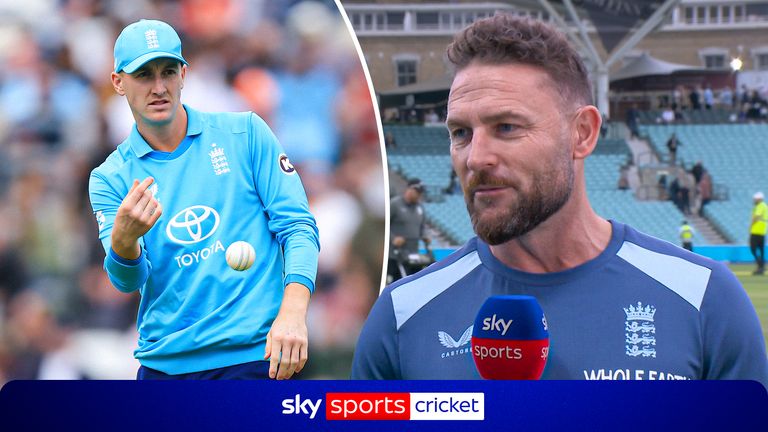
Brendon McCullum talked up Harry Brook’s captaincy following England series win over Sri Lanka
England vs Sri Lanka results and fixtures
All times UK and Ireland; all games live on Sky Sports
>
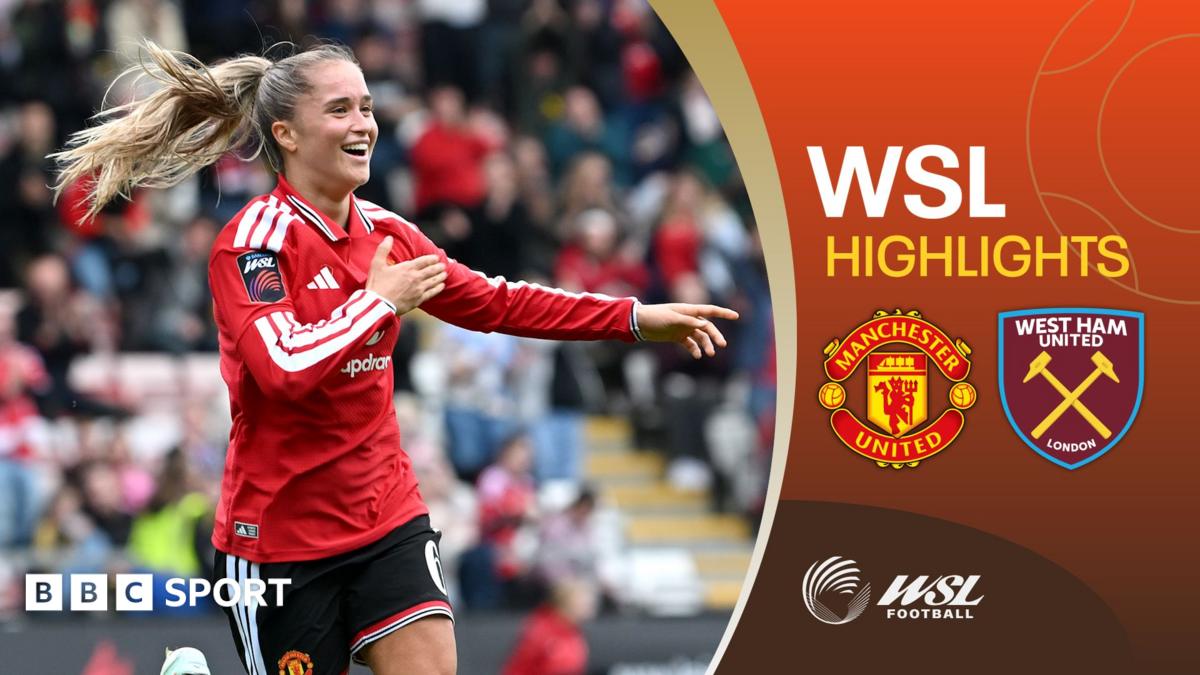
Eva Olid claims her first Women’s Super League victory as Manchester United manager, but they were made to work hard to beat West Ham.
>
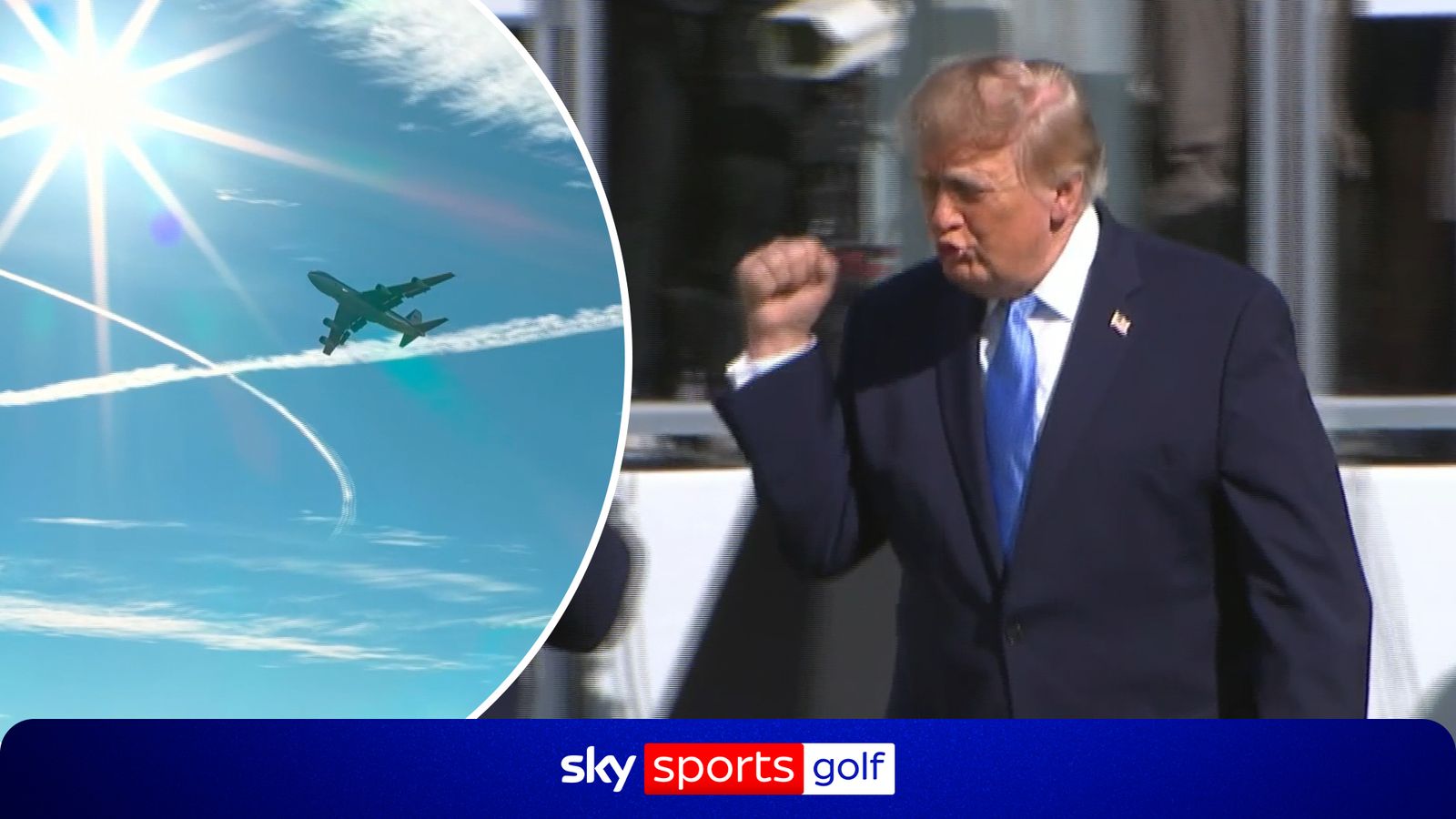
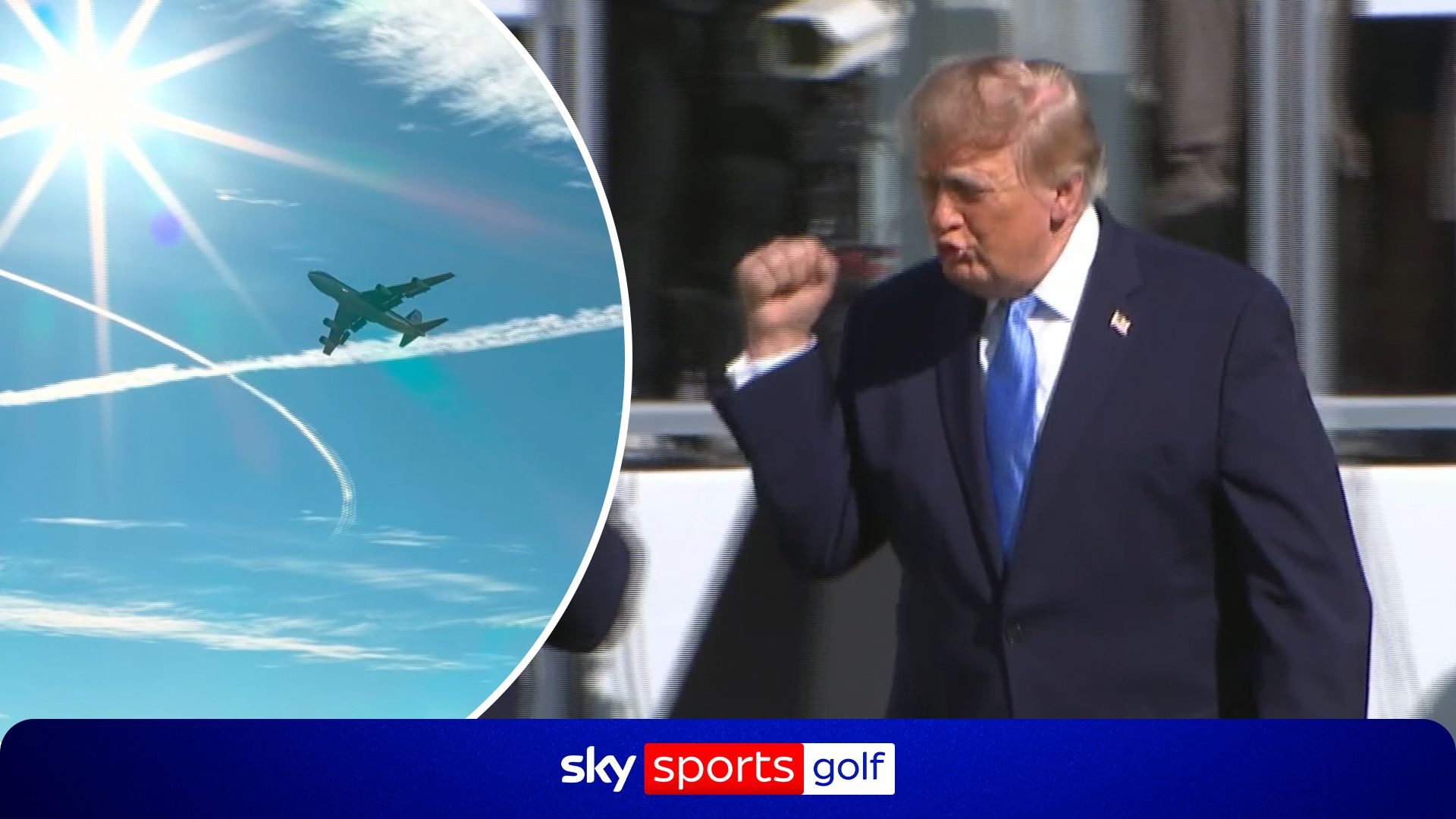
Donald Trump arrives at Medinah to support Team USA on the final day of the Presidents Cup.
>

England vs Sri Lanka: Tom Banton notches maiden ODI century as Harry Brook’s side secure series victory after tourists collapse | Cricket News

3 Best Movies to Watch on Paramount+ This Week (Sept. 27-Oct. 2)
3 Best Movies to Watch on Paramount+ This Week (Sept. 27-Oct. 2)
-

 movies4 months ago
Search For Canadian TV Actor Stewart McLean Now Homicide Investigation
-

 Fashion9 years ago
These ’90s fashion trends are making a comeback in 2017
-
Fashion9 years ago
According to Dior Couture, this taboo fashion accessory is back
-
Fashion9 years ago
Model Jocelyn Chew’s Instagram is the best vacation you’ve ever had
-
Fashion9 years ago
Emily Ratajkowski channels back-to-school style
-
Fashion9 years ago
9 Celebrities who have spoken out about being photoshopped
-

 Anime4 months ago
Rurouni Kenshin: Hokkaido Arc Manga Takes 1-Issue Break – News
-

 Anime3 months ago
HIDIVE to Stream English Dubs for The World Is Dancing, The Forsaken Saintess and Her Foodie Roadtrip in Another World, The Dangers in My Heart: The Movie Anime – News