
Tech
Salesforce is crowdsourcing its AI roadmap — with customers


Artificial intelligence continues to advance at a dizzying clip, forcing enterprises to develop and release new products quicker than ever or risk becoming irrelevant to a faster-moving competitor.
Salesforce believes it has found a strategy that allows it to keep up even if it isn’t clear where AI is headed next. The customer management software giant is crowdsourcing its AI roadmap in real time.
Salesforce is certainly not the only company to work intimately with its customers for feedback on its products. However, it’s notable considering the sheer size of the company, the pace of new product launches or fixes to existing ones, and the granular level of these relationships. These aren’t annual or even quarterly discussions. Salesforce is meeting with some customers as often as once a week.
“The 18,000 customers are a wellspring of information and a wealth of information that is really needed to get to customer success,” Jayesh Govindarajan, executive vice president at Salesforce AI, told TechCrunch in a recent interview. “The stack that we’ve built that has resonated with these customers. Over time we can get context to be better, and as it gets better, and LLMs get better, agent systems do more and more fully autonomous behaviors. That’s a long running innovation track and we’re going to invest in that.”
Salesforce was one of the first companies to launch AI agent management software in late 2024 before agentic AI started to dominate headlines the following year. The company has since doubled down and continues to release new products for voice AI and Slack at a rapid pace.
Salesforce credits its customers for the rate of its product releases. The company told TechCrunch that by letting its customers lead the way it is able to build an AI product roadmap that can quickly react to where AI technology is headed.
When large language models were introduced, enterprises naturally wanted to jump on the technology but didn’t have the last-mile tech needed to fully use LLMs, Muralidhar Krishnaprasad, the president and chief technology officer of Salesforce engineering, told TechCrunch.
Techcrunch event
San Francisco, CA
|
October 13-15, 2026
The need for that last-mile tech is what sparked Salesforce to launch its agent management platform Agentforce, Jayesh Govindarajan, executive vice president at Salesforce AI, said in a recent interview.
From there, the company developed a bottom-up strategy led by themes — including agent context, observability, and deterministic controls, among others — as opposed to specific product timelines. This approach uses direct feedback from rotating groups of customers to build products with the assumption that other enterprises will have similar needs.
Customers in the driver’s seat
“The innovation that we’ve brought, they are direct result of us working with a vast number of these customers and then classifying the problems they see in the real world,” Govindarajan said. ‘Then [we break] that down and say, which of this can be solved at the LLM layer, which cannot? And for things that we cannot solve at the LLM layer, we need to build that sort of agentic operating system components around the LLMs to be able to go do that.”
Working so closely with customers’ engineering teams allows Salesforce to fix problems quickly before the technology evolves past them.
“We can’t wait three months or six months to get feedback, and then go figure out another six months of work,” Krishnaprasad said. “We are literally reacting to it, week by week, month by month. That’s been a big change. Now we push code, pretty fast, and we have various sorts of gates to try out new features, get earlier feedback before we release it broadly as well. So those are all changes that we had to do to kind of accommodate this rapid change in this environment.”
Engine, a travel management platform, is one of the companies within Salesforce’s customer feedback loop. And it’s not a casual relationship. The company’s operations team meets with Salesforce weekly, according to Engine founder and CEO Elia Wallen.
Through the partnership, Engine gets access to AI tools before they’re released. Wallen said the access helps Engine stay competitive and get more value out of these tools than it would otherwise.
The relationship goes both ways.
Wallen said he’s seen feedback from Engine get implemented into Salesforce tools. For example, Wallen said he instructed an AI voice agent to book him a hotel in Chicago. He thought the voice and interaction felt a bit unnatural and shared that with Salesforce. Shortly after, the agent had been changed and the company’s A/B tests started showing better results.
“If somebody is willing to actually help curate and build products that we need, they can help us better and really understand our problem and how they can solve it,” Wallen said. “For us, it’s fantastic to actually be invited into a thing like that, because we can influence the product.”
This strategy also allows the company to roll out solutions and workflows built by users to its broader customer base too.
Federal credit union PenFed has been able to slim down its tech stack by working closely with Salesforce, Shree Reddy, the company’s chief innovation officer and executive vice president told TechCrunch.
“We invest our time, energy into the platforms that are more strategic, and we obviously spend a lot more time on this relationship,” Reddy said about Salesforce. “That investment has yielded good results in terms of strengthening that partnership that’s influencing each other, and what we see is the best value add mutually to both organizations.”
Reddy said PenFed developed an IT service management (ITSM) workflow on its own using existing tools and agents in Agentforce that worked well for the company. Salesforce was able to see that success and roll out the tool into the broader platform for other enterprises to use as well.
The downside to this approach is that it relies on the classic service sentiment that the customer is always right. Salesforce is hoping they are despite many enterprises still figuring out what role AI will play in their business, and many having yet to find value from the tech. As a result, they might not be the best source for long-term product development.
Plus, being willing to test and preview technology in beta now doesn’t necessarily translate to long-term usage habits or future software contracts either.
Be your own biggest user
The company also takes this bottom-up approach internally. Govindarajan said Salesforce employees are the biggest users of its AI tools.
The company also shifted labor and resources at the start of the AI boom. When ChatGPT was released, Salesforce moved around teams and resources to create a new AI team — a strategy the company has found successful during different innovation waves in the past, Krishnaprasad said.
“As the technology changes, we never know what’s going to come out a month from now,” Krishnaprasad said. “We will adapt to it. And that’s what we did all of last year. If you think about it, agents weren’t even in terminology when you look back a year and a half ago. And then we had to go react to it. We had to go react to all the advances, and we had to react to our customers.”
When you purchase through links in our articles, we may earn a small commission. This doesn’t affect our editorial independence.
>
Tech
More Ways to Disrupt: New 2026 Side Events from KOTRA, WayFounder, Enterprise Ireland, SafetyWing + Descope
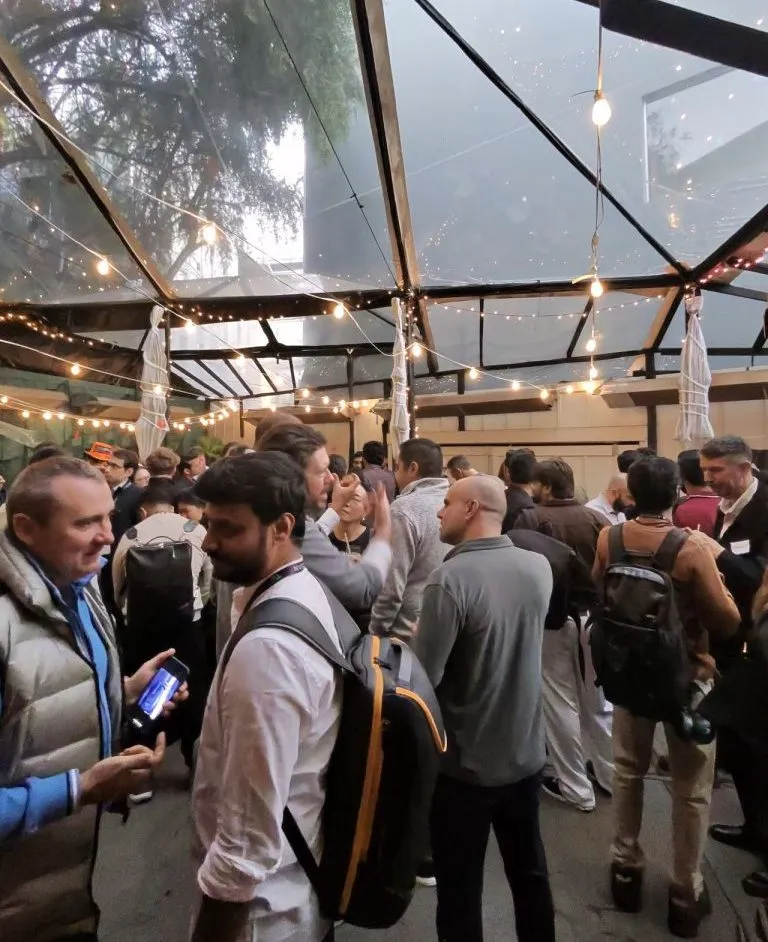
TechCrunch Disrupt is where the tech community comes together to build, debate, and connect. And during Disrupt Week, that conversation doesn’t stop when the doors to Moscone West close.
Our Side Events program brings founders, investors, operators, and tech leaders together across San Francisco for everything from intimate roundtables and founder gatherings to happy hours, dinners, workshops, and community meetups.
Whether you’re looking to make a few new connections, find your next collaborator, go deep on a specific industry, or just get out of conference mode for a minute, there’s a lot happening beyond the show floor.
Explore the 2026 Side Events, and find your people.
Featured Side Events
Korea–US Startup & Investor Networking Night
October 14 | 5:30 p.m. – 8:30 p.m. PT
Join Korean startups, U.S. investors, founders, and technology professionals for an evening of networking and cross-border connection in San Francisco. Organized by KOTRA as part of the Korea Pavilion’s programming, the event brings together Korean startups entering the U.S. market with investors, founders, corporate partners, and members of the Bay Area startup ecosystem.
For those without a ticket to attend TechCrunch Disrupt 2026, KOTRA is offering complimentary Expo+ passes to qualified applicants.
Hosted by: KOTRA Silicon Valley
RSVP
Born2Global Founder Networking Night
October 13 | 6:00 p.m. – 9:00 p.m. PT
Meet 18 emerging startups from the Republic of Korea for an evening of founder conversations, curated introductions, and networking with investors, operators, corporate leaders, and fellow entrepreneurs. Each founder will give a quick introduction before the evening opens up for conversations and connections across the U.S. and global startup ecosystem.
Hosted by: WayFounder
RSVP
The Irish Shark Tank
October 13 | 5:00 p.m. – 8:00 p.m.
Meet and mingle with Ireland’s hottest startups! Enterprise Ireland is BACK at TechCrunch Disrupt 2026, and we’re excited to reconnect with old friends and welcome new faces to The Irish Shark Tank at Ireland House for Happy Hour. Availability is limited!
Hosted by: Enterprise Ireland
RSVP
SafetyWing Happy Hour at Harrington’s
October 13 | 5:00 p.m. – 9:00 p.m. PT
Head to Harrington’s Irish Pub for an evening of drinks and conversation with founders, HR leaders, and members of the startup community. Hosted by SafetyWing during TechCrunch Disrupt, the happy hour offers a casual setting to meet new people and connect with the team behind the startup’s approach to health coverage for remote and global teams.
Hosted by: SafetyWing
RSVP
Vault & Verify: An Evening of Ping Pong, Cocktails & Conversation
October 14 | 6:00 p.m. – 9:00 p.m. PT
Join Skyflow and Descope for an evening of food, cocktails, friendly competition, and conversation with San Francisco’s security, privacy, and identity community. As AI systems become more autonomous, the event brings together leaders working on the challenges of keeping sensitive data and identity secure, with plenty of time to connect away from the conference floor.
Hosted by: Descope
RSVP
More Side Events
Pursuit of Happiness: Revolutionary Demonstration of Whitney Electrolarynx by Uhura Bionics
October 7 | 6:00 p.m. – 10:00 p.m. PT
Experience a live demonstration of voice-restoration technology as Uhura Bionics co-founder Konrad Zieliński showcases the Whitney Electrolarynx for a U.S. audience. The event explores how technology can help people reclaim their voices and agency following cancer treatment.
Hosted by: Uhura Bionics
RSVP
Find the 10x Opportunity Hiding in Your Product
October 10 | 9:00 a.m. – 11:00 a.m. PT
Learn how first-principles thinking can uncover overlooked customer needs, strengthen product-market fit, and reveal opportunities for significant growth. The session will use a real-world case study to explore how founders and product teams can identify new opportunities within products they already have.
Hosted by: PrincipiumX
RSVP
Long Lead Time: A Hardware Happy Hour
October 12 | 6:00 p.m. – 9:00 p.m. PT
Connect with founders, engineers, and operators building robotics, chips, rockets, and other frontier hardware. This casual, presentation-free gathering offers a chance to swap ideas, share experiences, and meet others working on the challenges of building physical technology.
Hosted by: Syntro
RSVP
Real World AI: Connect, Invest & Scale in Taiwan
October 13 | 5:30 p.m. – 8:30 p.m. PT
Explore Taiwan’s emerging AI ecosystem through startup pitches and conversations spanning robotics, intelligent hardware, and advanced manufacturing. Meet founders and investors working across Taiwan’s technology landscape and learn more about opportunities to connect, invest, and build.
Hosted by: Taiwan’s Ministry of Economic Affairs
RSVP
Pets of Disrupt: Founders, Investors & Their Pets
October 13 | 6:00 p.m. – 8:00 p.m. PT
Step away from the conference crowd for an informal evening with founders, investors, operators, builders, creators, and the pets that make San Francisco’s startup community a little more human.
Hosted by: Omelo
RSVP
EdgeM8: B2B Partnership Mixer
October 13 | 6:00 p.m. – 9:00 p.m. PT
Connect with founders, revenue leaders, and executives working across go-to-market, partnerships, distribution, and technology. The evening is designed to bring together people building relationships and creating new opportunities across the Bay Area startup ecosystem.
Hosted by: EdgeM8
RSVP
Fynex x Orion VC | Curated Rooftop Party
October 14 | 5:00 p.m. – 8:00 p.m. PT
Join founders, operators, and AI-focused investors for a rooftop evening centered on networking, food, drinks, and conversations around AI and infrastructure.
Hosted by: Fynex
RSVP
Watch It Run: Live Automation Dinner with Bolter
October 14 | 5:30 p.m. – 8:30 p.m. PT
See business automation happen live as Bolter turns attendees’ most dreaded weekly processes into working automations during dinner. Guests can describe a process in plain language and watch as it is transformed into an automation without writing code.
Hosted by: Improbable
RSVP
The Rooftop Pilaf: An Evening for Tech Founders and Investors
October 14 | 6:00 p.m. – 10:00 p.m. PT
Gather with founders, investors, and growth leaders for a limited-seat rooftop dinner focused on deep tech conversations. The evening pairs a shared meal with an opportunity to connect with others across the technology and investment ecosystem.
Hosted by: INNOVA × BeGlobe PR Agency
RSVP
SQLDoom Deathmatch Night at Disrupt, hosted by CedarDB
October 14 | 6:30 p.m. – 9:30 p.m. PT
Put your SQL skills to the test in a night of SQLDoom deathmatch, arcade games, food, drinks, and conversation. Play alongside the CedarDB team and connect with database engineers, startup founders, and fellow tech enthusiasts.
Hosted by: CedarDB
RSVP
Korea Emerging Tech Showcase
October 15 | 5:00 p.m. – 8:00 p.m. PT
Discover emerging Korean startups working across AI, software, medtech, clean tech, digital platforms, and advanced industry. The evening features rapid-fire pitches and networking with founders, investors, and global partners.
Hosted by: Brinc
RSVP
J-StarX Silicon Valley Extended Program Startup Showcase
October 15 | 5:30 p.m. – 8:30 p.m. PT
Meet 12 Japanese startups building for global markets across AI, enterprise software, health, biotech, defense, agtech, sports tech, and consumer technology. The showcase will feature live demos and opportunities to connect directly with the founders.
Hosted by: 500 Global
RSVP
The Runway 🛫 A Morning Founder Run
October 16 | 10:00 a.m. – 12:00 p.m. PT
Start the day with a casual waterfront run along the Embarcadero, complete with startup-themed “runway” markers. After the run, head to the Ferry Building for coffee and networking with fellow founders and members of the tech community.
Hosted by: Handler
RSVP
Founders @ Alchemy Springs
October 16 | 4:00 p.m. – 6:00 p.m. PT
Combine sauna and cold-plunge experiences with conversations and networking around the startups competing in this year’s Startup Battlefield 200. Connect with founders and members of the Startup Battlefield community in a more relaxed setting after Disrupt.
Hosted by: Press Club
RSVP
Find a Co-founder, Help or Join a Startup
October 16 | 6:00 p.m. – 9:00 p.m. PT
Hear startup pitches before joining breakout groups where attendees can offer feedback, make connections, or explore opportunities to work with the presenting teams. It’s an evening built around meeting founders and finding ways to get involved with early-stage startups.
Hosted by: Startup Oasis
RSVP
Check the chronological schedule regularly as new Side Events are added weekly.
While you’re in San Francisco…
If you’re building your Disrupt Week calendar, don’t forget the main event.
TechCrunch Disrupt 2026 takes over Moscone West October 13-15, bringing thousands of founders, investors, operators, and tech leaders together under one roof. Come for the programming, stay for the hallway conversations, and leave with a calendar full of people you didn’t know you needed to meet.
Tickets are still available. Come be part of it.
When you purchase through links in our articles, we may earn a small commission. This doesn’t affect our editorial independence.
>

Apple is set to launch Apple Pay in India later Tuesday with Axis Bank as its initial banking partner, TechCrunch has learned, bringing its payments service to the world’s most populous country after years on the sidelines of a market dominated by UPI.
The initial rollout will be limited, according to people familiar with the matter. Apple Pay will initially support eligible Axis Bank cards on Visa and Mastercard, but not India’s homegrown RuPay network. Acceptance will also be restricted to merchants and payment terminals that have been enabled for the service.
Unlike India’s ubiquitous Unified Payments Interface (UPI) system, which lets consumers make instant bank-to-bank payments without relying on cards, Apple Pay is card-based and requires individual issuers and payment infrastructure providers to integrate with the service. This makes a broad rollout more complex. Apple’s commercial terms have also emerged as a sticking point with some of India’s largest banks, the people said.
Apple is seeking a fee of about 20 basis points on transactions, according to the people, a significant bite out of the roughly 40 to 50 basis points of margin in the payments layer. The fee structure is broadly consistent with Apple Pay’s commercial model in other markets, the people said. HDFC Bank, ICICI Bank, and SBI Card are not expected to support Apple Pay at launch as negotiations over commercial terms continue, one of the people told TechCrunch.
Apple, Axis Bank, HDFC Bank, ICICI Bank, and SBI Card did not respond to requests for comment. Earlier this month, Reuters reported that Apple was preparing to launch Apple Pay in India in October, starting with Axis Bank credit cards.
Apple Pay is entering a payments market that looks markedly different from the U.S. and other card-heavy economies. India’s digital payments boom has been driven largely by UPI, the state-backed system that lets consumers move money directly between bank accounts.
UPI handles the bulk of digital payments in India, where scanning a QR code to pay directly from a bank account has become commonplace. Apple Pay, by contrast, will initially address a much smaller card payments market.
Nevertheless, Apple Pay could appeal to India’s growing base of iPhone users, who tend to be more affluent and are more likely to use premium credit cards. Those customers could make the service hard for banks to ignore, despite UPI’s dominance.
Even if Apple Pay remains a niche service, the economics could still make India meaningful for Apple. The transaction fee the iPhone maker would charge would give it another way to monetize its growing base of iPhone users in the country, the people said.
At launch, eligible Axis Bank customers will be allowed to add their credit cards to Apple’s Wallet app and use Apple Pay for online purchases as well as contactless payments at supported terminals, the people said.
An Apple Pay transaction could work at a terminal operated by an independent payments provider that has enabled the service but fail at another terminal whose acquiring bank has not, one of the people said. That could make acceptance uneven during the initial rollout, even for customers with supported cards.
The launch adds another piece to Apple’s growing business in India, where it has been expanding iPhone sales, local manufacturing and its retail footprint. Apple accounted for 28% of India’s smartphone market by value in 2025, up from 23% a year earlier, per an earlier report by Counterpoint Research.
India already accounts for about a quarter of global iPhone production, and that share could rise to 30% to 35% over the next five years, Indian English daily Business Standard reported last month, citing an Indian government official.
When you purchase through links in our articles, we may earn a small commission. This doesn’t affect our editorial independence.
>

When Nvidia announced on Monday a new consortium of more than 100 companies dedicated to solving rogue AI agents, there was one name notably missing: OpenAI.
While OpenAI wasn’t the only big tech player that didn’t sign on — Amazon, Google, and Apple haven’t joined either — it was the most obvious missing player, especially because Anthropic is a supporter.
However, despite OpenAI’s lack of a public pledge to the consortium, which presumably means that each company will use and sell some version of the technology and contribute features back to the project, an OpenAI spokesperson told TechCrunch that the company is supportive of Nvidia’s work.
The new effort, dubbed Nvidia’s Open Agent Safety Platform, is Nvidia’s attempt to spread its homegrown, and largely open source AI agent-security tech throughout the AI ecosystem as a direct response to the types of ongoing rogue AI agent incidents frontier labs like Anthropic and OpenAI have disclosed.
Nvidia CEO Jensen Huang has been calling rogue AIs an ordinary engineering problem that can be solved like any other tech issue. The Open Agent Safety Platform is Huang putting his money where his mouth is.
OpenAI is working with Nvidia on agent security, including on one of the key bits of software that’s part of this platform: OpenShell. OpenShell is open sourced software that creates a sandbox specifically designed to keep agents from escaping.
While it is still curious that OpenAI didn’t simply become a supporter of the initiative like its archrival Anthropic did, the fact that frontier AI lab is supporting the effort is good news.
That’s because OpenAI, in particular, could benefit from this tech, at least according to Hugging Face founder and CEO Clem Delangue (who just sold his company to Nvidia for $12.9 billion earlier this month).
“From what we know (take with a grain of salt, we need much more transparency!), if @OpenAI had been running this on their own agents that attacked us, they would have caught them before we did!” Delangue posted.
Delangue said Hugging Face has already contributed a feature to the Open Agent Safety Platform that will detect and shut down AI agents that are using websites they are allowed to visit but are doing so in unauthorized ways. For instance, this feature will act if agents are bypassing their guardrails and coordinating an attack by writing notes to one another in an open source code hosting repository.
That’s one of the ways OpenAI said its wayward swarm of agents coordinated its attack on Hugging Face.
But there’s another reason why some of these big names, including OpenAI, might not want to publicly commit to Nvidia’s efforts. To use the full system, there is a hardware component that is not open source software, remains proprietary, and can only be deployed on Nvidia’s hardware.
The Open Agent Safety Platform doesn’t just offer a sandbox. It also enforces agent behavior at a hardware layer, where agents can’t detect that they are being watched. (Some AI models and agents lie and pretend to be following the rules when they know they are being watched.)
The hardware monitoring part relies on Nvidia Sentry, a proprietary feature that runs on special Nvidia processors called BlueField-4 data processing units. Sentry continuously monitors agent behavior from these processors and can instantly shut agents down, Nvidia promises.
While a hardware solution is clearly a good idea, it means that the Open Agent Safety Platform isn’t exactly a pure open source play. It allows Nvidia to ensure that this solution always runs best on its own hardware. Indeed, Nvidia has said that, for those already running workloads on its latest hardware, implementing the Open Agent Safety Platform is an easy software update.
Still, Nvidia competitors, including Arm and Intel, have signed on as Open Agent Safety Platform supporters because the sandbox, OpenShell, can be modified to work with other chips and hardware. And Nvidia is sharing reference designs for the whole software-and-hardware idea.
All of which makes OpenAI’s absence even more noticeable.
Clearly, OpenAI sees AI safety as an opportunity for independence from its major investor Nvidia, as well as a chance to show its own leadership. That is true even though it was OpenAI’s AI agents that scared the industry with the Hugging Face incident.
For instance, the company is developing its own safeguards for its research and products and is disclosing the worst incident it discovers.Meanwhile, OpenAI has its own AI cybersecurity consortium to for sharing information, called the Defense Factory. Those that signed on to support that idea include Anthropic, Amazon Web Services, and Google — many of the names that didn’t sign on to Nvidia’s technology-oriented approach.
And, truth be told, some level of fear is good for business. OpenAI is busy crafting cybersecurity into an enterprise offering, with everything from its own cyber-oriented model, Daybreak, to a growing network of partners that enterprises can hire to implement AI security.
When you purchase through links in our articles, we may earn a small commission. This doesn’t affect our editorial independence.
>

OceanVeil Streams Even the Student Council Has its Holes! Anime on October 3 – News
Knies says Toronto trade talk was 'getting old'; Marchenko departure leaves unanswered questions

Lizzie Borden’s ‘Monster’ Jumps 20% From Premiere Week With 14.5 Million Views on Netflix, Tops TV Chart
-

 movies4 months ago
Search For Canadian TV Actor Stewart McLean Now Homicide Investigation
-

 Fashion9 years ago
These ’90s fashion trends are making a comeback in 2017
-
Fashion9 years ago
According to Dior Couture, this taboo fashion accessory is back
-
Fashion9 years ago
Model Jocelyn Chew’s Instagram is the best vacation you’ve ever had
-
Fashion9 years ago
Emily Ratajkowski channels back-to-school style
-
Fashion9 years ago
9 Celebrities who have spoken out about being photoshopped
-

 Anime4 months ago
Rurouni Kenshin: Hokkaido Arc Manga Takes 1-Issue Break – News
-

 Anime3 months ago
HIDIVE to Stream English Dubs for The World Is Dancing, The Forsaken Saintess and Her Foodie Roadtrip in Another World, The Dangers in My Heart: The Movie Anime – News