
‘Catane’
Intra Movies


In Ioana Mischie’s film Catane, twin girls weave their long red hair together into a single braid and squeeze themselves into one sweater to make it appear they are conjoined. Why would they do such a thing?
Well, it’s all part of a larger “conspiracy.” It seems the Romanian mountain village where they live has been pulling off a bit of a scheme. The handful of inhabitants all claim to live with physical or mental conditions of one kind or another – the better to enjoy government benefits.
Back in Bucharest, a red flag is raised among government officials. “All of the residents of Catane village claimed they have disabilities,” a functionary reports to his colleagues. Another responds, “What if it’s true?” Off they go to investigate.
‘Catane’
Intra Movies
Thus begins a comedy-romance that has been called “poetic, humorous and satirical” by Cineuropa. The feature – Mischie’s directorial debut – screened as the opening night film of the 21st edition of SEEfest, the South East European Film Festival in Los Angeles.
“A lot of people in Romania said the film reminded them of Wes Anderson,” Mischie said at a Q&A after the screening. “Which is funny for me because I do feel it’s very local and it’s very different at the same time.”
Director Ioana Mischie takes part in a Q&A at the Fine Arts Theatre in Beverly Hills, CA following the SEEfest screening of her film ‘Catane.’
SEEfest
Mischie spent years developing the project, encountering as many obstacles and bumps in the road as the inspectors as they drive up to the remote village of Catane.
“It took a decade to raise the money for it. Everyone rejected it at first,” the filmmaker explained. “We had a chance to do this project with some very big producers, but they wanted to turn it into a drama. So, I had to deny that. I was like, ‘We will try to do it the way we imagine.’ I’m very happy we stayed courageous because it’s a beautiful feeling to see the seeds of a story coming to life in the way that you envisage them.”
She added, “I feel we have a lot of dramas everywhere. It’s an overload of dramas. It’s an overload of traumas. And I think we need to find something to elevate us from the very low point where we are in.”
Intra Movies
There’s a whimsical feel to the proceedings as the government inspectors arrive in Catane and begin to meet a curious array of villagers, among them an extremely myopic man who wears headgear fitted with magnifying lenses to help him see; a man who lost a limb and replaced it with an animal’s hoof; a couple that communicates only through head jerks and chirps; a woman with painful bubo-like growths on her legs, arms and back.
“It’s really a lovely fairytale, a gift to all of us,” commented SEEfest founder Vera Mijojlić, who moderated the Q&A with Mischie.
Director Ioana Mischie (left) on stage with moderator Vera Mijojlić, SEEfest founder, at the Fine Arts Theatre in Beverly Hills, CA.
SEEfest
Commenting on the film’s tone, the director said, “I do come from Romania, which is a land of paradoxes. I did grow up in a countryside in a village that was very, very remote. And from there I collected a lot of spirituality, but also a lot of contrast. We have this word in the Romanian village — it’s called a face haz de necaz which means no matter how harsh reality is for you, you just make fun out of it. So, with that attitude, we somehow overcome anything, from really dreadful news to big, big disasters. So yeah, we are perfect in that.”
Mischie said thematically, the film “talks about, on one hand, the power of community. One of my dreams was to create the collective hero’s journey, not just the individual hero’s journey.”
She said it took a while to find her mountain setting, a bucolic if vertiginous location.
The setting of ‘Catane’ in the Apuseni Mountains of Romania.
Intra Movies
“We scouted for this village for more than a year. And the problem was a lot of Romanian villages got very modernized. So, they were full of plastic and hyper-modern stuff,” Mischie told the audience at the Fine Arts Theatre in Beverly Hills. “And a lot of other villages got depopulated completely. They had zero villagers in them. And finally, we found this place in the middle of Apuseni Mountains in Transylvania, in Alba County. All the villagers were just so warm with us. They made us feel like we are part of this big family… At the end of the shoot, we all wanted to move there.”
Mischie said she toyed with casting all non-professional actors. “I was thinking about going into a village, doing workshops with all the villagers for like one year and then filming in the next year, but then the production team told me ‘No, that’s not possible.’ So, ultimately, I got a chance to work with a brilliant casting director and also with some people in the village. The actors you see on screen are just brilliant Romanian actors. I hope they would have more opportunities to showcase their work. They are extremely versatile and they contributed a lot.”
Mischie’s script earned recognition at Berlinale Talents, the Sundance Workshop and other prestigious forums and won Best Script at Manaki Script Lab in North Macedonia and Fest Pitching Forum in Portugal. Catane was nominated for Best Original Score in the Independent Film (Foreign Language) category at the Hollywood Music in Media Awards, recognizing the work of composer Emiliano Mazzenga.
Director Ioana Mischie (left) on stage with moderator Vera Mijojlić, SEEfest founder, at the Fine Arts Theatre in Beverly Hills, CA.
SEEfest
At the Q&A, Mazzenga discussed his collaboration with Mischie. “The idea was at first you use all the instruments that you could find actually in the village,” he explained. “The only exception was with what we call the ‘spiritual theme’ where we have all these beautiful shots of the mountains and I used some Indian music and then we used the same thing with Magda and Anton, the lovers theme, which we felt was right because it was subtle, creating this kind of magic. And that was one of the word that Ioana told me, like we want magic.”
Mazzenga said that feeling needed to extend to the investigators, who are mostly buttoned-up types. “We wanted to give this idea, even if they’re tax inspectors, that they’re actually going to an adventure and something magical.”
Catane has played theatrically in Romania. “We had 10,000 spectators so far with a very, very nice reaction, very moving reactions, I would say,” Mischie noted. As for the film being released theatrically in the U.S.?
“That’s the dream. If you know any distributor in the United States, we would be very happy to send the film to them,” the director said. “The film is now circling the festivals for probably one more year. Crossing fingers.”
SEEfest continues in Los Angeles through Wednesday, May 6.
>
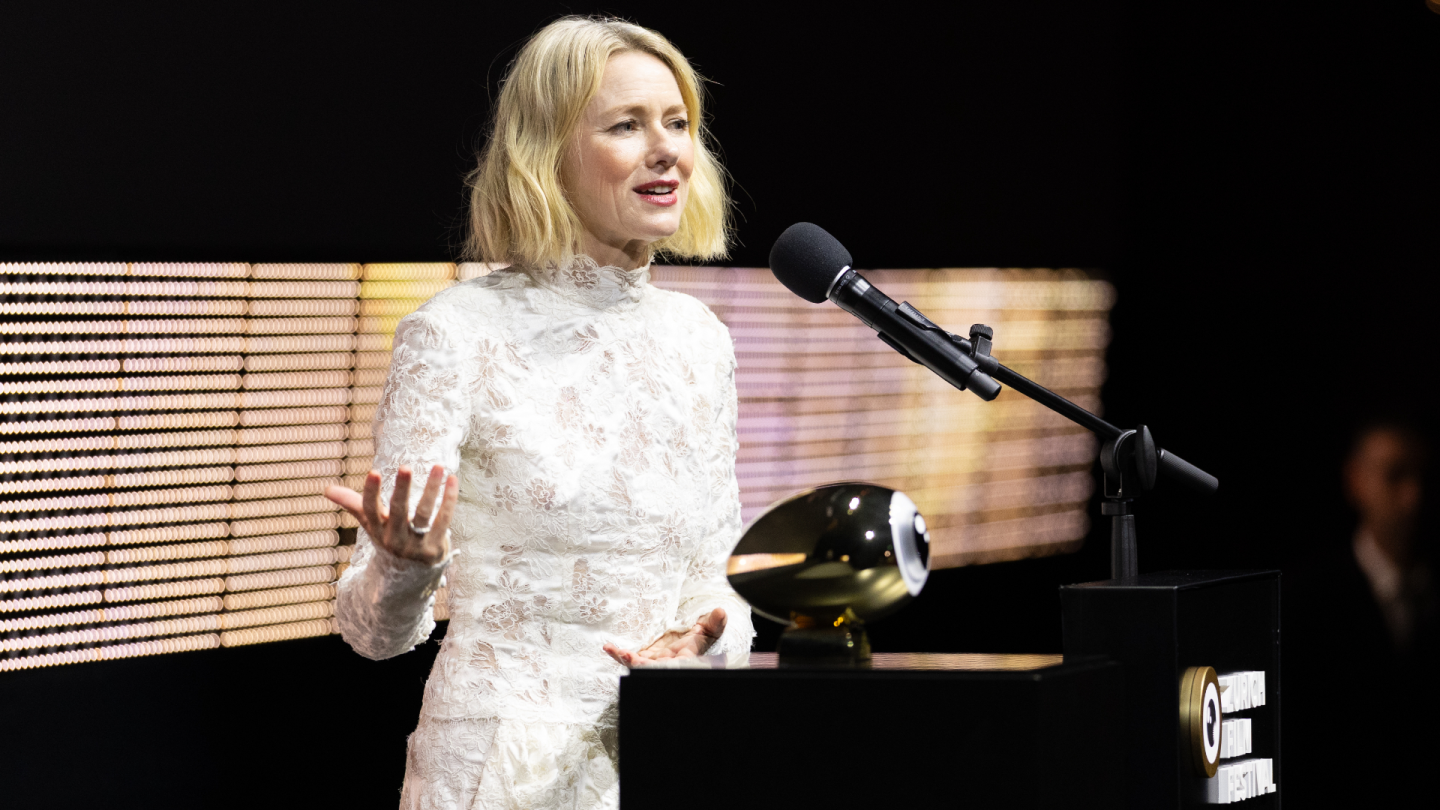
It felt like Naomi Watts covered it all in a Zurich Film Festival masterclass on Sunday afternoon: dreams, drama and, of course, the menopause.
The British star opened up with host Max Loong about struggling for around a decade auditioning in Los Angeles before she would go on to meet David Lynch and star in his career-transforming Mulholland Drive. Watts was speaking the day after a glitzy Zurich ceremony in which she accepted the fest’s prestigious Golden Eye award for her latest feature, The Housewife.
The conversation began with Watts’ childhood and acting aspirations. Her ambitions were made a little more complicated when Watts’ mother moved the family from the U.K. to Australia when she was only a young teenager.
In a bizarre way, meeting the late, great Lynch — whom Watts did an impeccable impression of, pretend cigarette and all — was almost like therapy for the actress, who landed that breakout role at the age of 31. She was worn down by Hollywood’s faux interest in her talent and the fickle nature with which casting directors operated. “[You’d] line up and see 10 or 15 girls, running their lines, looking much better for the part than you do, and it was really a grind,” Watts told the room.
“That 10 years before I met David Lynch, I just became so locked up and I felt worthless,” she continued. “My agent actually pulled me aside because she put together a reel with some of the work I’d done in Australia — little bits of things — and she said, ‘We need to have a heart-to-heart. Come in and talk to me because I don’t understand why you’re not getting these jobs.’”
Watts was told by that agent: “‘Honey, you’re too intense. You’re freaking people out.’ And I was like, ‘Yeah, no shit. I’m desperate. I’m three months behind on my rent. I’m getting evicted! They told me I wasn’t funny last week. I’m trying to be funny now. They told me I wasn’t sexy. I’m trying to be sexy!’” she said, likely validating a lot of women in the room vying for a foot in the door. “You reshape yourself to try and read the tone of what is needed, and it becomes freaky. And I just couldn’t be myself. I was either an extreme version of myself or a diluted version. I was further and further away from myself, and it took a genius like David Lynch to be able to see beyond all of that weirdness that I had built up and undo it and get to the real me.”
At the Cannes Film Festival premiere of the beloved Mulholland Drive, in which Watts plays an aspiring actress who arrives in L.A. and befriends a car crash victim, she remembers sitting in the car with co-star Justin Theroux, about to hit the iconic red carpet, when a sentimental song came on the radio. “The crowds are there waiting, and the song changed to Cat Stevens’ ‘Morning Has Broken,’ and this was the song that had played at my dad’s funeral.”
Watts became teary at this point in the conversation, earning a raucous round of applause from the crowd. Her father, Peter Watts, a road manager and audio engineer who went on the road with Pink Floyd, died of an apparent heroin overdose when she was just seven years old. “It was always a very meaningful song, and I just remember turning to Justin and went, ‘Oh my God, that song!’ […] Thank God I wasn’t alone in that car [and had] Justin because all I could think about was my mascara running down my [face]. He just grabbed my hand and he was like, ‘Come on. Let’s go. Let’s do it.’ I put my head up and off we went onto the red carpet, and it was wonderful. David was obviously very beloved and we just held on tight to each other.”
Mulholland Drive is widely considered one of the greatest films of all time, and made an international superstar out of the bright-eyed and bushy-tailed Watts. It was a modest commercial success, making around $20 million on a $15 million budget.
Towards the end of the masterclass, Watts took a moment to talk about her menopause activism, revealing how her four-year-old menopause and wellness company, Stripes Beauty, came to be. “Menopause has become a huge topic of conversations [and a] passion because I went into it early on in my life and had no clues about what was going on with my body and there was no open conversation,” she said. “Once I talked about it with my partner, who’s now my husband, and he was encouraging of it, I just thought: ‘How about I just own this story? How about I get ahead of it? I’m in on the joke that is not actually a joke, but why should we suffer?’” Watts’ goal was to inject normalcy into menopause, whether it’s through “humor, storytelling, just connectivity, or product solution.”
She lauded her husband of three years, fellow actor Billy Crudup, for being curious about menopause — and implored other men to replicate his openness. “I was hiding in the bathroom trying to scratch off my estrogen patch, and he was like, ‘Is everything okay?’ And I told him what was going on, and I really was so nervous and thinking, ‘Oh God, I bet he’s not going to want to be with me now. He knows I’m in menopause.’”
Crudup’s reaction was quite the opposite. “He was like, ‘Hold on a second. We’re the same age, and that’s great that you’re taking care of yourself. Love science, love medicine. And why are you ashamed? That’s fantastic. Thanks for telling me.’ And so instantly, I felt, ‘Oh my God, this is so sweet and generous and sexy!’ Like, that just felt really intimate. And I felt safer than I’d ever felt,” continued Watts. “And I told him that I wanted to create a company for women who are not clued in, and the company would be about hydration from scalp to vag.”
Watts comes to Zurich promoting The Housewife, directed by Ben Shirinian and co-starring Tye Sheridan, Michael Imperioli and Luke Evans. It is based on a true story and set in 1964 New York. When a young journalist tracks down a potential Nazi officer living secretly in Queens, he befriends the lead suspect’s charming wife. But the investigation soon takes a disturbing turn.
Her fellow Golden Eye recipients include John Turturro and Tom Hiddleston this year. The 22nd Zurich Film Festival runs Sept. 24-Oct. 4.
>

Dozens of Israeli Americans and members of Jewish communities gathered outside the Lincoln Center on Saturday to protest the premiere of NAZA at the New York Film Festival.
The documentary, directed by Yuval Abraham and Rachel Szor, was filmed at night from Tel Aviv rooftops and examines “the systems behind the mass killing of Palestinian civilians” by Israel‘s military operations in Gaza, the filmmakers previously said.
During the protest, demonstrators screened footage from the Oct. 7 attacks on Israel from LED screens mounted on trucks outside the premiere. Nova festival survivors Rom El-Hai and Shalev Biton also spoke to the crowd, sharing their accounts of Oct. 7.
“We’re here not because we’re saying, don’t show the film,” Israeli-American Council (IAC) co-chair Tal Shuster said of NAZA during the rally. “Everyone has the freedom of speech, that’s the United States. We are saying: it’s not all the facts. Show everything else, not just the documentary.”
“We have the trucks here,” Shuster continued. “Let’s each one of us be an ambassador and show people what actually happened. If you screen the film, invite a survivor, let them speak, at a panel. Let them be heard. Don’t just show one side without the facts from the other side. Before you go into the film, or after it, come hear about what happened in Israel on Oct. 7. 1,200 people were murdered. 251 people were kidnapped. Yes, show all the facts.”
The IAC also launched a petition, “calling on cultural institutions, film festivals and movie theaters across the United States to accompany screenings of NAZA with panels, survivor testimony, and background and context materials,” according to a press release.
“We are not here to silence a movie, but we believe people should watch, ask difficult questions, challenge what they see and decide for themselves, but they also deserve to hear the perspectives and facts that this film does not present,” Noa Peri-Jensch, the IAC’s chief communities officer, added during Saturday’s protest.
NAZA, which took home the Special Jury Prize at the Venice Film Festival earlier this month, will start its theatrical release in the U.S. on Oct. 9, followed by a global rollout.
“We made this film out of a sense of obligation to use our position as Israelis to examine the systems behind the mass killing of Palestinian civilians for which our country is responsible,” filmmaker Abraham and Szor previously said of their Israel–Gaza war documentary. “The threats from the Israeli government to revoke our citizenship and the death threats do not change that and will not stop the film. We thank our colleagues for the solidarity and look forward to sharing NAZA all over the world very soon.”
>
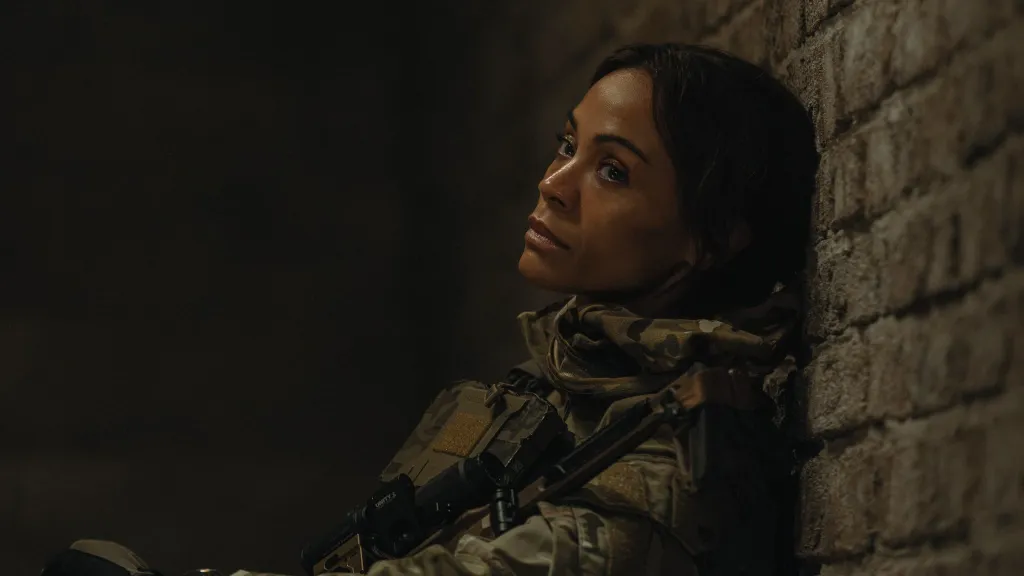
Although Zoe Saldaña speaks highly of collaborating with Taylor Sheridan, don’t expect her to make a trip to Dutton Ranch anytime soon.
The Lioness star recently explained why starring as Joe McNamara “is all that I can handle at this time,” noting she doesn’t have any plans to pop up elsewhere in the Sheridan TV universe after three seasons on the Paramount+ series.
“I’m number one on the call sheet. I am first one in, last one out. I am prepping months before anybody ever is able to prep,” she told People. “So it’s already a lot of work for me.”
Saldaña said she “can’t imagine me taking on more of a Taylor Sheridan world,” adding, “The good takeaway that I’m grateful for is that he knows that I’m reliable, just like Joe is.”
“I have my views, and I come with all heart, all brains, all muscle at all times,” said Saldaña. “So, no, I think I’m good here at Lioness.”
Starring and executive produced by Saldaña and Nicole Kidman, Season 3 of Lioness sees hidden networks, foreign operatives and personal betrayals collide. Joe (Saldaña) walks the line between duty and home as unseen forces circle her world. Patterns appear where they shouldn’t, names vanish and paths rearrange. Guided by Kaitlyn (Kidman) and Westfield (Michael Kelly), Joe confronts enemies operating in the shadows, leaving her to reckon with a war that now reaches into every part of her life.
>


Search For Canadian TV Actor Stewart McLean Now Homicide Investigation


These ’90s fashion trends are making a comeback in 2017
According to Dior Couture, this taboo fashion accessory is back
Model Jocelyn Chew’s Instagram is the best vacation you’ve ever had
Emily Ratajkowski channels back-to-school style
9 Celebrities who have spoken out about being photoshopped


Rurouni Kenshin: Hokkaido Arc Manga Takes 1-Issue Break – News


HIDIVE to Stream English Dubs for The World Is Dancing, The Forsaken Saintess and Her Foodie Roadtrip in Another World, The Dangers in My Heart: The Movie Anime – News