
Chris Hemsworth as Thor in ‘Thor’ (2011) (Paramount Pictures/Courtesy Everett Collection)


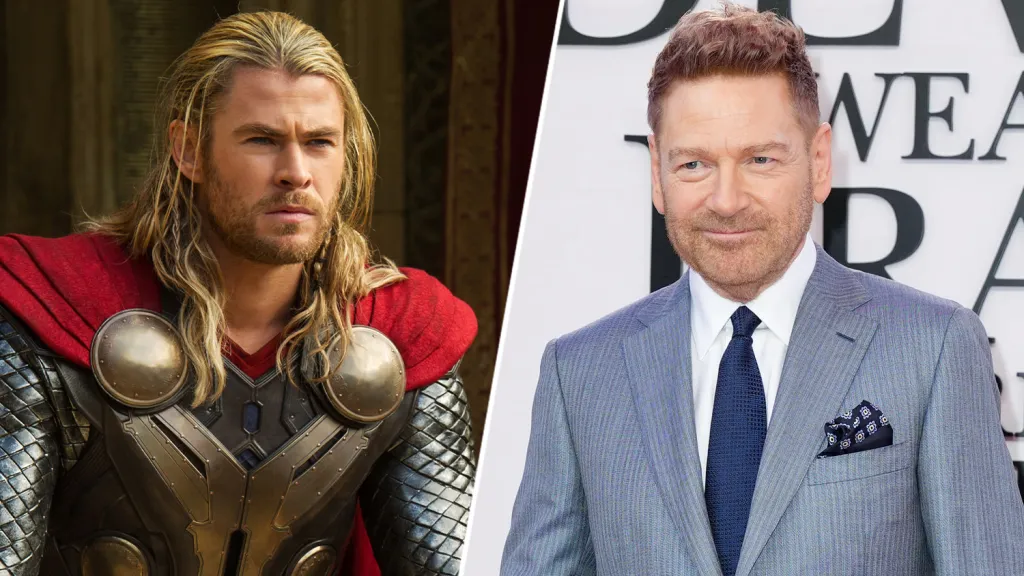
After 15 years, Kenneth Branagh has considered returning to the MCU for another cinematic outing with the Avengers’ favorite Norse god.
The Oscar winner, who directed 2011’s Thor, recently confessed that he “would love to finish my relationship with that character” in a darker sequel that would take the character “into a glorious twilight.”
“I definitely was ready for another, for sure, but not right then,” he told Business Insider. “Marvel shoots are intense. Marvel postproduction is more intense — wildly exciting but super intense. I definitely needed to smell the roses. Kevin Feige was very understanding, and so was the cast. I needed a break.”
Branagh added, “Part of me would love to finish my relationship with that character. I’d always wanted to do more and indeed had a couple of ideas, more in the territory of James Mangold’s brilliant Logan. I would love to see Chris Hemsworth and the others have their own individual final story that takes Thor into a glorious twilight.”
As a fan of the franchise, Branagh thinks it “would be something very beautiful to take those characters into their own particular sunset,” but whether or not he would direct the installment is “a whole other question.”
Chris Hemsworth as Thor in ‘Thor’ (2011) (Paramount Pictures/Courtesy Everett Collection)
“They are so far deep into the future of the Marvel Universe that I’m sure whatever plans they have for it are already kind of set,” said Branagh. “All I know is there’s something beautiful to be had out of arriving at a conclusion for that arc of those stories with those characters and those actors.”
Following Branagh’s work directing the 2011 adaptation of the Marvel comic, Thor: The Dark World (2013) was directed by Alan Taylor. Taika Waititi then directed Thor: Ragnarok (2017) and Thor: Love and Thunder (2022).
>
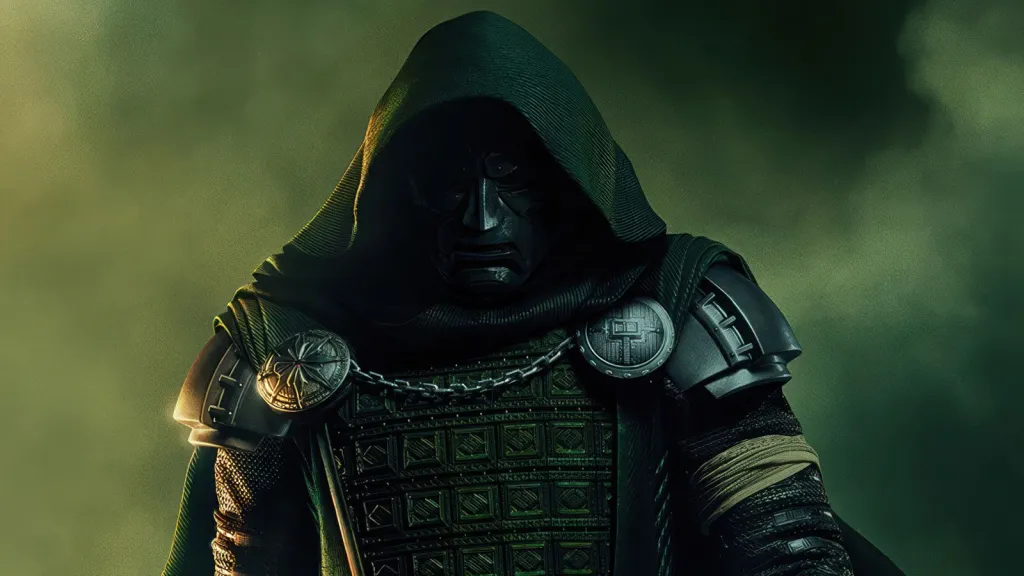
Many questions surround Avengers: Doomsday, and one major one is whether Mark Ruffalo will reprise his role as Bruce Banner.
The actor recently appeared in Spider-Man: Brand New Day as Banner, and the Russo Brothers teased that the Hulk is “certainly involved” in the story around Doctor Doom.
“I think [what] we could say is, [Banner] is certainly involved in the story that revolves around Doom,” Joe Russo told Empire Online. “We will not confirm nor deny his appearance in Doomsday.”
Anthony Russo added, “The farthest we can go is to say, there are characters and actors who have not been announced, who are a part of Doomsday.”
Avengers: Doomsday is set to be released on December 18 as part of Phase 6 of the MCU. The film follows 2019’s Avengers: Endgame, which the Russos also directed.
Avengers: Doomsday will feature different groups of heroes from different universes, including the Avengers, the Wakandans from Black Panther, the Thunderbolts (known as the New Avengers) from Earth-616, the Fantastic Four from Earth-828, and the original X-Men.
RELATED: 15 Movies & Shows To Watch Before ‘Avengers: Doomsday’
In a recent interview, the Russo Brothers said they started filming Avengers: Doomsday without a finished script.
“We’re improvisation-based, rehearsal-based directors,” Joe Russo told AP. “We like to see what the actors bring to the characters, and sometimes you don’t get the actors until a few days or few weeks before you shoot them. And a lot of the time, that’s when the magic happens.”
RELATED: ‘Avengers: Doomsday’ Ticket Pre-Sales Cross $50M Domestically Three Months Out
>
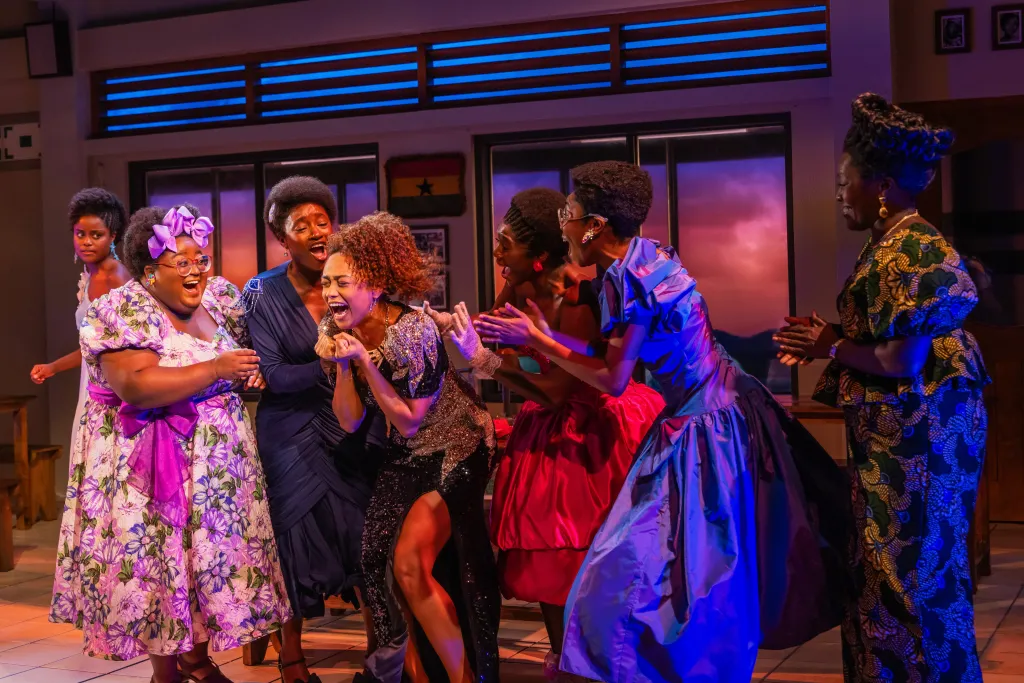
The battle lines are drawn early and definitively in Jocelyn Bioh‘s School Girls; Or, The African Mean Girls Play. The cruelties come fast and cut deep in this Ghana school lunch room where all the unspoken rules of adolescent pick-or-be-picked-upon are as strict as they are in high schools the world over. Or in other plays and TV shows the world over, whether we’re talking Heathers or Carrie or Jawbreaker. And since Stephen King didn’t write this one, we can be pretty sure there won’t blood, but gruesome playground injuries of a more psychic and soul-crushing variety are entirely on the table.
Bioh, perfectly assisted by her sympatico director Whitney White and a no-weak-link cast, has done something quite amazing with this comedy-drama, opening tonight on Broadway at the Samuel J. Friedman Theatre in a first-rate Manhattan Theatre Club production. Bioh takes on the tropes and dramatic conventions of high school claustrophobia, its rebellions and savageries and tendernesses so familiar from ancestors like the franchise that gives this play its subtitle and right up through the newcomer that called John Proctor a villain, that we can only trust a writer of her depth and skills (she wrote Jaja’s African Hair Braiding, after all) to find a new path through the well-trod turf.
And she does. School Girls; Or, The African Mean Girls Play, might well come closest in approach to Kimberly Belflower’s urgent John Proctor Is The Villain in its insistence that homeroom sadism doesn’t just spring from hormones or reindeer game competition. There are larger forces at work, the stuff that hurts people who hurt people, and portraying that hurt (and its goal, escape) with understanding – not to say excuse-making – takes uncommon talent. Belflower showed it, and so does Bioh.
The set up is simple and immediately recognizable. The year is 1986 and the place is a girls boarding school in the Aburi Mountains of Central Ghana. Five of the students – two in their final year, three a year behind – busy themselves with the gossip and whatever else passes for crucial business in the day-to-day, mostly as defined by Paulina (The Gilded Age‘s Denée Benton), the self-anointed queen of the clique by way of her looks, her force of will, her cruel streak and her much admired (if very tenuous) connection to the longed-for America by way of an aunt who lives in New York City and works in a castle there that serves unimaginable culinary delights and who sends Pauline the odd piece of designer clothing that makes her the envy of the school.
We’ll learn that Paulina, far from confident, is so self-conscious of the darkness of her Black skin that she secretly uses toxic bleach products that necessitate frequent trips to the emergency room, that her home life is so impoverished that she unleashes her frustrations on her terrified acolytes. Poor Nana (Erin Morton) gets the worst of the abuse, her large body and constant eating a source of unending bullying from Paulina, who calls her “cow.” Even Paulina’s best friend – a phrase pretty much useless in this milieu – isn’t safe. Ama (Lucia Aremu) pays dearly for the occasional hint of independence, so threatening is free thinking to Paulina.
In the grand tradition of teen movies, the equilibrium of the status quo is disrupted with the arrival of a new student. And Ericka (Jasmine Amy Rogers, all done up in big ’80s hair and a school girl uniform that leaves her unrecognizable from her flapper look in Boop) is not just any new student. She’s lived in America. She has Bobby Brown’s autograph. She has real Calvin Klein fashions, not the Chinatown knock-offs that have fooled Paulina. And she knows White Castle isn’t a white castle – it isn’t even McDonald’s.
Denée Benton and Jasmine Amy Rogers
Matthew Murphy
And she has two other things going for her. She’s kind – the put-upon girls of the Aburi Girls Boarding School take to her like docile puppies to a calming stroke – and she’s naturally light-skinned. No harsh chemicals for her, much to the amazement and envy of her Ghanaian classmates. If the mixed-race Ericka doesn’t quite grasp the significance of her coloring – back home at her all-white school she was, to be sure, Black – the other girls certainly do.
And among the things all the girls seem to sense is that Paulina is no longer the shoo-in for the upcoming Miss Ghana try-outs, a realization driven home when the pageant’s recruiter – a former Aburi student who, 20 years previous, won Miss Ghana 1966 and who retains her own mean girl leanings, especially when in the company of the school’s Headmistress, a classmate from those long ago years. One of Bioh’s most telling bits of stage magic here is showing us just how long-lasting such formative role-playing can be. If the device can seem more than a little schematic in intention, its execution – a few lines of dialogue between the recruiter Eloise (Patina Miller) and the Headmistress (Heather Alicia Simms) – nonetheless conveys both the tenacity and bite of mean girldom. And did I mention School Girls is a comedy? And a very funny one at that?
Patina Miller and Heather Alicia Simms
Matthew Murphy
As School Girls builds to its denouement – that pageant try-out – rest assured that Bioh and director White will not deprive us of bearing witness, and the young actors who play the school girls, some in their Broadway debuts, meet the challenge and then some. As they take turns soloing Whitney Houston’s “The Greatest Love of All” – an inspired choice not only for the technical demands that few of these hopefuls could meet, but for Houston’s haunted ending that they couldn’t possible know – the cast members imbue each character with comic ineptitude that’s as poignant as it is laugh-out-loud funny. Even the cruel Paulina’s misplaced overconfidence and comeuppance merits our charity.
Because comeuppance she gets. When the new girl Ericka takes her turn at the solo, her glorious voice rivals that of Whitney herself (as she proved in the otherwise lackluster Boop, Rogers is a talent to watch and embrace). As the greedy recruiter sees something to exploit, and the proud headmistress hears something finally worthy of pride, and the downtrodden classmates have their ding dong the witch is dead moment, poor Paulina all but crumbles into herself (Benton is a marvel in this scene).
But bullies don’t often go away easy. Her face bleeding from the corrosive bleach, her dreams of escape from poverty dashed, Paulina lashes out with ill-gotten information that will take the talented, seemingly charmed Ericka down with her. In the battle that ensues, no one will go untouched by hard truth and the realization of just how stacked the odds against triumph remain in a system where everything from the shade of one’s skin, the geography of one’s home and the capricious nature of one’s parentage determine so much, and foster all sorts of bad behavior and ruthless survivalism.
The Manhattan Theatre Club has given this excellent play the production it deserves. Costume designer Qween Jean, riding high from her Tony-winning contributions to Cats: The Jellicle Ball, delivers the perfect visuals for this tale – the conformity of school uniforms, the explosion of ’80s prom styles for the pageant auditions, the proud African ethnicity of the Headmistress’ attire and the arriviste Americanism of the made-good recruiter – while Teresa L. Williams’ cleverly efficient school cafeteria set, with its large glass windows offering quick hallway peeks at characters in their privacy – gives these school girls ample room for all their towering ambitions and their outsized insecurities.
Not enough praise can be heaped upon the excellent cast (in addition to those mentioned above, there’s the terrific Nia Otchere-Sarfo and Jordan Rice rounding out the clique). Every one of the school girls is perfectly delineated (kudos to the casting team for an exactingly chosen group), with each actor finding the humor, the humanity and, when necessary, the acidity of characters doing their best in a hothouse not of their making. Or not entirely of their making, anyway. Even the most dehumanizing of systems, from high schools to pageants to poverty and racism, require some human complicity in the building and, if we’re lucky, the undoing. The School Girls; Or, The African Mean Girls Play all but hands us an instruction manual.
Title: School Girls; Or, The African Mean Girls Play
Venue: Broadway’s Samuel J. Friedman Theatre
Written By: Jocelyn Bioh
Directed By: Whitney White
Cast: Lucia Aremu, Denée Benton, Patina Miller, Erin Morton, Nia Otchere-Sarfo, Jordan Rice, Jasmine Amy Rogers, Heather Alicia Simms
Running Time: 1 hr 25 min (no intermission)
>
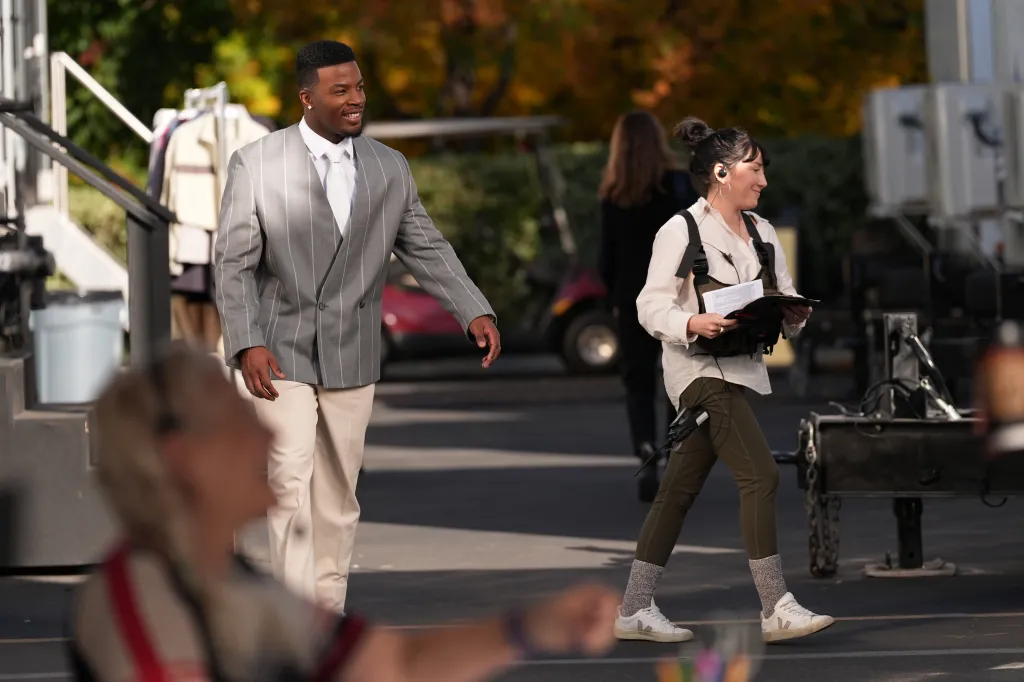
SPOILER ALERT! This post contains details from the series finale of The CW‘s All American.
That’s a wrap on All American.
The drama series, produced by Warner Bros. Television, ended its eight-season run on the CW on Monday with an emotional, moving episode directed by none other than Spencer James himself, Daniel Ezra. The rest of the Vortex had been trying to track Spencer down for the last few episodes, after Olivia (Samantha Logan) went into preterm labor with their twins. They’d thought he was tied up with a promotional photo shoot, but little did they know that Spencer was so hard to reach because he was fighting to bring his family back to Los Angeles.
He’s in a conference room urging his team’s general manager to allow his trade from New York to LA when he gets the news that his children are on the way. And, as Spencer James usually does, he finds a way. He not only makes it just in time to be there for the birth of the twins, but he also manages to persuade his team to let him go. With Jordan (Michael Evans Behling) realizing his purpose at South Crenshaw and Cassius (Osy Ikhile) sticking around Beverly, it looks like the whole family is finally back together again.
Fast forward six years, and Coop (Bre-Z) is getting sworn in as an attorney. Amina (Alexis Chikaeze) has just successfully run a political campaign to get her dad Preach (Kareem J. Grimes) elected as a local representative. Layla (Greta Onieogou) and Jordan have a daughter of their own, and the entire crew is about to go watch Spencer play in what we come to learn is his final Super Bowl before retiring — and he’ll share the field with KJ, whose made it to the NFL as well. Coming to Olivia’s aid set Khalil on a different path, and he’s now in medical school, and Tori (Lauryn Hardy) is an assistant coach for the Lakers’ dancers.
After eight years of fighting for their dreams, the series finale of All American gives the space for these characters to finally, fully realize them.
In the interview below, Ezra spoke with Deadline about directing the final episode of a series that he credits with completely changing his life and taking Spencer James with him wherever he goes next.
DEADLINE: The finale is extremely emotional. It really made me cry.
DANIEL EZRA: It was a strange experience. It was an amazing experience, but it was a strange, because I left in Season 6, and then I came back a few times. I don’t know. In my head, when I left, it was always still there. But this was the first time where we were all saying goodbye. So yeah, very emotional.
DEADLINE: I remember when you first started directing on All American, and NK really worked to find an episode that Spencer didn’t need to be in very much so you could pull it off. I know the 100th was very Spencer-heavy, but this was too. How do you feel like you grew as a director to juggle that?
EZRA: It was one of his biggest episodes, and I’m glad that this came later. The first couple episodes I directed, we were a little more successful in finding episodes that I was at least less in. NK was very realistic. She said, ‘There’s probably never going to be an episode that you’re not in, or not at least a significant part, but we can definitely find one that’s less.’ I think the first two were that. Our 100th episode wasn’t that, and we just kind of had to accept that. But this one always made sense. The way NK pitched it to me, she actually gave me a choice, and that was the only episode I felt like I wanted to do. I felt like that’s the one that felt right to do, and so I’m glad it came later. By that point, I had directed a chunk of episodes. I directed my own short film. I had had a bit more experience, and so I felt a lot more secure in myself and more confident, I think, in what I was able to do and the speed that you wish to work at, and all those things that I felt a bit more at ease with the demands of it.
DEADLINE: You spent so many years playing this character working toward a dream, and even in the Season 6 finale the dream is only just being realized. How was it to get those flash forwards at the end of the finale to actually get to live in the version of this character that had truly accomplished everything he dreamed of?
EZRA: It was weird. That scene, you’re talking about the one with me and Mike, right?
DEADLINE: That, and before that when he is talking to Nate about retiring. The twins growing up. Everything.
EZRA: I was so grateful that, even though I had stepped away, I still got a chance to come back and film those scenes. This scene with Mike — I remember in the read through, we couldn’t get through it, me and Mike couldn’t. We were just crying in the read through. We couldn’t get through it. When we got to set and to film it, we almost had to allow extra time, because we knew it was going to be tough for me and Mike. Just the way it was written, the things we were saying, and things we were talking about, it was Spencer and Jordan talking to each other and also a bit of Mike and Daniel talking to each other as well.
As an actor, I was just super grateful that we did get that moment, because we didn’t get that before I left. It was just real serendipitous of NK to write a moment like that in, because you could have ended before that. There was there was about three points in that episode where you could have ended, and it would have been great. You could have ended after he ran off into the tunnel. That was a beautiful ending. Before that, with the babies being born. There’s a couple almost false endings in the episode that all could have worked, but that one just felt like that made it perfect. I thought when I was leaving Season 6, my story was complete. I didn’t realize it wasn’t until we got to those scenes.
DEADLINE: You also had most of the original cast on screen again, plus the new cast. That scene in the hospital room, it’s pretty packed. How did you handle that?
EZRA: My job was to not think about it being a finale in any way, because once you get into that, everyone’s going to get emotional. Everyone’s going to start reminiscing. Everyone’s going to start talking and crying. As much as you want to allow for that, you can’t really allow for that during filming. Me and out AD Steve, we had to be very deliberately kind of, not mean, but a bit like ‘We don’t have time for that.’ You know what I mean?
That’s all gonna come. We knew there was gonna be a party. We knew there was gonna be a big moment of celebration at the end. We knew all of that was coming, but there’s just no space for that when you’re filming, because you still have to get these scenes. We’ve been doing this is eight years, so they know how these things work. They know we never have enough time, and so you keep moving.
DEADLINE: So, when you do think it really hit you that this was the end?
EZRA: I was the one that got to say ‘That’s a wrap on All American.’ We finished with just a perfect scene. It was actually one of the last scenes, where everyone’s going off to see Spencer play his last game, and so I wasn’t in that scene. I had already changed, and I had shot my last scene as Spencer, but I deliberately didn’t have any fanfare for my last scene. We just kind of did it and moved on, and then it was it was Mike, Sam, Osy, and Angel in the last scene, but everyone stayed. All the actors stayed. A bunch of the cast that wasn’t even working that day had showed up, and you could start to slowly feel everyone kind of gathering and waiting for it. So I knew I was like, ‘Okay, I’m gonna have to say something.’ And then it finished. I checked in with NK. I said, ‘Are you happy? I’m happy.’ And she said she was already gone. She just kind of nodded through tears. And I said to Steve, ‘So let’s have everyone come in.’ Just seeing that room so full of people that didn’t have to be there, that all chose to be there…we packed out the Baker house. I wrapped Osy. I wrapped Angel. I wrapped Sam and Mike. I wrapped NK and Jamie as showrunners, and it just got harder and harder and harder.
Then, I finally said, ‘That’s a wrap on All American.’ I think that’s the moment where it was. I remember after that, it took forever to get everyone off to set. No one wanted to leave. Everyone was hugging and crying, and then it was probably an hour before we emptied that stage. It was very funny, because no one just wanted to leave. I think NK was the last one to leave, which felt right. She wanted a moment to herself. So probably that moment when it was time to wrap everyone and say ‘This is a wrap,’ which was a real honor for me to get to do.
DEADLINE: My very last question for you: How are you going to carry Spencer and this experience with you throughout the rest of your career?
EZRA: Spencer, he will always, always, always be with me. There’s some characters that, you know, it’s it’s a time. This is a job. At the end of the day, there’s some characters that you enjoy for a moment, and then you kind of move on. There’s a handful of characters that I think will stay with you forever. Maybe less than a handful. Maybe two or three. But Spencer’s definitely at the apex of that pyramid. I’m such a different person from when I started this to now. Every single aspect of my life has changed, and I like to think that playing him fed into that in a really, really big and profound way. It was a real honor. It changed my life in every way. I think the idea of showing up for your people, the idea of showing up the people you love and the people you care about, chasing dreams, all those things — I think he really hammered home a lot of those lessons, and he was just so fun. He’s just such a fun, real, multi-dimensional character to play. So yeah, he’ll be with me forever.
>


Search For Canadian TV Actor Stewart McLean Now Homicide Investigation


These ’90s fashion trends are making a comeback in 2017
According to Dior Couture, this taboo fashion accessory is back
Model Jocelyn Chew’s Instagram is the best vacation you’ve ever had
Emily Ratajkowski channels back-to-school style
9 Celebrities who have spoken out about being photoshopped


Rurouni Kenshin: Hokkaido Arc Manga Takes 1-Issue Break – News


HIDIVE to Stream English Dubs for The World Is Dancing, The Forsaken Saintess and Her Foodie Roadtrip in Another World, The Dangers in My Heart: The Movie Anime – News