
Anime
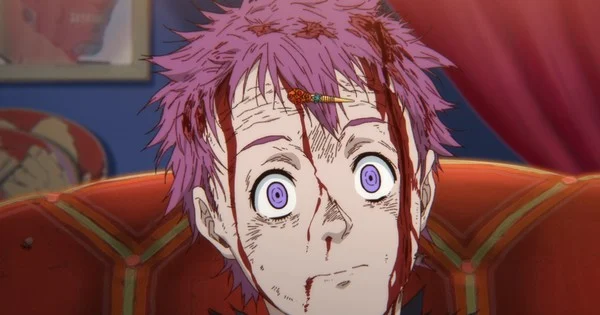
Episode 7 – Dorohedoro Season 2


©2026 Q-HAYASHIDA・Shogakukan/Dorohedoro Season2 Project
En is just a dude. Caiman is just a dude. Noi is just a dude. Everyone in Dorohedoro is just a dude. By that, I mean the series constantly reminds us that these characters are basically normal people: flawed, vulnerable, squishy piles of meat and bone that have inherited all of our primordial ancestors’ needs and fears. En gets his hair cut like everyone else. Dokuga and the other Cross-Eyes know the drudgery and demeaning nature of the gig economy. That’s why there’s also such an emphasis on their bonds of friendship and found family. When the world is tough, we rely on others to carry us, knowing we will return the favor when the situation is reversed. It’s an ideal, but it’s one that the dysfunctional relationships of Dorohedoro adhere to more often than not.
En, however, is a more solitary figure. While he has his own close-knit “family” in the mafia sense, En lacks a partner who shares the kind of camaraderie we see between Shin and Noi, or between Caiman and Nikaido. His relationships are either superficial or imbalanced. He rejects Chota’s affections. Kikurage is more of a pet than a true companion. And he forces his contract onto Nikaido, which she practically kills herself to suppress. En is powerful, but En is alone, because En is scared. He obsesses over his near-defeat at the hands of the Cross-Eyes’ boss, whose specter haunts him and informs his every decision. En’s overwhelming fear keeps his old foe alive long before he seemingly runs into him again. This feeds further into the delicious irony behind En’s death. He begins the episode, casually dismissing Fujita’s concerns about Ebisu’s demise. He ends the episode terrified and in pieces.
Still, we feel for En’s death because Dorohedoro doesn’t like to pick sides. While En may not be the most sympathetic character, he is the lovably haughty sort. Plus, look at how cute those mushroom pajamas are. We also observe that the inequalities baked into the sorcerers’ world are ingrained and systemic, so we can’t lay them all at En’s feet. Shaitan’s monopoly on healing magic, while certainly known to and endorsed by En, exists independently of the mushroom mogul. It’s just plain old corporate greed transposed into the precise circumstances of Dorohedoro. At least En has a fun(gal) aesthetic.
The nature of identity snakes and pulses like an artery through the entire narrative. The sorcerers don masks to disguise their identities, and this aspect alone is full of complications. Through Ebisu, we see how different masks can dictate how a person perceives or is perceived. Shin refuses to wear his own mask correctly, conforming and rebelling in the same act. And when they become Devils, the sorcerers adopt a new visage entirely, although Asu’s case demonstrates that even this is not a permanent change. Dorohedoro also shows how the same face can contain different identities. Is the current brain-damaged Ebisu the same as the old brain-damaged Ebisu, and are either of them the same as the “normal” Ebisu? The Risu found in Caiman’s mouth is not the same Risu who was revived, but one that nevertheless leads to the discovery of the other.
And of course, nowhere is identity more fraught than in Caiman’s situation. Dorohedoro has been a long and winding tale of one lizard man’s search for who he is and who made him that way. Many misadventures and mutilations later, we still don’t have a clear picture. Caiman, Aikawa, and the Cross-Eyes’ boss each bear degrees of resemblance to each other, but their true relationship remains shrouded in mystery. Granted, I know the answer, and you, too, can learn it soon enough if you choose to read ahead in the manga. However, I think the thematic implications are most interesting. The same face can share a tender and agonizingly romantic moment with Nikaido in one scene, and it can weave a nightmare in En’s mansion in the next. Are these different facets of the same person, or are they different people entirely? And more importantly, how do we distinguish that, either literally or figuratively? These are questions I like to think about in between all the viscera.
As far as viscera is concerned, Dorohedoro treats us with oodles of corpse slapstick this week. If you weren’t howling at Fujita’s antics with Ebisu and Kikurage, then we have very different senses of humor. The crux of this scene is that Kikurage finally revives Ebisu. There are several ways the plot could have gotten to that point. Q Hayashida‘s genius is that she knows a good opportunity for a farce when she sees one, and anybody who knows the pain of “working” with a cat is going to relate. The anime also continues to understand the assignment. All of the details devoted to the wrinkles of Ebisu’s exposed brain, the flies buzzing around her, and the ornate hallways of En’s mansion add to the absurdity of the chase. It’s a standout adaptation of a standout chapter.
Unfortunately, at the time of writing this review, the localization drops the ball big time. If you watched the original dub, then you missed out on about half of Kikurage’s “dialogue,” which the show displays in Japanese on the bottom half of the screen. This is integral text, but we don’t see it if another character happens to be speaking at the same time. This is likely a result of the show’s simultaneous broadcast to Netflix, whose rudimentary video player has been the bane of proper anime subtitling since the service’s inception. The licensor probably provides the same set of subtitles to both services, so these subtitles are tailored to the more basic capabilities of Netflix. Ultimately, though, the fault lies with Crunchyroll for publishing a substandard product. This is inexcusable. If you want to, you can switch to the English dub for this scene, and that subtitle track will reveal all of Kikurage’s thoughts. However, this means that hearing-impaired viewers have no way to experience this episode properly. Crunchyroll needs to do better. We all deserve better. And so does Dorohedoro.
Rating:
Dorohedoro is currently streaming on
Crunchyroll and Netflilx.
Sylvia is on Bluesky for all of your posting needs. She loves Hole. You can also catch her chatting about trash and treasure alike on This Week in Anime.
The views and opinions expressed in this article are solely those of the author(s) and do not necessarily represent the views of Anime News Network, its employees, owners, or sponsors.
>
Side story debuted in January

© Akaza Samamiya, Kadokawa
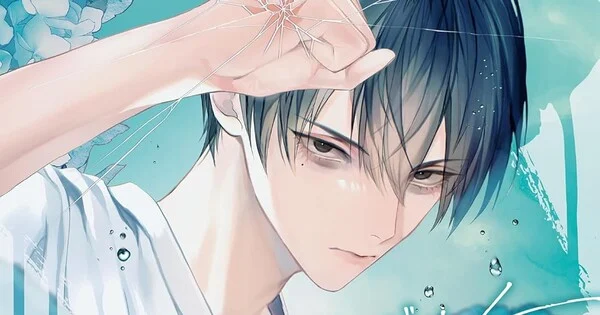
Akaza Samamiya announced on X (formerly Twitter) on Saturday the Mr. Mallow Blue: After The Rain side story to the Mr. Mallow Blue manga will end in the next chapter.
The original series focuses on the meetings of various social outcasts, including a fragile girl, a shut-in, and a handsome man who wears a cold expression as a mask.
Samamiya launched the side story in the March issue of Kadokawa‘s Asuka magazine, which shipped in January.
Samamiya launched the main manga in Kadokawa‘s Asuka magazine in November 2019, and ended the series with the the sixth and final compiled book volume on December 24.
Samamiya launched the Ballad x Opera manga in Asuka in May 2017, and ended it in September 2019. Kadokawa published the manga’s fifth and final volume in November 2019.
Samamiya serialized the Bloody Mary manga series in Asuka from November 2013 until February 2017. Kadokawa published 10 volumes for the manga, and Viz Media published all 10 volumes in English.
Source: Akaza Samamiya‘s X/Twitter account
Disclosure: Kadokawa World Entertainment (KWE), a wholly owned subsidiary of Kadokawa Corporation, is the majority owner of Anime News Network, LLC. One or more of the companies mentioned in this article are part of the Kadokawa Group of Companies.
>
Side story debuted in January
© Akaza Samamiya, Kadokawa
Akaza Samamiya announced on X (formerly Twitter) on Saturday the Mr. Mallow Blue: After The Rain side story to the Mr. Mallow Blue manga will end in the next chapter.
The original series focuses on the meetings of various social outcasts, including a fragile girl, a shut-in, and a handsome man who wears a cold expression as a mask.
Samamiya launched the side story in the March issue of Kadokawa‘s Asuka magazine, which shipped in January.
Samamiya launched the main manga in Kadokawa‘s Asuka magazine in November 2019, and ended the series with the the sixth and final compiled book volume on December 24.
Samamiya launched the Ballad x Opera manga in Asuka in May 2017, and ended it in September 2019. Kadokawa published the manga’s fifth and final volume in November 2019.
Samamiya serialized the Bloody Mary manga series in Asuka from November 2013 until February 2017. Kadokawa published 10 volumes for the manga, and Viz Media published all 10 volumes in English.
Source: Akaza Samamiya‘s X/Twitter account
Disclosure: Kadokawa World Entertainment (KWE), a wholly owned subsidiary of Kadokawa Corporation, is the majority owner of Anime News Network, LLC. One or more of the companies mentioned in this article are part of the Kadokawa Group of Companies.
>
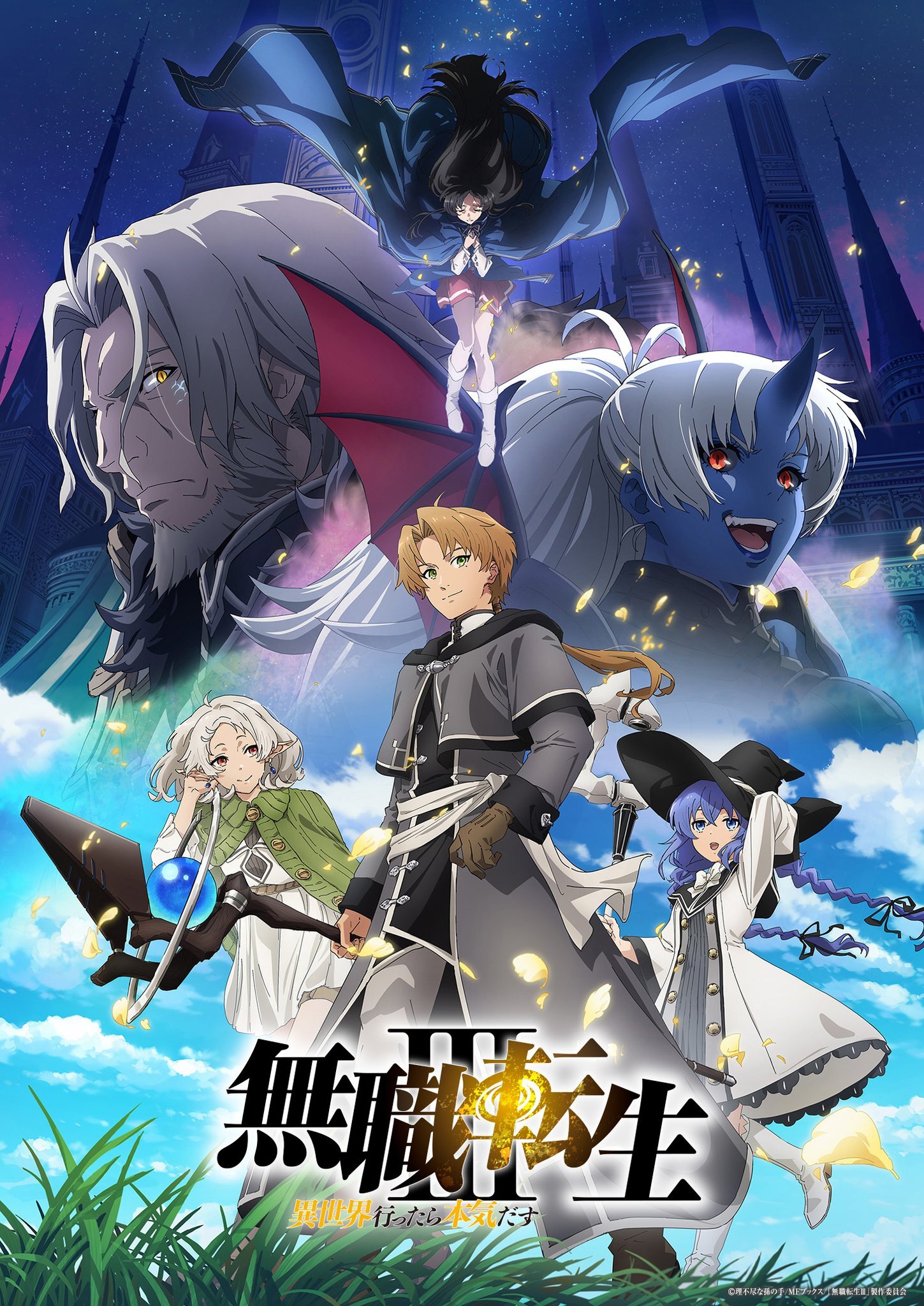
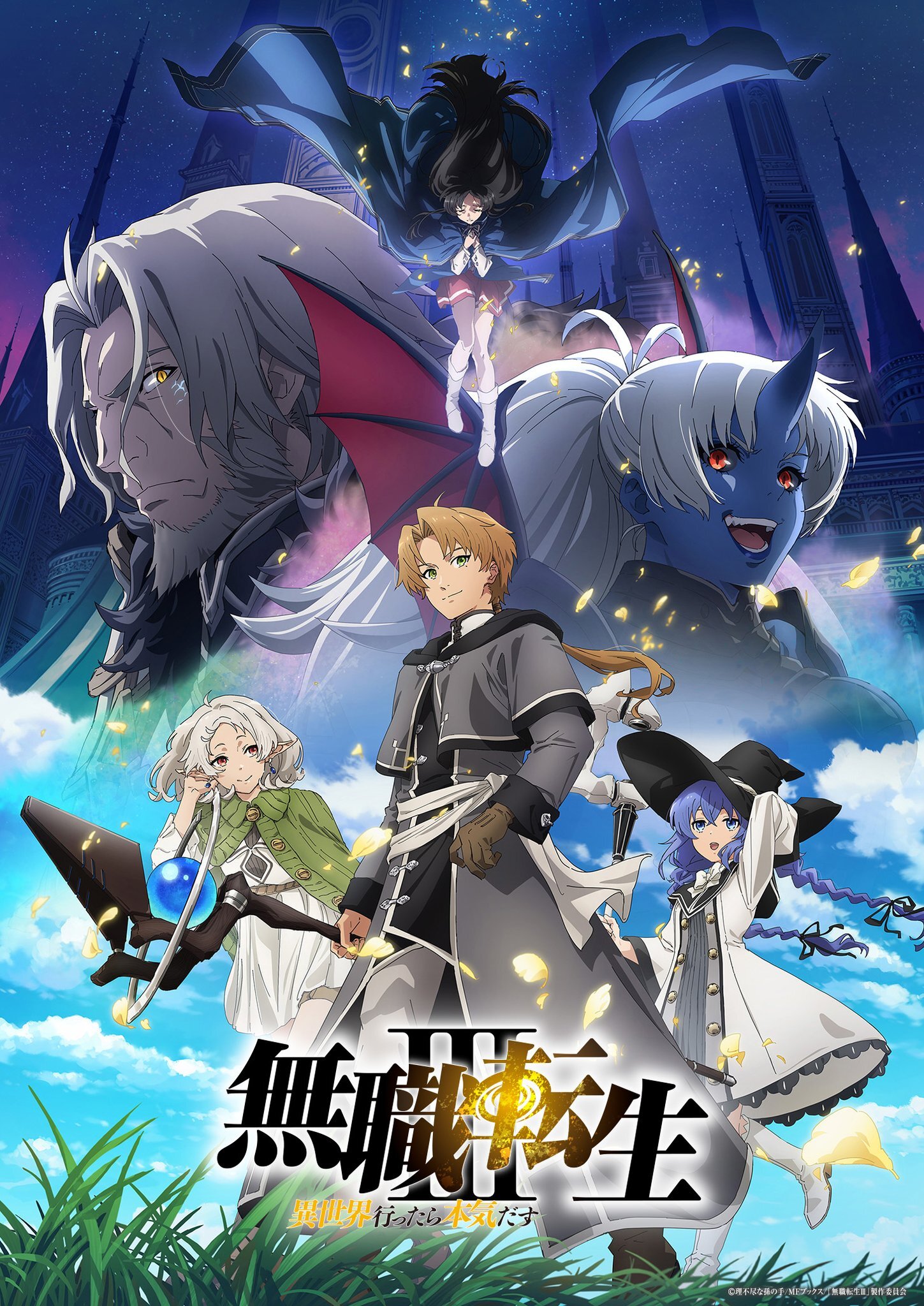 The 14th and final episode of Mushoku Tensei III: Isekai Ittara Honki Dasu (Mushoku Tensei: Jobless Reincarnation Season 3) television anime announced on Sunday that its second part is scheduled for 2027.
Produced by Studio Bind, the 23-episode first season aired in split cours in Winter 2021 and Fall 2021. The 24-episode second season premiered in two parts, with the first part in Summer 2023 and the second part in Spring 2024. The first part of season 3 aired in 14-episodes in Summer 2026. Funimation and Crunchyroll simulcast the anime series with English subtitles, respectively.
Mushoku Tensei adapts Rifujin na Magonote‘s adventure fantasy light novel, which he penned on the Shousetsuka ni Narou website between November 2012 and April 2015. Kadokawa began printing the novel with illustrations by Sirotaka under its MF Books label in January 2014 and shipped the 26th volume in November 2022.
Yuka Fujikawa began serializing a manga adaptation in Comic Flapper magazine in May 2014. Kadokawa published the 25th volume on September 18.
Seven Seas Entertainment licensed both the light novel and manga in English and published the 26th light novel volume on March 12. The 23rd manga volume went on sale on March 5, with the 24th volume scheduled for a March 2027 release.
Announcement
Source: Dengeki Online
>

Tyson Fury vs Anthony Joshua press conference not ‘confirmed’ says AJ promoter Eddie Hearn | ‘Wouldn’t be one without us’ | Boxing News

Thomas races ahead as USA look to avoid huge Presidents Cup upset LIVE!

Chelsea Women 1 – 0 Arsenal Women
-

 movies4 months ago
Search For Canadian TV Actor Stewart McLean Now Homicide Investigation
-

 Fashion9 years ago
These ’90s fashion trends are making a comeback in 2017
-
Fashion9 years ago
According to Dior Couture, this taboo fashion accessory is back
-
Fashion9 years ago
Model Jocelyn Chew’s Instagram is the best vacation you’ve ever had
-
Fashion9 years ago
Emily Ratajkowski channels back-to-school style
-
Fashion9 years ago
9 Celebrities who have spoken out about being photoshopped
-

 Anime4 months ago
Rurouni Kenshin: Hokkaido Arc Manga Takes 1-Issue Break – News
-

 Anime3 months ago
HIDIVE to Stream English Dubs for The World Is Dancing, The Forsaken Saintess and Her Foodie Roadtrip in Another World, The Dangers in My Heart: The Movie Anime – News