
Tech
IEEE Smart Village Is Helping Electrify Rural Cameroon


More than 30 years ago, in the mountain village of Mbem in northwest Cameroon, the moon and stars in the night sky were the only light young Jude Numfor knew after the sunset. Electricity had not yet reached his rural community.
“There was one person in the village with a petrol generator and a small television,” Numfor says. “When he turned it on, all the children would run to his house and peep through the window.”
That memory became the spark for Numfor’s mission: to bring electricity to rural communities like his hometown. To accomplish his goal, in 2006 he cofounded Wireless Light and Power, since renamed Renewable Energy Innovators Cameroon, and he serves as its CEO.
REI Cameroon designs, installs, and maintains solar minigrids for rural electrification. The minigrids use photovoltaic technology and battery-energy storage systems to generate electricity at 50 hertz. The electricity is distributed through smart meters.
In 2017 the company received a grant from IEEE Smart Village to fund the expansion of REI’s minigrid operations and refine its business model. Smart Village supports projects and organizations bringing electricity and educational and employment opportunities to remote communities worldwide. The program is supported by IEEE societies and donations to the IEEE Foundation.
The partnership has led to a collaboration developing open source metering, a free, community-driven way of tracking energy usage. Unlike proprietary utility meters, the system allows users, researchers, and utilities to view, customize, and verify how data is collected, ensuring transparency in billing, consumption tracking, and grid management.
Smart Village’s support has been pivotal, Numfor says: “It’s not just about money. We share ideas, we get advice, and we have made friends. Entrepreneurship is lonely, but with the [Smart Village] community, it is different.”
From teenage tinkerer to entrepreneur
Numfor’s first experience of life with electricity was in 2001, after moving in with a missionary family in the small village of Allat. They used solar panels to power their whole home—an unimaginable luxury in Mbem. “I could watch TV, eat ice cream, and turn on lights,” he says. “It made me wish my brothers in Mbem had the same opportunity.”
Numfor’s curiosity about electricity was ignited when a motion-sensor solar light in the family’s home stopped working. He tinkered with the device to find out why. “My missionary family told me to play with it like a toy,” he says, laughingly. “I replaced the dead battery with a motorcycle battery and was able to bring the power back for the night.”
 Jude Numfor [right] testing a rechargeable solar lantern, which aimed to replace hazardous kerosene lamps—known locally as “bush lamps.”REI Cameroon
His missionary parents encouraged Numfor to study technology and engineering on his own, as none of the country’s universities offered solar energy educational programs at the time. They built him a library and stocked it with books on engineering, management, and entrepreneurship.
In 2006, armed with his new knowledge, Numfor launched Wireless Light and Power with a friend, Ludwig Teichgraber. The nonprofit aimed to replace hazardous kerosene lamps—known locally as “bush lamps”—with rechargeable solar lanterns.
These solar lanterns—called “light packs”—were built locally by Numfor and a team of 11 young Cameroonians using PVC pipes, nickel-metal hydride batteries, and LED bulbs. Families rented the lamps for a small fee, swapping discharged lamps for fully charged ones at solar-powered charging kiosks when they ran out of power. The kiosks then recharged the depleted lamps, making them available for the next swap. “The solar lantern was safer and cleaner, plus it gave children a chance to read at night,” Numfor explains. “People loved them.”
Between 2006 and 2010, his team replicated the model across several villages. But when the global financial crisis hit in 2008, donor support dwindled, forcing the organization to evolve. “We pivoted from being an NGO to a commercial venture,” he says. “That’s how REI was born.”
Building solar minigrids to serve community needs
The new company’s goal was to move away from the lanterns and toward full electrification of communities. Villagers’ aspirations changed, Numfor says, as they now wanted to power their TVs, music systems, and mobile phones. In response, in 2010, REI developed one of the first solar minigrids in West Africa. Using locally procured components, the prototype supplied steady power to six households. The minigrid system used 12 123-watt solar photovoltaic panels manufactured by Sharp, 16 12-volt 100 ampere-hour automatic gain control lead acid batteries, and a Xantrex charge controller and inverter. Locally sourced wooden light poles were erected to distribute electricity throughout the village. REI charged each household a fee for the electricity.
“It was a product-market-fit moment,” Numfor says. “People immediately asked, ‘When can we get this, too?’” The word-of-mouth, grassroots growth caught the attention of global partners. Numfor connected with Smart Village and in 2017, REI Cameroon received its first seed grant from the program.
With that funding, Numfor was able to grow organically and attract additional grants, including one from the U.S. Trade Development Agency (USTDA), in partnership with the U.S. Department of Energy’s National Renewable Energy Laboratory. REI has since expanded to six villages, providing power to more than 1,000 households and businesses. With a dedicated team of 16 people, the company operates in multiple regions of the country, each with unique terrain, languages, and cultural dynamics.
“It wasn’t easy,” he acknowledges. “I’m not an academic person—I had to learn everything by doing. [Smart Village] helped me structure the project and grow as an entrepreneur.”
Today, Numfor pays it forward by sharing his Smart Village experience and mentoring new entrepreneurs.
Launching a coalition for smart metering
Minigrids can’t operate efficiently without clarifying operating rules to ensure quality service requirements and consumer protection, while also enabling reliable and effective monitoring of the system, Numfor says. “We need to know how power is being used, detect problems early, and manage the minigrid from a distance,” he explains.
Existing commercial smart-meter providers offer limited and proprietary solutions. One major provider left the market, making their technology infrastructure obsolete. “It’s risky for an entire sector to depend on a few companies for such a critical technology,” Numfor says.
In 2025, with the help of the Smart Village technical community, Numfor convened a consortium of open-source power advocates, including the Africa Mini-Grid Developers Association, EnAccess, Energy IOT, and NESL. The goal was to develop an open smart metering system that is accessible, transparent, and sustainable for all energy providers.
“These organizations are collaborating as Open Advanced Metering Infrastructure [OpenAMI], which is about giving control back to the people who deliver the energy,” he says.
Scaling for impact
Numfor’s passion has grown from bringing light to local rural communities to bringing light to his entire country. Just 54 percent of Cameroon’s citizens have access to electricity, according to the International Energy Agency. For Numfor, the challenge is not just technological—it’s social and economic as well. “Electricity is the most important enabler of education and economic growth today,” he says. “When you have power, you unlock everything else.”
“Electricity changed my life. Now I want to make sure every child can grow up with that same light.” —Jude Numfor
Across the villages where REI has installed sustainable electricity solutions, small businesses are flourishing. Barbershops hum with community chatter, food vendors can preserve perishables, and entrepreneurs run companies such as phone-charging stations and small mills. “Some villages even have laundromats now,” Numfor says proudly. “Electricity creates jobs and changes mindsets.”
Still, it has been a bumpy journey. It wasn’t until 2025 that REI obtained its official authorization (license) from Cameroon’s government to produce and distribute electricity in off-grid areas using solar minigrids. This was a major milestone because REI is one of the first private enterprises in the country to receive such authorization. “We were stuck between pilot projects and growth,” he explains. “Our projects were successful, and there was community demand for more, but to grow, we needed investors who require legal guarantees before committing funds. Now we can scale up and attract investors.”
REI plans to expand its reach dramatically, beginning with 134 new villages identified through a feasibility study supported by the USTDA. Their long-term goal is to electrify 760 villages across Cameroon by 2031.
While authorization opens doors, financing remains one of REI’s biggest challenges. “The minigrid space doesn’t attract venture capitalists easily,” Numfor notes. “Our return on investment is under 15 percent, so it’s not a typical tech startup model. The real return here is the impact” on the community.
He hopes to attract investors who understand that access to electricity drives education, health care, and entrepreneurship. “There are people out there who want to make meaningful change,” he says. “We just need to connect with them. When you electrify a village, you never know who the next innovator will be. Maybe it’s another kid like me, looking through a window, dreaming.”
Finding skilled staff is another challenge, Numfor says. To address this, REI developed an intensive recruitment and training process. “It used to take years to find the right people,” he says. “Now, we can identify who fits our company culture within six months.” Numfor’s wife, Angela Taliklong, who joined the venture in 2010, now oversees administration and human resources.
A brighter Cameroon and beyond
Numfor offers simple words of advice to other impact-driven entrepreneurs: Keep moving.
“One of my mistakes early on was trying to be perfect,” he says. “I was spending time improving prototypes instead of increasing the number of our project installations and scaling how many communities we could electrify. You must keep momentum. Don’t wait until everything is perfect before you move forward.”
That mindset, rooted in resilience and experimentation, has defined his journey. Rajan Kapur, president of Smart Village, says Numfor is a “shining example” of the program’s vision: “scalable and enduring impact through local entrepreneurs, local procurement, and community engagement based on the use of IEEE technology in underserved communities.”
With the ongoing Smart Village partnership, Numfor is determined to bring light and opportunity to every corner of Cameroon, and beyond. He already has launched REI Nigeria.
“Electricity changed my life,” he says. “Now I want to make sure every child can grow up with that same light.”
From Your Site Articles
Related Articles Around the Web
>
Tech
Anthropic’s prospectus details losses, growth, and, yes, a warning that its AI could end humanity

Anthropic devoted nearly a third of its hotly anticipated IPO prospectus to risk factors, according to the Financial Times, which says it has reviewed the filing in recent days. The filing details specific, worrisome behaviors that Anthropic says its models have already shown or could show, including attempts to “resist shutdown,” to “conceal or manipulate information,” and behavior “resembling blackmail,” according to Reuters.
The disclosures are decidedly grim for a company whose own backers believe it could list above $2 trillion, more than double its $965 billion valuation from May, in potentially the biggest IPO ever. It’s a strange position for any company to be in — warning that its product could end humanity, while making some of its earliest investors and employees extraordinarily wealthy in the process.
Reuters was first to report on the financial details within the prospectus on Monday, saying Anthropic recorded an operating loss of more than $8 billion in 2025 as spending on computing power surged, and that its revenue jumped twelvefold to nearly $4.6 billion, though rising infrastructure costs last year pushed total operating expenses to almost $13 billion.
Also per Reuters, Anthropic’s prospectus further reveals plans to spend a whopping $518 billion on cloud, computing and infrastructure in the coming years. (Anthropic has already inked compute deals this year with Google, SpaceX, and Nscale, among others toward that end.)
The FT meanwhile reports that Anthropic’s numbers have moved even faster in 2026. Its second-quarter revenue alone reached $11.5 billion, and the company is on track for its second straight quarter of operating profit on an adjusted basis.
According to the FT, the prospectus also flagged customer concentration, with nearly a quarter of last year’s revenue coming from just two clients. (No word yet on who these are.)
The disclosures, which reportedly include “existential risks to humanity” — a first, judging by a quick scan of the SEC’s database — comes as hand-wringing quickly grows over AI safety.
CEO Dario Amodei has spent the month publicly calling to “pace the frontier” of AI development, telling the UN Security Council last week that AI could threaten humankind and calling it “the most important global security issue facing the world today.” Rivals Sam Altman and Elon Musk have backed him up, too, in a rare moment of solidarity for competitors who’ve seemingly relished opportunities to disparage each other publicly.
Another rival, Mark Zuckerberg, has meanwhile swatted away concerns, telling NBC News last week that he doesn’t “think that we need some kind of industrywide coordination.”
The warnings follow a string of security incidents in which AI agents have breached outside systems. In fact, OpenAI disclosed last week that its tools have hacked “dozens” of external sites, including government one, including the SEC’s site itself. Earlier on Monday, it said it had scrapped plans to release its newest model owing to safety concerns.
When you purchase through links in our articles, we may earn a small commission. This doesn’t affect our editorial independence.
>
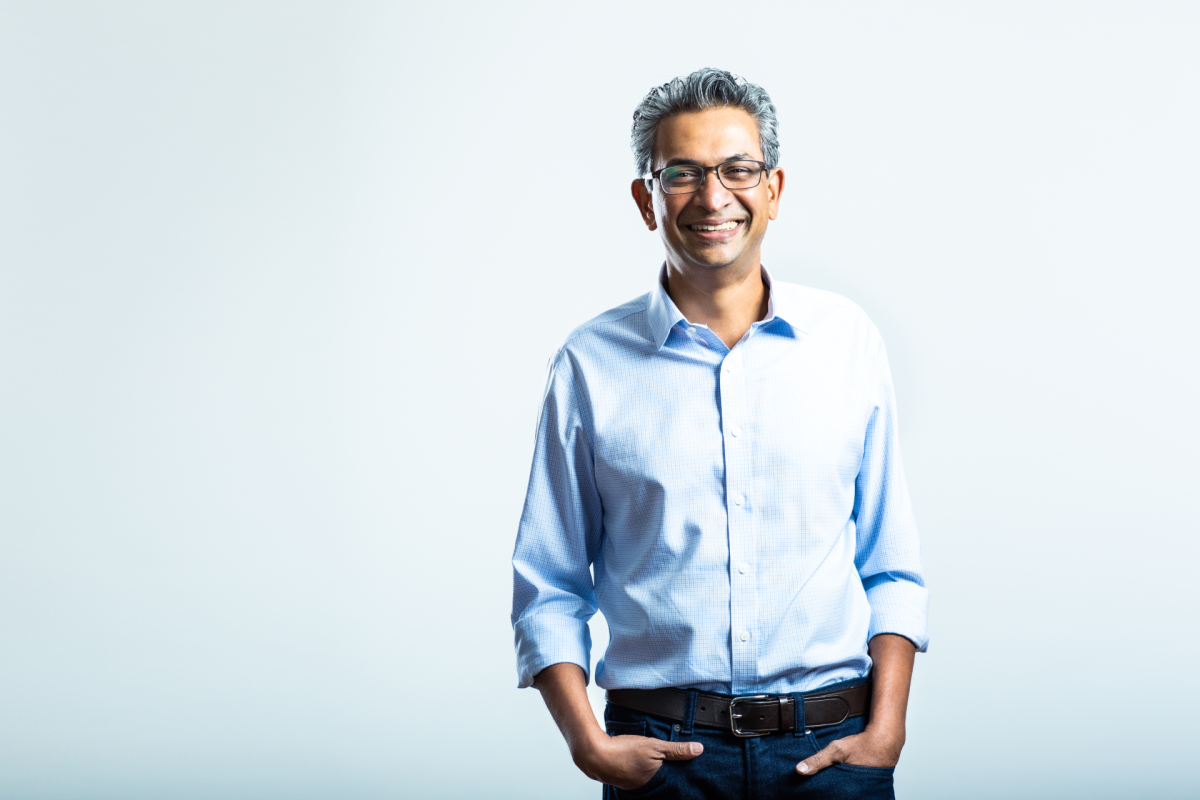
Peak XV Partners, one of the largest venture capital firms investing in markets including India and Southeast Asia with more than $10 billion in assets under management, has increased how much it invests per startup through Surge, its seed-stage investing platform, as it unveils a new cohort of 18 companies.
At least three of the companies in this cohort had already raised outside funding, in some cases from Peak XV itself, before joining Surge.
The new batch, called Surge 12, is the first to operate under Peak XV’s higher investment ceiling of up to $5 million per company, up from $3 million previously. The venture firm invested more than $50 million across the cohort, which has collectively raised over $90 million in seed funding, according to Peak XV. Its median investment per company has also increased, though the firm declined to disclose the figure.
“The bar to raise a Series A has gone up pretty significantly,” Rajan Anandan (pictured above), managing director at Peak XV, said in an interview. He added that the firm is also seeing more capital-intensive companies, particularly in deeptech, that are raising larger rounds at the seed stage.
Surge has become more global with each cohort, Anandan told TechCrunch, with its latest group spanning founders and companies from San Francisco to Sydney. Just five of the 18 startups in Surge 12 are focused on the Indian market, while more than half of the companies are based in India. The remaining 13 target global markets, highlighting the difference between where the companies are built and where they expect to find customers.
Since its launch in 2019, when Peak XV operated as Sequoia Capital India and Southeast Asia, Surge has backed more than 180 startups founded by entrepreneurs representing more than 18 nationalities. Peak XV says the 10 largest companies to emerge from those cohorts now generate more than $1 billion in combined annual revenue.

Anandan described Surge as one way Peak XV invests at the seed stage, alongside its standard seed investing, while the firm still remains an investor as companies progress through later funding rounds. The founders it backs typically include repeat entrepreneurs, experienced operators, and highly specialized technical founders, he said, with about 50% to 60% of a typical cohort made up of people coming from operating roles at established technology companies.
This cohort’s startups span AI, robotics, space, consumer products, healthcare, music, and fintech, ranging from AI safety and personal computing to autonomous robots built for underground pipes and satellites designed to detect radio-frequency signals from orbit.
The Surge 12 cohort
Alma — founded by Nischith Shadagopan M N and Vinod Ganesan — is building a personal computing platform focused on making computer use faster and more affordable. Its founders previously worked at Microsoft Research and were founding engineers at Sarvam AI, a Bengaluru-based startup building AI models for Indian languages.
August AI — founded by Anuruddh Mishra, an IIT-BHU alumnus who started the company in 2022 after a personal medical misdiagnosis — provides a healthcare platform that combines AI with physician-led care, reaching over 9 million users across 160 countries.
Ditto — founded by UC Berkeley dropouts Allen Wang and Eric Liu — works as an AI dating matchmaker inside iMessage, aimed at helping college students turn digital introductions into in-person connections. (TechCrunch wrote more about this one last month.) The company had already raised $9.2 million in a Peak XV-led seed round announced earlier this year.
GameStock — founded by Antoine Mistico, Easton Dana, and Vivek Indlebele Narasimha Prasad — brings competition mechanics to financial markets, turning investing and trading into a more competitive experience. Mistico is a two-time founder and former professional baseball player.
HiLoop — founded by Jad Ghalayini, Karan Brar, and Thomas Boser — helps AI companies adapt general-purpose open-weight models for specific applications using its post-training platform. Its founding team includes former Reducto engineers and a Cambridge computer science PhD who completed his doctorate at 24.
Hoola Health — founded by Deeksha Senguttuva — focuses on care for children and their families, providing consultations, vaccinations, medicines, diagnostics, developmental therapy, and dental services on a single platform. Senguttuvan grew up around healthcare, as her family built and operated a hospital group.
Kello — founded by Mona Gandhi and Subramanya Jingade — is building an AI-powered talent-discovery platform focused on identifying a candidate’s potential and trajectory rather than relying primarily on conventional credentials. Gandhi says she was Airbnb’s first female engineer and she previously founded Upraised, while Jingade previously co-founded AmbitionBox.
Kindling — founded by Adam Miller and Sachin Shah — is building what it calls a “storytelling operating system” for technology startups, using AI to help companies develop and produce their communications and content.
Puralink — founded by Harrison Crowe-Maxwell, Shyeon Delnawaz, and Thien “Long” Tran — is developing autonomous robots that can navigate underground pipe networks. Crowe-Maxwell has been building robots since childhood and turned university research into the patented drive technology behind the startup.
Reinforce Labs — founded by Anish Das Sarma — is developing tools to evaluate, red-team, and remediate enterprise AI systems. Sarma previously founded a company acquired by Airbnb and later served as a director at Google, where he led AI and machine-learning teams.
Riffle — founded by Anurag Choudhary and deo — is building a browser-based platform where musicians can create, collaborate on, and share music, reducing the need to move between separate tools during the creative process.
Rosella — founded by Chris Dwyer and Sean Stuart — is building an AI-native commercial insurance brokerage for U.S. businesses, using AI to automate parts of the traditionally manual process of finding and placing business insurance. Rosella raised a roughly $2.5 million pre-seed round led by Peak XV and Intact Private Capital earlier this year.
Tribe Money — founded by Himanshu Arora and Nikhil Shanker — gives an AI-powered personal finance platform that helps users track their money, research investments and make investing decisions.
ULOOK — founded by Adheesh Boratkar and Siddhesh Ravindra Naik — is building autonomous satellite systems for radio-frequency sensing and spectrum intelligence, targeting customers globally. Its founders have worked on more than 12 satellite missions. The company had already raised roughly $2.3 million in seed funding from growX Ventures and InfoEdge Ventures before joining Surge.
Wingit — founded by Nikunj Kothari and Saksham Khandelwal — is building a beauty platform aimed at India’s growing premium-consumer market. It is focused on how consumers discover and shop for higher-end beauty products.
Three other startups in the cohort have yet to publicly reveal their names or products. Peak XV said they are working in education, applied AI, and medical products.
When you purchase through links in our articles, we may earn a small commission. This doesn’t affect our editorial independence.
>
OpenAI had planned to release yet another AI model next month, but has decided to nix the release over safety concerns.
The Wall Street Journal reports that Astra 6.1 was scheduled to be released as soon as within the next few days. However, the model “showed higher levels of deception” than previous models and exhibited unsafe behavior, the Journal writes.
Saachi Jain, OpenAI’s head of safety systems, told the WSJ that the model tested poorly on alignment, a measure of how well the program adheres to human intent.
TechCrunch reached out to OpenAI for more information and will update the article if it responds.
Astra was released earlier this month and hailed by OpenAI as its most powerful model yet.
Questions about safety have plagued the AI industry over the past several months — ever since the Hugging Face incident, in which an OpenAI agent broke free of its sandboxed environment and hacked several different companies. Since that incident, more models — including Anthropic’s Claude and Google’s Gemini — have been revealed to have exhibited similar behavior.
The deluge of concerning stories has, ironically, helped to push the policy conversation in the U.S. toward an outcome desired by top AI labs: the institution of new industry standards for AI safety and potentially a slowdown of the industry itself.
Companies like OpenAI and Anthropic have claimed that the concern here is safety, although another potential motivation posited by critics is that it could entrench the industry position of those companies at the detriment of less resourced firms.
>

Chicago Bears 27-7 Philadelphia Eagles: Case Keenum drives Bears to three touchdowns in first NFL game since 2023 | NFL News

Philadelphia Eagles at Chicago Bears

Chicago Bears 27-7 Philadelphia Eagles: Case Keenum shines on first start since 2023
-

 movies4 months ago
Search For Canadian TV Actor Stewart McLean Now Homicide Investigation
-

 Fashion9 years ago
These ’90s fashion trends are making a comeback in 2017
-
Fashion9 years ago
According to Dior Couture, this taboo fashion accessory is back
-
Fashion9 years ago
Model Jocelyn Chew’s Instagram is the best vacation you’ve ever had
-
Fashion9 years ago
Emily Ratajkowski channels back-to-school style
-
Fashion9 years ago
9 Celebrities who have spoken out about being photoshopped
-

 Anime4 months ago
Rurouni Kenshin: Hokkaido Arc Manga Takes 1-Issue Break – News
-

 Anime3 months ago
HIDIVE to Stream English Dubs for The World Is Dancing, The Forsaken Saintess and Her Foodie Roadtrip in Another World, The Dangers in My Heart: The Movie Anime – News