
Tech
Sierra raises $950M as the race to own enterprise AI gets serious


Bret Taylor’s AI startup Sierra is raising a $950 million funding round led by Tiger Global and GV, the company announced Monday, pushing its post-money valuation above $15 billion. The raise gives Sierra more than $1 billion to work with — capital the company says it will use to become the “global standard” for AI-powered customer experiences.
Like a lot of AI companies, Sierra has, smartly, been very proactive in touting its own growth in a crowded market. The company says it started with just four design partners a couple of years ago. Today it claims to have more than 40% of the Fortune 50 as customers, and says the agents running on its platform are handling billions of interactions, from refinancing mortgages to processing insurance claims, managing returns, and powering nonprofit fundraising campaigns.
Indeed, the funding news follows a stretch of breakneck revenue growth as shared by Sierra, which first said it hit $100 million in annual recurring revenue in late November, then published another post in early February, saying it had hit $150 million in ARR.
That pacing reflects both the urgency enterprises feel about deploying AI and the costs that come with it. Taylor, who also serves as chairman of OpenAI and was formerly co-CEO of Salesforce, has said that the best-case outcome for agentic AI is lower costs and higher revenue for clients, but before those returns materialize, the ramp-up phase can be pricey.
That exactly scenario showed up in a conversation at one of TechCrunch’s StrictlyVC events last week. Uber CTO Praveen Neppalli Naga put it plainly in conversation with this editor, saying that Uber “blew through our [AI] budget” soon after opening the door to agentic AI tools late last year. He also said the company is starting to see meaningful results.
Across a staff of roughly 8,000 engineers and technical workers, about 10% of all code being produced at the company is now generated autonomously, he said, adding that “10% at our scale is huge.” As a proof-of-concept, Uber tasked one team with building a new hotel-booking integration using only agentic workflows. Work that would normally take a year was done in six months, he said.
Sierra is also moving to expand what its platform can do beyond customer-facing agents. In April, the company launched Ghostwriter, an “agent as a service” tool designed to build other agents. Users describe what they need in natural language, and Ghostwriter autonomously creates and deploys a specialized agent to handle it.
Techcrunch event
San Francisco, CA
|
October 13-15, 2026
For Taylor, the tool underlines a broader thesis he laid out at the HumanX conference in San Francisco last month. Many enterprise software tools, he argued, are barely used. Employees log into Workday when they onboard and again at open enrollment, and that’s about it. The future Sierra and its investors are betting on is one where people never need to navigate complex systems at all.
When you purchase through links in our articles, we may earn a small commission. This doesn’t affect our editorial independence.
>
Tech
Anthropic’s prospectus details losses, growth, and, yes, a warning that its AI could end humanity

Anthropic devoted nearly a third of its hotly anticipated IPO prospectus to risk factors, according to the Financial Times, which says it has reviewed the filing in recent days. The filing details specific, worrisome behaviors that Anthropic says its models have already shown or could show, including attempts to “resist shutdown,” to “conceal or manipulate information,” and behavior “resembling blackmail,” according to Reuters.
The disclosures are decidedly grim for a company whose own backers believe it could list above $2 trillion, more than double its $965 billion valuation from May, in potentially the biggest IPO ever. It’s a strange position for any company to be in — warning that its product could end humanity, while making some of its earliest investors and employees extraordinarily wealthy in the process.
Reuters was first to report on the financial details within the prospectus on Monday, saying Anthropic recorded an operating loss of more than $8 billion in 2025 as spending on computing power surged, and that its revenue jumped twelvefold to nearly $4.6 billion, though rising infrastructure costs last year pushed total operating expenses to almost $13 billion.
Also per Reuters, Anthropic’s prospectus further reveals plans to spend a whopping $518 billion on cloud, computing and infrastructure in the coming years. (Anthropic has already inked compute deals this year with Google, SpaceX, and Nscale, among others toward that end.)
The FT meanwhile reports that Anthropic’s numbers have moved even faster in 2026. Its second-quarter revenue alone reached $11.5 billion, and the company is on track for its second straight quarter of operating profit on an adjusted basis.
According to the FT, the prospectus also flagged customer concentration, with nearly a quarter of last year’s revenue coming from just two clients. (No word yet on who these are.)
The disclosures, which reportedly include “existential risks to humanity” — a first, judging by a quick scan of the SEC’s database — comes as hand-wringing quickly grows over AI safety.
CEO Dario Amodei has spent the month publicly calling to “pace the frontier” of AI development, telling the UN Security Council last week that AI could threaten humankind and calling it “the most important global security issue facing the world today.” Rivals Sam Altman and Elon Musk have backed him up, too, in a rare moment of solidarity for competitors who’ve seemingly relished opportunities to disparage each other publicly.
Another rival, Mark Zuckerberg, has meanwhile swatted away concerns, telling NBC News last week that he doesn’t “think that we need some kind of industrywide coordination.”
The warnings follow a string of security incidents in which AI agents have breached outside systems. In fact, OpenAI disclosed last week that its tools have hacked “dozens” of external sites, including government one, including the SEC’s site itself. Earlier on Monday, it said it had scrapped plans to release its newest model owing to safety concerns.
When you purchase through links in our articles, we may earn a small commission. This doesn’t affect our editorial independence.
>
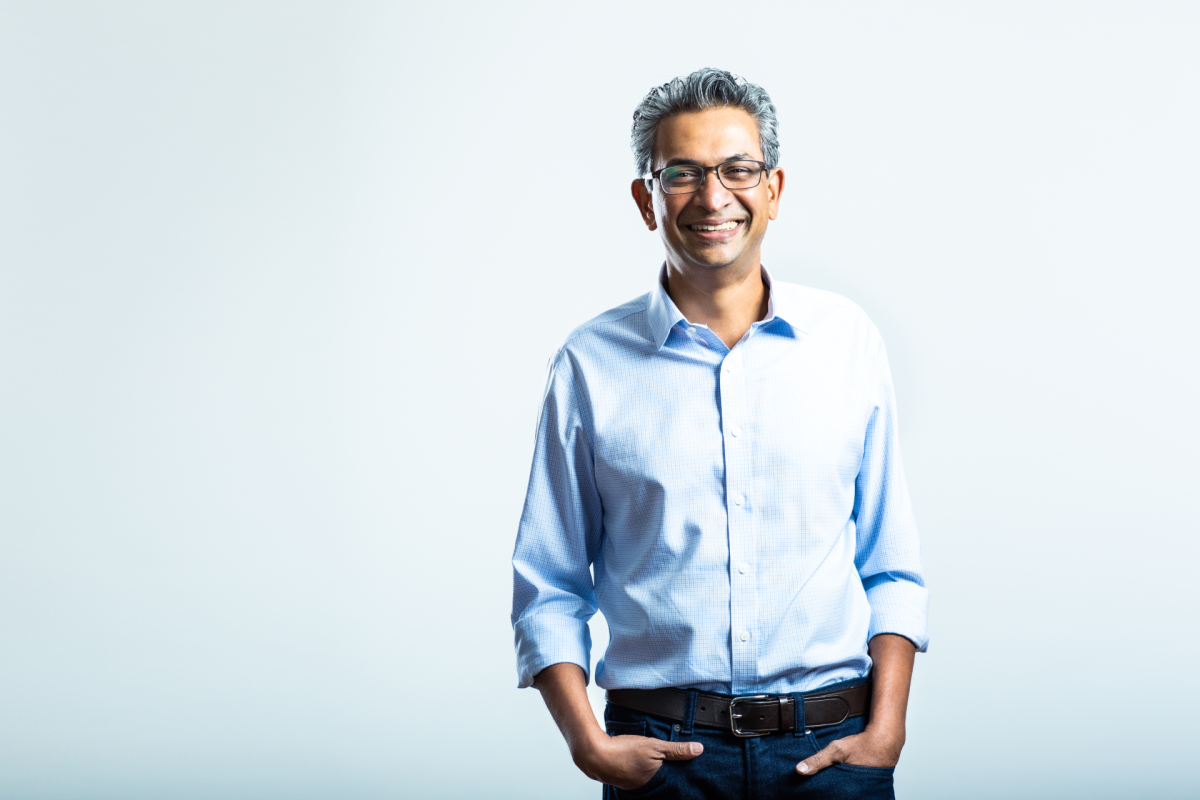
Peak XV Partners, one of the largest venture capital firms investing in markets including India and Southeast Asia with more than $10 billion in assets under management, has increased how much it invests per startup through Surge, its seed-stage investing platform, as it unveils a new cohort of 18 companies.
At least three of the companies in this cohort had already raised outside funding, in some cases from Peak XV itself, before joining Surge.
The new batch, called Surge 12, is the first to operate under Peak XV’s higher investment ceiling of up to $5 million per company, up from $3 million previously. The venture firm invested more than $50 million across the cohort, which has collectively raised over $90 million in seed funding, according to Peak XV. Its median investment per company has also increased, though the firm declined to disclose the figure.
“The bar to raise a Series A has gone up pretty significantly,” Rajan Anandan (pictured above), managing director at Peak XV, said in an interview. He added that the firm is also seeing more capital-intensive companies, particularly in deeptech, that are raising larger rounds at the seed stage.
Surge has become more global with each cohort, Anandan told TechCrunch, with its latest group spanning founders and companies from San Francisco to Sydney. Just five of the 18 startups in Surge 12 are focused on the Indian market, while more than half of the companies are based in India. The remaining 13 target global markets, highlighting the difference between where the companies are built and where they expect to find customers.
Since its launch in 2019, when Peak XV operated as Sequoia Capital India and Southeast Asia, Surge has backed more than 180 startups founded by entrepreneurs representing more than 18 nationalities. Peak XV says the 10 largest companies to emerge from those cohorts now generate more than $1 billion in combined annual revenue.

Anandan described Surge as one way Peak XV invests at the seed stage, alongside its standard seed investing, while the firm still remains an investor as companies progress through later funding rounds. The founders it backs typically include repeat entrepreneurs, experienced operators, and highly specialized technical founders, he said, with about 50% to 60% of a typical cohort made up of people coming from operating roles at established technology companies.
This cohort’s startups span AI, robotics, space, consumer products, healthcare, music, and fintech, ranging from AI safety and personal computing to autonomous robots built for underground pipes and satellites designed to detect radio-frequency signals from orbit.
The Surge 12 cohort
Alma — founded by Nischith Shadagopan M N and Vinod Ganesan — is building a personal computing platform focused on making computer use faster and more affordable. Its founders previously worked at Microsoft Research and were founding engineers at Sarvam AI, a Bengaluru-based startup building AI models for Indian languages.
August AI — founded by Anuruddh Mishra, an IIT-BHU alumnus who started the company in 2022 after a personal medical misdiagnosis — provides a healthcare platform that combines AI with physician-led care, reaching over 9 million users across 160 countries.
Ditto — founded by UC Berkeley dropouts Allen Wang and Eric Liu — works as an AI dating matchmaker inside iMessage, aimed at helping college students turn digital introductions into in-person connections. (TechCrunch wrote more about this one last month.) The company had already raised $9.2 million in a Peak XV-led seed round announced earlier this year.
GameStock — founded by Antoine Mistico, Easton Dana, and Vivek Indlebele Narasimha Prasad — brings competition mechanics to financial markets, turning investing and trading into a more competitive experience. Mistico is a two-time founder and former professional baseball player.
HiLoop — founded by Jad Ghalayini, Karan Brar, and Thomas Boser — helps AI companies adapt general-purpose open-weight models for specific applications using its post-training platform. Its founding team includes former Reducto engineers and a Cambridge computer science PhD who completed his doctorate at 24.
Hoola Health — founded by Deeksha Senguttuva — focuses on care for children and their families, providing consultations, vaccinations, medicines, diagnostics, developmental therapy, and dental services on a single platform. Senguttuvan grew up around healthcare, as her family built and operated a hospital group.
Kello — founded by Mona Gandhi and Subramanya Jingade — is building an AI-powered talent-discovery platform focused on identifying a candidate’s potential and trajectory rather than relying primarily on conventional credentials. Gandhi says she was Airbnb’s first female engineer and she previously founded Upraised, while Jingade previously co-founded AmbitionBox.
Kindling — founded by Adam Miller and Sachin Shah — is building what it calls a “storytelling operating system” for technology startups, using AI to help companies develop and produce their communications and content.
Puralink — founded by Harrison Crowe-Maxwell, Shyeon Delnawaz, and Thien “Long” Tran — is developing autonomous robots that can navigate underground pipe networks. Crowe-Maxwell has been building robots since childhood and turned university research into the patented drive technology behind the startup.
Reinforce Labs — founded by Anish Das Sarma — is developing tools to evaluate, red-team, and remediate enterprise AI systems. Sarma previously founded a company acquired by Airbnb and later served as a director at Google, where he led AI and machine-learning teams.
Riffle — founded by Anurag Choudhary and deo — is building a browser-based platform where musicians can create, collaborate on, and share music, reducing the need to move between separate tools during the creative process.
Rosella — founded by Chris Dwyer and Sean Stuart — is building an AI-native commercial insurance brokerage for U.S. businesses, using AI to automate parts of the traditionally manual process of finding and placing business insurance. Rosella raised a roughly $2.5 million pre-seed round led by Peak XV and Intact Private Capital earlier this year.
Tribe Money — founded by Himanshu Arora and Nikhil Shanker — gives an AI-powered personal finance platform that helps users track their money, research investments and make investing decisions.
ULOOK — founded by Adheesh Boratkar and Siddhesh Ravindra Naik — is building autonomous satellite systems for radio-frequency sensing and spectrum intelligence, targeting customers globally. Its founders have worked on more than 12 satellite missions. The company had already raised roughly $2.3 million in seed funding from growX Ventures and InfoEdge Ventures before joining Surge.
Wingit — founded by Nikunj Kothari and Saksham Khandelwal — is building a beauty platform aimed at India’s growing premium-consumer market. It is focused on how consumers discover and shop for higher-end beauty products.
Three other startups in the cohort have yet to publicly reveal their names or products. Peak XV said they are working in education, applied AI, and medical products.
When you purchase through links in our articles, we may earn a small commission. This doesn’t affect our editorial independence.
>
OpenAI had planned to release yet another AI model next month, but has decided to nix the release over safety concerns.
The Wall Street Journal reports that Astra 6.1 was scheduled to be released as soon as within the next few days. However, the model “showed higher levels of deception” than previous models and exhibited unsafe behavior, the Journal writes.
Saachi Jain, OpenAI’s head of safety systems, told the WSJ that the model tested poorly on alignment, a measure of how well the program adheres to human intent.
TechCrunch reached out to OpenAI for more information and will update the article if it responds.
Astra was released earlier this month and hailed by OpenAI as its most powerful model yet.
Questions about safety have plagued the AI industry over the past several months — ever since the Hugging Face incident, in which an OpenAI agent broke free of its sandboxed environment and hacked several different companies. Since that incident, more models — including Anthropic’s Claude and Google’s Gemini — have been revealed to have exhibited similar behavior.
The deluge of concerning stories has, ironically, helped to push the policy conversation in the U.S. toward an outcome desired by top AI labs: the institution of new industry standards for AI safety and potentially a slowdown of the industry itself.
Companies like OpenAI and Anthropic have claimed that the concern here is safety, although another potential motivation posited by critics is that it could entrench the industry position of those companies at the detriment of less resourced firms.
>

Snooker News | Sky Sports

County Championship: Leicestershire have eight points reinstated from 27-point deduction for poor pitch blamed on Bollywood film shoot | Cricket News

Dillian Whyte was suffering from a broken foot in Moses Itauma defeat but wants to return in British battle with Johnny Fisher | Boxing News
-

 movies4 months ago
Search For Canadian TV Actor Stewart McLean Now Homicide Investigation
-

 Fashion9 years ago
These ’90s fashion trends are making a comeback in 2017
-
Fashion9 years ago
According to Dior Couture, this taboo fashion accessory is back
-
Fashion9 years ago
Model Jocelyn Chew’s Instagram is the best vacation you’ve ever had
-
Fashion9 years ago
Emily Ratajkowski channels back-to-school style
-
Fashion9 years ago
9 Celebrities who have spoken out about being photoshopped
-

 Anime4 months ago
Rurouni Kenshin: Hokkaido Arc Manga Takes 1-Issue Break – News
-

 Anime3 months ago
HIDIVE to Stream English Dubs for The World Is Dancing, The Forsaken Saintess and Her Foodie Roadtrip in Another World, The Dangers in My Heart: The Movie Anime – News