
Anime
Tales of Wedding Rings II Anime Series Review – Review


Pretense is king in the realm of romance—especially harem anime. By Arceus, there must be an excuse, no matter how canned or flimsy, for love interests to, say, share an indirect kiss, fall on top of each other, or for one of them to need to give the other mouth-to-mouth. That’s simply how the game is played, how the dance is danced. And nothing exemplifies this more than the second season of Tales of Wedding Rings (TWR), a series in which an ordinary man named Satou has several women throwing themselves at him, jiggling breasts-first, despite zero effort on his part. And also, he must have sex with them to save the world.
Let’s back up a bit: While the first season of TWR focused mostly on the collection of the Ring Princesses, season two has them all setting forth for their intended purpose: Destroying the Abyss King. The bar is pretty low, but suffice it to say, it’s a much more story-focused season of TWR. Still, for the overwhelming majority of the series, that same story can basically be boiled down to “John Smith McEveryMan (Satou) has to strengthen his relationships (have sex) with his conventionally attractive wives to gain the power to destroy the Abyss King. They all desperately want to have sex with him, but he’s only really interested in one of them (Hime).”
Season one, in my opinion, was at its best when it was just letting itself be unabashedly horny, and leaving everything else—the story, in particular—to the side. And season two, which tries to put more focus on said story, only reaffirms this belief. The story is as bland and unimaginative as they come, without much of anything to give it any much-needed oomph—say, rich lore, better fight scenes, or stronger character writing. The latter, in particular, is especially to this anime’s detriment, given that this half of the series is supposed to be about Satou and his wives strengthening their relationships with one another.
This anime has a strange take on polyamory, to say the least. On one hand, all the characters (notably including the Ring Princesses themselves) seem totally chill with the idea of Satou, as the Ring King, having multiple wives. But that acceptance comes with some weighty asterisks. Hime is very obviously his favorite, and she’s often framed as being the only one that Satou actually loves, with the others being little more than her backup dancers. Moreover, were Satou not the Ring King, and were the world’s fate not dependent on a power that itself depends on his relationships with all these women, it’s less clear whether everyone would be quite so accepting. The impression it leaves is that this anime wasn’t so much interested in exploring or examining polyamory per se as much as it was over-engineering a pretense for multiple women to want to have sex with Satou, wherein he’s feeling an absolute maximum level of pressure—a monogamous anime, accidentally wearing a half-hearted cosplay of a polyamorous one.
Inevitably, this awkwardness bleeds into the character writing in general, and by extension, the story that revolves entirely around said character writing and their dynamics with one another. The big thing at the core of this anime is Satou’s big fight with the Abyss King, which requires power from the relationships he has with his wives. But apart from Hime, it barely feels like he really knows any of them particularly well. Sure, they all lust for him, and it’s more believable that some of them have deeper romantic feelings for him than others. But all the same, there’s less than zero chemistry between Satou and literally anyone but Hime. If you’re the type of person who likes harem anime for the will-they-won’t-they, who-will-the-protagonist-choose of it all, you won’t find anything even resembling it here.
Even if you wanted to watch a show just for horny purposes, there’s better out there—say, the first season, for example. Season two is still obviously pretty horny, but season one embraced this much more and let itself get lost in the lusty sauce more than season two, which has instead yielded a lot of that time to the story. Still, even if they’re not as plentiful as they were in the first season, in those moments where it does let itself indulge in just being erotic for the sake of eroticism, that’s when this show is at its most fun, since it tends not to hold back in those moments.
The production value does nothing in particular to help this anime. The animation quality ranges from “meh” to “okay, I guess.” The visual style itself, meanwhile, is forgettable—nothing unique nor exceptionally well-executed. The same can be said for the voice acting, although when it came to sub versus dub, I found myself preferring the dub, even if only somewhat.
To TWR‘s credit, I’ve seen some harem anime go to some pretty hilarious lengths to manufacture as much pressure and tension for their protagonists as possible. Even so, TWR takes it to a whole new level that’s funny just to even think about. Still, that’s more or less where the memorability of this anime begins and ends. TWR is nothing if not a textbook example of how sometimes, when it comes to the story, less is more.
>
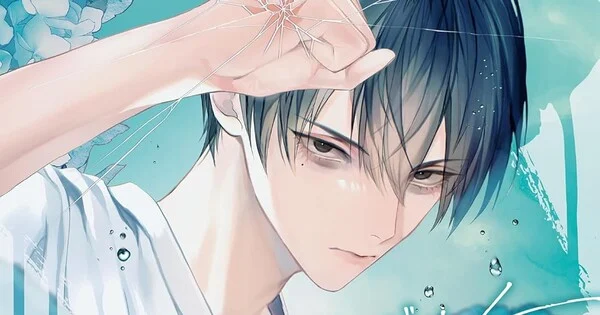
Side story debuted in January

© Akaza Samamiya, Kadokawa
Akaza Samamiya announced on X (formerly Twitter) on Saturday the Mr. Mallow Blue: After The Rain side story to the Mr. Mallow Blue manga will end in the next chapter.
The original series focuses on the meetings of various social outcasts, including a fragile girl, a shut-in, and a handsome man who wears a cold expression as a mask.
Samamiya launched the side story in the March issue of Kadokawa‘s Asuka magazine, which shipped in January.
Samamiya launched the main manga in Kadokawa‘s Asuka magazine in November 2019, and ended the series with the the sixth and final compiled book volume on December 24.
Samamiya launched the Ballad x Opera manga in Asuka in May 2017, and ended it in September 2019. Kadokawa published the manga’s fifth and final volume in November 2019.
Samamiya serialized the Bloody Mary manga series in Asuka from November 2013 until February 2017. Kadokawa published 10 volumes for the manga, and Viz Media published all 10 volumes in English.
Source: Akaza Samamiya‘s X/Twitter account
Disclosure: Kadokawa World Entertainment (KWE), a wholly owned subsidiary of Kadokawa Corporation, is the majority owner of Anime News Network, LLC. One or more of the companies mentioned in this article are part of the Kadokawa Group of Companies.
>
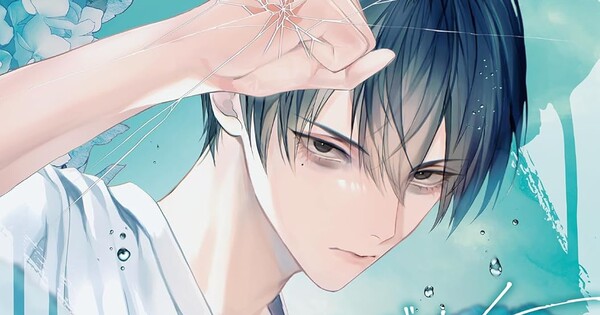
Side story debuted in January
© Akaza Samamiya, Kadokawa
Akaza Samamiya announced on X (formerly Twitter) on Saturday the Mr. Mallow Blue: After The Rain side story to the Mr. Mallow Blue manga will end in the next chapter.
The original series focuses on the meetings of various social outcasts, including a fragile girl, a shut-in, and a handsome man who wears a cold expression as a mask.
Samamiya launched the side story in the March issue of Kadokawa‘s Asuka magazine, which shipped in January.
Samamiya launched the main manga in Kadokawa‘s Asuka magazine in November 2019, and ended the series with the the sixth and final compiled book volume on December 24.
Samamiya launched the Ballad x Opera manga in Asuka in May 2017, and ended it in September 2019. Kadokawa published the manga’s fifth and final volume in November 2019.
Samamiya serialized the Bloody Mary manga series in Asuka from November 2013 until February 2017. Kadokawa published 10 volumes for the manga, and Viz Media published all 10 volumes in English.
Source: Akaza Samamiya‘s X/Twitter account
Disclosure: Kadokawa World Entertainment (KWE), a wholly owned subsidiary of Kadokawa Corporation, is the majority owner of Anime News Network, LLC. One or more of the companies mentioned in this article are part of the Kadokawa Group of Companies.
>
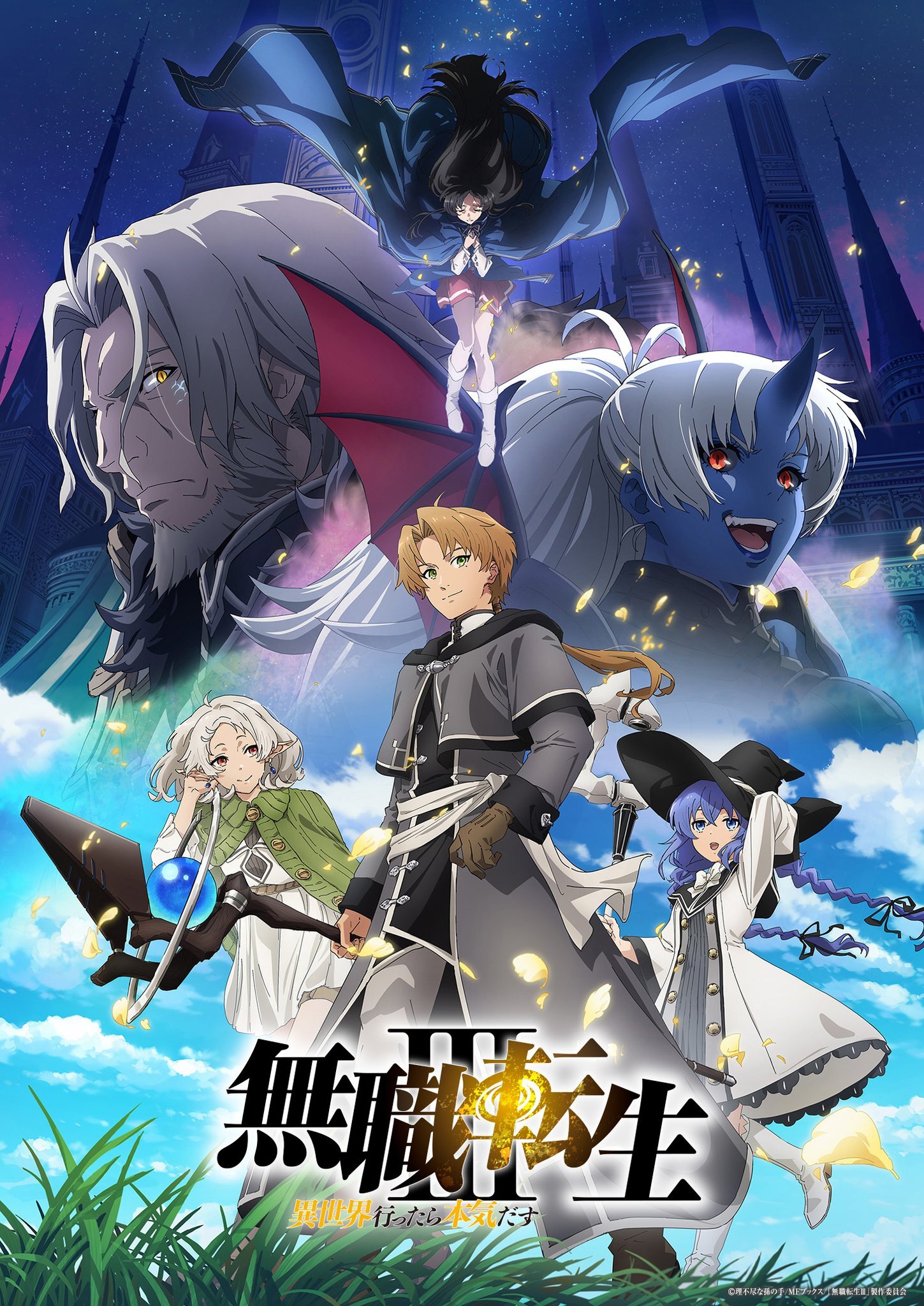
 The 14th and final episode of Mushoku Tensei III: Isekai Ittara Honki Dasu (Mushoku Tensei: Jobless Reincarnation Season 3) television anime announced on Sunday that its second part is scheduled for 2027.
Produced by Studio Bind, the 23-episode first season aired in split cours in Winter 2021 and Fall 2021. The 24-episode second season premiered in two parts, with the first part in Summer 2023 and the second part in Spring 2024. The first part of season 3 aired in 14-episodes in Summer 2026. Funimation and Crunchyroll simulcast the anime series with English subtitles, respectively.
Mushoku Tensei adapts Rifujin na Magonote‘s adventure fantasy light novel, which he penned on the Shousetsuka ni Narou website between November 2012 and April 2015. Kadokawa began printing the novel with illustrations by Sirotaka under its MF Books label in January 2014 and shipped the 26th volume in November 2022.
Yuka Fujikawa began serializing a manga adaptation in Comic Flapper magazine in May 2014. Kadokawa published the 25th volume on September 18.
Seven Seas Entertainment licensed both the light novel and manga in English and published the 26th light novel volume on March 12. The 23rd manga volume went on sale on March 5, with the 24th volume scheduled for a March 2027 release.
Announcement
Source: Dengeki Online
>

Tyson Fury vs Anthony Joshua press conference not ‘confirmed’ says AJ promoter Eddie Hearn | ‘Wouldn’t be one without us’ | Boxing News

Thomas races ahead as USA look to avoid huge Presidents Cup upset LIVE!

Chelsea Women 1 – 0 Arsenal Women
-

 movies4 months ago
Search For Canadian TV Actor Stewart McLean Now Homicide Investigation
-

 Fashion9 years ago
These ’90s fashion trends are making a comeback in 2017
-
Fashion9 years ago
According to Dior Couture, this taboo fashion accessory is back
-
Fashion9 years ago
Model Jocelyn Chew’s Instagram is the best vacation you’ve ever had
-
Fashion9 years ago
Emily Ratajkowski channels back-to-school style
-
Fashion9 years ago
9 Celebrities who have spoken out about being photoshopped
-

 Anime4 months ago
Rurouni Kenshin: Hokkaido Arc Manga Takes 1-Issue Break – News
-

 Anime3 months ago
HIDIVE to Stream English Dubs for The World Is Dancing, The Forsaken Saintess and Her Foodie Roadtrip in Another World, The Dangers in My Heart: The Movie Anime – News