
Sports
What a Grand Slam boycott could mean for tennis, from prize money to tickets and the trophy

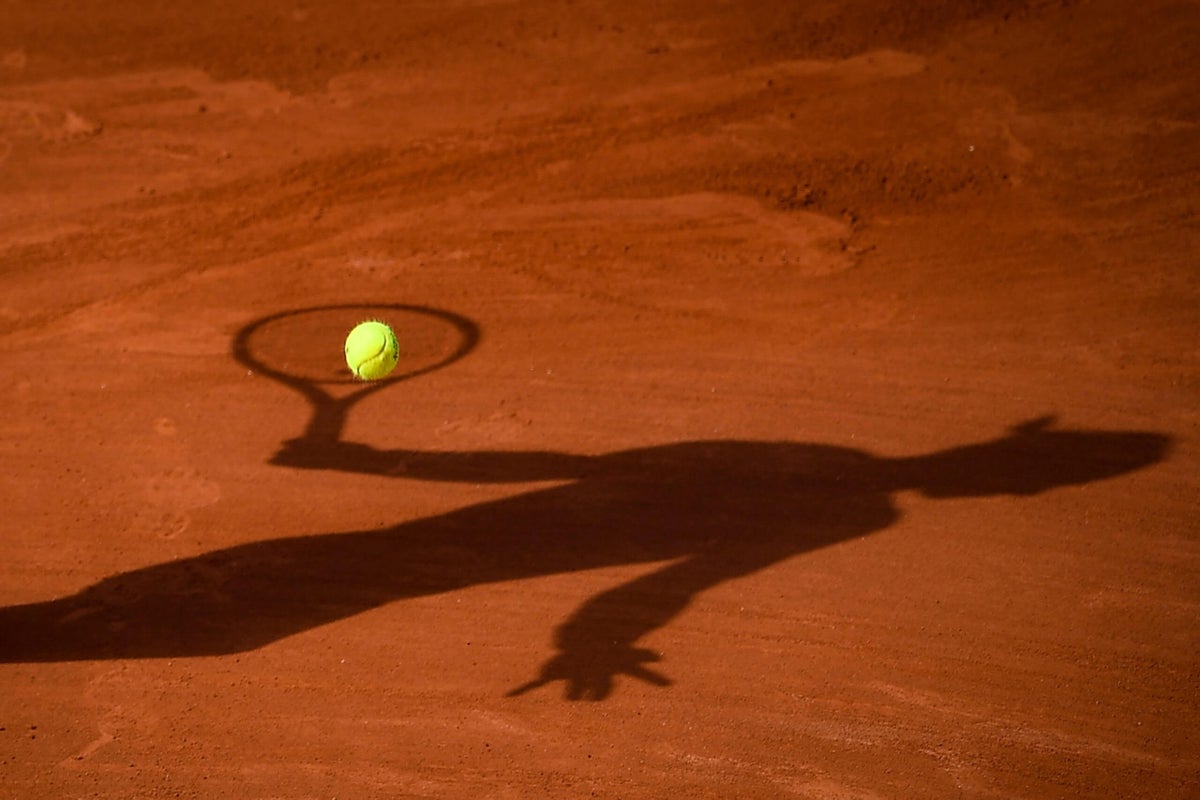
Just over a fortnight before the French Open, women’s world No. 1 Aryna Sabalenka made the most direct statement yet about one possible evolution in the standoff between a group of top tennis stars and its four biggest tournaments over prize money and player benefits.
“At some point we will boycott,” Sabalenka said in a news conference at the Italian Open in Rome. Defending French Open champion Coco Gauff and Australian Open champion Elena Rybakina echoed Sabalenka’s sentiments, days after the collective of top-10 ATP and WTA players greeted the annual increase in prize money at Roland Garros with “collective disappointment.”
Any boycott remains entirely hypothetical, and none of the players who discussed it said that any action of that kind is planned. In a statement sent to The Athletic, the French Tennis Federation said that it “remains fully committed to ongoing dialogue with all stakeholders in global tennis, including speaking directly with individual players.”
But which parts of the four Grand Slams — the Australian, French and U.S. Opens, and Wimbledon — would a boycott meaningfully impact? Which areas would remain relatively unharmed? And what would a tournament without the biggest stars in the sport even look like?
How would a Grand Slam boycott affect the field?
The area that would be most affected by a boycott is the field, but it is also the area that may be least affected.
If several leading players do pull out of events, then the same number of players who would otherwise not have been in the main draw will receive direct entry. The most visible impact will be a less-likely champion. When 81 players boycotted Wimbledon in 1973, the eventual winner was Jan Kodeš, who already had two majors at the time but had won them both on clay. He was a 1972 semifinalist and a 1974 quarterfinalist at Wimbledon, but outside that three-year stretch, Kodeš never went beyond the second round.
That boycott was in solidarity with Nikola Pilić. Pilić had been barred from the tournament by the International Lawn Tennis Federation (now the ITF, the world governing body of tennis that runs all the Grand Slam tournaments) for refusing to play a Davis Cup match for his native Yugoslavia a month earlier.
The contradictory thing about how a boycott affects the field is that it would likely still be a full one. Tennis players eat what they kill and the prospect of winning huge amounts of prize money and rankings points in a less challenging environment would be not go ignored by those further down the rankings.
Any modern-day boycott would also have to include a number of leading players to be meaningful. In a news conference at the Italian Open Tuesday, Coco Gauff joked that it would be a bummer to find out she were the only one doing so.

Jan Kodeš during Wimbledon 1973, which 81 men’s players boycotted. (Getty Images)
Would affected Grand Slams adjust their prize money and rankings points?
In the immediate term, the prize money for affected events would likely stay the same. If boycotts went beyond one event, then Grand Slam organizers could adjust their projected revenues to account for their impact and recalculate prize money, but that would be weighed against the desire for top stars to return.
Rankings points would also stay the same, meaning that players who pursue a boycott could face a serious hit — and the repercussions for other competitions would add another reason for any possible collective action to require something close to absolute unity.
The winners of Grand Slams receive 2,000 points. Women’s finalists receive 1,300 points, while men’s finalists received 1,200, with awards for each round dropping by roughly 40 to 50 percent.
Players compete with each other to win matches and earn those points, but they also compete with their performances from the previous season. If Gauff loses in the first round of this year’s French Open, her ranking will plummet, because she will “lose” 1,990 points of the 2,000 she earned for winning it last year.
If the top players don’t play Grand Slams, they will not only forfeit hundreds, if not thousands of new points, but also see the hundreds or thousands they acquired in previous years disappear. Meanwhile, the field that does take part will have the opposite issue. They can go deep in a big tournament with lesser opposition and boost their ranking, in the knowledge that if the field is restored to “normal” next year, they will likely have work to do to defend that boost.
There is a wild card in all this. The WTA and ATP Tours can decide to withdraw rankings points from a tournament. It happened in 2022, when Britain’s national tennis association and the All England Lawn Tennis Club, which operates Wimbledon, prohibited Russian and Belarusian players from entering following Russia’s invasion of Ukraine. In response, the tours pulled points from the tournament.
That time, no one got any points, so the impact was more evenly distributed, but it still put things out of whack. Elena Rybakina and Novak Djokovic received zero points for their titles, and returned in 2023 with no rankings target on their backs.
How would ticket sales respond?
If you hold a Grand Slam and the best players boycott, will anyone come?
Yes, probably.
Since the Covid-19 pandemic, Grand Slams have seen attendances rise to record highs as ticket prices have risen. Fans pack show courts and field courts alike. They queue for food and drink and merchandise and soak in the experience of events that have turned themselves into three-week tennis festivals, except Wimbledon, which remains a two-week shrine to the sport and still gets people to queue overnight in a field.
The bulk of ticket sales occur well in advance of the tournaments. Corporate seats, boxes and suites can often be empty during matches because of meals and other engagements, but they are paid for. A lack of star power could see that take a hit, but plenty of top stars who are injured during a big tournament still show up to these events for corporate engagements. Whether they would do that during a boycott would depend on what the players collectively decide is OK and not OK.
Fans who have paid for the chance to see the best in the world on a show court are unlikely to throw away their money. When top players skip ATP Masters 1000 and WTA 1000 events, the rung below a Grand Slam, fans still come in their droves.

Demand for Grand Slam tickets appears impervious to external factors. (Angela Weiss / AFP via Getty Images)
How would a boycott hit media rights and sponsorships?
Grand Slam tournaments depend on revenue from three main elements to turn a profit: tickets, media rights and sponsorships. Of those three, media rights offer the four federations that run the Grand Slams the most valuable long-term financial stability, because their current structure relies on longterm deals with huge networks.
All four majors have signed U.S. media rights deals that span roughly a decade. Warner Bros. Discovery will pay $650 million for a 10-year deal to air the French Open through 2035, ESPN’s 12-year deal to air the U.S. Open through 2037 cost $2.04 billion and Wimbledon’s 12-year broadcast deal with ABC and ESPN clocks in at roughly $630 million.
The financial impact on media rights and sponsorship revenue is likely proportional to the length and participation numbers of any Grand Slam boycott.
Because of the long-term nature of these contracts, a top-player boycott of a single Grand Slam would be unlikely to immediately impact media rights revenue. A prolonged boycott by a critical mass of top players could affect how TV networks value Grand Slam tennis in the future, at the end of current media rights deals, but they are not likely to impact current ones. The contracts are signed. Advertisers and sponsors who want advertising space on those networks might expect some recompense for any lost ratings, but ratings for major finals already fluctuate according to who is playing and the matchups involved.
But even then, there are only four tennis majors, and some of them have evolved to become more than just sporting events. Wimbledon and increasingly, the U.S. Open, are strong brands that carry cultural cachet beyond the world of sports. They are also not for sale or up for replacement, which gives them immense power in this dynamic with the players.
As for sponsorships, a boycott of any length would likely mean a loss of brand exposure. That could eventually affect how much a partner is willing to pay a tournament or on what timeline they’re willing to fulfil their financial obligations, but many of the majors’ significant sponsors are long-term partners and a short downturn would not meaningfully affect those relationships.
Is this actually going to happen?
As yet, no. There is no plan for a boycott in place and players’ agreement on its possibility does not mean that it will be set into motion anytime soon. With the French Open so close, the top-10 player group is using that proximity to put pressure on the FFT and other organizers.
>
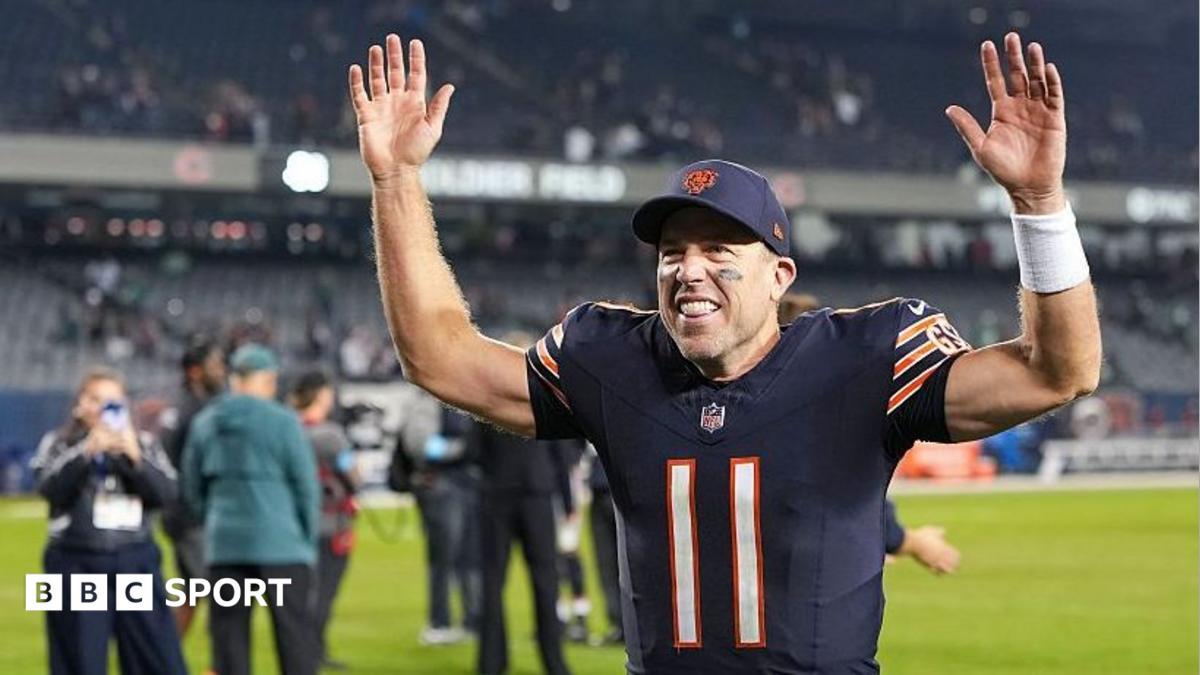
Veteran quarterback Case Keenum starred on his first start for almost three years as the Chicago Bears handed the Philadelphia Eagles their first defeat of the season.
Starting his first NFL game since December 2023, the 38-year-old threw for 247 yards and two touchdowns and rushed for another as the Bears won 27-7 at Soldier Field in Chicago.
It is the first time he has thrown multiple touchdowns in a game since October 2019, while he is also the oldest player to score a rushing touchdown for the Bears.
Keenum, an NFL journeyman playing at his eighth franchise, was called into action because of a knee injury to Caleb Williams and Tyson Bagent’s concussion.
Wide receiver Kalif Raymond, who scored a touchdown, said: “He was like, ‘I may not be a cowboy, but this is definitely not my first rodeo – a lot of confidence in him; a lot of confidence in himself.
“He practises, preps every week, but particularly this week. We didn’t expect anything different from him.”
Keenum’s first drive resulted in a touchdown for Luther Burden III, and Cairo Santos added a 29-yard field goal before Eagles quarterback Jalen Hurts rushed for a touchdown to cut the Bears’ half-time lead to 10-7.
Santos added a second field goal early in the third quarter before the Bears scored two touchdowns among 17 unanswered points.
The Bears defence limited the Eagles to 248 yards and picked off an interception off Jalen Hurts and replacement Andy Dalton.
>
Test your ball knowledge against today’s Who Am I?, Five in Five and Brainteaser.
>
Sports
F1 Q&A: Horner and Ferrari, Qatar and Abu Dhabi Grands Prix, Bottas’ Baku crash and the VSC, Williams upgrade
Mercedes’ George Russell took his first victory since June by holding off Max Verstappen to win the Azerbaijan Grand Prix.
Verstappen’s Red Bull team-mate Isack Hadjar completed the podium on his return after missing three races with a broken wrist.
Championship leader Kimi Antonelli finished fifth in Baku, meaning his advantage over team-mate Russell has narrowed to 66 points.
This weekend, Formula 1 heads to Malaysia, the host of the Bahrain Grand Prix – an event originally due to take place in April but which was postponed because of the war in the Middle East.
Before the race in Sepang, BBC F1 correspondent Andrew Benson answers your latest questions.
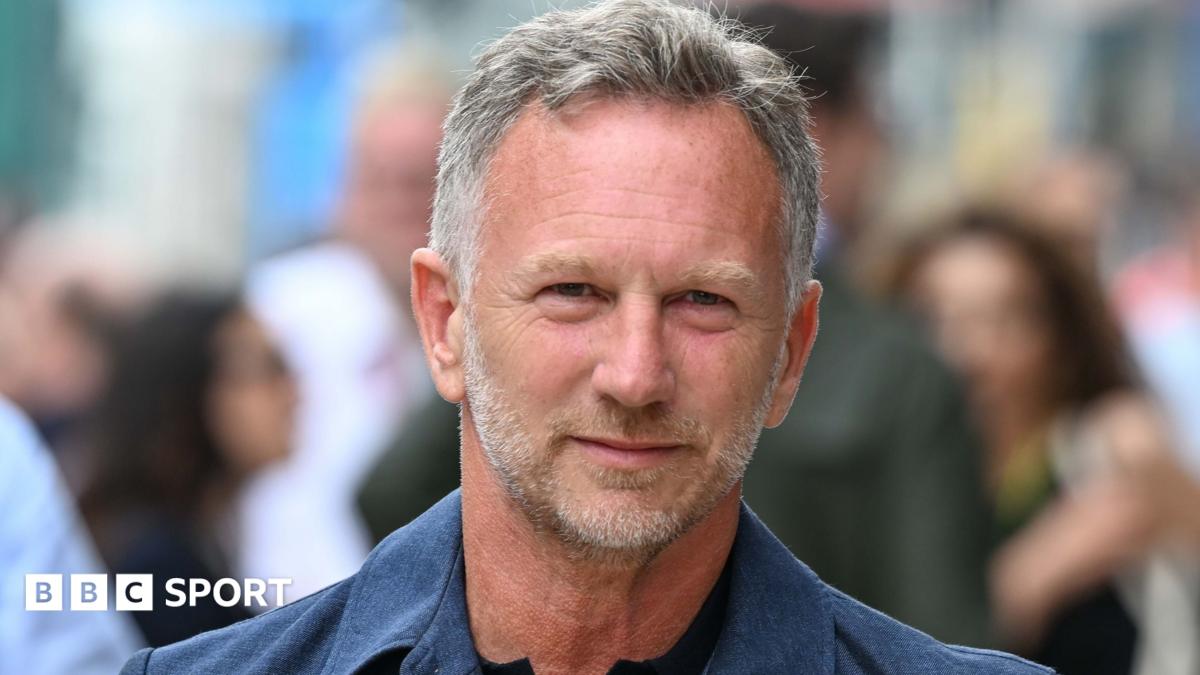
Does Christian Horner really want the team principal job at Ferrari, or even have a shot at it? – Ben
This topic has become a subject for conversation in recent days following an interview Horner did with the Times, external as he promotes his new book.
Horner said: “At this stage in my life, there’s only one team for which I would accept non-participation in ownership.”
Asked whether he would take a job there, he replied: “Would I consider Ferrari? I mean, Ferrari is the biggest brand in Formula 1. It’s the dream. And arguably it’s the sleeping giant of Formula 1.”
Ferrari team principal Frederic Vasseur made his views about Horner’s intervention pretty plain after the Azerbaijan Grand Prix when he said: “Mr Horner is looking for a job – that, everybody knows – everywhere.”
Vasseur said the speculation surrounding the team meant Ferrari were “not working in the perfect serenity”.
Horner’s comments seem to make it clear that he would consider a job offer from Ferrari. But the key questions are under what conditions he might accept it, and whether he would be offered it in the first place.
Horner has made it very clear over the years that he believes an F1 team needs one person in charge and in overall control.
It’s highly unlikely he would get that at Ferrari, where chairman John Elkann and chief executive officer Benedetto Vigna will always have more authority than any team principal.
Even at Red Bull, where Horner had theoretical leadership at the F1 team, he was ultimately answerable to headquarters in Austria and that is what led to his removal in the end.
It’s hard to imagine how Elkann and Vigna could or would countenance any situation where they were removed from any input into the F1 team.
And it’s even harder to imagine a situation where that was not the de facto position even if a team boss had been given assurances they would be left alone.
Then there is the question of whether Ferrari would want Horner.
Horner comes with baggage. All of the above for a start, and on top of that there is the cloud under which he left Red Bull.
There is no doubt that he was a remarkably successful team principal there, the team winning eight drivers’ titles, six constructors’ championships and 124 grands prix in his two-decade tenure.
However, the team unravelled in his final 18 months in charge, in the wake of the accusations of sexual harassment and coercive, controlling behaviour that were made against him by a female employee.
Red Bull dismissed those allegations after two internal investigations led by external lawyers.
But they were a key factor in Adrian Newey leaving his position as chief technical officer – along with internal politics in which Newey felt his role had been diminished by Horner.
Newey was followed out of the door by long-time sporting director Jonathan Wheatley and head of strategy Will Courtenay.
Horner was finally dismissed following a slump in form which Red Bull bosses concluded the team did not appear to be capable of arresting under his leadership.
In the Times interview, Horner says that the only justification he was given by Red Bull for his sacking was “it was more Christian Horner Racing than Red Bull Racing”.
He adds at other points in the interview: “I am a bit of a Marmite character. I know I’m not everybody’s cup of tea. It’s impossible to be.” And: “I’m the cure and the problem.”
Clearly, any decision as to whether Horner is the person you want to lead your F1 team would need careful consideration.
It’s also worth mentioning that Ferrari driver Lewis Hamilton has made it pretty clear over the past few years that he has little time for Horner.
Why hasn’t the FIA made a decision on the final two races of the season? They’ve cancelled the final rounds of the World Rally Championship and World Endurance Championship because of the Middle East conflict. Surely they should be confirming the changes in the calendar now? – Nigel
To start with a point of order, it is Formula 1 that decides the calendar – as in, the commercial rights holder – not the FIA, the governing body. The FIA’s role is effectively only to rubber-stamp F1’s decision.
As things stand, F1 is planning to end the season as the calendar was originally scheduled – with Las Vegas followed by Qatar and then Abu Dhabi, external over the last two weekends in November and the first in December.
Although the war continues between the US/Israel and Iran, the advice F1 has been getting is that the situation in those two countries is stable, and there is not a high risk of attacks on civilian infrastructure.
The UK Foreign Office, for example, does not advise against travel to Qatar and Abu Dhabi., external It simply says the situation there “remains unpredictable” and that “there is a risk of more attacks and unforeseen escalation in the region”.
And the two countries consider themselves open for business.
However, F1 has a contingency plan.
Imola in Italy is preparing to host a race on the weekend of Abu Dhabi.
If the two Middle Eastern races cannot happen as a result of an escalation of the situation in the Gulf, Imola would step in and hold the season finale on 4-6 December.
But unless and until that happens, there is no confirmation of changes to make, as there are currently no changes.
>

Chicago Bears 27-7 Philadelphia Eagles: Case Keenum shines on first start since 2023

Flex your football brain with our daily quizzes

F1 Q&A: Horner and Ferrari, Qatar and Abu Dhabi Grands Prix, Bottas’ Baku crash and the VSC, Williams upgrade
-

 movies4 months ago
Search For Canadian TV Actor Stewart McLean Now Homicide Investigation
-

 Fashion9 years ago
These ’90s fashion trends are making a comeback in 2017
-
Fashion9 years ago
According to Dior Couture, this taboo fashion accessory is back
-
Fashion9 years ago
Model Jocelyn Chew’s Instagram is the best vacation you’ve ever had
-
Fashion9 years ago
Emily Ratajkowski channels back-to-school style
-
Fashion9 years ago
9 Celebrities who have spoken out about being photoshopped
-

 Anime4 months ago
Rurouni Kenshin: Hokkaido Arc Manga Takes 1-Issue Break – News
-

 Anime3 months ago
HIDIVE to Stream English Dubs for The World Is Dancing, The Forsaken Saintess and Her Foodie Roadtrip in Another World, The Dangers in My Heart: The Movie Anime – News