
movies
4,500 Cinema Professionals Sign Open Letter In Support Of MEDIA Program

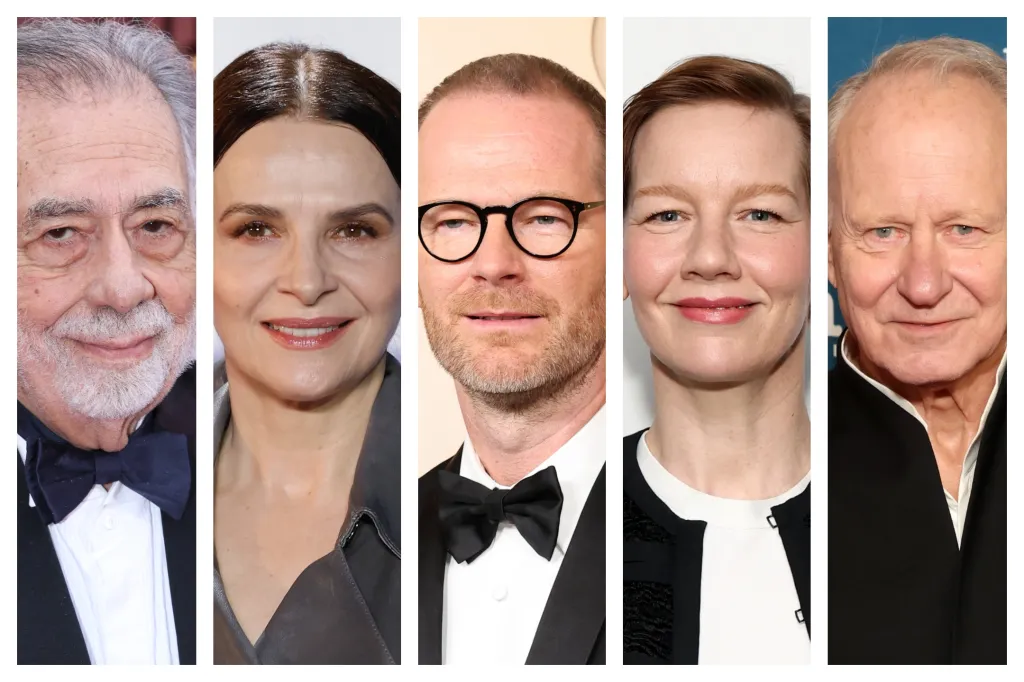
Juliette Binoche, Francis Ford Coppola Joachim Trier, Ruben Östlund, Stellan Skarsgård, Sandra Hüller and Vicky Krieps have joined calls for the European Union “to future-proof” the bloc’s 35-year MEDIA program which has supported thousands of films over the years.
They are among more than 4,700 cinema professionals to have signed an open letter entitled “Europe needs cinema, Cinema needs Europe”.
It has been published as EU Member states discuss plans for a controversial new mega-program bannered AgoraEU which will bring spending for culture, media and civil society under one umbrella. The move has set alarm bells ringing across the independent European film industry.
Under the proposal, the MEDIA program will be merged into a new Media+ strand combining support for film and audiovisual industries with that for video games, news media and journalism. MEDIA previously sat under the Creative Europe umbrella and ran several well-defined funding strands, honed over three decades, with clear multiyear funding windows.
The European Commission has proposed that €8.6 billion ($1 trillion) be set aside for AgoraEU under its 2028-2034 Multiannual Financial Framework (MFF) plan, with the European Parliament suggesting in April this should be bolstered to €10.7 billion under its ongoing consultation.
European film professionals say that while these figures suggests more money could be available overall for culture and media, there are no guarantees on what will be spent on the audiovisual and film sectors or any defined goals. The letter is part of a growing campaign to raise awareness around what is at stake.
“Just as the idea of Europe itself is a unique project, the idea of the MEDIA program is to sustain diverse European voices in a common house,” it reads.
“For over 35 years, it has been supporting the creation of European stories from script development to production by independent production companies, the releases in theatres and online, festivals, professionals’ training and upskilling.”
“We, European cinema professionals and citizens – all cinema lovers – call upon the European Commission, European Parliament and Member States to future-proof the success and integrity of the vital and precious MEDIA program and reinforce its resources. There are no shared values, no democracy, and no European soft power, without artistic creation.”
The member states are due to adopt a first position on the AgoraEU proposal on May 12, the same day as the opening of the 79th Cannes Film Festival.
The letter’s signatories include a number of Cannes habitués including 2026 Palme d’Or contenders Rodrigo Sorogoyen (The Beloved), Lukas Dhont (Coward), Pawel Pawlikowski (Fatherland) and Arthur Harari (The Unknown) as well as Ruben Östlund, Yorgos Lanthimos, Oliver Laxe, Michel Hazanavicius, Agnieszka Holland, Nadav Lapid, Laura Wandel, Ariane Labed, Agnès Jaoui, Clémence Poésy, Arnaud Desplechin among many more.
Most the signatories hail from Europe but the letter has also gained traction outside the region’s borders with Coppola among those lending his support.
The festival is usually a time of celebration for the MEDIA program thanks to its support of many of the European films in the Selection and parallel sections. This year, however, its future will be one of the hot button topics for European professionals up and down the Croisette.
Read the full letter below:
Cinema needs Europe, Europe needs cinema
“No art form, like cinema, traverses our diurnal consciousness so directly as to touch our feelings, deep within the twilight chamber of our soul.”
For more than 130 years, this twilight chamber, as Ingmar Bergman called it, was brought to life by the lives of others, by their thoughts, their struggles, their words and their gazes.
Cinema begins with the desire to create. It becomes a film through a succession of encounters: screenwriters, directors and producers develop it, cinematographers, actors, and technical crews contribute, film funds support it, sales agents and distributors bring it to cinemas and festivals – and later broadcasters and streamers, critics debate, and audiences embrace it.
Filmmaking is a collaborative art. It becomes an industry through job creation and technological innovation. Yet every film remains a prototype, impossible to mass-produce on an assembly line. There are no economies of scale in storytelling. This dual nature calls for deliberate political choices engaging public and private operators.
Europe itself, as a collective endeavour, was imagined in stories before it was built, it is Stefan Zweig’s continent of ideas, not armies. Cinema brought this imagined Europe to life: La Dolce Vita, Wings of Desire or Amélie turned Rome, Berlin and Paris into shared cultural references. Anatomy of a Fall, Sirat, or The New Years, global successes emerging from European talents, continue to build bridges across languages and borders.
In Europe, the political choice for cinema, be it Czech, Italian, Swedish, Slovenian, Portuguese or Belgian, is the MEDIA programme. Just as the idea of Europe itself is a unique project, the idea of the MEDIA programme is to sustain diverse European voices in a common house.
For over 35 years, it has been supporting the creation of European stories from script development to production by independent production companies, the releases in theatres and online, festivals, professionals’ training and upskilling. It has given a chance to all kinds of European projects, including the most unexpected ones, from East to West and from North to South. Building on the Union and Member States’ regulations, it has also reinforced our industries against global giants, allowing film professionals to face sector upheavals and resist standardization, and fostered a dynamic and job-creating ecosystem.
MEDIA is a drop in the ocean of European funding: it represents 0,2% of the Union’s budget, while, as a comparison, the common agricultural policy alone accounts for 32% of this budget.
Yet, it has been a European success story with an invaluable impact.
Thanks to MEDIA, works that nurtured the growth of Ruben Östlund or Justine Triet travelled the world.
Thanks to MEDIA, Europe wins an Oscar almost every year: after Flow, Gints Zilbalodis’s animated film, Joachim Trier’s Sentimental Value and the documentary Mr Nobody against Putin by David Borenstein and Pavel Talankin took the spotlight in 2026.
Thanks to MEDIA, the voices of exiled and oppressed authors, such as Jafar Panahi or Mohammad Rasoulof, have the freedom to reach audiences worldwide.
Thanks to MEDIA, our cherished neighbourhood cinemas can remain open to the world through diverse programming, and do not have to close their doors.
Without MEDIA, we would all be a little less European.
Greek filmmaker Costa-Gavras once said, “you cannot change people’s political vision with a film, but you can, at the very least, kindle a political discussion”. In times marked by war, geopolitical tensions, and pressure on democracy – our foremost common good – this function is essential. We strive to give our societies, our children and future adults a taste for collective experience, empathy, and resistance.
Yet Europe’s ability to tell its own stories is under strain. Most audiovisual productions viewed in Europe originate outside the continent. Global platforms increasingly shape visibility, access and stories. At the same time, the sector faces structural transformations: shifting audience habits, including declining cinema attendance, the rise of artificial intelligence, and growing geopolitical competition.
The European Union is currently revising the rules that enable European cinema to flourish, to travel, and to carry our common voice. It includes the future of MEDIA in the new AGORA EU programme.
It is now the time to write the next chapter of the European Cinema story, with even greater ambition, commensurate with the challenges we face. We must not fail to see that the destiny of democracy and that of cinema, both born in Europe, are intimately linked. Because every time a cinema opens, democratic life reasserts itself.
We, European cinema professionals and citizens – all cinema lovers – call upon the European Commission, European Parliament and Member States to future-proof the success and integrity of the vital and precious MEDIA programme and reinforce its resources. There are no shared values, no democracy, and no European soft power, without artistic creation.
>
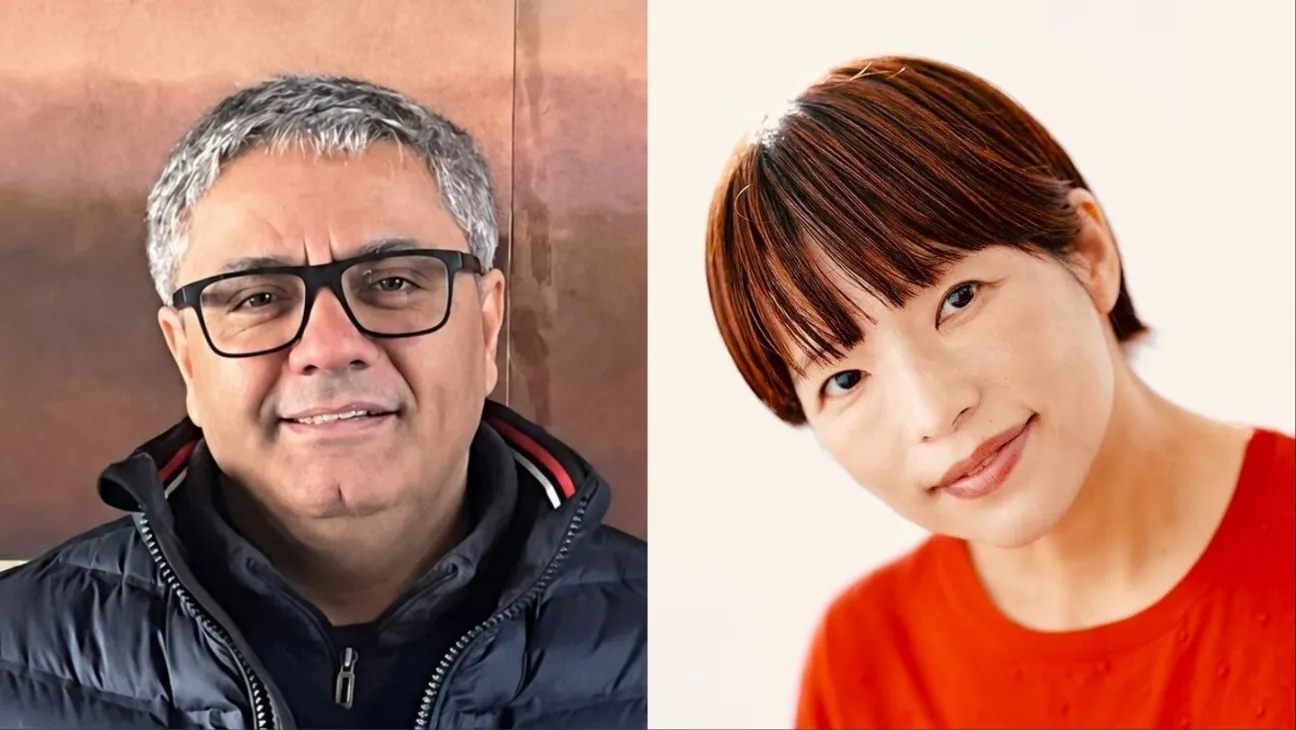
The Tokyo International Film Festival will honor filmmakers Mohammad Rasoulof and Mipo O with its Kurosawa Akira Award at the event’s 39th edition next month.
Named for the Japanese master, the award recognizes directors whose work has made an impact on cinema and who are expected to help shape its future. It was revived in 2022 after a 14-year hiatus with support from Capcom. Last year’s recipients were Chloé Zhao and Lee Sang-il.
This year’s honorees were selected by a committee comprising filmmakers Yoji Yamada and Lee Sang-il, cinematographer Akiko Ashizawa and TIFF programming director Shozo Ichiyama.
Rasoulof, one of Iran’s leading dissident directors now living in exile in Europe, won Berlin’s Golden Bear for There Is No Evil (2020), while The Seed of the Sacred Fig (2024) received a special prize at Cannes before earning an international feature Oscar nomination as Germany’s submission.
The committee singled out the two films for “their humanist perspective, which portrays even those who perpetrate oppression as ordinary citizens.” It also praised Rasoulof’s “unwavering commitment to creative expression despite relentless pressure.”
“Receiving the Kurosawa Award is a great honor for me. His films are profound explorations of the human condition and the moral choices we make in moments of crisis. Kurosawa was a dynamic and inquisitive visual storyteller whose unique perspective on humanity, nature, and the world has made his work an enduring source of inspiration in cinema,” Rasoulof said.
O, a Japanese-born filmmaker of Korean descent, made her feature debut with The Sakais’ Happiness in 2006. Her credits include The Light Shines Only There (2014), Japan’s Oscar submission that year, and Being Good (2015), an ensemble drama exploring child abuse, bullying and the possibility of breaking those cycles through human connection.
After a nine-year break from feature filmmaking, she returned with Living in Two Worlds (2024), a family drama starring Ryo Yoshizawa as the hearing son of deaf parents, whose desire for independence complicates his relationship with his mother. Her latest, How Dare You? (2025), takes a more comic approach to childhood, following three elementary school students whose budding environmental activism — mixed with a classroom crush — leads to unintended consequences.
The selection committee praised her “multifaceted perspective on individuals living on the margins of society” and her avoidance of “a simple lens of good vs. evil,” while highlighting her work with child performers.
“To receive such an extraordinary honor on the 20th anniversary of my directorial debut fills me with immense gratitude and deep humility,” O said. “Winning the Shindo Kaneto Award in 2010 provided me with the vital support to keep making films. Though my progress has been slow, reaching the Kurosawa Akira Award is a stroke of fortune that makes me truly savor what a happy cinematic journey I have had. This recognition is by no means mine alone. My heartfelt thanks go to all the cast and crew members I have met along the way, the audience who stepped into the theaters, and the selection committee—led by director Yamada Yoji—who discovered my films.”
Tokyo will also screen 4K restorations of Kurosawa’s Sanshiro Sugata (1943) and Ikiru (1952), alongside Charles Chaplin’s The Circus (1928) and Abbas Kiarostami’s Where Is the Friend’s House? (1987).
Separately, the festival named Alice in Borderland actor Hayato Isomura president of its Ethical Film Award jury. Launched in 2023 with Sumitomo Corporation, the prize recognizes films addressing social issues including the environment, poverty and discrimination. Three members of TIFF’s Student PR team will join Isomura on the jury.
The nominees are Brazil’s Amadeo and the Hypothetical New World, the German-Ukrainian feature I Rarely Wake Up Dreaming and Australia’s Time and Tide. The award ceremony and a talk with Isomura are scheduled for Nov. 2.
“Today, we absorb vast amounts of information in seconds through a small screen. I often feel we fall into the trap of believing we understand something instantly, constantly searching for quick answers. Yet, when it comes to deepening our awareness and understanding of social issues, the process of reaching those answers is what truly matters,” Isomura said. “Cinema possesses the unique power to pause our hurried pace, allowing us to experience that very process through the lives and emotions of others. I am committed to taking the thoughts, hopes, and wishes woven into these films by each filmmaker deeply to heart, and to reflecting on them together with everyone.”
The 39th Tokyo International Film Festival runs Oct. 26-Nov. 4, with the TIFFCOM market taking place Oct. 28-30.
>
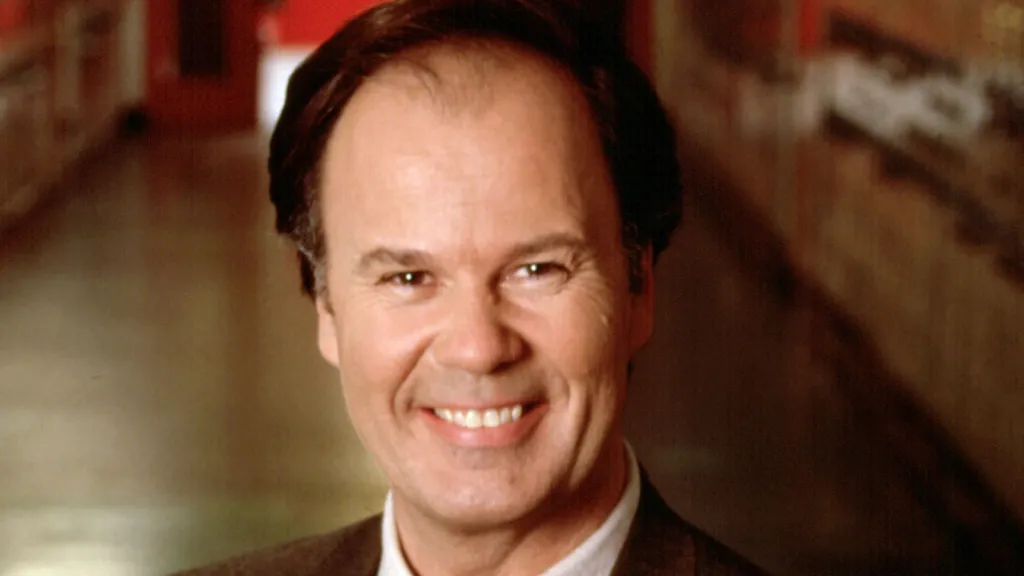
Dennis Haskins, best known for playing Mr. Belding in Saved by the Bell, has died. He was 75.
His agent Jay Schachter confirmed the news to Deadline, saying in a statement, “It’s a tragic loss. Everyone loved Mr. Belding and those of us who got to know Dennis, loved him even more. He was a great person, and he loved, I mean absolutely LOVED his fans.”
“He always had time for them, no matter what. He was my client and dear friend for over 20 years, and I will miss him terribly. I’m heartbroken,” he continued.
Haskins cause of death was not disclosed.
Haskins first played Principal Richard Belding in the Disney Channel series Good Morning, Miss Bliss, opposite Hayley Mills in 1989. After one season, the show was retooled as Saved by the Bell on NBC, where he reprised his role through its four-season run. Haskins returned as Mr. Belding for Saved by the Bell: The New Class in 1993 and played the role for seven more seasons, until the show’s finale in 2000.
Other acting credits for Haskins included Hangin’ with Mr. Cooper, Malibu, CA, The Practice, The West Wing, The Rerun Show, The Stoneman, 7th Heaven, Going Down, Red Water, Tangy Guacamole, An Ordinary Killer, JAG, Dead End Road, It’s Always Sunny in Philadelphia, Men of a Certain Age, The Bold and the Beautiful, Victorious, Mad Men, Emerald Acres, How I Met Your Mother, Destroy the Alpha Gammas, New Girl, Hot In Cleveland, This Isn’t Working, Bill Nye Saves the World, Abstruse, Enigma, A Bennett Song Holiday, among many others.
>
movies
Russo Brothers On The Hulk Appearing On ‘Avengers: Doomsday’: “Certainly Involved In The Story That Revolves Around Doom”
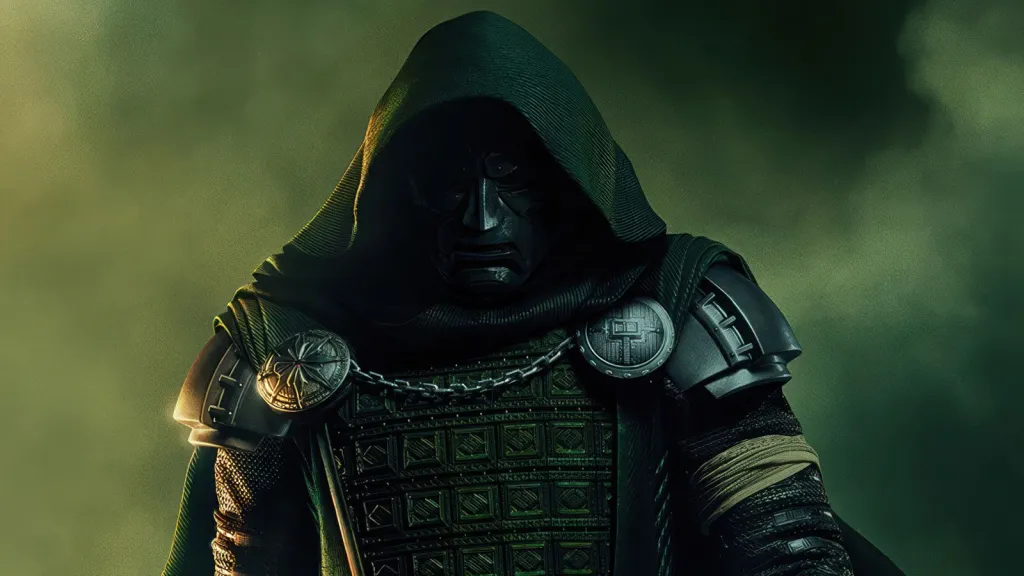
Many questions surround Avengers: Doomsday, and one major one is whether Mark Ruffalo will reprise his role as Bruce Banner.
The actor recently appeared in Spider-Man: Brand New Day as Banner, and the Russo Brothers teased that the Hulk is “certainly involved” in the story around Doctor Doom.
“I think [what] we could say is, [Banner] is certainly involved in the story that revolves around Doom,” Joe Russo told Empire Online. “We will not confirm nor deny his appearance in Doomsday.”
Anthony Russo added, “The farthest we can go is to say, there are characters and actors who have not been announced, who are a part of Doomsday.”
Avengers: Doomsday is set to be released on December 18 as part of Phase 6 of the MCU. The film follows 2019’s Avengers: Endgame, which the Russos also directed.
Avengers: Doomsday will feature different groups of heroes from different universes, including the Avengers, the Wakandans from Black Panther, the Thunderbolts (known as the New Avengers) from Earth-616, the Fantastic Four from Earth-828, and the original X-Men.
RELATED: 15 Movies & Shows To Watch Before ‘Avengers: Doomsday’
In a recent interview, the Russo Brothers said they started filming Avengers: Doomsday without a finished script.
“We’re improvisation-based, rehearsal-based directors,” Joe Russo told AP. “We like to see what the actors bring to the characters, and sometimes you don’t get the actors until a few days or few weeks before you shoot them. And a lot of the time, that’s when the magic happens.”
RELATED: ‘Avengers: Doomsday’ Ticket Pre-Sales Cross $50M Domestically Three Months Out
>

Tim Henman has called for changes to the calendar saying the 12-day Masters 1000 is ‘too much’ tennis | Tennis News

Man City CEO Ferran Soriano says fight against Premier League could take years to conclude amid reports of decision in 115 charges case | Football News

One Piece Anime Confirms New Episodes to Return in 2027 – News
-

 movies4 months ago
Search For Canadian TV Actor Stewart McLean Now Homicide Investigation
-

 Fashion9 years ago
These ’90s fashion trends are making a comeback in 2017
-
Fashion9 years ago
According to Dior Couture, this taboo fashion accessory is back
-
Fashion9 years ago
Model Jocelyn Chew’s Instagram is the best vacation you’ve ever had
-
Fashion9 years ago
Emily Ratajkowski channels back-to-school style
-
Fashion9 years ago
9 Celebrities who have spoken out about being photoshopped
-

 Anime4 months ago
Rurouni Kenshin: Hokkaido Arc Manga Takes 1-Issue Break – News
-

 Anime3 months ago
HIDIVE to Stream English Dubs for The World Is Dancing, The Forsaken Saintess and Her Foodie Roadtrip in Another World, The Dangers in My Heart: The Movie Anime – News