

movies
Borneo Rainforest Doc ‘Shinta’ Backed By Former AMPAS Prez & Rai

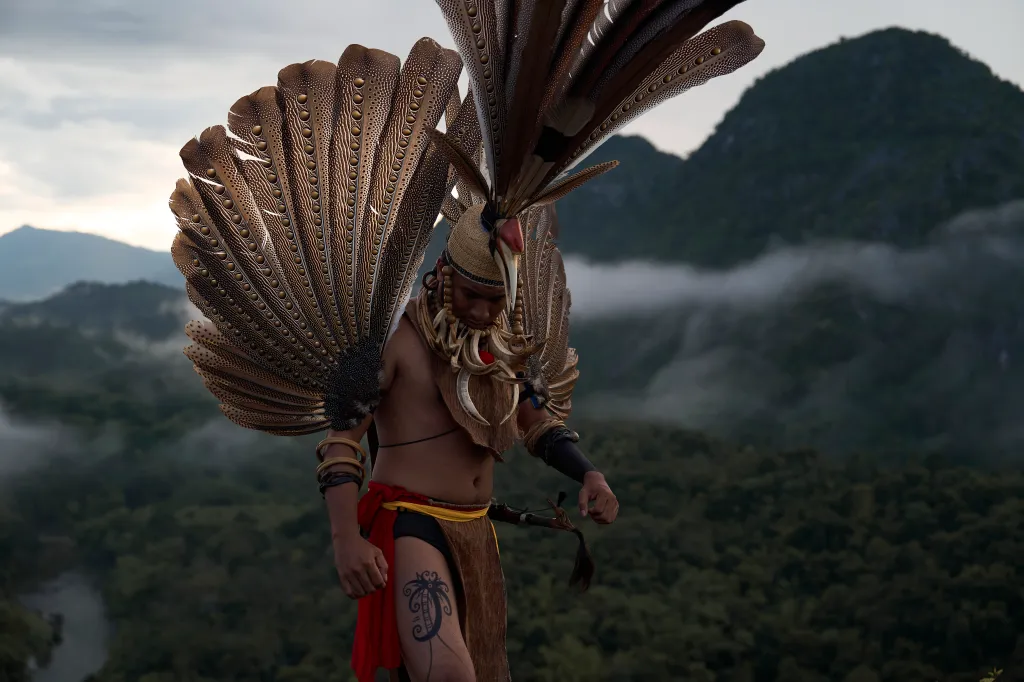
EXCLUSIVE: Former AMPAS President and The People vs. Larry Flynt producer Janet Yang is among the team behind new environmental doc Shinta, about a young Dayak girl and Indigenous activist Emanuela Shinta on a journey through Borneo’s rainforest.
The film is developed, written and produced by Michela Scolari (Paolo Rossi: The Heart Of A Champion) and directed by Paolo Sodi, who directed Andrea Bocelli’s Paramount documentary The Journey.
The documentary “follows a 10-year-old Dayak girl who dreams of saving her family and the Borneo that is disappearing around her, consumed by pollution, deforestation and loss. When she joins Indigenous activist Emanuela Shinta on a journey deep into the rainforest to find the Dream Wanderers, legendary ancestral shamans said to connect humans with Mother Nature, she believes they may hold the answers her world desperately needs. As myth and reality collide, the young girl discovers that the power to protect her homeland may already be within her: her voice, her courage and the strength of a generation ready to rise for nature.”
Currently in post, Scolari will be in Cannes to discuss the project with potential partners. The original idea was created by Scolari with Jaqueline Illy and Federico Gariboldi.
The film is a global co-production spanning the U.S., Romania, Switzerland and Italy. Producers include Scolari, Yang, Brenda Emmett and Vince Emmett for American Troubadours in the U.S.; Bradamante Entertainment in Romania; Angelo Boffa and Remo Muggli for Carm-One Productions in Switzerland; and Filmintuscany in Italy and RAI Cinema.
The project was developed with Yang’s guidance and support, with the producer championing the story from its earliest stages. It is being envisioned as the first feature documentary in a planned series exploring the power of female activism in countries facing severe ecological crises.
“At its heart, this is a story that brings forward the voices of two women, and through them, the powerful voice of nature itself,” said Scolari. “Shinta is a return to an ancestral, pure and direct love for our primordial mother, nature. It is a fairy tale, a love story between two young girls and the natural world, one that I believe can help us all see it again with new eyes.”
“Across documentaries, television series and narrative films, my purpose remains the same,” Scolari added. “To tell powerful stories that can awaken conscience and, hopefully, help shape a better society, one that listens to, and truly recognizes, the value of women.”
>
Continue Reading
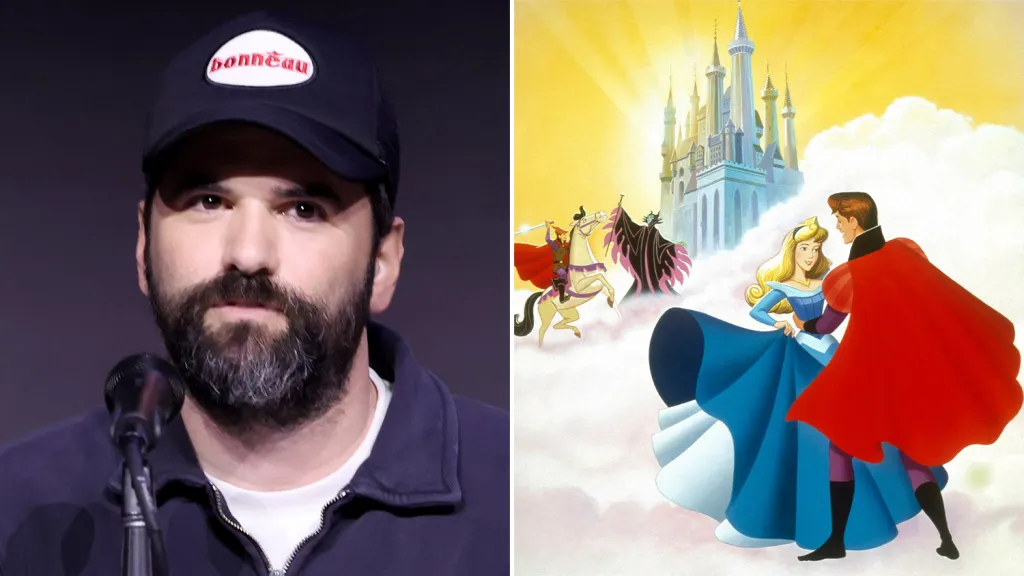
EXCLUSIVE: After breathing new life into the Predator franchise at 20th Century, Dan Trachtenberg and Disney have found their next property to give a fresh spin on. Sources tell Deadline the Prey director is coming on to direct an original idea inspired by the classic Disney tale Sleeping Beauty. The untitled project is in early development and is inspired by the classic fairy tale, taking the story in an entirely new direction with Trachtenberg’s distinct sensibility.
While plot details are being kept under wraps, Insiders add that this take has no connection to the Maleficent films starring Angelina Jolie. Trachtenberg and Raya McClendon came up with the story with Alex Anfanger and Dan Schimpf penning the script.
Trachtenberg and his long time producing partner Ben Rosenblatt will produce as will Star Wars producer Michelle Rejwan. EVP of production Jessica Virtue is overseeing the project with Creative Executive Alina Mota, reporting to Disney Live Action President Daria Cercek.
Trachtenberg and Disney have strong ties after he successfully helped relaunch the Predator franchise with his hit Prey, that was not only a massive success on Hulu but also heard strong critical prase as well landing an Emmy nomination for best TV movie. He followed that up with the Predator: Badlands as well as the animated Predator pic Predator: Killer of Killers for Hulu, which also has a 94% score on Rotten Tomatoes; all three of Dan’s entries hold the record for highest rated on Rotten Tomatoes in the Predator franchise.
He is currently in pre-production on a top secret pic at Paramount.
Anfanger and Schimp are the co-creators of the Comedy Central series Big Time In Hollywood, FL.
Trachtenberg is repped by CAA, Untitled Entertainment and Johnson Shapiro Slewett and Kole, Anfanger and Schimp are repped by Mosaic, CAA, and Ginsburg Daniels Kallis.
>
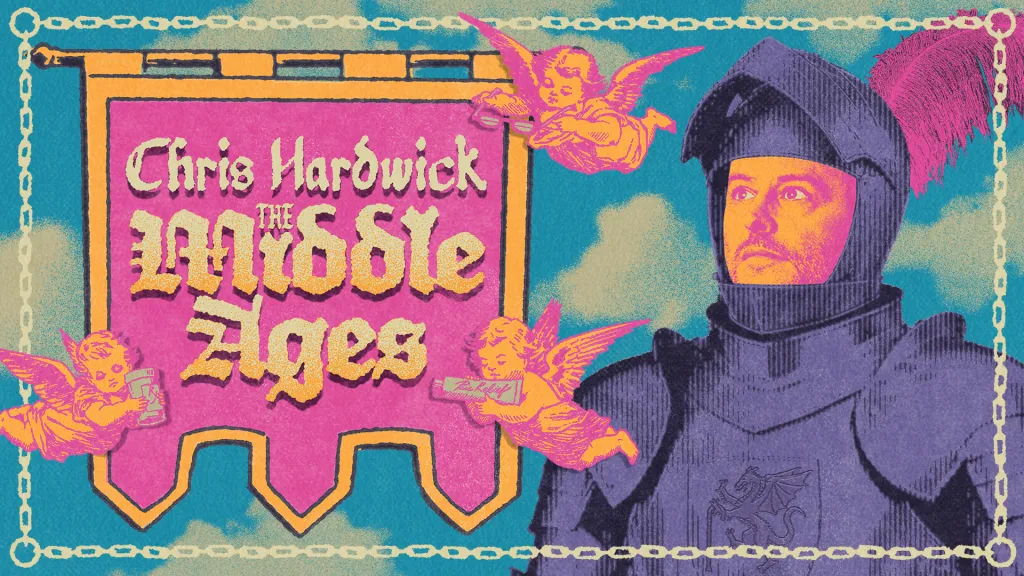
EXCLUSIVE: Comedian Chris Hardwick has announced that The Middle Ages — his third stand-up special and first in a decade — will premiere on Gorilla Comedy+ on October 5. It’ll then be unveiled on 800 Pound Gorilla’s YouTube channel at 7 p.m. CT. on October 20.
In The Middle Ages, Hardwick takes on middle age, marriage, fatherhood and a rapidly changing world. Now in his 50s, he finds comedy in the indignities of aging, from growing pill collections and questionable digestive choices to prostate exams and realizing Gen Z are “time millionaires.”
Check out a trailer above.
“The foundation of this set came from my 2019/2020 tour with the intent to shoot the special in 2021, but the pandemic had other plans!” Hardwick told Deadline. “In January of 2022 we had a baby and I paused work stuff for what ultimately became a three-year hiatus. BUT in that time, I learned piano, became a parent and got even MORE middle-aged than I was before, so in a weird way the delay actually kind of helped the set, and I’m super excited it’s finally happening! HUGE thanks to 800 Pound Gorilla, who not only have built a fantastic comedy community but who’ve also been an absolute dream to work with.”
Hardwick has worked in every sect of comedy, from the stand-up stage, to acting and writing in television and film, to voiceover work and hosting various podcasts and talk shows such as @midnight and Talking Dead. His previous hour specials, 2012’s Mandroid and 2016’s Funcomfortable, aired on Comedy Central. This summer, he returned to podcasting with I Think You’re Overthinking It, a weekly chat show with AMC+ that marks the latest incarnation of his former longtime pod The Nerdist Podcast. He also exec produces and hosts NBC’s The Wall, which this year was nominated for a Critics Choice Real TV Award for Best Game Show. He is repped by UTA, Brillstein Entertainment Partners, and Goodman, Genow, Schenkman.
This story originated as part of Deadline’s Comedy Means Business newsletter. Sign up here.
>
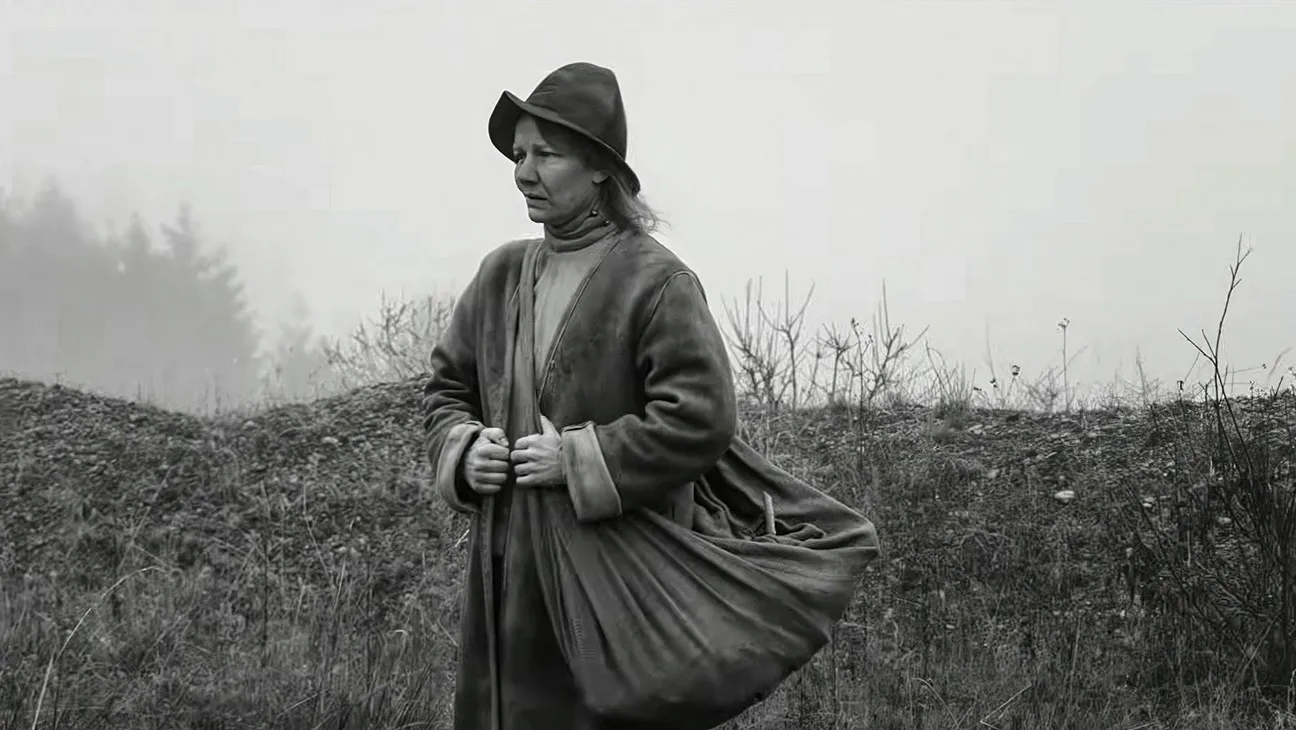
The bullet that tore through Rose‘s face now hangs around her neck. Occasionally, she raises it to her mouth and sucks on it, a small, private gesture from a woman whose survival depends on keeping nearly everything about herself private.
As played by Sandra Hüller in Markus Schleinzer’s Rose, she is a veteran of the Thirty Years’ War, which devastated Central Europe from 1618 to 1648. Now she is attempting to settle into a rural German community, acquire land and build a life, all while passing as a man. The trousers grant her freedoms she could never otherwise claim. A marriage to a local woman makes the arrangement considerably more complicated. It is a performance built from watchfulness and restraint, with Hüller allowing glimpses of tenderness, fear and finally fury to emerge from beneath Rose’s carefully maintained exterior.
The role has already earned Hüller the Silver Bear for best leading performance at this year’s Berlin International Film Festival and could bring the Anatomy of a Fall Oscar nominee back into the best actress race. Austria has selected the black-and-white drama as its international feature submission. A new trailer debuted today ahead of the film’s Dec. 11 U.S. theatrical release.
In a conversation with The Hollywood Reporter, the two discussed the freedom of leaving several central questions unanswered, the homemade device that helped Hüller find the character’s physicality and why Schleinzer refused to make her undress to prove anything.
***
Rose evoked several of my favorite films. I’m very drawn to this genre of hiding within gender. I thought of movies like Yentl, Boys Don’t Cry and M. Butterfly. The tension of wondering when they’ll be found out gives those films a simmering intensity. Were those some of your inspirations, Markus?
MARKUS SCHLEINZER I watched all of those films, but that was the second part of the process. The first part of the process was an incident. A friend of mine called me to wish me happy birthday. At the end of the call, she said, “Listen, it’s weird. I just finished reading a book today about a woman who got executed on this very day, your birthday, about 250 years before your birth, because she was wearing pants, because she was trying to live a different life. That’s the reason why she got executed.”
This was very touching to me, and it was the beginning of a very long process of research. I started on women in pants: Why had women chosen to wear pants? To gain more freedom. I think it was two to three years, this research process, in which I was able to learn about 300 women across three different centuries.
These are the women who got caught, the women we are aware of, so the figures must be much bigger. The reason why these women chose this kind of life was always different. Most of them tried to avoid getting married to someone they disliked. Some wanted to avoid rape or sexual harassment. Some wanted to have access to education, like in one of the films you mentioned, Yentl. Then there were women who wanted to fight for their countries and were not allowed to do so as women, so they chose to live like men. Some women just wanted to follow their husbands into war. There were transgender people or lesbians, I think, of course, but in those days there wasn’t an idea or words for this.
All very different reasons, but the goal was always the same: to have more freedom, live more freely, have the possibility to do something which is already allowed to others. And as my first two movies had dealt with the so-called outsiders of society, I thought, OK, why not do it again, proceed with this research and this time talk about the biggest group of outsiders in the world: women. It was very interesting. The interesting thing is, when it comes to cross-dressing movies with men in dresses, what they have to do to reveal their gender is take off the wig. That’s what they do mostly. And what women in trousers always have to do is …
SANDRA HÜLLER Completely undress.
SCHLEINZER Yeah, completely undress to prove their gender. When we started writing the script, I said, OK, I want to try writing something on this topic without the naked body, because I don’t think a story like this needs to prove it through the naked body. Why? How often do I have to fill out some form on the internet, what’s your gender, male, female, diverse, whatever, and how often have I ticked “male” without sending pics of my naked body to prove it? So this was the beginning of this project.
Is it true you wrote a novel version of Rose before you wrote the screenplay?
SCHLEINZER I was a casting director for 17 years and I read the traditional scripts, but I dislike the form. As an author, I get much more in contact with a person when I choose to write in prose, like a novel, because writing in that style you can discuss thoughts, you can discuss fears, whatever. This is what I like very much.
We started in the early years of Rose, when she was a child, and the novel ends where the film ends. It was about 1,000 pages. And then I thought, “Okay, you idiot, no one is going to give you millions of dollars to make a 45-hour movie.” So we just skipped the first 800 pages and concentrated on the last 200 pages of the novel, because that could survive as a movie by itself.
You should release that book. I’d love to see what else happened in her life.
HÜLLER Yeah, Markus, just do it. Just release the book.
SCHLEINZER I don’t know. I’m not this merchandising guy who does something and then has to shoot out more, more, more, more, keep the money coming. Maybe in some 20 years I will do so.
Sandra, how did you approach a character as quietly complex as Rose? Was her facial scarring something you were hesitant about, or something you thought helped you find the character?
HÜLLER The script was so poetic, and there was so much information in it about the emotional state of the people. It didn’t have the usual form. It was written like a poem. Even the [stage directions] came in this special [prose] form that Markus had found. So that set the inner tone for everything we did. It gave a certain tenderness to everything we did, despite the brutality of the things that are actually happening. I can only thank Markus that he wrote it in this manner, because it was so rare. It did something very special to the whole work.
As for the actual deformation of Rose’s face, it took us some time to find it. I remember, Markus, that you sent me a picture of a woman who had a scar from war, very early on. So I got familiar with the thought of having something put on my face. It was a pretty interesting construction. There had to be some pulling of the face up, and it would be clipped into the hair, like with a rubber band that kept it in place, and above that would be the form of the actual hole in the face, the scar. That’s something I’d never experienced before, and I was curious how it works when you can only use half of your face, and maybe just your eyes, for the things you want to express. I find limitations in acting very interesting. They force you to choose a certain form and help you find the essence of something when you leave a lot out. I found that very, very helpful. And it was, of course, a true pleasure to be in the makeup trailer of Anette Keiser for two hours every day. So that was always a good start.
And then there was also the costume, of course. Markus referenced the trousers, the boots.
HÜLLER Markus, you remember, you gave me your personal shoes, which I would have loved to keep, but I didn’t. A lot of Markus’ private life is in there, and that’s something you are aware of every day when you wear these things. You’re aware of the details and of all the love that has been put in there. It was meant to disguise something, and at the same time it was meant to give a certain feeling of strength, of course, because wearing armor does something to the body. Then we find out how her “horn” [a homemade strap-on sex device] that we discover later in the film is placed on the body, and that would also help to find out how to move and all of these things. Markus is someone who cares about all of these things. It’s something I would never have had to find out alone.
It’s never specified what Rose’s impulse is for passing as a man, beyond the freedom of it. Did you come to a conclusion in your own mind as to whether she was trans, or a lesbian, or just a woman who wanted more opportunities for herself? What was your take on it?
HÜLLER It’s part of the story that we don’t know, and it’s part of her personal freedom that she doesn’t tell anything about it, and I respected that. That’s all I can say. And as Markus said before, this character is an essence of hundreds of female characters from that time who chose this exact path, and their choices were very different from each other. So why would we decide on one reason?
And yet there is a real love story going on between you and Caro Braun’s character, which is very heartwarming to watch unfold. But one thing you never find out is how she got pregnant with their child. Did you intentionally leave that a mystery as well?
SCHLEINZER Well, I did, because I didn’t want to have this. I don’t want to look at people only as victims, and giving her this story might have put her in the victim corner. I think the things that happen to us should not define us completely.
HÜLLER Caro said such a beautiful thing about that pregnancy when we were talking about the film in Berlin. She chose, for herself, that it is something that happened with pleasure. And that is something I love so much about her as a person, that she is choosing this story, although we don’t know the truth. We just have to respect it.
SCHLEINZER When we were working on this, I went to Caro and said, “OK, I know you cannot play this without knowing how this happened to you, so find your own story.” And the funny thing is that she came back and said yes, now she knows everything, but she didn’t give it away. I asked her, “Who is the father?” She said, “None of your business.” Every time she gets asked in interviews, she always says, “None of your business.” And this I like very much. What do we really have to know about other people? Knowing too much, or knowing something about other people, so very often turns into judging. And is this a good thing? Does judging mean understanding? I doubt it.
Was Sandra always the actress you had in mind for Rose?
SCHLEINZER The part was written for Sandra. When it comes to a German-speaking part like this, there’s no way not to think about Sandra. So I stalked her. I watched all the movies I could get, to get my impression of how she does it, my impression of her enormous talent. And then I had the joy of acting alongside her in a movie, Sisi & I. I was pretty bad in that movie, because all I did was look at her and try to figure out, OK, [how would she do it?] I never told her this was written for her.
HÜLLER It doesn’t always help when you know.
SCHLEINZER Someone can write something for you and it still is shit. So I was very, very, very happy that she said yes.
Can we talk about the scene when the townspeople confront Rose and you finally lose your cool? They reduce her identity to anatomy, while she’s arguing for her right to exist on her own terms. It brought to mind the trans and anti-trans debates you read every day on social media. What did that scene mean to you when you were making it?
HÜLLER Well, we can talk about it on many levels. There’s a practical level: a night shoot in the dark, in the cold, with a lot of people who probably want to go home, so you have to really do it well so you don’t waste everybody’s time.
I like the idea that she is going into the confrontation in the first place. She’s not shying away from that discussion, and she’s basically asking, Markus, please correct me if I’m wrong, whether anything she’s done for the community changes if her gender were a different one. And I think that’s fair, because obviously the answer is no. The things she has contributed to the village and to the people there, what she taught them and how she showed up, don’t change in the slightest if people find out she is not a man.
It’s heartbreaking to watch you have to even make that case for yourself when you’ve done so much for the community, and they still don’t care. They still want blood.
SCHLEINZER You will never fit. Is this how we want to live together as a community on this planet? I don’t know what kind of future mankind has, but this is what I see so very often. This could be a win-win situation. What she’s doing there, she’s saving a life, she’s creating jobs, she’s paying people, they learn how to read and write, things like this. She’s doing what she can, and she just wants to do it within the existing community.
HÜLLER But it’s not for her to decide. That’s what we learned there.
>
Sports1 minute ago
Pacers' Tyrese Haliburton says he's '100 percent' healthy after torn Achilles
Sports7 minutes ago
Panthers CB Jaycee Horn suffers significant quad injury, out indefinitely

movies10 minutes ago
Dan Trachtenberg Developing New ‘Sleeping Beauty’ Pic (Exclusive)
-

 movies4 months ago
Search For Canadian TV Actor Stewart McLean Now Homicide Investigation
-

 Fashion9 years ago
These ’90s fashion trends are making a comeback in 2017
-
Fashion9 years ago
According to Dior Couture, this taboo fashion accessory is back
-
Fashion9 years ago
Model Jocelyn Chew’s Instagram is the best vacation you’ve ever had
-
Fashion9 years ago
Emily Ratajkowski channels back-to-school style
-
Fashion9 years ago
9 Celebrities who have spoken out about being photoshopped
-

 Anime4 months ago
Rurouni Kenshin: Hokkaido Arc Manga Takes 1-Issue Break – News
-

 Anime3 months ago
HIDIVE to Stream English Dubs for The World Is Dancing, The Forsaken Saintess and Her Foodie Roadtrip in Another World, The Dangers in My Heart: The Movie Anime – News