
Anime
Detective Conan Creator Gōshō Aoyama Celebrates New Film with Sketch – Interest

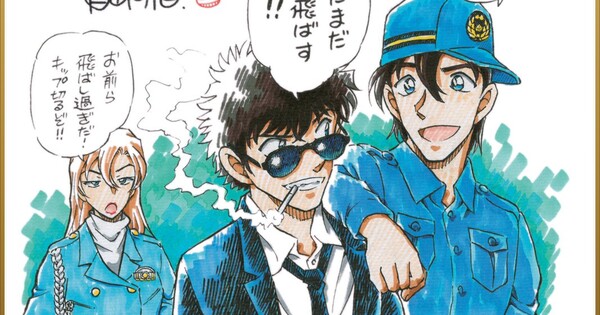
Detective Conan creator Gōshō Aoyama released an original illustration congratulating the latest Detective Conan film, Detective Conan: Fallen Angel of the Highway (Detective Conan: Highway no Datenshi), on earning 10.8 billion yen (about US$69 million) since opening on April 10. The illustration features Conan Edogawa, Chihaya Hagiwara, Kenji Hagiwara, and Jinpei Matsuda. Kenji says, “We’ve broken 10.8 billion,” and Jinpei responds, “We’ll keep flooring it!!” Chihaya and Conan are also in the background with Chihaya saying, “You’re flooring it too much! I’ll write you up!”

©青山剛昌
Detective Conan: Fallen Angel of the Highway is the 29th film in the franchise. The film opened at #1 on April 10 and sold 2,318,009 tickets to earn 3,502,137,800 yen (about US$21.9 million) in its first three days, a new opening-weekend record for the franchise. Following the franchise record breaking opening, voice actor Kappei Yamaguchi posted an original illustration he drew of his character Shinichi Kudō to his X (formerly Twitter) account.
The new film centers on the character Chihaya Hagiwara, member of the Kanagawa Prefectural Police and the leader of its motorcycle division. Miyuki Sawashiro now voices the character, replacing the late Atsuko Tanaka. The movie also features Kanagawa inspector Jugo Yokomizo, teenage detective Masumi Sera, Chihaya’s late younger brother Kenji Hagiwara, and Kenji’s Police Academy classmate Jinpei Matsuda.
Sources: Detective Conan movies’ X/Twitter account, Comic Natalie
>

 The 26th and final episode of Liar Game ended with an announcement on Tuesday that a second season is in production. The animation character designer Kei Tsuchiya drew an illustration to commemorate the announcement (pictured).
Produced by Madhouse, the television anime series adapting Shinobu Kaitani‘s psychological thriller manga aired in 26 episodes on April 7. Crunchyroll simulcast the television anime series with subtitles and an English dub.
Kaitani serialized the psychological suspense manga in Young Jump magazine from February 2005 to January 2015. Shueisha published the 19th and final volume in April 2015.
Shueisha published an anthology manga titled Liar Game: Roots of A from September 1999 to January 2004, and also published a one-shot sequel in February 2010. A sequel manga titled Liar Game: The Last Game was serialized from February 25 to July 22. Shueisha will publish its chapters as the 20th volume on October 19.
Official site: https://www.liargame-anime.com/
Official X: @liargame_anime
Source: animate Times
Liar Game 2nd Season on MAL
>
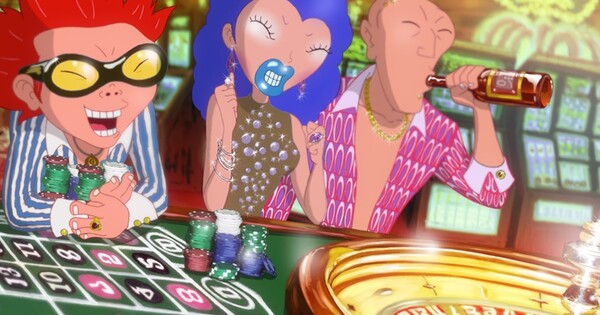
Korean Animation has hit a high in recent years. Between Netflix‘s Lost in Starlight and Studio Lico’s Your Letter, the industry feels more confident than ever in producing its own stories. But that wasn’t the case in the early 2000s. While the country had become known for reliable outsourcing of animation talent, producing wholly Korean animated films was a massive gamble that rarely paid off (Wonderful Days). Aachi & Ssipak spent eight years developing in this era, starting right after 1998 lifts anime’s ban in the country, then spent an extra two decades streaming uncut in its original language exclusively on DARKROOM. This film certainly isn’t for everyone, but it’s like watching someone drop Rugrats into AKIRA!
Right out of the gate, this film makes its priorities clear: potty humor and ultra-violence. After a title crawl establishing that this world is literally fueled by doodoo, a gang of diaper-clad blue minions brutally raid an armored truck for its stash of ice pops. These “juicybars” were previously provided in bathrooms in exchange for a good poop, but these mutants lost their ability to defecate (alongside their genitals) after consuming too much. In the midst of their heist, a biker Robocop pops most of them in the head in a matter of minutes. He moves so fast that the bullets have a delayed impact, similar to when a samurai sheathes his swords before revealing the killing blow. One survivor grasps a remaining juicybar with tears in their eyes, only to get casually run over by our two leads: Aachi & Ssipak.
There’s an old saying that the people reflect the city, and in this case that’s absolutely true. There is not a single character you want to root for here. Aachi & Ssipak are two lowlife crooks breaking into toilets to fulfill quotas from the local mob. They’re incredibly shallow and outright sociopathic, only garnering sympathy by being at the bottom of a rotten food chain. The government essentially runs on a currency of mandated drugs, maintained through a militarized police and PSAs that are indistinguishable from its adult video industry. These give birth to an army of monsters dependent on those drugs and a black market for crooks to sell more than one, thus creating a perpetual cycle of one side making hamburger meat out of the other. It’s as if breathing in the filth of this city has rotted the soul of its populace.
So when these two meet a gold digger who can literally shit gold (one of them is clearly in love with her), is it any wonder sharing is the last thing on anyone’s mind? Nah, these two and their “beauty” just buy their way up the criminal ladder in a three-minute montage. Then when they’re at the top, it’s simply a matter of who’s gunning their way to the top. This nihilistic tinge to how everyone’s characterized makes it hard to get emotionally attached to anyone involved. But this turns out to be a good thing: I don’t care if anyone dies, so watch how awesome it is when they blow the fuck up! It’s in that meat-grinder approach to storytelling that this film excels, throwing multiple factions into one room and counting how many bodies hit the floor. If there’s one thing anyone can appreciate in this film, it’s the nonstop, kinetic, brutal action.
Director Jo Beom-jin has a strong grasp of both weight and motion, combining John Woo gunfights with Looney Tunes movement. You’ll see the camera go through a bullet-ridden car WHILE it’s in the middle of being shot at. The Robocop that does most of the fighting achieves superhuman acrobatic feats at a pace no human could keep up with. At one point, he transforms into a human Beyblade X Gatling gun by breakdancing with two pistols. Despite being the title characters, Aachi & Ssipak mostly run away from all the danger. But through a mix of early CG backgrounds and well-timed camera shake, their chase scenes have an immersive quality that feels like you’re running from the gunfire with them. And that’s not even getting into the Minecart chase where everyone in the film gets involved! There’s almost a Video Game quality to how each level escalates as the body count increases. It may not even try to tell a hero’s story, but it knows which action scenes to fit into each stage.
The art style sticks out for looking nothing like anime. It looks more like Rocket Power or The Wild Thornberrys (RIP Tim Curry). The mix of oversized heads and beady eyes too far apart reminded me a lot of the deformed character designs of Rugrats. One uncanny detail is that no one keeps their mouths closed: everyone’s showing off their pearly whites. It’s funny because Klasky-Csupo Inc. did dabble in adult animation with Duckman, but never something this grimy. It’s definitely a look that takes getting used to, but it felt like a way to make the characters look as ugly on the outside as they are on the inside.
It’s worth mentioning, though, that this film was technically released in the US before. Shortly after its domestic release, a small screening in LA caught MTV‘s attention. They planned to release the film cut up into TV episodes, but instead they sat on the rights for as long as it took to make: eight years. Multi-Channel Network Mondo Media (Happy Tree Friends) then bought the rights in 2014 to distribute it digitally and on DVD. About four minutes of the film would be cut (the Butt Extraction scene and the stinger), new music would be commissioned, and two of their creators, Ed Skudder and Zack Keller of DICK FIGURES fame, would dub it. On paper, their sense of humor seems perfect for this film. Lines like “their number two makes us number one” or “my junk is a divining rod” don’t feel out of place in a movie about literal shit. The problem comes when an adapted script is treated more like a comedian’s playground.
Put simply, the English dub feels more like a commentary riff or abridged series than a professional dub. Character motives are rewritten for the sake of a punchline, and plot points get haphazardly spoiled to pick up the pace. The government mole now helps the Diaper Gang for a hang glider. The mad scientist changes sides because he likes spinning rather than the promise of test subjects. Ssipak lusted for Beauty before they ever met, giving his bumbling simp persona a slightly creepier edge. One bit about the ID chips is revealed much earlier than the point at which the villains come up with their plan. These changes seem like an attempt to cram humor at the film’s expense. But in my opinion, it’s funnier if the staff completely buys into the insanity they’re writing.
This difference also shows up in the soundscape, as each has different music. The original by Bok Seung-Ah leans more towards Funk and Rock, while Kevin Seaton’s is more reminiscent of Dubstep. Both are loud genres that fit the image of rambunctious rascals entering a violent world, but each paints this chaotic image at a different pace and tone. The original feels more psychedelic, often repeating beats in a hypnotic rhythm. It’s also not a constant presence, instead letting gunfire and explosions take its place. Meanwhile, the dub‘s score seems loud and fast to compensate for noticeably weaker sound mixing. Several shootouts feel less punchy because they’re drowning out all the background noise. That’s not to say they didn’t have fun with it: a character’s scream while firing a gun will sometimes make it into the song. But I prefer the immersive element of the original’s more dated soundtrack.
Overall, I can see why this struggled to grab an audience. It’s too childish and frantic for adults, but too violent and sexual for kids. In a way, MTV was the perfect distributor for something this proudly immature: they just refused to release it and let someone else take over. But I’m here to say this: go watch it anyway. Even if it’s not your cup of tea, you’ll definitely come out of it going, “WHAT DID I JUST WATCH?!” What it lacks in brains and soul, it more than makes up for in attitude. At a brisk 84 minutes, that’s good enough.
>

©とよ田みのる/小学館/王島南高校漫研
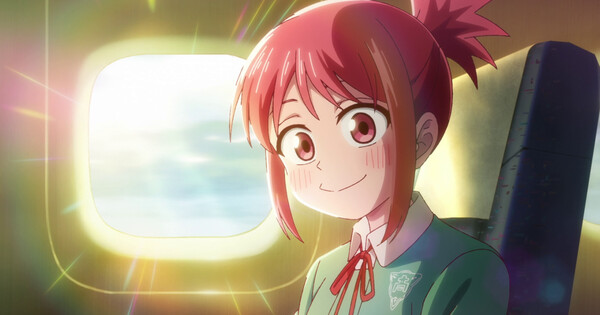
I would be lying if I said I wasn’t sobbing emotionally by the end of this finale. When I started Draw This, Then Die!, I knew it was going to tug at my heartstrings given that its premise was all about creative people discovering and rediscovering their passions. As somebody who keeps throwing themselves into creative fields, I think art like this is so important because it serves as a reminder of why I pursue things in the first place while also being realistic about the ups and downs that come with being an artist. I didn’t expect to relate so heavily to characters like Teshima, who suffered a psychotic break. But much like her, this show as a whole fills me with light to keep trying.
This episode makes it clear that the reason why Teshima quit being a manga creator was that she just couldn’t take it anymore. She did have a passion for creating manga, but that passion got buried under overwhelming negative emotions like jealousy, insecurity, and exhaustion. She was already easily influenced by those emotions. Add physical burnout, and she never had a chance. She basically lost sight of why she wanted to be a manga creator in the first place. For the entire show, Teshima had been telling Yasumi that she should only be a manga creator as a hobby, and while Teshima is definitely jaded about the manga industry, it’s clear that this was to protect them both. She didn’t want Yasumi’s smile to be destroyed, but she also didn’t think she could handle seeing Yasumi as a reminder of what she went through. The irony is that Yasumi’s response served as a reminder of the difference between the two.
It doesn’t matter if you do something professionally or as a hobby; as long as you’re making something you’re happy with and that other people can find interesting, that burnout should never destroy you. Teshima probably never even considered that her manga could reach somebody because she got so overwhelmed in the throes of just meeting those deadlines and making something popular. The irony is that Teshima’s life came full circle in finding one of her most devout fans, and it’s in meeting Yasumi that she might be willing to pick up a pen again in the future. The show is a little ambiguous about what Teshima will do next, and with the recent announcement of a second season, that could be the next major arc of the show. Even without that announcement, this is how this season needed to end.
This finale even retroactively absolves one complaint I had last week regarding Pokota. I thought the show was being inconsistent or poorly writing Pokota’s potential exit from the show, but it turns out that the show was just trolling me because he’s not going anywhere. If anything, he has a bunch of imaginary friends to chill out with because every new creation of Yasumi is just another element of her world that he gets to interact with. That’s really cute because I interpret that as Pokota literally being the representation of Yasumi’s creativity. Him exiting the show might actually be more of a negative sign than a positive one because Yasumi should never lose that creative spark, and I would really like to see how far that spark of hers can go in any more physically demanding field.
That’s what the first half of this episode was: shadowing with the editor. Fujimori and Yasumi didn’t just immediately buckle under the pressure of their manga getting a lukewarm reaction. Instead, they took the criticism and applied it to their story without compromising the ideas that they came up with. They listened, reacted, and adapted. They literally did what Teshima could not based on all of her flashbacks. I know that Yasumi isn’t fully sure about being a professional, but she might have a better chance of making it in the creative world than Teshima because she was always willing to put that passion first. Plus, having a great support group like the other characters further solidifies that she could go far compared to Teshima, who seemed to be much more of a loner until the late stages of her career. This is the finale that wraps up the main arc and perfectly embodies the main message of the show, but there are so many little things that can still be built upon in a second season. I feel very satisfied with my time here. I laughed, I cried, and I felt very emotionally overwhelmed, even as I write this final review. I’m looking forward to seeing what other endeavors this cast will have and what other ways it’ll gut punch me in the future.
Rating:
Bolts also streams regularly on Twitch as the indie VtuberBolts The Mechanic where they talk about and play retro media!
Draw This, Then Die! is currently streaming on
Crunchyroll.
The views and opinions expressed in this article are solely those of the author(s) and do not necessarily represent the views of Anime News Network, its employees, owners, or sponsors.
>

Fox News To Launch ‘The Girls’ Podcast
Giants to acquire QB J.J. McCarthy from Vikings for 2027 fifth-round pick
ADB Raises Southeast Asia Growth Forecast as AI Boom Builds, but Gains Are Uneven
-

 movies4 months ago
Search For Canadian TV Actor Stewart McLean Now Homicide Investigation
-

 Fashion9 years ago
These ’90s fashion trends are making a comeback in 2017
-
Fashion9 years ago
According to Dior Couture, this taboo fashion accessory is back
-
Fashion9 years ago
Model Jocelyn Chew’s Instagram is the best vacation you’ve ever had
-
Fashion9 years ago
Emily Ratajkowski channels back-to-school style
-
Fashion9 years ago
9 Celebrities who have spoken out about being photoshopped
-

 Anime4 months ago
Rurouni Kenshin: Hokkaido Arc Manga Takes 1-Issue Break – News
-

 Anime3 months ago
HIDIVE to Stream English Dubs for The World Is Dancing, The Forsaken Saintess and Her Foodie Roadtrip in Another World, The Dangers in My Heart: The Movie Anime – News