
Ebon Moss-Bachrach and Rebecca Hall (left), who play brother-in-law and sister to Jimmy in ‘The Man I Love,’ “built something so intimate and lived-in together,” says Malek.



Ira Sachs had been talking about making some version of The Man I Love, his vividly sad but vibrant drama set in New York circa 1984, for over a decade by the time the moment to do it had arrived — and yet it was only well after production when he realized where it all came from. This was an instinctual work, mined from decades of memory. Sachs took on his first job in New York in 1984, then lived through a decade or so of “deep, painful and also transcendent experiences of gay life.” That informed the texture of The Man I Love as much as the aftermath of the pandemic, during which Sachs confronted his increasingly intertwining relationships to art and mortality. And he was thinking a lot about pleasure, too: “emotion and drama and story and color and skin and sex.” Sachs threw this charged mix into a pot, started editing, and saw something profoundly autobiographical unfold.
“I was struck by the loss in the film, and I was struck by the sadness within that loss, but I was also struck by the strength,” Sachs says now, in his first interview about his new movie. “I’m certainly the only person who could make this film.”
Quietly, Sachs has built one of the steadiest, most well-regarded filmographies of his generation in American indies: He’s directed seven features over the last 15 years, four of which went on to receive Spirit Award nominations for Best Feature — and that includes his two most recent efforts, the sexy Passages and the talky Peter Hujar’s Day. The Man I Love will premiere only 16 months after his latest, at the Cannes Film Festival, his second placement in the Main Competition after the 2019 Isabelle Huppert vehicle Frankie. It stars Oscar winner Rami Malek as Jimmy George, a beloved queer entertainer who’s dying of AIDS — but remains determined to keep working, and specifically to mount a new play.
“Our intention was to make a film about life,” says Sachs, who co-wrote with his longtime collaborator Mauricio Zacharias. Adds Malek, a longtime fan of the director: “He is such a unique filmmaker with a very, very specific perspective and voice that I wish more people were aware of. Hopefully this film exposes so many to what that man is capable of and has created over his body of work.”
Jimmy was modeled after experimental artists like Ron Vawter, of The Wooster Group, and Frank Maya, a pioneering gay comedian — men who died young but fought to create until their last breath. Vawter, for instance, was on stage, unable to complete a theater piece, merely six days before he died on a plane. “There’s something quietly defiant about making art in moments of uncertainty, and that refusal to disappear felt so moving to me and striking — there was a driving force emanating from me given what I was feeling,” Malek says. “It began from somewhere very, very personal.”
Ebon Moss-Bachrach and Rebecca Hall (left), who play brother-in-law and sister to Jimmy in ‘The Man I Love,’ “built something so intimate and lived-in together,” says Malek.
“I think about all these radical people who did not seem consumed with bourgeois success, though they were all struggling with the idea of sustainability, and they were not trying to fit in,” Sachs adds. “When I first described this film to a friend, I told him it was about a man who was trying to figure out what to do with the remainder of his life. If you imagine that you’re going to no longer be in the world, what would you miss most? I wanted the film to be filled with those things.”
If not a musical, The Man I Love is certainly Sachs’ most musically driven film, drawing from classics like All That Jazz and A Star Is Born in the way that live singing not only defines the movie’s sense of mood, but propels it narratively. “That was really interesting — how do songs become dialogue, even if it’s not a musical?” Sachs says. Malek gets a few showstoppers, including one heartrending scene where Jimmy performs Melanie’s “What Have They Done to My Song Ma” before his family. While most of these tunes predate the ‘80s, for Sachs, it’s evocative of the time all the same.
That sense of a living past extends to the ensemble, which Sachs built out with casting director Avy Kaufman. Jimmy’s creative community is populated with dozens of real-life artists that Sachs has known over the years. They’re often boisterously stuffed into the frame together in scenes of performing and partying. “I know this wide variety of artists who are here with the most essential passion, of making work that they care about,” he says. “I took very seriously the casting of the theatrical troupe in the film, to find people who came with enough history that they could embody the depth of what it is to make theater in New York City.”
Inspired by the likes of Robert Altman and Ken Loach, Sachs doesn’t make movies with protagonists, per se; in his worldbuilding, he leaves room for spontaneity. The Man I Love embodies this through its steamy but aching love triangle between Jimmy, his partner Dennis (Tom Sturridge), and their cute new neighbor who pursues Jimmy, Vincent (Luther Ford). Jimmy guides us into the milieu, but Sachs’s camera will start following Dennis, say, out of one scene and into the next, as he grapples with his dying lover’s appetite for life.
For Malek, the bond between him and Sturridge, a longtime friend, proved crucial: “When we first sat down to talk about this film, in a pub in London, I just remember Tom putting his hand on top of mine, and I felt this sense of being cared for…. It always existed in these beautiful moments where we would catch each other’s eye.” The star was then kept intriguingly off balance by Ford (who makes a beguiling feature-film debut here), as Jimmy launches into a complex affair with Vincent. “Luther has this ability to balance his youthful exuberance with a sense of having more life experience than one would expect from someone at that age,” Malek says.
Jimmy remains the center of The Man I Love, of course, and Malek’s mercurial and impassioned turn is unlike any in his career to date. They met after Sachs watched Malek’s Emmy-winning work in Mr. Robot for the first time. “This actually wasn’t a given,” Malek says of getting cast in The Man I Love. “Ira was essentially seeing if I was the right guy for it…. I don’t think I’m ever the obvious choice, to be quite frank, and I think that’s nice. I choose quite carefully and this felt like a very big risk worth taking. And to that, it’s a film about people who create and what that costs.”
“I realized I made a love story,” Ira Sachs says. “That’s unexpected for me about the film, but it was actually my original intention from 2012 when I first started thinking of it.”
“Rami makes the film dangerous,” Sachs says. “The story could change at any moment, and in that way, Rami aligns with Gazzara and Falk and Cassavetes. It’s possible that he’ll jump over the counter and steal the milk, like a scene from Mikey and Nicky.”
Sachs has increasingly worked outside of the American system to get his projects off the ground. The Man I Love is not only a New York story shot in New York, but is representing its country in unusual fashion for Sachs — it’s one of just two American films in competition at Cannes this year, alongside James Gray’s Paper Tiger, a signal of the challenges currently faced by the U.S. indie market.
“If you live within the context of American Independent cinema, you feel a little bit alone, to be honest,” Sachs says. As soon as you start to think of yourself within a broader community of people all over the world — Asia, Latin America, the Middle East, Europe — it just becomes exciting…. I feel excited because I feel in conversation with a lot of people, but also anxious because I’m exposing myself in a world I really respect.”
Sachs talks a lot about the notion of “personal cinema” — it’s what he lives by in his filmmaking, and he’s open about how each of his movies is imbued with a different, sometimes abstract form of memoiristic sensibility. Even with that, though, The Man I Love’s autobiographical shades took him aback. “After I shot this, I looked at my first film, Vaudeville, which was a backstage drama about a group of actors putting on a show with a narrative trajectory built around three men in a love triangle,” he says. “I was like, ‘Oh, I just remade my first film — from 1989.’”
He pauses, again considering the past-present continuum of this movie. He admits he’s a little nervous about our interview, pointing to his glass of wine with a grin. “I feel like I need to go into the world with this movie with as much of me as possible — and the fearlessness of Jimmy in the face of mortality is really beautiful,” he says. “It came from a very deep place for me.”
**
The Man I Love premieres May 21 at the Cannes Film Festival. Stay tuned for more Cannes 2026 first looks and exclusives.
>
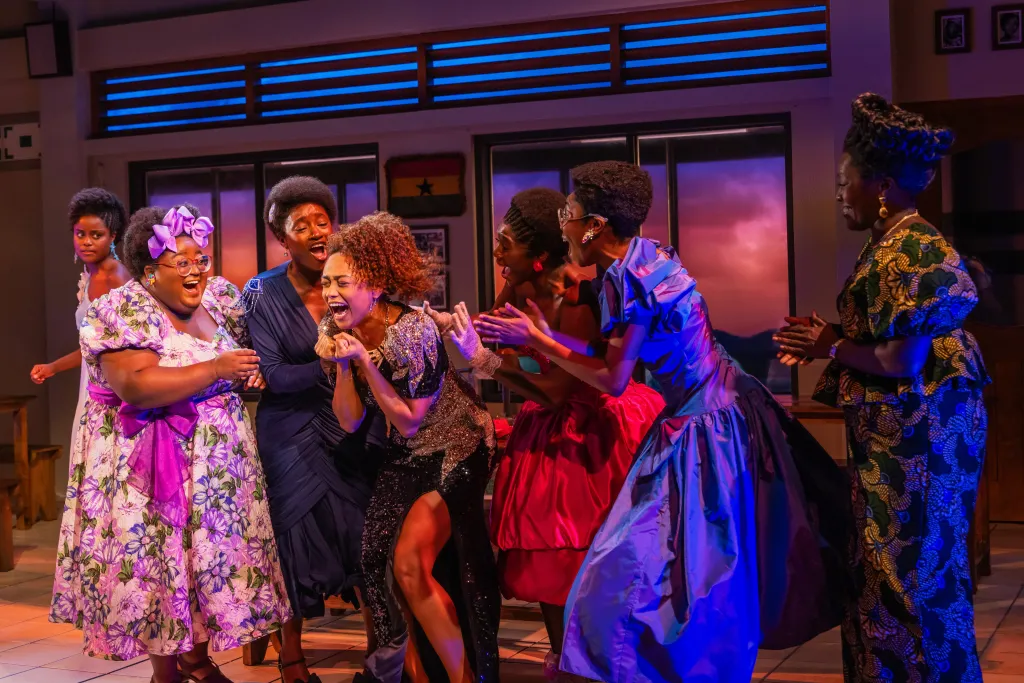
The battle lines are drawn early and definitively in Jocelyn Bioh‘s School Girls; Or, The African Mean Girls Play. The cruelties come fast and cut deep in this Ghana school lunch room where all the unspoken rules of adolescent pick-or-be-picked-upon are as strict as they are in high schools the world over. Or in other plays and TV shows the world over, whether we’re talking Heathers or Carrie or Jawbreaker. And since Stephen King didn’t write this one, we can be pretty sure there won’t blood, but gruesome playground injuries of a more psychic and soul-crushing variety are entirely on the table.
Bioh, perfectly assisted by her sympatico director Whitney White and a no-weak-link cast, has done something quite amazing with this comedy-drama, opening tonight on Broadway at the Samuel J. Friedman Theatre in a first-rate Manhattan Theatre Club production. Bioh takes on the tropes and dramatic conventions of high school claustrophobia, its rebellions and savageries and tendernesses so familiar from ancestors like the franchise that gives this play its subtitle and right up through the newcomer that called John Proctor a villain, that we can only trust a writer of her depth and skills (she wrote Jaja’s African Hair Braiding, after all) to find a new path through the well-trod turf.
And she does. School Girls; Or, The African Mean Girls Play, might well come closest in approach to Kimberly Belflower’s urgent John Proctor Is The Villain in its insistence that homeroom sadism doesn’t just spring from hormones or reindeer game competition. There are larger forces at work, the stuff that hurts people who hurt people, and portraying that hurt (and its goal, escape) with understanding – not to say excuse-making – takes uncommon talent. Belflower showed it, and so does Bioh.
The set up is simple and immediately recognizable. The year is 1986 and the place is a girls boarding school in the Aburi Mountains of Central Ghana. Five of the students – two in their final year, three a year behind – busy themselves with the gossip and whatever else passes for crucial business in the day-to-day, mostly as defined by Paulina (The Gilded Age‘s Denée Benton), the self-anointed queen of the clique by way of her looks, her force of will, her cruel streak and her much admired (if very tenuous) connection to the longed-for America by way of an aunt who lives in New York City and works in a castle there that serves unimaginable culinary delights and who sends Pauline the odd piece of designer clothing that makes her the envy of the school.
We’ll learn that Paulina, far from confident, is so self-conscious of the darkness of her Black skin that she secretly uses toxic bleach products that necessitate frequent trips to the emergency room, that her home life is so impoverished that she unleashes her frustrations on her terrified acolytes. Poor Nana (Erin Morton) gets the worst of the abuse, her large body and constant eating a source of unending bullying from Paulina, who calls her “cow.” Even Paulina’s best friend – a phrase pretty much useless in this milieu – isn’t safe. Ama (Lucia Aremu) pays dearly for the occasional hint of independence, so threatening is free thinking to Paulina.
In the grand tradition of teen movies, the equilibrium of the status quo is disrupted with the arrival of a new student. And Ericka (Jasmine Amy Rogers, all done up in big ’80s hair and a school girl uniform that leaves her unrecognizable from her flapper look in Boop) is not just any new student. She’s lived in America. She has Bobby Brown’s autograph. She has real Calvin Klein fashions, not the Chinatown knock-offs that have fooled Paulina. And she knows White Castle isn’t a white castle – it isn’t even McDonald’s.

Denée Benton and Jasmine Amy Rogers
Matthew Murphy
And she has two other things going for her. She’s kind – the put-upon girls of the Aburi Girls Boarding School take to her like docile puppies to a calming stroke – and she’s naturally light-skinned. No harsh chemicals for her, much to the amazement and envy of her Ghanaian classmates. If the mixed-race Ericka doesn’t quite grasp the significance of her coloring – back home at her all-white school she was, to be sure, Black – the other girls certainly do.
And among the things all the girls seem to sense is that Paulina is no longer the shoo-in for the upcoming Miss Ghana try-outs, a realization driven home when the pageant’s recruiter – a former Aburi student who, 20 years previous, won Miss Ghana 1966 and who retains her own mean girl leanings, especially when in the company of the school’s Headmistress, a classmate from those long ago years. One of Bioh’s most telling bits of stage magic here is showing us just how long-lasting such formative role-playing can be. If the device can seem more than a little schematic in intention, its execution – a few lines of dialogue between the recruiter Eloise (Patina Miller) and the Headmistress (Heather Alicia Simms) – nonetheless conveys both the tenacity and bite of mean girldom. And did I mention School Girls is a comedy? And a very funny one at that?
Patina Miller and Heather Alicia Simms
Matthew Murphy
As School Girls builds to its denouement – that pageant try-out – rest assured that Bioh and director White will not deprive us of bearing witness, and the young actors who play the school girls, some in their Broadway debuts, meet the challenge and then some. As they take turns soloing Whitney Houston’s “The Greatest Love of All” – an inspired choice not only for the technical demands that few of these hopefuls could meet, but for Houston’s haunted ending that they couldn’t possible know – the cast members imbue each character with comic ineptitude that’s as poignant as it is laugh-out-loud funny. Even the cruel Paulina’s misplaced overconfidence and comeuppance merits our charity.
Because comeuppance she gets. When the new girl Ericka takes her turn at the solo, her glorious voice rivals that of Whitney herself (as she proved in the otherwise lackluster Boop, Rogers is a talent to watch and embrace). As the greedy recruiter sees something to exploit, and the proud headmistress hears something finally worthy of pride, and the downtrodden classmates have their ding dong the witch is dead moment, poor Paulina all but crumbles into herself (Benton is a marvel in this scene).
But bullies don’t often go away easy. Her face bleeding from the corrosive bleach, her dreams of escape from poverty dashed, Paulina lashes out with ill-gotten information that will take the talented, seemingly charmed Ericka down with her. In the battle that ensues, no one will go untouched by hard truth and the realization of just how stacked the odds against triumph remain in a system where everything from the shade of one’s skin, the geography of one’s home and the capricious nature of one’s parentage determine so much, and foster all sorts of bad behavior and ruthless survivalism.
The Manhattan Theatre Club has given this excellent play the production it deserves. Costume designer Qween Jean, riding high from her Tony-winning contributions to Cats: The Jellicle Ball, delivers the perfect visuals for this tale – the conformity of school uniforms, the explosion of ’80s prom styles for the pageant auditions, the proud African ethnicity of the Headmistress’ attire and the arriviste Americanism of the made-good recruiter – while Teresa L. Williams’ cleverly efficient school cafeteria set, with its large glass windows offering quick hallway peeks at characters in their privacy – gives these school girls ample room for all their towering ambitions and their outsized insecurities.
Not enough praise can be heaped upon the excellent cast (in addition to those mentioned above, there’s the terrific Nia Otchere-Sarfo and Jordan Rice rounding out the clique). Every one of the school girls is perfectly delineated (kudos to the casting team for an exactingly chosen group), with each actor finding the humor, the humanity and, when necessary, the acidity of characters doing their best in a hothouse not of their making. Or not entirely of their making, anyway. Even the most dehumanizing of systems, from high schools to pageants to poverty and racism, require some human complicity in the building and, if we’re lucky, the undoing. The School Girls; Or, The African Mean Girls Play all but hands us an instruction manual.
Title: School Girls; Or, The African Mean Girls Play
Venue: Broadway’s Samuel J. Friedman Theatre
Written By: Jocelyn Bioh
Directed By: Whitney White
Cast: Lucia Aremu, Denée Benton, Patina Miller, Erin Morton, Nia Otchere-Sarfo, Jordan Rice, Jasmine Amy Rogers, Heather Alicia Simms
Running Time: 1 hr 25 min (no intermission)
>
SPOILER ALERT! This post contains details from the series finale of The CW‘s All American.
That’s a wrap on All American.
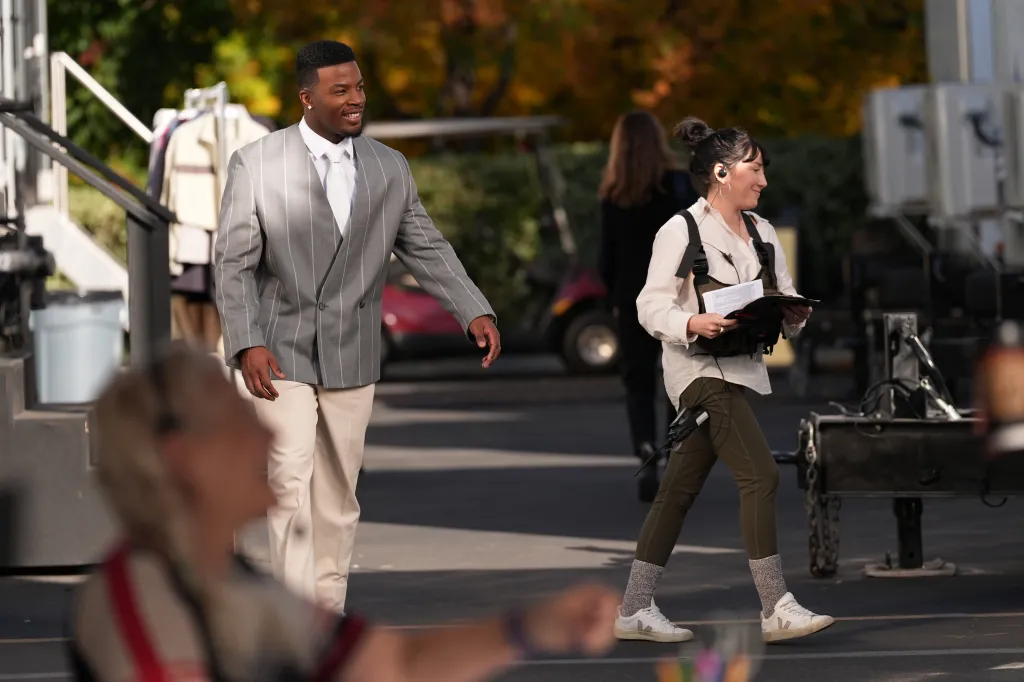
The drama series, produced by Warner Bros. Television, ended its eight-season run on the CW on Monday with an emotional, moving episode directed by none other than Spencer James himself, Daniel Ezra. The rest of the Vortex had been trying to track Spencer down for the last few episodes, after Olivia (Samantha Logan) went into preterm labor with their twins. They’d thought he was tied up with a promotional photo shoot, but little did they know that Spencer was so hard to reach because he was fighting to bring his family back to Los Angeles.
He’s in a conference room urging his team’s general manager to allow his trade from New York to LA when he gets the news that his children are on the way. And, as Spencer James usually does, he finds a way. He not only makes it just in time to be there for the birth of the twins, but he also manages to persuade his team to let him go. With Jordan (Michael Evans Behling) realizing his purpose at South Crenshaw and Cassius (Osy Ikhile) sticking around Beverly, it looks like the whole family is finally back together again.
Fast forward six years, and Coop (Bre-Z) is getting sworn in as an attorney. Amina (Alexis Chikaeze) has just successfully run a political campaign to get her dad Preach (Kareem J. Grimes) elected as a local representative. Layla (Greta Onieogou) and Jordan have a daughter of their own, and the entire crew is about to go watch Spencer play in what we come to learn is his final Super Bowl before retiring — and he’ll share the field with KJ, whose made it to the NFL as well. Coming to Olivia’s aid set Khalil on a different path, and he’s now in medical school, and Tori (Lauryn Hardy) is an assistant coach for the Lakers’ dancers.
After eight years of fighting for their dreams, the series finale of All American gives the space for these characters to finally, fully realize them.
In the interview below, Ezra spoke with Deadline about directing the final episode of a series that he credits with completely changing his life and taking Spencer James with him wherever he goes next.
DEADLINE: The finale is extremely emotional. It really made me cry.
DANIEL EZRA: It was a strange experience. It was an amazing experience, but it was a strange, because I left in Season 6, and then I came back a few times. I don’t know. In my head, when I left, it was always still there. But this was the first time where we were all saying goodbye. So yeah, very emotional.
DEADLINE: I remember when you first started directing on All American, and NK really worked to find an episode that Spencer didn’t need to be in very much so you could pull it off. I know the 100th was very Spencer-heavy, but this was too. How do you feel like you grew as a director to juggle that?
EZRA: It was one of his biggest episodes, and I’m glad that this came later. The first couple episodes I directed, we were a little more successful in finding episodes that I was at least less in. NK was very realistic. She said, ‘There’s probably never going to be an episode that you’re not in, or not at least a significant part, but we can definitely find one that’s less.’ I think the first two were that. Our 100th episode wasn’t that, and we just kind of had to accept that. But this one always made sense. The way NK pitched it to me, she actually gave me a choice, and that was the only episode I felt like I wanted to do. I felt like that’s the one that felt right to do, and so I’m glad it came later. By that point, I had directed a chunk of episodes. I directed my own short film. I had had a bit more experience, and so I felt a lot more secure in myself and more confident, I think, in what I was able to do and the speed that you wish to work at, and all those things that I felt a bit more at ease with the demands of it.
DEADLINE: You spent so many years playing this character working toward a dream, and even in the Season 6 finale the dream is only just being realized. How was it to get those flash forwards at the end of the finale to actually get to live in the version of this character that had truly accomplished everything he dreamed of?
EZRA: It was weird. That scene, you’re talking about the one with me and Mike, right?
DEADLINE: That, and before that when he is talking to Nate about retiring. The twins growing up. Everything.
EZRA: I was so grateful that, even though I had stepped away, I still got a chance to come back and film those scenes. This scene with Mike — I remember in the read through, we couldn’t get through it, me and Mike couldn’t. We were just crying in the read through. We couldn’t get through it. When we got to set and to film it, we almost had to allow extra time, because we knew it was going to be tough for me and Mike. Just the way it was written, the things we were saying, and things we were talking about, it was Spencer and Jordan talking to each other and also a bit of Mike and Daniel talking to each other as well.
As an actor, I was just super grateful that we did get that moment, because we didn’t get that before I left. It was just real serendipitous of NK to write a moment like that in, because you could have ended before that. There was there was about three points in that episode where you could have ended, and it would have been great. You could have ended after he ran off into the tunnel. That was a beautiful ending. Before that, with the babies being born. There’s a couple almost false endings in the episode that all could have worked, but that one just felt like that made it perfect. I thought when I was leaving Season 6, my story was complete. I didn’t realize it wasn’t until we got to those scenes.
DEADLINE: You also had most of the original cast on screen again, plus the new cast. That scene in the hospital room, it’s pretty packed. How did you handle that?
EZRA: My job was to not think about it being a finale in any way, because once you get into that, everyone’s going to get emotional. Everyone’s going to start reminiscing. Everyone’s going to start talking and crying. As much as you want to allow for that, you can’t really allow for that during filming. Me and out AD Steve, we had to be very deliberately kind of, not mean, but a bit like ‘We don’t have time for that.’ You know what I mean?
That’s all gonna come. We knew there was gonna be a party. We knew there was gonna be a big moment of celebration at the end. We knew all of that was coming, but there’s just no space for that when you’re filming, because you still have to get these scenes. We’ve been doing this is eight years, so they know how these things work. They know we never have enough time, and so you keep moving.
DEADLINE: So, when you do think it really hit you that this was the end?
EZRA: I was the one that got to say ‘That’s a wrap on All American.’ We finished with just a perfect scene. It was actually one of the last scenes, where everyone’s going off to see Spencer play his last game, and so I wasn’t in that scene. I had already changed, and I had shot my last scene as Spencer, but I deliberately didn’t have any fanfare for my last scene. We just kind of did it and moved on, and then it was it was Mike, Sam, Osy, and Angel in the last scene, but everyone stayed. All the actors stayed. A bunch of the cast that wasn’t even working that day had showed up, and you could start to slowly feel everyone kind of gathering and waiting for it. So I knew I was like, ‘Okay, I’m gonna have to say something.’ And then it finished. I checked in with NK. I said, ‘Are you happy? I’m happy.’ And she said she was already gone. She just kind of nodded through tears. And I said to Steve, ‘So let’s have everyone come in.’ Just seeing that room so full of people that didn’t have to be there, that all chose to be there…we packed out the Baker house. I wrapped Osy. I wrapped Angel. I wrapped Sam and Mike. I wrapped NK and Jamie as showrunners, and it just got harder and harder and harder.
Then, I finally said, ‘That’s a wrap on All American.’ I think that’s the moment where it was. I remember after that, it took forever to get everyone off to set. No one wanted to leave. Everyone was hugging and crying, and then it was probably an hour before we emptied that stage. It was very funny, because no one just wanted to leave. I think NK was the last one to leave, which felt right. She wanted a moment to herself. So probably that moment when it was time to wrap everyone and say ‘This is a wrap,’ which was a real honor for me to get to do.
DEADLINE: My very last question for you: How are you going to carry Spencer and this experience with you throughout the rest of your career?
EZRA: Spencer, he will always, always, always be with me. There’s some characters that, you know, it’s it’s a time. This is a job. At the end of the day, there’s some characters that you enjoy for a moment, and then you kind of move on. There’s a handful of characters that I think will stay with you forever. Maybe less than a handful. Maybe two or three. But Spencer’s definitely at the apex of that pyramid. I’m such a different person from when I started this to now. Every single aspect of my life has changed, and I like to think that playing him fed into that in a really, really big and profound way. It was a real honor. It changed my life in every way. I think the idea of showing up for your people, the idea of showing up the people you love and the people you care about, chasing dreams, all those things — I think he really hammered home a lot of those lessons, and he was just so fun. He’s just such a fun, real, multi-dimensional character to play. So yeah, he’ll be with me forever.
>

Apple TV had a record-breaking 2026 Emmys with 28 Emmys (29 if you include the commercials win), the most for the streamer ever and the most for any platform this year. Apple TV’s big night at the Emmys on Sept. 14 was followed by a big week — the biggest in the streamer’s seven-year history, the company said Monday.
No, hell has not frozen over, and Apple did not release hard viewership numbers, just qualitative data and year-to-year and week-to-week increases. They still provide a glimpse into the streamer’s performance, especially when compared to existing third-party ratings information.
Per Apple, fueled by strong deliveries from the Cold War buddy comedy Mayday, starring Ryan Reynolds and Kenneth Branagh, Season 4 of Ted Lasso, and a post-Emmy viewership surge for big winners Widow’s Bay and Pluribus, the service had its highest weekly viewership ever for the week of Sept. 14, rising by +67% year-over-year.
Released straight-to-streaming on Sept. 4, Mayday has become Apple TV’s biggest film debut on the platform to date over its first 18 days, the company said. In the U.S., Mayday opened at No. 1 in Luminate’s Sept. 4-10 weekly rankings with 8.7M views. It remained strong in Week 2, placing at No.2.
Freshman horror comedy Widow’s Bay, the biggest winner at the Emmys with 14 trophies — the most ever for a comedy series in a single season — saw a massive halo effect as its viewership skyrocketed +280% week-over-week in the post-Emmys week of Sept. 14, per Apple, with the US, UK, Canada, Australia, Brazil, Mexico, Germany, India, Poland, and Spain, leading the charge.
Luminate data corroborates that claim. For the week of Sept. 4-10, Widow’s Bay was outside of the Top 50. For the week of Sept. 11-17, which includes the first three days after the Emmys where Widow’s Bay was crowned Outstanding Comedy Series, it jumped to No. 13.
‘Widow’s Bay’ creator Katie Dippold and cast/crew accept the Outstanding Comedy Series Awardduring the 78th Primetime Emmy Awards on September 14, 2026
Kevin Winter/Getty Images)
Pluribus, Apple TV’s second biggest Emmy winner with six statuettes, including Outstanding Lead Actress in a Drama Series for Rhea Seehorn, experienced +200% surge in viewership week-over-week following the ceremony, per Apple.
Since the sci-fi drama from Emmy winner Vince Gilligan wrapped its run back in December while Widow’s Bay, starring Emmy winner Matthew Rhys, was a more recent entry that didn’t launch until end of April, for Pluribus, the increase was likely off a small base as the series did not reenter Luminate’s Top 50 the week of Sept. 11.
‘Slow Horses’
Apple TV
Slow Horses, winner of one Emmy, also got a bump, getting back into Luminate’s Top 50 the week of Sept. 11-17 at No. 43 after missing the cut the prior week. The spy thriller also posted a rare season-to-season viewership increase for a show so deep into its run, with Season 6 up +25% over Season 5 based on the first seven days of release, maintaining its position as Apple TV’s #1 UK title, per the company.
Nielsen’s reporting is delayed; its figures for the week of Sept. 14 will be released this Thursday.
The most recent Nielsen weekly streaming report for the week of Sept. 7 has one Apple TV titles in the overall Top 10, Ted Lasso at No. 7 with 734M minutes viewed. (Comedies are at a disadvantage in Nielsen’s ranking which are based on overall watched time vs. number of views.)
With that, Jason Sudeikis’ soccer comedy was a major contributor to Apple TV’s year-over-year viewership jump in the post-Emmys week. Its fourth season, which stumbled creatively a bit before finding its footing in the second half, marks the most viewed seasons for a returning Apple TV comedy over the first 54 days, according to the streamer.
Also possibly factoring into the year-to-year gains is the iCloud+ expansion launched by Apple on Sept. 15, which rolled out access to Apple TV at no additional cost for paid iCloud+ subscribers across more than 170 countries.
>


Search For Canadian TV Actor Stewart McLean Now Homicide Investigation


These ’90s fashion trends are making a comeback in 2017
According to Dior Couture, this taboo fashion accessory is back
Model Jocelyn Chew’s Instagram is the best vacation you’ve ever had
Emily Ratajkowski channels back-to-school style
9 Celebrities who have spoken out about being photoshopped


Rurouni Kenshin: Hokkaido Arc Manga Takes 1-Issue Break – News


HIDIVE to Stream English Dubs for The World Is Dancing, The Forsaken Saintess and Her Foodie Roadtrip in Another World, The Dangers in My Heart: The Movie Anime – News