
The poster art for 1951’s The Day the Earth Stood Still.


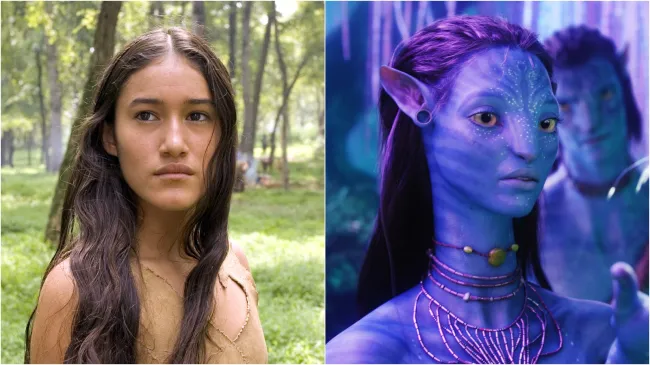
Over the years, there have been a number of copyright infringement lawsuits against the “Avatar” franchise that have all gone filmmaker James Cameron‘s way, but the latest isn’t a gripe over copyright, but over someone’s face, particularly their chin.
On May 5, actress Q’orianka Kilcher sued Cameron, The Walt Disney Company, Twentieth Century Fox, and Cameron’s Lightstorm Entertainment complaining that Cameron used Kilcher’s facial features as inspiration to create the main character Neytiri in “Avatar.” A pair of lawyers IndieWire spoke to called the lawsuit “frivolous” and with some “very serious weaknesses.” But it caught the eye of the media because it involved a recognizable Native American actress — one who literally played Pocahontas in “The New World” and has since appeared on “Yellowstone” — calling out the biggest franchise in the world based on a flashpoint that has dominated Hollywood in the age of AI: who has the right to my digital likeness?


Kilcher’s lawyers in a 99-page filing said that Cameron modeled the look of Neytiri off Kilcher’s own facial features based on her appearance in “The New World” when she was just 14. They didn’t just do initial sketches based on Kilcher, but went a step further and composed digital renderings that were based on one image from “The New World.”
“What Cameron did was not inspiration, it was extraction,” said Arnold P. Peter of Peter Law Group, lead counsel for Kilcher. “He took the unique biometric facial features of a 14-year-old Indigenous girl, ran them through an industrial production process, and generated billions of dollars in profit without ever once asking her permission. That is not filmmaking. That is theft.”
Kilcher’s suit is based on Cameron meeting Kilcher before the release of “Avatar” in 2009, at which point he gave Kilcher a sketch of Neytiri. When Cameron talked about it publicly in 2024, her tone changed.
“When I received Cameron’s sketch, I believed it was a personal gesture, at most a loose inspiration tied to casting and my activism,” Kilcher said in a statement. “Millions of people opened their hearts to ‘Avatar’ because they believed in its message and I was one of them. I never imagined that someone I trusted would systematically use my face as part of an elaborate design process and integrate it into a production pipeline without my knowledge or consent. That crosses a major line. This act is deeply wrong.”
The video in question isn’t a great look; it’s something that Cameron’s and Disney’s lawyers were “probably not the happiest about” when he said it, according to attorney Ray Seilie with Kinsella Holley Iser Kump Steinsapir. But a jury likely wouldn’t look at it as enough evidence that she’s entitled to potentially billions of dollars of the movies’ profits in damages. (Disney had no comment on the lawsuit when reached by IndieWire, and a lawyer for Cameron did not return a request for comment.)
“There’s a statute of limitations problem. ‘Avatar’ came out in 2009, and one of the specifics in her case is that her jaw is, supposedly, very easily noticeable,” Seilie said. “So why did it take until James Cameron said it out loud for her to realize it was her jaw? Jurors are going to be thinking about that.”
“I don’t think that anybody involved in this, any member of the public, would have taken look at this character materially and have made the connection that it was this actress, including, by the way, it seems, the actress herself,” added attorney Simon Pulman with Pryor Cashman.
Kilcher can’t sue for copyright because it’s her own face, so instead they’re suing based on Right of Publicity, where typically a person’s name or likeness is being used to sell a product in a commercial without their knowledge, and that depends on the person being very recognizable. Aside from the fact that she’s blue, seven foot tall, and is also played by Zoe Saldana, even the side by side isn’t 100 percent obvious to the naked eye. The lawsuit also includes a lot of lengthy rationales that this is cultural appropriation of an Indigenous person that has nothing to do with the legality of Right of Publicity. And it even makes the assertion that Cameron violated a deepfake revenge porn law because Neytiri has a love scene in “Avatar”; Seilie said that issue is just a “non-starter” almost certainly to be tossed.
But this remains an interesting conversation piece worthy of the attention of actors because AI now makes it possible to take the features of multiple people’s likenesses, without any other creative filter, and turn them into something new. Take Tilly Norwood or other “synthetic” actors. AI models have to be trained on something, and while Tilly might not look like anyone in particular, she’s likely trained on a number of images of women and could share features with someone in particular.
“What if you could somehow prove and reverse-engineer the creation process and figure out that, yes, in fact, Tilly Norwood uses the chin of a particular famous actor,” Seilie said. “That’s a question that hasn’t really been answered yet. Obviously, there’s a sliding scale here. If you’re lifting a likeness from one actress, it’s easier to say that that’s a violation of the right of publicity. But what if you’re combining two actresses? What if you take one actress’s body and one actresses head?”
Pulman notes there are recent examples in which a court has subpoenaed the prompts a person used in creating an AI-generated image. So in the future, there could very easily be claims that if an artist was found to have directly prompted a model to generate an image using a specific actor’s body part, that could be enough for a jury to deem it a violation. Right now though, Pulman says it would have to be a “very clear smoking gun,” like prompting the generation of Angelina Jolie “but we’ll make her blonde.”
Should the Kilcher/”Avatar” case make it to trial, which would be unlikely, Seilie says it would inevitably be one that would set precedent and be cited moving forward in determining what constitutes likeness.
“Does likeness mean the full body and face, or does the word likeness, can that be applied to parts?,” Seilie said. “I don’t think that’s been fully fleshed out, because until recently, we don’t really have technology that could hone in on individual parts of a likeness as opposed to the whole thing. That’s an area where technology raises new questions for existing doctrines of law, and it’ll be interesting to see how that’s approached.”
Seilie and Pulman say, that when it comes to complaints like this, it’s likely that actors will soon get more bargaining power with the studios and others to negotiate the value of their likenesses. It will include negotiating over specific features of a person, and studios or commercial agencies will negotiate individually with each performer to figure out just how much is permissible to be used, whether they’re allowed to use it in perpetuity, or in what specific ways. So while this case may not set precedent today, they’re questions all actors should be prepared for.
“We live in a world where actors are routinely scanned in high resolution for various purposes. They’re scanned for motion pictures, visual effects, and for video games. Even some of the agencies have unilaterally gone ahead and scanned their clients with the notion that then their clients can control their digital replicas,” Pulman said. “If I were an actor, I thought this for some time, you want to make sure your reps are very, very clearly from a contractual perspective setting forth how your digital replica can be used, how it will be stored, whether it will be destroyed after use, etc.”
>
EXCLUSIVE: In June, in rural Ohio, 16 children, from toddlers to teenagers were found living in a 12×12 room in conditions so deplorable that authorities described it as “pure evil”.
This story is set to be explored in a new feature-length documentary for Oxygen.
The Versant-owned cable network has greenlit The Siders 16: Ohio House of Horrors (w/t) from KT Studios, the company behind Amazon’s Murder 101 and Peacock’s The Idaho Student Murders.
The Siders 16: Ohio House of Horrors will explore the case as it unfolds in real time after the children’s parents Gary Siders Jr. and Elizabeth Siders, and their grandparents, Gary Siders Sr. and Christina Siders, were arrested at the scene.
The group were charged were multiple counts of endangering children, while, in August, Gary Siders Jr. and Elizabeth were also charged with allegations of child sexual abuse in a separate case.
The film will touch on these unexpected new charges and ask: Who ultimately bears responsibility for what happened to these children?
The 90-minute doc will premiere later this year on Oxygen True Crime.
It follows the success of The Hooters Murders: Deadly Shift, which was Oxygen’s most-watched doc premiere in more than two years.
The Siders 16: Ohio House of Horrors is directed by KT Studios founder Stephanie Lydecker, who also exec produces alongside Kevin Brennecke.
Alongside the doc, the network will also launch its first-ever companion podcast series. The ten-part audio series will be available on all major podcast platforms as well as Oxygen’s digital platforms.
>

Fox News is launching The Girls, a conversation series for its podcast division that will feature a rotating series of co-hosts each week.
The first episode will debut on Thursday, with new episodes dropping that day each week. The conversations will delve into pop culture, parenting, relationships, careers, money and politics. The first episode will feature network personalities Rachel Campos-Duffy, Harris Faulkner and Kat Timpf, new contributor Melissa DeRosa and former ESPN host Samantha Ponder.
Fox News Podcasts has expanded its portfolio, debuting Hang Out with Sean Hannity earlier this year. This latest podcast is the latest iteration of a panel format that has worked well for the network, including with The Five and Outnumbered.
Campos-Duffy co-hosts Fox & Friends Weekend, and joined the network in 2016. Faulkner, with Fox News since 2005, anchors The Faulkner Focus and co-hosts Outnumbered. Timpf is a panelist on Gutfeld!, and joined the network in 2015. DeRosa previously served in the administration of New York Governor Andrew Cuomo. Ponder formerly hosted ESPN’s Sunday Countdown.
Porter Berry, president of Fox News Digital and New Media, called the show “a natural addition to our growing podcast portfolio.” Megan Albano, executive vice president of morning programming and program development, said in a statement that the podcast would be a “no-holds-barred format that captures the authenticity and perspectives of the many dynamic women” on the network and elsewhere.
>
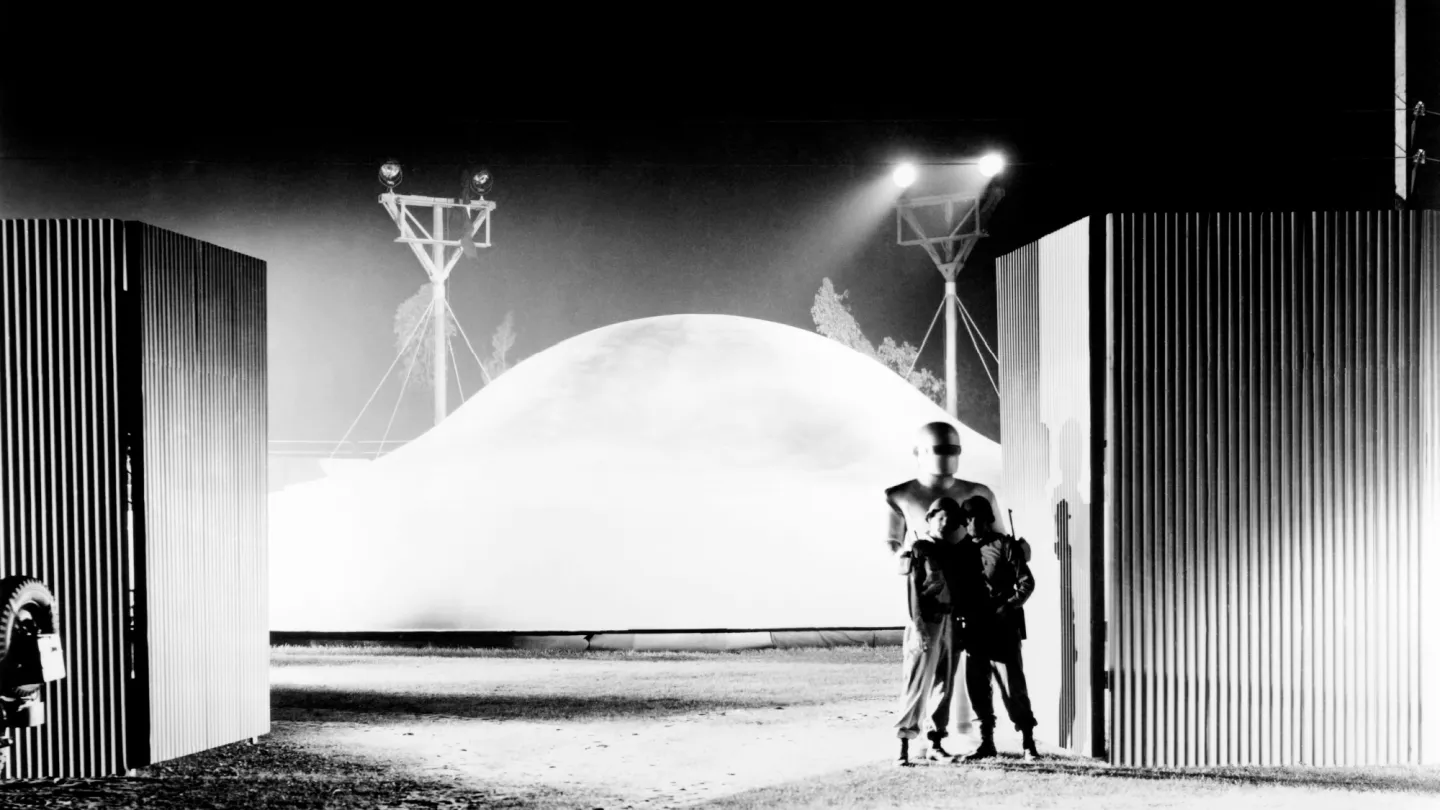
In September 1951, 20th Century-Fox‘s sci-fi drama The Day the Earth Stood rolled out in theaters following its premiere opening on Sept. 18 at New York’s Mayfair Theatre (where it grossed $6,500 that day). At the beginning of the month, the film screened at the World Science Fiction Convention in New Orleans, where 250 attendees “universally acclaimed the picture.”
The 92-minute feature, directed by Robert Wise, was released as Cold War fears were at the top of the headlines and was intended as a cautionary tale (decades later, the studio remade the film with Keanu Reeves and an aughts sheen in 2008). The Hollywood Reporter’s original review is below:
In The Day the Earth Stood still, producer Julian Blaustein and director Robert Wise have a highly exploitable, suspensefully entertaining drama that will ride the crest of the current cycle of science films with the ease of a space ship.
Adapted from a story by Henry Bates, the drama is an intriguing science fantasy, made believable by touches of genuine humor and the faint suggestion of a romance between a pretty American widow and a mysterious visitor from another planet. The overtones of social significance are adroitly handled and make real sense in an era of tragic international quarrels.
Physically, the production is all science saga should be — Blaustein supervises the special effects with telling results; the Washington locale is excellently fulfilled; and the thoughtful choice of actors accounts for convincing performances throughout. Wise’s direction imbues the narrative with the compelling atmosphere of the documentary; he creates an illusion of presenting the real thing rather than a fictional motion picture. Inevitably, the Wise technique heightens suspense values and writes terrific punch into the action scenes involving a powerful robot who accompanies the human visitor to the U.S.
Michael Rennie is the visitor, a man who whirls into the center of Washington in a space ship accompanied by his robot. His mission is one of peace — he wants to talk to the President. An hysterical soldier shoots him, Rennie is carried to Walter Reed Hospital. Here, by administering medicine brought from his outer-planet home, Rennie recovers. He tells the President’s secretary that he wishes to speak to representatives of all nations on earth. The secretary informs him this is impossible. Rennie casually leaves the hospital, takes a room in a boarding house where he meets Patricia Neal and her young son, Billy Gray. His adventures with the lad are amusing; one includes a visit to Sam Jaffe’s home where, by working an intricate scientific problem within seconds, he identifies himself as a super-intellect. Jaffe agrees to bring men of science from the four corners of the globe to hear him speak.
Meanwhile the police are searching frantically for him. Though wounded again, he escapes to his ship and before flying off tells those who hear him that the world must solve its petty political problems; otherwise, action by other planets in the universe will destroy the world.
Rennie’s quiet dignity in the part of the space visitor brings conviction to the interesting role. Miss Neal is vibrant and lovely as the young widow, and Hugh Marlowe is vigorous as her ambitious suitor. Jaffe’s scientist is portrayed with the actor’s usual resourcefulness. Gray is fine as the youth. Supporting players include some of Hollywood’s best character actors. Commentators Drew Pearson, Gabriel Heatter, H.V. Kaltenborn and Elmer Davis are on deck to implement the air of authenticity.
Leo Tover’s work in the trick photographic department is exceptional. Lyle Wheeler and Addison Hehr, allowing imagination to run wild, perform a superb job of art direction. Bernard Herrman’s eerie score and the editing of William Reynolds are other outstanding contributions to the success of the production. — Staff byline, originally published on Sept. 4, 1951.
The poster art for 1951’s The Day the Earth Stood Still.
The Hollywood Reporter‘s original review of The Day the Earth Stood Still in 1951.
>


Search For Canadian TV Actor Stewart McLean Now Homicide Investigation


These ’90s fashion trends are making a comeback in 2017
According to Dior Couture, this taboo fashion accessory is back
Model Jocelyn Chew’s Instagram is the best vacation you’ve ever had
Emily Ratajkowski channels back-to-school style
9 Celebrities who have spoken out about being photoshopped


Rurouni Kenshin: Hokkaido Arc Manga Takes 1-Issue Break – News


HIDIVE to Stream English Dubs for The World Is Dancing, The Forsaken Saintess and Her Foodie Roadtrip in Another World, The Dangers in My Heart: The Movie Anime – News