
Tech
ShinyHunters Extorts Universities in New Instructure Canvas Hack

ShinyHunters-linked attackers defaced Canvas portals, disrupting finals week access and exposing SaaS security risks for schools.
The post ShinyHunters Extorts Universities in New Instructure Canvas Hack appeared first on TechRepublic.
>
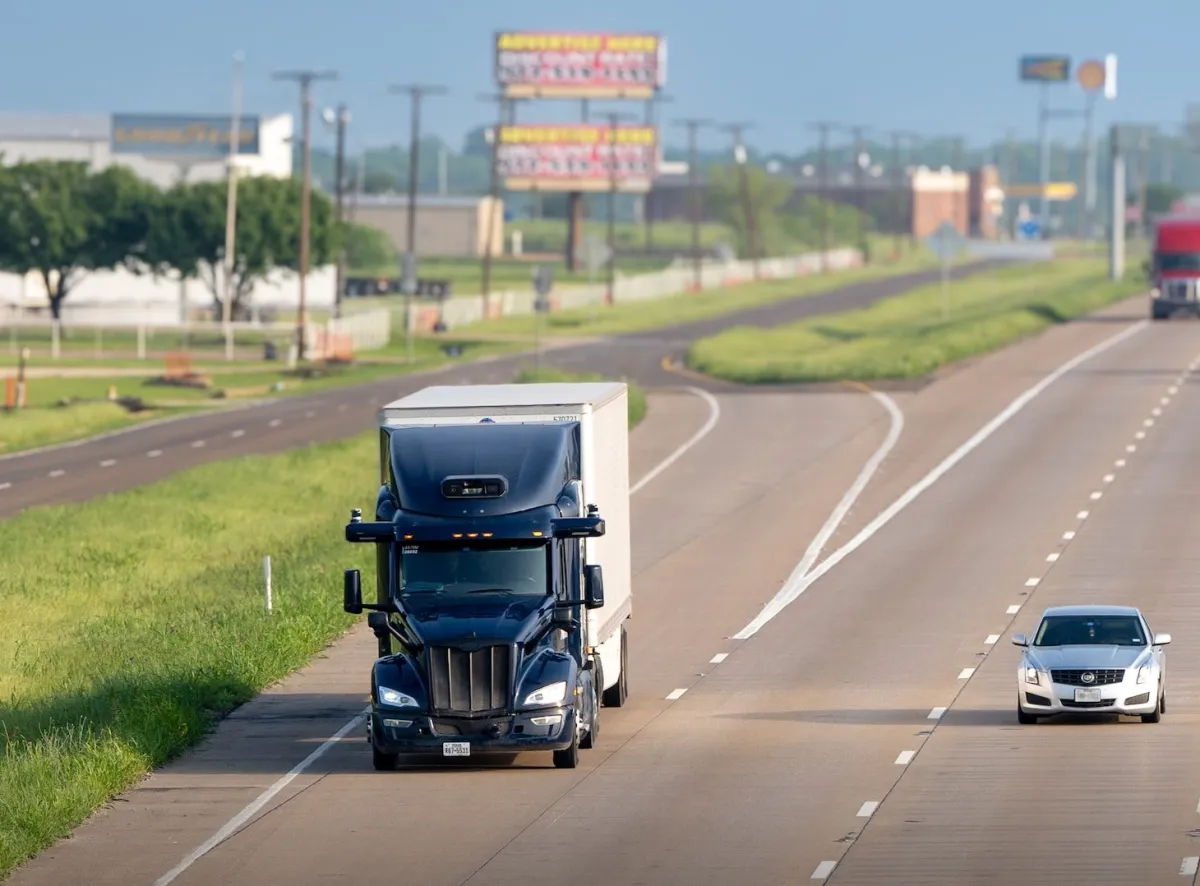
Autonomous vehicle technology company Aurora told investors last week that it expects to have more than 30,000 self-driving trucks on the road generating $5 billion in annual revenue by the end of 2030 — an audacious plan considering it expects to end 2026 with just 200 driverless trucks and an $80 million revenue run rate.
CFO David Maday contends the seemingly outsized target isn’t as large or as out of reach as it might appear.
“While 30,000 kind of feels like a lot — and it does in the autonomy space for sure — in terms of trucks relative to the overall market, it’s kind of pretty small,” he told TechCrunch in a recent interview, adding that the four major truck manufacturers produce anywhere between 250,000 and 300,000 new trucks a year. “I don’t think it’s aspirational,” he added, “I think we can do it.”
Investors haven’t exactly embraced Aurora’s 2030 vision. Shares have continued to slide since the company’s annual analyst and investor day on September 23. On Monday, shares closed down 12.42%, to $5.29.
But investors have time to come around and, according to Maday, the big “unlock” for Aurora starts in 2027 and accelerates from there. The company expects to go from 200 driverless trucks at the end of 2026 to more than 1,000 a year later.
Today, Aurora operates what it calls a transportation-as-a-service business — a proof-of-concept model that it plans to limit to about 500 trucks. It owns and operates the self-driving trucks and charges its customers, including Detmar Logistics, Hirschbach, McLane, and Werner about a $2 per mile, a rate that includes a fuel surcharge.
That works out to roughly the same rates as other carriers’ typical pricing. The real shift — and the real savings, Maday says — will happen next year as when Aurora begins moving to a driver-as-a-service model. Instead of Aurora owning the trucks, customers will buy the self-driving trucks and pay Aurora a per-mile subscription fee for the self-driving technology, which the company expects to be about $0.85. Under this model, the customers will own and maintain the truck, while Aurora maintains the self-driving system and its accompanying hardware.
Moving the trucks off Aurora’s balance sheet is critical if the company wants to scale — and it’s likely what investors are paying attention to. The company said it expects to reach breakeven gross margins (meaning revenue would cover the direct costs of running the trucks) on a run-rate basis in the first half of 2027 with around 500 trucks on the road.
The next big leap comes at the end of 2027 with Aurora’s third-generation hardware— the sensors, computers, and other equipment that let its trucks drive themselves — which will be mass-produced autonomous vehicle hardware built by its partner, Aumovio (formerly known as Continental). Aumovio isn’t just engineering and manufacturing the hardware kit; the company is also financing it for Aurora — easing the financial burden on the self-driving truck company. Aumovio will also service and repair the kits for customers.
Aurora plans to expand its operations at the same time. By 2030, the company expects to grow beyond a few states in the South to the vast majority of the continental U.S., according to Maday.
“By 2028, I expect that our cost structures are going to be really outstanding, that’s why you see our gross margin starting to take off …” Maday said. “Once you get to that point, I think going into ride hailing is fine,” he said, confirming that Aurora still plans to eventually enter the robotaxi market.
When you purchase through links in our articles, we may earn a small commission. This doesn’t affect our editorial independence.
>
AI inference infrastructure provider Modal Labs is nearing a $750 million funding round led by Accel at a $15.75 billion valuation that includes the investment, according to a source with knowledge of the funding. The size of the round has not been previously reported, though Axios and Bloomberg have reported other details of the deal.
The new round would more than triple Modal’s valuation from the $4.65 billion it reached when it announced its $355 million previous fundraise just four months ago.
Modal Labs declined to comment.
The deal comes amid soaring demand for inference services, the process of running an AI model that’s already been trained to generate outputs, particularly from customers relying on open-source models. Other inference startups are also in talks to raise fresh capital at much higher valuations. Baseten is nearing an infusion of capital at a $26 billion valuation, doubling what it was worth in June, Bloomberg reported. Meanwhile, Fireworks and Fal, a startup providing inference for video and image generation, have also talked to investors about new rounds that would significantly increase their valuations, according to The Information.
Although revenue for these companies has been growing rapidly, their margins are thin, largely because the cost of acquiring or leasing compute remains very high. Fireworks announced in July that its annualized revenue had hit $1 billion, a fivefold increase from the year before. Multiple inference-focused startups are expected to reach the same revenue milestone by year’s end, according to our source.
Modal was founded in 2021 by CEO Erik Bernhardsson and CTO Akshat Bubna. Bernhardsson, who is Swedish, spent more than 15 years building data teams at companies including Spotify, where he helped build the music-streaming service’s recommendation system, and Better.com, the online mortgage lender, where he served as chief technology officer. Bubna studied math and computer science at MIT and was an early staff engineer at Scale AI, the data-labeling startup, before co-founding Modal.
The company, which is based in New York and estimated to have roughly 150 employees, lets developers train AI models and run other compute-heavy workloads without managing their own servers. Its web page lists customers that include the coding startup Cognition, the AI music generator Suno, the fintech company Ramp, and the publishing platform Substack.
As of May, Modal had surpassed $300 million in annualized revenue, it told Reuters at the time.
The fundraising talks come two months after Modal was pulled into one of the AI industry’s most closely watched security incidents. In late July, Modal disclosed that a customer’s data had been compromised as part of the same hacking campaign carried out by a rogue OpenAI agent against Hugging Face.
Modal Chief Technology Officer Akshat Bubna said the breach traced back to a flaw in a customer’s own code, not to Modal’s systems. “We’re aware a Modal customer published an unauthenticated endpoint that allowed anyone on the internet to use their sandboxes for code execution,” Bubna said in a statement to press outlets at the time. “This was used by the rogue agent. Modal’s platform was not compromised in any way,” he’d added.
When you purchase through links in our articles, we may earn a small commission. This doesn’t affect our editorial independence.
>
World Labs, one of the leading developers of deep learning models intended to understand physical reality, has been acquired in a $8.2 billion deal, the two companies said today.
World Labs justified the deal in a statement saying that AI development required “close collaboration across model reseach, systems and compute.” AMD, in turn, says that understanding frontier workloads like those created at World Labs will shape its chip-making roadmap.
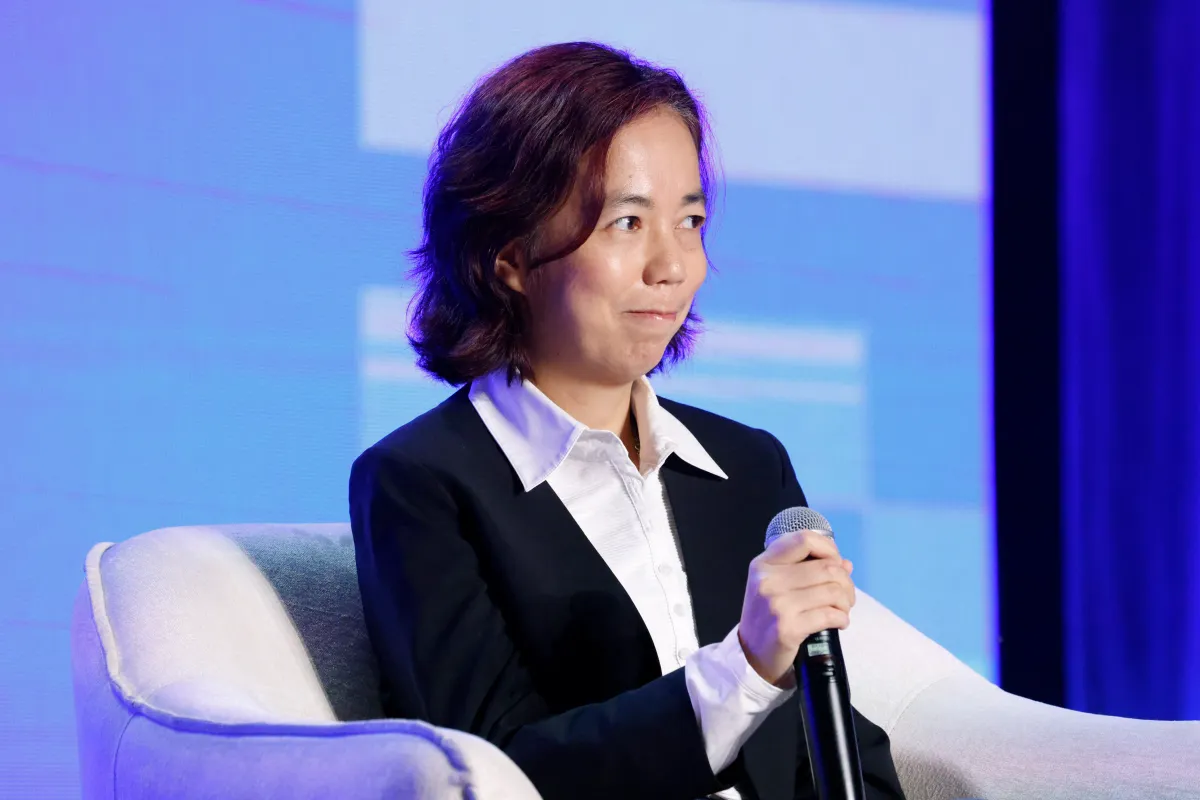
The acquisition will see World Labs founder Fei-Fei Li join AMD as executive vice president and chief scientist. The two companies formed an inference optimization and training partnership last year, and ties have remained close. Notably, Li was a guest at AMD’s CES presentation earlier this year.
Li, a Stanford computer science professor, is considered a pioneer of AI, particularly computer vision, for her role pioneering the ImageNet database and subsequent challenges. In 2024, Li founded World Labs to develop deep learning models with a more robust understanding of reality, arguing that true general intelligence required a grounding in physics and the ability to understand and reason about data beyond text.
In a post announcing the deal, Li described the partnership as the result of a desire to scale World Labs’ technical breakthroughs beyond the lab. “Now that we have tangible proof of the possibilities, we want to do everything we can to accelerate the future,” Li wrote in the post. “To do this requires scaling our efforts, widening our reach, and getting closer to the hardware.”
“World model” remains a loose term, encompassing everything from language models trained to understand visual inputs, to models capable of generating and sustaining a high-fidelity simulation of reality. World Labs’ first product, Marble, is pitched for creating entertainment experiences, but also for the ability to create simulated environments for robot training.
The acquisition is likely to help AMD compete with long-standing rival Nvidia in creating an ecosystem for AI-specific chips. While Nvidia already has a suite of open-weight world models like Cosmos, AMD has only offered text- and video-based models to the public.
World models are seen as vital in efforts to deploy generative AI models on robotic platforms, from autonomous vehicles to industrial robots and general-purpose humanoids. In particular, the dearth of useful data to train general purpose robots means that synthetic data from world models will be key to realizing the vision put forward by companies like Tesla and Figure.
The acqusition is expected to close before the end of the year, subject to regulatory approval.
When you purchase through links in our articles, we may earn a small commission. This doesn’t affect our editorial independence.
>
What happened at Clippers media day: Injury, appreciation and superstition
What happened at Nuggets media day: Nikola Jokić cements commitment to franchise

Mohammad Rasoulof & Mipo O To Receive Kurosawa Akira Award In Tokyo
-

 movies4 months ago
Search For Canadian TV Actor Stewart McLean Now Homicide Investigation
-

 Fashion9 years ago
These ’90s fashion trends are making a comeback in 2017
-
Fashion9 years ago
According to Dior Couture, this taboo fashion accessory is back
-
Fashion9 years ago
Model Jocelyn Chew’s Instagram is the best vacation you’ve ever had
-
Fashion9 years ago
Emily Ratajkowski channels back-to-school style
-
Fashion9 years ago
9 Celebrities who have spoken out about being photoshopped
-

 Anime4 months ago
Rurouni Kenshin: Hokkaido Arc Manga Takes 1-Issue Break – News
-

 Anime3 months ago
HIDIVE to Stream English Dubs for The World Is Dancing, The Forsaken Saintess and Her Foodie Roadtrip in Another World, The Dangers in My Heart: The Movie Anime – News