
Sports
2026 World Cup: FIFA still haggling with broadcasters in China and India over ‘most U.S. tournament ever’


With a gag the FIFA president first tested at the World Economic Forum’s comedy festival in Davos this year, Gianni Infantino had them rolling in the aisles at the Milken Institute’s Global Conference in Beverly Hills last week.
The sports administrator-turned-clown was doing one of his “conversations” in front of an audience of capital allocators and international thought-leaders, when he was asked what he tells investors when they question why they should put money into football.
“Let me tell you one thing,” he started, with a twinkle in his eye. “Do you know what the definition of FIFA is? Well, FIFA is the official happiness provider to humanity since 1904.”
Then, picking up one of the two official World Cup footballs which had been placed on tables on either side of his chair, he said: “Because this is happiness. This is not a soccer ball — it’s a magic tool that transforms people into happy people, straight away.
“So, if you invest in FIFA, you invest in happiness. You invest in the world, in children, you invest in our future.”
He then gently lobbed the ball to a lady in the front row, who was immediately transformed. Unlike January’s Davos show, where the “magic instrument” was then passed around the entire audience, the compere of this conversation wrapped things up quickly, noting that Infantino really is “one of one”.
This meant there was no time to ask Infantino about the story Reuters broke the day before, the news agency reporting that “millions of soccer fans in the world’s two most populous nations may not be able to watch the World Cup” as FIFA was still haggling with broadcasters in China and India about the media rights to this summer’s festival of happiness.

FIFA President Gianni Infantino (Alex Wong/Getty Images)
It is a story that has flown around the world as, while FIFA was right when it told Reuters it had secured rights deals with “more than 175 territories”, it was missing a few big ones.
In fact, at that moment, FIFA had still not nailed down World Cup deals in Pakistan, Bangladesh, Thailand or Myanmar, either. So, including India and China, FIFA was on track to provide happiness to humanity, just not in the world’s first, second, fifth, eighth, 23rd and 29th most populous countries, as well as half a dozen more places in Asia and nearly 20 islands in the Caribbean, including two nations sending teams to the World Cup.
The good news is that FIFA has subsequently inked a deal for Bangladesh with a media outlet called “Springbok”, although there have been no official announcements by Springbok, which does not appear to have a website or social media presence.
But the Bangladeshi deal means FIFA now has World Cup watch party arrangements for 180 of its 211 member associations. It seems likely that a deal with a pan-Caribbean streamer is imminent, which means fans in Curacao and Haiti will be able to watch their heroes make them happy. Taken together, these deals would mean another 200million or so folk will have legal access to FIFA fun this summer.
Just the 3.3billion people, or 40 per cent of the world’s population, to go, then.
The geographers among you will have noticed that most of the excluded nations are from the same neighbourhood. This is because, like a football, the world is round and when the sun is shining on one side, the other is most likely in bed.
At this time of year, India is nine and a half hours ahead of New York, while China is 12 hours. This means most of the games in the United States, Canada and Mexico this summer will kick off when India is asleep and China is waking up.
This is a different proposition from the last World Cup in Qatar, which is only two and a half hours ahead of India and five hours in front of China.
As a result of that timezone sweet spot, Viacom18, the Indian media giant then owned by Reliance Industries, paid $60million (£44m) for the rights in 2022, and streamed the games for free on its JioCinema platform. According to India sports business website State of Play, JioCinema’s unique visitors leapt from under three million a month at the start of the tournament to almost 23million by the final.
Viacom18 lost money on the deal, though, as it only brought in about $30million in advertising, which is a crucial point to understand when talking about the Indian market. Even if it had charged its usual rate for JioCinema, that rate is $14. For the whole year. Adverts are how Indian media companies make their money, not subscriptions.
So, the audiences for the games in Qatar, which were in the winter, were pretty good but still did not bring in enough ad dollars to cover the rights fee.

Fireworks at Lusail Stadium as Argentina lift the 2022 World Cup (Richard Heathcote/Getty Images)
This brings us to the next problem FIFA faced when it returned to the Indian market hoping to secure something similar to what it achieved for Qatar. Infantino might like a laugh but he’s not daft, so the plan was to offer a 2026/2030 combo, with all those extra games thanks to the expanded format, for $100million.
Unfortunately, as has been widely reported in India, neither JioStar, the new Disney/Reliance joint venture, nor Sony, its main rival, bit at that price. On the contrary, Sony has sat on its hands and JioStar made a counter-offer of $20million for 2026.
The timezone issue is clearly a big problem. But the other factor is that Viacom18 used Qatar 2022 as a test to see if JioCinema could handle the traffic its $3billion bid for India’s only real “must-have” sports content, the Indian Premier League, would bring. Football was the loss leader for cricket.
But now the calendar is working against FIFA in India. One, every Indian media company is saving its rupees for the next cycle of IPL rights. And two, there is another World Cup this summer: the Women’s T20 World Cup in England. JioStar has these rights and is looking forward to bumper audiences for India’s games against Pakistan on June 14, Australia on June 28 and, fingers crossed, the final on July 5.
As State of Play puts it: “For any brand planning its June-July calendar, the choice is India in a World Cup at civilised timings, on a platform with 280million subscribers, or 104 football matches, without India, mostly after midnight, on the same platform.”

India captain Harmanpreet Kaur announces the squad for the T20 World Cup and tour of England (Indranil Mukherjee/AFP via Getty Images)
The situation in China is not complicated by cricket, but it comes down to a similar-sized gap between FIFA’s expectations and China’s view on the value of these rights.
National broadcaster CCTV has been the usual home of World Cup football and, according to FIFA, it accounted for 17.7 per cent of Qatar 2022’s global linear TV reach. The numbers for hours of action viewed on digital and social media platforms were even more impressive, as China provided almost half of those.
With a total population north of 1.4 billion and a dedicated audience of at least 200million football fans, FIFA must have thought it was being reasonable when it asked for bids of more than $250million, about half what Fox and Telemundo have shelled out for the U.S. rights.
But China’s state-controlled media has reported the tumbleweed that greeted that opening gambit has forced FIFA to reduce its price twice, first to $120million, then to $80million. Still no handshake.
“Low interest from the broadcasters leads to reduced or non-existent competition, so it is inevitable that the bids will be low,” explains sports rights expert Pierre Maes. “What we’re seeing in China and India are very, very low bids that are a long way off FIFA’s overly-optimistic expectations.
“OK, that is partly to do with the time zones but I would also ask: ‘How popular is soccer in these countries, really? The deadlock provides an answer.
“Now, will they reach a deal? I think so but FIFA will have to make big concessions on price.”

A football vendor in Yiwu, Zhejiang province, China (Wang HE/Getty Images)
Michael Payne is a sports rights veteran who has worked in Formula One and for the International Olympic Committee before setting up his own consultancy, Payne Sports Media Strategies.
“I have four decades’ experience of negotiating Chinese media rights and it is far from simple — they can be very naughty,” he says. “FIFA has less leverage than they may believe and it will be an interesting poker game as to who blinks first. With no team in the tournament, there is less political pressure on China to strike a deal.
“(Chinese dairy brand) Mengniu must be very nervous, as all they care about is the Chinese market. If there is no World Cup on TV, their whole marketing campaign is torpedoed.”
Dr Jonathan Sullivan is a China specialist at the University of Nottingham and has recently co-authored a book on the Asian superpower’s relationship with football. “I would be very surprised if CCTV did not ultimately do a deal,” he says.
“Chinese people expect coverage of the World Cup, and I’m pretty sure CCTV-5 will still be hoping to do some free-to-air games. The streaming situation is a bit unclear — there are state and commercial options — but I would still expect CCTV/Migu (China Mobile’s streaming platform) to end up with it.”
Sullivan believes there is a difference of opinion on the value of games played overnight.
“Compared to other media markets around the world, large numbers of Chinese people will watch the tournament whenever and wherever it is held, but those audiences are going to be smaller because of the time difference,” he says. “And even Chinese state media are obliged to seek value.
“Commercially, it’s a challenging World Cup for China, that’s all it is. One thing is for sure: the Chinese people who want to watch the games will find a way to do so.”
And as rights-holders around the globe know only too well, where there is a will to watch sport, there is a way, be that via an illegal stream, jailbroken Firestick or VPN. Rights are not as exclusive as they used to be.
“There are several overlapping things happening here, and the economics are probably the least interesting part of it,” says Dr Paul Widdop, an associate professor in sports business at Manchester Metropolitan University and a visiting professor at the University of Derby.
“The obvious explanations are straightforward: poor kick-off times for Asia, fragmented viewing habits, piracy, broadcasters becoming more disciplined after years of sports rights inflation.
“FIFA wanted around $100m in India, Disney and Reliance reportedly offered $20m, FIFA dropped to around $60m. China appears even colder. Five weeks out from a World Cup, that is really unusual. But the more interesting question is why broadcasters suddenly feel comfortable calling FIFA’s bluff.”
For Widdop, FIFA has usually been able to rely on the ultimate flex when it has dealt with broadcasters: they need the World Cup more than the World Cup needs them.
“What may be happening now is that some of that aura has weakened,” he says.
“The 2026 World Cup is probably the most American World Cup ever staged, not just geographically, but ideologically: expanded tournament, dynamic pricing, half-time shows, celebrity integration. FIFA increasingly behaves less like a governing body and more like a global entertainment platform with Silicon Valley assumptions about scale and monetisation.
“I wonder whether China and India are quietly pushing back against that valuation model.

This is going to be the most American World Cup ever staged (Chip Somodevilla/Getty Images)
“And this is where the geopolitical angle becomes interesting. I do not think this is anti-American sentiment in a crude sense, but I the wider political climate matters. Trump-era tariffs and trade tensions have clearly strained U.S. relationships with India and China. There is growing scepticism in Asia of American-led economic systems and institutions.
“In that sense, the World Cup is colliding with a more multi-polar world. For 30 years, football globalisation assumed convergence — the same leagues, same tournaments, same stars, same commercial hierarchies — but maybe China and India are saying they value football differently and refuse to pay whatever FIFA asks for just because FIFA says it’s the centre of the sporting universe.”
Payne puts it like this. “I wonder if (China’s President) Xi wants to send a subtle message to the U.S. and Donald Trump that China does not really care about their little event?”
Whether the impasse in happiness talks is about kick-off times, cricket or the Chinese Communist Party, there is no disputing how much this all matters to FIFA.
As Infantino, in his more serious moments, often points out, FIFA’s business model is three years of famine, followed by a World Cup feast. That is when it banks most of its revenues, and media rights are expected to contribute almost $5.3billion in this four-year cycle, or just over 40 per cent of the $13billion target.
That is a smaller share of the total than the Qatar cycle and the projection for 2027-30. But then I suspect you have read about FIFA’s plan to take full advantage of the American sports fan’s willingness to pay first-class prices for the working man’s ballet. FIFA is hoping to make four times as much in matchday revenues in this cycle as it did in the last one and a third more than it hopes to make in 2030.
Even so, media rights are still meant to be FIFA’s biggest single revenue stream this cycle, as they have been in every cycle since the 1990s. But for how much longer?
“FIFA still sells rights using a 20th-century scarcity model — territorial exclusivity, centralised control, premium access — but fans increasingly experience football through fragmented ecosystems like TikTok clips, watch-alongs, YouTube creators, Telegram streams, WhatsApp highlights and so on,” says Widdop.
To be fair, Widdop notes that FIFA has done a deal with TikTok, which means the Chinese-owned app will be able to stream bits of games, show clips and give a select group of content creators access to behind-the-scenes material.

FIFA has done a deal with TikTok (Roslan Rahman/AFP via Getty Images)
There is a danger here, though. FIFA might gain eyeballs, especially younger ones, but make it even harder for its traditional media partners to make money. Football can be all over your phone but still not generate the kind of money an advertising campaign designed for the half-time slots on Fox, Globo, ITV, or RAI can.
For what it is worth, a FIFA spokesperson said “discussions in China and Russia” regarding the rights are “ongoing and must remain confidential at this stage”.
“The really dangerous issue for FIFA is the precedent,” adds Widdop. “They will almost certainly secure deals because the political embarrassment of having no official World Cup broadcaster in those markets is too large for everyone involved.
“But if FIFA accepts substantially lower fees, every broadcaster across Asia notices. Suddenly, the premium attached to FIFA rights weakens. That may be the deeper fear here — not losing the markets entirely, but losing the psychological leverage they have held over broadcasters.
“This feels like one of the first real signs that football’s globalised, infinite-growth model is wobbling slightly. Not collapsing but wobbling.”
That sounds like the premise of a great Infantino gag. Coming to a sports business conference near you soon.
>

TORONTO — Aryna Sabalenka, the world No. 1 on the WTA Tour, was eliminated Saturday at the Canadian Open, in the biggest upset of the tournament. She exited in three sets 7-6(3), 4-6, 6-4 to Ekaterina Alexandrova, the world No. 19, in 2 hours and 29 minutes. It was a frustrating performance for Sabalenka, defined by uncharacteristic unforced errors and underwhelming serving.
The match started on track for Sabalenka. She broke Alexandrova’s serve and consolidated to go up 2-0. But Alexandrova won four straight games to go up 4-2. The cracks in Sabalenka’s game were appearing, and when she made mistakes, she became visibly frustrated. She served at a disappointing 46.2 percent in the first set and recorded five double faults. Sabalenka won just nine points on her second serve, succumbing to the power of Alexandrova’s return. Even in the tiebreak, where Sabalenka is often reliable, her lack of precision allowed Alexandrova to take advantage and win the opening set.
The shot that arguably exemplified Sabalenka’s match occurred in the second set. At 1-1,0-15, Sabalenka looked to break serve. Alexandrova gave Sabalenka a high ball, pulled off the court, presenting the opportunity for an overhead smash winner. Only Sabalenka dumped the shot in the net. The crowd gasped and Sabalenka looked dazed. Alexandrova would eventually hold serve, a missed chance for Sabalenka to seize back control of the match.
An opening came at the end of the second set. After saving three break points, Sabalenka broke Alexandrova’s serve once. The one break was the difference as Sabalenka captured the second set, the crowd cheering her on.
Any hopes for a Sabalenka comeback ran out in the third set. She continued to commit errors, and her frustration remained evident. Alexandrova broke her serve three more times for a total of seven breaks in the match, including the final game. Sabalenka double-faulted on match point, also her seventh of the day, putting an exclamation point on an irritating evening for the top seed.
Alexandrova will face the winner of Saturday night’s match between Elina Svitolina and Amanda Anisimova in the quarterfinals. Sabalenka remains at three singles titles in 2026 as she prepares to defend her 2025 U.S. Open championship.
This story will be updated.
>
Sports
Cristian Romero open to joining Arsenal but Tottenham adamant their defender will not cross the north London divide – Paper Talk | Football News

The top stories and transfer rumours from Sunday’s newspapers…
Premier League
Cristian Romero is open to joining Arsenal this summer – but Tottenham are adamant their defender will not be crossing the north London divide – Sunday Mirror
Everton and Crystal Palace are in discussions over a potential swap deal between Dwight McNeil and Brennan Johnson – Mail on Sunday
Barcelona are confident they can reach a compromise agreement with Manchester City for £68m-rated Rodri as they prepare a revised bid – Mail on Sunday
Arsenal are once again eyeing up a move for Juventus winger Kenan Yildiz after seeing their ambitious bid to lure Vinicius Junior to the Premier League fall flat – Sunday Mirror
Enzo Maresca will choose his own Manchester City captain rather than put the decision to a team election and wants to inject some English influence into his leadership group – Mail on Sunday
Non-League
Andy Carroll was sent off with a straight red card in Dagenham & Redbridge’s first game of the season after an off-the-ball incident – The Sun
Scottish Football
Rangers have tabled an improved offer for PSV Eindhoven winger Couhaib Driouech – The Scottish Sun
Greg Taylor would reportedly be OPEN to a stunning Celtic return this summer – just one year after leaving Parkhead for PAOK – The Scottish Sun
>

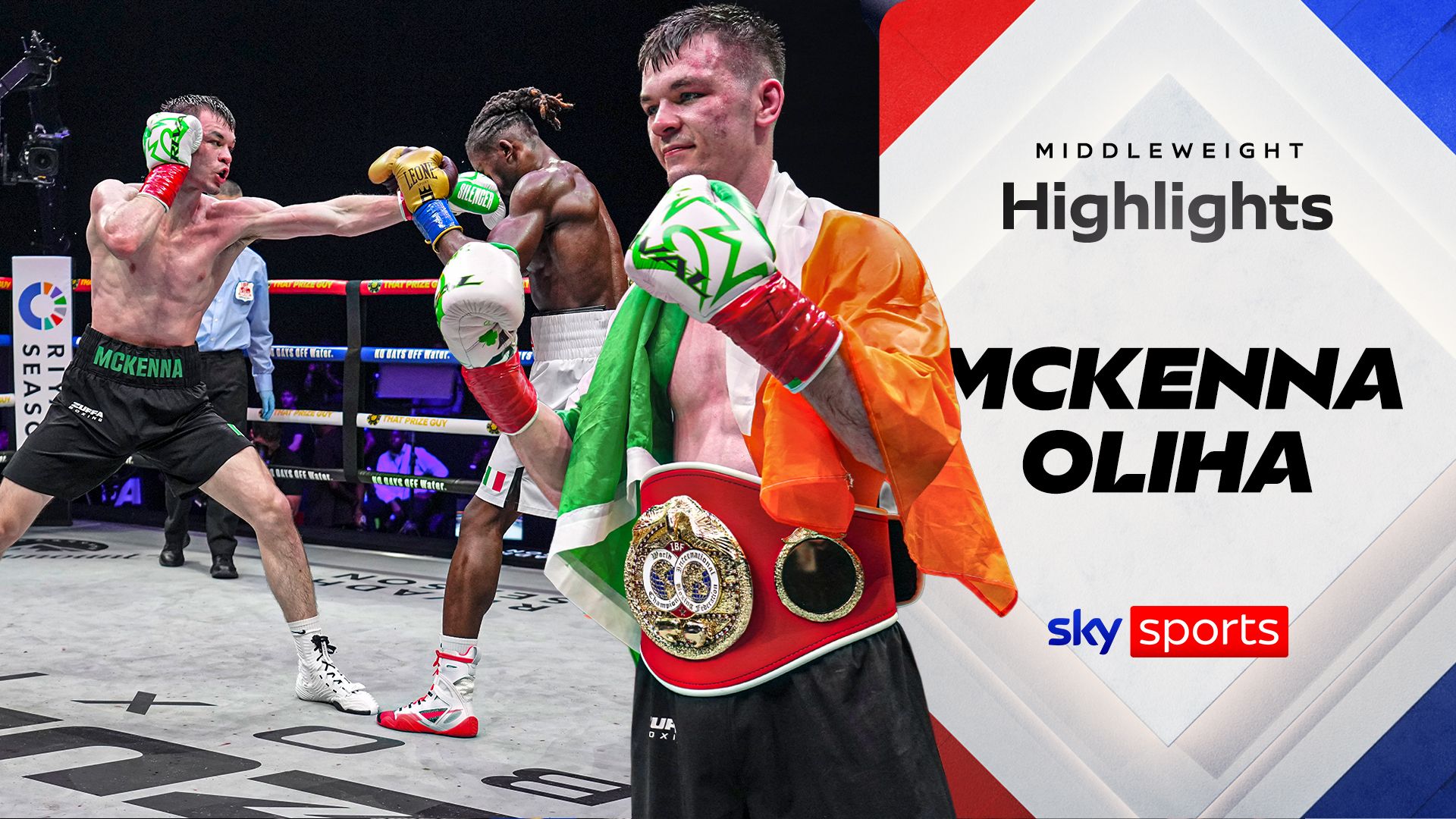
Highlights of Aaron McKenna’s IBF middleweight world title fight against Etinosa Oliha.
>

Aryna Sabalenka falls to Ekaterina Alexandrova in biggest upset of Canadian Open

Matthew McConaughey Performs “Quill” From ‘Rivals of Amziah King’ — Watch

Happy International Cat Day 2026 From Around the Anime World, Part II – Interest
-

 movies3 months ago
Search For Canadian TV Actor Stewart McLean Now Homicide Investigation
-

 Fashion9 years ago
These ’90s fashion trends are making a comeback in 2017
-
Fashion9 years ago
According to Dior Couture, this taboo fashion accessory is back
-
Fashion9 years ago
Model Jocelyn Chew’s Instagram is the best vacation you’ve ever had
-
Fashion9 years ago
Your comprehensive guide to this fall’s biggest trends
-
Fashion9 years ago
9 Celebrities who have spoken out about being photoshopped
-
Fashion9 years ago
Emily Ratajkowski channels back-to-school style
-
Fashion9 years ago
A photo diary of the nightlife scene from LA To Ibiza