
Sports
As the splitter rises in popularity, why do left-handers rarely throw the pitch?


During the final seasons of his soon-to-be Hall of Fame career, Clayton Kershaw experimented with baseball’s trendiest pitch. For years, Kershaw had tried and failed to throw a changeup. His delivery didn’t allow him to pronate enough to throw the pitch consistently. So he tried a split-fingered fastball.
Kershaw wound up throwing just 126 splitters over his final three seasons with the Los Angeles Dodgers, but even with that relatively minimal usage, he joined an exclusive club: left-handers who throw split-fingered fastballs.
The split-fingered fastball — or “splitter” — has had its moment before, specifically during the 1986 season. But in our current era of pitch tracking, the splitter has never been more popular than it is right now. MLB pitchers are throwing almost three times as many splitters as they did when the league first started tracking pitch types. Eight pitchers are throwing a splitter they didn’t regularly throw last year, and 11 pitchers added the pitch last season.
While the pitch has grown in popularity, it’s usage hasn’t been evenly distributed. Right-handers are four times more likely than left-handers to throw a splitter. Righties threw more than 11 times as many splitters as lefties from 2022 to 2025.
So why don’t lefties throw splitters more often? It is a question with no concrete answer. Many have theories as to why it isn’t a favored pitch amongst southpaws. We put the four most common theories to the test.
The splitter’s reputation as an injury-risk
One of the first things that always comes up with splitters is the impact the pitch has on a pitcher’s health. Does the split-finger grip lead to injury?
“The reason that I don’t throw the splitter anymore is I did blow out my elbow when I was throwing it,” said San Francisco Giants left-handed starter Robbie Ray. “I don’t think there’s any correlation between the two, but it just happened. I was throwing it a lot in spring training, I was working on it, and never had any issue. I think my elbow was just ready to go.”
The perception has long been that splitters lead to elbow injuries, but there isn’t much hard evidence for a link between throwing a splitter and suffering an arm injury at the major-league level. According to research by Jeff Zimmerman of FanGraphs, pitchers who throw the splitter at least 10 percent of the time are likely to hit the injured list 54 percent of the time in any given year. Pitchers who don’t throw a splitter? That percentage falls slightly to 52 percent. This mirrors past research that doesn’t show a direct link between the pitch and injury risk.
Still, it’s hard to dismiss the possibility of an increased risk of injury out of hand. If you put the ball between your first two fingers and feel the muscles in your forearm and near your elbow, those muscles are engaged in a way that they are not with a traditional fastball grip. Those muscles redirect stress away from the elbow ligament.
“I always thought that if thrown properly with the fingers really split like a forkball, that’s when you can get hurt because there’s no resistance against the ball being thrown and it really puts a lot of pressure on the elbow,” then-Rays manager Joe Maddon told the Associated Press in 2011.
The potential injury risk remains a supposition at this point, but with the advances in player science, it seems possible we could measure just how much impact the splitter has on the elbow. Unfortunately, it appears biometrics can’t measure that impact yet. Current systems break pitchers down into skeletal numbers and don’t yet have great models for what each muscle is doing. That could change soon as we go forward.
“The theory of the splitter being more harmful is due to the split fingers and the alleged pressure on the forearm/elbow,” said Driveline Baseball co-founder Kyle Boddy. “But that’s not possible to model using the systems we use today.”

Roger Craig was considered the godfather of the splitter when it rose in popularity in the mid-1980s. (Otto Greule Jr. / Getty Images)
Roger Craig, the late former big-league manager and pitching coach who is credited with helping bring about the wave of split-fingered fastball adopters in the mid-1980s, often pushed back on this critique when asked about it in his time. He’d point out that you can hurt your arm on any pitch, and that some of the injured pitchers people associated with his split-finger tutelage hurt their knees and hamstrings, too.
“I’m not an idiot,” Craig said. “I wouldn’t have taught them the splitter if I thought it was hurting them.”
Convention — the splitter was always a right-hander’s pitch, so it’s remained one
The last time we had a “year of the splitter” was 1986, when Mike Scott of the Astros won the Cy Young Award and the splitter was his signature pitch. In what is often a copycat league, it wasn’t surprising to see pitchers everywhere start picking it up. Craig famously taught it to anyone who would listen, and the grip quickly spread throughout baseball.
“The grip does all the work,” Craig, who passed away in 2023, once told The Athletic about the brilliance of that pitch. “You just throw it like a fastball.”
Craig’s most famous pupils were all righties — Scott, Jack Morris, John Burkett and Steve Bedrosian, among others. Even his pupils’ pupils were righties, as he taught the grip to Ron Perranoski, who went on to spread splitters to the likes of Orel Hershiser, Bob Welch and others (almost all of whom were right-handed).
So, even back when the pitch was at its trendiest, it was a pitch thrown primarily by righties. Now it’s regaining popularity, but interestingly, the rise in splitter usage in MLB today is nowhere near as significant as the rise in its usage in another huge baseball country, Japan.
“It’s sort of a pitch over here that not a lot of people throw,” said splitter-thrower and Dodgers left-hander Justin Wrobleski. “If you look at Japan, there are a lot more people doing it.”
In Japan, according to YakyuCosmo.com proprietor and writer Yuri Karasawa, around 14 percent of all pitches have been splitters or forkballs this season. That’s more than four times as many splitters/forkballs currently being thrown in MLB.
But guess what? Even though they throw more splitters in Japan, they have a righty/lefty split in that league, too. Since 2021, right-handers in Nippon Professional Baseball have thrown more than two times as many splitters as left-handers.
It’s a much smaller difference than in MLB, but there’s still a platoon split. That seems to imply that it isn’t only MLB tradition that’s keeping the pitch right-hander dominant, but something else.
The splitter doesn’t work as well with left-handers’ mechanics
One working theory as to why lefties don’t throw splitters is that their mechanics aren’t well-suited to the pitch, especially since it seems like so many left-handers have lower arm slots, a la Chris Sale and Randy Johnson.
Could the splitter be a pitch best suited for an over-the-top delivery that’s just easier for righties to learn?
There doesn’t seem to be a lot of evidence for this theory. The median arm slot for lefties this year is 38.5 degrees, and the median arm slot for righties is 38.7, so there isn’t a huge difference, on average. The average righty arm angle on a splitter is 41 degrees, suggesting the pitch is slightly more likely to be thrown by a pitcher using a higher arm angle, so maybe there’s a little something there. But there are plenty of low-slot splitters, all thrown by righties: Paul Skenes, Joe Ryan and Kirby Yates all throw split-fingers from a lower than 30-degree arm slot.
Are there other mechanical reasons for the difference?
“Splitters are the changeups for supinators,” said one major-league pitching coach.
Supinators are, colloquially, pitchers who are more comfortable gripping the baseball on the outside of the ball, and they are usually great at throwing breaking balls. Some use spin efficiency on the fastball as a proxy for pronation bias, arguing that a supinator would be on the side of the ball and therefore be less efficient when it comes to spin. Last year, 30 percent of lefties were pronator-biased (and therefore more predisposed to throwing a good non-splitter changeup) versus 26 percent of righties. That’s not a big difference, though.
Teams can now dial in exactly how the ball is coming off the fingers with high-speed cameras and a better understanding of seam effects. It doesn’t look like arm slot or supinator bias is the main reason more righties throw splitters than lefties.
The role of early development
Watch any Little League or high school game, and you’ll notice it: way fewer lefties at the plate and on the mound than in MLB. Young amateur pitchers will generally face multiple teams that don’t have a left-handed batter in the lineup over the course of a short season. That puts pressure on lefty starters to find a pitch to use against righties more than it does the reverse, which puts the focus on left-handers developing changeups rather than breaking balls early in their development
“Left-handed pitchers have a greater need to develop platoon-neutral off-speed pitches earlier,” said Driveline baseball director of pitching Connor White.
In the major leagues, lefties throw non-splitter changeups about 50 percent more often than righties, so there’s something to this idea. Southpaws have to face a lot of righties growing up, and they have to find a changeup that works to get them out. Right-handed pitchers can go a lot longer throwing only breaking balls and fastballs, because they didn’t see that many lefties.
“Splitters weren’t in the base set of pitch types pitchers learn growing up — I’d say fastball, sinker, slider, change, curve — and more a pitch type that someone goes to down the road when they feel the need to develop something new for a specific reason,” White said.
And here’s where the role of injury comes in. Fair or not, the splitter is associated with injury, so it’s not taught to kids looking to find a changeup. Lefties who succeed early in their careers usually develop a non-splitter changeup, while righties can ascend without one. Then, once they get to the big leagues, the righties who are still looking for a changeup have more need for the splitter.
Consequently, those left-handers throwing a splitter in the majors are just generally looking to improve upon a bad changeup more than anything.
“You can kind of get away with an OK changeup when you’re babying it and you’re not throwing as hard coming up,” Ray said, “but then the second I started throwing harder, the changeup wasn’t as good and I needed something new.”
Interestingly, in Japan, the pitch is more commonly used by younger pitchers — “Team USA plays Japan all the time at 16-21-and-under (tournaments) and gets diced by forkballs,” Boddy noted — which could explain why in Japan, more lefties are throwing the splitter, even if the pitch is still more commonly thrown by righties.
So perhaps we’ve landed on why so many more righties than lefties throw the splitter in the big leagues: Because it’s associated with injury, it’s not taught at the young amateur levels, and so it becomes the last-chance changeup for pitchers who don’t have a changeup yet. And because lefties see so many righties coming up through the ranks, they’re more likely to already have a changeup and aren’t in need of a splitter to fill that part of their arsenal.
In other words, this little MLB quirk — that the lefty splitter is a relative rarity — is in part due to all of the aforementioned theories working together rather than any single reason. Lefties are just a little bit less likely to need the splitter once they get to the big leagues because of who they faced on the way up.
As Wrobleski put it, “the hitters will let you know what you need to throw.”
>
Sports
Callum Walsh comes through cuts and knockdown to drop Denny and take battling decision victory in Dublin contest | Boxing News
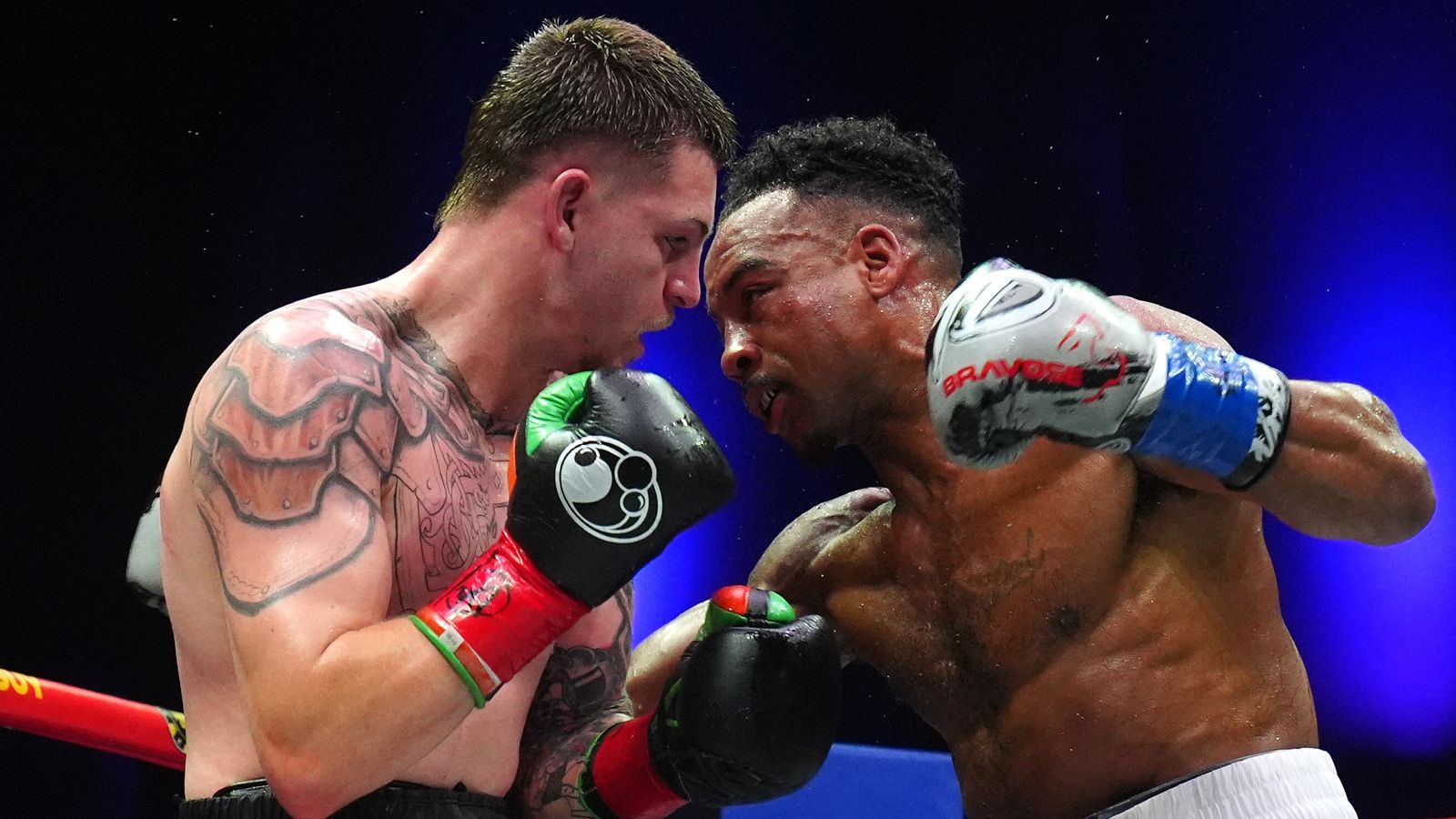
Callum Walsh maintained his unbeaten record and top contender status with a unanimous decision victory over Tyler Denny.
Denny, a former European champion, is a tough veteran and proved a test for the Irish middleweight at Dublin’s 3Arena.
Walsh prevailed on points, winning 98-91 twice and 96-90.
The bout didn’t progress without its pitfalls as Denny gave him hard rounds.
The first round suddenly went south for Walsh. Awkwardly positioned in front of Denny, he found himself bending low. Denny attacked and Walsh took a shot before slipping to a knee. The referee ruled that a knockdown.
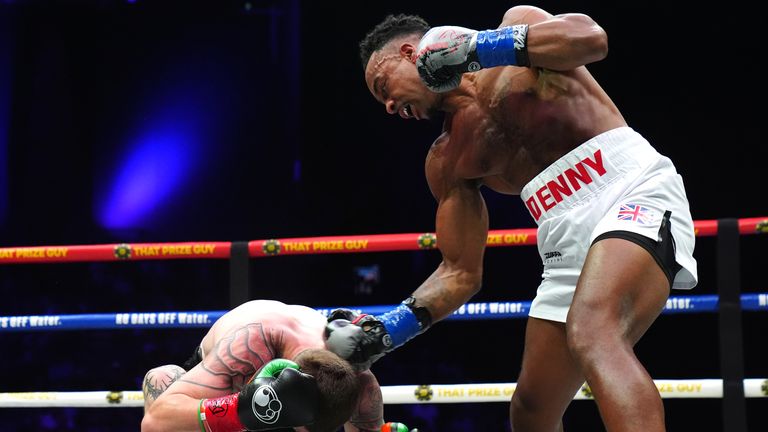
Walsh has a knockdown scored against him.
Walsh found the perfect riposte in the second round. As Denny came after him, Walsh launched a lovely arching left cross to the point of the Englishman’s chin, dropping him heavily to the canvas.
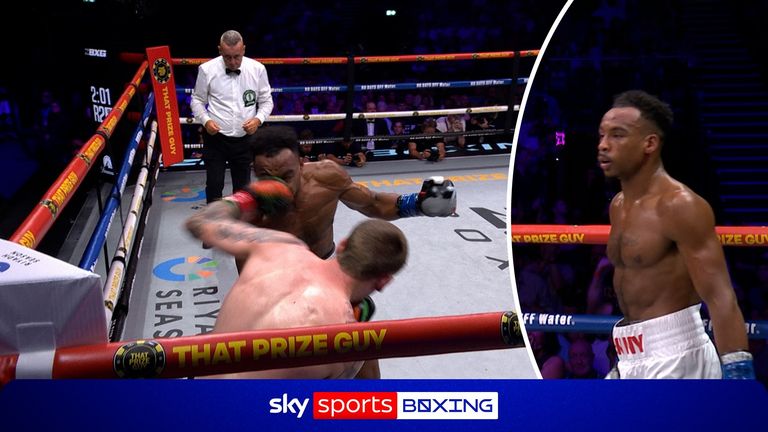
Callum Walsh put Tyler Denny down in the second round with a huge left hand punch.
Denny, brave as ever, rose and fought on. But Walsh popped up from beneath an attack to land a fine right hook and he finished the round slugging Denny into the ropes.
The Briton shook off the effects of that round and advanced. By the end of the fourth round, Walsh was backing up, letting his southpaw opponent come on but picking out accurate punches to catch Denny.
Walsh maintained his control, moving, hitting and letting Denny work to try to pin him down.
The Briton kept scrapping forward and managed to land solidly in the sixth round.
Denny trudged on swinging wildly, but Walsh manoeuvred well. The Irishman caught Denny to the head with a left-right combination. Denny felt those shots but remained doggedly determined. He cleaved away with uppercuts in close.
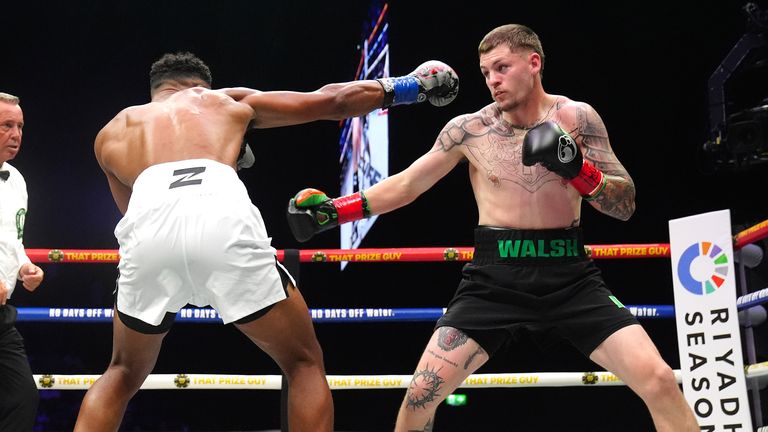
Walsh readies to uncork his southpaw left
The referee took a point off Walsh for holding, before evening up it by taking a point off Denny for hitting behind the head.
Walsh exploded forward with a savage sequence of punches to the head, leaving Denny stranded, standing still on the end of them.
But Walsh emerged from a clash with a cut over his left eye. It bled badly at once. Denny was leaning into him in scrappy collisions and Walsh looked frustrated after picking an additional nick on his cheek.
In the 10th round Walsh landed a great lead right uppercut. Denny got after him with hooks, catching the Irishman with his southpaw left and right.
Another hard left from Walsh though snagged Denny. He couldn’t put the Englishman down a second time but made sure he finished the fight in the ascendancy.
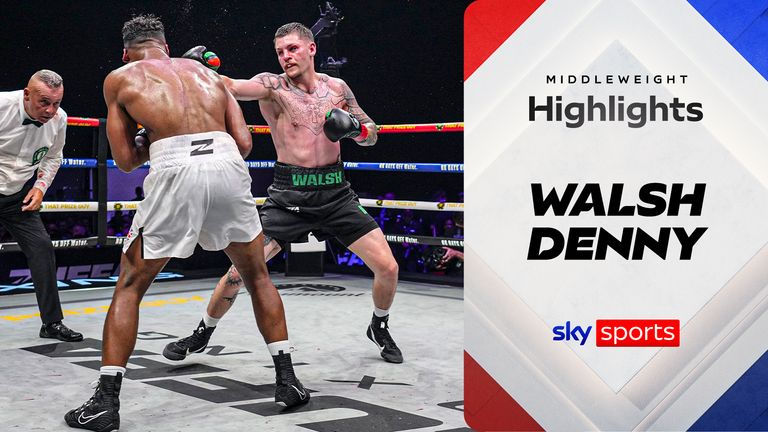
Watch highlights of Callum Walsh’s clash with Tyler Denny from Zuffa Boxing 10 in Dublin.
‘I think he broke my orbital bone’
Walsh told Sky Sports: “It was a lot harder than I thought. In the second round we clashed heads. I think he broke my orbital bone. It was crunching the whole time.
“It was very tough. I’m very critical of myself. I should have been a lot better. I wish I could have been better.
“He’s tough, awkward and tricky, but we’ll go again.”
Watch Aaron McKenna and Etinosa Oliha fight for the IBF world middleweight title in Dublin on Saturday, live on Sky Sports. Get Sky Sports or stream boxing with no contract.
>
Sports
Joe Ward rescues career with valiant Artjom Kasparian win as Stevie McKenna and Sam Hickey take stunning one-punch finishes | Boxing News

Joe Ward staved off disaster, beating Artjom Kasparian on a unanimous decision after 10 ferocious rounds at the 3Arena in Dublin.
Ward was a true amateur boxing sensation. At 17, all the way back in 2011, he became Ireland’s youngest ever senior European gold medallist.
Though he became an Olympian, misfortune dogged his amateur career, and his pro start was even worse. He dislocated his knee and lost his professional debut.
This fight at the 3Arena in Dublin was his first since 2024 and his ticket back to the big-time
Ward did begin like he’d never been away. He peppered Kasparian with sharp southpaw punching, popping shots into the body and the head. The Manchester-based hitter even picked up a nick by his right eye.
Kasparian stayed in front of his opponent though and in the third round consecutive right hooks to the jaw tested out Ward’s chin and the visitor would then test the home hero to his limit.
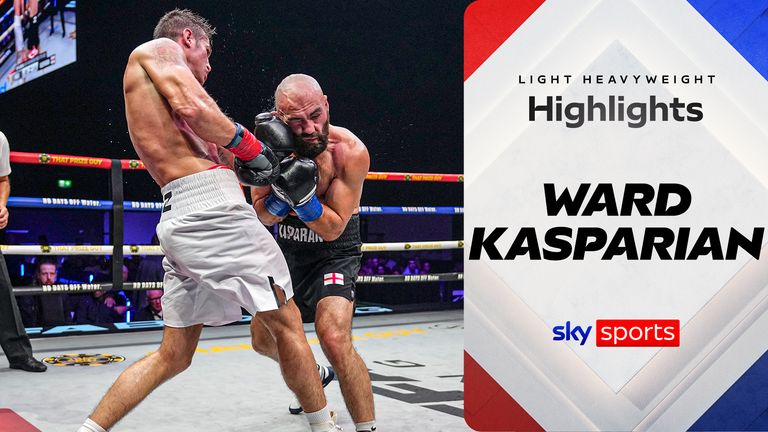
Watch highlights of Joe Ward’s clash with Artjom Kasparian from Zuffa Boxing 10 in Dublin.
Kasparian refused to take a backwards step. Ward’s arms began to look tired and he leaned on in a clinch.
Kasparian’s solution was to keep on throwing and keep hitting out with heavy shots.
The visitor got himself onto the front foot at the start of the fourth round, landing a double jab and snagging Ward as he stepped in.
Ward rapidly tired, punching with just his arms, his feet rooted to the spot, his head available to be hit. That is not the place to be against a big puncher like Kasparian.
Kasparian kept up a strong assault through the middle rounds of the fight. He was, at times, pummelling Ward and it looked like the Irishman was on the brink of disaster.
But, as well as talent, Ward has heart. He pulled it back, and brought in strong backhands to repel Kasparian in the seventh round.
Ward pounced on the opportunity, getting a second wind. He bounced a one-two off Kasparian’s head in the eighth round and started to dictate the action.
Under pressure Kasparian almost fell through the ropes and the crowd wildly cheered for Ward.
In the ninth round, Ward screwed his right in and slammed his left down again. Kasparian, though, hacked at him with left hooks.
Ward popped in a clean, accurate left cross and Kasparian staggered back a step. He harried Kasparian with a sustained combination before the round was up.
Kasparian banged in a one-two but Ward, marked under his right eye, managed to trade with gusto. Kasparian tried to reel away, but Ward kept on throwing, catching him.
Fiercely determined Kasparian slugged back, but Ward answered in kind and raised both arms in the air at the final bell.
Stevie McKenna, with older brother Aaron starring in the main event, got a memorable evening for his family off to a sensational start.
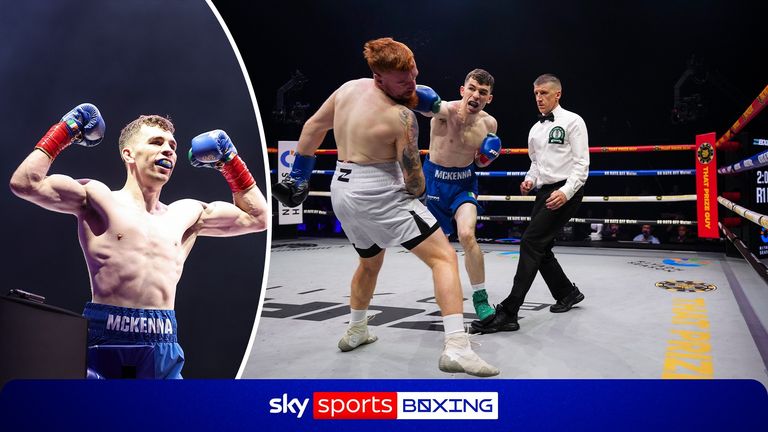
Stevie McKenna stopped Owen O’Neill with a devastating right hand in the opening round of their contest at Zuffa Boxing 10.
He stormed out to meet Owen O’Neill, loomed over his opponent, and slung out heavy punches. O’Neill hopped backwards, hoping to ride out the storm. But McKenna did not relent. He stayed on his prey, whacking him with a massive left hook and continuing to strafe him with wide-arm punches.
O’Neill was left with little option but to tuck up beneath the onslaught. That though was just an invitation for trouble. A one-two from McKenna lanced down and a right cross sent O’Neill flying off his feet, crashing down on the canvas. He had to be stopped there and then in the first round.
Slick Scottish middleweight prospect Sam Hickey scored a second consecutive victory with a monstrous one-punch finish.
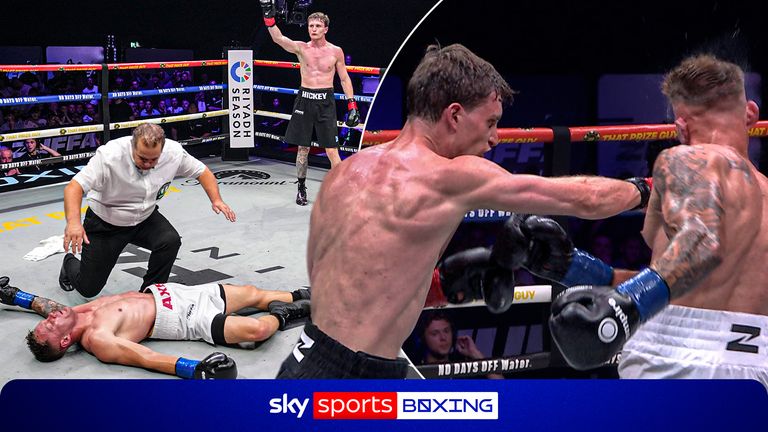
Sam Hickey’s huge right hand knocked out Brad Axe in the seventh round of their contest.
Brad Axe was a competitive opponent, digging in and firing back when Hickey clipped him.
In the third round Hickey stepped in and short right to the side of the head dropped Axe to a knee. The bell though rang to save him.
But Axe kept himself in the fight and caught Hickey in return. Regularly though Hickey finished rounds strongly, driving Axe into the ropes only for the bell to call him off.
Hickey though finished matters at the start of the seven round, Axe bounced in and a booming right greeted him, spinning him round as he flopped down to the canvas. The towel immediately came in as Axe suffered a heavy stoppage.
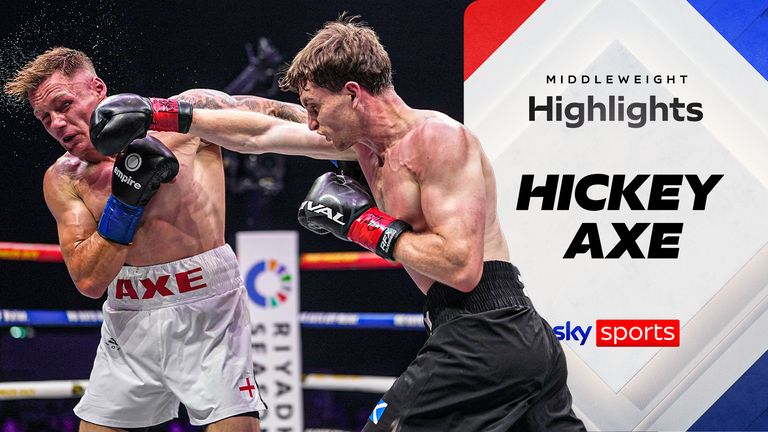
Watch highlights of Sam Hickey’s clash with Brad Axe from Zuffa Boxing 10 in Dublin.
Romania’s Daniel Buciuc managed to get through six rounds with Louis Greene, though was in severe trouble in the closing seconds of the bout.
After a quiet first round, Greene closed down Buciuc’s space, hammering his body with hooks. He brought hard, chopping shots through the middle jolting the Romanian.
Buciuc soon was trying to move off but he couldn’t keep himself clear. Greene took him to the ropes and Buciuc had to endure salvoes of punchers, hefty uppercuts jolting him.
He attempted to tie up Greene but that left him open to the Briton’s overarm right.
Buciuc was hanging on as Greene shook him up in the final half-minute of the contest. With his legs loosening, Buciuc still kept himself upright and got through to the final bell, Greene winning 59-55.
Connor Coyle took a unanimous points decision win after a bruising 10 rounds with the USA’s Mark Beuke. The man from Derry put himself in the ascendancy in the early going of the bout, teeing up some solid right hands that blasted straight into Coyle.
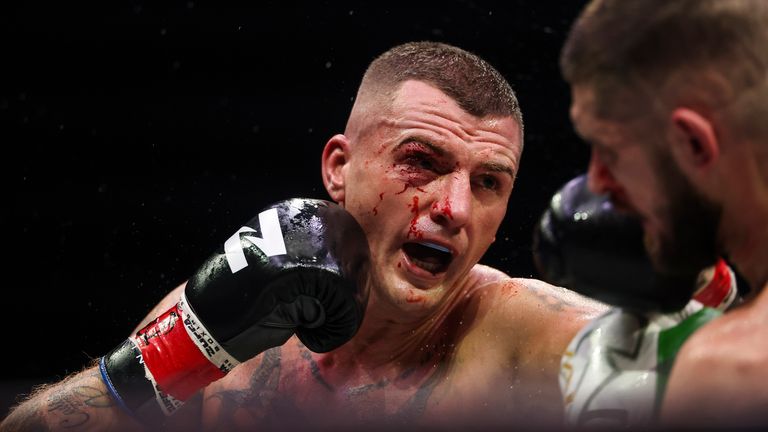
Coyle picked up a cut early in the fight (Photo: Ed Mulholland/Zuffa Boxing)
But the American took his power and a cut opened by Coyle’s right eye to complicate his evening’s efforts.
Beuke stood his ground and kept Coyle honest with heavy hooks that he managed to land with either hand. But his successes came as single blows. Coyle worked better combinations and made sure he finished their exchanges with accurate punching.
Coyle finished the bout bleeding from the nose, but reeling off straight punches to push Beuke back, winning 98-92, 98-93 and 97-93.
Patrick O’Connor, a top American cruiserweight prospect with Irish roots, made short work of Spain’s Juan Manuel Moriel.
Measured with his jab, O’Connor quickly took control. He lashed a right over and began to work the body as he ramped up his attack. The American finished a blazing combination of hooks to Moriel’s trunk with a left hook to the head.
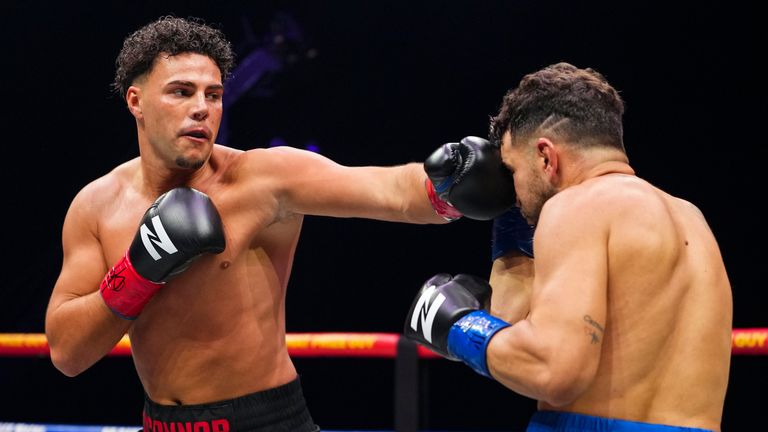
Patrick O’Connor maintains his winning run. (Photo: Cooper Neill/Zuffa Boxing)
With O’Connor about to move through the gears, the bout was stopped after the first round, Moriel citing a shoulder injury as he stayed on his stool.
The American remains unbeaten in four pro fights, all of those wins coming inside the distance.
Watch Aaron McKenna and Etinosa Oliha fight for the IBF world middleweight title in Dublin on Saturday, live on Sky Sports. Get Sky Sports or stream boxing with no contract.
>

Full Time
After Extra Time
This is a live match.
Extra Time
Half Time
Valencia
vs Newcastle United. Friendly Matches.
Mestalla.
>

Callum Walsh comes through cuts and knockdown to drop Denny and take battling decision victory in Dublin contest | Boxing News

Obama Relives Tan Suit Debacle In ‘Life, Larry & Pursuit of Unhappiness’

Joe Ward rescues career with valiant Artjom Kasparian win as Stevie McKenna and Sam Hickey take stunning one-punch finishes | Boxing News
-

 movies3 months ago
Search For Canadian TV Actor Stewart McLean Now Homicide Investigation
-

 Fashion9 years ago
These ’90s fashion trends are making a comeback in 2017
-
Fashion9 years ago
According to Dior Couture, this taboo fashion accessory is back
-
Fashion9 years ago
Model Jocelyn Chew’s Instagram is the best vacation you’ve ever had
-
Fashion9 years ago
Your comprehensive guide to this fall’s biggest trends
-
Fashion9 years ago
9 Celebrities who have spoken out about being photoshopped
-
Fashion9 years ago
Emily Ratajkowski channels back-to-school style
-
Fashion9 years ago
A photo diary of the nightlife scene from LA To Ibiza