
movies
Ex-Prime Video UK Boss Chris Bird Launches Two AI Ventures

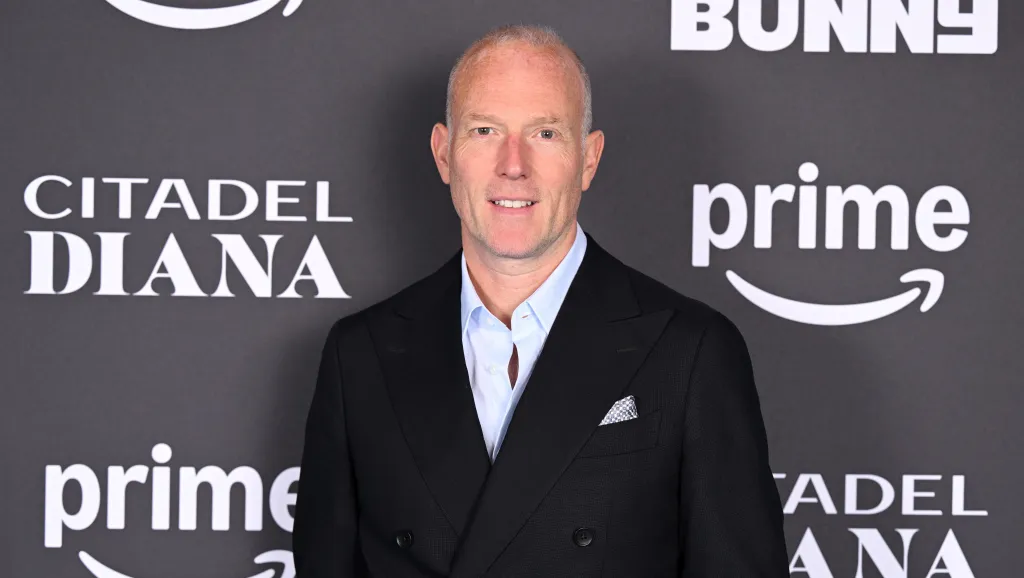
Former Prime Video UK chief Chris Bird has launched a pair of AI ventures aimed at empowering indie content creators, one with documentary director Dan Hartley.
Bird is behind HawksHead AI, a predictive data analytics platform, and CineMe AI, an AI-powered development took he has co-founded with The Boy Who Lived director Hartley.
Having left Amazon last year, where he was Managing Director of Prime Video UK, Bird has been building up his new businesses behind the scenes and is now in Cannes at the film festival to launch them.
HawksHead AI is being billed as a data analysis platform that helps content creators predict how their projects will perform with audiences at the earliest stages of development from script or synopsis.
Using proprietary AI tools and private databases, HawksHead gives eagle-eyed analysis on the likely performance of a project within specific audience groups and provides actionable guidance on how to adjust scripts, casting or the creative approach to improve resonance. A ‘synthetic panel’ capability also allows creators to test changes and gauge results in advance, getting feedback in hours.
Bird hope this will collectively allow creators to win commissions or secure investment from broadcasters and streamers.
CineMe comes from Bird and Hartley, whose HBO and Sky feature documentary David Holmes: The Boy Who Lived, about Harry Potter stunt performer was BAFTA and Emmy-nominated) is being marketed as “a pioneering, accessible and affordable visual development tool for filmmakers, powered by AI.”
In practice, it will take a script and automatically createsa visual storyboard of related photo-realistic images in seconds. The founders say it enables collaboration between producers, directors, production designers, DPs, locations, costume designers and VFX teams, simplifies how ideas are shared and saves “significant” time and money.
The tool is being aimed at everyone from established Hollywood film producers to indie grassroots creators. Generative AI VFX capabilities that allow for complex visual effects such as explosions or large-scale set pieces entirely through AI will be introduced over time.
“The old ways of commissioning, based on who you knew and what talent you could attach are changing rapidly,” said Bird. “Streamers and platforms have for years used sophisticated data analysis to make investment decisions, and that data was their exclusive preserve.
“Now, through HawksHead AI and CineMe, we’re levelling the playing field – putting that same power into the hands of British filmmakers and content creators at the point where it matters most: before a single frame is shot. As AI-produced content becomes more mainstream, the ability to optimise for audience engagement will only become more important. We exist to help creators make the best decisions with the best available data.”
Hartley added that CineMe “was born out of frustration with slow, laborious systems for getting projects off the ground,” adding: “There’s an absence of accessible, affordable visual development tools outside of the studio system. We’re changing that — for established filmmakers looking to simplify the production process, and for the next generation of content creators across film, television and web-based media.”
CineMe is currently in beta phase testing, with “a series of confidential, high-profile productions on board.” Unnamed “key advisors and industry names from across the film, technology and investment sectors” are on board and will be announced “soon.”
Hartley and Bird have also formed the CineMe Future Fund, which will put 5% of the company to a charitable trust, with the goal of providing enterprise-grade AI to the screen-based creative industries workforce. Hartley, a freelancer who hit hard by financial insecurity in the wake of the pandemic and Hollywood strikes, wants the fund to start a conversation about supporting those most vulnerable to disruption.
”Over a 20-year career I’ve had the opportunity to work with some of the leading luminaries in the British film industry, and I’ve seen first-hand how important it is to align teams around a creative vision,” said Hartley. “I see CineMe’s role as supporting the next generation of storytellers and filmmakers, by giving them access to affordable tools that will transform how they develop, produce and distribute films. Before CineMe you used to have to wait until you’d made a film before you could see it, now you don’t.”
Bird added: “After 15 years at Amazon, seeing first-hand how new technologies can help reduce cost, improve decision-making and increase efficiency, I’m excited to bring that ethos to the UK content creation space with CineMe. We sit on the precipice of significant change in our industry, and CineMe is perfectly placed to help creators bring their vision to screen more easily than has ever been possible.”
The news comes after Deadline’s Breaking Baz revealed David Holmes, who played Daniel Radcliffe’s stunt double in Harry Potter before a tragic accident on the set of Deathly Hallows: Part One left him paralyzed from the waist down, was turning Harley’s doc The Boy Who Lived into a stage play.
>

The Producers Guild of America said Tuesday that Oscar-winning Shakespeare in Love producer Donna Gigliotti and Emmy-winning Weird: The Al Yankovich producer Mike Farah as its new presidents.
The pair succeed Donald De Line and Stephanie Allain, who have been the guild’s presidents since 2022.
“It is an incredible honor to serve as presidents of the Producers Guild of America at such a pivotal moment for our industry,” said Gigliotti and Farah in a press release today announcing the news. “We are deeply grateful to Donald and Stephanie for their leadership and dedication to the guild, particularly as they helped guide our members through a period of profound change. The PGA has created a community that supports one another and a Mark that validates the work of a producer at the highest level. The PGA is dedicated to embracing new opportunities for producers while maintaining a commitment to the core principles of producing: tenacity, perseverance and dedication to all aspects of the work.”
Gigliotti became the third woman in Oscar history to win the Academy Award for Best Picture, winning in 1998 for producing Shakespeare in Love. She has since scored three more Best Picture noms for Hidden Figures, Silver Linings Playbook and The Reader.
She earned an Emmy nomination in 2019 for producing the Academy Awards telecast for ABC and received a second nomination in 2023 for the documentary Wuhan Wuhan. She also served a full six-year term on the Board of Governors of the Academy of Motion Picture Arts and Sciences, where she held leadership roles including Governance Chair and Finance Chair.
Farah is a three-time Emmy-winning producer who once worked as Allain’s assistant. He began at Funny Or Die as its first producer in 2008 and eventually ascended to CEO of the comedy platform. His credits include winning a pair of Emmys for producing Between Two Ferns, Billy on the Street and American Vandal. His later credits include Weird: The Al Yankovic Story and late-night’s @fter Midnight. He won Outstanding Television Movie for Weird: The Al Yankovic Story in 2023.
>

Oscar nominees Margot Robbie and producer Jason Blum have boarded exhibition trade org Cinema United‘s Filmmaker Leadership Council, a strategic group of producers and directors united in a single cause to champion the future of theatrical worldwide. The duo join council leaders Jerry Bruckheimer and Emma Thomas, and charter members Ryan Coogler, Brad Bird, Jason Reitman, and Celine Song.
The Filmmaker Leadership Council provides feedback and recommendations on pressing issues facing exhibition today—including consolidation, windows, the promotion and marketing of the cinematic experience, and highlighting innovation and technology. The Council meets quarterly. Former Imax exec Greg Foster is the Council’s Executive Director and a senior consultant for Cinema United.
“We are thrilled and honored to welcome two leaders like Margot and Jason to this influential group,” said Michael O’Leary, President and CEO of Cinema United. “Margot is a global superstar and the voice of a generation who loves movies on the big screen. Jason is beloved by fans around the world for creating incredible—and scary—experiences in theatres. They are both well-known, fierce advocates of the theatrical experience. I want to thank them both for their commitment, and I look forward to working closely with them to advance this great industry together.”
“It’s an absolute honor to have Margot and Jason join the Filmmaker Leadership Council,” said Council Chair Bruckheimer. “Their combined impact on this industry is enormous, and I know they will help our efforts immensely.”
“For me, the magic of cinema starts with the cinema itself,” Robbie said. “Storytelling in this format can be incredibly powerful, and I truly believe movie theatres are essential to our art form. I couldn’t be more grateful and excited to be able to work with such a powerful group of creatives to continue to drive the theatrical experience forward.”
Blum added, “Movie theaters are where fans are made. Bold, creative voices are bringing young audiences back to the movies, and that’s exciting. Turning moviegoing into a habit takes all of us, and this Council gives us a way to do that together.”
This week, Blum will speak to members of exhibition as part of a live conversation at Cinema United’s annual Fall Summit gathering in Los Angeles.
Robbie is a 3x Oscar nominated actress and producer. She starred in Warner Bros’ highest grossing movie ever, Barbie, which made over $1.4 billion worldwide. She stared earlier this year in Warner Bros/MRC’s feature take of classic novel Wuthering Heights. She next stars and produces Warners’ Ocean’s prequel which is shooting in Monaco under the direction of Bradley Cooper who also stars.
Three-time Oscar nominee Blum leads Blumhouse Atomic Monster. Blumhouse has a first-look deal with Universal Pictures and has produced the highly-profitable Paranormal Activity, The Purge, Insidious, and Sinister franchises which have grossed more than $1.2 billion worldwide on combined budgets under $40 million. This past summer Blumhouse Atomic Monster had two movies which grossed over $900M combined on very low budgets: A24’s highest grossing movie ever Backrooms and Focus Features’ highest grossing movie ever, Obsession.
>

EXCLUSIVE: As the worlds of entertainment and brands move closer together, The Now Agency has a plan to scale content.
The New York-based social media agency is launching a social distribution network (SDN), which is aimed at helping brands push their content towards a network of more than 50,000 third-party publishers.
“Great content alone is no longer enough to win on social,” said Gabe Feldman, co-founder and Managing Partner of The Now Agency. “Brands need to think just as critically about how that content is engineered to break through the discovery mechanisms that determine its reach, and how distribution can scale that reach beyond a brand’s owned channels.”
In effect, the social distribution network will allow content such as podcasts, interviews, live streams, YouTube programing and other types of long-form content to reach vetted third parties, who turn the content into social-native clips and distribute them through their own channels. The content will span the entertainment, lifestyle, sports and culture spaces.
The Now Agency says content discovery that was once tied to a creator or brand’s follower base, but that platforms are now sharing based on signals such as watch time, engagement, discussion and shares.
“The opportunity isn’t simply to produce more content,” added Jonathan Chanti, Co-Founder of The Now. “It’s to build a system that gives every strong piece of content more chances to find its audience. Social distribution should be treated as infrastructure, not an afterthought.”
>

OceanVeil Streams Even the Student Council Has its Holes! Anime on October 3 – News
Knies says Toronto trade talk was 'getting old'; Marchenko departure leaves unanswered questions

Lizzie Borden’s ‘Monster’ Jumps 20% From Premiere Week With 14.5 Million Views on Netflix, Tops TV Chart
-

 movies4 months ago
Search For Canadian TV Actor Stewart McLean Now Homicide Investigation
-

 Fashion9 years ago
These ’90s fashion trends are making a comeback in 2017
-
Fashion9 years ago
According to Dior Couture, this taboo fashion accessory is back
-
Fashion9 years ago
Model Jocelyn Chew’s Instagram is the best vacation you’ve ever had
-
Fashion9 years ago
Emily Ratajkowski channels back-to-school style
-
Fashion9 years ago
9 Celebrities who have spoken out about being photoshopped
-

 Anime4 months ago
Rurouni Kenshin: Hokkaido Arc Manga Takes 1-Issue Break – News
-

 Anime3 months ago
HIDIVE to Stream English Dubs for The World Is Dancing, The Forsaken Saintess and Her Foodie Roadtrip in Another World, The Dangers in My Heart: The Movie Anime – News