
Rooney and Kate Mara in Bucking Fastard
Gateway to Orkney


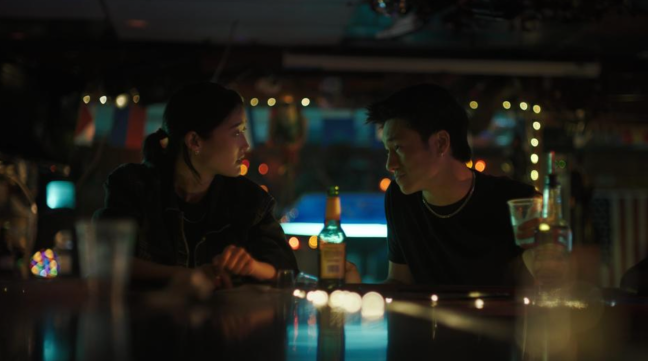
Editor’s note: This review was originally published during the 2025 SXSW Film and TV Festival. Utopia’s Circle Collective will open “Forge” with week-long theatrical runs in Los Angeles beginning May 15 at the Landmark Nuart Theatre, followed by New York beginning May 22 at Quad Cinema, with additional select markets rolling out nationwide in the weeks ahead.
To most of us, a phrase like “imitation is the sincerest form of flattery” is little more than a platitude. To Coco Zhang, it’s an ethos that’s worth building an entire creative existence around.
The Miami-based painter, played by Andie Ju in Jing Ai Ng’s first feature “Forge,” is the queen of fine art forgeries — just don’t call them “fakes.” The difference between the two is vast: fakes are simple reproductions of existing paintings, whereas forgeries are new works of art inspired by a famous artist, designed to appear like like the newly-discovered works of a master. In her eyes, it takes real love to make a convincing forgery. You have to understand every step of an artist’s process at a fundamental level, from the way they held their brushes to the traumatic experiences that shaped their worldviews. To her, forging an artist is an act of resurrection that brings a dead genius back to life for a few fleeting moments.


The people she rips off see it a bit differently.
Spending six figures on an investment piece only to find out that it’s a worthless canvas made in some Zoomer’s garage is the kind of thing that can radicalize a loaded Miami socialite. String enough of those together, and you’ll have the art crimes division of the FBI crawling up your ass.
When Ng’s thrilling directorial debut begins, Coco is on the cusp of both life-changing money and life-ending legal consequences. Her reputation is growing in the right corners of Miami’s underground art scene, and the illicit sales she makes through a man known only as “Pedro” keep growing. She’s ready to expand her crime empire for reasons both financial and egotistical — she likes the money, but what she really wants is the rush of placing a forgery in a museum.
The market for her talents is there, but her ambitions are thwarted by her brother and business partner Raymond, whose pragmatism leads him to spend more time weighing risks than daydreaming about rewards. When he’s approached by billionaire fuckup Holden Beaumont (Edmund Donovan) about taking on a job that would require hundreds of fake paintings, his knee-jerk response is a resounding “No.” But with Holden desperately in need of assistance and Coco craving a partner whose ambition matches hers, it isn’t long before the three are in business.
Reeling from an ill-advised business venture that saw him launch a less successful version of Fyre Fest, Holden is looking to recreate his late grandfather’s massive art collection that was destroyed in a hurricane. Coco needs to recreate hundreds of old landscapes and portraits of dead presidents, then Holden and his savvy trophy wife Talia (Eva De Dominici) have to slowly sell them two and three at a time to local art dealers to avoid flooding the market and raising eyebrows.
The problem is that Coco has to manage the job while also working at her family’s Chinese restaurant, where her mother is always berating her for lacking the ambition of her banker brother. (It should be noted that Raymond does not actually work at a bank, but lies and tells his family he does while he serves poolside drinks at a hotel.) On New Year’s Eve, they’re joined by a new customer named Emily (Kelly Marie Tran), a lonely FBI agent seeking a bit of Chinese community after her colleagues don’t take her work in the Art Crimes division as seriously as their drug busts. She becomes fast friends with Coco’s mother, and the restaurant becomes her preferred spot for mulling over the case of the art forger that’s taking Miami by storm (and cooking her dumplings).
In a world where so many crime movies (understandably) focus on protagonists pushed to their limits by dire financial circumstances and forced to do things they initially don’t believe in, “Forge” is refreshing in how committed Coco is to the art of forgeries. It has all the neon, sunsets, and club music you’d expect from a thriller set in the wealthiest echelons of Miami, but the film doubles as a portrait of an artist who craves recognition for her work even more than she craves money.
Her desires elegantly clash with those of everyone around her thanks to the excellent work of the ensemble cast, who each embody a character chasing a different segment of the American dream. Raymond is a materialist who craves the wealth and status symbols that make you somebody in Miami. Holden already has them thanks to his family wealth, but craves the validation of the business community for creating something of his own. Emily has spent her entire life doing the right thing at every opportunity, and doesn’t care about fame or fortune, but just wants the human connection that comes from forming a few genuinely close relationships. And Coco wants to be seen as a lauded artist deserving of the same respect she gives to her dead heroes, even though there’s no amount of artistic fame that would earn the approval of her mother.
The tightly crafted story ensures that everyone is running a different race as the characters sprint to the finish line, leading to a deliberately unsatisfying ending that reflects those divergent goals. One of the more entertaining films of this years’ SXSW, “Forge” might end up bringing its director into the same spotlight that Coco wanted so badly.
“Forge” premiered at the 2025 SXSW Festival.
Want to stay up to date on IndieWire’s film reviews and critical thoughts? Subscribe here to our newly launched newsletter, In Review by David Ehrlich, in which our Chief Film Critic and Head Reviews Editor rounds up the best new reviews and streaming picks along with some exclusive musings — all only available to subscribers.
>
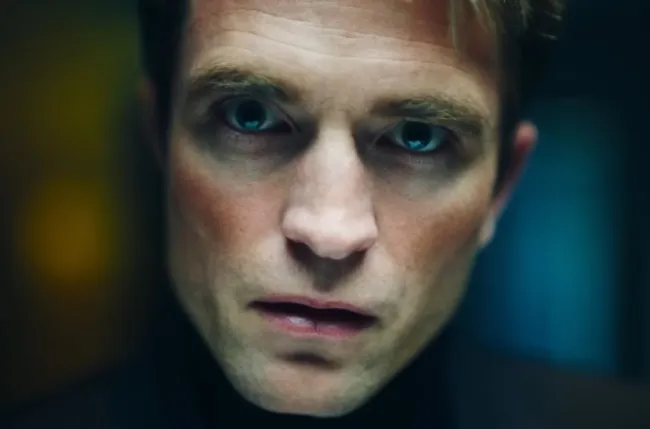
Before “Primetime” director Lance Oppenheim had seen formative films like Abbas Kiarostami’s “Close-Up” or Orson Welles’ “F for Fake,” in which masters of cinema blurred the line between fiction and reality, he had watched “To Catch a Predator.”
“I remember thinking, ‘What am I watching? Is this a documentary? Is this a scripted movie? Is it something new, something different?’” said Oppenheim of watching the news program that lured child predators into homes rigged with hidden cameras as TV journalist Chris Hansen waited in the wings to confront the unsuspecting molesters. “I couldn’t tell if it was like a prank show or a horror movie or a news program.”


For a documentary filmmaker, who shot nonfiction subjects (“Ren Faire,” “Spermworld,” “Some Kind of Heaven,” and the soon-to-be-released Nathan Fielder joint “You Can See Everything”) as if they were scripted narrative films, “Primetime,” starring Robert Pattinson as Hansen during the rise and fall of “To Catch a Predator,” became the perfect project. It gave the young auteur a chance to blur the line between fiction and reality from the scripted side of the equation.
Oppenheim could plug into how the news program created, in his words, “this manufactured reality,” where adult actors pretended to be children, houses that looked like sets (some reminding Oppenheim of David Lynch’s “Blue Velvet”), and “props that looked like cookies, pepperoni pizzas, and sweet tea, that took on this feeling of dread.” It was a manufactured reality that would then collide with the “hyperreal situation” of a potential predator walking in to attempt something terrible.
“Hansen had created this space and world where time seemed to freeze, and the laws of gravity and physics and reality would be a little different; it was almost like the zone in [Andrei] Tarkovsky’s ‘Stalker,’” said Oppenheim. “I liked the challenge of attempting to express that through visual, cinematic terms.”
The result is a film that looks radically different from anything else we’ve seen on the big screen in recent years, which was the filmmaker’s stated intention. Here are four ways Oppenheim and his longtime cinematographer David Bolen achieved that distinctive look.

Oppenheim wanted to instill in his audience that same “What am I watching?” sense that he had experienced with the original series. To pull it off, Bolen used 12 different camera formats, including mini-DV (many mirroring Hansen’s hidden cameras), vintage tube and broadcast cameras, a micro-endoscope used for colonoscopies, along with a more standard modern-day movie camera (Arri Alexa 35).
The goal, according to Oppenheim, was to create an “elastic aesthetic value system,” where they might run a shot with an Arri Alexa 35, then do another take with a radically different camera, something Oppenheim admits befuddled some of his crew.
“I think a lot of people thought I was like Tommy Wiseau on the set of ‘The Room,’ not knowing what I was doing and just kind of arbitrarily making choices,” said Oppenheim. “ I love Tommy Wiseau, and I love the way he made ‘The Room,’ so I was like, ‘I don’t care. I’m going to run the scene once on an Alexa, and do it again on a broken Plumecon tube camera.’”
Oppenheim consulted with veteran TV cameraman Mitchell Wagenberg, who worked on the original “To Catch a Predator,” “Cash Cab,” and traditional news programs with TV journalists like “60 Minutes” Mike Wallace. Oppenheim wasn’t only trying to learn how shows used to be shot; he was also looking for new emotional and narrative brushstrokes.
While much has been made of the novelty of the medical colonoscopy camera, it was Wagenberg introducing the “Primetime” team to the Plumbicon that became the game-changer. It was an early attempt at a digital camera, used briefly by Wagenberg and others on news programs in the late ’80s before being discontinued.
“It was this antiquated technology where the tubes inside the camera would be physically warmed up, like microwaved, until it would produce an image,” explained Oppenheim.
Oppenheim was intrigued, desperate to better understand the long-gone technology, and set out to find and acquire one he could possibly use in the film.
“The Plumecon we found, the tubes had been burnt to a crisp, so every time we turned the camera on it would distort the images. It almost looked like a nuclear explosion had been set off right in front of us, and I loved that about it. It reminded me of the [Werner] Herzog quote, ‘The moment you turn the camera on, you’re seeing a fiction,’ [and] the camera felt like it was honoring the spirit of that.”
Oppenheim admits that while shooting with the Plumecon, he had no idea how or if the image would hold up, but he also liked the idea that the image could “collapse a little.”
Describing his Plumecon brushstroke, Oppenheim said: “The colors all kind of bleed and run, and they’re kind of funny looking, and it feels a little dreamlike.”

All the footage, regardless of which camera format it was shot on, was printed to 16mm film stock and then digitized for the edit. The reasons for this, and what it accomplished, are threefold.
“With the cinema camera [footage shot on the] Alexa, Dave and I were always sort of allergic to how digital it looked, and how crisp it felt,” said Oppenheim. “[The 16mm scan] was an effort to make the Alexa images feel tactile.”
Oppenheim also liked the layer of removal the scan supplied between the audience and the original image. He was inspired by a leaked version of director Lynne Ramsay and cinematographer Seamus McGarvey’s 2025 film “Die My Love,” starring Pattinson.
“A cam scanner version had come out from ‘Die My Love,’ and that movie was shot with Ektachrome, and I remember just thinking, ‘Wow, this is so fucking crazy, just the way it looks,’” said Oppenheim. “Obviously, when the movie came out it was even more beautiful, but there was something about that contact high, kind of like being a little bit removed from it that was interesting.”
Oppenheim also wanted to honor and expressively capture how “To Catch a Predator” today only exists online, and how the scan allowed him to create an expressive language of the internet.
“[‘To Catch a Predator’] doesn’t exist on DVDs, Blu-ray, all that we really have of it are these 360p and 480p versions that have seemingly been digitized by somebody else. So we’re watching something that’s been essentially reprinted twice. The audience is interacting with an object that had been scanned, that had been corrupted in some way. I liked conceptually that it rhymed with what we were doing with this sort of operatic, heightened portrait of Chris Hansen, the internet’s version of Chris Hansen.”
While “Primetime” lays bare the dangers of what 2000s reality and new programs unleashed, Oppenheim said he still enjoys watching reality TV, but like many, the 30-year-old director is nostalgic for the TV of his youth.
“The thing that’s sort of depressing about the news when I look at it [today], aesthetically, everything is so grayscale, and there’s no color anymore. When you looked at things in the 2000s, especially in 2006, you’d turn on any program, like, ‘What Would You Do? With John Quiñones,’ and the colors were so saturated, almost pastel-like.”

While Oppenheim’s cinematic references for “Primetime” are works of Billy Wilder, Oliver Stone, Tarkovsky, and numerous films from the canon of film history, Oppenheim explained he wanted to capture the color saturation and feel of the TV he consumed during the time of “The Catch a Predator.”
“I grew up with these television shows and network shows like ‘The O.C.’ and ‘Smallville,’ and I [wanted] that stuff to enter the movie in some sort of way aesthetically.”
One of the reasons Bolen and Oppenheim felt comfortable with their bold experiments in creating the collapsing images of “Primetime” was that their longtime colorist, Damien Vandercruyssen, was at the controls. Vandercruyssen not only orchestrated how the brittle tube camera’s image, 16mm scans, and Bolen’s inventive cinematography would come together, he simultaneously pulled out the bold color and tactile quality Oppenheim associated with the images of that era.
“He’s an artist, and we couldn’t have done it without him,” said Oppenheim of Vandercruyssen. “[Damian] did so much insane work; he is the essential piece in the collaboration with David. What he did with this in the scanning process and creating this really tactile image – he’s a master.”
>
The stage is nearly set for AFI Fest 2026.
The American Film Institute unveiled the full lineup of films that make up the 40th edition of the Canva-presented festival at Hollywood’s TCL Chinese Theatre from Oct. 21 to 25. In all, 157 films will screen including five red carpet premieres, 12 special screenings, 13 luminaries titles, 18 discovery titles, 16 from world cinema, 17 documentaries, three after-dark films, four guest artistic director presentations, 45 shorts and 24 films from the AFI Conservatory showcase presented by AMC Global Media.
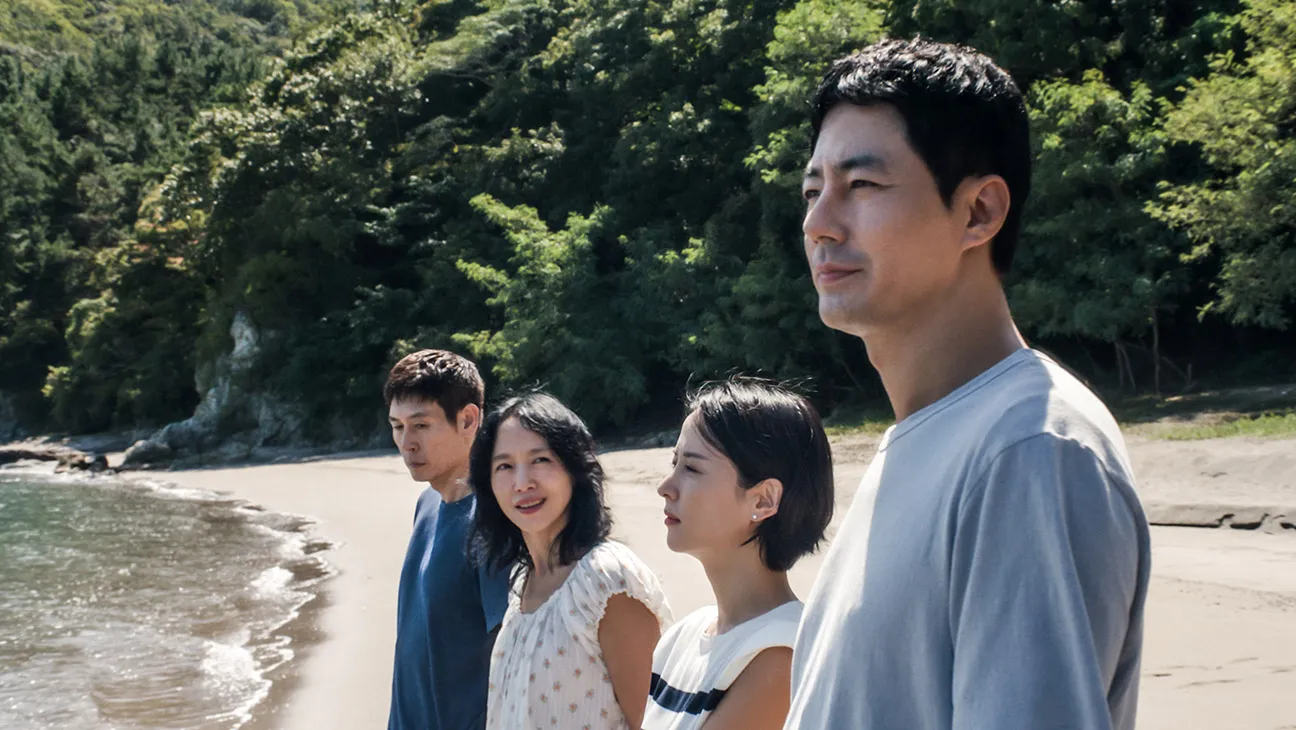
Among the selections are a number of films that got a boost from fall festival premieres like Lee Chang-dong’s Venice Film Festival Silver Lion grand jury prize winner Possible Love; Ryûsuke Hamaguchi’s Cannes Film Festival prize-winning All of a Sudden starring Virginie Efira and Tao Okamoto; Werner Herzog’s Venice selection Bucking Fastard starring Kate Mara and Rooney Mara; Andrew Haigh’s A Long Winter starring Fred Hechinger, Kit Connor, Ebon Moss-Bachrach and Caitríona Balfe; Malgorzata Szumowska and Michal Englert’s The Idiot(s), starring Johnny Flynn and Aimee Lou Wood; Mike Leigh’s San Sebastián Golden Shell winner Tender Loving Care; and the North American premieres of Asghar Farhadi’s Parallel Tales starring Isabelle Huppert, Vincent Cassel and Virginie Efira; and Céline Sciamma’s Tutti Fruitti.
Rooney and Kate Mara in Bucking Fastard
Gateway to Orkney
Other titles include Ilker Çatak’s Berlinale Golden Bear winner Yellow Letters; Markus Schleinzer’s Rose, starring Sandra Hüller, who won the Berlinale Silver Bear for best lead performance for her work in the black-and-white film; Sandra Wollner’s Everytime which won an Un Certain Regard prize; Marine Atlan’s Cannes’ Critics’ Week grand prize winner La Gradiva; Louis Clichy’s Iron Boy, winner of Cannes’ Un Certain Regard special jury prize; Stephanie Ahn’s Bedford Park, which snagged a Sundance U.S. dramatic special jury award for debut feature; and Lance Hammer’s Queen at Sea starring Juliette Binoche alongside Tom Courtenay and Anna Calder-Marshall, who shared the Berlinale Silver Bear for best supporting performance.
Rose
The Match Factory/Courtesy Everett Collection
As previously announced, the roster of films includes Peter Farrelly’s I Play Rocky starring Anthony Ippolito; Netflix’s animated Ray Gunn from Brad Bird featuring the voices of Scarlett Johansson and Sam Rockwell; Martin McDonagh’s Wild Horse Nine starring Rockwell and John Malkovich; Ava DuVernay’s documentary 14th; Diego Luna’s Ashes; Tony Gilroy’s Behemoth! starring Pedro Pascal as a gifted cellist; Pedro Almodóvar’s Bitter Christmas; Florian Zeller’s Bunker starring couple Javier Bardem and Penélope Cruz; Arie and Chuko Esiri’s Clarissa with David Oyelowo, Sophie Okonedo and Ayo Edebiri; Simon Stone’s Elsinore starring Andrew Scott as Ian Charleson; Beth de Araújo’s Josephine starring Channing Tatum, Gemma Chan and Mason Reeves; Ira Sachs’ The Man I Love starring Rami Malek, Rebecca Hall, Ebon Moss-Bachrach, Tom Sturridge and Maisy Stella; Kelly O’Sullivan and Alex Thompson’s Mouse starring Okonedo and Katherine Mallen Kupferer; and Leah Nelson’s animated pic about Alzheimer’s, Tangles, featuring an all-star voice cast that includes Seth Rogen and Julia Louis-Dreyfus.
Pedro Pascal and Will Arnett in Behemoth!
Justin Lubin/Searchlight Pictures
The fest opens with the U.S. premiere of Travis Knight’s animated Wildwood, and will feature showings of Sian Heder’s Being Heumann and Netflix’s The Mosquito Bowl from filmmaker Peter Berg and starring Nicholas Galitzine, Bill Skarsgard, Ray Nicholson and Berg. Project Hail Mary helmers Phil Lord and Chris Miller are serving as guest artistic directors. They’ll sit for a Q&A following by a screening of 2001: A Space Odyssey, and they’ve hand-picked Harold and Maude, The Muppet Movie and Rififi to screen.
“Our 40th edition of AFI Fest celebrates the cinematic artistry of bold, inspiring filmmakers from around the world,” said Todd Hitchcock, who serves as director of AFI Fest and the AFI Silver Theatre and Cultural Center. “With more than 80 features and nearly 70 shorts, AFI Fest 2026 will once again light up the screen of the iconic TCL Chinese Theatre with a wide-ranging slate of films that includes highly anticipated awards favorites and a few surprises as well.”
“We’re thrilled to share some of the year’s most compelling films with the film lovers of Los Angeles at the 40th edition of AFI Fest — from red carpet premieres and major works by established auteurs to exciting debuts from emerging talents, this year’s lineup invites audiences to spend five days experiencing worlds beyond their own and making the connections that great art can spark,” said Abbie Algar, director of programming for AFI Fest and AFI Silver Theatre and Cultural Center.
Canva is the exclusive presenting sponsor while FIJI Water serves as the official water sponsor and American Airlines as the official airline. Passes to AFI Fest are now available for purchase, with individual tickets available Oct. 3.
The full lineup can be found here.
>
Note: This story contains spoilers from the Season 8 finale of “All American.”
It’s hard to find a series sendoff that’s sweeter than “All American.” After eight seasons spent detailing the sacrifices, drama and loyalty that come with following a high school star athlete to the Super Bowl, the CW show concluded in a way that gave both its original and newer, younger characters their own happy ending.
Fittingly directed by the series’ longtime star Daniel Ezra and written by Nkechi Okoro Carroll and Jameal Turner, “To Live and Die in L.A.” is a sendoff that celebrates the love and kindness that’s also been baked into this series. But it also officially marks the end of an era. “All American” was the last remaining scripted CW show before the network was acquired by Nexstar and shifted its strategy from being a hub for young adult content into a more mainstream platform. The importance and love of shows like “Dawson’s Creek” was baked into “All American” from the beginning.
“At the end of the day, these friendships, family bonds and dreams matter, and helping each other get there matters. That’s something that TV has done for me my whole life,” executive producer Carroll told TheWrap. “My whole life, it has been the thing that allowed me to dream. It is the thing that allowed me to hope. It is the thing that made me realize love really can win. And so I want to contribute to being that for the next generation.”
That hopeful message is entwined into the legacy of “All American,” even as young adult shows as a whole transition from The CW to other platforms like Prime Video. Here’s how that final episode came to be and why Carroll always knew how she wanted this heartfelt football drama to end. This conversation has been edited for length and clarity.
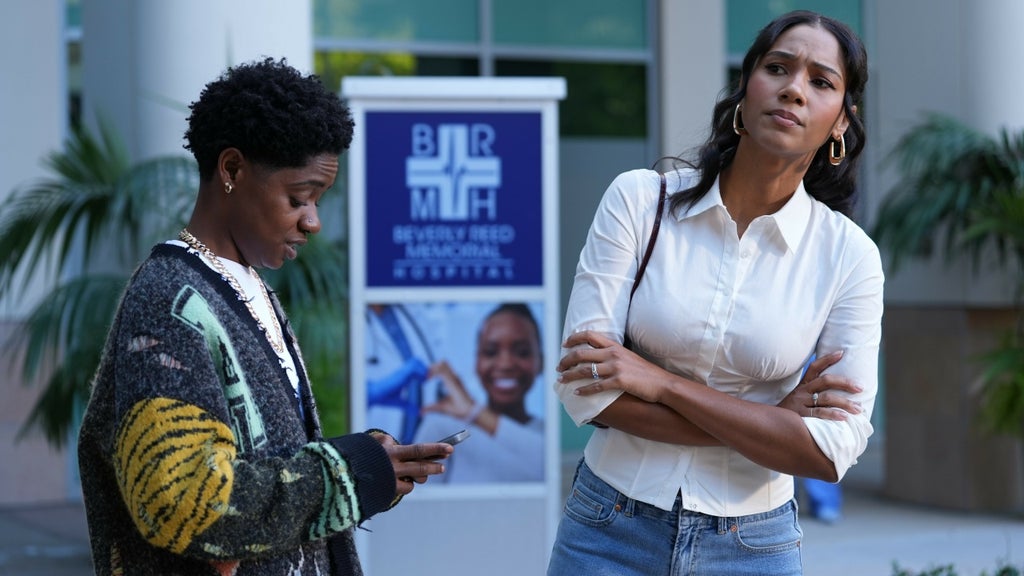
TheWrap: The finale is such a loving sendoff to these characters. Did you always know you wanted to end the series this way?
Nkechi Okoro Carroll: Yes. After all the drama they’ve been through in their lives, there was no version of them not reaching their goals or achieving their dreams. Especially for our OG cast, I have known for a while what I wanted the endpoint to be for their characters.
Then for our new generation cast, it was really more about giving them that big push off into the first steps of them realizing their dreams. For example, I knew that we were always going to reunite the Jeremy family. I knew KJ (Nathaniel Logan McIntyre) would always make it to the NFL. I knew that for Khalil (Antonio J. Bell), football was never endgame, that football would be the thing that got him to college to get him to his endgame [of going to medical school]. I always knew Amina (Alexis Chikaeze) would end up a fighter. The actual specifics of what that looked like — Khalil going to med school, Amina going into politics and being one of the youngest campaign managers to run a winning campaign with her and her father becoming the new activists and advocates for their community — that started to really materialize over the last couple seasons.
With Olivia (Samantha Logan) and the twins, it was very important to me that Kahlil be the one to save their lives because the Bakers had pretty much saved his, and that would be important to him to repay it. We all have that moment where something happened in our lives that just unlocked something. For me, it was when I was introduced to Shakespeare in seventh grade. You have that moment where something just gets unlocked, and you’re like, “Yep, I know what I’m supposed to do. I know what I’m here for.” We wanted to be able to see that moment with Kahlil since we knew football wasn’t his endgame.
For the rest of the characters, a lot of them we’ve known for seasons. It’s why we had the time capsules in Season 4, which hinted at what those futures were going to look like. Spencer (Daniel Ezra) was always going to go to the NFL, but not just the NFL. We were going to see him complete his dream and move into the next chapter of his life, not unlike what Spencer Paysinger did in real life. For Layla (Greta Onieogou), I knew that journey was always going to come full circle to her being a mother. For Jordan (Michael Evans Behling), it was always going to come full circle around to [his late father] Billy’s legacy.
For Coop (Bre-Z), the minute we decided on the law track for Coop in the middle of our run while they were in high school and she started working with Laura Baker (Monet Mazur), I knew this was going to be her endpoint. I knew we were going to end on her being sworn in, in some capacity. If we were so lucky to live past that day, ultimately we were going to see her opening her firm. So we knew the north star we were always heading towards for these characters. It was just a question of “OK, how do we get them there?”

I especially love Kahlil’s storyline. I went to college at Clemson, and I had several football players in my classes. There were a lot of players who knew that this was the end of the road for their football career but they were really excited to be studying engineering or whatever.
It’s part of the football story. It’s not always about football being the thing that gets them to stardom. Sometimes it’s about football being the pathway to a future, whatever that future is. It’s the thing that got them into college. It’s the thing that got them to perform differently. It’s the thing that opened up opportunities for them. It felt like that was as important to show as it was to show the Spencers and the KJs who make it to that big Super Bowl stage and have these successful careers. Football is also a pathway to other success.
Dania Ezra came back to direct this finale. What was it like having him back to close out the series?
It was a no brainer. The only way that was not going to happen was if he was not able to make it work schedule wise. To his credit, when I called him right after we got the Season 8 pickup to ask him to direct the finale, he was like, “I’d be honored to direct anything, but the series finale” — like he was just he was so excited. Then, shortly after that, he booked a series regular role on a new show shooting elsewhere. I was like, “We just lost him, we’re done.” But he made [the finale] part of his negotiations. He was like, “It’s important to me,” and they made it work. Kudos to the other production, the line producer and the executive producers for all being so amazing and working with us so that we could have him back for that finale in the middle of their season.
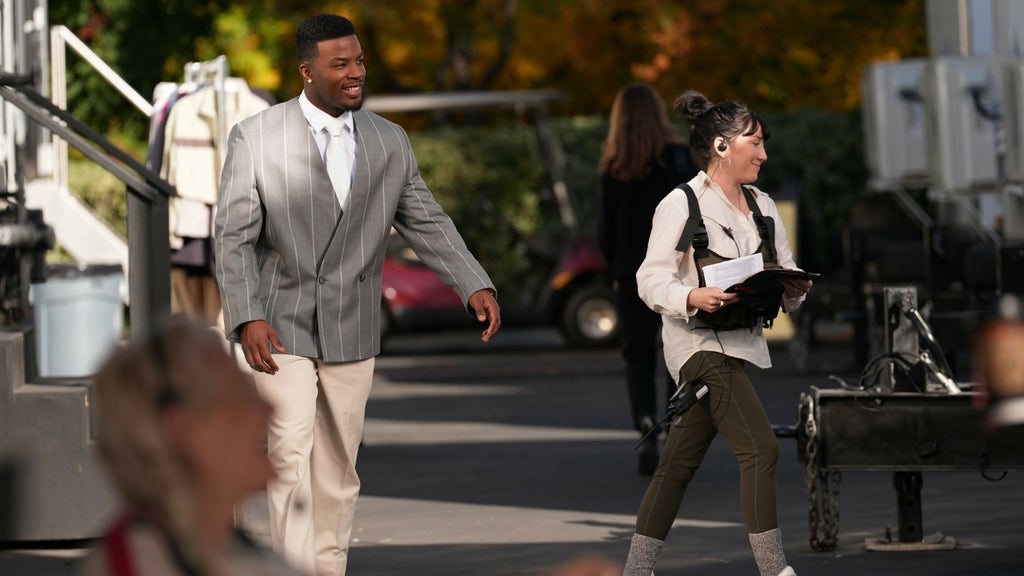
This is the fifth episode Daniel Ezra has directed. How has it been for you to watch him evolve into someone leading the charge, and how have you seen him evolve as a director?
Oh, he’s incredible. It’s obnoxious, actually, and I’m going on record as saying it’s obnoxious. He has a real gift, and I saw it in him before he ever asked to direct an episode, which is why it was a no-brainer the first time. He was like, “I think I might want to try direct.” I was like, “Yeah, I’ve been waiting for you to ask because it’s so clearly in you.”
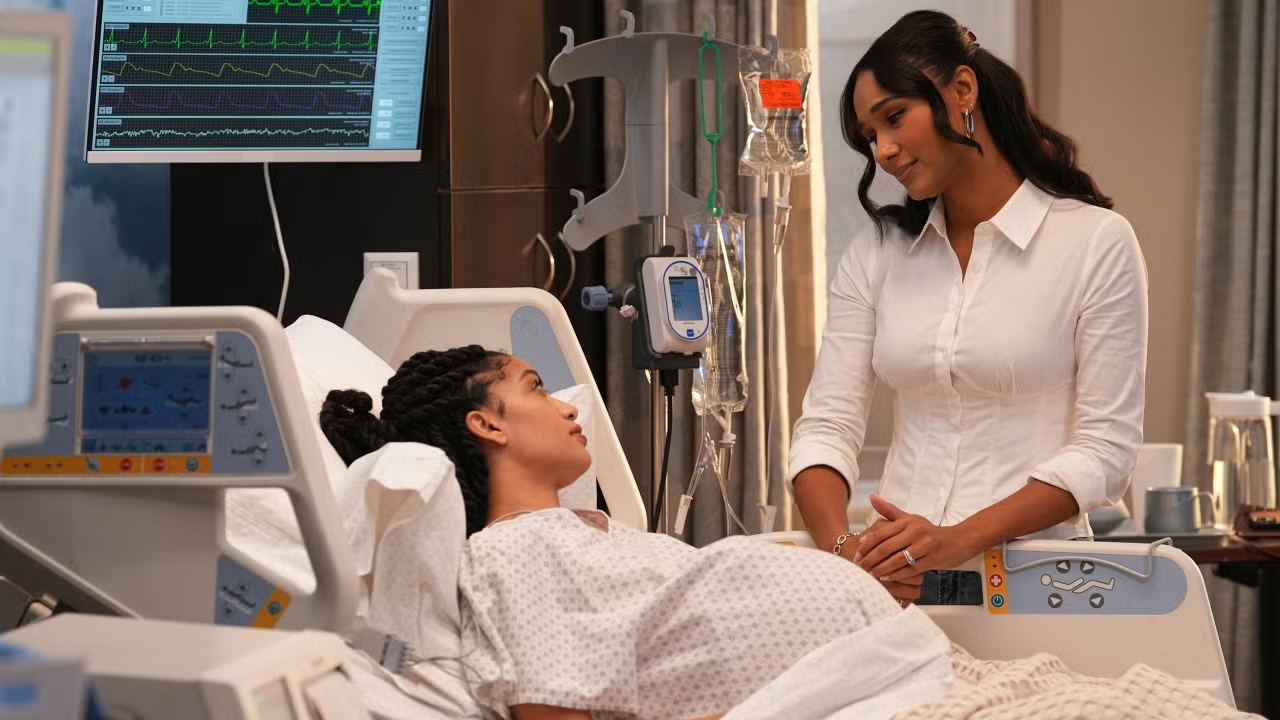
It was really a thing of his confidence, because he’d never done it before, building with each episode he directed, and he truly brought it home in this series finale. When he was pitching how he wanted to shoot the hospital scenes when everyone comes rushing into Olivia’s room and seeing him and the DP have their heads together as they’re talking about how they want to move the Steadicam through the room to mimic the urgency of what Olivia’s going through, I was literally like a proud big sister … It was not just about making sure he captured the essence of the show, but he wanted to elevate things in certain areas. I’m super proud. He’s he’s tremendously talented, and I think we will see him direct a lot in the future.
What about you? What projects do you have lined up? Is there anything you want to pursue now that “All American” is coming to an end?
I have a project that is in development right now with Onyx Collective at Hulu that I’m super excited about. I have a feature that I sold to Amazon that I’m in the process of writing and a couple other shows I’m getting ready to take out to pitch, so I’m excited. I’ve been incredibly blessed in this industry to have had the “All American” universe, and now I’m excited to find what’s next. But what will be at the heart of all of those projects is a story that reaches out and hopefully touches you the way it touched me enough to want to write it.

There’s always been a throughline of genuine kindness in “All American.” These characters, you could tell that they love each other. It does feel there has been a resurgence of kind stories on TV. Why do you think that is?
I can say why I need it, and it is the thing that allows me to get out of bed in the morning. I said in an interview once that I firmly believe that God gives us all a weapon to use for good, to make the world a better place. The weapon He happened to give me was my keyboard. And so, the tougher times get out there, the more I want to put on TV and in people’s homes something that reminds them that, at the end of the day, love wins. We are friends, we are neighbors, we are family, we are humankind, and we can lead with love and compassion, and there’s forgiveness. I’m not saying people don’t make mistakes. I’m not saying there’s not fights. I’m not saying there’s not drama, but there is always a path to the other side of it.
If showing that on TV helps remind people of that or maybe even just alters for a second how someone responds to a situation where all of a sudden they’re like, “Wait, I can’t have that conversation with that person I haven’t talked to for forever because I’m holding on to something I shouldn’t be” — if I can even make that incremental difference, then those moments add up.
I know you mentioned that if the show were to continue, we’d see more of Coop’s legal practice. What other plot lines may have happened if you’re given a ninth season?
If we’ve been given a ninth season, I would have not had to leap forward six years, so I would have filled in a little bit more of that time — actually see Jordan and Layla become parents, things like that. I would have seen the new generation step into college and Spencer and Olivia being parents and what that looks like as they’re juggling their careers and relationship in this new chapter of their life as a married couple with newborns. You know, the continuation of the story that is “All American.” And at the heart of it would have continued to be a foundation of the underpinnings of this football world and the legacy its left in in all of their lives.

>


Search For Canadian TV Actor Stewart McLean Now Homicide Investigation


These ’90s fashion trends are making a comeback in 2017
According to Dior Couture, this taboo fashion accessory is back
Model Jocelyn Chew’s Instagram is the best vacation you’ve ever had
Emily Ratajkowski channels back-to-school style
9 Celebrities who have spoken out about being photoshopped


Rurouni Kenshin: Hokkaido Arc Manga Takes 1-Issue Break – News


HIDIVE to Stream English Dubs for The World Is Dancing, The Forsaken Saintess and Her Foodie Roadtrip in Another World, The Dangers in My Heart: The Movie Anime – News