
Entertainment
‘The Comeback’: James Burrows on Hollywood’s AI Future — ‘Just Crazy’


Midway through “The Comeback’s” remarkable third season, Jimmy the Director (aka James Burrows) informs Valerie Cherish (Lisa Kudrow) he won’t be working on her show anymore. Sure, the pilot for “How’s That?!” turned out OK, but OK is also the ceiling for a sitcom written by AI.
“Good, but never gonna be great,” Jimmy says. “The machine is fast and cooperative, I’ll give it that. But I saw every one of those jokes coming, and so did you. Surprising only comes from a group of writers, huddled in a corner, beating themselves up to beat out a better joke. It’s the chubby guy who’s a secret alcoholic. It’s the gay guy who, despite all the work he’s done, still hates himself a little. Or the funny woman who’s been invisible for way too long. They turn all that pain into a joke. Val, those broken, beautiful souls are what make something great. And you didn’t see it coming.”


His words, written by Kudrow and Michael Patrick King, are delivered with a frankness born from unsurpassed experience; experience “The Comeback” has relied upon for three seasons across three decades to deliver the truth to Valerie and viewers alike. After all, Jimmy the Director, as Burrows refers to his character in the HBO comedy, conveys an outsized authority — for Valerie as well as the audience watching at home — thanks primarily to the non-actor playing the part.
A paragon of television, listing Burrows’ accolades — co-creator of “Cheers,” director of “Friends,” “Will & Grace,” and “The Mary Tyler Moore Show,” 11 Emmy wins and 47 nominations — doesn’t begin to relate his impact on the TV industry and culture at large. Simply seeing his name in the credits elevates the creative potential of the series lucky enough to snag him.
So when Jimmy the Director makes a statement in “The Comeback,” it matters that much more because Burrows is saying it, too.
“What Michael said is what I believe,” Burrows told IndieWire about his character’s big speech about AI. “You can’t write a show from the heart when you have no heart. That’s what I feel.”
Below, Burrows unpacks the considerable work that went into the biggest role of his career (“I don’t think I ever [became an actor], but I maybe became an A-C-T without the O-R.”), what makes “The Comeback” a series special enough to return to, again and again (“I really appreciate the skill Lisa has for creating characters and Michael’s unbelievable ability to write shit that nobody else would write”), as well as his unfiltered thoughts on AI and how it plays into Hollywood’s future:
“Unfortunately, I think that the world is going that way,” Burrows said. “I know sitcoms have gone the way of imitation for a long time. There’s no more innovation left.”
The following interview has been condensed and edited for clarity and length.
IndieWire: When you were first approached about acting in “The Comeback,” the part was written for you, but why did you agree to do it? What appealed to you about acting?
James Burrows: Nothing.
Nothing?
Nothing except the fact that MPK, Michael Patrick King, and Lisa [Kudrow] wanted me to do it. If you look at my career, I was never an actor. I played a couple of parts: I was a telephone man on “Phyllis,” a maintenance man on “Newhart,” and I was a literary agent on “Rhoda.” I was just playing myself. Then they wrote this part for me because I had worked on “Friends” and Lisa knew me, and Michael knew me from “Will & Grace.” So I had no aspirations to be an actor, nor do I consider myself an actor. And I have the utmost respect for all the actors I ever worked with.
So it was just those personal relationships that made you say, “OK, I’ll do it for you guys because you say you need it”?
Yes, exactly.
In the end, did any of it appeal to you?
No. There was no drive [in me] that an actor needs to survive in this world. It was just, “I thought this would be an interesting idea. And if Michael thinks I can do it and Lisa to thinks I can do it, then why not give it a shot?”
I read that acting made you nervous. Did that dissipate at all as you kept coming back season after season?
Yeah, because I was in a strange world. You know the old joke about an actor learning his lines? He says his line, and then he goes, “Bullshit, bullshit, bullshit, now my line.” I’m not trained as an actor, and so listening is the most difficult thing I had to learn how to do — at least I tried. I don’t know if I ever got there.
Lisa was on “Cheers” just when Woody [Harrelson] came on the show, like the fourth or fifth year, so I knew her from way back then. Now, she was not Phoebe anymore. She was [Valerie Cherish] — this lunatic that I had to deal with. So it was very difficult in the first and second seasons having to deal with a woman I thought I knew. Eventually — I think when I made that speech to her about, “You’re not it anymore” — it finally clicked in my head that, “Oh yeah, she’s my daughter.” I have four daughters, and I said, “OK, I know how to deal with her.” I don’t know if that makes me an actor or just a lucky guy. But it was scary in the beginning. And at the end, it was scary because I had this big speech.
It’s such an important monologue, and it means so much more because it’s coming from this character, a version of you. How did you prepare for that moment?
Well, after strangling Michael Patrick King for writing it for me, I learned it by rote. I kept doing it over and over and over again. I drove my wife crazy. But what I didn’t know how to do was make it seem like it’s the first time I’ve ever said it. I did it five or six times with Lisa in the scene. Each time Michael would come up to me and say, “Make it more natural” — because I had learned it without emotion. So Michael, he was a great help to me.
No offense, but that’s some very blunt direction. How did it help you to settle into the words?
He was doing my work as an actor. If you had an actor playing Jimmy the Director, Michael would never give that note because the actor playing me would know what that is — he would know the subtleties of being an actor; how to modulate the speech, how to make it seem natural. I have no skill that way. I had none. So Michael guided me that way and it was a blessing.
I was a little concerned, so I did watch myself [on playback]. I think I’m in three episodes, but none more difficult than the last one I did. And I even moved myself. I have no idea why, but I looked at myself on that screen, and I said, “Who is that fucking guy up there? Who is that guy?” I mean, that’s what Michael did. He literally helped me to become an actor.

So after all that, did you forgive him for making you learn the speech?
From the day he asked me to do it, I was eternally grateful. It was so interesting for me to be in it, because they came to me initially and they said, “Read the script.” I thought they wanted me to direct it. And I went back to Michael and I said, “I don’t do this kind of show.” He said, “No, no, I want you to play Jimmy the Director.” So once he said that to me, I started my journey to try and become an actor. I don’t think I ever did, but I maybe became an A-C-T without the O-R.
I went from being scared of Valerie Cherish — because she’s so daunting — to really appreciating who she was and the skill that Lisa has of creating characters and Michael’s unbelievable ability to write shit that nobody else would write.
Is there something to you that always remains true about a Lisa Kudrow project?
It’s going to be different. She doesn’t do the same character twice. She hasn’t done Phoebe in a long time, nor will she. She’s too smart for that, but whatever she does, it’s going to be intense, and you have to play on her terms. You have to cherish the time that you get to work with Valerie Cherish. That’s her skill, and she never drops that — well, she’s not crazy. It’s not like Daniel Day-Lewis, who you had to call Mr. Lincoln, but she’s in that character and then out of that character. She’s amazing.
What was your reaction to finding out that Season 3 was going to be so focused on AI?
I thought it was a great idea. I have no idea if there are sitcoms now made totally by AI, but I thought it was just a brilliant, brilliant idea.
Did you have any concern over a character with your image and your name directing the first AI TV show, even within the context of this fictional world?
No, because I redeem myself with that speech. If I was the director for all the subsequent episodes [after the “How’s That?!” pilot], I probably would’ve talked to Michael about that. I would not do that. I’m too proud of what I do and what I did, and since we are playing me as Jimmy the Director, Jimmy the Director would not pursue this.
At the start, the story necessitates him getting on board, just so we can see what making a show with AI would look like. Did it feel real as you were making it? Did it feel like the future in some way?
No, it never did.
OK, good.
It was so bad. It was so bad — and Michael wrote it that way. Michael wrote that whole thing — including the cold open that doesn’t work, just one hokey joke after the other — so that’s Michael’s opinion of it, which is the right opinion because, as I say in my speech, with actual people, you don’t see the joke coming, but with AI, you see every joke coming.
Have you seen the rest of the season?
I saw the episode after the one I did, and I haven’t seen the rest of it. Look, I’m an actor. I only watch what I’m in.
Then you earned the full title: You’re an actor, not just an act.
My wife finally convinced me to write a book about my life, and the one thing I didn’t put in it was an index because I knew every fucking actor would go to the back of the book and look for their name and just read that part. But I never got that way with “The Comeback.” I never said, “Why am I not in it more?” I just committed to do what Michael wanted me to do.

Did you and Michael have discussions about the threat AI poses and how you feel about it? Did you want to say something about AI with your role in show?
No, because what Michael said is what I believe. You can’t write a show from the heart when you have no heart. That’s what I feel. Unfortunately, I think that the world is going that way. I know sitcoms have gone the way of imitation for a long time. There’s no more innovation left.
A lot of it has to do with the writers. I don’t mean to lecture or anything like that, but when I started in the business with the Charles brothers and Jim Brooks and Ed. Weinberger and Stan Daniels, everybody was raised on books, and now everybody’s raised on television. And it’s derivative television. There are very few shows that have new ideas because the people who trained in the new world of television have not been trained to be innovative, and they’re not helped by networks that want to do shows that are imitations of the shows they have on.
We keep running backward, toward the same things.
That’s all they know. And then they get a hit — they got “Ghosts,” and there were a hundred different versions of “Ghosts” the next pilot season.
To a degree, that’s always been the case, but it just seems like it’s compounded every year as we go forward.
Well, it was not the case in the beginning because in the beginning, the networks hired the writers and left them alone. On “Cheers,” we learned from Grant Tinker, who ran MTM, that if you have a note, you give it to Grant, and Grant will pass it on. Grant never passed a note on. Never. Never. He never did. That’s all changed with the power of the networks. They think they know what they’re doing, and what they know how to do is imitate. How many “CSI’s” can there be?
But even then, with “Cheers,” wouldn’t they tell you, “Can’t we have another show like this?“
Well, yeah, they tried. There were a couple of bar shows after that. I mean, they let us do another show. We did a show called “All Is Forgiven.” It was pretty good. It was about a soap opera. And we did “The Tortellis,” unfortunately.
So it’s also the creatives. We thought, “Oh, this is so fucking easy.” It’s not. It’s hard. It’s hard to get people in a room, and it’s hard to get magic like you got magic between Ted [Danson] and Shelley [Long]. It’s hard. You’ve got to be lucky. You’ve got to be lucky that they put you in the right timeslot, that you’re on the right network. Brandon Tartikoff was running NBC when we did “Cheers” and he fucking left us alone. He was smart enough to know, “These guys, I think, know what they’re doing.” It’s so hard. But when they’re great, they’re great, and when they’re no good, they’re awful.
So I don’t know what the answer is, and I don’t know what the answer is in television comedy, but it’s hard.
I will say that one of my favorite things about “The Comeback” this season is that they put so much emphasis on how difficult it is to make a show and how many people you need to make a show well.
It is difficult. It’s a strange conundrum the world of television has found itself in. We rely now on reality television. [groans] I always thought that would die — that’ll tell you how much I know. It’s just crazy what’s happened. There’s something in the system that’s broken because it’s cheaper to do a sitcom than it is to do a one-camera show. So I’m not sure what goes on. For the last 20 years, I tried to figure out what it was, and I can’t put my finger on it. I have no idea what the fuck happened.
“The Comeback” Season 3 is available on HBO and HBO Max. All episodes are available now.
>
>

The White House has been hit with a cease-and-desist letter from a musician whose song was featured in a promotional ad featuring Donald Trump that was paid for using tax dollars rather than campaign funds.

An attorney for JMSN, whose real name is Christian Berishaj, fired off a cease-and-desist letter to White House Chief of Staff Susie Wiles on Monday, objecting to the use of his song “Love Me” in the ad, known as “The Country He Loves.” The ad was one of a series of spots that have run on TV in the past week, with the White House claiming they are public service announcements yet Democrats and even some Republicans contending that they are campaign propaganda.
The letter alleges that the song was used without proper clearances and claims violation of federal copyright law. Norm Eisen of Democracy Defenders Action wrote in the letter that “JMSN does not want to be viewed as directly or indirectly affiliated with the President or his Administration. As he said in his Instagram post denouncing the Advertisement, he ‘would never authorize [his] music to be used for ANY political agenda or campaign.’ Thus, the use of the Song in this context, as part of an overtly partisan, political advertisement, is particularly damaging, as it could cause others to call into question JMSN’s artistic independence and integrity.”
A White House spokesperson did not immediately return a request for comment. Yashar Ali first reported on the cease-and-desist letter.
The ads contain messages that they are “paid for by the U.S. government.” Per NBC News, AdImpact estimates that $1.7 million has been spent to run the spots.
>
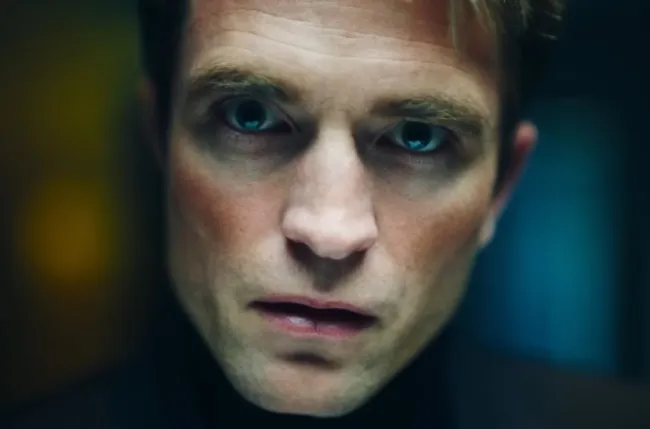
Before “Primetime” director Lance Oppenheim had seen formative films like Abbas Kiarostami’s “Close-Up” or Orson Welles’ “F for Fake,” in which masters of cinema blurred the line between fiction and reality, he had watched “To Catch a Predator.”
“I remember thinking, ‘What am I watching? Is this a documentary? Is this a scripted movie? Is it something new, something different?’” said Oppenheim of watching the news program that lured child predators into homes rigged with hidden cameras as TV journalist Chris Hansen waited in the wings to confront the unsuspecting molesters. “I couldn’t tell if it was like a prank show or a horror movie or a news program.”


For a documentary filmmaker, who shot nonfiction subjects (“Ren Faire,” “Spermworld,” “Some Kind of Heaven,” and the soon-to-be-released Nathan Fielder joint “You Can See Everything”) as if they were scripted narrative films, “Primetime,” starring Robert Pattinson as Hansen during the rise and fall of “To Catch a Predator,” became the perfect project. It gave the young auteur a chance to blur the line between fiction and reality from the scripted side of the equation.
Oppenheim could plug into how the news program created, in his words, “this manufactured reality,” where adult actors pretended to be children, houses that looked like sets (some reminding Oppenheim of David Lynch’s “Blue Velvet”), and “props that looked like cookies, pepperoni pizzas, and sweet tea, that took on this feeling of dread.” It was a manufactured reality that would then collide with the “hyperreal situation” of a potential predator walking in to attempt something terrible.
“Hansen had created this space and world where time seemed to freeze, and the laws of gravity and physics and reality would be a little different; it was almost like the zone in [Andrei] Tarkovsky’s ‘Stalker,’” said Oppenheim. “I liked the challenge of attempting to express that through visual, cinematic terms.”
The result is a film that looks radically different from anything else we’ve seen on the big screen in recent years, which was the filmmaker’s stated intention. Here are four ways Oppenheim and his longtime cinematographer David Bolen achieved that distinctive look.
Multiple Formats

Oppenheim wanted to instill in his audience that same “What am I watching?” sense that he had experienced with the original series. To pull it off, Bolen used 12 different camera formats, including mini-DV (many mirroring Hansen’s hidden cameras), vintage tube and broadcast cameras, a micro-endoscope used for colonoscopies, along with a more standard modern-day movie camera (Arri Alexa 35).
The goal, according to Oppenheim, was to create an “elastic aesthetic value system,” where they might run a shot with an Arri Alexa 35, then do another take with a radically different camera, something Oppenheim admits befuddled some of his crew.
“I think a lot of people thought I was like Tommy Wiseau on the set of ‘The Room,’ not knowing what I was doing and just kind of arbitrarily making choices,” said Oppenheim. “ I love Tommy Wiseau, and I love the way he made ‘The Room,’ so I was like, ‘I don’t care. I’m going to run the scene once on an Alexa, and do it again on a broken Plumecon tube camera.’”
Plumecon: A Collapsing Image
Oppenheim consulted with veteran TV cameraman Mitchell Wagenberg, who worked on the original “To Catch a Predator,” “Cash Cab,” and traditional news programs with TV journalists like “60 Minutes” Mike Wallace. Oppenheim wasn’t only trying to learn how shows used to be shot; he was also looking for new emotional and narrative brushstrokes.
While much has been made of the novelty of the medical colonoscopy camera, it was Wagenberg introducing the “Primetime” team to the Plumbicon that became the game-changer. It was an early attempt at a digital camera, used briefly by Wagenberg and others on news programs in the late ’80s before being discontinued.
“It was this antiquated technology where the tubes inside the camera would be physically warmed up, like microwaved, until it would produce an image,” explained Oppenheim.
Oppenheim was intrigued, desperate to better understand the long-gone technology, and set out to find and acquire one he could possibly use in the film.
“The Plumecon we found, the tubes had been burnt to a crisp, so every time we turned the camera on it would distort the images. It almost looked like a nuclear explosion had been set off right in front of us, and I loved that about it. It reminded me of the [Werner] Herzog quote, ‘The moment you turn the camera on, you’re seeing a fiction,’ [and] the camera felt like it was honoring the spirit of that.”
Oppenheim admits that while shooting with the Plumecon, he had no idea how or if the image would hold up, but he also liked the idea that the image could “collapse a little.”
Describing his Plumecon brushstroke, Oppenheim said: “The colors all kind of bleed and run, and they’re kind of funny looking, and it feels a little dreamlike.”
Printing to 16mm

All the footage, regardless of which camera format it was shot on, was printed to 16mm film stock and then digitized for the edit. The reasons for this, and what it accomplished, are threefold.
“With the cinema camera [footage shot on the] Alexa, Dave and I were always sort of allergic to how digital it looked, and how crisp it felt,” said Oppenheim. “[The 16mm scan] was an effort to make the Alexa images feel tactile.”
Oppenheim also liked the layer of removal the scan supplied between the audience and the original image. He was inspired by a leaked version of director Lynne Ramsay and cinematographer Seamus McGarvey’s 2025 film “Die My Love,” starring Pattinson.
“A cam scanner version had come out from ‘Die My Love,’ and that movie was shot with Ektachrome, and I remember just thinking, ‘Wow, this is so fucking crazy, just the way it looks,’” said Oppenheim. “Obviously, when the movie came out it was even more beautiful, but there was something about that contact high, kind of like being a little bit removed from it that was interesting.”
Oppenheim also wanted to honor and expressively capture how “To Catch a Predator” today only exists online, and how the scan allowed him to create an expressive language of the internet.
“[‘To Catch a Predator’] doesn’t exist on DVDs, Blu-ray, all that we really have of it are these 360p and 480p versions that have seemingly been digitized by somebody else. So we’re watching something that’s been essentially reprinted twice. The audience is interacting with an object that had been scanned, that had been corrupted in some way. I liked conceptually that it rhymed with what we were doing with this sort of operatic, heightened portrait of Chris Hansen, the internet’s version of Chris Hansen.”
Color and the Colorist
While “Primetime” lays bare the dangers of what 2000s reality and new programs unleashed, Oppenheim said he still enjoys watching reality TV, but like many, the 30-year-old director is nostalgic for the TV of his youth.
“The thing that’s sort of depressing about the news when I look at it [today], aesthetically, everything is so grayscale, and there’s no color anymore. When you looked at things in the 2000s, especially in 2006, you’d turn on any program, like, ‘What Would You Do? With John Quiñones,’ and the colors were so saturated, almost pastel-like.”

While Oppenheim’s cinematic references for “Primetime” are works of Billy Wilder, Oliver Stone, Tarkovsky, and numerous films from the canon of film history, Oppenheim explained he wanted to capture the color saturation and feel of the TV he consumed during the time of “The Catch a Predator.”
“I grew up with these television shows and network shows like ‘The O.C.’ and ‘Smallville,’ and I [wanted] that stuff to enter the movie in some sort of way aesthetically.”
One of the reasons Bolen and Oppenheim felt comfortable with their bold experiments in creating the collapsing images of “Primetime” was that their longtime colorist, Damien Vandercruyssen, was at the controls. Vandercruyssen not only orchestrated how the brittle tube camera’s image, 16mm scans, and Bolen’s inventive cinematography would come together, he simultaneously pulled out the bold color and tactile quality Oppenheim associated with the images of that era.
“He’s an artist, and we couldn’t have done it without him,” said Oppenheim of Vandercruyssen. “[Damian] did so much insane work; he is the essential piece in the collaboration with David. What he did with this in the scanning process and creating this really tactile image – he’s a master.”
>

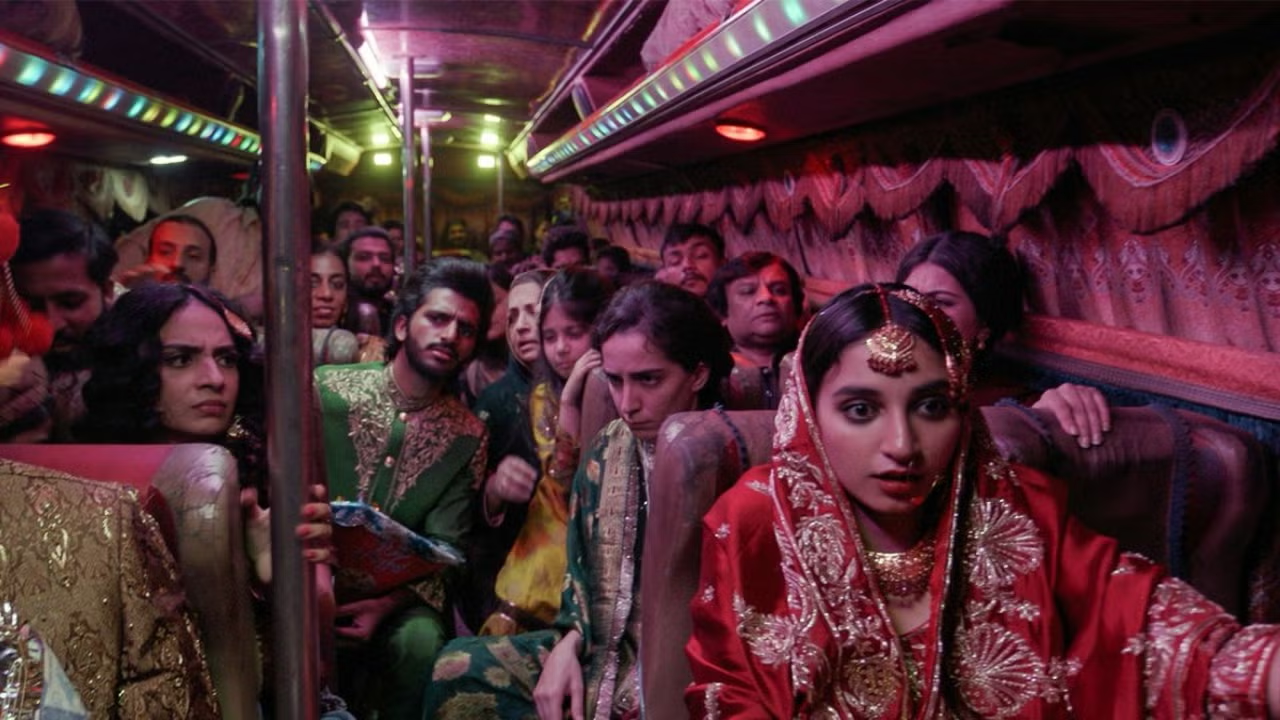
International South Asian Film Festival Canada Picks 2026 Winners

JMSN Fires Off Letter Over Use Of Song In Ad Spot Touting Trump
Olivia Miles, Caitlin Clark among WNBA stars who attribute hoops skills to soccer background
-

 movies4 months ago
Search For Canadian TV Actor Stewart McLean Now Homicide Investigation
-

 Fashion9 years ago
These ’90s fashion trends are making a comeback in 2017
-
Fashion9 years ago
According to Dior Couture, this taboo fashion accessory is back
-
Fashion9 years ago
Model Jocelyn Chew’s Instagram is the best vacation you’ve ever had
-
Fashion9 years ago
Emily Ratajkowski channels back-to-school style
-
Fashion9 years ago
9 Celebrities who have spoken out about being photoshopped
-

 Anime4 months ago
Rurouni Kenshin: Hokkaido Arc Manga Takes 1-Issue Break – News
-

 Anime3 months ago
HIDIVE to Stream English Dubs for The World Is Dancing, The Forsaken Saintess and Her Foodie Roadtrip in Another World, The Dangers in My Heart: The Movie Anime – News