
‘Pillion’
A24


Mia Bays is winding down her tenure in charge of one of the biggest backers of British independent film, the British Film Institute’s Filmmaking Fund.
She’s done and seen it all over the past five years, having become the first person ever to hold the position for a fixed term — a change implemented in recognition of just how influential the job is — and joining at a time when the industry, post-pandemic, had been transformed for good.
Bays, who will leave her post in October of this year, has experience in producing, exhibition, distribution and international sales strategy. She considers herself a cultural and gender equity activist, and with the BFI Filmmaking Fund, consolidated all of that expertise into overseeing a budget of around 20 million pounds ($27 million) a year. She’s put relatively unknown filmmakers up for Oscar consideration, made BAFTA winners out of others, and done it all with what she says is a knack for kicking the industry’s risk aversion to the curb.
“I think [risk] is absolutely a fundamental part of what the public funds are there for,” Bays tells The Hollywood Reporter ahead of her last Cannes Film Festival as the BFI Filmmaking Fund boss. She cites some of her recent, edgy successes — Rich Peppiatt’s raucous “print the legend” biopic Kneecap, Harry Lighton’s biker BDSM dramedy Pillion and Akinola Davies Jr.’s tender, Lagos-set My Father’s Shadow, selected as the U.K.’s 2026 Oscars entry — as evidence of the payoff of that audaciousness.
Bays has also invigorated the country’s largest open-access fund by reshaping the team, improving how the fund is performing against the BFI’s inclusion targets and even setting up brand new pots of money for more experienced directors (the Impact Fund), as well as higher-budget, live-action shortform projects (Future Takes). Financing just 12 feature films a year, she’s homed in on talent pursuing cultural and social reverberations.
With recruitment for her replacement officially underway, Bays sat down with THR to talk about the obstacles plaguing the British film industry — and what we should be optimistic about. She discusses some of the buzzy BFI movies hitting the Croisette this year, such as Clio Barnard’s I See Buildings Fall Like Lightning; why co-productions might just be British film’s savior; and the key piece of advice she has for her successor.
Reflecting on the past five years, what feelings come up for you?
Well, I subscribe to creative renewal, so I think it’s healthy. I think five years is a good amount of time to effect enough change — to do so quite fast — and then to leave a steady ship, I hope. Reflecting on the films and the features we’ve supported, we won a BAFTA for best [British] debut two years running, Kneecap in 2025 and My Father’s Shadow this year, both incredibly unusual, I would say, and fresh voices and narratives. We also won the best [British] Independent Film Award [BIFA] two years running [with] Kneecap and Pillion. Awards are only one arbiter of impact, obviously. But our films have been selected as the U.K. entry for best international feature at the Oscars — Santosh in 2025 and My Father’s Shadow in 2026. And then … Two Black Boys in Paradise, which is supported through our short animation fund, won the BAFTA for best short animation this year. And Magid / Zafar, which is through Future Takes — our higher-budget short scheme — won the BIFA for best short and was also nominated for a BAFTA.
‘Pillion’
A24
What comes into the decision-making process for you — what must a project have to get funding?
Our fund priorities are a really important steer. So it’s really vital to us that whoever is applying understands what our priorities and what we are looking for, and what steers our decisions as they’re applying. That’s been a very big part of the work — to make sure that the fund is transparent. There are six fund priorities, [and] that’s a very important tool. There are other frameworks around having a balanced slate, prioritizing U.K.-wide, so not everything being made is from London and the South East — that we really are entirely representative of the U.K. — that we back creative risk, that the films can have some impact, both at home and away. [We] consider audiences and perhaps who has been underserved.
What do you think is the biggest hurdle facing the British film industry right now?
It’s the challenges of distribution. Whenever we have the contraction that we’re seeing now among distributors becoming risk-averse and less money being risked on releases and P&A [prints and advertising] and the struggle to sell internationally, that then creates an environment that makes it very hard to make the risky films, which tends to be the kind of films that we support. It makes our funds more important than ever. But as I said, we only make 12 features a year, so that’s not enabling much, really, in the grand scheme of things. It’s doing a substantial amount, but it’s not enough. I mean, thank God that our sister fund, the U.K. Global Screen Fund, also exists. They’re there to support minority co-productions, and the terrific news is that they’ve got more money now. Over the course of the next few months, they’re announcing new interventions and new funds. That’s incredibly important, because we need to be co-producing more. It’s incredibly hard to finance a film entirely out of the U.K. at the moment. Yeah, those are the challenges.
And once the industry contracts and other investors become risk-averse, what that does is shut out the underrepresented voices. That’s the fear — the rollback on the progress that has been made over the past few years in diversifying [film], which has created some incredible and exciting work. But thank God that we can keep existing.
Are co-productions the way forward for British film right now?
Yeah, 100 percent. Even with the nations and regions within our smaller conurbation between the U.K. and Ireland, [it] can be very substantial — accessing the two tax credits and then public funds. We fund with Ffilm Cymru [Wales] and Screen Scotland and Northern Ireland Screen. And those are incredibly meaningful partnerships. Kneecap is a really good example, which is a co-production between the U.K. and Ireland and two broadcasters and three significant lottery funds. I don’t think that film would have been made without that. But I hope it’s opened the door to privileging more Irish-language work and showing that actually, that kind of work is exciting. It’s an incredibly important part of [Irish] heritage as well, the Celtic language.
Do you consider it your job to be risky? Do you think films should be risky in the current climate?
Yeah, that’s absolutely a fundamental part of what the public funds are there for. And risk can show up in various ways. It doesn’t always mean in the content and around edgy narratives that push at the boundaries. Obviously, Kneecap is a great example of that. Pillion is another version of that. Palestine 36 is another version, because that was an untold story — the colonial impact of the U.K. in Palestine and [how] we’re seeing the effects of that still to this day. Those films just wouldn’t be made without us. That enriches not just the film culture, but the wider culture in the U.K. — how we see ourselves, how we represent ourselves. It’s fundamental that we’re doing that. If we were just steering everything through our own personal taste … I think in the bygone eras, a lot of these roles were often [navigated] with a tastemaker principle. We’ve moved away from that to have a wider scope around what role we play, and what we don’t see getting made is absolutely what we should be there for.
What do you feel optimistic about?
I’m always buoyed by the work. And I just feel like British filmmaking at the moment is really, really consistently world-class and evidencing that. When we just look at our own slate and how much impact those films are having internationally, and we know that through how well they’re selling and how significant the box office is at home and away — within a relatively contained realm. We’re still seeing some worldwide deals. I’ve loved the resurgence of comedy that we’re seeing in the U.K. That’s long overdue. Seven out of 10 of the qualifying indies at the U.K. box office last year were comedies or comedy-drama. I’m really excited about that. We’ve got a bit of a resurgence [with] films like The Ballad of Wallis Island and Marching Powder, Pillion, a very, very strong range of work. But again, we’ve got a really important comedy tradition, which I felt had slightly disappeared. Our own The Incomer made a really big mark in Sundance this year, very proudly and very culturally Scottish, and the human really translated. It was a joy to be in a room full of 400 people in Sundance guffawing away.
Talk to me about what’s coming up in Cannes — I See Buildings Fall Like Lightning is just brilliant.
I’m so delighted to hear that. I loved working on that film — it’s a novelist collaborating with a screenwriter, collaborating with Clio Barnard, the director and Tracy [O’Riordan], the producer. They were a really strong team. They gathered such an incredible crew. All of the cast are just absolute knockouts, not just in that piece, but they’re all real rising stars. The kind of alchemy of what they create together … they were so collaborative. So I’m really excited about that film, because I do feel that it really speaks to the challenges of a generation, particularly 30-somethings. It really opens up a very important conversation that perhaps isn’t just British either, and it does it with such heart and such tenderness and with such care.
What advice would you offer to your successor?
I really like the principle of beginner’s mind — coming in and not thinking you know everything. You may have an idea, but context changes once you have more information. Just being able to listen is such an incredible part of what good leadership looks like, and then being able to act upon it and striking the balance between bringing your own ideas, but also the listening. You’re really, really taking on what the industry are telling you they need now. Some of that you have to filter out. Some of it won’t be possible. But there will be good ideas, and there could be important changes that are needed for the next five years. The fund may shift, because that’s what the industry needs next.
Is there a particular project or creative you’re especially proud of championing?
It’s picking between children. It’s too difficult. I would just center the work of the team.
>
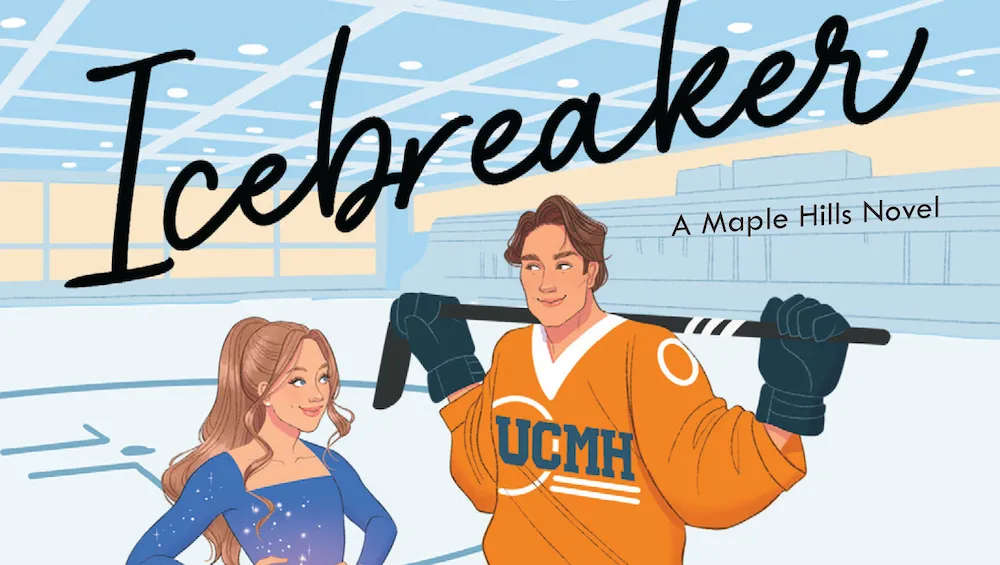
Another hockey book adaptation has entered the chat.
Netflix is currently building out its cast for the series adaptation of Hannah Grace’s Icebreaker book that kicks off the Maple Hill series. This in addition to their show The Sticks that is also currently in the works.
For everything we know about Netflix’s Icebreaker book adaptation so far, read on.
When will Netflix’s Icebreaker series adaptation come out?
A release date has not yet been set. The show has begun to assemble its cast.
Who will lead the Icebreaker show at Netflix?
Daisy Jelley (Poser, How To Have Sex) will portray Anastasia “Stassie” Allen, and Connor Simos (Subversion) will portray Nate Hawkins in the college hockey drama series.
Who else is in the cast of Netflix’s Icebreaker adaptation?
Gabriel Tierney (Rivals, Enola Holmes 2), Auliʻi Cravalho (Moana), newcomer and professional athlete Peter Berry, Chaneil Kular (Best of the Best, Sex Education), Devin Craig (Sex Lives of College Girls, Maize) and Aidan Shaw (We Were Liars, Heated Rivalry, Finding Her Edge) have joined the ensemble cast.
Tierney will play Aaron; Cravalho will portray Lola; Berry is Robbie; Kular will play JJ; Craig will portray Henry and Shaw is Russ.
What is Hannah Grace’s Icebreaker book about?
Stassie is a transfer athlete gunning for Olympic gold. Nate is the campus star chasing the NHL. When an accident forces their teams to share one rink, Anastasia Allen and Nate Hawkins collide—and discipline gives way to obsession, because the only thing more dangerous than wanting to win is wanting each other.
Who else is behind Netflix’s Icebreaker series?
Jade Halley Bartlett (Road House, Doctor Strange in the Multiverse of Madness, Miller’s Girl) created and executive produced the series. Amanda Lasher (Gossip Girl, The Bold Type, Togetherness) serves as showrunner, writer and excutive producer. Grace also executive produces along with Alex Cooper, Matt Kaplan and Mina Lefevre for Cooper’s Unwell Productions.
>
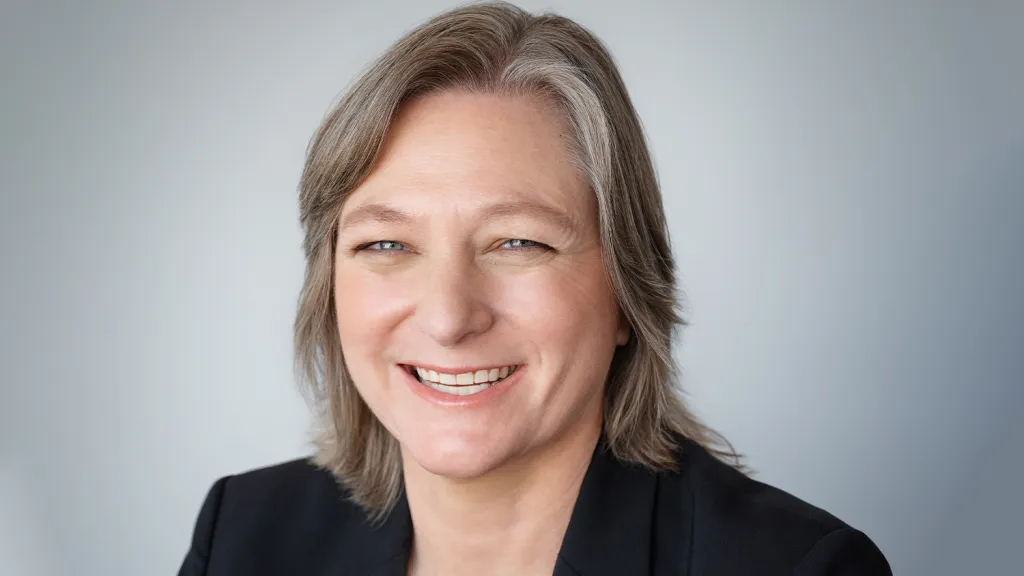
One of the biggest executive questions about Paramount following its pending acquisition of Warner Bros. Discovery — who will lead streaming — may have been answered.
Cindy Holland is leaving Paramount where she was Chairman of Direct-To-Consumer since the Skydance-Paramount merger having served as an advisor to Skydance CEO David Ellison prior to that. She announced her departure in a company memo, which you can read below.
The move leaves HBO’s Casey Bloys as the likely streaming head of the combined Paramount-WBD.
“Cindy is one of the most exceptional executives in our industry — a force of nature whose impact on Paramount over the past year has been significant,” Paramount CEO David Ellison said. “Under her leadership, P+ reached new heights, Pluto TV underwent its most significant transformation in a decade, and we strengthened our content and sports portfolio – all while the business exceeded the ambitious goals we set. Just as importantly, she built an exceptional team and a strong foundation for the future. Cindy has been a trusted partner to me and so many others, and I couldn’t be more grateful for her leadership, her relentless drive and everything she’s done for our company.”
Here is Holland’s memo:
When I joined David’s team in January 2025, we proceeded to set three goals: i) advise on the Warner Bros. Discovery acquisition, ii) integrate and transform Paramount+ & revive Pluto TV, and iii) build an unparalleled team in this industry. In just over 12 months, I’m proud to say we accomplished all three and it’s been a joy to work closely with all of you.
Together with the Product team, we drove significant strategic and organizational change across DTC — building a new foundation for growth on both services, while investing in greater depth and breadth of programming and delivering strong revenue, profit, and subscriber growth for the division.
As David readies for the next phase of his vision, we’ve discussed my role and the future of the combined businesses. David is optimizing for HBO stability as we move into this next chapter, and I fully support that. I know this team has the leadership and expertise to manage through the transition and the next phase of the company, and to this end today will mark my last day here.
As I reflect on my time here and all that we’ve built together in this short time, what stands out most to me is this team. I have never been more proud of a group of people. What we’ve accomplished together is remarkable — landing quarter after quarter while navigating extraordinary uncertainty and change with resilience, focus and ambition. We grew Paramount+ to an all-time subscriber high, delivered the best retention in the service’s history, and drove double-digit growth in both engagement and revenue. We built an extraordinary content pipeline, greenlighting more than 40 new and returning series and setting all-time records with Landman, the most-watched series in Paramount+ history, and Dutton Ranch, the service’s biggest original series debut ever. We transformed live sports into a powerful streaming growth engine, securing landmark agreements with UFC and Zuffa Boxing and expanding our WNBA and UEFA Champions League rights – with UFC Freedom 250 becoming the largest-ever audience for an exclusive live event on Paramount+ and UFC 329 setting a new platform record for peak concurrent streams for an exclusive live event. And we undertook Pluto TV’s biggest product transformation in a decade, dramatically increasing registered viewing and VOD consumption while delivering strong financial performance across the business. These are extraordinary accomplishments – but what makes me proudest is how we achieved them: together, with an unwavering commitment to our audiences, our creative partners and one another.
I joined Paramount because I believe in these businesses, and because I believe wholeheartedly that the combination of Paramount and Warner Bros. Discovery serves the best interests of artists and audiences worldwide. I’m looking forward to seeing what you all accomplish together in this next, momentous chapter.
Cindy
>
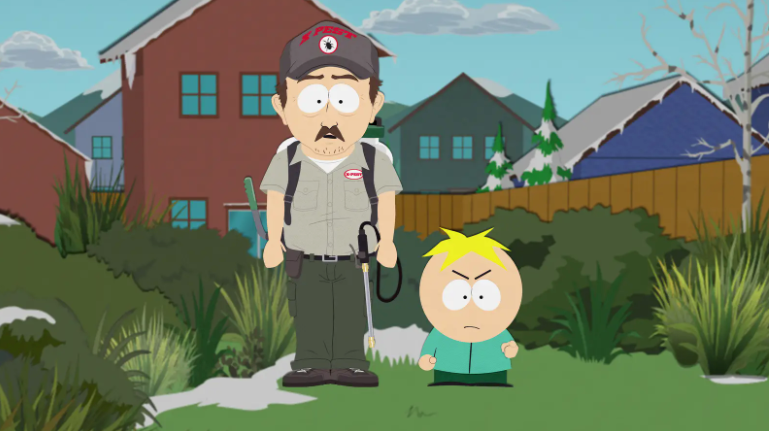
While President Trump was holding a press conference at the White House this morning and extolling the AI-related work of Meta’s Mark Zuckerberg, Nvidia CEO Jensen Huang, Anthropic’s Dario Amodei and SpaceX’s Elon Musk, a promo for tomorrow night’s South Park episode dropped. It was less salutary.
Here’s the logline for Episode 6 of Season 29: “Butters is unhappy with the data centers that the billionaires are building in our backyards.”
The clip opens with an X-Pest exterminator guy ringing the doorbell at Butters’ home.
“I understand you’ve got some billionaires in your back yard,” he says.
“Yeah, there’s more of these stupid billionaires every day!” replies Butters.
The first image from the episode (see it above) shows Butters in what appears to be his back yard with the X-Pest exterminator guy, who has strapped on his tank of poison and has his sprayer wand at the ready.
The topic of data centers is a hot one across the country and especially in Hollywood, where unions and workers worry about job displacement and writers and directors express concern over what it might do to their art.
Among the biggest players in the data center land rush is, of course, Oracle CEO and Paramount-WBD deal financier Larry Ellison. South Park airs on Comedy Central, which is owned by Paramount. As in the past, the show’s creators are seemingly not afraid to bite the hand that feeds them.
Mark Ruffalo and others have decried the introduction of “really profoundly scary technology” into Hollywood and how AI might impact media outlets soon to be owned by Ellison and his son David.
“Larry is a classic Oligarch,” wrote Ruffalo. “They are crushing workers and consolidating the wealth of the world for their own power and concentrated dominance.”
Paramount, for its part, responded by accusing Ruffalo of using “antisemitic tropes” in his argument, especially when linking the Ellisons’ studio acquisition to Oracle’s work with the Israeli military.
>


Search For Canadian TV Actor Stewart McLean Now Homicide Investigation


These ’90s fashion trends are making a comeback in 2017
According to Dior Couture, this taboo fashion accessory is back
Model Jocelyn Chew’s Instagram is the best vacation you’ve ever had
Emily Ratajkowski channels back-to-school style
9 Celebrities who have spoken out about being photoshopped


Rurouni Kenshin: Hokkaido Arc Manga Takes 1-Issue Break – News


HIDIVE to Stream English Dubs for The World Is Dancing, The Forsaken Saintess and Her Foodie Roadtrip in Another World, The Dangers in My Heart: The Movie Anime – News