Connect with us

movies

‘The White Lotus’ Season 4 Updates & News: Everything We Know So Far

Published

on

Cue a likely new version of the opening credits song for The White Lotus, because Season 4 is in the works, though it doesn’t look like the song will sound the same as that of Season 3.

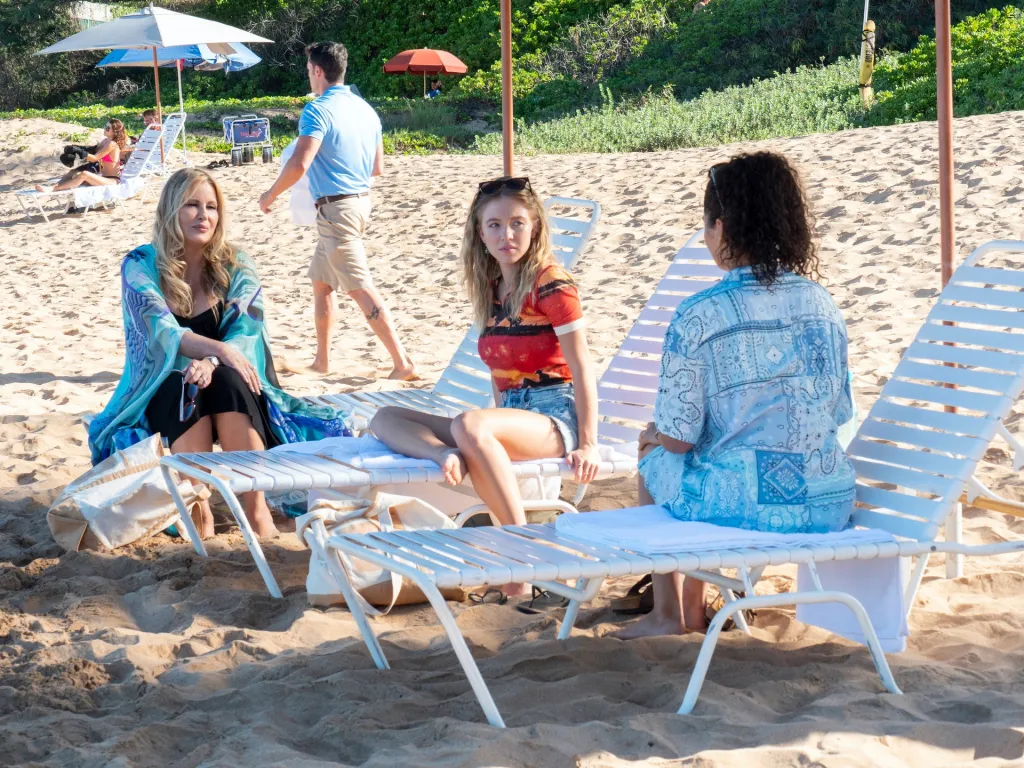
After the first three seasons of the HBO drama, set in Hawaii, Italy and Thailand, respectively, the fourth season will head back to Europe with some cast already assembled.

For everything we know about The White Lotus Season 4, read on.

When will The White Lotus Season 4 come out?

A release date won’t be available for some time, as the full cast has not yet been assembled nor has Season 4 begun production.

Where will Season 4 of The White Lotus take place?

Deadline first reported that the luxurious hotel chain series that features wealthy guests has opened up a location in France for the fourth season.

RELATED: Composer Cristobal Tapia de Veer Reacts To Winning Emmy For His Third & Final Season Of ‘The White Lotus’ Following Contentious Exit

Mike White and HBO selected Château de La Messardière in Saint-Tropez as the hub setting for the next installment of the murder mystery series. The setting of the Cannes Film Festival will provide a backdrop for the fourth installment.

The iconic Martinez and the Airelles Château de la Messardière in Saint-Tropez have been named the White Lotus Cannes and the latter the White Lotus du Cap, respectively. Bernad called the Martinez “a beautiful place that perfectly captured what we were going for” and noted that White will use selected locations to influence his scripts.

Interior filming is taking place in Paris due to the busy tourist season in Europe.

What will Season 4 of The White Lotus be about?

“Early on, Mike talked about wanting to do Season 4 as the life of an artist – the loneliness and the pain,” teased executive producer David Bernad while at Canneseries last month. “That’s a throughline that runs throughout the season. As we located the show at the Cannes Film Festival, this idea of fame popped up, and who has the world’s attention? Who can grab it, and who is the plus-one in a relationship? What are the things that satisfy us? Is it the love of an intimate partner, the love of strangers? What do we prioritize in people?”

Bernad also teased that Season 4 would be “the most personal and the funniest” to date.

“It really examines the things we value as people and what is attractive to us, and how fame can be corrosive and dictate your choices in life,” he added. “Some of the characters are existentially reflecting on those choices, some are reflecting on the choices and sacrifices they made as artists, and some are just starting to enter into this world of fame. Mike does a brilliant job of capturing how relationships can be corroded.”

RELATED: ‘The White Lotus’ Season 4’s Cannes Film Festival Trip Will Explore “The Life Of An Artist,” Says EP David Bernad

Bernad revealed the inspiration for Season 4 as a shared experience of his and Mike White’s with a waiter and maître d at a restaurant in Cannes. The encounter convinced them that they had found their Season 4 setting, and they canceled all other location scouting.

“The energy around it was so intoxicating and this season will have elements of that, he said. “It’s really about the people’s stories, them navigating Cannes, and the ups and downs of the festival. It’s the beating heart of everything in this season.”

Who will be in the cast of The White Lotus Season 4?

The latest round of casting netted Ben Kingsley (The Thursday Murder ClubWonder Man), Max Minghella (The Handmaid’s TaleThe Social Network) and Pekka Strang (Mister 8Dogs Don’t Wear Pants) in recurring roles.

Comedic actors Max Greenfield and Kumail Nanjiani are also among the heavy hitters who have joined the next iteration of the drama series alongside Chloe Bennet, Charlie Hall and Jarrad Paul as recurring characters.

RELATED: Steve Coogan On Why Mike White Cast Him In ‘The White Lotus’ & Helena Bonham Carter’s Exit: “The Whole Part Was Rewritten From Scratch”

Helena Bonham Carter was originally confirmed to star, as Deadline first reported she was in talks to join the fourth season. Alexander Ludwig and AJ Michalka joined the new season shortly after that news. Carter’s role is now being recast and rewritten after production on the fourth season has begun, Deadline first reported. Deadline then broke the news that Laura Dern, who has previously worked with creator Mike White, will replace Carter.

Deadline reported that Chris Messina had been offered a role in the fourth season as well, and he is now confirmed to star as well. Marissa Long was the newest addition before Sandra Bernhard joined the cast in February. Character roles are under wraps.

RELATED: ‘The White Lotus’ S4 Adds Max Greenfield, Kumail Nanjiani, Chloe Bennet, Charlie Hall & Jarrad Paul

French actors joining the cast as likely locals for Season 4 include  Vincent Cassel (Ocean’s movies, Jason Bourne), Corentin Fila (Being 17, Escort Boys) and Nadia Tereszkiewicz (Forever Young, Heads or Tails)

Recurring cast members announced in March 2026 include Americans Heather Graham (They Will Kill You, Chosen Family), Rosie Perez (The Flight Attendant, Your Honor) and Ben Schnetzer (The Madison, Y: The Last Man), the Scandinavian duo of Tobias Santelmann (Detective Hole, The Last Kingdom) and Frida Gustavsson (Faithless, Vikings: Valhalla), and French actress Laura Smet (Eager Bodies, The Bridesmaid).

Who will be the connecting character for The White Lotus Season 4?

No word yet on who is set to recur as a character who has already appeared in a previous season of the series, which is a trend that the second and third installments have followed. Jennifer Coolidge bridged Seasons 1 and 2, and Natasha Rothwell appeared in Seasons 1 and 3. Jon Gries appeared in all three seasons. Charlotte Le Bon is a strong contender for Season 4’s connecting character because she speaks French, and she is Jon Gries’ character Greg’s new girlfriend.

Though Laura Dern previously had an uncredited voice cameo in Season 2, she will be playing a brand new character in Season 4.

RELATED: Laura Dern Joins ‘The White Lotus’ Season 4, Reuniting With Series Creator Mike White

Carrie Coon shared with Deadline that she would be willing to come back on one condition.

“I would certainly be open to it. I would prefer to work in the snow,” she said, alluding to her six months in Thailand in the humid heat. “It was the hottest I’ve ever been in my life, and it’s only getting hotter.”

Who else is behind The White Lotus Season 4?

Season 4 is created, written, and directed by Mike White. Executive producers include White, David Bernad, and Mark Kamine.  

RELATED: Jason Isaacs On His Golden Globes Nomination For ‘The White Lotus’: “I’ve Been Lucky To Be Around Brilliant Writing”

>

Continue Reading

movies

‘Objet a’ Film on Desire, Control, Touch: Locarno 2026 Interview

Published

on

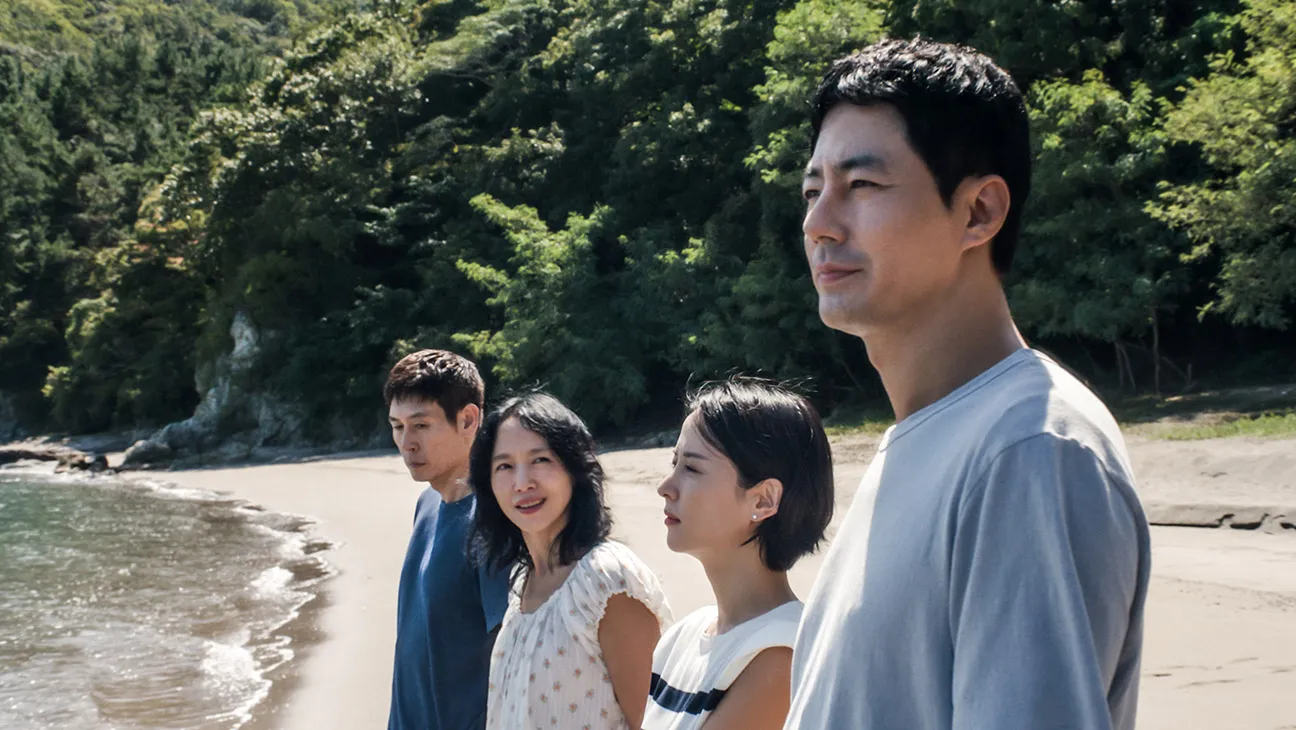
Ingeborg and Adam are visionary hand surgeons who are bound by love, control and irresistible fixations. Ingeborg, for one, feels compelled to steal objects. Adam longs to become one.

But after an accident, their well-choreographed lives suddenly face a force that could upset the careful balance that has long defined their relationship: the enigmatic Gaia. With her arrival, unexpected desires start springing up.

With Objet a, her new mind-bending and visceral feature, Berlin-based visual artist and filmmaker Ann Oren (Piaffe) returns to Locarno. It is a stylized cinematic exploration of the fragile relationships between humans, as well as humans and nature. And it is likely to make you look and think at control, desire, intimacy, identity – and kleptomania – in a different way.

Objet a, world-premiering in the international competition of the 79th edition of the Locarno Film Festival on Tuesday, Aug. 11, stars Aenne Schwarz (All Is WellEvery You Every Me) as Ingeborg, Louis Hofmann (All the Light We Cannot SeeThe ForgerDark) as Adam, and Simone Bucio (PiaffeThe Ivy) as Gaia. Georg Friedrich (Great Freedom) and Sofia Kokkali (Our Wildest Days) also feature.

“I’m interested in human desire and how it connects us to other species,” Oren says in a director’s note. “The human body is the starting point for my cinematic language: the more control we have over it, the more we separate ourselves from the natural world.”

Oren wrote the screenplay for Objet a with Geoffroy Grison. The cinematography is courtesy of Juan Sarmiento G. (The Voice of Hind RajabA Poet), with editing by Hansjörg Weißbrich (RoseLate Shift). The film is produced by Schuldenberg Films in co-production with Tarantula, asterisk* and ERT.
A theatrical release in Germany through Grandfilm is scheduled for the first quarter of 2027. Oscilloscope Laboratories has acquired the North American rights. Bendita Film Sales is handling international sales.

Ahead of the Locarno premiere of Objet a, Oren, Schwarz and Hofmann talked to THR about the serious and fun sides of the production, how they collaborated on its choreography and how timely its themes are if you look close enough.

Ann, what gave you the idea for this film and this story?

ANN OREN Several things, but what I was starting with was the sense of touch. I make very visceral films. My first feature film, Piaffe, dealt with the sense of sound. I start with the experience of the human body today in order to understand the human condition today. Here, I was thinking about the sense of touch today and what happens when we touch flat screens more than we touch our lover’s skin. A lot of experiences have flattened down to touching this plexiglass most of the day, so what is happening to our fingertips? I think they’re really deprived, and I was imagining zombie-like, hungry fingers – hungry to touch something. And then I had this idea of a couple that is living a very bubbled life and communicating emotionally through objects.

‘Objet a’ film still, courtesy of Juan Sarmiento G./Schuldenberg Films

I am curious, Aenne and Louis, how Ann pitched this project to you. To me as a viewer, Objet a sometimes felt a bit like a dance choreography that was very body-driven and that I could “feel” physically while watching.

AENNE SCHWARZ When I read the script, I felt a real longing to become part of this genuinely faraway world, which, at the same time, felt somehow familiar. What was very intense was when Ann talked us through the script. I remember when we all met, she had such a precise and full vision of what she wanted. And then, yes, it was a very physical experience. I experienced it like diving in, and at the same time, you had to hold the line and be very straight because they’re such delicate characters.

LOUIS HOFMANN I remember that in our first rehearsal, the term dance popped up quite a few times. The way we moved around one another was, I guess, testing out how near you could be to one another and what distance you could create. I remember that there were only a few moments where the characters would actually touch. But most of the time, it was about playing with the distance between them, creating tension, and playing with that tension.

SCHWARZ Yes. The gaze was part of the tension between us. You never lose each other. But sometimes, you are very far and sometimes much closer. It’s always a thin line holding us together.

HOFMANN And that longing for the touch is, I think, omnipresent, and that created the tension.

Interesting how you both describe this. Now it makes more sense to me why I sometimes felt that you two were almost moving like marionettes. Ann, are you happy if viewers get that sense?

OREN Absolutely, because this is exactly the type of work that I’m doing. I see working with actors as being about a very physical performance. There is also the psychology, but what I’m actually interested in is how the characters make decisions, not rationally, but rather through gut feeling. I look at human beings as the species that they are. In everyday life, it happens to everybody that we are compelled to do something, although we don’t really understand why. And I think it’s very exciting for a viewer to see that in a character and see that things are charged with this kind of tension.

In the psychoanalytic theory of Jacques Lacan, “objet a” is an unattainable object of desire. Aenne, Louis, were you familiar with this term, or did Ann go through some of this theory? Or was it not really that important to understand such concepts?

HOFMANN My girlfriend mentioned it to me. I wasn’t aware of it, but she was. And then during rehearsals, we touched on it a little bit. My character Adam has this desire of wanting to be a desired object for someone else. But then through his journey, he is also developing a sense of what he wants to be for himself. For me, that was a very beautiful journey to go on.

Ann Oren, courtesy of Björn Melhus

AENNE I saw the title and remembered that a long time ago I studied literature, and Lacan was a topic in one seminar. I remember that I was very excited about it, and so I got a little bit into it. A close friend of mine is a Lacanian psychoanalyst. I felt I had a very intense meeting with this “objet a” myself during filming. The film became this object, in a way. I also wanted to touch it. I also wanted to have it, to own it, and it was also slipping away. So for me, it was a very personal experience with the theme.

HOFMANN You mentioned marionettes. I sometimes felt that the way I was being, or we were being directed, I felt so secure and so safe. In Ann’s world that she created, we just kind of obeyed her vision in a very beautiful way. I don’t mean that we had no say in it anymore, because it was quite the opposite. She was still welcoming all of our ideas.

Do you remember any examples?

HOFMANN When I tried to find the character, I very much went through voice. It was an impulse. I’d read somewhere that the soul of a character is placed in the voice, and I’ve never really gone through that, using the voice in particular to create the character. During rehearsals, I was reading Georg [Friedrich]’s part with Aenne, and I was mimicking, for fun, Georg’s [Austrian] accent and dialect. And then Ann was like: “Wait, I love this voice for you.” And I said: “Hang on, I can’t really have Georg’s voice when being in a film with Georg.” But I then took that placement of the voice, where his voice sits. That’s just an example of how playful we were with one another while being in that very safe and secure environment of Ann’s vision.

Ann, as a filmmaker, how do you think about colors? I noticed, or maybe I should say “felt,” colors quite a bit in Objet a

OREN This is the bread and butter of my language. I don’t even have to sketch it out. It just comes to me. What would be the color palette of the film and how does that support the mood that I would like to bring across? For this film, I wanted to reduce colors. Actually, we only have natural colors in the film until, slowly, green becomes the guest and the star color in the film. You have to work very hard to reduce color, actually, especially when you’re shooting outside, and then you slowly introduce it. So when you have a sequence in the end, it’s really ecstatic.

So we made sure in the production design and in the costumes that the range is from whites and beiges into the deep browns. The red color was used only in the bedroom … and [somewhere else] in the background. When I see Adam and Ingeborg within these natural colors, it really makes me think of them a little bit more like animals.

I felt the desire below the surface of the couple without the characters having to talk about it. Is there a trick to tap into that to make us viewers sense this desire?

SCHWARZ With Ingeborg, what I thought was very exciting about her is that her fingertips and her eyes are her sensual organs. And I really tried to dive into these sensations. The crutch she [gets for one of her legs as the film unfolds] became part of my body. It was exciting for me to really open to the world that an object can become so strong that you want to become one. And with Gaia, she also has a sense she never had before, and she can’t control it. That is like an earthquake for her. She goes into a direction she never went before, and she can’t understand it.

She has things basically in order. She knows what she wants. She’s very sensitive and delicate, but also very clear in where the limbs are and what the object has to do for her. And then this kind of melting starts when her body breaks. When her leg is broken, something breaks into pieces.

‘Objet a’ film still, courtesy of Juan Sarmiento G./Schuldenberg Films

HOFMANN I remember that the objects, the crutch, as well as the corset I use, had an immense effect – not only on us but on the whole team. There was a fascination with the beauty of how they were built, and maybe how we got attached to them. We treated them as maybe extended parts of ourselves, and there was this fascination coming from the team as well.

I also remember us as actors acting differently when we had our objects with us. There was more to ourselves, and it was kind of between us. This film is about these two people that are symbiotic and living their life in a in a very symbiotic way, doing everything with one another, working together, living together, loving each other, and then there are these new elements popping up that are so disturbing at first, and so irritating, and so frightening. And then they slowly but surely start to go with those impulses, and they don’t really know where they’re coming from.

SCHWARZ One thing that was very special was that it very playful, and also funny in a way. And that gave us also a lot of freedom. We were having fun. We were laughing.

HOFMANN At first, I wondered, “Is this going to become not body horror, but is it all going to be really dark and scary or just full of doom?” But I felt it was quite endearing, and I think it’s so sweet, no matter how strange these desires might appear to other people. At the end of the day, they are very endearing, sweet desires. And I found the characters so endearing.

SCHWARZ Yes, there’s a tenderness.

Ann, can you share how you think of rituals as part of your storytelling?

OREN That has a lot to do with obsessions with control. You see that with both of them, especially with Adam’s character. He’s obsessed with controlling his body, developing his body, and then he wants his body to also get attention. But the more control we have over our bodies, the more we are disconnected from the natural world that we are a part of. And I think this is a very contemporary condition.

The need for rituals, historically, first of all, is that they are relaxing. It doesn’t have to be a religious ritual, but it can be the things that you have to do in the morning or the things that you have to do before you leave the house. I think that the need for it also has to do with forgetting ourselves and connect with something larger than ourselves. If in the beginning, the characters are connected to controlling their lives and to objects, towards the end it opens up to a psychedelic experience that is like ecstasy. And ecstasy has always been part of a need for humankind. Today, there is a renaissance now of psychedelics in the world and because we’re so controlled, the need to forget ourselves, to have a moment of ego loss, and to connect to something larger than ourselves. I didn’t want to have a didactic experience for the audience, but rather lure them into something through passion.

Speaking of passion, Adam and Ingeborg also try to control that…

OREN This is why I built the sexuality between the couple so that they were canceling parts of their bodies, like they’re not including their genitals. It’s all about this exchange of the experience of touching and being touched, but in the most clinical way, which makes it absurd and interesting and a very particular choice for the two of them, which makes them suit each other very well. I think we lived so bubbled today, and we’re trying to control everything, and it’s becoming about maximizing the length of your life, but you forget to live your life.

The film starts with thinking about the human condition, our bubbled life, and what, in a way, leads us to the disaster that we are in right now. We’re living in times of war, climate catastrophe and tech fascism, and it starts from that. So, it’s something very fantastical, and I have very particular characters. But it touches on living in the world right now, and I hope that it’s going to resonate and be absorbed this way. I like to work with ambiguity, so I don’t want a person to come out of the film and be able to describe it with one sentence. That would make it rather boring.

>

Continue Reading

movies

Obama Relives Tan Suit Debacle In ‘Life, Larry & Pursuit of Unhappiness’

Published

on

As Larry David‘s comedic trip through U.S. history comes to an end, he took credit for one of the nation’s more recent presidential scandals.

On Friday’s season finale of the HBO sketch comedy miniseries Life, Larry and the Pursuit of Unhappiness, President Barack Obama made a surprise appearance as himself in a sketch set in 2014, as David advised him to wear the now-infamous, outrage-inducing tan suit during his live press conference on military response to ISIS.

Following some banter on how the POTUS avoids stains, David accidentally spills juice on Obama’s suit jacket when he leaves the room. When the 44th president returns, the comedian recommends he wear the tan suit that Obama planned on taking it to Turin for NATO Summit, for “a daytime event, it’s outdoors, a little more casual.”

“First of all, it’s a gorgeous suit,” David declared. “And this is casual Friday!”

“It is a great suit,” admitted Obama, as David told him, “Oh boy, oh boy. I think this is the move. … Old lips won’t let you down. You’ll thank me!”

As Obama models the look, David gives him his signature, “Pretty good! Pretty, pretty, pretty, pretty, pretty good.”

“You sure about this?” asks Obama, as David assures him, “Never been more sure about anything in my life. People are going to be talking about this for a long, long time.”

Obama’s cameo in the finale comes as David marks the United States Semiquencentennial with the seven-part sketch comedy limited series, which recounts major events in U.S. history through the comedian’s signature observational humor.

David’s longtime Curb Your Enthusiasm partner Jeff Schaffer, who serves as an executive producer on Life, Larry and the Pursuit of Unhappiness, previously told Deadline that Obama, who produced under his Higher Ground banner, reached out to his buddy David to ask if he’d be interested in making the show to celebrate the country’s 250th birthday.

“When you’re doing a show about American history, you want to do it warts and right now we have this orange saggy wart that we wish would go away,” said Schaffer. “But the nice thing about having President Obama produce this and be a part of it is that this country’s had a lot of fuck ups, we’ve seemed to have learned very little, but we’re still moving forward sometimes, and then we move back a little bit, but we always move forward again. While Larry’s pointing out a lot of the steps back, the President is telling us we can still step forward.”

>

Continue Reading

movies

Matthew McConaughey Performs “Quill” From ‘Rivals of Amziah King’ — Watch

Published

on

Matthew McConaughey shows off his vocal skills (and some hidden banjo talents) with his latest role in The Rivals of Amziah King.

On Friday, Lakeshore Records released the single and music video for “Quill” from the original motion picture soundtrack, performed by the Oscar-winning and co-star Ben Hardesty, also featuring Miranda Zickler, Angelina LookingGlass and Andrea Pister.

Set in the backwoods of Oklahoma, The Rivals of Amziah King follows the musically gifted Amaziah King (McConaughey) and his bluegrass-playing band of misfits while overseeing the premier honey-making operation in town. When Amaziah’s estranged foster daughter unexpectedly returns, he leaps at the chance to reconnect and create a family business. But the honey game is ruthless, and Amaziah’s rivals threaten to destroy everything he has built.

Related Stories

Premiering Aug. 14 in theaters, the Andrew Patterson-written-and-directed drama also stars Angelina LookingGlass, Cole Sprouse, Jake Horowitz, Tony Revolori and Kurt Russell.

Producers are David Heyman, Teddy Schwarzman, Jeffrey Clifford, Michael Heimler, James Montague and Will Greenfield.

>

Continue Reading

Trending

Copyright © 2017 Zox News Theme. Theme by MVP Themes, powered by WordPress.