
From left: Lars Von Trier, Catherine Deneuve, and Bjork at the ‘Dancer In The Dark’ premiere at the 53rd Cannes Film Festival in 2000.
FocKan/WireImage


Catherine Deneuve, of course, brings her dog.
Jack — “not Jacques, Jack!” — a pointy-eared Shiba Inu, stands at attention throughout the interview, his eyes fixed on her like a discreet, furry security guard.
“I usually have him on set with me,” she says, patting his head. “He is always very good.”
We’re tucked into a cozy corner of a boutique Left Bank hotel. Deneuve’s tasteful Louis Vuitton handbag is tossed on the chaise lounge. As we chat, she punctuates her answers with the occasional puff from her vape — “I did quit smoking for a while, even did hypnosis, but I started again,” she says, waving the vape. “This, however, is not smoking. It’s nothing.”
It’s a classy, casual, almost domestic setting for what at times feels akin to a papal audience. This is Catherine Deneuve! Not just the face of French film but quite literally the face of France. In 1989, for the bicentennial of the French Revolution, Deneuve’s face was used as the image of Marianne, the French national emblem of liberty and reason. She is, de facto, an icon.
Deneuve’s onscreen persona is simultaneously that of sweet Geneviève, romantic idealism personified, in Jacques Demy’s magical 1964 musical The Umbrellas of Cherbourg; and Carole Ledoux, the Belgian girl in London whose sexual repression turns homicidal in Roman Polanski’s Repulsion (1965). She’s Séverine, haute-bourgeois housewife who moonlights as an S&M submissive in Luis Buñuel’s Belle de Jour (1967); and the camp star who sends up her own iconography in both Tony Scott’s lesbian vampire thriller The Hunger (1983) and François Ozon’s murder mystery musical 8 Women (2002).
At once liberated and conservative, radical and restrained (and, some would say, occasionally reactionary), Deneuve, more than any actress, more than any filmmaker, embodies French cinema in all its glorious, confounding contradiction. Deneuve is not just a legend of the Croisette. She’s the legend.
Deneuve returns to Cannes not as a retrospective figure but as a working actor. She has two films in official competition: Alongside Isabelle Huppert, Vincent Cassel and others in the ensemble drama Parallel Tales, from two-time Oscar winner Asghar Farhadi (A Separation, A Salesman); and as the mother of Léa Seydoux in Gentle Monster, from Austrian director Marie Kreutzer (Corsage). “Oh, they are very small roles,” she says modestly. “But even a small role must be necessary. When a role is small, I always ask myself: ‘If this character were removed from the script, would it matter?’ If not, then it isn’t very interesting. I’m also of course interested in the director, especially if they are young and the way they speak about the film has energy, something open and new. Then I want to be part of it.”
But Cannes is more than a current stop on the circuit for Deneuve — it is the throughline of her career, the stage on which her legend was first forged.
Deneuve’s Cannes story began with a coronation. The Umbrellas of Cherbourg, her first lead role, won the Palme d’Or and transformed the 20-year-old ingenue into an international star.
“We knew [the film] was special when were shooting it, the story was very different, and the film was entirely sung. Everything had to be recorded before shooting, so we had to learn the whole film in advance. It was a very special experience,” she recalls. “But it was the beginning of my career, and everything was new. Even winning [the Palme d’Or] felt unreal because I didn’t fully understand it yet. The moment I especially remember from Cannes is when [Lars von Trier’s] Dancer in the Dark won the Palme d’Or [in 2000]. That recognition, that stayed with me.”
From left: Lars Von Trier, Catherine Deneuve, and Bjork at the ‘Dancer In The Dark’ premiere at the 53rd Cannes Film Festival in 2000.
FocKan/WireImage
Between Umbrellas and Dancer — two musicals at opposite poles of the joy-to-anguish spectrum — Deneuve has been back to Cannes so many times, she can barely keep count. Her 1994 festival, where she served on the jury alongside Clint Eastwood, stands out. The jury’s Palme d’Or pick was Pulp Fiction. Deneuve handed the trophy to Quentin Tarantino, anointing a new generation of indie cinema — a choice that would prove as divisive as it was defining.
“Oh, the reaction in the theater! People were shouting, they were so angry. It was such a new kind of film that some didn’t understand it,” she remembers. “But inside the jury, there was not much conflict. Clint Eastwood, though, didn’t talk much. He knew what he decided, but he didn’t explain it much to the others.”
Scandal, for Deneuve, is nothing new. Over the course of six-plus decades onscreen playing serial killers, kinky housewives and lesbian vampires, she’s rarely seen a cinema piety she wouldn’t transgress. The fresh-faced Geneviève of Umbrellas would be shocked.
It was just a year after Umbrellas that Deneuve transformed for Polanski’s dark, violent and over-the-top Repulsion. Her performance shifted from romantic transparency, from the open joy of Geneviève, to Carole Ledoux’s unreadable froideur.
Repulsion and, more significantly, her performance two years later in Buñuel’s Belle de Jour, would cement Deneuve’s image as the “ice queen” of French cinema, as an indecipherable projection of male desire, poised between repression and release. For a modern audience, the premise of the film, and its depiction of female sexuality, seems almost inconceivable.
Deneuve admits some Belle de Jour scenes “were difficult. I wasn’t ready to do everything exactly as written,” she says. “And Luis Buñuel didn’t explain much to actors, so at the beginning, it was complicated. But the film went well, and after that we did another film together [Tristana], which was wonderful.”
Repulsion and Belle de Jour turned her into a bona fide sex symbol. (Her two Playboy pictorials, in 1963 and 1965, the latter shot by future husband David Bailey, also helped.) But such is the apparent contradiction that is Catherine Deneuve that the actress who helped define the language of sexual liberation rarely bared it all onscreen.
Catherine Deneuve at the Cannes Film Festival on May 10, 1983
Pool GARCIA/URLI/Gamma-Rapho via Getty Images
“I’m not a big fan of nudity in films,” she muses. “When you are naked, you are no longer quite a character — you are just a person, a body. It’s difficult to stay in the story of a character.”
There’s a similar tension in Deneuve’s public image and her cultural politics, which can appear, depending on where you’re standing, to be simultaneously progressive and reactionary.
Offscreen, Deneuve has been a mostly dependable progressive: a signatory of the 1971 “Manifesto of the 343” protesting France’s abortion laws; a petitioner against the death penalty; and, at Cannes last year, a voice condemning the killing of Palestinian photojournalist Fatima Hassouna. But the petition most people remember is her 2018 open letter in Le Monde, chastising #MeToo as a witch hunt. She later apologized to victims and distanced herself from those who had “found it strategic to support me.” For many, however, the letter — combined with her refusal to distance herself from Polanski and longtime friend Gérard Depardieu — convicted in 2025 of sexually assaulting two women on a film set — places her firmly in the reactionary camp.
Asked who was her best screen partner — from an incomparable list that includes Marcello Mastroianni, Jack Lemmon, Burt Reynolds, Daniel Auteuil and Michel Piccoli — she barely hesitates. “Gérard Depardieu. Because he is completely present. With some actors, you feel they are not fully listening. With him, everything is alive in the moment.”
On #MeToo’s lasting impact, she is circumspect. “It’s very complicated. Sometimes accusations come many years later, which raises questions. People must be very careful. It has made everyone more aware, more cautious. I’m very careful [what I say].”
But the queen of French cinema is not one for regrets. She would have liked to work with Alfred Hitchcock — “We had a project. It was a sort of spy movie. It was a fine script, so I met him, but then nothing happened” — and to have made a few more American movies. “I had a very good experience working with Jack Lemmon [on her first Hollywood movie, 1969’s The April Fools]. Then I did the film with Burt Reynolds [1975’s Hustle], which I liked very much. He was a wonderful actor and such a nice man.” And, as Deneuve put it in an earlier interview, “very funny … for an American.”
She does still long for celluloid and the era of screening the dailies. “I used to like watching dailies — discussing scenes afterward. You see some things that you wouldn’t notice when you are shooting,” she notes, wistfully. “[Now] directors watch monitors instead of being directly involved in the scene. That has disappeared. Everything is faster now, less collective.”
What hasn’t changed for the 82-year-old actress is the essential appeal of the work: “I still love going to the cinema — being in a theater with people, feeling that shared atmosphere. And I still love making films. I try to choose only what I truly want to do. It’s not just work — it’s something I love.”
Outside, Paris moves at its usual pace. Deneuve gathers her things. Jack rises with her, attentive as ever.
“It’s a great luck to have a life like this.”
This story appeared in the May 6 issue of The Hollywood Reporter magazine. Click here to subscribe.
>
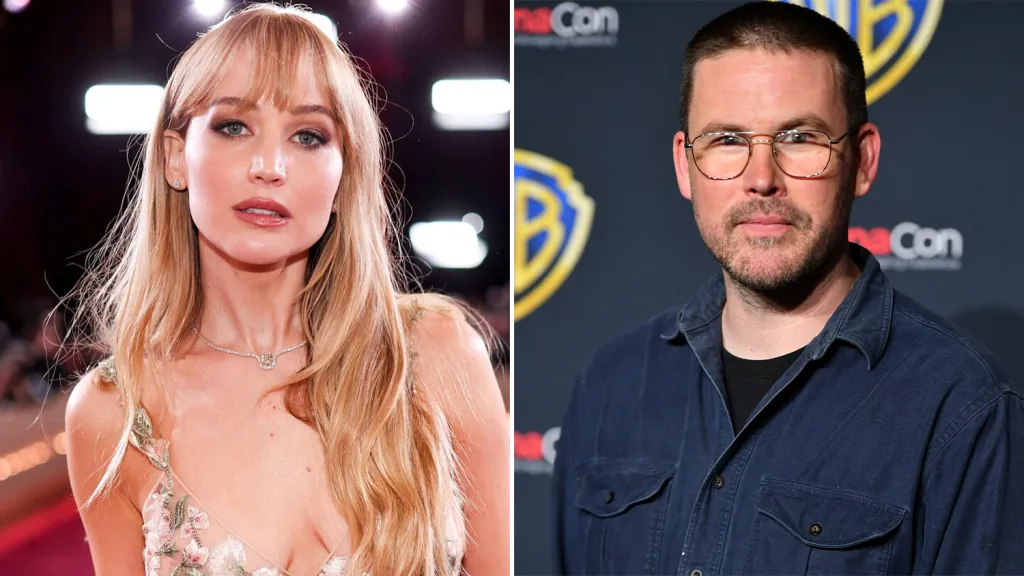
What has been buzzed about is becoming a reality: Oscar winner Jennifer Lawrence is starring in Zach Cregger‘s next movie, The Flood at Warner Bros’ New Line Cinema. The pic has a release date of August. 11, 2028.
The sci-fi thriller project brings the Weapons filmmaker back to New Line on which he’ll direct, produce and write based on his original idea. The news comes just as Cregger’s Resident Evil for Sony/Constantin has just crossed the two century mark at the global box office.
Said Cregger, “Mike, Pam and the whole Warner Bros./New Line team were an absolute dream to collaborate with on Weapons, and I couldn’t be happier to dive in with them again. Jennifer is one of a kind, and I’m beyond excited to see her in this role.”
“Jennifer Lawrence is one of the most gifted and compelling actors working today, and we are thrilled to have her at the center of Zach’s bold and wholly original vision for The Flood. Following our extraordinary experience together on Weapons, we could not be more excited to reunite with Zach and the team at Vertigo, as well as Amblin to bring this ambitious film to audiences around the world,” said Mike De Luca and Pam Abdy.
Amblin Entertainment is producing alongside Roy Lee and Miri Yoon of Vertigo Entertainment. Plot details are being kept under wraps.
Weapons led the domestic box office for four consecutive weeks and earned $270 million worldwide last year, ranking among 2025’s highest-grossing horror films. Amy Madigan won the Academy Award for Best Supporting Actress for her performance as Aunt Gladys, a character whose story will continue in the upcoming film Gladys.
Lawrence received the Academy Award for Best Actress for her performance in Silver Linings Playbook and has also starred in American Hustle, Joy, Don’t Look Up, and The Hunger Games franchise. Through her production company, Excellent Cadaver, she has produced acclaimed films including Causeway, No Hard Feelings, and Die My Love, as well as the documentaries Zurawski v Texas and the Peabody Award-winning Bread and Roses. Most recently, Lawrence earned a Golden Globe nomination for her performance in Die My Love. Up next, Excellent Cadaver will produce the highly anticipated What Happens at Night, starring Lawrence alongside Leonardo DiCaprio and directed by Martin Scorsese.
Lawrence is represented by LBI Entertainment and Hansen, Jacobson, Teller, Hoberman, Newman, Warren, Richman, Rush, Kaller & Gellman.
>
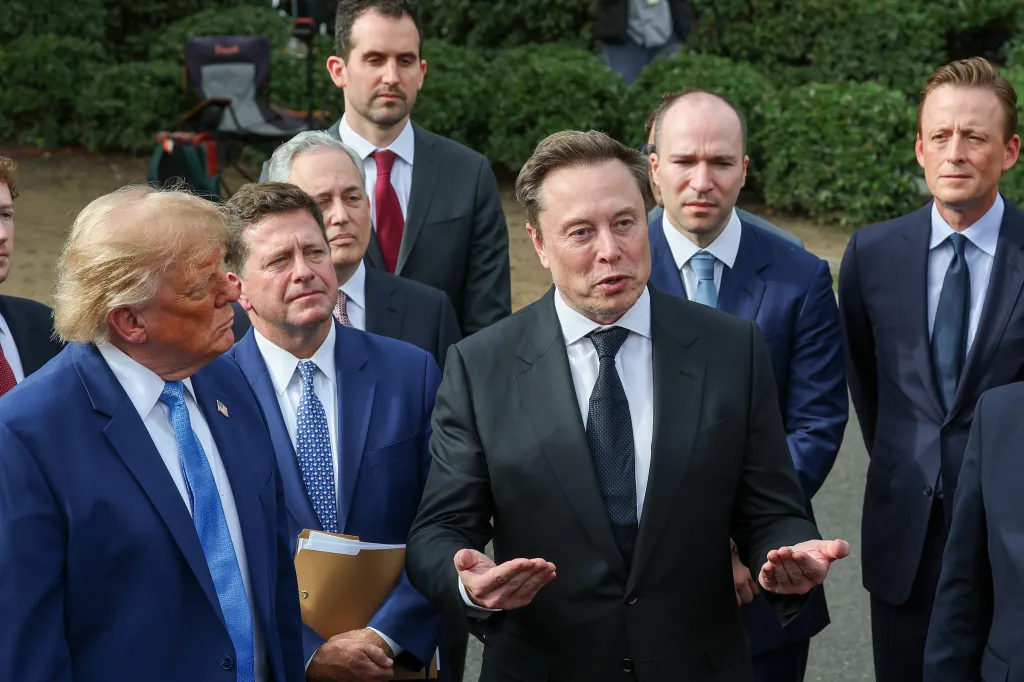
Amid a backlash against data centers, worries of massive job loss and doomsday warnings from the industry itself, Donald Trump stood with top tech CEOs and pitched a rebrand.
“We’ve changed the name officially to SI,” Trump told reporters gathered just outside the West Wing, referring to the switch from “artificial intelligence” to “super intelligence.”
The president planned to sign an executive order as such on Tuesday afternoon, but it remains to be seen whether it actually will take hold when AI has become so ubiquitous.
Standing with Meta’s Mark Zuckerberg, Nvidia CEO Jensen Huang, Anthropic’s Dario Amodei and SpaceX’s Elon Musk, among others, Trump also said that the White House meeting between the top executives produced a “self-policing” agreement and one that would be “morally binding.”
Three years ago, when Joe Biden was president, many of the same CEOs gathered on Capitol Hill for a forum on AI led by then-Senate Majority Leader Chuck Schumer. But that meeting, along with others he held to address concerns over the technology, produced no new regulation.
Trump has continued to dismiss calls for greater regulation, warning of a race with China to dominate the technology. And he’s also expressed continued support for data centers even amid a backlash in local communities that has drawn opposition from lawmakers in both parties.
“The data centers are incredible,” Trump said. “And by the way I am very good at real estate. Some of those buildings are absolutely beautiful. They are big strong powerful buildings but they are beautiful.”
Zuckerberg said, “I think what we can all agree on is that the American public and our customers want to know that what we are building is working the way we intended. We drafted a set of principles and commitments around building robust internal controls and detecting any issues with the technology, coupled with multiple layers of auditing and controls, starting with internal risk review, external auditors and evaluators, and agreeing that we are going to have all of our board of directors independently review the reports that come from the auditors.”
He added, “The idea isn’t that this is the only thing we will ever do, it is that this is a start and an accord that the whole industry can come to.”
>
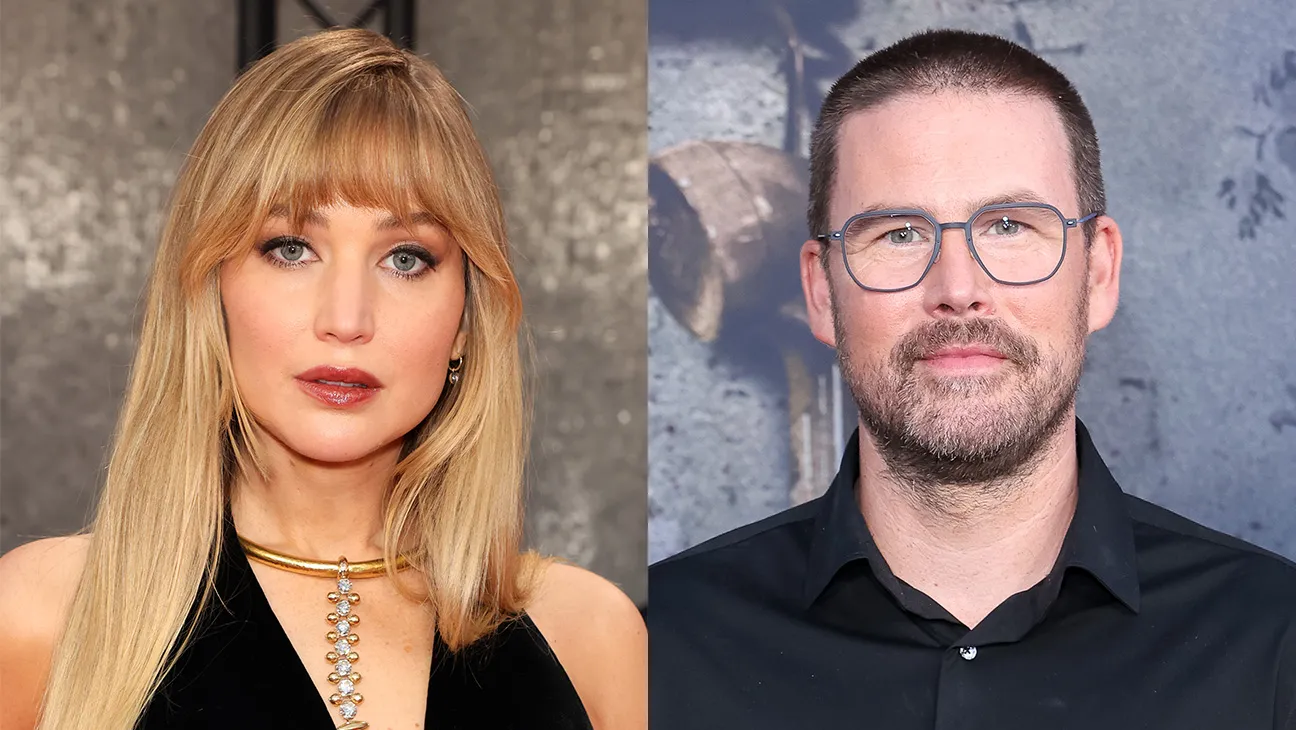
Jennifer Lawrence will star in Zach Cregger’s sci-fi thriller The Flood.
Warner Bros.’ New Line division is behind the movie, having picked up the project out of turnaround from Netflix earlier this year.
Cregger wrote the script and will direct and produce the thriller, which is based on his original idea and is set for theatrical release on August 11, 2028.
With Cregger’s Resident Evil movie now out and a hit, this is the filmmaker’s next movie to go. Production is due to begin in Europe in the first months of 2027.
Amblin Entertainment is producing alongside Cregger’s frequent collaborators, Roy Lee and Miri Yoon of Vertigo Entertainment.
Lawrence’s casting is a coup – for any studio, really – as the actress is known for being quite choosy. Most recently, she earned a Golden Globe nomination for her performance in post-partum drama Die My Love and will next be seen with Leonardo DiCaprio in drama What Happens at Night, directed by Martin Scorsese.
>


Search For Canadian TV Actor Stewart McLean Now Homicide Investigation


These ’90s fashion trends are making a comeback in 2017
According to Dior Couture, this taboo fashion accessory is back
Model Jocelyn Chew’s Instagram is the best vacation you’ve ever had
Emily Ratajkowski channels back-to-school style
9 Celebrities who have spoken out about being photoshopped


Rurouni Kenshin: Hokkaido Arc Manga Takes 1-Issue Break – News


HIDIVE to Stream English Dubs for The World Is Dancing, The Forsaken Saintess and Her Foodie Roadtrip in Another World, The Dangers in My Heart: The Movie Anime – News