
movies
How the Director of ‘Clue’ Cracked the ‘Silliest Idea’ He’d Ever Heard

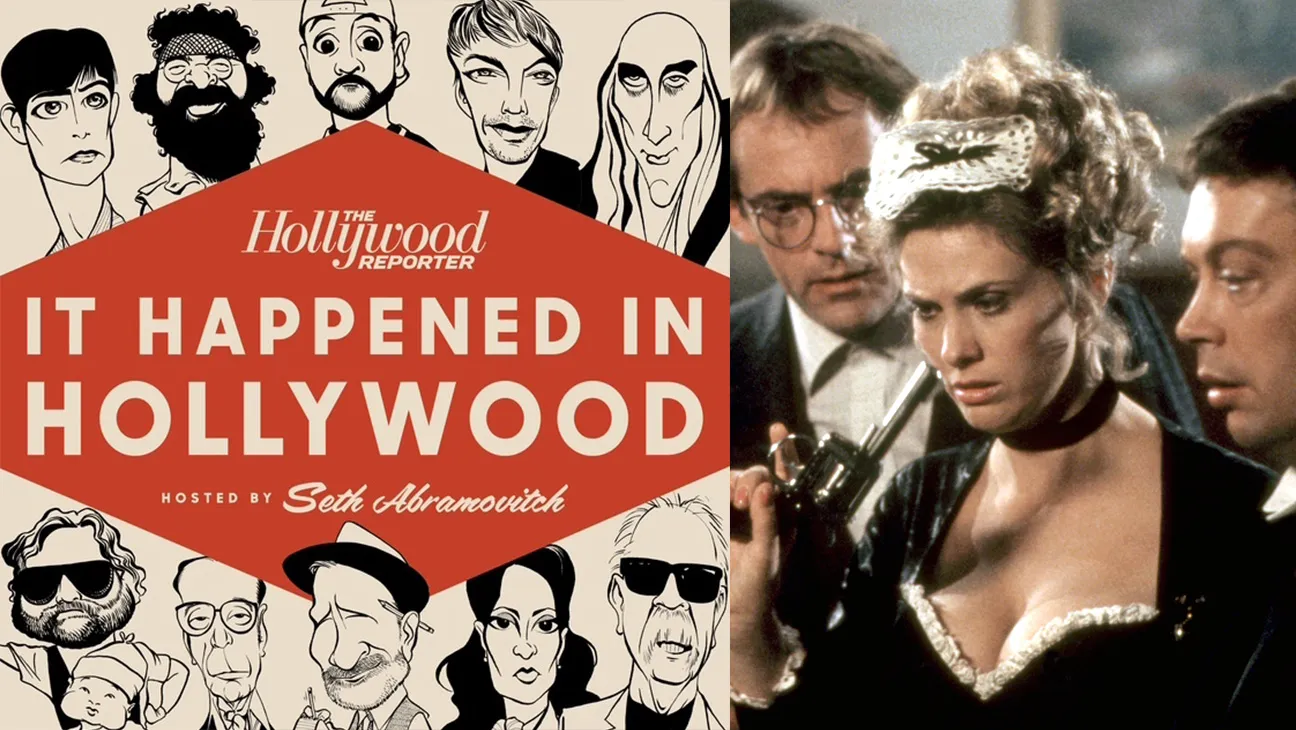
When Jonathan Lynn was summoned to Hollywood to write the screenplay for Clue, his first reaction was that it was the silliest idea he’d ever heard. A feature film based on a board game? But he’d never flown first class before, and he had a spare week. So he went.
Forty years later, the film is a genuine cult phenomenon — performed live by shadow casts the way Rocky Horror once was, endlessly rewatched on streaming, and quoted with near-religious devotion by multiple generations of fans. On the latest episode of It Happened in Hollywood, I sat down with Lynn for a wide-ranging conversation about how one of comedy’s most intricately engineered films came to exist. (It very nearly didn’t.)
Lynn arrived in Los Angeles as the sixth writer to be approached about the project — after Tom Stoppard, who accepted the commission and then mailed back the check with a note saying the whole idea was hopelessly old-fashioned. Lynn met producer Peter Guber and director John Landis, the latter pitching his vision for the film in a performance that involved jumping on office furniture and running in circles for ten minutes straight.
“And then the butler says, ‘I can tell you who did it!’” Lynn recalled. “So I said, ‘Who did?’ And he said, ‘I don’t know. That’s why I need a writer.’”
Lynn checked in to the Chateau Marmont — which bore a resemblance to the foreboding mansion he was about to invent, and had recently hosted its own untimely death in the form of John Belushi’s overdose — and spent the night trying to figure out if there was actually a story here.
The breakthrough came when he realized that characters named after colors couldn’t possibly be their real names. Which meant they were all aliases — which meant they all had something to hide.
“It was the spine of the whole thing,” Lynn says.
From that single logic problem, the entire clockwork machinery of Clue — the blackmail, the secrets, the cascading murders — was born.
The film’s casting is one of the great sliding-doors stories in 1980s Hollywood. The role of Miss Scarlet was originally cast with Carrie Fisher, who came in and was, by Lynn’s account, genuinely hilarious in the room.
His wife back in London was somewhat less enthusiastic when Lynn called to share the news.
“She said, ‘Are you nuts?’ I said, ‘Why?!’ She said, ‘She’s a drug addict!’ So I said, ‘Really? She seemed fine to me.’” Lynn then met Fisher for lunch and remained unconvinced — even as she fell over a chair on her way to the table.
Days before rehearsals were set to begin, Fisher called to say she was in rehab at Cedars-Sinai and would need to commute to set each day. Insurance companies took a dim view of this arrangement. With four or five days left, Lynn cast Lesley Ann Warren. Warren turned out, he says, to give a wonderful performance.
The film’s most celebrated gimmick — three different endings, distributed to different theaters — was someone else’s idea, and Lynn was nervous about it from the start. The thinking was that audiences would return three times to see each resolution. Instead, as he puts it, people who couldn’t decide which ending to see simply didn’t go at all.
“The ending is what people remember,” Lynn says. “It’s what they go out having just seen. If you can’t decide what your last two hours has been about, critics tend to say, ‘They couldn’t even make up their minds how to end it.’ So that was a disaster.”
When the film moved to home video and cable television, all three endings were joined together and played in sequence; that’s the format most viewers know today. That version, Lynn says, finally revealed the full ingenuity of what he had built. The box office damage was done, but the cult was just beginning to form.
One detail I had never heard before the interview: Lynn and Tim Curry attended the same school in England. Lynn was 14 when Curry was 12. They weren’t close, but they knew each other — and Curry would later tell Lynn that seeing him pursue acting had shown him it was possible for someone from their conservative, Methodist-founded institution to go into the business.
Decades later, on the Paramount lot, both of them veterans by that point, Lynn cast Curry as Wadsworth the butler — the role that anchors the entire film.
“I don’t know that I can honestly say I got that work out of him,” Lynn says. “I think he did that work.”
The most famous line in the film — Madeline Kahn’s “flames… flames on the side of my face” confession — was improvised. Kahn asked Lynn if she could scrap what he’d written for that moment and try something of her own.
“Sure,” he told her. “If it doesn’t work, we’ll do the speech in the script.” They never shot the script version.
The only other notable ad-lib was Michael McKean’s final line — “I’m going home to sleep with my wife” — and even then, Lynn isn’t entirely sure McKean invented it. “He believes he adlibbed that one and he may have done, although I thought I wrote that.”
The script, by necessity, was essentially airtight: with three separate endings requiring precise choreography of who was offscreen at which moment, a single changed line could collapse the entire structure.
The entire interior of the film was shot on the Paramount soundstage where Alfred Hitchcock had built the apartment complex for Rear Window. The set was so convincing that after production wrapped, Dynasty reportedly purchased it and repurposed it as the Carlyle Hotel — which I looked up online and found to be true.
Lynn first met John Landis the day Landis was mixing Thriller. In the mixing suite — a vast room with a ping-pong table, a pool table, and no chairs — a friendly young man came over to ask if Lynn wanted pizza. It was Michael Jackson.
“Very nice fellow,” Lynn says. “Yeah.”
Lynn is 83 now and, he says, retired from filmmaking for some time. He remains surprised that anyone still wants to talk about a film he made 40 years ago.
But it’s no mystery: This movie consistently kills.
Listen to the full episode of It Happened in Hollywood — featuring Jonathan Lynn on Clue — wherever you get your podcasts.
>

Chinese director Niu Niu’s Final Payment scooped the Best Film Award in the Fei Mu Awards of this year’s Pingyao International Film Festival (PYIFF), while Rafiki Fariala’s Congo Boy won Best Film in the festival’s Roberto Rossellini Awards.
Final Payment, which also won Best Actor for Niu Jianrong’s performance, revolves around a homeowner clashing with a contractor over the final payment following a set of renovations on his home. PYIFF’s competition jury stated: “Tearing through a very small rip, the film leads us into a reality and emotional landscape so expansive, where we sigh, lament, and reflect. The director’s approach is concise, unpretentious, and masterful, earning the wholehearted recognition of the entire jury.”
The Best Film award came with a cash prize of $150,000 (RMB1m) with half given to the director for the development of their next film, and half given to the distributor in China. Niu Niu previously directed Mr Junjun, which was awarded with the Jury Award and Youth Jury Award at PYIFF in 2023.
Also in the Fei Mu Awards, Xu Zao won Best Director for Light Pillar, while Best Actress went to Sun Yi for Wang Xiaozhen’s A Joke. The Jury Award was presented to Dong Jie’s Zoom In, Zoom Out, which had its world premiere in Venice Critics Week, while a special mention went to Cai Chengjie’s Suzhou Quartet.
The Fei Mu awards are focused on the festival’s Hidden Dragons section, which selects first, second and third films from emerging directors making Chinese-language films, while the Roberto Rossellini Awards focus on the Crouching Tigers section for emerging international directors.
Congo Boy, which took Best Film in the Roberto Rossellini Awards, also won Best Actor when it premiered in Un Certain Regard at this year’s Cannes film festival. The PYIFF award came with a cash prize of $20,000, with half given to the director for the development of their next film, and half given to the distributor in China.
The PYIFF jury stated: “The Jury unanimously has been moved by this autobiographical story, told in a simple style that echoes the great tradition of neorealism. For a film focusing on a character that confronts his world with optimism despite dark times and takes on his shoulders the destiny of his entire family.”
Also in this section, the Philippines’ Rafael Manuel won Best Director for Filipiñana, while the Jury Award went to Ben’imana, directed by Marie-Clémentine Dusabejambo, which won the Camera d’Or at this year’s Cannes. The jury also awarded Rakan Mayasi’s Yesterday The Eye Didn’t Sleep a Special Mention.
Hong Kong filmmaker Ann Hui received the Crouching Tiger Hidden Dragon East-West Award, shortly before she receives the Camellia Award at Busan International Film Festival next week.
Pingyao’s International Contribution To Chinese Cinema Award went to Marco Müller, who founded the festival with Chinese auteur Jia Zhangke and currently serves as Artistic Director of the Film Art Research Centre at Shanghai University, and veteran producer, director and former chairman of China Film Group Han Sanping. Hello Group chairman Tang Yan was presented with a 10th Anniversary Award.
This year’s PYIFF opened on September 24 with a screening of the 4K restoration of Fei Mu’s Spring In A Small Town; closed with Good Trip, co-directed by Hong Kong filmmakers Norris Wong and Hoi Wong, and also screened Jia’s short film Torino Shadow, which premiered at this year’s Cannes.
PINGYAO INTERNATIONAL FILM FESTIVAL 2026 AWARDS:
FEI MU AWARDS:
Best Film: Final Payment, dir: Niu Niu
Best Director: Xu Zao, Light Pillar
Best Actress: Sun Yi, A Joke, dir: Wang Xiaozhen
Best Actor: Niu Jianrong, Final Payment, dir: Niu Niu
Jury Award: Zoom In, Zoom Out, dir: Dong Jie
Special Mention: Suzhou Quartet, dir: Cai Chengjie
ROBERTO ROSSELLINI AWARDS:
Best Film: Congo Boy, dir: Rafiki Fariala
Best Director: Filipiñana, dir: Rafael Manuel
Jury Award: Ben’imana, dir: Marie-Clémentine Dusabejambo
Special Mention: Yesterday The Eye Didn’t Sleep, dir: Rakan Mayasi
>
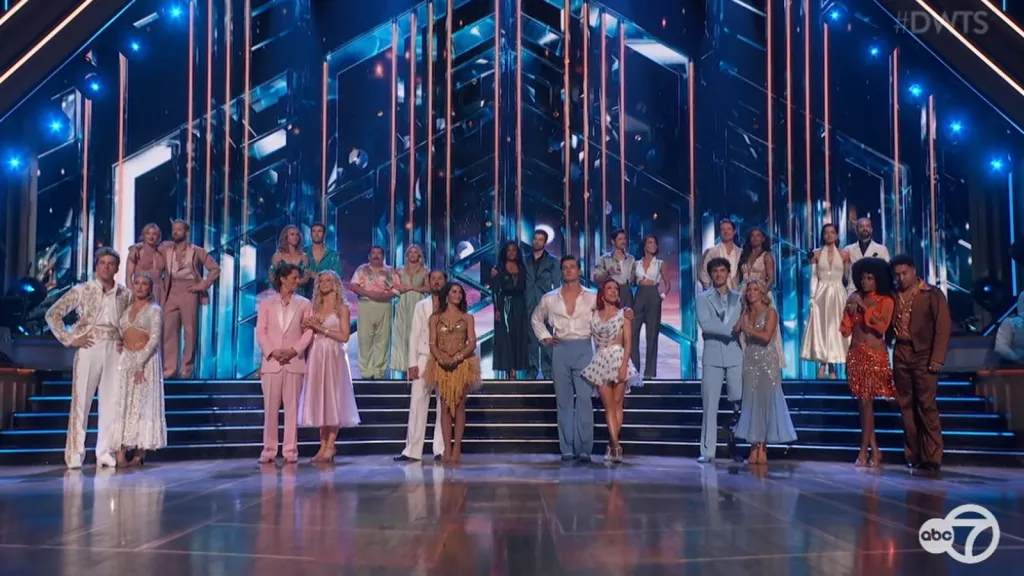
SPOILER ALERT! This post contains details from Tuesday night’s episode of Dancing with the Stars.
It’s another exciting night in the ballroom as 13 contestants are still eyeing the Len Goodman Mirrorball Trophy during Week 3 of Dancing with the Stars.
Last week, the judges reinforced just how tough they are going to be this season, once again declining to score anyone above a 7. Still, three couples — Jenna and Val, Ezra and Daniella, and Amber and Pasha — walked away tied for the top of the leaderboard with 21 points. We also said goodbye to Alan Bersten and chef Giada De Laurentiis.
Week 3 is Yacht Rock night, so the remaining couples are performing to hits from artists including Fleetwood Mac, The Doobie Brothers, and Luther Vandross.
Here is how the night went.
Olympian Amber Glenn with Pasha Pashkov danced a Foxtrot to “Hold the Line” by Toto. SCORE: 24
Actress Julia Stiles with Ezra Sosa danced a salsa to “I Can’t Go for That (No Can Do)” by Daryl Hall & John Oates. SCORE: 19
Late-night sidekick Guillermo Rodriguez with Whitney Carson danced a Foxtrot to “Escape (The Piña Colada Song)” by Rupert Holmes. SCORE: 15
Actress Tatyana Ali with Jan Ravnik performed a Quickstep to “Maneater” by Daryl Hall & John Oates. SCORE: 21
Actor Harry Shum Jr. with Jenna Johnson performed a jive to “You Make My Dreams Come True” by Daryl Hall & John Oates. SCORE: 24
Musician Taylor Hanson with Britt Stewart danced a Foxtrot to “What a Fool Believes” by The Doobie Brothers. SCORE: 18
Reality star Maura Higgins with Mark Ballas danced a Quickstep to “Turn Your Love Around” by George Benson. SCORE: 22
Reality star Ciara Miller with Brandon Armstrong performed a Cha Cha to “Never Too Much” by Luther Vandross. SCORE: 18
Savannah Bananas midfielder Jackson Olson with Emma Slater performed a paso doble to “Easy Lover” by Philip Bailey and Phil Collins. SCORE: 18
Comedian and podcaster Connor Wood with Rylee Arnold danced a Foxtrot to “Everywhere” by Fleetwood Mac. SCORE: 20
Actress Jenna Dewan with Val Chmerkovskiy danced a samba to “Africa” by Toto. SCORE: 21
Reality star Tyler Cameron with Sharna Burgess danced a jive to “Still the One” by Orleans. SCORE: 17
Paralympian Ezra Frech with Daniella Karagach danced a Foxtrot to “Just the Two of Us” by Grover Washington Jr. featuring Bill Withers. SCORE: 21
Who goes home?
The competition is now down to 12 as Taylor Hanson and Britt Stewart were sent home. Next week is all about Mariah Carey, so the couples will perform a variety of the pop superstar’s biggest hits.
>
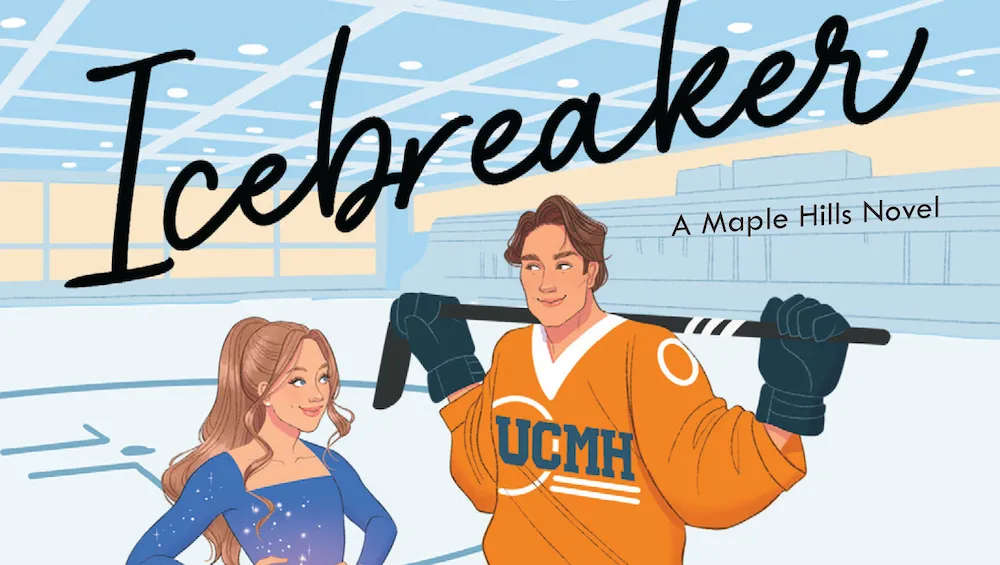
Another hockey book adaptation has entered the chat.
Netflix is currently building out its cast for the series adaptation of Hannah Grace’s Icebreaker book that kicks off the Maple Hill series. This in addition to their show The Sticks that is also currently in the works.
For everything we know about Netflix’s Icebreaker book adaptation so far, read on.
When will Netflix’s Icebreaker series adaptation come out?
A release date has not yet been set. The show has begun to assemble its cast.
Who will lead the Icebreaker show at Netflix?
Daisy Jelley (Poser, How To Have Sex) will portray Anastasia “Stassie” Allen, and Connor Simos (Subversion) will portray Nate Hawkins in the college hockey drama series.
Who else is in the cast of Netflix’s Icebreaker adaptation?
Gabriel Tierney (Rivals, Enola Holmes 2), Auliʻi Cravalho (Moana), newcomer and professional athlete Peter Berry, Chaneil Kular (Best of the Best, Sex Education), Devin Craig (Sex Lives of College Girls, Maize) and Aidan Shaw (We Were Liars, Heated Rivalry, Finding Her Edge) have joined the ensemble cast.
Tierney will play Aaron; Cravalho will portray Lola; Berry is Robbie; Kular will play JJ; Craig will portray Henry and Shaw is Russ.
What is Hannah Grace’s Icebreaker book about?
Stassie is a transfer athlete gunning for Olympic gold. Nate is the campus star chasing the NHL. When an accident forces their teams to share one rink, Anastasia Allen and Nate Hawkins collide—and discipline gives way to obsession, because the only thing more dangerous than wanting to win is wanting each other.
Who else is behind Netflix’s Icebreaker series?
Jade Halley Bartlett (Road House, Doctor Strange in the Multiverse of Madness, Miller’s Girl) created and executive produced the series. Amanda Lasher (Gossip Girl, The Bold Type, Togetherness) serves as showrunner, writer and excutive producer. Grace also executive produces along with Alex Cooper, Matt Kaplan and Mina Lefevre for Cooper’s Unwell Productions.
>
Is Carlos Baleba's return to fitness the key to kickstarting United's season?
Why Mikel Merino would be a better fit than Viktor Gyokeres if Arsenal need to fill a Kai Havertz-shaped hole

Uefa Nations League: How do smaller countries deal with extended international window?
-

 movies4 months ago
Search For Canadian TV Actor Stewart McLean Now Homicide Investigation
-

 Fashion9 years ago
These ’90s fashion trends are making a comeback in 2017
-
Fashion9 years ago
According to Dior Couture, this taboo fashion accessory is back
-
Fashion9 years ago
Model Jocelyn Chew’s Instagram is the best vacation you’ve ever had
-
Fashion9 years ago
Emily Ratajkowski channels back-to-school style
-
Fashion9 years ago
9 Celebrities who have spoken out about being photoshopped
-

 Anime4 months ago
Rurouni Kenshin: Hokkaido Arc Manga Takes 1-Issue Break – News
-

 Anime3 months ago
HIDIVE to Stream English Dubs for The World Is Dancing, The Forsaken Saintess and Her Foodie Roadtrip in Another World, The Dangers in My Heart: The Movie Anime – News