
‘Teenage Sex and Death at Camp Miasma’
Cannes Film Festival


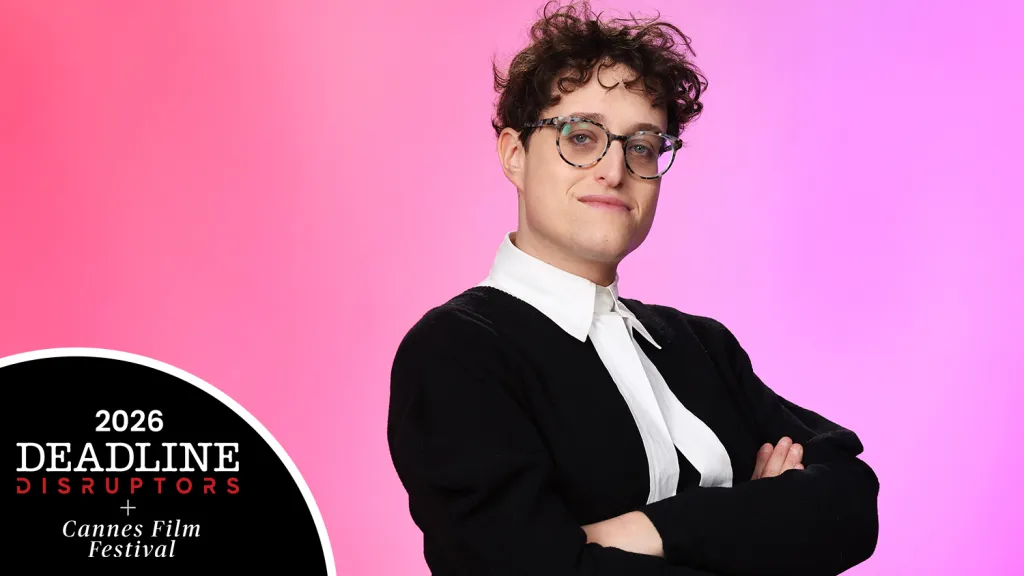
Jane Schoenbrun made a splash at Sundance in 2021 with We’re All Going to the World’s Fair, a creepy low-budget horror about a young girl drawn into a nihilistic and potentially deadly online game of dares. Next came I Saw the TV Glow, the trippy, neon-hued story of two young people who bond over the sudden cancellation of their favorite cult YA fantasy TV show.
Add two legit stars, a bit more money, and now you get Schoenbrun’s latest, Teenage Sex and Death at Camp Miasma, a bloody valentine to the golden age of video stores and irresponsible babysitters who watched VHS shockers with children far too young for The Evil Dead. Starring X-Files icon Gillian Anderson and Hacks star Hannah Einbinder, it’s a trippy genre mash-up that draws on David Lynch’s experiments in mood, the fleshy gore of David Cronenberg’s body horror and the ever-problematic trashy delights of ’70s/’80s slasher flicks.
For a time, Schoenbrun’s new film plays things relatively straight, eschewing the bright colors and black-light fluorescence of the non-binary director’s first two films. “On this one,” Schoenbrun says, “I felt that the thing that I really needed to do was something that was in a more classical and playful, kind of almost like a ‘golden era of cinema’ style. I remember feeling that it was very important to do that after I Saw the TV Glow, which had been this wail of a movie, a cry into the void. It had been this very earnest expression of pain and it had borrowed this very sensitive arthouse coming-of-age vernacular to express itself. Its gentleness was, to me, one of its graces and one of its defining qualities. But with this film, I remember being like, ‘It is very important in the very first scene of the movie that there’d be a huge f*cking geyser of blood.’”
‘Teenage Sex and Death at Camp Miasma’
Cannes Film Festival
The film stars Einbinder as a gay filmmaker tasked with resurrecting a “zombie IP” franchise about a masked killer that slaughters teenagers at summer camp. She has contacted the film’s original star (Gillian Anderson), who lives as a recluse in the disused location of the original film, and what starts as a simple request for a cameo becomes something much more dangerous and surreal as the two women become closer.
Though not everyone will jump on board, aficionados of the panoply of Nightmare on Halloween the 13th knock-offs – and the diminishing returns that followed – will know the references and get the affectionate, tongue-in-cheek humor. “It’s so fun to make a comedy,” says Schoenbrun. “The first two movies came from such a specific time in my life that, while I think they’re funny, the vibe at screenings tends to be like… You hear some sniffles, and you get a sense of people feeling emotionally exhausted. The relationship with the audience is so deeply important to me. My movies are a strange mix of commercial entertainment and more dense, academic, philosophical musing. But with this, I want people to feel like we’re hanging out. We’re sharing a joint on the porch and eating candy and talking about real things — which isn’t like an academic lecture. It’s like a conversation with a friend. And that’s really how I hope the movie feels.”
Nevertheless, the film does express some very complex ideas about the perverse pleasures of slasher movies and the titillating way they show the killer’s point of view but still yet expect audiences to identify with the victims (a paradox the director compares to “having your cake and eating it”). “At least so far in my movies, it’s really felt so much more interesting for the horror to be more internal,” says Schoenbrun. “And therein lies, I think, the thing that’s so alluring. It’s what I hope – as a trans and queer filmmaker – to be doing, which isn’t like, ‘Look at my identity. Aren’t trans people human beings too?’ My whole career I’ve been trying to push back against an idea of shallow representation or art that can simplify human experience into an identitarian package. To me, queerness is all about looking inwards and being as truthful as possible about not just what’s inside me, but what’s inside the society that surrounds me.”
Opening the Un Certain Regard strand at this year’s Cannes Film Festival, then, is a big step up from Sundance, and Schoenbrun is well aware of that. “For years before I started making my own films,” they say, “I worked in indie film and saw so many filmmakers who had really distinctive voices get their voices watered down by a commercial industry that I think is very scared of individual authorship. It’s why I made my first film for, like, $50 instead of trying to raise a bunch of money. It was very important to me from the beginning to not water down or compromise the individuality of what felt true to me as an artist. And the fact that I’ve been able to build to bigger and bigger levels of cultural platform without compromising is no small feat.”
DEADLINE: Teenage Sex and Death at Camp Miasma is such a great title. Which came first, the title or the film?
JANE SCHOENBRUN: This time the title came first. I think I was just finishing I Saw the TV Glow, maybe even finishing the writing of I Saw the TV Glow. It was years ago. I remember, I was sitting on my couch and those words popped into my head. I had no idea what they were, but it was there from the very, very beginning and almost the film organized itself around the title.
DEADLINE: How quickly do you work? Did you finish We’re All Going to the World’s Fair then go straight on to I Saw the TV Glow from scratch?
SCHOENBRUN: It’s funny. I think that in every case so far, the sprout of the idea is old. It’s been there for a very, very, very long time, but it’s pretty abstract. It’s not a movie yet. In the case of TV Glow, it was the idea of two kids being haunted by a TV show, and the trauma of the way it ended almost feeling like real life. That’s an idea that stuck in my brain, but that’s not a movie. So, the process that’s happened each time has been a matter of having something wedged in there, be it a core idea or an image or even – in the case of Teenage Sex and Death at Camp Miasma – just a title.
And then it’s about two years of just thinking, which is really fun. It doesn’t feel like work. It feels like investigation. It’s a lot of reading. I read a lot of theory, think a lot about the mysteries that I’m exploring in my own life and how they might relate to what the movie is slowly becoming. And it’s really only at the end of those two years – probably in the last couple of months of the development process – that it’s anything resembling a story, with structure and characters. Which isn’t to say that that’s an afterthought. It’s more like I need to build the intellectual and emotional foundation of what I want to be trying to articulate before I can find the simplest and best narrative structure through which to do that work.
DEADLINE: The title sequence is very impressive. It could have been a short film in itself, giving the whole trajectory of the Camp Miasma movies. You really dig deep into the whole concept of slasher franchises — how they rise, fall, reboot then rinse and repeat.
SCHOENBRUN: Well, that was just pure childhood. I was a fifth grader hanging around in the horror section at the local video store, obsessively renting and watching and just dreaming. That opening credit sequence really felt to me like a return to childhood, almost. I loved Halloween as a kid more than anything. The idea of getting to go to the Halloween store, or getting to go to a haunted house, or just swim in scary iconography, that will always be associated with childhood for me. And so, it wasn’t so much a research process as much as it was a return to the things that, as a kid, powered me.
But, certainly, we did a ton of digging through archives and fan websites. With Nightmare on Elm Street, and Friday the 13th and Halloween, we’re now over 40 years on, and it’s not just movies any more, it’s merchandise too — the capitalist machines have been pumping out T-shirts and pinball machines and bad video games. It’s endless, and it’s so much of the fun of it. The movies are one thing, but the way that you can really just live and swim in all of that ephemera is so joyful to me. Yeah, it’s very much the case that the movie is about play and about learning how to re-access some kind of childhood joy.
That opening sequence I’m so proud of. It was in the script and it was something that I knew would be a lot of fun, but the actual experience of making it all was probably one of the best creative collaborations I’ve ever had. I was working with my same team from TV Glow in a lot of our core creative positions, and it was maybe three weeks before the start of production. We knew we needed to be exhaustive [in the detail], not just in terms of, “What kind of film is the audience going to see?” but “What’s the tagline for Camp Miasma Part 7?” We just kind of like sequestered ourselves in a room, jury-duty style, and spent an entire day brainstorming together. Then watching it all then get made and become real really expanded my idea of what my team is capable of doing with me. It was a fun scavenger hunt that we made for ourselves.
DEADLINE: Is that where you came up with the tagline you use in the movie?
SCHOENBRUN: [Laughs.] Yeah. It was all in the script: “If it gets too real, you can always turn it off.” It refers to the way the movie is enjoying having its cake and eating it too, which is kind of like a nod to consent, which the movie is very much about. Watching a horror movie is obviously different than being actually stalked by a psycho killer, in that you do have the agency to turn it off. And it’s the same in queer sex. Maybe you’re exploring a fantasy, and that fantasy touches on some pretty raw and scary elements, but you’re doing it in a safe way with somebody who you trust outside of the domain of that fantasy space you’re entering. “If it gets too real now, you can turn it off…” That felt like a really beautiful way to talk about that central metaphor of the film: If sex for you is both scary and alluring, how do you form a relationship with it where it can feel safe?
DEADLINE: We’ll come back to the subtext later. The reconstruction of the original Camp Miasma movie is so incredibly well done: The moody low angles, the grain of the film stock, the earthy color palette… Did you study those films, or was that your technical team?
SCHOENBRUN: Oh, we all studied them. I make a giant 800-page reference image guide that was broken down by subject. Sometimes it would be as specific as, “Here’s a section just on old strength-tester machines.” There was a flesh section, and then a fluid section. The fluid section had all the beheadings and dismemberments that you could ask for from those classic ’80s slashers, whereas the flesh section — in keeping with this strange melt-merging of genres that I’m doing with the film — was much more like sensuous imagery from films like Ang Lee’s Lust, Caution or the Wachowskis’ Bound.
After that, it’s just a matter of working with other artists who can bring that to life. In this case, that’s Eric Yue, my cinematographer; Brandon Tonner-Connolly, my production designer; and my colorist, Mikey Rossiter, who’s a frequent collaborator. He likes to brag that he’s the best in the business of purposefully making something look like sh*t! But it’s coming from a place of genuine love. We’re not being like, “Let’s do a cheesy parody,” or doing a sly, winking, modern nod to how we think of the slasher film. We’re really thinking about how it felt like as a kid to watch those things. To me, that’s always the recipe. There has to be love involved in that. It can’t just be like, “Oh, remember how cheesy these things were?” It has to be like, “Remember how awe-inspiring it felt when you were 11 years old watching A Nightmare on Elm Street 3?
Justice Smith in ‘I Saw the TV Glow’
A24 / Courtesy Everett Collection
DEADLINE: Your films always seem to involve people having a physical relationship with things that are intangible. The characters become one with the things they’re obsessed with, and then reality and fantasy merge to become a very real entity all of its own. Why does that interest you?
SCHOENBRUN: I think it’s probably something to do with that process I was talking about earlier, where the thing that’s driving the development of the project is a lot of internal work. It’s a lot of reading and thinking and exploring a mystery, and not just a mystery that’s outside of me. It’s like, “I want to investigate this thing in the world that I am also a part of.” In this case, this film came from working through a ton of sexual trauma in the early stages of post-transition and learning, after years and years of it feeling completely inaccessible, how to feel good and comfortable in a body that actually felt like my own, after years of internalized transphobia, dysphoria, et cetera.
It feels like fuel to look inside myself, or have the characters in the movie looking inside themselves rather than outside themselves. When I was on the TV Glow press tour, I remember talking a lot about how I think that in a lot of horror movies, the scary thing – or the thing that is driving the tension of the film – is exterior. The killer chasing you through the woods. That kind of movie invests a lot of its narrative energy on the thing that’s coming at you rather than coming from you. And, at least so far in my movies, it’s really felt much more interesting to me for the horror to be more ephemeral and internal, and the same goes for the beauty. Therein lies, I think, the thing that’s so alluring.
DEADLINE: It’s very trippy in terms of Hannah’s character, who identifies with both the victim and the killer. There’s sort of a Möbius strip of logic there. It’s really fascinating, and quite provocative.
SCHOENBRUN: Thank you. Yeah, but it’s certainly not without precedent. In college, I remember reading Men, Women, and Chainsaws [by Carol J. Clover, 1992], which is a seminal bit of slasher gender theory about the pretty obvious weird Freudian shit we’re reading into those movies, where there’s the masculine killer chasing the scantily clad victim, and then you have “The Final Girl”, who can kind of be both at the same time. There’s a phrase in the movie, that I put in there, that I think sums it up in three words: “Strange mating ritual.” There’s clearly something intoxicating, culturally, in all of that iconography: the killer, the victim, and the shower curtain in between them, so to speak.
I’m trying to remake a lot of that imagery in a new way, not so much to be like, “Let’s wag our finger at it,” or talk about how problematic it is, but to be like, “Clearly there’s something in these movies that is libidinal, that we keep returning to.” Clearly it’s some way for us – through mimesis – to have an experience that’s cathartic. At the same time, when you go back and watch those movies from the ’80s, it can feel a little too misogynistic.
DEADLINE: How did you get Hannah and Gillian involved? Were they ever scared of the material or is that why they joined up?
SCHOENBRUN: I think it’s why they joined up. I think Hannah came first. Hannah, I think reached out, had heard that I was working on the follow-up to TV Glow and read the script, and I think she very immediately knew it had to be her. And I think she was right. We had a few calls and then we became incredibly close through the development and making of the film. In an uncanny way, even though I didn’t have her in mind when I wrote the role, once I saw it, I couldn’t unsee it. I was like, “Oh my God, it was written for Hannah.”
She would talk on set about how it was her first time playing a character that wasn’t her character on Hacks, that wasn’t Ava, and her first time going outside the comfort zone of a character that, I think, is largely based on herself. She does some really intense capital-A acting in this movie. I found her just tapping into wellsprings of emotion in some of the movie’s more intense scenes, and she was able to go to places where I was pretty awed. I mean, I knew that she was perfect going in, in terms of her aura and her personality and her voice. But I think what shocked me about working with Hannah was seeing what a sponge she is — her ability to empathetically access experience that she can relate to. She’s just a great f*cking actor. She’s a movie star. The emotional commitment that she was able to bring to that character was stunning.
And Gillian. [Pauses.] I did think about Gillian while writing the script. I was thinking about childhood sex symbols, and for so many of my friends, their coming of age was about Dana Scully. Growing up, I was a huge X-Files obsessive from third grade on. It was my life. And so, meeting her… [Laughs.] It felt like I was meeting a parent who had raised me, but who I hadn’t ever actually interacted with somehow. It was very surreal and both comforting and disorienting. She’s also just an incredibly committed and serious actor. Again, capital A. It doesn’t surprise me that she’s been very reticent to do genre film in a post X-Files world, because she is classical and rigorous in her process.
She’s so controlled in the way that she acts. And I think one of the really fun things – and perhaps for her even scary things in this movie – was me asking something of her that was going to push her a little outside of a comfort zone, perhaps. To me, it’s such an amazing and unique and singular performance. Though her character is larger than life, and there’s obviously so much camp that she’s bringing to the role on purpose, there’s also this core of the performance that’s so vulnerable and pained and personal, in a way.
‘We’re All Going to the World’s Fair’
Sundance Film Festival
DEADLINE: Do you know what you’re going to be doing next?
SCHOENBRUN: Well, I have a novel. I wrote a 600-page fantasy epic that I’m quite proud of, that I think is kind of like my opus to date, perhaps. And that will come out in late October. It’s called Public Access Afterworld. And yeah, I have a loose idea for the next film. It’s called The Dream Factory, and it’s my take on a ’90s cyberpunk thriller. The other thing I’ve got is a Netflix adaptation of a graphic novel, Black Hole [by Charles Burns], which is a really seminal graphic novel about these kids giving each other STDs that turn them into monsters. But really it’s just sad and weird and, like all of my work, about not quite feeling like yourself, but trying to. About the place where horror meets romance. That I’m doing as a TV show for Netflix.
[Pauses.] Perhaps as you can tell from my last film, TV is something that’s very, very important to me. Very much like how I didn’t grow up watching Bergman films, I grew up watching Buffy. And the idea of like making classic television in the style that I grew up so in love with has always been a white whale for me. And so that project, I’m really trying to put my whole heart into. It’s not just like, “Oh, I’ll direct the pilot.” It’s, “I’m going to write it all,” and try to really make something bold and expansive and much bigger than I’ve been able to commandeer to date.”
DEADLINE: Sounds like you’re living the dream!
SCHOENBRUN: I’m working hard. I work hard. I live in upstate New York in a little two-bedroom with my best friend and hang out with queer people and farmers. And alongside all of the work and trying to negotiate getting to do cool shit in Hollywood. It’s very, very important to me to keep that as just one part of who I am. So, I’m also just trying to get stoned and chill out with my loved ones, yeah. In that sense, I am living the dream, yes!
DEADLINE: Have you had any overtures from Hollywood? Does Hollywood even exist anymore in the old sense of the word?
SCHOENBRUN: [Laughs.] I mean, certainly Hollywood exists. But I think they know better than to offer me the G.I. Joe movie or whatever. But I deal with Hollywood every day. I mean, that’s obviously a theme in Camp Miasma, right? I think that you can see in this new movie some of the tensions of being the one trans person who actually gets money to make things in Hollywood spilling onto the screen a bit. There will always be something that’s [codependent] — like, we both need each other, but it’s inherently oppositional, between the art side and the commerce side.
Most people who deal with Hollywood as “artists” have learned to temper their artistic side a bit towards the sake of feeding the machine, feeding what it asks of you. And I’m a weird case, both because I’m like a trans person in rooms where there aren’t many trans people, but also because I both want to be making things that are culturally “pop”, let’s say — things that aren’t just speaking to a small academic audience. I want to make things that are reaching the population. But I think there is an inherent conflict in working with the forces of commerce that I navigate. [Laughs.] Probably to the detriment of my mental health…
>
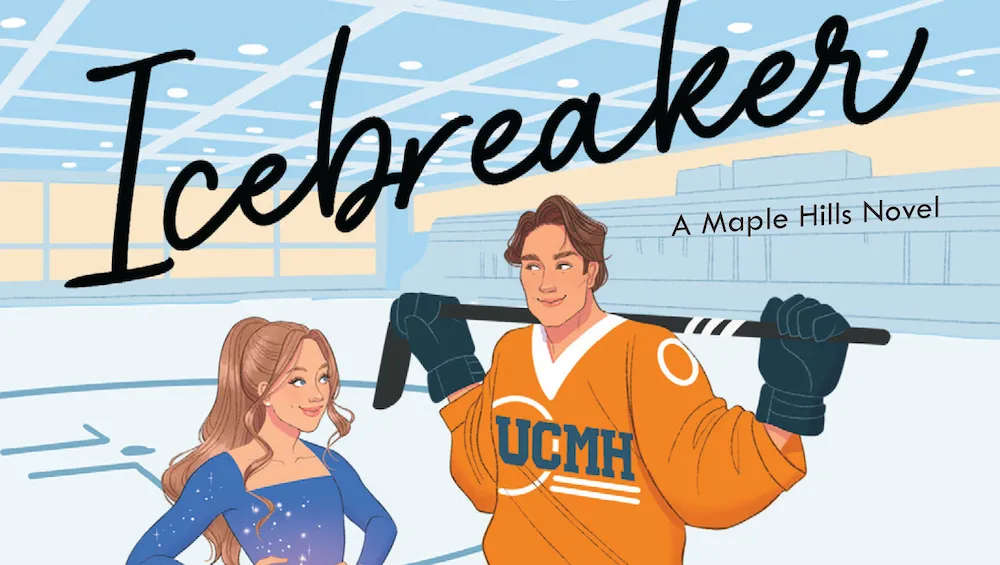
Another hockey book adaptation has entered the chat.
Netflix is currently building out its cast for the series adaptation of Hannah Grace’s Icebreaker book that kicks off the Maple Hill series. This in addition to their show The Sticks that is also currently in the works.
For everything we know about Netflix’s Icebreaker book adaptation so far, read on.
When will Netflix’s Icebreaker series adaptation come out?
A release date has not yet been set. The show has begun to assemble its cast.
Who will lead the Icebreaker show at Netflix?
Daisy Jelley (Poser, How To Have Sex) will portray Anastasia “Stassie” Allen, and Connor Simos (Subversion) will portray Nate Hawkins in the college hockey drama series.
Who else is in the cast of Netflix’s Icebreaker adaptation?
Gabriel Tierney (Rivals, Enola Holmes 2), Auliʻi Cravalho (Moana), newcomer and professional athlete Peter Berry, Chaneil Kular (Best of the Best, Sex Education), Devin Craig (Sex Lives of College Girls, Maize) and Aidan Shaw (We Were Liars, Heated Rivalry, Finding Her Edge) have joined the ensemble cast.
Tierney will play Aaron; Cravalho will portray Lola; Berry is Robbie; Kular will play JJ; Craig will portray Henry and Shaw is Russ.
What is Hannah Grace’s Icebreaker book about?
Stassie is a transfer athlete gunning for Olympic gold. Nate is the campus star chasing the NHL. When an accident forces their teams to share one rink, Anastasia Allen and Nate Hawkins collide—and discipline gives way to obsession, because the only thing more dangerous than wanting to win is wanting each other.
Who else is behind Netflix’s Icebreaker series?
Jade Halley Bartlett (Road House, Doctor Strange in the Multiverse of Madness, Miller’s Girl) created and executive produced the series. Amanda Lasher (Gossip Girl, The Bold Type, Togetherness) serves as showrunner, writer and excutive producer. Grace also executive produces along with Alex Cooper, Matt Kaplan and Mina Lefevre for Cooper’s Unwell Productions.
>
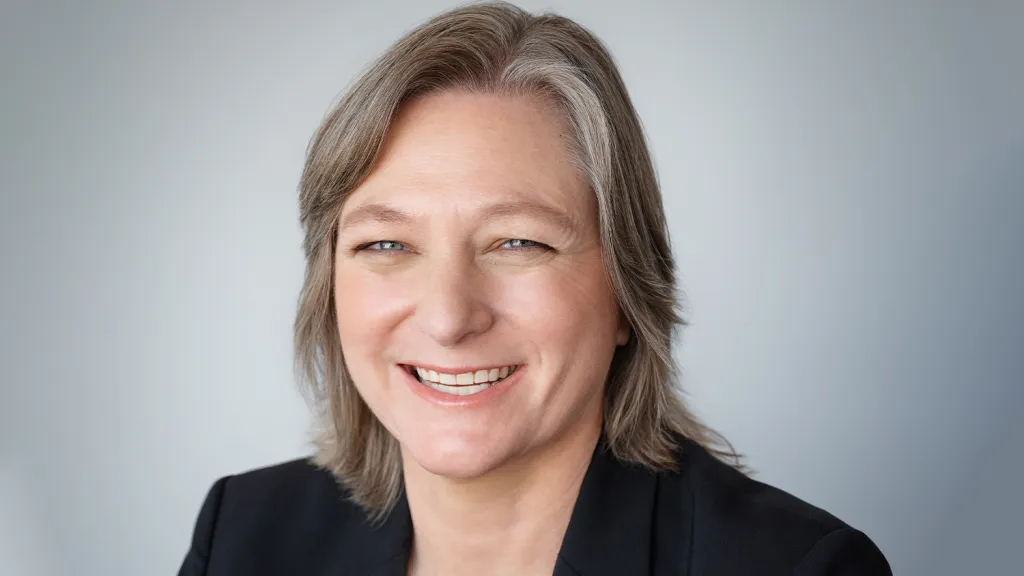
One of the biggest executive questions about Paramount following its pending acquisition of Warner Bros. Discovery — who will lead streaming — may have been answered.
Cindy Holland is leaving Paramount where she was Chairman of Direct-To-Consumer since the Skydance-Paramount merger having served as an advisor to Skydance CEO David Ellison prior to that. She announced her departure in a company memo, which you can read below.
The move leaves HBO’s Casey Bloys as the likely streaming head of the combined Paramount-WBD.
“Cindy is one of the most exceptional executives in our industry — a force of nature whose impact on Paramount over the past year has been significant,” Paramount CEO David Ellison said. “Under her leadership, P+ reached new heights, Pluto TV underwent its most significant transformation in a decade, and we strengthened our content and sports portfolio – all while the business exceeded the ambitious goals we set. Just as importantly, she built an exceptional team and a strong foundation for the future. Cindy has been a trusted partner to me and so many others, and I couldn’t be more grateful for her leadership, her relentless drive and everything she’s done for our company.”
Here is Holland’s memo:
When I joined David’s team in January 2025, we proceeded to set three goals: i) advise on the Warner Bros. Discovery acquisition, ii) integrate and transform Paramount+ & revive Pluto TV, and iii) build an unparalleled team in this industry. In just over 12 months, I’m proud to say we accomplished all three and it’s been a joy to work closely with all of you.
Together with the Product team, we drove significant strategic and organizational change across DTC — building a new foundation for growth on both services, while investing in greater depth and breadth of programming and delivering strong revenue, profit, and subscriber growth for the division.
As David readies for the next phase of his vision, we’ve discussed my role and the future of the combined businesses. David is optimizing for HBO stability as we move into this next chapter, and I fully support that. I know this team has the leadership and expertise to manage through the transition and the next phase of the company, and to this end today will mark my last day here.
As I reflect on my time here and all that we’ve built together in this short time, what stands out most to me is this team. I have never been more proud of a group of people. What we’ve accomplished together is remarkable — landing quarter after quarter while navigating extraordinary uncertainty and change with resilience, focus and ambition. We grew Paramount+ to an all-time subscriber high, delivered the best retention in the service’s history, and drove double-digit growth in both engagement and revenue. We built an extraordinary content pipeline, greenlighting more than 40 new and returning series and setting all-time records with Landman, the most-watched series in Paramount+ history, and Dutton Ranch, the service’s biggest original series debut ever. We transformed live sports into a powerful streaming growth engine, securing landmark agreements with UFC and Zuffa Boxing and expanding our WNBA and UEFA Champions League rights – with UFC Freedom 250 becoming the largest-ever audience for an exclusive live event on Paramount+ and UFC 329 setting a new platform record for peak concurrent streams for an exclusive live event. And we undertook Pluto TV’s biggest product transformation in a decade, dramatically increasing registered viewing and VOD consumption while delivering strong financial performance across the business. These are extraordinary accomplishments – but what makes me proudest is how we achieved them: together, with an unwavering commitment to our audiences, our creative partners and one another.
I joined Paramount because I believe in these businesses, and because I believe wholeheartedly that the combination of Paramount and Warner Bros. Discovery serves the best interests of artists and audiences worldwide. I’m looking forward to seeing what you all accomplish together in this next, momentous chapter.
Cindy
>
While President Trump was holding a press conference at the White House this morning and extolling the AI-related work of Meta’s Mark Zuckerberg, Nvidia CEO Jensen Huang, Anthropic’s Dario Amodei and SpaceX’s Elon Musk, a promo for tomorrow night’s South Park episode dropped. It was less salutary.
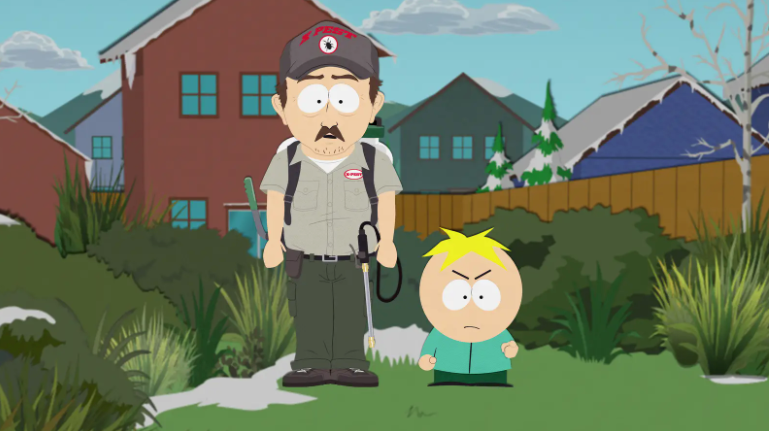
Here’s the logline for Episode 6 of Season 29: “Butters is unhappy with the data centers that the billionaires are building in our backyards.”
The clip opens with an X-Pest exterminator guy ringing the doorbell at Butters’ home.
“I understand you’ve got some billionaires in your back yard,” he says.
“Yeah, there’s more of these stupid billionaires every day!” replies Butters.
The first image from the episode (see it above) shows Butters in what appears to be his back yard with the X-Pest exterminator guy, who has strapped on his tank of poison and has his sprayer wand at the ready.
The topic of data centers is a hot one across the country and especially in Hollywood, where unions and workers worry about job displacement and writers and directors express concern over what it might do to their art.
Among the biggest players in the data center land rush is, of course, Oracle CEO and Paramount-WBD deal financier Larry Ellison. South Park airs on Comedy Central, which is owned by Paramount. As in the past, the show’s creators are seemingly not afraid to bite the hand that feeds them.
Mark Ruffalo and others have decried the introduction of “really profoundly scary technology” into Hollywood and how AI might impact media outlets soon to be owned by Ellison and his son David.
“Larry is a classic Oligarch,” wrote Ruffalo. “They are crushing workers and consolidating the wealth of the world for their own power and concentrated dominance.”
Paramount, for its part, responded by accusing Ruffalo of using “antisemitic tropes” in his argument, especially when linking the Ellisons’ studio acquisition to Oracle’s work with the Israeli military.
>


Search For Canadian TV Actor Stewart McLean Now Homicide Investigation


These ’90s fashion trends are making a comeback in 2017
According to Dior Couture, this taboo fashion accessory is back
Model Jocelyn Chew’s Instagram is the best vacation you’ve ever had
Emily Ratajkowski channels back-to-school style
9 Celebrities who have spoken out about being photoshopped


Rurouni Kenshin: Hokkaido Arc Manga Takes 1-Issue Break – News


HIDIVE to Stream English Dubs for The World Is Dancing, The Forsaken Saintess and Her Foodie Roadtrip in Another World, The Dangers in My Heart: The Movie Anime – News