
Pierre Salvadori
Guy Ferrandis


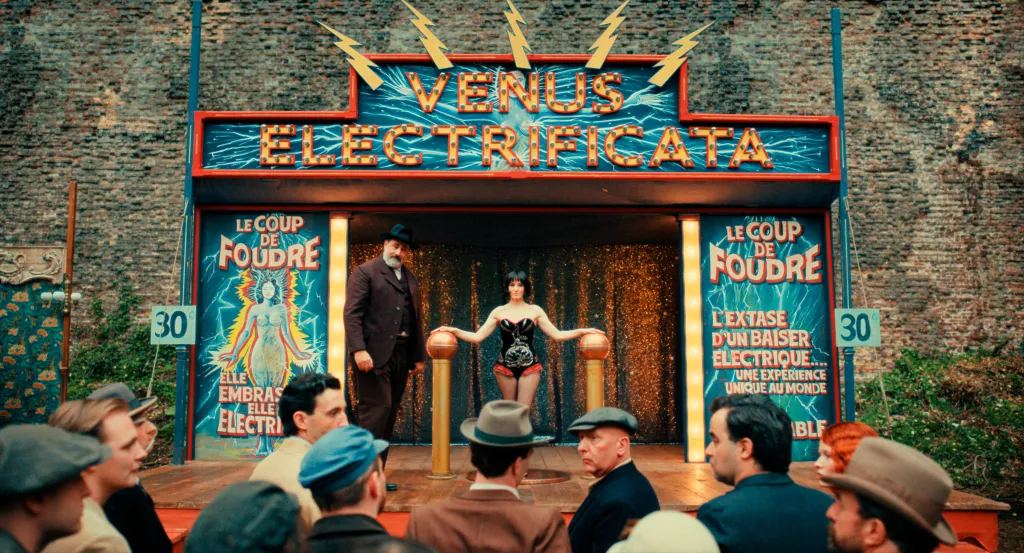
Pierre Salvadori opens the 79th Cannes Film Festival this evening with Roaring Twenties Paris art world-set romantic tragicomedy The Electric Kiss starring Pio Marmaï, Anaïs Demoustier, Vimala Pons and Gilles Lellouche.
Taking time out of the mixing room to talk to Deadline just days before the premiere, the French director admits to feeling a mixture of elation and terror as he gears up for his first time in Official Selection across a 30-year career.
“It’s funny because there was talk of the film being in competition but for me, it isn’t a competition film and I didn’t want to be in competition,” says Salvadori.
He suggests other works in his filmography – such as The Apprentices (1995), with Marie Trintignant, François Cluzet and Guillaume Depardieu; or the Berlinale-selected In The Courtyard starring Catherine Deneuve (2014) and The Trouble With You (En Liberté!), which screened in Directors’ Fortnight in 2018 – would have been better suited as Palme d’Or contenders.
“This is a film for a party, a celebration… it’s a film that talks about my love for cinema… we said we wanted the opening slot but had no idea if it would happen… so to be presenting the film in that immense theater is a gift, something that has not happened to me across the 30 years of my career… it’s a joy accompanied by an immense terror and fear, that will only come to an end at 10.30pm,” he says.
Set in Roaring Twenties Paris, or Les Années Folles, as the city emerges as a major modern art market, The Electric Kiss weaves a bittersweet tale of love and betrayal and finding love in unexpected places.
Demoustier stars as a penniless young woman called Suzanne working on the ‘Venus Electrificata’ sideshow of a traveling fair meting out electrifying kisses to unsuspecting paying bystanders, while secretly being charged with electricity.
Taking her cue from the fayre’s resident clairvoyant, Suzanne hits on a moneymaking scheme in which she convinces grieving artist Antoine (Marmaï) that she has psychic powers and is capable of connecting him with dead wife Irène (Pons). Her ruse wins the approval of his art dealer and friend Armand (Lellouche) who is desperate to get his most lucrative artist back at work.
Pierre Salvadori
Guy Ferrandis
Occasional actor Salvadori recounts how the film’s premise grew out of a backstory given to him by director Rebecca Zlotowski for his character in her 2019 film The Summoning (Planetarium), starring Natalie Portman and Lily-Rose Depp.
“I was playing a director shooting a film in 1938, before the war. In the screenplay the description for the film I was directing was very vague… Rebecca kept asking me to improvise scenes where I was directing on set. At a certain point, she said, ‘Pierre, if that can help you, I can give you some background on the screenplay for the film your directing,” recalls Salvadori.
“She told me it was the story of a young woman, a fake psychic, who makes a young man believe she can put him in contact with his deceased wife, and in the process falls in love with him.”
Salvadori immediately fell in love with the storyline, which stayed in the back of his mind, with the director then deciding to revive the idea after his penultimate film The Trouble With You. In between times, he has also directed episodes of the French version of In Therapy as well as the children’s adventure tale The Little Gang.
“I loved the paradox of someone manipulating someone but at the same time falling in love with that person as they steal from them,” he says, suggesting the plot has hints of Trouble in Paradise, the 1932 classic by Ernst Lubitsch.
Zlotowski did not want payment for the idea, but Salvadori has put her and The Summoning co-writer Robin Campillo in the credits. “Rebecca said, ‘Ideas belong to those who take them on’,” he recounts.
The decision to set The Electric Kiss in 1928 is tied to the craze for Spiritualism in Europe and the U.S. at that time, when the belief that it was possible to connect with the people in the afterlife sparked a vogue for seances and other psychic experiences.
“It needed to be set in that era, otherwise my character would come across as too gullible, almost naive, bordering on stupid,” he says. “There was a great deal of curiosity about everything related to the afterlife and spiritualism at that time. It was considered intelligent and open-minded to be interested in those things.”
He points to the fact that figures such as Thomas Edison even embraced the craze, with the electric power-pioneer inventing a machine to speak to people in the afterlife.
The Electric Kiss is Salvadori’s 10th theatrical feature in a filmography dominated by comedies and romantic comedies. He winces on being read a French media resumé of his work as being characterised by “the search for happiness” and “broad audience appeal”.
“It almost hurts,” he says, suggesting there’s a tendency to regard comedies as a “cynical” ploy to appeal to as wide as audience as possible,
The director says his filmmaking is steeped in a love of strong mise-en-scene and a desire to explore the dynamics of human relationships, with the happy outcome element of the story never its main driver.
“I liked going to the movies as a kid, but I didn’t love cinema…. the first filmmaker who liberated me and broadened my horizons was Lubitsch. It was after seeing Heaven Can Wait that I suddenly understood what directing was, what it was all about,” he explains.
“I understood that ultimately, it was the formalists who interested me, as well fiction and the mise-en-scène, and how fundamentally the same story filmed by someone else, would have been a different film.
“initially, the first filmmakers who fascinated me starting with Lubitsch, were Howard Hawks, Mitchell Leisen, Gregory La Cava, filmmakers who have a very powerful, very assertive, very strong style, who use all the tools of cinema, and very often are also genre filmmakers, because then there’s [Raoul] Walsh, people,” he continues, referring to the The Big Trail (1930), The Roaring Twenties (1939), High Sierra (1941) director.
“Directors who work with genre, but with a very strong point of view. That’s what interests me enormously. I’m not at all a naturalist filmmaker or a filmmaker obsessed with any form of realism. But fiction interests me, and the way it’s shaped interests me.”
“I don’t like films with a strong message. I like it when there is a fictional narrative, and the friction between the characters stirs things up and themes come to the surface. I didn’t say, ‘I’m going to make a film about the relationship between art and money,’ or ‘I’m going to make a film about self-interest,’ but these are things that surface in film through the somewhat complex, interesting characters.”
The Electric Kiss
Les Films Pelléas
The Electric Kiss reunites Salvadori with Marmaï, after collaborations on In The Courtyard and The Trouble with You, and marks his first time working with Demoustier.
“I met Anaïs on a jury and we had quite a few conversations about cinema. I was struck by her quickness, her intelligence, her mischievousness. There was something about her that I really liked,” he says.
“At the same time, I knew she was a very technically skilled as actress, capable of both control and abandon. The dialogue is very scripted, and I needed someone who could bring that to life, with a certain rhythm and musicality. When I made In the Courtyard with Catherine Deneuve, Catherine was also very musical, like Anaïs. They have a certain expressiveness, a certain way of breaking the silence.”
The feature also reunites Salvadori with producer Philippe Martin with the director revealing that Lellouche’s character of art dealer Armand is inspired his long-time collaborator, and their producer-director dynamic over 30 years of working together.
The pair first met in their early 20s, just as Martin was on the cusp of getting his company Les Films Pelléas off the ground.
“I had written my first film, Wild Target… He said to me, ‘I’m going to become a producer, and then I’ll produce your film’. I was like sure, thanks, goodbye. I was working in the theater at the time. Philippe never had any money. I was always withdrawing money for him. I was like, how is this guy going to be my producer?. ”
Martin did manage to set up his own company and came back to Salvadori, producing his first short Ménage and Wild Target.
“He’s the one who told me I had to direct the film. At the time, I wanted to act in it,” says Salvadori.
He laughs, that like Armand with Antoine in The Electric Kiss, Martin is at once looking out for him and keen for him to keep the screenplays and features coming in
“There has always been this dimension of friendship and work, and sometimes a lot of tension about how to produce a film and to succeed in making it; a lot of arguments about what a film should be. There’s this unbreakable friendship, almost a brotherhood, and then this other dimension of our relationship around making a film work together, which can be very chaotic and difficult.”
>
SPOILER ALERT! This post contains details from Tuesday night’s episode of Dancing with the Stars.
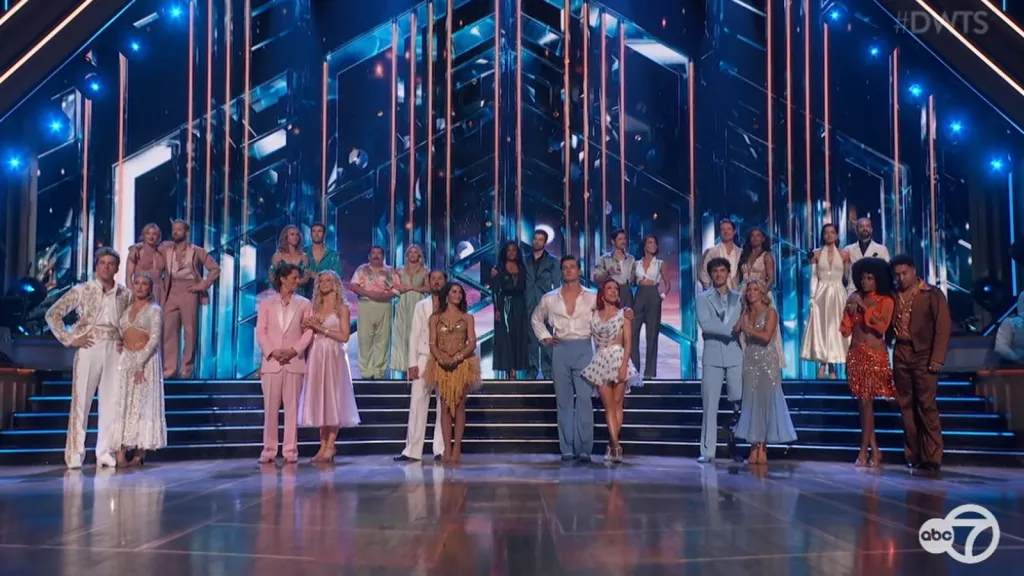
It’s another exciting night in the ballroom as 13 contestants are still eyeing the Len Goodman Mirrorball Trophy during Week 3 of Dancing with the Stars.
Last week, the judges reinforced just how tough they are going to be this season, once again declining to score anyone above a 7. Still, three couples — Jenna and Val, Ezra and Daniella, and Amber and Pasha — walked away tied for the top of the leaderboard with 21 points. We also said goodbye to Alan Bersten and chef Giada De Laurentiis.
Week 3 is Yacht Rock night, so the remaining couples are performing to hits from artists including Fleetwood Mac, The Doobie Brothers, and Luther Vandross.
Here is how the night went.
Olympian Amber Glenn with Pasha Pashkov danced a Foxtrot to “Hold the Line” by Toto. SCORE: 24
Actress Julia Stiles with Ezra Sosa danced a salsa to “I Can’t Go for That (No Can Do)” by Daryl Hall & John Oates. SCORE: 19
Late-night sidekick Guillermo Rodriguez with Whitney Carson danced a Foxtrot to “Escape (The Piña Colada Song)” by Rupert Holmes. SCORE: 15
Actress Tatyana Ali with Jan Ravnik performed a Quickstep to “Maneater” by Daryl Hall & John Oates. SCORE: 21
Actor Harry Shum Jr. with Jenna Johnson performed a jive to “You Make My Dreams Come True” by Daryl Hall & John Oates. SCORE: 24
Musician Taylor Hanson with Britt Stewart danced a Foxtrot to “What a Fool Believes” by The Doobie Brothers. SCORE: 18
Reality star Maura Higgins with Mark Ballas danced a Quickstep to “Turn Your Love Around” by George Benson. SCORE: 22
Reality star Ciara Miller with Brandon Armstrong performed a Cha Cha to “Never Too Much” by Luther Vandross. SCORE: 18
Savannah Bananas midfielder Jackson Olson with Emma Slater performed a paso doble to “Easy Lover” by Philip Bailey and Phil Collins. SCORE: 18
Comedian and podcaster Connor Wood with Rylee Arnold danced a Foxtrot to “Everywhere” by Fleetwood Mac. SCORE: 20
Actress Jenna Dewan with Val Chmerkovskiy danced a samba to “Africa” by Toto. SCORE: 21
Reality star Tyler Cameron with Sharna Burgess danced a jive to “Still the One” by Orleans. SCORE: 17
Paralympian Ezra Frech with Daniella Karagach danced a Foxtrot to “Just the Two of Us” by Grover Washington Jr. featuring Bill Withers. SCORE: 21
Who goes home?
The competition is now down to 12 as Taylor Hanson and Britt Stewart were sent home. Next week is all about Mariah Carey, so the couples will perform a variety of the pop superstar’s biggest hits.
>
Another hockey book adaptation has entered the chat.
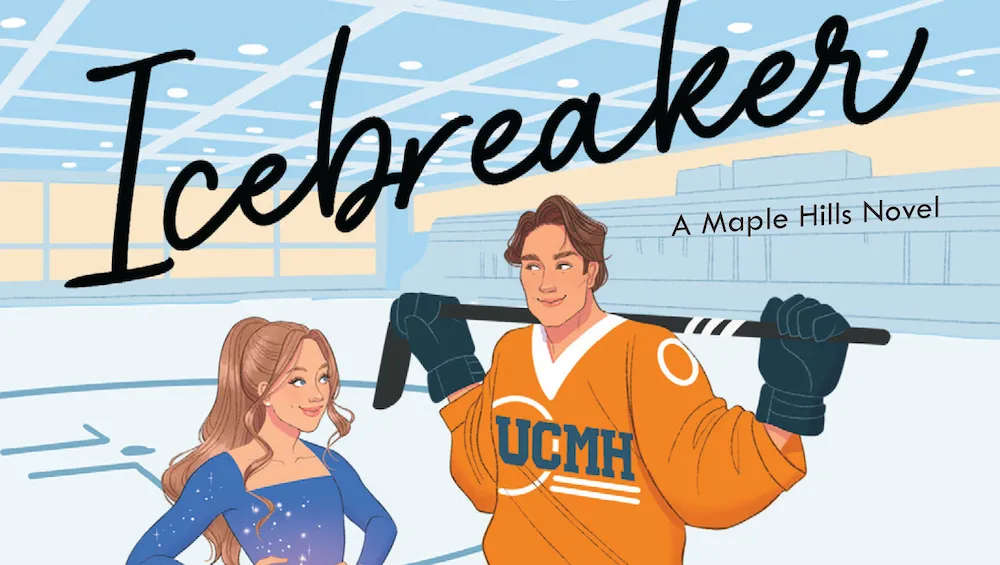
Netflix is currently building out its cast for the series adaptation of Hannah Grace’s Icebreaker book that kicks off the Maple Hill series. This in addition to their show The Sticks that is also currently in the works.
For everything we know about Netflix’s Icebreaker book adaptation so far, read on.
When will Netflix’s Icebreaker series adaptation come out?
A release date has not yet been set. The show has begun to assemble its cast.
Who will lead the Icebreaker show at Netflix?
Daisy Jelley (Poser, How To Have Sex) will portray Anastasia “Stassie” Allen, and Connor Simos (Subversion) will portray Nate Hawkins in the college hockey drama series.
Who else is in the cast of Netflix’s Icebreaker adaptation?
Gabriel Tierney (Rivals, Enola Holmes 2), Auliʻi Cravalho (Moana), newcomer and professional athlete Peter Berry, Chaneil Kular (Best of the Best, Sex Education), Devin Craig (Sex Lives of College Girls, Maize) and Aidan Shaw (We Were Liars, Heated Rivalry, Finding Her Edge) have joined the ensemble cast.
Tierney will play Aaron; Cravalho will portray Lola; Berry is Robbie; Kular will play JJ; Craig will portray Henry and Shaw is Russ.
What is Hannah Grace’s Icebreaker book about?
Stassie is a transfer athlete gunning for Olympic gold. Nate is the campus star chasing the NHL. When an accident forces their teams to share one rink, Anastasia Allen and Nate Hawkins collide—and discipline gives way to obsession, because the only thing more dangerous than wanting to win is wanting each other.
Who else is behind Netflix’s Icebreaker series?
Jade Halley Bartlett (Road House, Doctor Strange in the Multiverse of Madness, Miller’s Girl) created and executive produced the series. Amanda Lasher (Gossip Girl, The Bold Type, Togetherness) serves as showrunner, writer and excutive producer. Grace also executive produces along with Alex Cooper, Matt Kaplan and Mina Lefevre for Cooper’s Unwell Productions.
>
One of the biggest executive questions about Paramount following its pending acquisition of Warner Bros. Discovery — who will lead streaming — may have been answered.
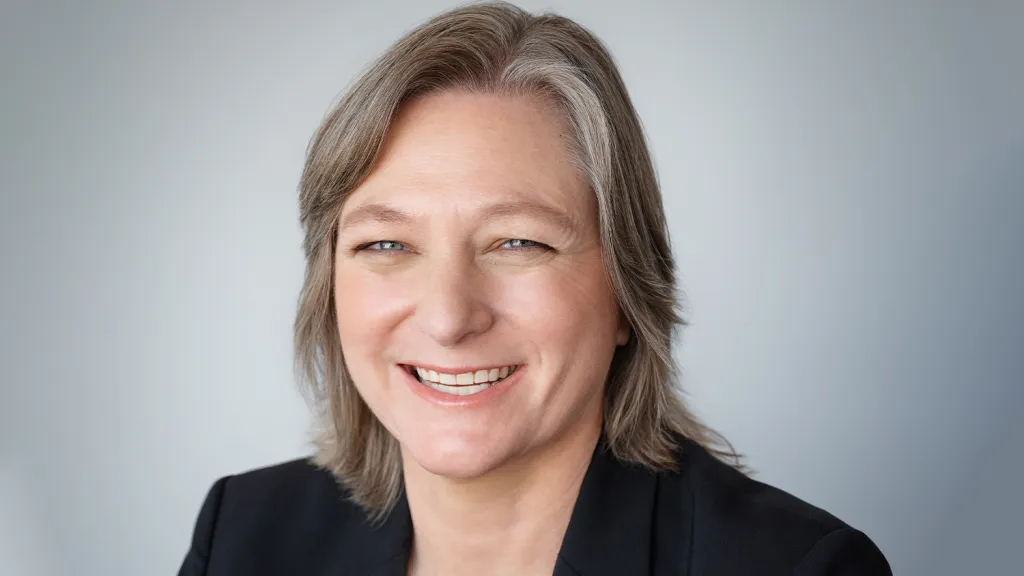
Cindy Holland is leaving Paramount where she was Chairman of Direct-To-Consumer since the Skydance-Paramount merger having served as an advisor to Skydance CEO David Ellison prior to that. She announced her departure in a company memo, which you can read below.
The move leaves HBO’s Casey Bloys as the likely streaming head of the combined Paramount-WBD.
“Cindy is one of the most exceptional executives in our industry — a force of nature whose impact on Paramount over the past year has been significant,” Paramount CEO David Ellison said. “Under her leadership, P+ reached new heights, Pluto TV underwent its most significant transformation in a decade, and we strengthened our content and sports portfolio – all while the business exceeded the ambitious goals we set. Just as importantly, she built an exceptional team and a strong foundation for the future. Cindy has been a trusted partner to me and so many others, and I couldn’t be more grateful for her leadership, her relentless drive and everything she’s done for our company.”
Here is Holland’s memo:
When I joined David’s team in January 2025, we proceeded to set three goals: i) advise on the Warner Bros. Discovery acquisition, ii) integrate and transform Paramount+ & revive Pluto TV, and iii) build an unparalleled team in this industry. In just over 12 months, I’m proud to say we accomplished all three and it’s been a joy to work closely with all of you.
Together with the Product team, we drove significant strategic and organizational change across DTC — building a new foundation for growth on both services, while investing in greater depth and breadth of programming and delivering strong revenue, profit, and subscriber growth for the division.
As David readies for the next phase of his vision, we’ve discussed my role and the future of the combined businesses. David is optimizing for HBO stability as we move into this next chapter, and I fully support that. I know this team has the leadership and expertise to manage through the transition and the next phase of the company, and to this end today will mark my last day here.
As I reflect on my time here and all that we’ve built together in this short time, what stands out most to me is this team. I have never been more proud of a group of people. What we’ve accomplished together is remarkable — landing quarter after quarter while navigating extraordinary uncertainty and change with resilience, focus and ambition. We grew Paramount+ to an all-time subscriber high, delivered the best retention in the service’s history, and drove double-digit growth in both engagement and revenue. We built an extraordinary content pipeline, greenlighting more than 40 new and returning series and setting all-time records with Landman, the most-watched series in Paramount+ history, and Dutton Ranch, the service’s biggest original series debut ever. We transformed live sports into a powerful streaming growth engine, securing landmark agreements with UFC and Zuffa Boxing and expanding our WNBA and UEFA Champions League rights – with UFC Freedom 250 becoming the largest-ever audience for an exclusive live event on Paramount+ and UFC 329 setting a new platform record for peak concurrent streams for an exclusive live event. And we undertook Pluto TV’s biggest product transformation in a decade, dramatically increasing registered viewing and VOD consumption while delivering strong financial performance across the business. These are extraordinary accomplishments – but what makes me proudest is how we achieved them: together, with an unwavering commitment to our audiences, our creative partners and one another.
I joined Paramount because I believe in these businesses, and because I believe wholeheartedly that the combination of Paramount and Warner Bros. Discovery serves the best interests of artists and audiences worldwide. I’m looking forward to seeing what you all accomplish together in this next, momentous chapter.
Cindy
>


Search For Canadian TV Actor Stewart McLean Now Homicide Investigation


These ’90s fashion trends are making a comeback in 2017
According to Dior Couture, this taboo fashion accessory is back
Model Jocelyn Chew’s Instagram is the best vacation you’ve ever had
Emily Ratajkowski channels back-to-school style
9 Celebrities who have spoken out about being photoshopped


Rurouni Kenshin: Hokkaido Arc Manga Takes 1-Issue Break – News


HIDIVE to Stream English Dubs for The World Is Dancing, The Forsaken Saintess and Her Foodie Roadtrip in Another World, The Dangers in My Heart: The Movie Anime – News