
movies
‘A Woman’s Life’ Review: Léa Drucker in Lovely French Character Study

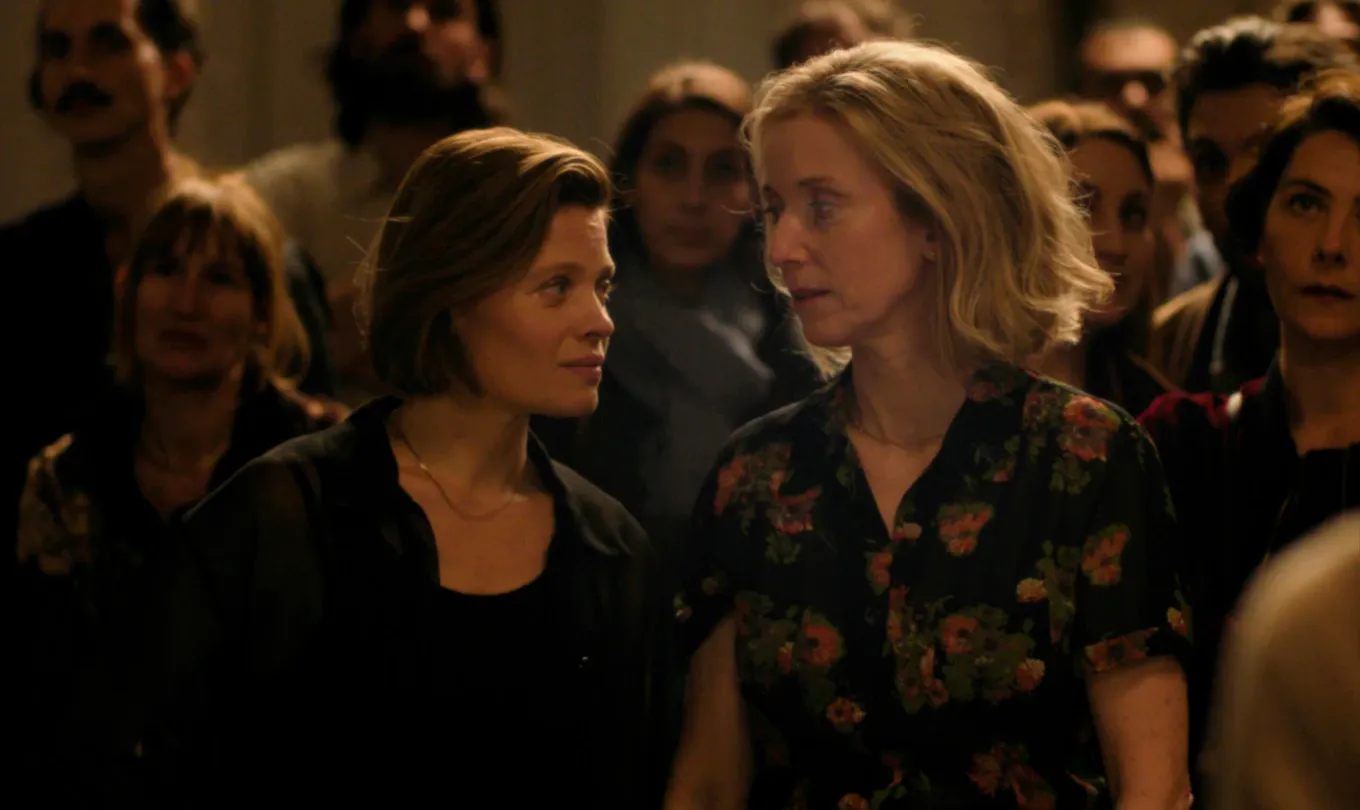
The bracing romantic screwball Anaïs in Love (2021) marked the arrival of Charline Bourgeois-Tacquet among the growing ranks of French female directors giving their national cinema a vigorous dusting-off — an honor roll including Mia Hansen-Love, Justine Triet, Rebecca Zlotowski, and, with The Little Sister (soon to be released Stateside), Hafsia Herzi.
Starring Anaïs Demoustier as an irrepressible Parisian grad student who steamrolls her way into and out of affairs, the film was the standout of that year’s Cannes Critics’ Week. Now Bourgeois-Tacquet has a slot in the festival’s competition, though A Woman’s Life (La vie d’une femme) is the kind of intimate, modestly scaled Gallic movie likely to be greeted with some sniffiness about whether that promotion was premature — as if a Cannes competition entry simply must be a magnum opus-level swing for the fences.
A Woman’s Life
The Bottom Line
A buoyant and affecting character study.
Venue: Cannes Film Festival (Competition)
Cast: Léa Drucker, Mélanie Thierry, Charles Berling, Laurent Capelluto, Marie-Christine-Barrault
Director: Charline Bourgeois-Tacquet
Writer: Charline Bourgeois-Tacquet, with Fanny Burdino
1 hour 38 minutes
But while it isn’t the major artistic stride that a swift upgrade to the main event might have augured, A Woman’s Life is, in its own way, something almost as gratifying: an elegant, enjoyable sophomore outing that proves the breakout was no fluke.
Bourgeois-Tacquet’s elevator pitch — unforeseen circumstances lead Gabrielle, a workaholic 55-year-old surgeon, to question her life choices — isn’t exactly earth-shaking, and the film lacks the propulsive spontaneity that made Anaïs in Love such an off-kilter delight. That’s partly a reflection of the type of protagonist A Woman’s Life is dealing with: Gabrielle is as grounded — or “rational,” to borrow her word — as Anaïs is flighty. Still, there’s an unmistakable safeness here — a sense that the writer-director is never pushing beyond the familiar contours of a certain slice of contemporary French cinema, complete with customary storyline staples (extramarital affair, ailing parent, career crossroads) and stylistic moves (pacy editing, soundtrack packed with lively classical piano, chapter headings divvying up the narrative).
And yet, when coloring within the lines yields a second consecutive character study this buoyant and perceptive, it feels churlish to complain too much. Particularly with a lead like Léa Drucker — so fantastic in Catherine Breillat’s recent Last Summer — delivering another performance of riveting nuance, feeling and wit.
Written by Bourgeois-Tacquet and Fanny Burdino, A Woman’s Life opens with flashes of Gabrielle in panting mid-coital close-up — a clear indication we’re in that recognizable realm known as French Cinema. The following scenes show Gabrielle, the tireless, talented chief of facial reconstruction surgery at an underfunded Parisian hospital, in her default mode: racing through a quotidian gauntlet of medical, administrative and personal challenges both major and minute, all while griping about the ineptitude of everyone else.
Simultaneously good-humored and ill-tempered in that quintessentially French fashion, Gabrielle is indeed shouldering a crushing amount of responsibility. In addition to her daily schedule of operations and consultations, there are interns to train and a clinic renovation to oversee. Her longtime surgical partner and confidant, Kamyar (Laurent Capelluto), is about to go on paternity leave. Tensions with her husband (Charles Berling) are flaring over the fact that his grown kids are still living, and partying, at home. (Gabrielle doesn’t have biological children of her own.) Her mother (Marie-Christine Barrault, wonderful) has Alzheimer’s and requires round-the-clock care.
Gabrielle is so fearsomely self-sufficient, so adept at juggling, pivoting, and tending to everyone and everything, that — you guessed it — no one really tends to her. Nor do the people who populate her world seem duly dazzled by her ability to rein in its chaos; they’re not just dependent on her virtuosity — they’re accustomed to it. In a way, the formidable Gabrielle has become invisible, even to herself.
That status quo is jolted by Frida (Mélanie Thierry), a writer who comes to observe Gabrielle at work as research for her upcoming novel. The experience of being watched by Frida in the operating room, of being appreciated and admired by this younger woman, awakens something in Gabrielle. And when Frida’s interest seems to go beyond the, um, strictly professional, Gabrielle, after a moment’s resistance, gives in to it.
Any French film buff will easily intuit how this all unfolds. But if A Woman’s Life is missing the spark of surprise that powered Anaïs in Love, it nevertheless deepens nicely, building out Gabrielle’s outer and inner worlds with darts of sly humor and sweeping brushstrokes of melancholy. This is, in a broad sense, a story of serial heartbreak — of the inevitable sacrifices, trade-offs and losses we endure in life, and which no measure of achievement or privilege can protect us from. More specifically, the film suggests, it’s women like Gabrielle — of a certain age, highly accomplished — who are especially susceptible to this kind of regret or second-guessing.
But Bourgeois-Tacquet is scrupulous in not denying the character her agency. Gabrielle isn’t a “victim,” as she insists, and her occasional swells of anger seem triggered less by the impossibility of “having it all” than by the assumption that she would want to have it all in the first place. Beneath its breezy surface, the movie is grappling with these knotted questions of gender, choice, ambition and identity — just like Gabrielle, hurtling through her day, is constantly negotiating competing urges, figuring out how to wrest meaning from her existence.
One of the pleasures of the film — of today’s French cinema in general — is the delicious multi-dimensionality of its female protagonist. Like numerous Gallic screen heroines before her, Gabrielle skates the line between brisk and brusque, with patience bordering on zero and phone etiquette most charitably described as “perfunctory.” She suffers no fools, certainly, but she can also be rigid and unfair with those closest to her. When Kamyar, her co-department-head and dear friend, broaches his upcoming parental leave, Gabrielle’s response is one part scoffing to ten parts guilt-tripping.
But if Drucker refuses to round off her character’s spiky edges, she never overplays her toughness. Gabrielle’s unflinching competence and dynamism belie acute sensitivity, and the actress allows hints of child-like hurt and hesitation to pierce the carapace. Much of the film’s drama stems from this supremely empowered woman being confronted with the fact that she needs, and wants, other people, too.
The supporting characters are more functional than fleshed-out, perhaps not unfitting for a portrait of someone like Gabrielle, a force of purpose and passion who has the effect of making those around her feel inessential. Berling’s Henri, especially, suffers from the film’s disinterest in anyone aside from its central figure; a key scene between him and Gabrielle lays out their history in clumsy expository snippets. Capelluto’s Kamyar — the colleague with whom Gabrielle shares both a long professional history and tender personal chemistry — and Barrault’s impaired but sharp-tongued Arlette are more compelling, partly because the movie conveys the idiosyncrasies of their relationships to the protagonist without spelling them out.
Frida is the most significant secondary figure — the person who tempts Gabrielle away from her trajectory, making her pause and ponder roads not taken. But appealing as she is, Thierry doesn’t have much to work with here besides Cheshire cat smiles and dulcet-toned come-ons. Gabrielle’s feelings for Frida are understandable in theory; the latter approaches her with fresh eyes and few demands, giving her space to be something other than problem solver extraordinaire. It’s too bad the film doesn’t take the time to make us feel in our guts what stirs Gabrielle so intensely in the younger woman, to probe their connection a bit more. (Contrast that to the giddy, goosebump-inducing romance in Anaïs in Love, with Valeria Bruni Tedeschi matching Demoustier’s magnetic capriciousness beat for beat — literally, in that knockout “Bette Davis Eyes” dance scene).
Working with DP Noé Bach and editor Clément Pinteaux, Bourgeois-Tacquet keeps A Woman’s Life moving with a crisp efficiency that mirrors Gabrielle’s own. But she knows when to slow things down, the camera advancing gently and tightening around Gabrielle to capture tiny shifts and turning points. The filmmaker rarely lingers, making brief moments of grace — like Gabrielle peeking in at her mom and stepdad taking a nap — all the more resonant for their evanescence. She also can turn it up, staging a swoony first-date sequence that finds Gabrielle and Frida swept into intimate proximity by an immersive dance performance.
Among Bourgeois-Tacquet’s strengths as a writer-director is her nimble way with tone and emphasis. A family meeting with a social worker about Arlette’s worsening dementia is a marvel of counterintuitive comedy, while Gabrielle’s huddle with a shell-shocked tongue cancer sufferer proves an unexpected emotional centerpiece. “Sometimes life is tough,” she tells the man, who is resisting the surgery that could save him. “And it’s always unfair.”
Those words might read as harsh. This is, after all, a doctor who tells her interns they won’t be remembered fondly when their residency is over. But Gabrielle’s manner with the patient is gentle, and by this point we recognize her statement as one of empathy, solidarity and profound, hard-won honesty. Such honesty is this flawed yet deeply human character’s defining quality — a gift she extends to the people around her, and, by the film’s end, to herself as well.
>

Chinese director Niu Niu’s Final Payment scooped the Best Film Award in the Fei Mu Awards of this year’s Pingyao International Film Festival (PYIFF), while Rafiki Fariala’s Congo Boy won Best Film in the festival’s Roberto Rossellini Awards.
Final Payment, which also won Best Actor for Niu Jianrong’s performance, revolves around a homeowner clashing with a contractor over the final payment following a set of renovations on his home. PYIFF’s competition jury stated: “Tearing through a very small rip, the film leads us into a reality and emotional landscape so expansive, where we sigh, lament, and reflect. The director’s approach is concise, unpretentious, and masterful, earning the wholehearted recognition of the entire jury.”
The Best Film award came with a cash prize of $150,000 (RMB1m) with half given to the director for the development of their next film, and half given to the distributor in China. Niu Niu previously directed Mr Junjun, which was awarded with the Jury Award and Youth Jury Award at PYIFF in 2023.
Also in the Fei Mu Awards, Xu Zao won Best Director for Light Pillar, while Best Actress went to Sun Yi for Wang Xiaozhen’s A Joke. The Jury Award was presented to Dong Jie’s Zoom In, Zoom Out, which had its world premiere in Venice Critics Week, while a special mention went to Cai Chengjie’s Suzhou Quartet.
The Fei Mu awards are focused on the festival’s Hidden Dragons section, which selects first, second and third films from emerging directors making Chinese-language films, while the Roberto Rossellini Awards focus on the Crouching Tigers section for emerging international directors.
Congo Boy, which took Best Film in the Roberto Rossellini Awards, also won Best Actor when it premiered in Un Certain Regard at this year’s Cannes film festival. The PYIFF award came with a cash prize of $20,000, with half given to the director for the development of their next film, and half given to the distributor in China.
The PYIFF jury stated: “The Jury unanimously has been moved by this autobiographical story, told in a simple style that echoes the great tradition of neorealism. For a film focusing on a character that confronts his world with optimism despite dark times and takes on his shoulders the destiny of his entire family.”
Also in this section, the Philippines’ Rafael Manuel won Best Director for Filipiñana, while the Jury Award went to Ben’imana, directed by Marie-Clémentine Dusabejambo, which won the Camera d’Or at this year’s Cannes. The jury also awarded Rakan Mayasi’s Yesterday The Eye Didn’t Sleep a Special Mention.
Hong Kong filmmaker Ann Hui received the Crouching Tiger Hidden Dragon East-West Award, shortly before she receives the Camellia Award at Busan International Film Festival next week.
Pingyao’s International Contribution To Chinese Cinema Award went to Marco Müller, who founded the festival with Chinese auteur Jia Zhangke and currently serves as Artistic Director of the Film Art Research Centre at Shanghai University, and veteran producer, director and former chairman of China Film Group Han Sanping. Hello Group chairman Tang Yan was presented with a 10th Anniversary Award.
This year’s PYIFF opened on September 24 with a screening of the 4K restoration of Fei Mu’s Spring In A Small Town; closed with Good Trip, co-directed by Hong Kong filmmakers Norris Wong and Hoi Wong, and also screened Jia’s short film Torino Shadow, which premiered at this year’s Cannes.
PINGYAO INTERNATIONAL FILM FESTIVAL 2026 AWARDS:
FEI MU AWARDS:
Best Film: Final Payment, dir: Niu Niu
Best Director: Xu Zao, Light Pillar
Best Actress: Sun Yi, A Joke, dir: Wang Xiaozhen
Best Actor: Niu Jianrong, Final Payment, dir: Niu Niu
Jury Award: Zoom In, Zoom Out, dir: Dong Jie
Special Mention: Suzhou Quartet, dir: Cai Chengjie
ROBERTO ROSSELLINI AWARDS:
Best Film: Congo Boy, dir: Rafiki Fariala
Best Director: Filipiñana, dir: Rafael Manuel
Jury Award: Ben’imana, dir: Marie-Clémentine Dusabejambo
Special Mention: Yesterday The Eye Didn’t Sleep, dir: Rakan Mayasi
>
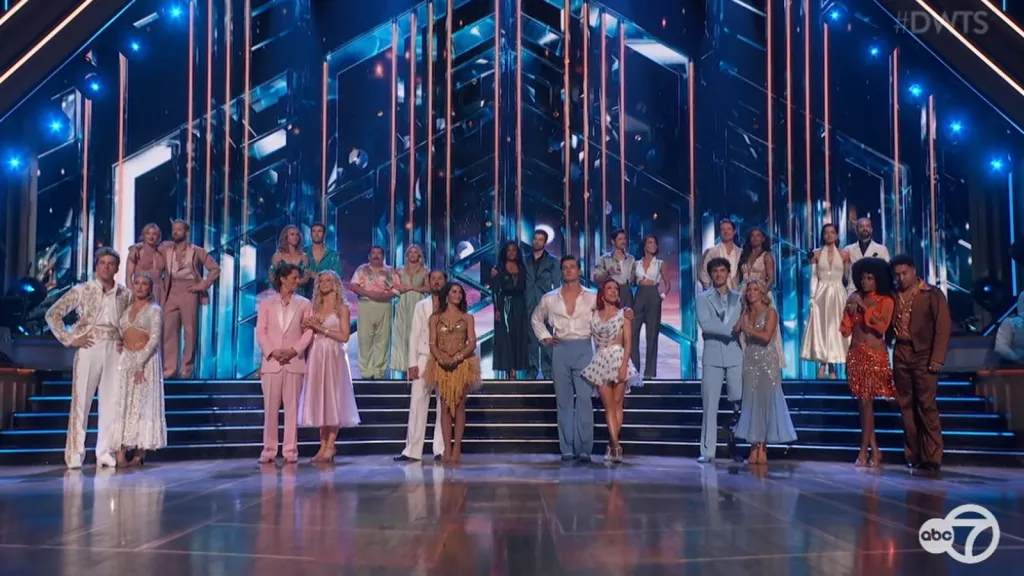
SPOILER ALERT! This post contains details from Tuesday night’s episode of Dancing with the Stars.
It’s another exciting night in the ballroom as 13 contestants are still eyeing the Len Goodman Mirrorball Trophy during Week 3 of Dancing with the Stars.
Last week, the judges reinforced just how tough they are going to be this season, once again declining to score anyone above a 7. Still, three couples — Jenna and Val, Ezra and Daniella, and Amber and Pasha — walked away tied for the top of the leaderboard with 21 points. We also said goodbye to Alan Bersten and chef Giada De Laurentiis.
Week 3 is Yacht Rock night, so the remaining couples are performing to hits from artists including Fleetwood Mac, The Doobie Brothers, and Luther Vandross.
Here is how the night went.
Olympian Amber Glenn with Pasha Pashkov danced a Foxtrot to “Hold the Line” by Toto. SCORE: 24
Actress Julia Stiles with Ezra Sosa danced a salsa to “I Can’t Go for That (No Can Do)” by Daryl Hall & John Oates. SCORE: 19
Late-night sidekick Guillermo Rodriguez with Whitney Carson danced a Foxtrot to “Escape (The Piña Colada Song)” by Rupert Holmes. SCORE: 15
Actress Tatyana Ali with Jan Ravnik performed a Quickstep to “Maneater” by Daryl Hall & John Oates. SCORE: 21
Actor Harry Shum Jr. with Jenna Johnson performed a jive to “You Make My Dreams Come True” by Daryl Hall & John Oates. SCORE: 24
Musician Taylor Hanson with Britt Stewart danced a Foxtrot to “What a Fool Believes” by The Doobie Brothers. SCORE: 18
Reality star Maura Higgins with Mark Ballas danced a Quickstep to “Turn Your Love Around” by George Benson. SCORE: 22
Reality star Ciara Miller with Brandon Armstrong performed a Cha Cha to “Never Too Much” by Luther Vandross. SCORE: 18
Savannah Bananas midfielder Jackson Olson with Emma Slater performed a paso doble to “Easy Lover” by Philip Bailey and Phil Collins. SCORE: 18
Comedian and podcaster Connor Wood with Rylee Arnold danced a Foxtrot to “Everywhere” by Fleetwood Mac. SCORE: 20
Actress Jenna Dewan with Val Chmerkovskiy danced a samba to “Africa” by Toto. SCORE: 21
Reality star Tyler Cameron with Sharna Burgess danced a jive to “Still the One” by Orleans. SCORE: 17
Paralympian Ezra Frech with Daniella Karagach danced a Foxtrot to “Just the Two of Us” by Grover Washington Jr. featuring Bill Withers. SCORE: 21
Who goes home?
The competition is now down to 12 as Taylor Hanson and Britt Stewart were sent home. Next week is all about Mariah Carey, so the couples will perform a variety of the pop superstar’s biggest hits.
>

Another hockey book adaptation has entered the chat.
Netflix is currently building out its cast for the series adaptation of Hannah Grace’s Icebreaker book that kicks off the Maple Hill series. This in addition to their show The Sticks that is also currently in the works.
For everything we know about Netflix’s Icebreaker book adaptation so far, read on.
When will Netflix’s Icebreaker series adaptation come out?
A release date has not yet been set. The show has begun to assemble its cast.
Who will lead the Icebreaker show at Netflix?
Daisy Jelley (Poser, How To Have Sex) will portray Anastasia “Stassie” Allen, and Connor Simos (Subversion) will portray Nate Hawkins in the college hockey drama series.
Who else is in the cast of Netflix’s Icebreaker adaptation?
Gabriel Tierney (Rivals, Enola Holmes 2), Auliʻi Cravalho (Moana), newcomer and professional athlete Peter Berry, Chaneil Kular (Best of the Best, Sex Education), Devin Craig (Sex Lives of College Girls, Maize) and Aidan Shaw (We Were Liars, Heated Rivalry, Finding Her Edge) have joined the ensemble cast.
Tierney will play Aaron; Cravalho will portray Lola; Berry is Robbie; Kular will play JJ; Craig will portray Henry and Shaw is Russ.
What is Hannah Grace’s Icebreaker book about?
Stassie is a transfer athlete gunning for Olympic gold. Nate is the campus star chasing the NHL. When an accident forces their teams to share one rink, Anastasia Allen and Nate Hawkins collide—and discipline gives way to obsession, because the only thing more dangerous than wanting to win is wanting each other.
Who else is behind Netflix’s Icebreaker series?
Jade Halley Bartlett (Road House, Doctor Strange in the Multiverse of Madness, Miller’s Girl) created and executive produced the series. Amanda Lasher (Gossip Girl, The Bold Type, Togetherness) serves as showrunner, writer and excutive producer. Grace also executive produces along with Alex Cooper, Matt Kaplan and Mina Lefevre for Cooper’s Unwell Productions.
>
Man City's 'sham contracts', spending breaches and 'disguised funding': Breaking down the findings

Whitley Bay: The part-timers who won a record three Wembley finals in a row

Flex your football brain with our daily quizzes
-

 movies4 months ago
Search For Canadian TV Actor Stewart McLean Now Homicide Investigation
-

 Fashion9 years ago
These ’90s fashion trends are making a comeback in 2017
-
Fashion9 years ago
According to Dior Couture, this taboo fashion accessory is back
-
Fashion9 years ago
Model Jocelyn Chew’s Instagram is the best vacation you’ve ever had
-
Fashion9 years ago
Emily Ratajkowski channels back-to-school style
-
Fashion9 years ago
9 Celebrities who have spoken out about being photoshopped
-

 Anime4 months ago
Rurouni Kenshin: Hokkaido Arc Manga Takes 1-Issue Break – News
-

 Anime3 months ago
HIDIVE to Stream English Dubs for The World Is Dancing, The Forsaken Saintess and Her Foodie Roadtrip in Another World, The Dangers in My Heart: The Movie Anime – News