
Marie Kreutzer
Courtesy of Pamela Rußmann


Sometimes, horrible things happen right under our noses. And sometimes, we just do not want to see things as they are, particularly when it comes to the people we love. Gentle Monster, the new film from Austrian writer-director Marie Kreutzer (Oscar submission and historical drama Corsage), which world premieres in the competition program of the 2026 Cannes Film Festival, explores such themes as love, trust, loyalty and narratives, both factual and fictional, in ways that will get under your skin.
Lucy and Elsa have built their lives around men who may have dark sides lurking. Pianist Lucy, played by French star Léa Seydoux, with Catherine Deneuve as her mother, loves her husband Philip (Laurence Rupp) so much that she agreed to move to the countryside with him and their son Johnny after Philip’s burnout. This affects her professional life, but a bigger worry emerges from the shadows. In an early morning police visit, investigators from the sexualized violence against children, child and youth pornography unit accuse Philip of being active in online chat forums where men share footage of kids. Is he a pedophile? Did he look to make a quick but illegal buck? Or is there another explanation? Desperate to protect Johnny, Lucy feels trapped between the man she loves and the horror of what he may have done.
Meanwhile, Elsa, portrayed by German actress Jella Haase (Berlin Alexanderplatz), who international audiences will recognize as the star of Netflix spy series Kleo, lives for her job as a special police investigator, while also being responsible for her father (Sylvester Groth), who has dementia. But he also seems to have a dark side rearing its ugly head.
Dr. Jekyll and Mr. Hyde send their regards as the film takes the women, and audiences, on an emotional cinematic journey through complex and painful territory to an abyss where they must confront horrible questions!
For Gentle Monster, Kreutzer re-teamed with cinematographer Judith Kaufmann (Yellow Letters, Late Shift), editor Ulrike Kofler (Gina) and producers Alexander Glehr and Johanna Scherz of Film AG, with Komplizen Film and Kazak Productions also backing the film. mk2 Films is handling international sales.
The auteur talked to THR about the inspiration for her latest creation, getting to cast big international stars, her work with music, in what ways a real-life scandal surrounding Austrian actor Florian Teichtmeister, who featured in her previous feature, Corsage, played into the process for the new movie, and how a pair of sunglasses inspired the title Gentle Monster.
What led you to explore the heavy and difficult themes related to relationships and sexuality that the women in Gentle Monster face?
For me, it’s all about power and wanting to dominate someone, to be above someone. I was inspired by a newspaper article that I read during COVID, while I was still preparing two other films, one of them being Corsage. It was great journalism, and it really haunted me. I couldn’t even finish it in a day, because it was extremely explicit. I just felt that the only thing I could do was to tell a story about this issue, this problem that we, as a society, don’t really know how to deal with.
Of course, I knew about sexual violence towards children, but reading that article in 2020, I realized even more that it’s not about the creepy guy behind the bushes. Statistically speaking, it has to be someone we know. Hence the title. We all do know victims, and we all do know perpetrators. We just don’t know who they are. What I wanted to show was that it could be someone you love, it could be someone you trust. That’s what I like about the title. There can be something really dark and dangerous in someone we trust and love.
Can you share how you actually found the title for the film?
It’s actually a Korean sunglasses brand. We obviously had to check if we were allowed to use the name. The first title was [different]. I had a pair of sunglasses while I was working on the script. The sunglasses were lying on the table, and I was looking around and thinking. Then I just saw the little writing [on the glasses], and thought, “This is the perfect title.”
I felt you made me, as a viewer, feel different emotions throughout, including worry, anger, fear. Since you mentioned the writing stage, how did you approach the writing process to make me care so much?
I basically wrote it as if it were happening to me and asking: “What would I do?” I don’t know who said it, but it’s a famous quote: Write about your biggest fear. The worst thing for me, of course, is if something happened to my kid. But right after that, it would be that my partner did something [horrible]. This is where the story and the plot came from.
When we started looking for financing, we always said this is a film about trust and about violence. Now, looking at the film, I think it’s really a film about honesty, including honesty towards oneself. At what point are you going to acknowledge that a person did something, and you just didn’t want to see it, you just didn’t want to believe it, even if the proof was there all along?
Marie Kreutzer
Courtesy of Pamela Rußmann
How different was it from making a period drama like Corsage?
It always seems that doing a period film is more work. But actually, doing a contemporary film is as much work, because everyone who sees it knows this world and knows this time. Getting it right in a way that it feels very natural is sometimes even harder than with a period film, where you can make things up and create things. I tried to make it a film that feels authentic [in the sense that it could be happening] to our friends or our neighbors.
Can you talk a little bit about the music and how important it is for your filmmaking, and specifically for Gentle Monster? I got a sense that these two women have different soundtracks. For example, Coldplay’s “Yellow” is part of Lucy’s and her family’s world, while Elsa listens to rap or hip-hop.
Music is always a big part of my work, especially when I’m writing. I have my playlists, I have playlists for different characters, and I just have a soundtrack in my head. Sometimes, some of the songs make it into the film.
With Lucy, it was clear early on that she would be a musician and work with existing material. At some point, I realized that all the songs I collected for Lucy to play with and to perform are songs by men. She mentions that in one line, but I thought it was very interesting that we are so influenced by these love songs by men.
For Elsa, I was looking for something that would be a contrast. When I discussed it with Jella, the female rap idea was really more her idea than mine. I had my music supervisor just show me different artists, and this is how we found these tracks.
You mentioned how Gentle Monster explores how people near us could be involved in dark and scary things. The conversation about Corsage at some point ended up becoming partly about one of its actors and how he was charged with possession of child pornography. Did that affect your work on Gentle Monster, or did making the film help you process that experience further?
I had been working on this film for a while when all of that happened, so it was really absurd. I literally had a one-and-a-half-hour research phone call with a police investigator on a Friday, and on Monday, I heard about these rumors for the first time. It was so crazy.
In the middle of that whole scandal and shit storm, I thought maybe I cannot make Gentle Monster anymore, because everyone will always make that connection. It didn’t take me very long until to realize that I might have to make it even more. If I don’t make the film for that reason, wouldn’t that be wrong? What happened to us was not on such a traumatic level as what happens to Lucy, because it was not someone I loved, but someone I had worked with. This might sound cheesy, but it felt like maybe this was a calling.
I also asked someone at a child protection organization if we should not show Corsage anymore. And she said that would be a very Austrian solution. It would just mean brushing it under the rug and not having to look at that ugly side.
Speaking of child protection: How involved were the safeguarding measures for the cast of Gentle Monster, especially to protect young Malo Blanchet, who plays Lucy’s son, Johnny?
We were extremely careful with everything. There was a whole crew involved, and we had very high standards of child protection. We were [careful about] how we and also how his parents communicated with Malo and what he should know and not know. We agreed on all these things with his parents, who know him best.
We also kept in mind the whole crew. Kasia [Szustow], who did the intimacy coordination, brought that up. She said we needed a mental health person or someone people can talk to, because, statistically speaking, there must be people on the team who have experienced these kinds of things. So, if something came up, they could have someone to speak to. But in general, when you are finally making a film, it’s split up into so many small scenes and bits and pieces that it’s not like you’re thinking about the subject matter every day, but you’re [focused] on that specific scene. So, to be honest, I didn’t have the feeling that it was really heavy on us.
How did two huge French stars, Léa and Catherine, end up in Gentle Monster?
After Corsage, I really got a lot of calls and had a lot of meetings with actors. I learned something that the Americans do, which we are not very familiar with in Europe, or at least in Austria, which is a “general meeting.” After Corsage, I started working with an American manager, and she said people wanted to have a general meeting just to get to know me, and maybe at some point, we were going to work together. I started enjoying this and realized this would also work the other way around. I could also say I wanted to meet this or that person, which I then did. So, it was not that hard to get in touch with great actors.
I had some U.S. and international offers, but I just wanted to make my film with my people, and at some point, I realized that I could make it more international with the cast. Lucy was already a character who spoke two languages because of her parents, and so, I thought it would be good for the story if she was not a native Austrian or German, because when it comes to institutions and all of these problematic things, it’s harder for you if you are not dealing with them in your country and in your first language. [Using] three languages in the film also highlights that this problem [transcends] social and country borders. And Léa is just excellent.
What was the hardest part about shooting the film?
The music scenes, because they were technically very demanding for all of us. This was a whole new situation I had never had to work with on screen, music that’s supposed to be live. It was really like a parallel production, shooting these big concert scenes with a lot of extras. These were days when I was quite tense, because I couldn’t really do much. I just had to rely on everyone else, and I couldn’t really direct that much. That was the most stressful part.
How cool is it that Gentle Monster will premiere at the Cannes Film Festival? Corsage had its debut in the Un Certain Regard section, and this time, you are in the competition program?
It’s very special. I just learned that the number of films in competition compared to the number of entries is under 1 percent. It’s like winning the lottery, in a way. And I’m especially happy for this film. With Corsage, people wanted to see this period film about an Austrian Empress. Many people loved it so much. I knew, when I started on this project, that it wouldn’t be the same, because this is not a film you can enjoy watching three times. People did that with Corsage; they will not do that with Gentle Monster.
It’s important to tell these difficult stories. I knew it would be harder to get the love and attention for this film, so I’m even happier that it gets to be presented in this very special place and with all this attention.
Are you already working on something new?
I have four projects, but in different stages. So, it’s not that I’m shooting anything next week.
You have also done TV productions, but are movies your big passion?
I just love the cinema. I just went to the movies last night … to see Hamnet – late to the party. (laughs) Whenever the light goes down, and you’re with people you don’t know in a dark room watching a film, it’s just magic.
>
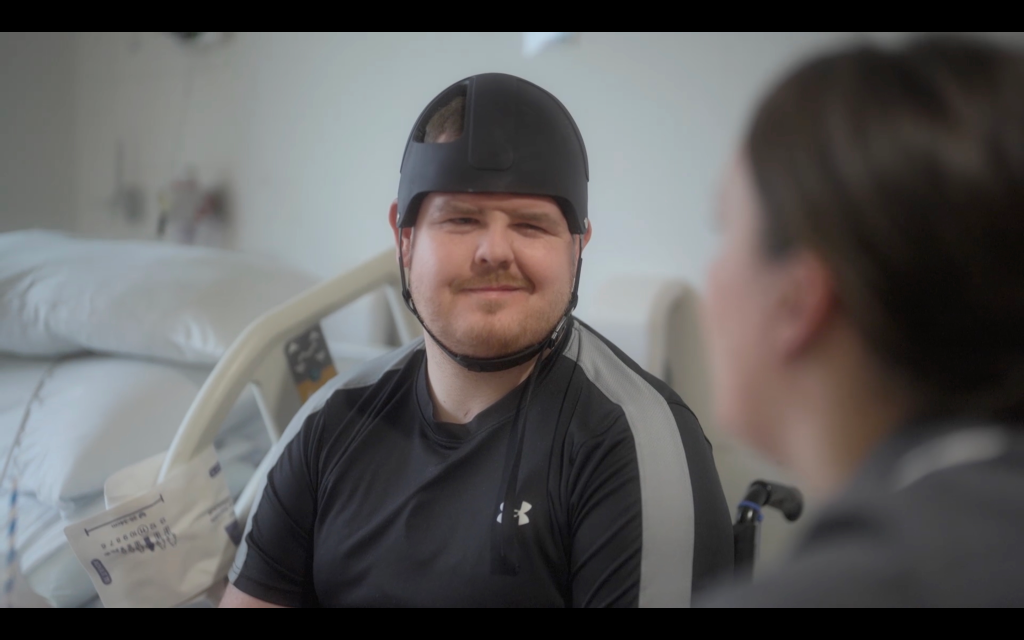
EXCLUSIVE: Channel 4 is teaming with the Stroke Association on a documentary sereis looking at young people living with the aftermath of a stroke.
Trauma: My Broken Brain follows three young survivors through the most frightening days of their lives and the grueling journey back to independence.
Every five minutes someone in the UK suffers a stroke – there are 1.4 million stroke survivors living in the UK today – but the aim of the doc is to show that this is only the beginning of recovery. Filmed over seven months with access to these young adults at the most terrifying and testing moments of their lives, the series meets Dan (28), a dancer left confined to a wheelchair, barely able to speak following emergency brain surgery; Saskia (22), a self-described social butterfly left bedbound after a brain bleed so severe her family feared she would not survive; and Dec (20), who collapsed just four months into a new relationship and spent weeks in a coma, his family and girlfriend unsure if he would survive.
Channel 4 has taken the rare step of teaming with a charity on the doc. It is being produced by Stream Media Group, which was also behind the same network’s Anna Richardson: Love, Loss and Dementia, made with the Alzheimer’s Society.
Channel 4 commissoning exec Simon Lee said: “This is an ambitious and important series that challenges perceptions and gives a voice to young people whose lives have been transformed by stroke, as they embark on the long road that begins after survival.”
Stream’s Victoria Noble added: “What struck us throughout filming was how little people understand about stroke. Survival is often seen as the end of the story, when in reality, it is only the beginning. By sharing their journeys with such honesty and courage, Dec, Dan and Saskia revealed the reality of rebuilding a life after stroke, and the truth behind the long and unforgiving journey to reclaim the right to live an independent life. Alongside the extraordinary support of their families, their stories offer a powerful insight into resilience, determination and hope. It’s been a privilege to tell their stories.”
Noble is EP with Ben Padfield and producer is Laura Hooper. Series director is Storm Theunissen and production executive is Fiona Ridgers. The show was filmed with access to The Walton Centre NHS Foundation Trust and Clatterbridge Rehabilitation Centre, and Wirral University Teaching Hospital NHS Foundation Trust.
>

EXCLUSIVE: Power Couple seller Dori Media is heading to Cannes with the largest unscripted slate in its history.
At MIPCOM, the Israeli company will debut the likes of games shows The Hive and You Should Know, docu-series My Hottest Years and primetime reality format New Love, which is from Power Couple maker Abot Hameiri.
Also on the slate is Paraiso Tropical, a doc exploring a mysterious Panamanian plane crash, and Seekers, which looks at humans’ search for meaning.
“We have been listening to our clients across the globe, many who are looking for affordable content that can help them break through with their local audiences and we are headed to MIPCOM with our largest slate of unscripted programming, a slate that features many new offerings that we believe can do just that,” said Dori Media Group CEO Nadav Palti.
Studio quiz show The Hive comes from and is from United Studios Productions and channels Kan 11 and Makan. The show’s USP is that knowing the right answer isn’t enough: Contestants need to know when to take a risk, when to block an opponent, and how to build a strategic play.
You Show Know is another quiz, this time from Shenhar Productions. Questions are tailored specifically to each contestant, drawing from their social media feeds, meaning they should, in theory, know the answers.
Doc series My Hottest Years comes from Drucker-Goren Communications and is for Kan 11, looking at what happens when women’s hormones change, while New Love is a dating reality show for Reshet 13. The format sees women live with a carefully-selected stranger for 72 hours, before they decide whether to stay for another three days or replace them with someone new.
Paraiso Tropical is a co-production from Apertura Films and Ajimolido Films in which filmmaker Abner Benaim reopens the case of a passenger plane that exploded over Panama, killing all 21 on board, including his under. Seekers, meanwhile, runs to six parts and follows the human experience through the eyes of an Amazonian chief, an Advaita monk, an African healer, a Hindu sage, a Native grandmother and a Buddhist psychologist. Édgar Ramírez, Riley Keough and Jamie-Lynn Sigler all feature.
>
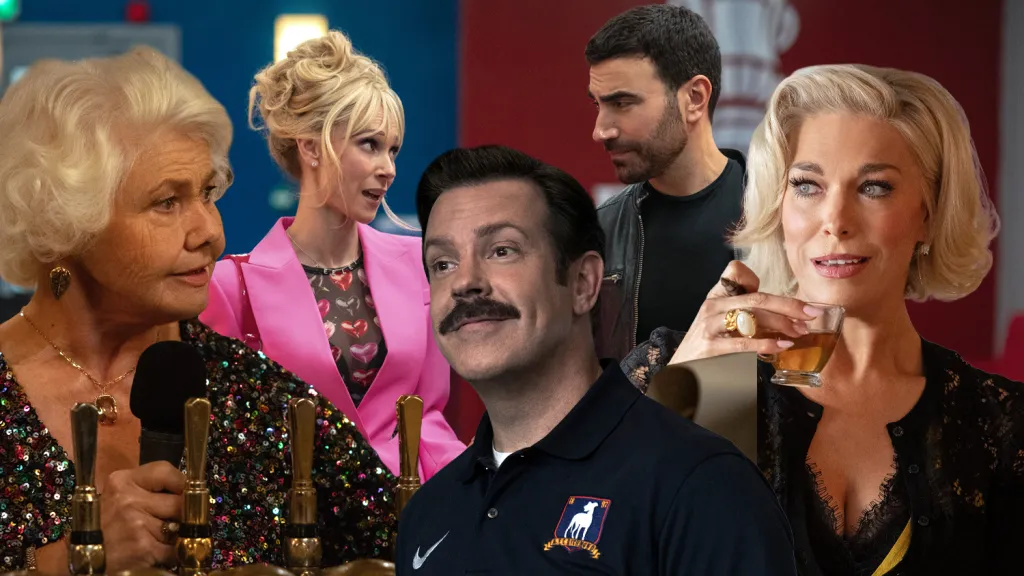
SPOILER ALERT: This post contains spoilers for Ted Lasso Season 4, Episode 9, titled “Mae Rides The Bus,” now streaming on Apple TV.
The title of the second-to-last episode of Ted Lasso Season 4 hints at a goodbye to a beloved character who has been around since the first season.
Episode 9 bids farewell to Richmond’s own Mae Green (Annette Badland) who dies doing what she loves: supporting the Lady Greyhounds at their away match against Bristol City in the stands.
“That’s what happens. You’re involved with folks, and they disappear. They go, and she loved her life,” Annette Badland told Deadline. “She made the very best of her life and really relished it. So she went, I suppose, for her, in the very best way.”
The Crown & Anchor pub owner was invited to take the team bus to the away game after she had hinted that it would be difficult for someone with her “level of seasoning” to make the two and a half hour drive. Thus, Ted (Jason Sudeikis) and Coach Beard (Brendan Hunt) invite her on the shuttle with all of the players, and they embrace Mae as one of their own on the drive.
RELATED: ‘Ted Lasso’ Episode 6 Recap: Phil Dunster Returns & New Believe Sign Debuts On New Year’s Eve
“I love the Lionesses, so I was thrilled when [Season 4] happened, and the girls are tremendous and effervescent and glorious to be around. The pub quiz scene took a couple of days to shoot, but that was like a tidal wave coming,” Badland said. “They are just so full of energy and life. So that was just something wonderful to be involved in, and just enhanced all the feelings and the camaraderie. And Mae couldn’t play football, wasn’t allowed to play football, I’m sure she’s had a lot of bad stuff in her life, but she just carries on and defies the odds and just keeps on pitching. That’s an excellent story to tell.”
In the below interview, Badland unpacks Mae’s legacy left on the series, transitioning from the men’s team dynamic of the first three seasons to the Lady Greyhounds and how Mae might come up in the finale episode.
DEADLINE: Did you know about this episode for Mae when you signed on for Season 4? How did you react when you found out what would happen for her in Episode 9?
ANNETTE BADLAND: No, I didn’t know, and I didn’t know till about, I suppose, maybe November. We were only an episode away filming that. I was shocked, but I’m very proud being in the show, and I admire Jason [Sudeikis]. I think the series is so successful because people smell it’s very genuine. The audience know it’s not made cynically. It’s not a product. It’s something Jason wants to say about the world and how we are, so you have to trust that.
I don’t know when I’ll die. You just don’t know. So, being told that it was going to happen quite close to it being filmed, you just have to go. ‘Well, that’s [that]. He told me in the storyline, so he started at the beginning [with] “I invite her to come, and blah blah, and she won’t drive, and then she comes to the grounds and she goes in the bus,” and I’m going, “Oh wow, this is…” and then “She passes.” [Gulps.] But hopefully that’s what will happen for the audience too.
DEADLINE: How did you want to approach the speech you gave in the locker room before the game? There’s the moment in the bus before where they’re like, “We’re gonna grill you about your whole life and everything you know. How did you approach those scenes with the end of the episode in mind? What you wanted to leave on the field, for lack of a better way to put that?
BADLAND: I think not giving in. She’s very outspoken. She’s a lioness who will defend you till the nth degree once you’ve got her heart and respect. Being an older woman, where you do become invisible, Mae’s never going to be invisible. She will not allow that to happen. I get ignored. You’ll stand at a counter, and people won’t bother, or they’ll walk into you. “You’ve had your time, move aside.” And Mae would not allow that, and was still in there pitching and relishing.

L-R: Jason Sudeikis and Annette Badland in Season 4 of ‘Ted Lasso’
Apple TV
DEADLINE: What does it say about her that she wants to sit in the audience stands or the supporters side versus the box with Rebecca and everyone?
BADLAND: Yeah, not her people, and she might have felt constrained. “Well, I’m not going to sit and behave myself or feel the fool because I’m sitting with you.” I’ll go where the folk that really scraped together to get the money, who are dedicated, [are sitting]. Even although it was her pub, she’s not part of a hierarchy. Everybody’s judged on how they are. Just not her style. Go and be with the real fun.
DEADLINE: There’s the hint of the shares and the battle that’s going on there. And Mae has shares, and she was like protecting her patrons at the pub. Can you tease anything about how could she could leave an impact that way too on the team?
BADLAND: Well, she had a very large pile of shares. I mean, they were about “yay high” (gestures to table height she sits at.) She uses them to good effect. Her instructions are for them to be used in a particular way that is quite good.
DEADLINE: I love her relationship with Ted’s son this season too. I was hoping you could talk about working with Grant and any wisdom she maybe has left with him?
BADLAND: He is a delight. He’s a beautiful young man, and bright. We got on terribly well, and I shall miss him. Really, it was great having that element in the pub too. Another side of her. I can’t tease you with anything, I don’t think, but he knows what he’s doing now with a tea towel.
DEADLINE: Keeley’s pregnancy is revealed in 409, and I’ve heard some people talk about the cycle of life and how someone passes and then a new life comes into the world. So I was curious if you had any thoughts on those themes for episode nine?
BADLAND: Oh yes, well it’s absolutely true, isn’t it? We move along. We’re here for a very short time, and the next wave, the next group of people comes in. I’m delighted for Keeley, just delighted, and poor old Roy.
DEADLINE: This episode felt like such a great send off for Mae, but could we still see a funeral or something in the finale?
BADLAND: You could, maybe. I guess, or it’s like, “Oh well, that’s it.” [They could forget about her.]
DEADLINE: What do you think she would want as a celebration of her life? Have you thought about that at all?
BADLAND: Oh, she’d have asked for a tremendous party at The Crown and Anchor. Everyone invited. Jason did modify some of 410. We talked after he told me about her passing, and he did, because that’s how he is. He’s responsive and collaborative. So he did change some of the stuff in 10, or incorporated what we talked about. She doesn’t just [go away]. She has, not an appearance, but she is still within the context.
DEADLINE: I’m also worried-not worried, but the pub was her thing. So I hope it’s in good hands in the future.
BADLAND: So does she. Oh yes.
DEADLINE: Anthony Head gets an acknowledgement in 409, and Rupert gets his mention too. How did that all weave together with Mae also leaving? What are your thoughts on that? You had scenes with Anthony in the past.
BADLAND: He came in the pub. The darts, and we were around. He came in more than that, but that was the main one. He was a beautiful man, and he will be much missed. He was charming and funny and generous, and we’d have naughty little sort of asides. And I had wondered why we weren’t — I assumed he would be in this last [season] and didn’t know, as I think very few people knew, he was ill and just couldn’t do it.
So we will miss him, and I respect him, and I think it’s a great honor to be in the episode that is dedicated to him.
DEADLINE: How did it feel embarking on this new chapter of the show after the previous three seasons with the men’s team, and how much do you think it meant to Mae? Could you talk about that transition and leaving the show behind?
BADLAND: Well, when we finished [Season 3], we didn’t think there would be another. Jason had said, “I’ve got a three series arc, that’ll be it.” And then to go back and to take, it’s very exciting because it’s a risk, isn’t it?
A female team [is] quite quite different, and the men have come with it. The male audience have gone with it, like they do with the genuine footballers. And there’s good stories, different stories in there, different tales to tell. So, I’m absolutely thrilled that it seems, in England, certainly, to have taken off this year. People don’t know what to do. They don’t know whether to watch it episode by episode or to binge watch it. They can’t wait to binge it. So that’s thrilling, absolutely thrilling. I’ve had a great time. I’m privileged to have been part of it, and I’ll just have to be in the stands, won’t I? And see how they progress.
Or there is a film called Wonderful Life, where an angel [comes down.]
Annette Badland in ‘Ted Lasso’ Season 4
Apple TV
DEADLINE: I could see them incorporating it. I love that movie. We watch it every Christmas. She would be such a great Clarence-esque character.
BADLAND: Yeah, popping up in someone’s conscience and tearing them off a strip or whatever. Or giving them information.
DEADLINE: I feel like Beard may need some of that for some reason. Because we don’t see his reaction, at the end of the episode. We see it’s Rebecca’s telling Ted, you don’t see the words pass, but just from his actions, you know that she’s died. But yeah, I guess curious to see what will happen with him. I love that idea. I hope you’ve pitched that and that it comes to light in the future.
BADLAND: As soon as he said she passed, I said, “Oh, can I come back as an angel?” So we did talk about it.
But he doesn’t do the predictable, does he? That’s what’s so delightful.
DEADLINE: That’s all I had, unless you wanted to add anything else about what fans come up to you and say when they recognize you from the show, or any last words before we go.
BADLAND: Ah, encountering them is terrific, and I’m very proud to have been in this because I still get messages from people saying, you know, things like “My mom’s very ill with cancer. She comes home from her treatment. We all pile on the bed. We put Ted on. We believe. We laugh.” So that’s a just tremendous thing to have in the world, and to be connected to it, and feel you’ve done that for folk. No bad thing, eh?
>


Search For Canadian TV Actor Stewart McLean Now Homicide Investigation


These ’90s fashion trends are making a comeback in 2017
According to Dior Couture, this taboo fashion accessory is back
Model Jocelyn Chew’s Instagram is the best vacation you’ve ever had
Emily Ratajkowski channels back-to-school style
9 Celebrities who have spoken out about being photoshopped


Rurouni Kenshin: Hokkaido Arc Manga Takes 1-Issue Break – News


HIDIVE to Stream English Dubs for The World Is Dancing, The Forsaken Saintess and Her Foodie Roadtrip in Another World, The Dangers in My Heart: The Movie Anime – News