
Entertainment
Cannes review: Teenage Sex and Death at Camp Miasma


There are images and shots crafted in Jane Schoenbrun’s “Teenage Sex and Death at Camp Miasma” that we still don’t have words for. Some films come to you not as media you watch but visions that possess you, and that approximates the haunting and spellbinding world that Schoenrun and their collaborators have so lovingly crafted. It’s a world where slasher killers slam dead campers against tetherball poles till they explode, where bodies line the walls of a video store like fiberglass insulation, where a scene of Gillian Anderson seductively holding a cornucopia of KFC dissolves an ignited fireplace.
Skewering everything from transphobia in slasher films to Hollywood’s hypocrisy of supporting “woke” stories only when it’s convenient, Schoenbrun has established themselves as a master portal maker. They’ve always been adept at making digital worlds – whether they be television shows in “I Saw the TV Glow” or the recesses of the internet in “We’re All Going to the World’s Fair” – as “private alternate universes” (as one character says in the film). These virtual worlds offer safety and the ability to be seen that the outside world fails to provide.
With “Teenage Sex and Death at Camp Miasma,” Schoenbrun further interrogates their relationship to these spaces and the tension between the tragedy of their necessity and the beauty of their reality. What happens to these spaces when we feel comfortable in our bodies again? Does resurrection always have to require a type of death first? Is there ever a point in our lives where it’s too late to transform? That the film manages to make room for these ideas while
lacing it all with enough tacky genre thrills to make it all palatable and thought-provoking is a miraculous feat in its own right.

The film’s opening sequence wastes no time in making this world feel lived in. An up-and-coming filmmaker, Kris (Hannah Einbinder), is hired to direct a remake of the long-running slasher film “Camp Miasma” series. As Kris cleverly notes, her hiring kills two birds with one spear: Hollywood is ever hungry for old IP to exploit, and by hiring an LGBTQ+ filmmaker, the studio can wave away criticism over revising a notoriously anti-trans franchise.
As Okay Kaya’s “Nightswimming” plays over the opening credits, we see the story of “Camp Miasma” through merchandise and newspaper clippings, tracing the way the film went from a surprise cult hit to an oversaturated franchise over the span of a few installments. Board games and a magazine cartoon mocking the series shows how quickly stories can be ground into mediocrity under the Hollywood machine.
Kris wants to give a role in the remake to Billy Presley (Gillian Anderson), who as a teenager had played the final survivor in the first “Camp Miasma” movie. She takes a meeting with the retired actor, who has set up her home in the abandoned camp where the original films were shot. Their conversations start awkardly enough, but it’s evident that there’s a connection between them that goes deeper than just curiosity. It’s not just desire, but a hunger between the two women that brews beneath their eyes, as emotional guardrails go down and the two discuss their creative and personal lives. It’s easy to get caught in the spell of their bewitching attraction.

The real treat is that this is really multiple films in one. We’re treated to extended sequences from past “Camp Miasma” that are fully realized works of art in their own right, including an uproarious extended massacre sequence choreographed to Counting Crows’ “A Long December.” These re-creations are a testament to the respect Schoenbrun has for thresholds, those strange, colorful, and often violent portals that were our safe spaces when we had nowhere to go.
As if to further underscore this theme, Kris confesses, “Sometimes, I kind of am my work” to Billy. For rest of the film, Kris works to untangle herself from her vocation, to get to the core of who she is rather than hiding it through overwork. She’s long felt insecure about herself, and she soon realizes her time with Billy is a portal in and of itself, a way for her to come to terms with how she’s become estranged from her own body and ashamed of her desires.
You feel the joyful sense of collaboration between production designers Matt Hyland and Brandon Tonner-Connolly, art director Courtney Stockstad and set decorator Hana Cook in the blood-soaked world of the “Camp Miasma” films or in Billy’s camp home, which feels like a Lynchian version of Narnia. While the film is primarily a two-hander between Anderson and Einbinder, the “Camp Miasma” sequences are a way for new and old collaborators of Schoenbrun’s to appear and leave a memorable impression even if they’re quickly dispatched. Of particular note is Eva Victor as DJ Ella Giastic, who plays into the gregariousness of their character’s spiky hair and punk rock attitude, while still allowing for shades of tenderness and humor to bleed through.
In her poem “Effigy,” Gabrielle Bates writes, “What the self forms around / cannot be undone,” and later, “How am I to live if this is who I am?” These words seem sown in the very DNA Schoenbrun’s work, which has explored this delicate, painful nature of uncoupling one’s self and soul.

There are certainly sequences and motifs (including a cornucopia of food brands) that may feel a bit too much to fully process, but that’s a feature of “Teenage Sex and Death,” not a bug. In many ways, the inability to form cohesive or coherent thoughts after viewing the film is a sign of its odd potency and staying power.
It’s hard to totally accept, let alone fully digest, a new gospel when you first encounter it, but the gift of work like Schoenbrun’s is that, above all else, it is characterized by a charitable spirit of invitation. Settle into their assured and madcap wavelength and watch the scales fall from your eyes. Be sure to bring plenty of gummy candy; as Kris points out, it’s the golden age for it, after all.
>
>
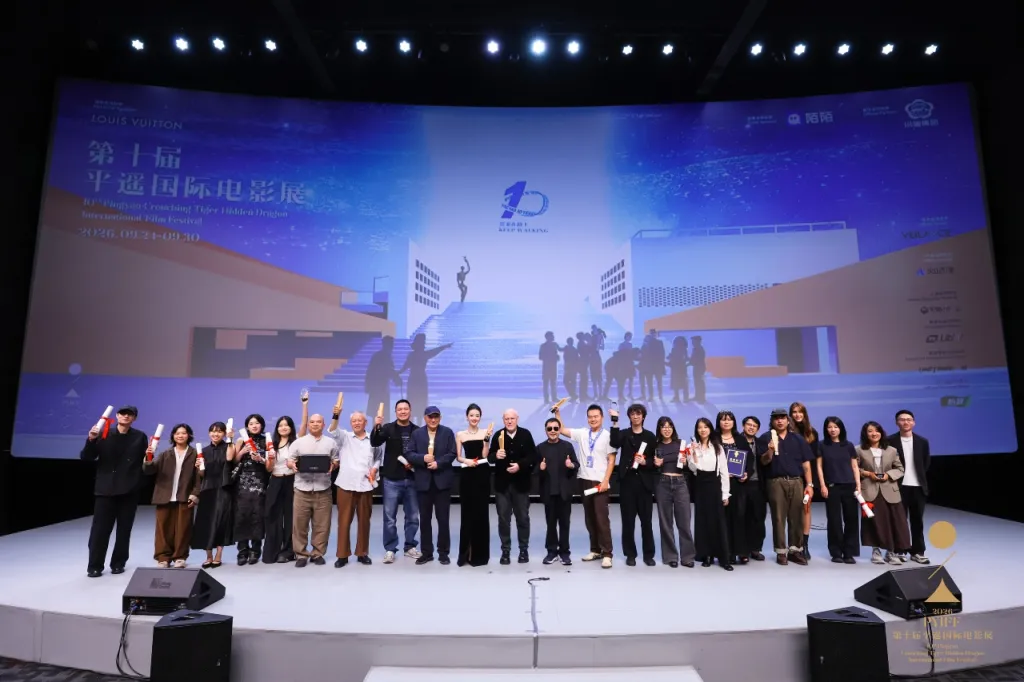
Chinese director Niu Niu’s Final Payment scooped the Best Film Award in the Fei Mu Awards of this year’s Pingyao International Film Festival (PYIFF), while Rafiki Fariala’s Congo Boy won Best Film in the festival’s Roberto Rossellini Awards.
Final Payment, which also won Best Actor for Niu Jianrong’s performance, revolves around a homeowner clashing with a contractor over the final payment following a set of renovations on his home. PYIFF’s competition jury stated: “Tearing through a very small rip, the film leads us into a reality and emotional landscape so expansive, where we sigh, lament, and reflect. The director’s approach is concise, unpretentious, and masterful, earning the wholehearted recognition of the entire jury.”
The Best Film award came with a cash prize of $150,000 (RMB1m) with half given to the director for the development of their next film, and half given to the distributor in China. Niu Niu previously directed Mr Junjun, which was awarded with the Jury Award and Youth Jury Award at PYIFF in 2023.
Also in the Fei Mu Awards, Xu Zao won Best Director for Light Pillar, while Best Actress went to Sun Yi for Wang Xiaozhen’s A Joke. The Jury Award was presented to Dong Jie’s Zoom In, Zoom Out, which had its world premiere in Venice Critics Week, while a special mention went to Cai Chengjie’s Suzhou Quartet.
The Fei Mu awards are focused on the festival’s Hidden Dragons section, which selects first, second and third films from emerging directors making Chinese-language films, while the Roberto Rossellini Awards focus on the Crouching Tigers section for emerging international directors.
Congo Boy, which took Best Film in the Roberto Rossellini Awards, also won Best Actor when it premiered in Un Certain Regard at this year’s Cannes film festival. The PYIFF award came with a cash prize of $20,000, with half given to the director for the development of their next film, and half given to the distributor in China.
The PYIFF jury stated: “The Jury unanimously has been moved by this autobiographical story, told in a simple style that echoes the great tradition of neorealism. For a film focusing on a character that confronts his world with optimism despite dark times and takes on his shoulders the destiny of his entire family.”
Also in this section, the Philippines’ Rafael Manuel won Best Director for Filipiñana, while the Jury Award went to Ben’imana, directed by Marie-Clémentine Dusabejambo, which won the Camera d’Or at this year’s Cannes. The jury also awarded Rakan Mayasi’s Yesterday The Eye Didn’t Sleep a Special Mention.
Hong Kong filmmaker Ann Hui received the Crouching Tiger Hidden Dragon East-West Award, shortly before she receives the Camellia Award at Busan International Film Festival next week.
Pingyao’s International Contribution To Chinese Cinema Award went to Marco Müller, who founded the festival with Chinese auteur Jia Zhangke and currently serves as Artistic Director of the Film Art Research Centre at Shanghai University, and veteran producer, director and former chairman of China Film Group Han Sanping. Hello Group chairman Tang Yan was presented with a 10th Anniversary Award.
This year’s PYIFF opened on September 24 with a screening of the 4K restoration of Fei Mu’s Spring In A Small Town; closed with Good Trip, co-directed by Hong Kong filmmakers Norris Wong and Hoi Wong, and also screened Jia’s short film Torino Shadow, which premiered at this year’s Cannes.
PINGYAO INTERNATIONAL FILM FESTIVAL 2026 AWARDS:
FEI MU AWARDS:
Best Film: Final Payment, dir: Niu Niu
Best Director: Xu Zao, Light Pillar
Best Actress: Sun Yi, A Joke, dir: Wang Xiaozhen
Best Actor: Niu Jianrong, Final Payment, dir: Niu Niu
Jury Award: Zoom In, Zoom Out, dir: Dong Jie
Special Mention: Suzhou Quartet, dir: Cai Chengjie
ROBERTO ROSSELLINI AWARDS:
Best Film: Congo Boy, dir: Rafiki Fariala
Best Director: Filipiñana, dir: Rafael Manuel
Jury Award: Ben’imana, dir: Marie-Clémentine Dusabejambo
Special Mention: Yesterday The Eye Didn’t Sleep, dir: Rakan Mayasi
>
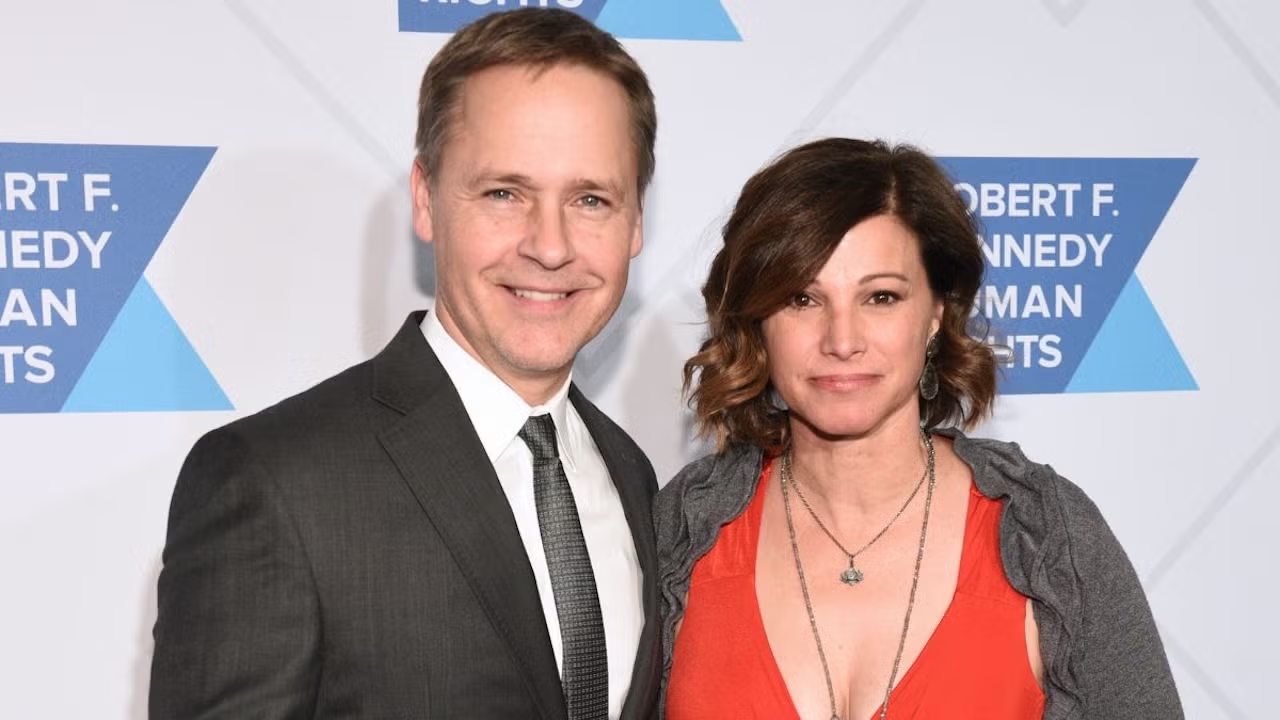
Actor Chad Lowe and producer Kim Painter’s 13-year-old daughter, Fiona, has died, according to a statement from the teen’s family.
“We are deeply heartbroken by the loss of our beloved Fiona,” the Lowe family said in a statement to media Tuesday evening. As the family went on, they remembered Fiona as “a loving young girl who was smart, creative, and loved to dance.”
“She was adored by her sisters and she was deeply loved by her parents,” the family’s statement added. “In fact, she was the light of our lives.”
While a cause of death was not immediately shared, the Lowes alluded to Fiona’s mental health struggles, writing, “Her passing is devastating for our entire family and we ask for prayers and privacy at this time. If you or someone you know is struggling with mental health, please reach out to the 988 Suicide & Crisis Lifeline by calling or texting 988.”
More to come…
>

Flex your football brain with our daily quizzes

Mazenchu Anime Posts Opening Video Narrated by Actress First Summer Uika – News
Breaking down a sensational Spain goal: 70 seconds, 26 passes and an unerring Lamine Yamal
-

 movies4 months ago
Search For Canadian TV Actor Stewart McLean Now Homicide Investigation
-

 Fashion9 years ago
These ’90s fashion trends are making a comeback in 2017
-
Fashion9 years ago
According to Dior Couture, this taboo fashion accessory is back
-
Fashion9 years ago
Model Jocelyn Chew’s Instagram is the best vacation you’ve ever had
-
Fashion9 years ago
Emily Ratajkowski channels back-to-school style
-
Fashion9 years ago
9 Celebrities who have spoken out about being photoshopped
-

 Anime4 months ago
Rurouni Kenshin: Hokkaido Arc Manga Takes 1-Issue Break – News
-

 Anime3 months ago
HIDIVE to Stream English Dubs for The World Is Dancing, The Forsaken Saintess and Her Foodie Roadtrip in Another World, The Dangers in My Heart: The Movie Anime – News