
movies
Exclusive: Maika Monroe Takes on Serial Killer in ‘Victorian Psycho’

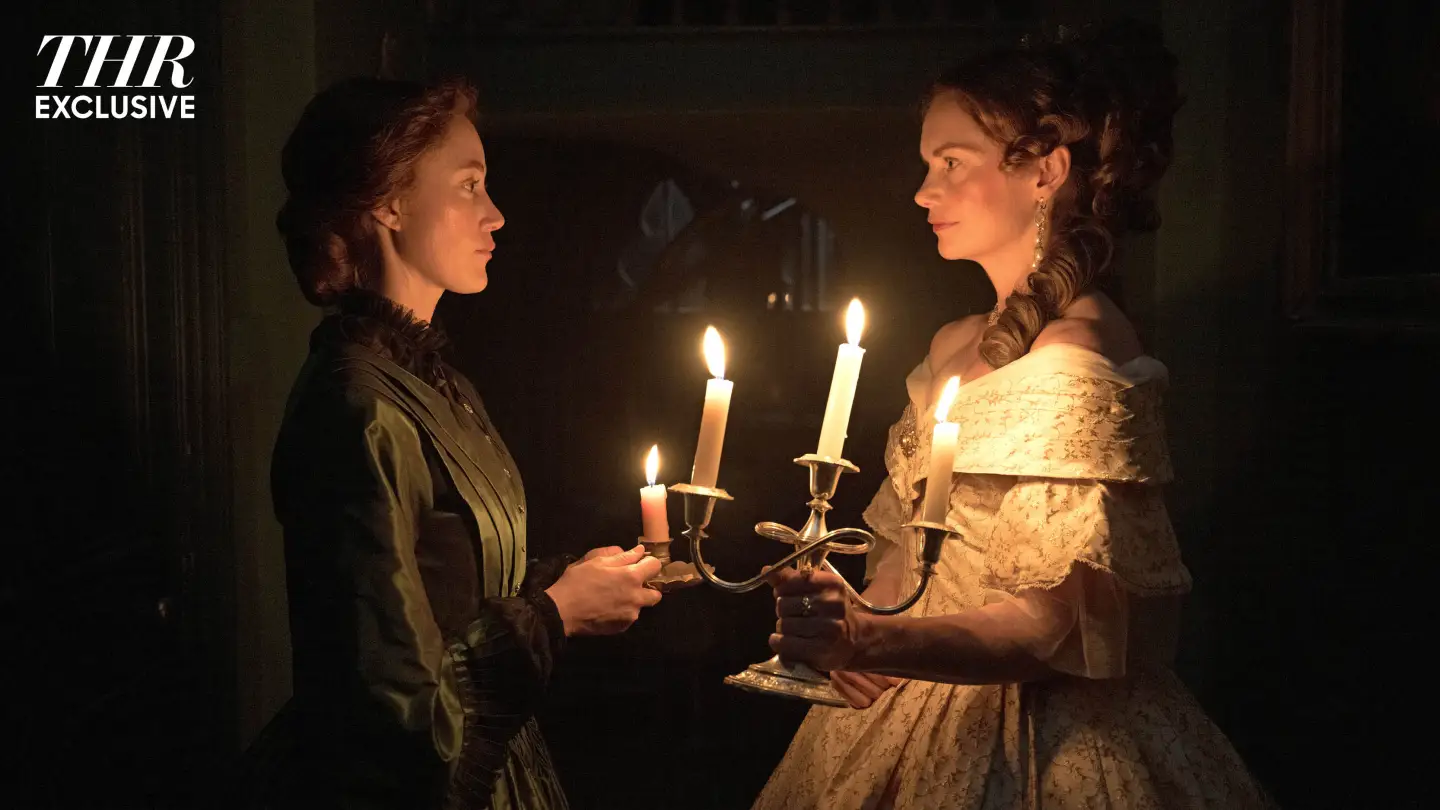
Maika Monroe may have starred in multiple defining horror films of the last 10-plus years, from her breakout in It Follows to the recent box-office smash Longlegs, but no amount of scream-queen credits could prepare her for the gory terror of Victorian Psycho.
“It terrified me. I knew that it would be the hardest role that I have ever done — and so incredibly different from anything I’ve ever done,” the Santa Barbara native says. “There’s always a little part of me in roles that I do, something that I can ground it with or connect it with within my own personal life — but this role was really a departure from that. It was working from the ground up, creating this character where I couldn’t rely on my own self. It really, in the most magical way, took a toll on me. I felt it every day.”
Set in 1858 and adapted by Virginia Feito from her own novel, Victorian Psycho stars Monroe as Winifred Notty, an idiosyncratic young woman who arrives at the wealthy Pounds family’s old gothic manor, claiming to be the house’s new governess. She’s eager to please, but only reluctantly welcomed in by the matriarch and patriarch (Ruth Wilson and Jason Isaacs), and is tasked with watching over and teaching their children. She bonds with a fellow employee of the house, the kindly Ms. Lamb (Thomasin McKenzie), and expresses a plucky determination to fit in.
“It’s fascinating to see an outsider who desperately wants to be an insider, and it’s simply impossible,” says director Zachary Wigon (Sanctuary). “It’s a very, very deep paradox. She will never belong — and she will never stop wanting to belong.”
Those irreconcilable truths are but one reason why things start going so very wrong inside the Pounds household. People go missing; blood starts littering the garden, the hallway, the kitchen. This isn’t just any oddball employee slowly losing her grip on her job. “I remember reading the manuscript of the novel, and it’s like, ‘What is this woman going to do?’” Wigon says. “There was an interesting visual language to be had in depicting this woman’s losing of her grip…. What was animating about it from an aesthetic perspective was to do something set in 1858, but with a contemporary style.”
The project came about organically for Wigon, who’d been collaborating with Feito on an unrelated script before she informed him of her then-impending next book. They pivoted to fast-track a screen take on Victorian Psycho and swiftly sold the rights to A24, with Margaret Qualley attached to star. That setup gradually fell apart. “It changed distributors, it comes with the territory of the volatile nature of independent filmmaking,” Wigon says when asked about how the project evolved from the A24 version to a new package headlined by Monroe and distributed by Bleecker Street. “We’re enormously pleased with all the support that Bleecker has given me to bring the film into the world.”
What drew him to Monroe, who’s having a big 2026 as she comes off of leading the commercial success Reminders of Him? “She has this very, very intense internal quality, where you can tell that the gears are whirring and there’s a lot going on in the character’s head,” Wigon says. “I thought it would be perfect for a serial killer because we’re always wondering what’s going on in their head — that’s why this whole industry of nonfiction TV shows and whatnot exists about trying to understand the phenomenon.”
To prepare for portraying a 19th-century serial killer, Monroe went through extensive rehearsals, zooming every week with Wigon to nail down the specific blocking. She needed to nail down the English accent, adjust her mannerisms and body movements. She suggested painfully visible prosthetic teeth. One memorable sequence from the film required Monroe to be covered in fake blood in the cold for an elaborate technocrane shot, at 4:30 in the morning.
In short, Monroe needed to be all in. “I had every scene memorized because you’re running the script so many times — it was so ingrained in my head, and I could still recite probably for years to come,” Monroe says. “This character might be the character that I miss the most.” It helped that each of her principal costars kept her off balance.
Isaacs’ slithery Mr. Pounds shows a discomfiting interest in Winifred. “Your eyes are just absolutely glued to him, and he’s totally unpredictable, and his choices are always unusual as his wife,” Wigon says of the White Lotus alum. Wilson, meanwhile, plays Isaacs’ wife as a kind of desperate shit-stirrer. “Some of my favorite scenes that I’ve ever filmed in my entire career were with Ruth,” Monroe says. “Sometimes in the scenes, I would just be watching her blown away by what she was doing — and I find her role actually incredibly challenging.”
Then there’s the friendship with Ms. Lamb, a rare instance of seeing Winifred and another person able to enjoy each other’s company. “Most times with people, they look at her with a bit of disgust and don’t understand her,” Monroe says. “And for the first time, she feels this bit of connection with a person.” In these interactions, Winifred’s characterization gets more complicated — she’s an unhinged murderer, yes, but she’s after something relatably human. The tension then becomes: What happens if she gets what she is searching for, and what if she doesn’t?
The movie’s arch-horror-comic tone came to Wigon only after the initial script stages. “It’s a little bit more like engineering in the beginning,” he says. “It’s more about the structural math of, ‘How are we going to fit this narrative and how are these scenes going to be arranged?’ “ That led to a one-word descriptor that Monroe says defines his overall approach to the show: “Demented.”
“When I talked to people about it in the beginning, I said, ‘This is a kind of manic madness,’” Wigon says. The presence of Monroe helped matters: “Every single time that we got into a setup, it was like Maika had the character in a vice grip. She never really left. You were always right there. It was like a magnet. It was just amazing to watch.”
The postproduction aspect, Wigon adds, was straightforward — if only because he’d laid out the movie so exactingly before shooting even began. He had access to the castle where they shot for prep. “We had almost everything in the shot list pre-visualized before we started shooting, so in a situation like that, there’s almost zero coverage,” he says. “You don’t really shoot coverage in these situations because you want to max out what you can get stylistically. If you have a more sophisticated or complicated visual idea that’s going to come at the cost of coverage, that’s fine because you’ve visualized it.”
For her part, Monroe saw that all come together in the final edit. “Zach had such specific visuals and certain shots, and you’re filming it like, ‘That looks cool, hope that works out, seems cool’ — and then seeing it all put together, it really blew me away,” she says. “As with most actors, it’s always a bit odd watching yourself, but what was really nice about this project is that it was very different for me — that little part of me was able to take myself out of it.”
Indeed, it’s not just the fake teeth — Monroe may have scared you before on screen, but never quite like this.
***
Victorian Psycho premieres May 21 at the Cannes Film Festival. Stay tuned for more Cannes 2026 first looks and exclusives.
>

EXCLUSIVE: Orange County Choppers Originals is headed out of the garage and travelling to Europe.
Hearst Networks has bought UK rights to the ‘reborn’ ob doc series from Off The Fence, which has boarded the show after striking an agreement to represent it worldwide (excluding the U.S.).
The new series – which aired in the U.S. on Discovery Channel, Discovery Turbo TV, Discovery+, and Discovery GO after launching in February – is the latest chapter in the motorbikes franchise that began in 2002 with American Chopper and is bases around the Orange County Choppers custom bikes business. A second season has been ordered, with the number of eps doubling to 12.
Prior to Orange County Choppers Originals‘ launch, there had been no new American Chopper episodes since 2020’s finale, American Chopper: The Last Ride. At one point, there had been a six-year gap due to legal problems between Paul Teutul Sr. and his son, Paul Teutul Jr., the father and son at the center of the series, but they were ultimately settled and the pair reunited on-screen.
The Hearst agreement, brokered by OTF’s SVP North America and Global Networks, Sam Thompson and Hearst Networks’ Acquisitions Manager, Hannah Gray, marks a first international deal for the revival.
Orange County Choppers Originals is based around Teutul Sr., founder and CEO of Orange County Choppers, who has spent over 30 years crafting custom motorcycles for major corporations and sports teams. The series shifts the focus to his workshop in Florida, where he reunites with some of the original team while introducing fresh talent. It also delves into his personal life, highlighting his charity work and passion for animal welfare and rescue on his hobby farm.
Hearst’s Gray said: “Orange County Choppers has everything we look for in great factual entertainment: big builds, strong characters and plenty of heart. With Paul Sr. back at the centre of the story, we’re excited to bring this new chapter to UK audiences.”
Orange County Choppers Original sees Teutul Sr.’s team design and build one-of-a-kind motorcycles for charitable causes, with each episode following them through engineering challenges, tight deadlines, and unexpected setbacks, culminating in auctions or raffles to raise funds and awareness.
Joan Kay, co-CEO of OCC said: “Everyone loves a comeback story and this one comes with the rebirth of an iconic brand and frankly, Paul Sr. is kicking ass. We’re very excited to partner with OTF on the global revival of the show as the company shares our values of working with entertainment with purpose and has an enviable reach and network of partners around the world across all platforms.
“This show isn’t just television, it has proved itself as a cultural phenomenon with the power to ignite fans and enthusiasts and turbocharge bike culture – we can’t wait for you all to see it.”
OTF’s Thompson said: “We’ve seized this opportunity wholeheartedly because the facts speak for themselves. There’s an existing fanbase hungry for more, with proven ratings, engagement, sponsorship and merchandising potential. We’re especially excited to have Hearst Networks on board as a quality broadcast partner and look forward to sharing the rollout of this rare gem.”
The American Chopper franchise has previously broadcasted in 160 territories in 35 languages worldwide, and OTF’s acquisition offers a new opportunity for buyers at MIPCOM in just under two weeks’ time in Cannes, France.
>

The European Film Academy has named Beki Probst, Marin Karmitz and Sandra den Hamer as the first recipients of its new Community Award for an Outstanding Contribution to European Film Culture.
The award, paying tribute to “a decisive and continuous contribution over many years to the development and expansion of European film culture”, will be presented during the European Film Awards weekend in Athens in January 2027.
The trio will be presented with the award on January 15, on the eve of the main ceremony at the traditional Welcome Night gala dinner, taking place this edition at the Acropolis Museum housing some 4,000 artefacts dating as far back as 1,200 BCE.
Probst is best known internationally as the founder of the Berlinale’s European Film Market, having entered the cinema world as the founder with her Swiss husband of the Queenie Cinemas in Berne in the 1960s, which grew into a successful chain of arthouse cinemas still existing today.
Born into a Sephardic Jewish family in Istanbul, Probst studied Law and Journalism and worked briefly as a film journalist.
From 1981 to 1988, she was the Berlinale delegate for Turkey and Greece and after initiating Locarno’s industry program, she was asked by Berlinale Director Moritz de Hadeln to start the European Film Market in 1988 in its current form.
Under her management, which continued into 2014, the EFM became one of the largest and most important international film market in Europe.
She has previously been feted with the Berlinale Camera, the Prix du cinéma Suisse, the French Chevalier des Arts et des Lettres and the Order of Merit of the Federal Republic of Germany.
Karmitz is known as the founder of France’s independent exhibitor, producer, film financier and sales agent mk2 film. Born in Romania in 1938, Karmitz arrived in France as a refugee with his family in 1947.
After studies at the IDHEC film school in Paris, he worked as assistant director to the filmmakers Jean-Luc Godard, Agnès Varda, Jacques Rozier, Yannick Bellon and Pierre Kast. before directing his first short film, Nuit Noir, Calcutta, based on a screenplay by Marguerite Duras, in 1964.
In 1965, he worked with Samuel Beckett on the adaptation of Comédie. In the same year, the feature was selected to open the Venice International Film Festival and shocked audiences with its avant-garde material.
He launched mk2 Productions in 1967 and made his feature-length directorial debut with Seven Days Somewhere Else (1968), followed by Comrades (1970) and Blow for Blow (1972), which were screened at international festivals.
He opened his first cinema in Paris in 1974 in response to Blow for Blow, about a group of textiles workers who take their factory boss hostage in protest at the work conditions, being shut out of mainstream circuits.
In 40 years, he would produce 108 films and distribute over 350 in theatres, among them Krzysztof Kieslowski’s Three Colours trilogy, for which he received a nomination for the European Film Awards 1994, twelve films by Claude Chabrol, Alain Resnais, Louis Malle, the Taviani brothers, Theo Angelopoulos, Lucian Pintilié, Gus Van Sant, Ken Loach, Abbas Kiarostami, Hong Sang-Soo, Michael Haneke, Walter Salles and Xavier Dolan.
Den Hamer has an extensive track record in the Dutch film industry.
From 2007 to 2023, she was the director of the Netherlands Filmmuseum in Amsterdam. Under her leadership, the re-named Eye Filmmuseum opened a brand-new museum building and a new collection centre in Amsterdam.
Its eclectic programming includes large retrospectives, international conferences and as well as exhibitions, exploring the work and careers of filmmakers such as Bela Tarr, Apichatpong Weerasethakul and Alex van Warmerdam among many others.
Before that, Sandra den Hamer worked for 23 years at the International Film Festival Rotterdam, including roles as co-ordinator of CineMart and the Hubert Bals Fund. From 1996 to 2007, she directed the festival.
She also served as President of the Board of the Association of European Cinematheques (A.C.E.). From 2023 to 2026. she was appointed interim executive director at the Netherlands Film Fund. Today she chairs the Board of the IDFA Institute and the Gerrit Rietveld Academy in Amsterdam.
Gathering 5,700 members from more than 50 countries across Europe, the European Film Academy oversees the annual European Film Awards, which alternates taking place in its home city of Berlin and another European city, which is Athens this year.
The 39th ceremony marks the second time it is unfolding in its new January slot, after the academy decided to shift it from a long-running December slot to integrate the awards more fully into the wider awards season.
>
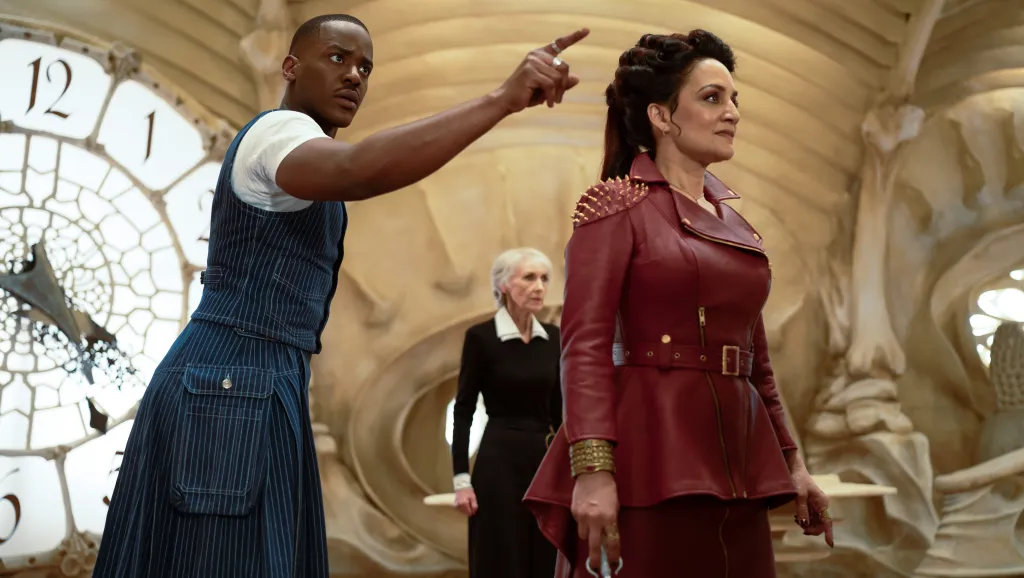
EXCLUSIVE: At least one BBC Studios indie will be throwing its hat in the ring to become the next producer of Doctor Who, with scripted boss Jamie Hall telling Deadline he “firmly believes” the entire BBC group should “reap the rewards” of the iconic sci-fi series.
Hall said “we’ve probably got one, potentially two companies” going for the multi-million pound tender, which if successful would bring the show back in house following two seasons made by Sony-owned Bad Wolf, starring Ncuti Gatwa. His comments followed BBC Studios CEO Tom Fussell recently saying BBC Studios would be applying “with gusto.”
Hall wouldn’t reveal the names of the indies but said he would “100%” be happy for more than one to enter the race.
BBC Studios runs an in-house drama label, which made Doctor Who before Bad Wolf, while it also owns several scripted indies outright including Baby Reindeer maker Clerkenwell Films, Happy Valley producer Lookout Point and Sherwood indie House Productions.
While he hasn’t seen his labels’ proposals, Hall said he has been “very open” and honest with those keen to go for the tender because the process is “quite an onerous undertaking and costs quite a bit of money.” “I have to make sure that it doesn’t become a distraction from the day job,” he added.
If two BBC Studios labels enter, they will likely join Line of Duty producer World Productions, whose boss Simon Heath has previously indicated his ITV Studios-owned outfit is interested. More thoughts from producers can be found in our future Doctor Who analysis from over the summer.
Published a fortnight ago, the tender calls for a “relevant, surprising, brave and inspiring” new vision for the show that should premiere in 2028-29. Notably, it said it is happy for indies to pitch a series using “episodic writers” rather than a “showrunner model,” which would do away with how Doctor Who has been made in recent years.
After several years with Bad Wolf and after the termination of the just-ended Disney+ co-pro deal, Hall was adamant that Doctor Who “should sit within the BBC and the whole group should reap the rewards of it.”
Questioned on what he would want to see from a revamped Doctor Who, Hall harked back to the days when Matt Smith and David Tennant were playing the Doctor.
“It feels to me that there is an opportunity to get back to what the core offering was in that time,” he added. “It will be off screen for two or three years and that gives the audience a great chance to have a break then rediscover, while also bringing a new audience.”
>

Hearst Networks UK Buys Rebooted ‘Orange County Choppers Original’

‘Mahou no Princess Minky Momo: Akogare no Yume e – Magokoro no Duo’ Theatrical Release Postponed
Jalen Duren could turn down $200 million from the Pistons. Here’s what happens next
-

 movies4 months ago
Search For Canadian TV Actor Stewart McLean Now Homicide Investigation
-

 Fashion9 years ago
These ’90s fashion trends are making a comeback in 2017
-
Fashion9 years ago
According to Dior Couture, this taboo fashion accessory is back
-
Fashion9 years ago
Model Jocelyn Chew’s Instagram is the best vacation you’ve ever had
-
Fashion9 years ago
Emily Ratajkowski channels back-to-school style
-
Fashion9 years ago
9 Celebrities who have spoken out about being photoshopped
-

 Anime4 months ago
Rurouni Kenshin: Hokkaido Arc Manga Takes 1-Issue Break – News
-

 Anime3 months ago
HIDIVE to Stream English Dubs for The World Is Dancing, The Forsaken Saintess and Her Foodie Roadtrip in Another World, The Dangers in My Heart: The Movie Anime – News