
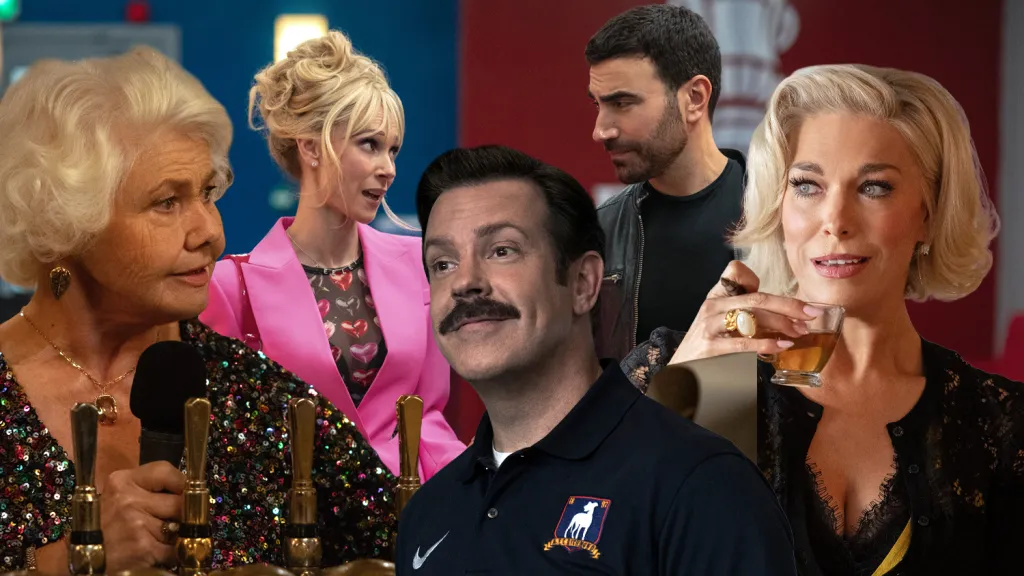
L-R: Jason Sudeikis and Annette Badland in Season 4 of ‘Ted Lasso’
Apple TV


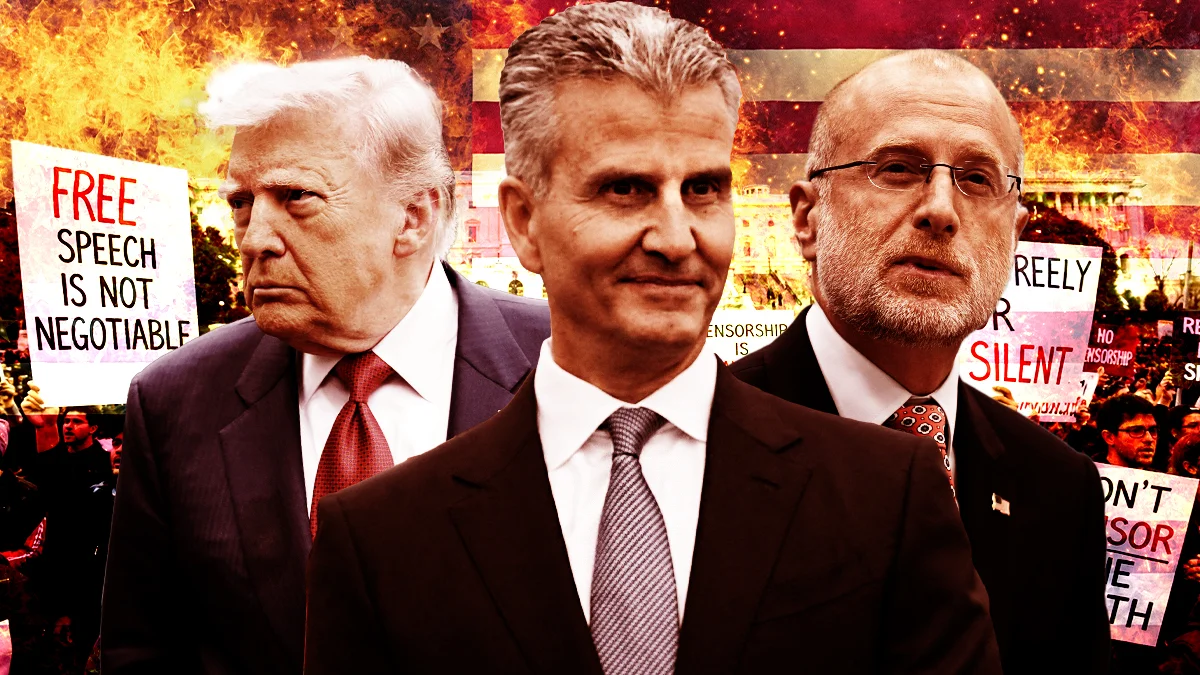
Jimmy Kimmel, ABC’s embattled late night host, closed out Disney’s annual upfronts presentation to advertisers on Tuesday with a quip that summed up his last year in the Trump administration’s crosshairs.
“I didn’t think I’d ever see you guys again either,” he told the crowd at Manhattan’s Javits Center, which erupted into thunderous applause when he walked out.
Last year, under Bob Iger’s second tenure as Disney CEO, that seemed like a real possibility as Kimmel was pulled off the air amid Donald Trump’s calls for his firing. Now, two months into Josh D’Amaro’s leadership amid renewed calls from the White House to fire Kimmel and the Federal Communications Commission threatening ABC’s “The View,” Disney is biting back.
Disney’s 52-page brief to the FCC last week marked a pivot from its conciliatory approach to Trump’s second term as president under Iger, which included a $16 million settlement in a defamation case experts believed it could have won and a temporary suspension of Kimmel after FCC Chairman Brendan Carr threatened the company.
Instead, Disney rebuked the federal regulator’s yearlong pummeling of the company, including an investigation into the diversity practices of eight local ABC affiliates that culminated last month in a demand they file for early renewal of their broadcast licenses.
That final demand may have been what crossed the line and forced Disney to take its more aggressive approach.
“Chairman [Carr] has given them no choice but to push back,” Bob Corn-Revere, chief counsel for the Foundation for Individual Rights and Expression, told TheWrap. “It’s one thing to try and jawbone your way into modifying a licensee’s behavior. But once you start taking various regulatory actions, like the investigation over ‘The View,’ or like the designation of earlier license renewal, then it’s sort of an action-forcing event.”
In an interview with TheWrap, Anna Gomez, the lone Democratic FCC commissioner, said Disney has “learned a lesson that other companies and organizations also are learning, and that is that capitulation does not buy protection.”
“Instead, it invites more harassment,” she added. “This time, Disney has chosen courage over capitulation, and they will win in any challenge that they bring against this administration’s attempts to silence it.”

Gomez on Monday sent a letter to D’Amaro praising the company’s decision to rebuff “a sustained, coordinated campaign of censorship and control” — a rare show of support by a commissioner over an FCC matter.
“The fight ahead may not be easy, but the law, the facts, and the public are on your side,” Gomez wrote. “This is a fight worth having, and one that I am confident you will win.”
Even Kimmel is showing teeth, taking aim at CBS’ decision to cancel “The Late Show” — one many saw as a capitulation to the Trump administration — while appearing alongside Stephen Colbert with his fellow late night hosts on Tuesday.
“When I got knocked off the air for a few days, people canceled Disney+,” Kimmel said. “Why aren’t you people canceling Paramount+? Because you didn’t have it in the first place?”
Paramount declined to comment.

As for D’Amaro, he took the upfronts stage on Tuesday and, rather than showing his muscles, he painted a portrait of his love for Disney and why this particular entertainment brand is so special.
“That feeling, the one that does not fade, the one that becomes part of who someone is, that is our entire business,” he told a room of thousands of ad executives and anyone else who might be listening. “No focus group invents that. No algorithm produces it. No amount of capital can buy it. That is what every audience, every sponsor, every brand in this room is actually trying to buy.”
He went on: “The thing is, you cannot acquire a hundred years of trust. You can’t put generations of belonging on a balance sheet. And in a world of infinite choice and constant distraction, that kind of presence is rare, and getting rarer.”
An FCC spokesperson did not respond to a request for comment.
Disney’s decision to not just stand its ground but forcefully push back on the FCC’s actions stands in stark contrast to the more passive tone the company struck throughout 2025, and while a spokesperson did not respond when asked why the D’Amaro-led company took a defiant stance against the FCC, Corn-Revere said Disney didn’t have many other options.
He called Carr’s demand for an early renewal process a “blunder” that he speculated was a job-saving effort to show Trump he would pursue actions against his media enemies. Still, Corn-Revere said, the efforts have not gone far: Kimmel remains on the air, and the legal process of the FCC’s ABC license demand will drag on beyond Trump’s tenure.
“In terms of sort of a lasting impact, [Carr’s] informal actions have backfired, and the more he moves toward taking formal actions, the more he moves closer to having some kind of accountability for what he’s doing,” he said.
The political environment is different now, too, with Trump’s popularity considerably lower than it was when Kimmel was first pulled off the air. Calls from the president and his wife Melania Trump to reprimand the late night host a second time failed to gain the widespread support that spurred Iger and Dana Walden to take action last year, and the FCC’s attempt to go after “The View” is seen by most experts as an attack on the First Amendment.
Gomez, the Democratic commissioner, said Carr’s actions go beyond the FCC alone. Instead, she said they were part of Trump’s “administration-wide campaign to bring any perceived critics to heel and just to basically send a message to other broadcasters, speakers, critics, that this administration will come after them if they displease the administration.”
She wouldn’t speculate why Disney under D’Amaro was willing to speak out now instead of during the past, but she said the company’s effort should send a message to other companies under FCC threat that have “the Constitution, the First Amendment, and the law on their side.”
Disney set the dynamic of how it would deal with Trump early on. Within a month of his electoral victory, Trump brought Iger to heel by getting the company to pay him $16 million to settle his defamation suit over a George Stephanopoulos interview and his legal costs.
Shortly after Trump’s return to office, the FCC revived a dismissed complaint against ABC, Disney’s broadcast channel, over how the network’s news anchors, David Muir and Linsey Davis, moderated the 2024 presidential debate between Trump and Kamala Harris. The move enraged Gomez and other press freedom advocates, though the company remained largely silent.
The FCC ramped up its pressure two months later, opening an investigation into the company’s diversity, equity and inclusion practices as Trump sought to extinguish it. “I want to ensure that Disney ends any and all discriminatory initiatives in substance, not just name,” Carr wrote in a March 2025 letter to Iger.
“We anticipate the opportunity to address the agency’s inquiries during our forthcoming dialogue,” a spokesperson said at the time. By the end of the year, the company removed all instances of “diversity” and “DEI” from its 2025 business report (and, it should be noted, many other companies followed suit). Then came last month’s FCC order for eight of ABC’s local stations to file for early renewal for their broadcast licenses in the investigation.

The pressure wasn’t limited to the parent company alone, extending its meddling to Disney’s ABC shows.
After Kimmel made a joke last September in the days following Charlie Kirk’s assassination, Carr threatened action if Disney didn’t discipline Kimmel. Within hours and after deliberation between Iger and Walden, the company suspended Kimmel for nearly a week before returning him to air.
Months later, after an interview with Texas Democratic Senate candidate James Talarico, Carr launched the FCC’s investigation into “The View” for alleged violations of its “equal time” provisions, which mandate that broadcast licensees provide equivalent airtime to every eligible candidate seeking political office. Carr instead argued the show was not a “bona fide” news program, and again, Disney stayed largely silent.
But roughly a month after “The View” investigation came to light, Iger stepped down to make way for D’Amaro’s ascension. Now, the company is singing a different tune, demanding in its legal brief last week that the full commission affirms the opinion show’s bona fide exemption it has operated under since 2002. It called the action “unprecedented” and “counterproductive to the Commission’s stated goal of encouraging free speech and open political discussion.”
“Uncertainty as to the scope of broadcast licensees’ editorial discretion threatens to limit news coverage of political candidates and chill core First Amendment-protected speech for years and potentially decades to come,” the network wrote on Friday.
In her letter to Disney, Gomez pledged to use “every tool available to me as a Commissioner to shine a light on what this FCC is doing to curtail press freedom and to hold this process to account at every step.”
Carr, who is no stranger to posting inflammatory attacks on social media, has yet to turn up the heat following Disney’s pushback. And Disney made clear in its legal brief that it thinks Carr is using the FCC to restrict views he doesn’t agree with, writing, “Some may dislike certain — or even most — of the viewpoints expressed on ‘The View’ or similar shows. Such dislike, however, cannot justify using regulatory processes to restrict those views.”
Gomez, meanwhile, told TheWrap she’s happy to see the D’Amaro-led Disney take a stand after choosing appeasement last year.
“Companies should be protecting their rights, because what we have learned from this administration is that if they give in to this administration, the administration comes back for more,” she said. “You’re never protected from capitulation. You’re just borrowing time, and that’s something that Disney has shown us.”

>
SPOILER ALERT: This post contains spoilers for Ted Lasso Season 4, Episode 9, titled “Mae Rides The Bus,” now streaming on Apple TV.
The title of the second-to-last episode of Ted Lasso Season 4 hints at a goodbye to a beloved character who has been around since the first season.
Episode 9 bids farewell to Richmond’s own Mae Green (Annette Badland) who dies doing what she loves: supporting the Lady Greyhounds at their away match against Bristol City in the stands.
“That’s what happens. You’re involved with folks, and they disappear. They go, and she loved her life,” Annette Badland told Deadline. “She made the very best of her life and really relished it. So she went, I suppose, for her, in the very best way.”
The Crown & Anchor pub owner was invited to take the team bus to the away game after she had hinted that it would be difficult for someone with her “level of seasoning” to make the two and a half hour drive. Thus, Ted (Jason Sudeikis) and Coach Beard (Brendan Hunt) invite her on the shuttle with all of the players, and they embrace Mae as one of their own on the drive.
RELATED: ‘Ted Lasso’ Episode 6 Recap: Phil Dunster Returns & New Believe Sign Debuts On New Year’s Eve
“I love the Lionesses, so I was thrilled when [Season 4] happened, and the girls are tremendous and effervescent and glorious to be around. The pub quiz scene took a couple of days to shoot, but that was like a tidal wave coming,” Badland said. “They are just so full of energy and life. So that was just something wonderful to be involved in, and just enhanced all the feelings and the camaraderie. And Mae couldn’t play football, wasn’t allowed to play football, I’m sure she’s had a lot of bad stuff in her life, but she just carries on and defies the odds and just keeps on pitching. That’s an excellent story to tell.”
In the below interview, Badland unpacks Mae’s legacy left on the series, transitioning from the men’s team dynamic of the first three seasons to the Lady Greyhounds and how Mae might come up in the finale episode.
DEADLINE: Did you know about this episode for Mae when you signed on for Season 4? How did you react when you found out what would happen for her in Episode 9?
ANNETTE BADLAND: No, I didn’t know, and I didn’t know till about, I suppose, maybe November. We were only an episode away filming that. I was shocked, but I’m very proud being in the show, and I admire Jason [Sudeikis]. I think the series is so successful because people smell it’s very genuine. The audience know it’s not made cynically. It’s not a product. It’s something Jason wants to say about the world and how we are, so you have to trust that.
I don’t know when I’ll die. You just don’t know. So, being told that it was going to happen quite close to it being filmed, you just have to go. ‘Well, that’s [that]. He told me in the storyline, so he started at the beginning [with] “I invite her to come, and blah blah, and she won’t drive, and then she comes to the grounds and she goes in the bus,” and I’m going, “Oh wow, this is…” and then “She passes.” [Gulps.] But hopefully that’s what will happen for the audience too.
DEADLINE: How did you want to approach the speech you gave in the locker room before the game? There’s the moment in the bus before where they’re like, “We’re gonna grill you about your whole life and everything you know. How did you approach those scenes with the end of the episode in mind? What you wanted to leave on the field, for lack of a better way to put that?
BADLAND: I think not giving in. She’s very outspoken. She’s a lioness who will defend you till the nth degree once you’ve got her heart and respect. Being an older woman, where you do become invisible, Mae’s never going to be invisible. She will not allow that to happen. I get ignored. You’ll stand at a counter, and people won’t bother, or they’ll walk into you. “You’ve had your time, move aside.” And Mae would not allow that, and was still in there pitching and relishing.
L-R: Jason Sudeikis and Annette Badland in Season 4 of ‘Ted Lasso’
Apple TV
DEADLINE: What does it say about her that she wants to sit in the audience stands or the supporters side versus the box with Rebecca and everyone?
BADLAND: Yeah, not her people, and she might have felt constrained. “Well, I’m not going to sit and behave myself or feel the fool because I’m sitting with you.” I’ll go where the folk that really scraped together to get the money, who are dedicated, [are sitting]. Even although it was her pub, she’s not part of a hierarchy. Everybody’s judged on how they are. Just not her style. Go and be with the real fun.
DEADLINE: There’s the hint of the shares and the battle that’s going on there. And Mae has shares, and she was like protecting her patrons at the pub. Can you tease anything about how could she could leave an impact that way too on the team?
BADLAND: Well, she had a very large pile of shares. I mean, they were about “yay high” (gestures to table height she sits at.) She uses them to good effect. Her instructions are for them to be used in a particular way that is quite good.
DEADLINE: I love her relationship with Ted’s son this season too. I was hoping you could talk about working with Grant and any wisdom she maybe has left with him?
BADLAND: He is a delight. He’s a beautiful young man, and bright. We got on terribly well, and I shall miss him. Really, it was great having that element in the pub too. Another side of her. I can’t tease you with anything, I don’t think, but he knows what he’s doing now with a tea towel.
DEADLINE: Keeley’s pregnancy is revealed in 409, and I’ve heard some people talk about the cycle of life and how someone passes and then a new life comes into the world. So I was curious if you had any thoughts on those themes for episode nine?
BADLAND: Oh yes, well it’s absolutely true, isn’t it? We move along. We’re here for a very short time, and the next wave, the next group of people comes in. I’m delighted for Keeley, just delighted, and poor old Roy.
DEADLINE: This episode felt like such a great send off for Mae, but could we still see a funeral or something in the finale?
BADLAND: You could, maybe. I guess, or it’s like, “Oh well, that’s it.” [They could forget about her.]
DEADLINE: What do you think she would want as a celebration of her life? Have you thought about that at all?
BADLAND: Oh, she’d have asked for a tremendous party at The Crown and Anchor. Everyone invited. Jason did modify some of 410. We talked after he told me about her passing, and he did, because that’s how he is. He’s responsive and collaborative. So he did change some of the stuff in 10, or incorporated what we talked about. She doesn’t just [go away]. She has, not an appearance, but she is still within the context.
DEADLINE: I’m also worried-not worried, but the pub was her thing. So I hope it’s in good hands in the future.
BADLAND: So does she. Oh yes.
DEADLINE: Anthony Head gets an acknowledgement in 409, and Rupert gets his mention too. How did that all weave together with Mae also leaving? What are your thoughts on that? You had scenes with Anthony in the past.
BADLAND: He came in the pub. The darts, and we were around. He came in more than that, but that was the main one. He was a beautiful man, and he will be much missed. He was charming and funny and generous, and we’d have naughty little sort of asides. And I had wondered why we weren’t — I assumed he would be in this last [season] and didn’t know, as I think very few people knew, he was ill and just couldn’t do it.
So we will miss him, and I respect him, and I think it’s a great honor to be in the episode that is dedicated to him.
DEADLINE: How did it feel embarking on this new chapter of the show after the previous three seasons with the men’s team, and how much do you think it meant to Mae? Could you talk about that transition and leaving the show behind?
BADLAND: Well, when we finished [Season 3], we didn’t think there would be another. Jason had said, “I’ve got a three series arc, that’ll be it.” And then to go back and to take, it’s very exciting because it’s a risk, isn’t it?
A female team [is] quite quite different, and the men have come with it. The male audience have gone with it, like they do with the genuine footballers. And there’s good stories, different stories in there, different tales to tell. So, I’m absolutely thrilled that it seems, in England, certainly, to have taken off this year. People don’t know what to do. They don’t know whether to watch it episode by episode or to binge watch it. They can’t wait to binge it. So that’s thrilling, absolutely thrilling. I’ve had a great time. I’m privileged to have been part of it, and I’ll just have to be in the stands, won’t I? And see how they progress.
Or there is a film called Wonderful Life, where an angel [comes down.]
Annette Badland in ‘Ted Lasso’ Season 4
Apple TV
DEADLINE: I could see them incorporating it. I love that movie. We watch it every Christmas. She would be such a great Clarence-esque character.
BADLAND: Yeah, popping up in someone’s conscience and tearing them off a strip or whatever. Or giving them information.
DEADLINE: I feel like Beard may need some of that for some reason. Because we don’t see his reaction, at the end of the episode. We see it’s Rebecca’s telling Ted, you don’t see the words pass, but just from his actions, you know that she’s died. But yeah, I guess curious to see what will happen with him. I love that idea. I hope you’ve pitched that and that it comes to light in the future.
BADLAND: As soon as he said she passed, I said, “Oh, can I come back as an angel?” So we did talk about it.
But he doesn’t do the predictable, does he? That’s what’s so delightful.
DEADLINE: That’s all I had, unless you wanted to add anything else about what fans come up to you and say when they recognize you from the show, or any last words before we go.
BADLAND: Ah, encountering them is terrific, and I’m very proud to have been in this because I still get messages from people saying, you know, things like “My mom’s very ill with cancer. She comes home from her treatment. We all pile on the bed. We put Ted on. We believe. We laugh.” So that’s a just tremendous thing to have in the world, and to be connected to it, and feel you’ve done that for folk. No bad thing, eh?
>
SPOILER ALERT: The story includes details about Episodes 408 and 409 of Apple TV’s Ted Lasso.
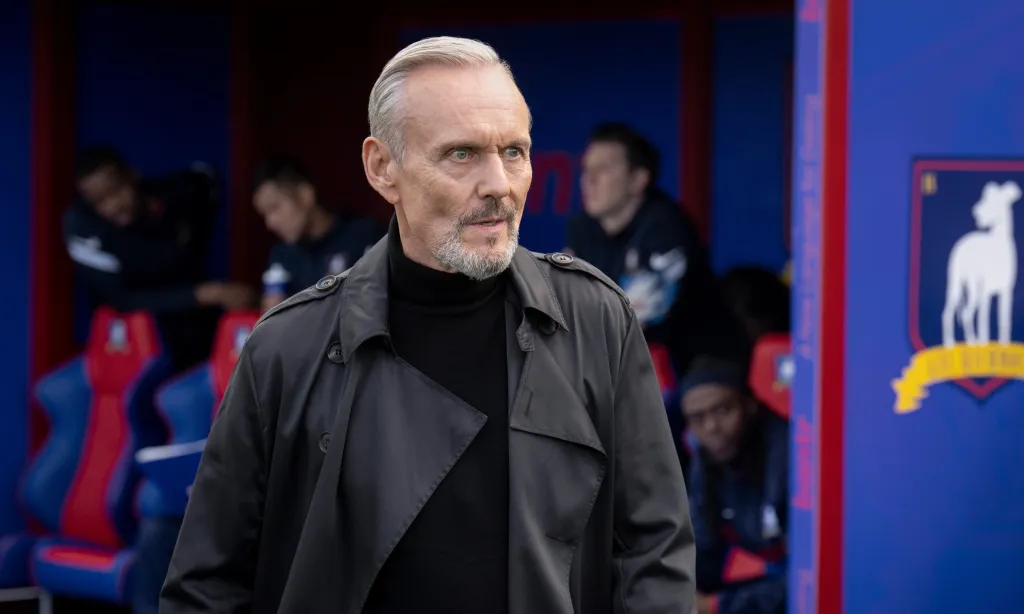
A very emotional Ted Lasso episode that included the death of a beloved original character, The Crown & Anchor pub owner Mae Green, played by Annette Badland, also acknowledged the death of the series’ popular recurring cast member Anthony Head, who played the villainous Rupert Mannion in the first three seasons.
A card, In Memory of Anthony Head, ran at the end of Season 4’s penultimate episode, “Mae Rides the Bus.” (You can see it below.)
“He was a beautiful man, and he will be much missed,” Badland told Deadline during an interview about Mae’s shocking death, reminiscing about famous Season 1 darts scene between Rupert and Jason Sudeikis’ Ted Lasso at the pub. “He was charming and funny and generous, and we’d have naughty little sort of asides.
Ted Lasso was always expected to pay tribute to the veteran British actor who died on June 1 at the age of 72. When that was not done in the Season 4 premiere, many thought that Head would be honored in an episode he appears in as the season had wrapped production in January, months before his passing.
“I assumed he would be in this last [season], and didn’t know, as I think very few people knew, he was ill and just couldn’t do it,” Badland said.
Barely referenced in the first seven episodes, Head’s Rupert, ex-owner of AFC Richmond and ex-husband of the club’s current owner Rebecca (Hannah Waddingham), came back into the forefront in Episode 8, when Higgins (Jeremy Swift), with the help of Mae and her “Follow the anger” advice, deducted that Rupert had been secretly buying shares to regain control of Richmond.
That remained a story thread in Episode 9 until the surprise twist at the end that revealed it was not Rupert but Tracey Ullman’s Zelda Southport who was behind the shady operation and on the verge of becoming a majority owner of the club.
The move raised questions whether Ted Lasso had pivoted from Rupert to Zelda as the culprit — and away from a potential Rebecca vs. Rupert battle for control of Richmond — in light of Head’s death (or leading into it). According to sources, no Season 4 storylines were changed following Head’s passing, there had been no formal plans for Head to be in Season 4 and no official approach to him about appearing.
It is unclear whether that was related to Head’s health issues which had been kept private. (His cause of death was listed by his daughters as complications due to pneumonia.) Head’s last acting credits were Season 3 of Ted Lasso, which came out in 2023, and the 2024 Prime Video movie Upgraded.
It is a longstanding TV tradition for characters to mirror the death of the actors who played them by passing away in the show. Because of the timing of Head’s passing after Season 4 had been completed, that will likely happen in Season 5.
The eccentric ultra-wealthy entrepreneur and sports investor Zelda — a polarizing and largely disliked new character introduced in Season 4 — had long been suspected by fans to be the season’s secret villain.
Zelda, who had become involved in Richmond’s women’s team with Keeley’s (Juno Temple) enthusiastic support over Rebecca’s serious reservations, was present when Higgins told Rebecca in Season 8 that Rupert was behind the buyouts. In fact, Zelda looked rather nervous for a moment when Higgins announced that he had solved the mystery before he dropped Rupert’s name and she chimed in with “Never underestimate the power of anger as fuel.” (We will likely find out more about her motives in the Season 4 finale.)
In Episode 9, Zelda also happened to be there any time Higgins and Rebecca discussed the matter. That included him telling his boss in the office that Rupert’s lawyers were “denying knowing anything about people selling shares but since there has been a pause in buying” and that Rebecca won’t lose control of the club regardless, as long as the Milk sisters, who no one had been able to get ahold of, don’t sell their shares. The three also were together on board the Richmond private jet when Higgins told Rebecca that even without the Milk sisters, the mystery buyer they believed to be Rupert can get 49% of the shares.
That may prove a moot point as Zelda was later seen giving her henchman, who had located the sisters, instructions to go as high as needed to secure their shares.
With the mystery solved, the producers felt it made sense to run an end card honoring Head in Season 9. Rupert had his Season 4 moment in 408 and 409, so paying tribute to Head following the close of his character’s two-episode arc felt most appropriate. (Running the card at the end of Episode 8 likely also would’ve spoiled the surprise that it wasn’t Rupert who was buying the shares.)
Head recurred on the first two seasons of Ted Lasso, becoming a series regular in Season 3. His character Rupert, Rebecca’s vindictive and philandering former husband who lost Richmond to her in the divorce, was the original three-season installment’s main antagonist. He subsequently bought another Premiere League team — West Ham United — and recruited Ted’s kitman turned assistant coach Nathan Shelley (Nick Mohammed) to work with him, before losing it in the Season 3 finale.
“We will miss him, I respect him, and it’s a great honor to be in the episode that is dedicated to him,” Badland said. Here is a video of her comments.
>

“I was very successful since I was a kid,” Tom Cruise told a full house at the Academy Museum’s 945-seat David Geffen Theater following a screening of Digger. That stardom has led him in search of ever bigger challenges, learning new skills and finding opportunities to apply them.
As he put it: “OK, the door’s open. Now I want to push it again.”
He has certainly done that with Digger, Alejandro G. Iñárritu’s wildly ambitious, deeply weird and extravagantly mounted comedy, in which Cruise plays a Texas oil tycoon forced to face the music after an environmental disaster puts the world at risk.
The Warner Bros. release, arriving just as Paramount nears its takeover of Warner Bros. Discovery, carries a reported $125 million production budget.
At 64 and 63, respectively, Cruise and Iñárritu are near-exact contemporaries taking this leap together. Cruise has ventured into similarly offbeat territory before, memorably in an Oscar-nominated turn in Paul Thomas Anderson’s Magnolia and beneath the prosthetics of Ben Stiller’s comedy Tropic Thunder.
But he has spent much of his recent career delivering increasingly elaborate Mission: Impossible spectacles, taking extraordinary physical risks within a franchise whose appeal he understands intimately. Digger requires a different leap of faith, both from Cruise and from the audience he hopes will follow him.
Among critics, the film has proved wildly divisive, with some reviews positively savage, The Hollywood Reporter’s among them. I understand the objections to Digger; I was also quite happy to have seen it. There is something invigorating about watching this much talent and money committed to a movie this peculiar, even when its considerable parts refuse to cooperate.

Tom Cruise talks to the audience at Academy Museum’s ‘Digger’ screening.
Seth Abramovitch
Iñárritu offered a remarkably candid account of the challenges during the discussion. Making this trompe-l’œil of a film required a constant negotiation between theatricality and the camera. What felt inspired on set could look very different the following morning.
“We were laughing all day,” the four-time Oscar-winning Mexican filmmaker said. Then he would watch the dailies: “Oh my God,” he recalled thinking. “This is not working. This is shit.” Adjusting the performance could send it too far in the other direction: “It’s too naturalistic. It’s not so funny.”
In sharing that, Iñárritu was describing the search for the film’s highly unusual tone, not conceding that the finished movie had failed. But the anecdote gets at the precariousness of the enterprise. The actors had to find that tone in their bodies and voices, he explained. “Nothing can be written in tone. It doesn’t exist,” he said.
Iñárritu compared the precision of Cruise’s acting to the “micro decisions” he makes during a dangerous stunt, when “one second is the difference between life and death.” On set, the director watched that attention extend to where Cruise placed his hands, when he winked and when he stayed silent. “Every take he’s just present and observing naturally,” he said.
Cruise, meanwhile, seemed delighted by the company he was keeping. He repeatedly jumped in to praise his fellow actors, recalling how difficult it was to stop laughing around John Goodman. Of Sandra Hüller, he said, “What an extraordinary actress,” before settling on a succession of wows.
His enthusiasm was considerably easier to pin down than his acting techniques. After Cruise gave a drawn-out answer about a life spent observing humanity to explain his character work, Iñárritu teased him: “He keeps the secret. He don’t answer.”
Tom Cruise and Alejandro G. Iñárritu at the Academy Museum’s ‘Digger’ screening.
Seth Abramovitch
By the end of the conversation, Cruise was making a broader argument about what audiences want, and what filmmakers should give them. “This film is handmade,” he said. He described stopping on set with his colleagues to look around and appreciate the skill that had gone into the physical world surrounding them. “People want to see real things,” he said. Then, a little later: “People want real things and they want real experiences.”
Cruise never mentioned artificial intelligence, but the repeated emphasis on “real things” and “handmade” filmmaking could readily be heard as an implicit rejoinder to it. His remarks placed the value in the people doing the work, the skills they had acquired and the pleasure of being together to make something. “It was never handed to any of us,” he said.
For all his confidence, there was also an acknowledgment that the opportunity to keep doing this depends on people buying tickets. “My hope is always that the films would do enough that I’d have that opportunity to do it again,” Cruise said.
Whether audiences follow him into Digger remains to be seen. For now, he seemed grateful to have made the leap. “It’s not like I don’t have challenges, we don’t have challenges,” he said. “But I really choose to be joyful about creating.”
After posing for a cast and crew photo, Cruise, ever the audience pleaser, spent 15 minutes mingling with fans who rushed the stage for selfies and a few words with a movie legend. Four decades into his career, he’s still finding new ways to make it in this risky business.
He clearly loves the job.
>


Search For Canadian TV Actor Stewart McLean Now Homicide Investigation


These ’90s fashion trends are making a comeback in 2017
According to Dior Couture, this taboo fashion accessory is back
Model Jocelyn Chew’s Instagram is the best vacation you’ve ever had
Emily Ratajkowski channels back-to-school style
9 Celebrities who have spoken out about being photoshopped


Rurouni Kenshin: Hokkaido Arc Manga Takes 1-Issue Break – News


HIDIVE to Stream English Dubs for The World Is Dancing, The Forsaken Saintess and Her Foodie Roadtrip in Another World, The Dangers in My Heart: The Movie Anime – News