
Sports
Jose Mourinho: Why the ‘Special One’ is returning to Real Madrid

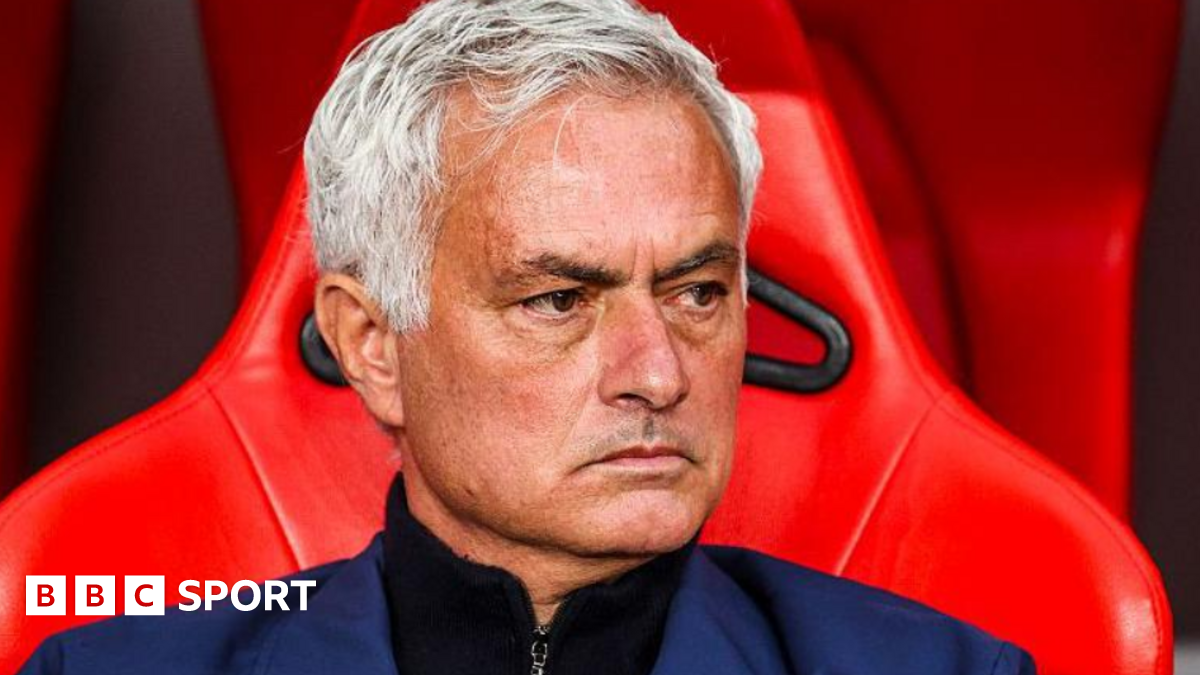
So what would a wiser return look like? The areas where Mourinho must improve are not mysterious.
He needs to recognise that winning is a shared vision, not a slogan he imposes. The bullet points from his Spurs and Manchester United tenure read like a manual of what not to do: failing to fully adapt his methods to his squad, ignoring the needs of some of the people around him, taking credit for victories while offloading blame for defeats.
There is also the matter of an incident that, in Spain, never quite became the scandal it perhaps should have.
Mourinho responded to allegations of racist abuse from Benfica’s Gianluca Prestianni directed at Vinicius by invoking Eusebio, arguing, clumsily, that a club whose greatest legend was a black man could not be racist.
It caused a stir and then, remarkably, disappeared. It has barely surfaced in the debate about his return to Madrid, which perhaps tells you everything about the current mood at the club, so desperate for a solution that certain questions get quietly filed away.
At Madrid, with Vinicius and Mbappe already in a fragile coexistence, with a dressing room that has been allowed to run its own politics for two years, any repetition of them falling out might produce a quick catastrophe.
The Vinicius-Mbappe problem deserves more attention. Three managers – Carlo Ancelotti, Xabi Alonso, Arbeloa – have been unable to make them function as a partnership.
The chemistry that was supposed to make Madrid the most feared attack in Europe simply has not materialised. Mourinho’s record with difficult combinations or personalities is mixed, but let’s go with the hopeful.
He made striker Samuel Eto’o play as a right winger at Inter Milan and they won the Treble. He managed the Cristiano Ronaldo-Karim Benzema dynamic at Madrid, keeping them functional if not always comfortable.
He can do this. But only if he’s willing to manage with empathy and communication rather than authority alone.
His demands have already been outlined. He wants input on signings – not names necessarily, but positions, areas of need.
He has identified imbalances in the squad. In his first Madrid spell, he pushed for Luka Modric, Sami Khedira and Mesut Ozil, and history would vindicate all three choices.
He also wants his staff around him, his own people in key roles. The club wants to retain their medical and physical department. Whether Mourinho can not only accept but work with that hybrid structure – his coaches, their doctors – will be an early test of how much he has genuinely changed.
What is also real is the weight of what he is inheriting.
Two titleless seasons and a squad that played without intensity and finished below the top 10 in the Champions League group phase – twice.
Perez’s media conference yesterday named none of this. He spoke about the press, about conspiracies, about his enemies. He always does it in private, never so openly before.
He was singing from the Mourinho songsheet. He did not speak about the football.
Mourinho will have to do so. And beyond speaking about it, he will have to solve it by earning trust with his pupils. By managing culture rather than bulldozing it. By understanding that the club he is joining is bigger than any one person.
The press conference yesterday may well have marked the beginning of something. Whether it is a renaissance or a relapse depends almost entirely on whether Mourinho has learned anything from the last decade.
He says he has. Madrid is about to find out.
>
Sports
Man City's 'sham contracts', spending breaches and 'disguised funding': Breaking down the findings
The Athletic has broken down the findings from the core decision of the independent commission in the City case
>

Despite being a lifelong Sunderland fan, Chandler admits basing his team on Kevin Keegan’s Newcastle – with entertainment even placed above winning.
“There was a standing joke in the team, two or three at the back? One time we chased a game with two at the back,” he says.
“The Premier League can be so boring; fans want to be entertained, that’s what we promised.”
Chandler was already a Whitley Bay hero when he was appointed manager by chairman Paul McIlduff, having scored the winner in the 2002 FA Vase final against Tiptree United at Villa Park.
After a slow start as the then-35-year-old with no prior managerial experience found his bearings, Chandler built a talented team which became the envy of non-league football nationwide.
“We played good football. We had pace on the wing, fantastic midfielders, and strikers who were deadly,” says McIlduff, who has been Whitley Bay chairman since 2001.
“When we brought them in, it was about fitting the psychology of the dressing room. No-one thought they were better than anyone else, they played for each other.”
A growing influence in the side was the ‘Whitley Bay Maradona’.
Paul Robinson came through Newcastle United’s academy before a career spent across various non-league clubs in the north-east – including Whitley Bay from 2007 to 2013.
Like several other players and staff, he worked with Chandler both in his day job at software company Sage and at Hillheads Park.
“He was my manager at work and football, I was sick of him,” he tells BBC Sport. “But it helped get time off for matches.”
And it meant he also had an understanding boss if his mind drifted at work.
“Zoning out happened regularly, picturing scoring and winning, what the opposition would be like – hoping they were rubbish so we could have an easy stroll,” he says.
Perhaps Robinson’s greatest Whitley Bay moment came in the 2010 FA Vase semi-final second leg, when his last-minute diving header in the driving rain secured a 6-5 aggregate victory over Barwell, sparking a pitch invasion.
“Everyone goes to the finals, you were there, you could enjoy it,” says Robinson, who is now academy head at South Shields.
“But the rounds before were the bigger games. At home, we would get 2,000 or 3,000 at every game. You felt like a real player. You associate those memories with 90s FA Cup you never think it will happen in non-league.”
Chandler played in a 2-0 win over Preston in round two as they reached the FA Cup third round for the first and only time in the 1989-90 season, and they also progressed to round two the following campaign.
Those seasons of success – made The Bay a feared side for non-league clubs across England, and meant they were ready for the big games in a way most amateur sides are not.
“One quarter-final against Biggleswade [in 2009], they turned up in suits and ties,” says Robinson. “We thought, this is their day out, their cup final. We won 5-2.
“By the end, teams were turning up afraid of us. We had it won beforehand.”
>

Test your ball knowledge against today’s Who Am I?, Five in Five and Brainteaser.
>
Man City's 'sham contracts', spending breaches and 'disguised funding': Breaking down the findings

Whitley Bay: The part-timers who won a record three Wembley finals in a row

Flex your football brain with our daily quizzes
-

 movies4 months ago
Search For Canadian TV Actor Stewart McLean Now Homicide Investigation
-

 Fashion9 years ago
These ’90s fashion trends are making a comeback in 2017
-
Fashion9 years ago
According to Dior Couture, this taboo fashion accessory is back
-
Fashion9 years ago
Model Jocelyn Chew’s Instagram is the best vacation you’ve ever had
-
Fashion9 years ago
Emily Ratajkowski channels back-to-school style
-
Fashion9 years ago
9 Celebrities who have spoken out about being photoshopped
-

 Anime4 months ago
Rurouni Kenshin: Hokkaido Arc Manga Takes 1-Issue Break – News
-

 Anime3 months ago
HIDIVE to Stream English Dubs for The World Is Dancing, The Forsaken Saintess and Her Foodie Roadtrip in Another World, The Dangers in My Heart: The Movie Anime – News