
movies
‘Teenage Sex and Death at Camp Miasma’ Review: Hannah Einbinder Stars

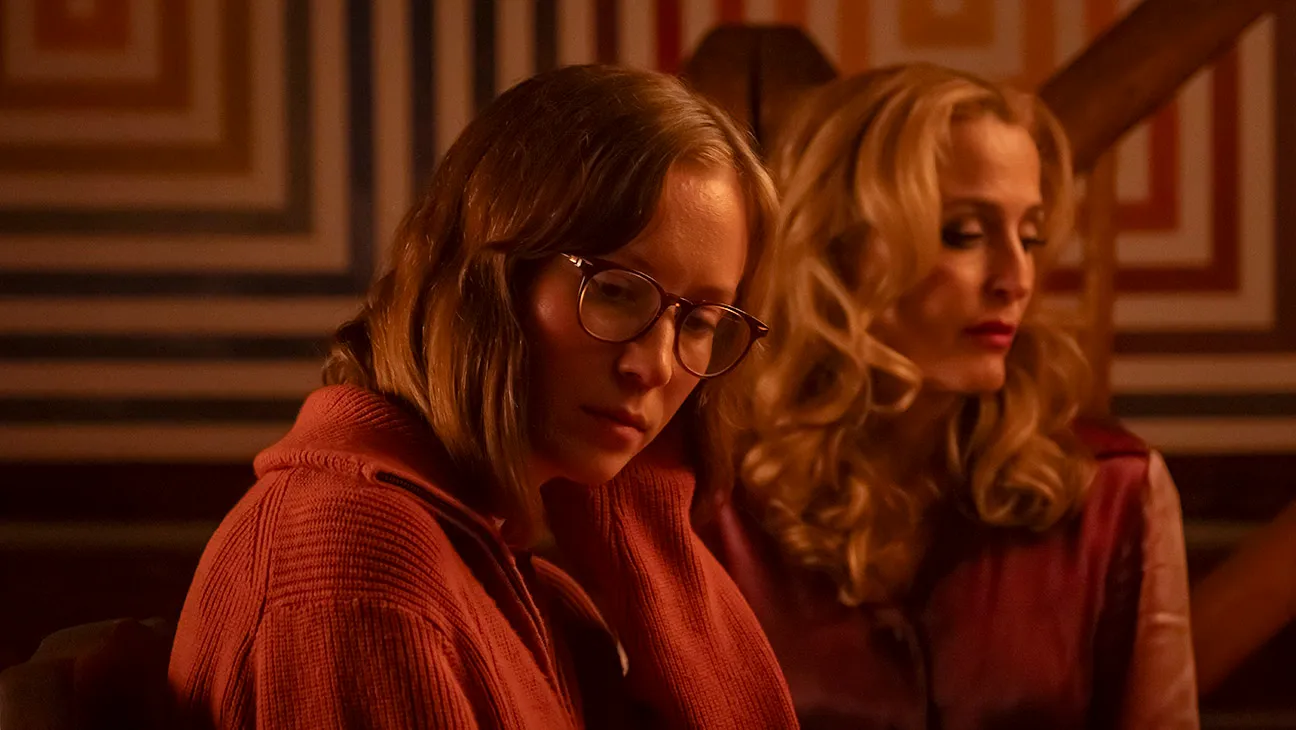
The filmmaker Jane Schoenbrun’s last film, the eerie and sad I Saw the TV Glow, used a made-up artifact from the pop-culture past — a cultishly beloved supernatural television show — as a kind of seeing stone, gazing through its lens to inspect matters of identity. Schoenbrun draws from the next well over in their new film, Teenage Sex and Death at Camp Miasma, which employs a fictional slasher movie of yesteryear as the portal into a conversation about self and desire. It’s heady, strange stuff, perhaps not as emotionally resonant as TV Glow, but captivating in both its confusion and honesty.
Hannah Einbinder plays Kris, an up-and-coming filmmaker who has parlayed Sundance success into a gig rebooting a once-popular horror franchise called Camp Miasma. The original film was a watershed smash hit, spawning myriad sequels and merchandise and intense fan adoration of its killer, Little Death, who was once a gender fluid teenager bullied to death by his fellow campers. Kris, long a devotee of the franchise, is determined to cast the reclusive star of the first film, a mostly forgotten actress named Billy (Gillian Anderson, drawling away like she’s still doing Streetcar). A journey to Billy’s house — a remote cabin near the Washington/British Columbia border — leads Kris on a curious, blood-spattered journey of discovery.
Teenage Sex and Death at Camp Miasma
The Bottom Line
Talk about losing it at the movies.
Venue: Cannes Film Festival (Un Certain Regard)
Cast: Hannah Einbinder, Gillian Anderson, Dylan Baker, Jack Haven, Sarah Sherman
Writer and director: Jane Schoenbrun
1 hour 52 minutes
Schoenbrun has stuffed their film with cultural references, to amusing effect. If something about the now-problematic gender-bending killer of Camp Miasma reminds you of 1983’s Sleepaway Camp, Schoenbrun is not coy about the parallel. If Billy, who wears a turban and caftan in a few scenes, calls to mind Norma Desmond of Sunset Boulevard, Schoenbrun directly assures you that that is not an accident. There is a hyper awareness to TSADACM, a determination to point out each of its Easter eggs and allusions, lest the viewer think Schoenbrun is trying to outsmart anyone. Schoenbrun is welcoming us into a collective pool of memory, though they have very particular, very personal things to discuss once we’re all in there.
There’s a slight awkwardness to the film’s invitation, a fussy kind of table setting that offers some trite (though, not inaccurate) Hollywood satire to ease us toward what the movie is really about. That nervousness is deliberate, I think; the film is about a person who is forever in their head, unable to exist in a moment without qualifying and explaining and even apologizing for their presence. Kris’ chief insecurity has to do with sex, an act during which she’s never felt comfortable, unable to fully inhabit her body and accept how others might make it feel.
But Camp Miasma, specifically one (ahem) climactic scene involving Billy’s character, has triggered something in Kris. She first saw the film as a probably too-young child, and its depiction of horror-movie teen hedonism — most of its characters operating on horny id — remains both alluring and othering. When Kris tries to academically explain what the film means to her, Billy offers a simpler interpretation in response: The film is really just about “flesh and fluids,” she says.
In many ways, Kris aches to be reduced to such simple matter, to strip away all of her heady anxiety and surrender to basic want. Feeling so outside of that, so different from the teens in the movie (minus Billy’s final girl, who is less eager about sex than everyone else around her), has, in a way, made Kris identify with Little Death most of all. Schoenbrun, who transitioned in their 30s, divulges something quite intimate here, attempting to explain their own longstanding hang-ups about sex, their detachment from something that so many people seem to enjoy so readily.
That candor is refreshing, and the film’s conclusions about accepting the idiosyncrasies of one’s individual eros are quite moving. But Schoenburn does not make it easy for the audience to reach those conclusions. TSADACM can be alienatingly offbeat; it is situated somewhere between the real world and fantasy, and is consistently blurring those borders. We see many scenes of the movie within a movie, and it looks and moves nothing like actual 1980s slasher films do. Little Death wears a giant HVAC vent on their head instead of a mask, there are ludicrous founts of blood that would be more at home in a Troma film. Schoenbrun is not going for kicky mimicry here — literalism is not their chief aim.
Similarly, the landscape surrounding Billy’s cabin — which is on the property of the abandoned camp where the original film was shot — is made up of highly saturated color and painted backdrops. We have ventured into some kind of other place, much as Kris (and, in some ways, Billy) frequently disappear into the reverie of a movie. But that abstraction does not dilute the potency of Schoenbrun’s inquiry; we do, by the end, keenly feel that a very real crucible has been passed through, that Kris — and, by extension, her creator — have come to some new and significant realization about their physical being.
If that all sounds awfully heavy, it is, instead, handled mostly with a comic touch. TSADACM could be called a comedy, with its pithy one-liners and deliriously exaggerated depictions of gore and arousal. Just as she is on Hacks (another story of an intense connection between a younger writer and an older performer), Einbinder is droll and peppery, while also handling the dramatic bits quite well. Anderson is having a lark; she takes a rare juicy film role and runs with it, happily serving as a vessel for Schoenbrun’s complicated obsessions.
Teenage Sex and Death at Camp Miasma will certainly not be to everyone’s liking. It isn’t a quirky, movie-nerd paean to B-movie horror. Nor is it strictly a tete-a-tete between two lesbian icons (Anderson is not gay, but she has been an idol of the community since her X-Files days). It is a far less definable film than that, and difficult to get a satisfying hold on. But it makes an impact nonetheless; one leaves the theater once again awed by Schoenbrun’s willingness to bare so much of themselves (albeit in oddball allegory). The film is disarming in its palpable longing, in the way it tries to explain to an audience of strangers how its maker has lived in their changing body. It’s an act of generosity, one person saying to another with wistful empathy, “I can be weird about this stuff, too.” And then, Schoenbrun presents a comforting idea: Life isn’t a movie. But if it was, maybe you get to write it for yourself.
>

EXCLUSIVE: BBC Studios’ scripted chief has laid out his strategy for future indie and talent investments that will shy away from “going out and spending £20M ($26.5M) on a production company.”
Speaking exclusively with Deadline for his first interview since taking on the Scripted MD role, Jamie Hall said his plan for the Doctor Who, Baby Reindeer and Sherwood maker is instead to strike smaller but more regular deals with top talent and “build creative hubs.” In this vein, Hall said BBC Studios scripted will “move slightly closer” to the strategy of soon-to-be-independent rival ITV Studios.
Hall came to our interview clutching receipts in the shape of two new labels led by the producers behind Strike and The Detection Club, along with early-stage plans for a label that will focus on digital spin-offs of existing brands.
BBC Studios runs hefty in-house drama and comedy teams along with majority-owning big beasts of the UK production world like Baby Reindeer maker Clerkenwell Films, Sherwood producer House Productions, Lookout Point and Steve Coogan’s Baby Cow.
Hall joined earlier this year, three decades on from his first stint at the BBC (he met his wife working on Our Friends in the North) from Vice Studios/Pulse Films, where he oversaw the likes of Gangs Of London. At BBC Studios, his remit is to give a shot in the arm to the drama and comedy offering and unearth the next generation of IP at a time when the public service BBC is desperate for funding. His desire echoes that of his boss, BBC Studios Productions chief Zai Bennett, which is to invest in around two to three of these new-look talent labels per year. Other examples include tie-ups with Barbie star Jamie Demetriou, The Ballad of Wallis Island writer Tom Basden, Ted Lasso alum Nick Mohammed and Cunk on Earth creator Diane Morgan.
“I inherited a group of great production companies that had been acquired in the way production companies were acquired at the time,” Hall told Deadline from BBC Studios’ Soho outpost. “But I don’t think the market can support that anymore – or, at least, it can only do so very rarely. We’re not going to spend £20 million buying a production company. Instead, we’re building an amazing service at the center of the studio, then creating creative hubs that can tap into our brilliant lawyers, HR, finance and other support functions.”
He recalled a recent conversation with Joel Wilson, the just-departed co-founder of Sex Education producer Eleven, who told him: “Towards the end of running the company I came to dread the pressure of running a business.”
“All [Eleven] wanted to do was build great shows,” added Hall.
Hall didn’t completely rule out stumping up big bucks to buy an indie outright in the future, but added: “The reality is that I can set up creative pods or labels at a much lower price point, and that feels right.” He said the scripted supremo role at BBC Studios had attracted him because, “I wasn’t simply coming in to mind the wheel. There was a creative renewal that needed to happen – some wiring and plumbing that needed fixing.”
Backing up his strategy, Hall unveiled Bristol-based Landed Productions led by Strike and Possession producer Jenny Van Der Lande, who is leaving her role as Big Talk’s creative director of drama to helm BBC Studios’ first scripted label outside London.
Landed Productions will make “premium genre pieces” and Van Der Lande has multiple writers in mind with whom she wants to develop shows. “Jenny said in our conversations that she doesn’t want to run a production company,” explained Hall. “She wants to work with amazing writers she already has relationships with, then partner up when she gets a greenlight.”
Hall’s new-look team, which consists of the likes of CFO Jennifer Dickson, legal chief Anna Beese and production director Alison Loose, has also been busy working on the digital spin-offs label that follows big digital successes for franchises like Dancing with the Stars and EastEnders. This one, which doesn’t yet have a name, will be led by BBC Studios Drama digital chief Katy Karger. “Scripted is probably the hardest area to crack [in digital], so we’re setting up a central digital capability,” said Hall. “When someone pitches a conventional piece of television, we can also pitch to buyers a digital component.”
Hall also unveiled CliffEdge Entertainment, led by “real grafter” Deborah Sathe, who is moving across from her role as Senior Creative Director at the in-house BBC Studios Drama Productions. CliffEdge will take some shows off Drama Productions’ hands such as The Detection Club, Silent Witness, Father Brown and Shakespeare and Hathaway, while the Kate Oates-run Drama Productions will continue making soaps and continuing drama. Some staff will move over to CliffEdge.
“When I came in, I spent a lot of time getting to know all the creatives in the business and Deb Sathe was one of the people who really impressed me with her energy and what she was building,” added Hall. “She’s a real grafter, but is also incredibly disciplined about making shows at a certain price point. It felt natural for her to have her own entity to run.”
CliffEdge comes replete with a greenlight: an adaptation of Vanessa Savage’s gripping thriller The Night They Vanished starring It’s a Sin’s Callum Scott Howells and Gabrielle Creevy (Black Doves). That one has been pre-bought by Channel 4 and follows Anna (Creevy), whose world is blown apart when she discovers her childhood house listed on a true crime website as the scene of her family’s future deaths. Intriguing blind date Cai (Scott Howells) runs the true-crime site, but he swears he didn’t post it.
“I’ve done the rounds of most of the agencies”
The Night They Vanished speaks to what Hall believes BBC Studios can do with big IP.
He says he has “done the rounds of most of the agencies to remind them that we’re open” – the day after he chats with Deadline he has a meeting in the diary with Curtis Brown – and is in talks over “a number of pieces of IP that are coming through which are quite interesting.”
Driven by the success of Sky and AMC’s Gangs of London, for which he says Pulse was “a bit ahead of the curve,” Hall is chatting to rightsholders about the possibility of revamping in-vogue gaming IP for the small screen. This follows big successes for the likes of HBO’s The Last of Us.
Although none of these examples are necessarily franchise-able in the vein of a Gangs of London or Doctor Who, Hall reels off a list of upcoming BBC Studios shows he is buzzing for, including the BBC’s Killing Eve origin story Honey, Netflix surfing drama Breakers and a second season of Disney+ rom-com Alice and Steve.
Another hit dominating ratings at the moment is Diane Morgan’s comedy Ann Droid, which poignantly taps into societal paranoia about AI but in an oh-so-gentle way. Having yesterday become the BBC’s biggest new scripted comedy since Ludwig Season 1, Hall reveals there is “real interest” in Ann Droid from American buyers, who are familiar with Morgan from her work as comedy creation Philomena Cunk and could either buy finished tape or commission their own unique version.
Hall has plenty experience working for American behemoths and will soon sit down with BBC Studios’ new L.A. chief Ryan O’Dowd to figure out “how we can be better joined up, because inevitably our producers [in the UK] want access to the U.S. market.”
This comes at a time when Hall says the co-pro market is “picking up a bit” from the lows of 2025, although he acknowledges it is “nowhere near what it was in the past and there is still quite a big oversupply in the market of producers and projects.” “If we’re designing a show and the budget is at a [higher] level then we need to start thinking about [co-pros] much earlier in the process,” he added. “What has happened in the past is you develop a show for [BBC drama boss] Lindsay [Salt] and she says she wants it and then you go, ‘Oh crap we can’t finance it with just Lindsay and the tax credit, we need co-pro’. But by then the show has been developed in such a distinct way.”
He hopes his experience in the belly of the beast at Vice can help but is so far loving being part of a public service machine, which Hall labels the fourth biggest brand in the world. “Our ultimate owner is the epitome of patient money,” he said. “Whereas when I was at Vice it was owned by three American banks and if we didn’t hit our numbers each quarter we were in trouble.”
This unique BBC model helps in the current landscape, Hall reckons, coming as the Banijay-All3Media mega-merger marches on.
“I imagine that if you’ve got a super-indie with 130 production companies, the amount of facetime you’re going to have with the boss is quite minimal,” he added. “What I really lean into is the way we’re structured. Zai [Bennett] and I sit opposite each other, across a bank of desks. We don’t have to wait for L.A. to wake up before we make a decision; we can just get on with things.”
“Just getting on with things” is a crucial mantra for a BBC Studios scripted operation that is feeling more and more pressure to return funds to the cash-strapped 100-year-old national broadcaster.
Is Hall feeling the pressure?
“There’s no denying that any headwinds the BBC faces will come and hit us,” he added. “All I can do is manage that and focus on where we can grow our business outside of that [traditional BBC funding] route to help compensate. The BBC gets beat up so much. What we can do inside the studio is really help it and support it.”
>
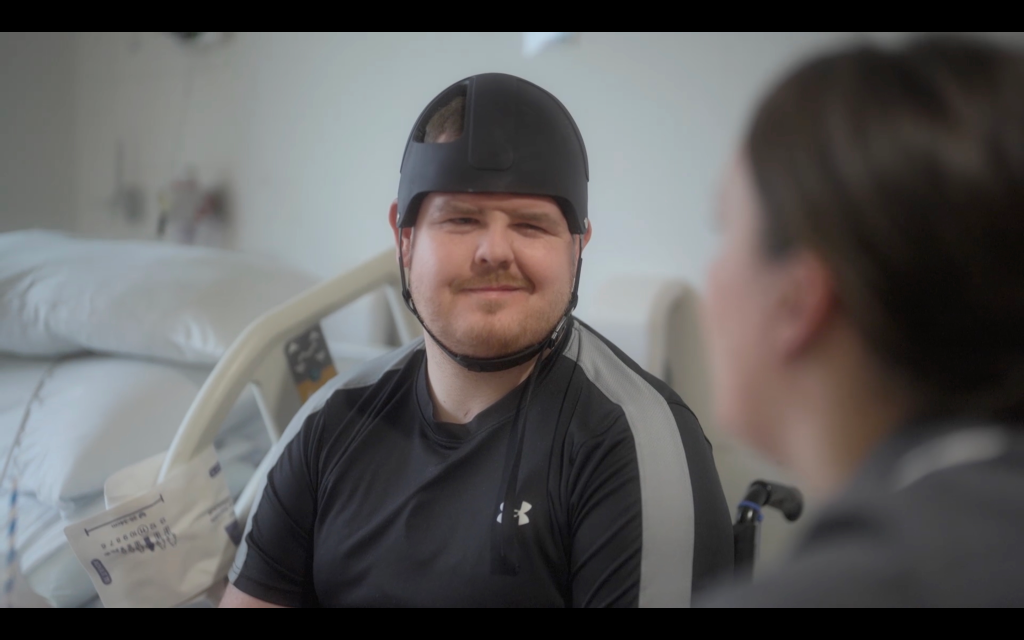
EXCLUSIVE: Channel 4 is teaming with the Stroke Association on a documentary sereis looking at young people living with the aftermath of a stroke.
Trauma: My Broken Brain follows three young survivors through the most frightening days of their lives and the grueling journey back to independence.
Every five minutes someone in the UK suffers a stroke – there are 1.4 million stroke survivors living in the UK today – but the aim of the doc is to show that this is only the beginning of recovery. Filmed over seven months with access to these young adults at the most terrifying and testing moments of their lives, the series meets Dan (28), a dancer left confined to a wheelchair, barely able to speak following emergency brain surgery; Saskia (22), a self-described social butterfly left bedbound after a brain bleed so severe her family feared she would not survive; and Dec (20), who collapsed just four months into a new relationship and spent weeks in a coma, his family and girlfriend unsure if he would survive.
Channel 4 has taken the rare step of teaming with a charity on the doc. It is being produced by Stream Media Group, which was also behind the same network’s Anna Richardson: Love, Loss and Dementia, made with the Alzheimer’s Society.
Channel 4 commissoning exec Simon Lee said: “This is an ambitious and important series that challenges perceptions and gives a voice to young people whose lives have been transformed by stroke, as they embark on the long road that begins after survival.”
Stream’s Victoria Noble added: “What struck us throughout filming was how little people understand about stroke. Survival is often seen as the end of the story, when in reality, it is only the beginning. By sharing their journeys with such honesty and courage, Dec, Dan and Saskia revealed the reality of rebuilding a life after stroke, and the truth behind the long and unforgiving journey to reclaim the right to live an independent life. Alongside the extraordinary support of their families, their stories offer a powerful insight into resilience, determination and hope. It’s been a privilege to tell their stories.”
Noble is EP with Ben Padfield and producer is Laura Hooper. Series director is Storm Theunissen and production executive is Fiona Ridgers. The show was filmed with access to The Walton Centre NHS Foundation Trust and Clatterbridge Rehabilitation Centre, and Wirral University Teaching Hospital NHS Foundation Trust.
>
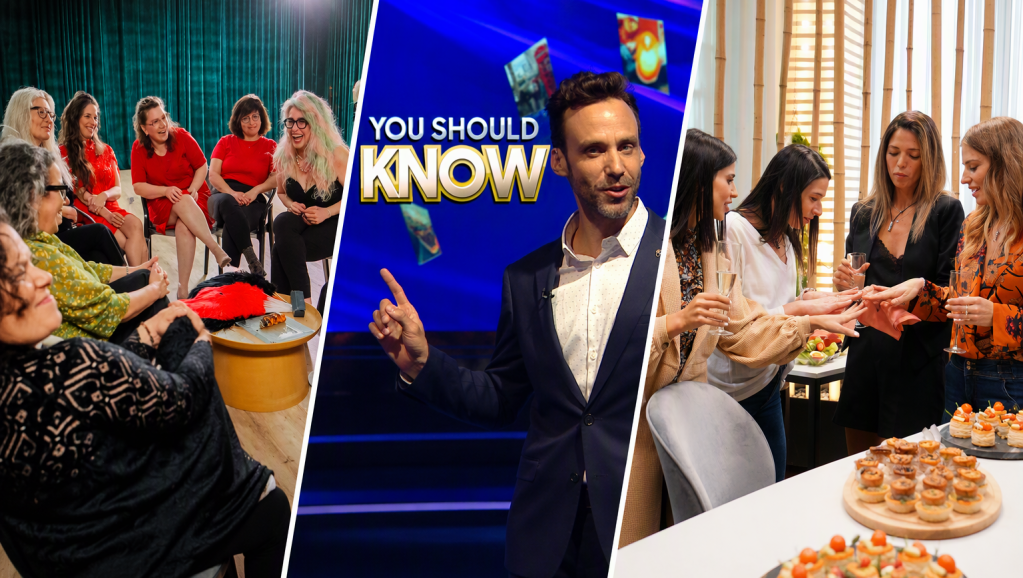
EXCLUSIVE: Power Couple seller Dori Media is heading to Cannes with the largest unscripted slate in its history.
At MIPCOM, the Israeli company will debut the likes of games shows The Hive and You Should Know, docu-series My Hottest Years and primetime reality format New Love, which is from Power Couple maker Abot Hameiri.
Also on the slate is Paraiso Tropical, a doc exploring a mysterious Panamanian plane crash, and Seekers, which looks at humans’ search for meaning.
“We have been listening to our clients across the globe, many who are looking for affordable content that can help them break through with their local audiences and we are headed to MIPCOM with our largest slate of unscripted programming, a slate that features many new offerings that we believe can do just that,” said Dori Media Group CEO Nadav Palti.
Studio quiz show The Hive comes from and is from United Studios Productions and channels Kan 11 and Makan. The show’s USP is that knowing the right answer isn’t enough: Contestants need to know when to take a risk, when to block an opponent, and how to build a strategic play.
You Show Know is another quiz, this time from Shenhar Productions. Questions are tailored specifically to each contestant, drawing from their social media feeds, meaning they should, in theory, know the answers.
Doc series My Hottest Years comes from Drucker-Goren Communications and is for Kan 11, looking at what happens when women’s hormones change, while New Love is a dating reality show for Reshet 13. The format sees women live with a carefully-selected stranger for 72 hours, before they decide whether to stay for another three days or replace them with someone new.
Paraiso Tropical is a co-production from Apertura Films and Ajimolido Films in which filmmaker Abner Benaim reopens the case of a passenger plane that exploded over Panama, killing all 21 on board, including his under. Seekers, meanwhile, runs to six parts and follows the human experience through the eyes of an Amazonian chief, an Advaita monk, an African healer, a Hindu sage, a Native grandmother and a Buddhist psychologist. Édgar Ramírez, Riley Keough and Jamie-Lynn Sigler all feature.
>
Inside what's gone wrong for David Stearns and how the Mets must fix it this winter
'The Inner Game of Tennis', a sports psychology bible, finds its modern mindset

BBC Studios’ Jamie Hall On ‘Doctor Who’, Talent Deals & Ambitions
-

 movies4 months ago
Search For Canadian TV Actor Stewart McLean Now Homicide Investigation
-

 Fashion9 years ago
These ’90s fashion trends are making a comeback in 2017
-
Fashion9 years ago
According to Dior Couture, this taboo fashion accessory is back
-
Fashion9 years ago
Model Jocelyn Chew’s Instagram is the best vacation you’ve ever had
-
Fashion9 years ago
Emily Ratajkowski channels back-to-school style
-
Fashion9 years ago
9 Celebrities who have spoken out about being photoshopped
-

 Anime4 months ago
Rurouni Kenshin: Hokkaido Arc Manga Takes 1-Issue Break – News
-

 Anime3 months ago
HIDIVE to Stream English Dubs for The World Is Dancing, The Forsaken Saintess and Her Foodie Roadtrip in Another World, The Dangers in My Heart: The Movie Anime – News