
Entertainment
The Film Industry Doesn’t Owe You a Career: A Producer’s Path

Editor’s note: This is the fifth chapter of “A Producer’s Path,” an ongoing column for IndieWire’s Future of Filmmaking from independent producer Daren Smith. Read the first chapter here.
For four columns, I’ve been making the case that independent film has an architecture problem. We’ve talked about the investors who keep losing money. The distributors who keep quietly burying movies that deserved a fighting chance. The audience that’s been written off as fragmented when really it’s just been ignored.
Three factions, three problems.
There’s one left.
This column is for the filmmakers – and I’m going to be more direct here than I have been anywhere else in this series, because I know who’s still reading this far in. You’re the writer-director who left a stable job to chase this dream. You’re the producer who’s been six months from “the yes” for the last three years. You’re the cinematographer with two festival shorts and a half-finished feature. You’re the film-school grad who can’t figure out why no one’s calling.


I’ve been a version of every one of those. So this isn’t a pep talk. It’s a slap, and then a hand up.
The Slap
A few years ago, an email circulated through the Utah film community. A recent grad of a local film school had sent it to the working filmmaker directory. The note opened, more or less, with: I am a recent graduate, and I expect a $40,000-a-year minimum salary directing films and television.
People forwarded it for weeks. Not out of cruelty but out of bewilderment. The kid wasn’t wrong to want a career. They were wrong about who owed it to them.
Here’s what I want to plant in the middle of this column so it can’t be missed:
The industry doesn’t owe you a career.
It doesn’t owe you one because you graduated. It doesn’t owe you one because you bought a camera, wrote a script, made a short, took out a loan, sold your couch, posted a behind-the-scenes reel, or sacrificed your twenties. The market is the market is the market — it’s supply and demand, all the way down — and we’ve already covered the math in this series. You know the funnel. Every script in it has a person behind it who feels exactly as called as you do.
The market doesn’t reward calling or passion or even hustle. It rewards results.
It also rewards volume, and this is the second piece of the slap, the one that nobody likes hearing. It takes more than you think.
When a filmmaker tells me they can’t raise money, my first question is how many investors they’ve talked to. The answer is almost always under five. I tell them it will likely take 100 or more, and their eyes get big. But that’s the number. The 10,000-hour idea gets dismissed now, but the underlying math is right: competence lives in repetitions, not realizations. I was guest-teaching at a film program last year and one of the students had directed thirty-two short films before graduation. That’s the volume the market quietly assumes you’re operating at. The reason I could jump over from running a production company straight into senior-producing a network show wasn’t talent. It was that I had hundreds of projects already behind me.
You can be furious about any of this. You can post about how unfair it is. Or you can do something with it.
The Shift
In 2017, I was “doing something with it”. But the something wasn’t working.
I had just left a production company I had co-founded and produced at for the better part of a decade. I went out into the world calling myself an independent producer with the explicit goal of making movies.
Not content. Not commercials. Movies.
That year I made about $35,000 — as a husband, the father of three, with a house, two cars, and a dog. I went another $15,000 personally into debt that year trying to keep the business above water. Bridge loans. Invoice factoring. The whole financial gymnastics routine of someone refusing to admit that this isn’t working. For two months after I left I did construction with a generous friend who threw me work because I needed it.
It was the worst financial year of my life.
Somewhere in the middle of it, I picked up a book I’d read once before in 2015 and shelved without really applying. Cal Newport’s “So Good They Can’t Ignore You.” This time it hit differently. The first time I read it, I admired the argument. The second time, I needed it.
The premise is simple and unfashionable: stop pursuing your passion. Pursue the craftsman mindset instead — an outcome-focused approach to creative work where you don’t expect a career because you love something, you earn a career by becoming so good at producing valuable results that the people who need those results can’t afford to ignore you.
Steve Martin gave Charlie Rose the cleanest version of this on television years ago, and is what the title of the book is referencing. Rose asked him what he tells young people trying to make it in this business. Martin’s answer was simply: be so good they can’t ignore you. Not be more passionate. Not be more visible. Not be in the right room. Be so good.
That shift — from chasing passion to building outcomes — changed everything for me. Not in a moment. In a year. Quietly, before any of it showed on the outside.
What Happened After
In 2018, I was hired as a senior producer on “Relative Race.” I worked on four seasons through 2020 and did some of the most rewarding television work I’ve ever done. While I was producing it, I was also building a body of work in plain sight, daily, for an audience that didn’t exist yet.
By 2021, a director who’d been watching asked me to produce her first narrative feature – Amy Redford’s “What Comes Around“. It went to the Toronto International Film Festival and was bought by IFC Films. The next year I produced two more; one became a hit on Amazon Prime in Latin America. By 2024, we self-distributed two of the films I’d produced into 400+ screens.
It took me twelve years to produce my first feature. I produced four in the next three.
The first time I sat in a theater and watched a movie I’d produced come up on the screen, I’d been calling myself a producer for twelve years. The audience in that room didn’t know about any of those thirteen years and didn’t need to. The work was the work. They just cared whether it was good.
The difference between those twelve years and those three years was not luck. It was not a deal. It was not a phone call. It was a mindset shift, applied with discipline, every day, in public, before any of it began to compound.
The Practice
The principle is be so good they can’t ignore you. The practice is making what you’re good at visible enough that the right “they” can find it.
On the second movie I produced, I posted a single black-and-white still from set every day of the shoot. I had less than a thousand followers at the time. But reach was not the point. Reps in public was the point — building a body of evidence, in real time, that this was what kind of value I can provide to people in this industry.
By the end of that shoot, a director I’d known but never worked with reached out. He’d been watching the daily posts, and wanted to know if I would produce his next movie. The next gig came to me because I was so good he couldn’t ignore me.
That’s how the principle compounds. You produce a result, then you make the result visible. Someone who wants that result for themselves recognizes you. They reach out. You produce another. Soon ten people have seen it, then 100, then thousands.
The “they” in be so good they can’t ignore you keeps getting bigger.
That’s not magic. That’s the craftsman mindset pursued day after day until it works.
What’s Coming
I’ve spent the last five years building what I call my movie framework — the day-to-day operating system of how a sustainable indie producer actually works. Development. Validation. Capital. Crew. Distribution. Audience. The architecture, viewed from the inside, by a producer doing the work.
The next several columns are going to lay it out, piece by piece.
For now, this is what I want to leave you with.
As this column goes up, I’m in the final week of production on “Brotherhood – A Cinematic Musical.” None of this would be happening if I hadn’t started showing up nine years ago, when nobody was watching, on a project nobody asked me to make.
The next producer whose career compounds the way mine has won’t be discovered, they’ll just become so good that the right people can’t afford not to find them.
Daren Smith is a Utah-based indie film producer and founder of Craftsman Films, an independent studio established last year to finance, develop, produce, market, and distribute values-based, family-friendly indie films that spark conversation and change people for the better. The first film he helped produce premiered at the Toronto International Film Festival and was acquired by IFC Films. His next film, “Brotherhood – A Cinematic Musical” films in April and is targeting an October release.
All artwork for the Producer’s Path series is created by Steven de Groot.
>

EXCLUSIVE: Orange County Choppers Originals is headed out of the garage and travelling to Europe.
Hearst Networks has bought UK rights to the ‘reborn’ ob doc series from Off The Fence, which has boarded the show after striking an agreement to represent it worldwide (excluding the U.S.).
The new series – which aired in the U.S. on Discovery Channel, Discovery Turbo TV, Discovery+, and Discovery GO after launching in February – is the latest chapter in the motorbikes franchise that began in 2002 with American Chopper and is bases around the Orange County Choppers custom bikes business. A second season has been ordered, with the number of eps doubling to 12.
Prior to Orange County Choppers Originals‘ launch, there had been no new American Chopper episodes since 2020’s finale, American Chopper: The Last Ride. At one point, there had been a six-year gap due to legal problems between Paul Teutul Sr. and his son, Paul Teutul Jr., the father and son at the center of the series, but they were ultimately settled and the pair reunited on-screen.
The Hearst agreement, brokered by OTF’s SVP North America and Global Networks, Sam Thompson and Hearst Networks’ Acquisitions Manager, Hannah Gray, marks a first international deal for the revival.
Orange County Choppers Originals is based around Teutul Sr., founder and CEO of Orange County Choppers, who has spent over 30 years crafting custom motorcycles for major corporations and sports teams. The series shifts the focus to his workshop in Florida, where he reunites with some of the original team while introducing fresh talent. It also delves into his personal life, highlighting his charity work and passion for animal welfare and rescue on his hobby farm.
Hearst’s Gray said: “Orange County Choppers has everything we look for in great factual entertainment: big builds, strong characters and plenty of heart. With Paul Sr. back at the centre of the story, we’re excited to bring this new chapter to UK audiences.”
Orange County Choppers Original sees Teutul Sr.’s team design and build one-of-a-kind motorcycles for charitable causes, with each episode following them through engineering challenges, tight deadlines, and unexpected setbacks, culminating in auctions or raffles to raise funds and awareness.
Joan Kay, co-CEO of OCC said: “Everyone loves a comeback story and this one comes with the rebirth of an iconic brand and frankly, Paul Sr. is kicking ass. We’re very excited to partner with OTF on the global revival of the show as the company shares our values of working with entertainment with purpose and has an enviable reach and network of partners around the world across all platforms.
“This show isn’t just television, it has proved itself as a cultural phenomenon with the power to ignite fans and enthusiasts and turbocharge bike culture – we can’t wait for you all to see it.”
OTF’s Thompson said: “We’ve seized this opportunity wholeheartedly because the facts speak for themselves. There’s an existing fanbase hungry for more, with proven ratings, engagement, sponsorship and merchandising potential. We’re especially excited to have Hearst Networks on board as a quality broadcast partner and look forward to sharing the rollout of this rare gem.”
The American Chopper franchise has previously broadcasted in 160 territories in 35 languages worldwide, and OTF’s acquisition offers a new opportunity for buyers at MIPCOM in just under two weeks’ time in Cannes, France.
>
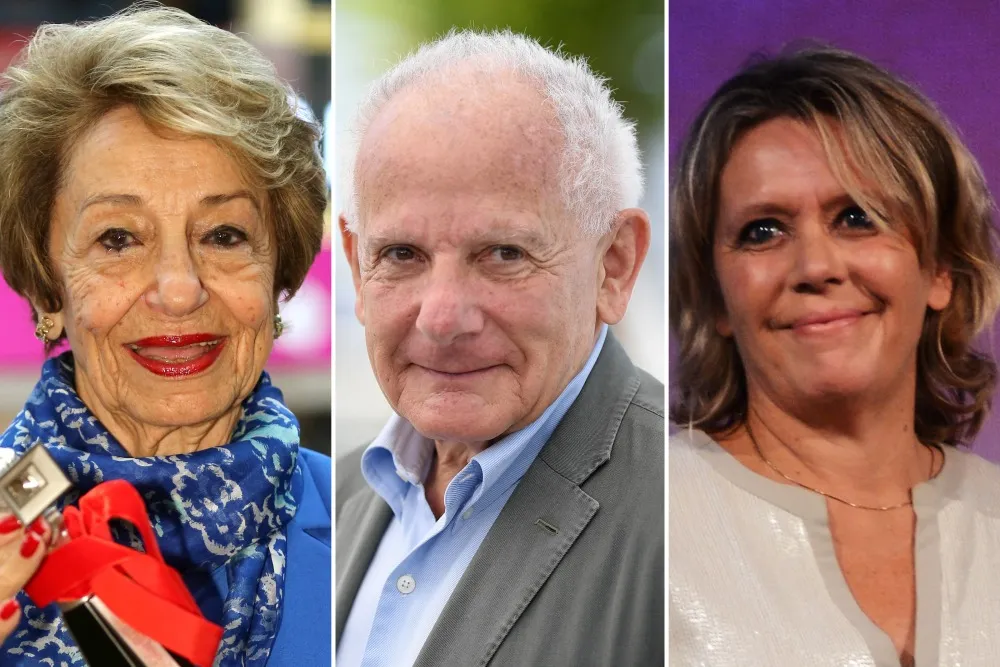
The European Film Academy has named Beki Probst, Marin Karmitz and Sandra den Hamer as the first recipients of its new Community Award for an Outstanding Contribution to European Film Culture.
The award, paying tribute to “a decisive and continuous contribution over many years to the development and expansion of European film culture”, will be presented during the European Film Awards weekend in Athens in January 2027.
The trio will be presented with the award on January 15, on the eve of the main ceremony at the traditional Welcome Night gala dinner, taking place this edition at the Acropolis Museum housing some 4,000 artefacts dating as far back as 1,200 BCE.
Probst is best known internationally as the founder of the Berlinale’s European Film Market, having entered the cinema world as the founder with her Swiss husband of the Queenie Cinemas in Berne in the 1960s, which grew into a successful chain of arthouse cinemas still existing today.
Born into a Sephardic Jewish family in Istanbul, Probst studied Law and Journalism and worked briefly as a film journalist.
From 1981 to 1988, she was the Berlinale delegate for Turkey and Greece and after initiating Locarno’s industry program, she was asked by Berlinale Director Moritz de Hadeln to start the European Film Market in 1988 in its current form.
Under her management, which continued into 2014, the EFM became one of the largest and most important international film market in Europe.
She has previously been feted with the Berlinale Camera, the Prix du cinéma Suisse, the French Chevalier des Arts et des Lettres and the Order of Merit of the Federal Republic of Germany.
Karmitz is known as the founder of France’s independent exhibitor, producer, film financier and sales agent mk2 film. Born in Romania in 1938, Karmitz arrived in France as a refugee with his family in 1947.
After studies at the IDHEC film school in Paris, he worked as assistant director to the filmmakers Jean-Luc Godard, Agnès Varda, Jacques Rozier, Yannick Bellon and Pierre Kast. before directing his first short film, Nuit Noir, Calcutta, based on a screenplay by Marguerite Duras, in 1964.
In 1965, he worked with Samuel Beckett on the adaptation of Comédie. In the same year, the feature was selected to open the Venice International Film Festival and shocked audiences with its avant-garde material.
He launched mk2 Productions in 1967 and made his feature-length directorial debut with Seven Days Somewhere Else (1968), followed by Comrades (1970) and Blow for Blow (1972), which were screened at international festivals.
He opened his first cinema in Paris in 1974 in response to Blow for Blow, about a group of textiles workers who take their factory boss hostage in protest at the work conditions, being shut out of mainstream circuits.
In 40 years, he would produce 108 films and distribute over 350 in theatres, among them Krzysztof Kieslowski’s Three Colours trilogy, for which he received a nomination for the European Film Awards 1994, twelve films by Claude Chabrol, Alain Resnais, Louis Malle, the Taviani brothers, Theo Angelopoulos, Lucian Pintilié, Gus Van Sant, Ken Loach, Abbas Kiarostami, Hong Sang-Soo, Michael Haneke, Walter Salles and Xavier Dolan.
Den Hamer has an extensive track record in the Dutch film industry.
From 2007 to 2023, she was the director of the Netherlands Filmmuseum in Amsterdam. Under her leadership, the re-named Eye Filmmuseum opened a brand-new museum building and a new collection centre in Amsterdam.
Its eclectic programming includes large retrospectives, international conferences and as well as exhibitions, exploring the work and careers of filmmakers such as Bela Tarr, Apichatpong Weerasethakul and Alex van Warmerdam among many others.
Before that, Sandra den Hamer worked for 23 years at the International Film Festival Rotterdam, including roles as co-ordinator of CineMart and the Hubert Bals Fund. From 1996 to 2007, she directed the festival.
She also served as President of the Board of the Association of European Cinematheques (A.C.E.). From 2023 to 2026. she was appointed interim executive director at the Netherlands Film Fund. Today she chairs the Board of the IDFA Institute and the Gerrit Rietveld Academy in Amsterdam.
Gathering 5,700 members from more than 50 countries across Europe, the European Film Academy oversees the annual European Film Awards, which alternates taking place in its home city of Berlin and another European city, which is Athens this year.
The 39th ceremony marks the second time it is unfolding in its new January slot, after the academy decided to shift it from a long-running December slot to integrate the awards more fully into the wider awards season.
>
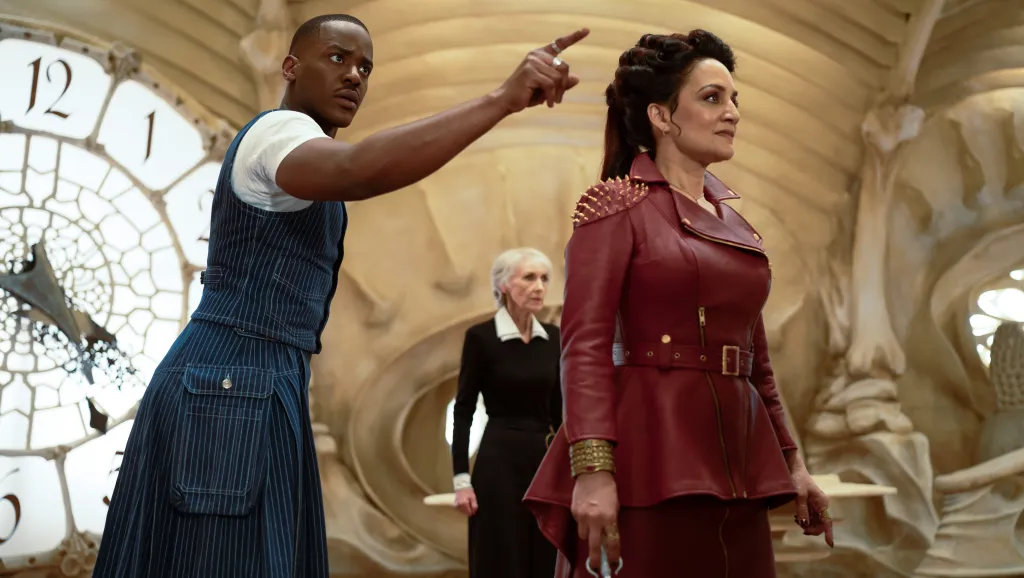
EXCLUSIVE: At least one BBC Studios indie will be throwing its hat in the ring to become the next producer of Doctor Who, with scripted boss Jamie Hall telling Deadline he “firmly believes” the entire BBC group should “reap the rewards” of the iconic sci-fi series.
Hall said “we’ve probably got one, potentially two companies” going for the multi-million pound tender, which if successful would bring the show back in house following two seasons made by Sony-owned Bad Wolf, starring Ncuti Gatwa. His comments followed BBC Studios CEO Tom Fussell recently saying BBC Studios would be applying “with gusto.”
Hall wouldn’t reveal the names of the indies but said he would “100%” be happy for more than one to enter the race.
BBC Studios runs an in-house drama label, which made Doctor Who before Bad Wolf, while it also owns several scripted indies outright including Baby Reindeer maker Clerkenwell Films, Happy Valley producer Lookout Point and Sherwood indie House Productions.
While he hasn’t seen his labels’ proposals, Hall said he has been “very open” and honest with those keen to go for the tender because the process is “quite an onerous undertaking and costs quite a bit of money.” “I have to make sure that it doesn’t become a distraction from the day job,” he added.
If two BBC Studios labels enter, they will likely join Line of Duty producer World Productions, whose boss Simon Heath has previously indicated his ITV Studios-owned outfit is interested. More thoughts from producers can be found in our future Doctor Who analysis from over the summer.
Published a fortnight ago, the tender calls for a “relevant, surprising, brave and inspiring” new vision for the show that should premiere in 2028-29. Notably, it said it is happy for indies to pitch a series using “episodic writers” rather than a “showrunner model,” which would do away with how Doctor Who has been made in recent years.
After several years with Bad Wolf and after the termination of the just-ended Disney+ co-pro deal, Hall was adamant that Doctor Who “should sit within the BBC and the whole group should reap the rewards of it.”
Questioned on what he would want to see from a revamped Doctor Who, Hall harked back to the days when Matt Smith and David Tennant were playing the Doctor.
“It feels to me that there is an opportunity to get back to what the core offering was in that time,” he added. “It will be off screen for two or three years and that gives the audience a great chance to have a break then rediscover, while also bringing a new audience.”
>

Hearst Networks UK Buys Rebooted ‘Orange County Choppers Original’

‘Mahou no Princess Minky Momo: Akogare no Yume e – Magokoro no Duo’ Theatrical Release Postponed
Jalen Duren could turn down $200 million from the Pistons. Here’s what happens next
-

 movies4 months ago
Search For Canadian TV Actor Stewart McLean Now Homicide Investigation
-

 Fashion9 years ago
These ’90s fashion trends are making a comeback in 2017
-
Fashion9 years ago
According to Dior Couture, this taboo fashion accessory is back
-
Fashion9 years ago
Model Jocelyn Chew’s Instagram is the best vacation you’ve ever had
-
Fashion9 years ago
Emily Ratajkowski channels back-to-school style
-
Fashion9 years ago
9 Celebrities who have spoken out about being photoshopped
-

 Anime4 months ago
Rurouni Kenshin: Hokkaido Arc Manga Takes 1-Issue Break – News
-

 Anime3 months ago
HIDIVE to Stream English Dubs for The World Is Dancing, The Forsaken Saintess and Her Foodie Roadtrip in Another World, The Dangers in My Heart: The Movie Anime – News