
Anime
The Irregular at Magic High School THE MOVIE – Yotsuba Succession Arc – Anime Film Review – Review

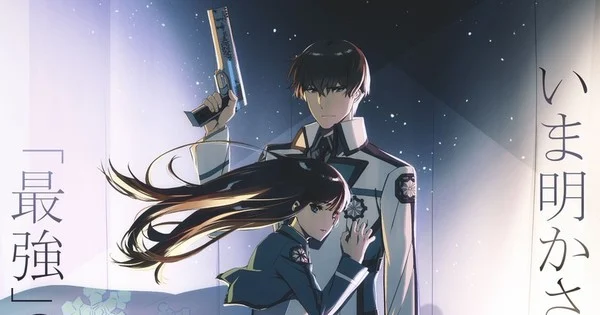
*This review contains major spoilers for both the various The Irregular at Magic Highschool TV anime and this film as well.
As humans, we love stories about overcoming challenges—be they practical or romantic. Even if we’ll never be facing down magical soldiers or grappling with a love that can never be, we can empathize with those feelings—and hope that our favorite characters will be able to overcome all that stands against them, even if we are unable to overcome the mundane challenges in our real-world, everyday lives.
The Irregular at Magic Highschool as a whole is a story about Tatsuya living in the shadow of his far more traditionally talented sister while overcoming the prejudice directed towards him (and other outcasts like him). The story ultimately shows that being different doesn’t mean being weak—nor does being hyper-specialized in one specific area.
However, this film focuses not on the practical challenges facing Tatsuya but rather the romantic challenge facing Miyuki: that she’s deeply in love with her brother. Unlike many anime out there, the incest angle in this film is not played for titillation—nor is it played for laughs as it has so often been in previous iterations of this franchise. Rather, it is played for pure, serious drama.
Miyuki knows her feelings are wrong on both a scientific and societal level. However, that doesn’t change the fact that the idea of being married off to another man—being forced to be intimate with someone other than Tatsuya—makes her physically ill. So does the idea of Tatsuya becoming romantically involved with someone else and leaving her behind. The cold truth of reality clashing with what she wants but knows she can never have leaves her on the edge of a psychotic break, curled up on her floor, bawling while her desires taunt her rational mind.
Honestly, the series up to this point has done a great job of showing us why Miyuki feels the way she does. In her cutthroat family clan, Miyuki has had one true ally; one person she could count on regardless of the situation: Tatsuya. He always puts her and her feelings first and is literally the most loyal man out there. But, of course, that’s only half the story. While he has grown a bit emotionally over the course of the story, the fact remains that his mind was initially altered so that the only emotions he would feel would be love for her. She knows this and no doubt harbors guilt around the fact that his feelings for her are the chain around his neck. With all this context, it’s understandable why she might feel so unnaturally attached to him, even if she knows it’s wrong.
In the series thus far, things have been in a holding pattern while the siblings have been at school. With this film, however, time has run out. While Miyuki knows she can never be with Tatsuya as she wants to be, if she even wants some hope of being able to keep the status quo—both her and Tatsuya side-by-side and single—then there is only one choice: for her to become the next head of the Yotsuba family. Only then will she have control over both her life and her brother’s.
What’s truly interesting about this film is how it manages to both sidestep its incest dilemma for a happy ending and fail to do so at the same time. Basically, Miyuki gets both permission and an excuse for why it would be okay for her to be with Tatsuya romantically. However, there is one often overlooked issue that still remains: Tatsuya’s own feelings.
While he is not disgusted by Miyuki’s feelings towards him, he doesn’t reciprocate them either. Miyuki is his sister—this was forcefully hard-wired into his mind. He cares for her and loves her, just not in a romantic way. It’s not something he can simply switch off—not even with the reveal of a few loopholes that would make such a relationship just this side of moral if you squint right. And on a more meta-textual level, it also substantially changes the status quo for the pair going forward. Miyuki’s love for Tatsuya is now out in the open, and the two of them will have to learn how to deal with it both at home and school.
As the main dilemma for the film is an internal, dramatic one—and its solution gained through expositionary dialogue and flashbacks—there isn’t much action in this film. Of the four fights seen in the film, three are over in a scant few minutes. The remaining one, while longer, doesn’t even have the needed importance to act as an action climax for the film, leaving the film without one.
However, that doesn’t mean that the film is boring to watch. There is a lot of visual creativity to keep things interesting through the endless series of conversations. There are slow camera spins, low-angle shots, camera focus on relevant background objects, and more than a few surreal bits of visual exposition to make what the characters are thinking about clear. Flashbacks are given a mostly monochrome color palette, and the characters’ faces, hair, and clothing have distinct highlights based on the color of the nearest light source. All in all, this is the best The Irregular at Magic Highschool has ever looked by a fair margin.
Musically, the background soundtrack works at bolstering the moments of tension, drama, and joy in the film. And, as is par for the course for the series, this film also comes with a new LiSA song—and while it may not be the best of the best, it’s a catchy enough tune.
The Irregular at Magic High School THE MOVIE – Yotsuba Succession Arc – serves as the emotional capstone to the story so far. The truth behind Tatsuya and Miyuki’s origins is laid bare, as are their feelings for each other. But that doesn’t mean that there aren’t forces both within the Yotsuba clan and without who refuse to tolerate a pair of codependent teens with the power to destroy the world as we know it. Plenty of danger still awaits our heroes even as they enter a new stage of their relationship.
>

The official website for the television anime of Mochimaru Sakaki‘s The World’s Strongest Witch: I’m Starting My Free Life in a World Where Only I Can See the Online Strategy Guide (Sekai Saikyō no Majo, Hajimemashita: Watashi dake “Kōryaku Site” o Mireru Sekai de Jiyū ni Ikimasu) light novel series announced on Wednesday that Nana Mizuki will voice Yggdrasil, the spirit of the World Tree. The character will appear in the anime’s first episode on October 7.

©坂木持丸・riritto・戸賀環・講談社/「世界最強の魔女、始めました」製作委員会

©坂木持丸・riritto・戸賀環・講談社/「世界最強の魔女、始めました」製作委員会
Yen Press is releasing the light novels in English, and will release the third volume on November 10. Yen Press describes the story:
When Lorna manifests a completely useless ability, she’s labeled an embarrassment to her family and kicked out of the house. With no money or food, she’s about to hit rock bottom. But then, she figures out how to use her supposedly worthless SSS-Rank skill, “Internet.” This cheat-level talent gives her the know-how to gather an unlimited amount of valuable items and easily acquire rare equipment. Armed with godlike knowledge, Lorna’s free to do anything she wants! If only she could figure out what “lmfao” means…
The anime stars:
Jōji Furuta (ēlDLIVE, Double Decker! Doug & Kirill, Bad Girl) is directing the anime at the studios Bridge and Aisle. Shoji Yonemura (Pokémon Journeys: The Series, One Piece 2013-onwards, Bad Girl) is in charge of the series scripts. Yūki Morimoto (Cardfight!! Vanguard GZ, Boarding School Juliet, Bad Girl) is designing the characters.
Additional staff members include:
HoneyWorks feat. HaKoniwalily perform the opening theme song “Eikyōryoku∞Idol” (Infinitely Influential Idol), and the group Rokudenashi performs the ending theme song “Hoshi o Muguru” (Traversing the Stars).
The anime will premiere on the Tokyo MX, BS11, and TV Aichi channels on October 7, and on MBS on October 10.
Mochimaru Sakaki began serializing the original story in the Shōsetsuka ni Narō website in May 2022. Square Enix published the first print novel volume in December 2022, with illustrations by riritto. The sixth novel volume will ship on October 7.
Tamaki Toga launched a manga adaptation in Kodansha‘s Getsu Maga Kichi/Comic Days website in May 2023. Kodansha published the manga’s 14th compiled book volume on October 8.
Comikey publishes both Daisuke Takashima‘s manga adaptation of Sakaki’s The Strongest Swordsman Has Zero Equipment Slots novel series, as well as Namiki Tsukiyama‘s manga adaptation of Sakaki’s Final Boss Fake-out novel series in English. Square Enix also publishes both manga in English on its Manga UP! Global website.
Sources: The World’s Strongest Witch anime’s website, Comic Natalie
>
Anime
‘Mahou no Princess Minky Momo: Akogare no Yume e – Magokoro no Duo’ Theatrical Release Postponed

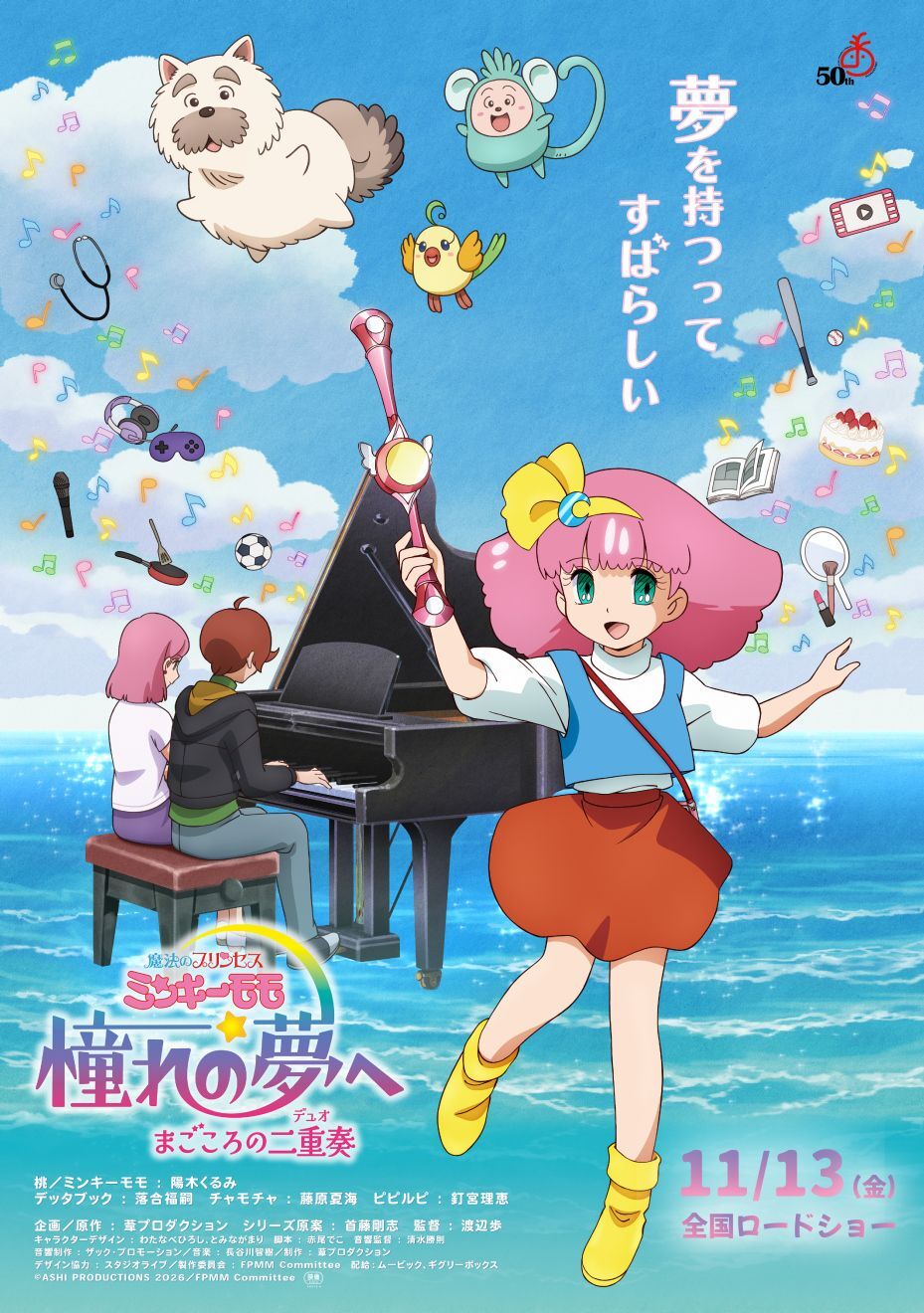 The official website for the Mahou no Princess Minky Momo: Akogare no Yume e – Magokoro no Duo (Fairy Princess Minky Momo) original video anime announced on Wednesday that its theatrical release has been postponed due to production circumstances. The OVA was originally scheduled to open in Japan on November 13. A new release date will be announced at a later time.
The production committee apologized to viewers and related parties for the postponement. Advance tickets that have already been purchased will remain valid for the rescheduled theatrical release.
Ayumu Watanabe (Summertime Render) is directing at Ashi Productions and Deko Akao (Witch Watch) is penning the script. Hiroshi Watanabe (Minky Momo in Tabidachi no Eki) and Mari Tominaga (Cardfight!! Vanguard) are designing the characters. Tomoki Hasegawa (Jiisan Baasan Wakagaeru) is composing the music.
Produced by Ashi Productions, the original television anime aired in 63 episodes from March 1982 to May 1983. A second anime series aired in 62 episodes from Fall 1991 to Fall 1992.
The Mahou no Princess Minky Momo: Yume no Naka no Rondo (La Ronde in my Dream) original video anime was released in July 1985, followed by Minky Momo in Yume ni Kakeru Hashi (Minky Momo in the Bridge Over Dreams) in May 1993, and Minky Momo in Tabidachi no Eki (Minky Momo: The Station of Your Memories) in June 1994.
Source: Oricon News
>

Ministry of Justice expert panel had indicated right of publicity protects voices

©津田健次郎 / ANDSTIR
On Wednesday, the Tokyo District Court dismissed the lawsuit voice actor Kenjirō Tsuda filed against the operator of the video-sharing app TikTok for posting videos that allegedly used AI to imitate his voice without permission. Tsuda had sought the removal of the videos, and the court found that the videos had already been removed.
The Singaporean company that operates TikTok in Japan reported that the videos had been removed after the lawsuit’s November 2025 filing. Thus, the company argued that Tsuda no longer has a legal interest in continuing the case.
According to the lawsuit’s filing, an unidentified individual owned the TikTok account that posted at least 188 videos dealing with urban legends and conspiracy theories between July 2024 and September 2025. According to information the individual posted on another site, the revenue from the videos was estimated between 500,000 and 750,000 yen (about US$3,000 to US$4,500) per month.
Tsuda’s legal team argued that the videos featured narration generated by AI to imitate Tsuda’s characteristic “smooth, low-pitched” and “deep, husky” voice. They claimed that the videos were misleading viewers into believing that the narration is Tsuda’s voice, thus attracting them. Tsuda’s camp had sought the removal of the videos based on the Unfair Competition Prevention Act and the right of publicity, which is the right to protect the image of public figures such as celebrities and entertainers.
The defense had argued that the voice in the narration was a “universal male voice” generated by training AI on the voice of the poster’s friend, as was stated on the poster’s external website. The company’s lawyers argued that there was no confusion and therefore no violation of the law. TikTok also denied any infringement of publicity rights, arguing that most of the comments on the videos were opinions and reactions regarding to the content, and the viewers were not drawn in by the voice of the narration.
In related news, an expert panel for the Ministry of Justice issued guidelines in August on how to interpret the existing laws to protect voices from unauthorized generative AI use. The guidelines indicated that the voices of voice actors and actors are legally protected under the right of publicity, just as their likenesses (e.g. photographs) are. The guidelines also indicated that depending on how much they infringed on that right, generative AI providers could face joint liability.
Source: Mainichi Shimbun
(Kōtarō Adachi) via Hachima Kikō
>

The World’s Strongest Witch Anime Casts Nana Mizuki – News
After Case Keenum’s stunning performance, Bears have QB dilemma: Who should start?
Will Napheesa Collier be back with the Lynx? Minnesota enters a murky offseason
-

 movies4 months ago
Search For Canadian TV Actor Stewart McLean Now Homicide Investigation
-

 Fashion9 years ago
These ’90s fashion trends are making a comeback in 2017
-
Fashion9 years ago
According to Dior Couture, this taboo fashion accessory is back
-
Fashion9 years ago
Model Jocelyn Chew’s Instagram is the best vacation you’ve ever had
-
Fashion9 years ago
Emily Ratajkowski channels back-to-school style
-
Fashion9 years ago
9 Celebrities who have spoken out about being photoshopped
-

 Anime4 months ago
Rurouni Kenshin: Hokkaido Arc Manga Takes 1-Issue Break – News
-

 Anime3 months ago
HIDIVE to Stream English Dubs for The World Is Dancing, The Forsaken Saintess and Her Foodie Roadtrip in Another World, The Dangers in My Heart: The Movie Anime – News