
(L to R): Vincent Lindon as Jean Valjean and Tahar Rahim as Javert in ‘Les Miserables‘
Christophe Brachet © 2026 Curiosa Films – Eskwad – Studiocanal – TF1 Films


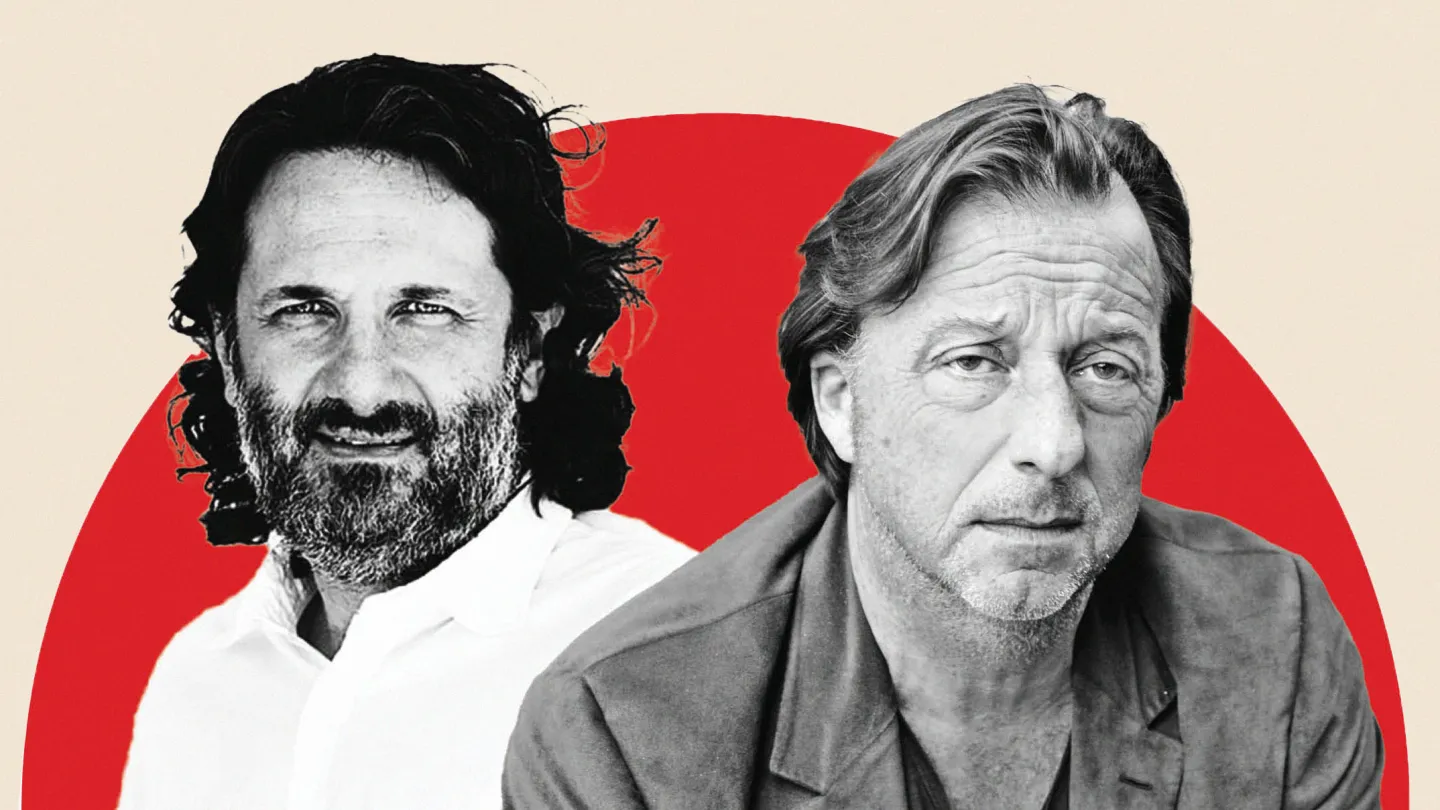
The French are betting audiences want their epics back.
For much of the 1980s and ’90s, France regularly mounted sprawling prestige productions on a scale few European industries could match. Films like Jean-Paul Rappeneau’s Cyrano de Bergerac (1990), Claude Berri’s Germinal (1993), or Patrice Chéreau’s Queen Margot (1994). But as production costs rose and financing grew more risk-averse, those ambitious historical spectacles gradually disappeared from the big screen, replaced by smaller auteur dramas, comedies and internationally portable genre films.
Now, after years in retreat, large-scale French period storytelling is mounting a comeback. StudioCanal parent Canal+ has found global audiences for glossy historical series such as Versailles and Marie Antoinette, while Martin Bourboulon’s two-part The Three Musketeers adaptation and Matthieu Delaporte and Alexandre de la Patellière’s The Count of Monte Cristo demonstrated there was still an appetite, at least in France, for muscular literary adventure made on a blockbuster scale. This year in Cannes, Antonin Baudry’s De Gaulle: Tilting Iron, the first in an epic two-part biopic on the iconic French leader, premieres out of competition, another sign of renewed confidence in prestige French popular cinema.
Into that landscape comes Fred Cavayé’s Les Misérables, a new action-skewed adaptation of Victor Hugo’s classic about crime, justice and redemption, starring Vincent Lindon as Jean Valjean and Tahar Rahim as the relentless Inspector Javert. The film reframes Hugo’s novel — adapted dozens of times throughout the decades but probably best known to modern audiences from the Andrew Lloyd Webber musical and Tom Hooper’s 2012 film adaptation — as a propulsive chase thriller. Alongside Lindon and Rahim, and veteran actors Camille Cottin and Benjamin Lavernhe, the film boasts a supporting cast of 20- and 30-something up-and-comers, including Noémie Merlant (Portrait of a Lady on Fire, Tár), Megan Northam (Rabia), Vassili Schneider (The Count of Monte Cristo), Marie Colomb (The Beasts), and Louis Peres (The Sentinels).
The 40 million euro ($47 million) production was put together independently by Richard Grandpierre at Eskwad (The Tuche franchise, Brotherhood of the Wolf) and Olivier Delbosc at Curiosa Films (8 Women, The Wizard of the Kremlin) with backing from Canal+/ StudioCanal, which is releasing the film theatrically across its global footprint and handling worldwide sales at the Cannes film market. Additional funding came from TF1 and Netflix in France.
In an exclusive interview with The Hollywood Reporter, Grandpierre and Delbosc discuss the high-stakes gamble behind reviving the grand French popular epic, why they believed audiences were ready for another Les Misérables, and why Victor Hugo’s 19th century classic still feels politically explosive today.
Why make yet another version of Les Misérables?
Richard Grandpierre We were expecting this question. You’re absolutely right. I can speak for myself, but I’m sure Olivier agrees — in the lifetime of a producer, we all dream of doing something like The Three Musketeers, Monte Cristo, the major productions, the major books in French literature.
But I think what really prompted us to do this movie was our meeting with Fred Cavayé, the director, and hearing him talk about his idea. And the other reason is that for 35 years, nobody had done a version of Les Misérables in France. The last time was with Lino Ventura as Jean Valjean [in 1982, directed by Robert Hossein]. An entire generation has not experienced watching it onscreen. If you take people under 30, I’m sure most of them haven’t read Les Misérables. They only know it through [Hooper’s 2012] musical.
The difference with Fred Cavayé’s vision is that the characters are young. Before, it was just [middle-aged]. We’ve brought in a whole new universe of younger characters, the youth in Victor Hugo’s story, people 15- to 20-year-olds can identify with.
Olivier Delbosc We were very quickly convinced that Victor Hugo’s story is completely timeless. It’s a story of inequality and social misery that unfortunately is still very contemporary.
Grandpierre The strength of the movie comes from the fact that it resonates in today’s world and in today’s life. You’ve probably heard about the Yellow Vest movement a few years ago, where people went into the streets to protest and demonstrate. It’s the same thing as the barricades Victor Hugo described in the 19th century, when people couldn’t afford bread.
If you watch the news, unfortunately it’s exactly the same topics that Victor Hugo’s brought up in his book.
(L to R): Vincent Lindon as Jean Valjean and Tahar Rahim as Javert in ‘Les Miserables‘
Christophe Brachet © 2026 Curiosa Films – Eskwad – Studiocanal – TF1 Films
How does Fred Cavayé’s approach make this adaptation distinct?
Delbosc He has done a lot of thrillers and action movies, and he’s using those techniques to create tension. That is what brings modernity to Victor Hugo’s masterpiece.
We have big films about Charles de Gaulle and the Vichy regime screening in Cannes this year. Why do you think French cinema is returning to large-scale historical and period films at this moment?
Delbosc In the ’60s, ’70s and ’80s, French cinema was producing a lot of period films, and that kind of disappeared after the ’80s because they cost a lot of money and take a lot of time to make. Now they are coming back, with a modern twist but with the same themes of social inequality that were described 100 years ago. Because unfortunately history repeats itself and the same problems keep coming back.
Grandpierre I think it’s really the desire of producers to make these kind of movies. Olivier and I are about the same generation, and we grew up with these great, popular French period movies. When we were starting in the industry, we watched Claude Berri’s films [like Jean de Florette (1986), Uranus (1990) and Germinal (1993] and loved them. So we had the desire to make a great popular French movie.
And I could ask you the same question: Why does American cinema continue to make Westerns? Because they speak to the country’s collective history.
Delbosc And audiences around the world love period movies, historical stories, whether in series or cinema.
Do you think historical films allow filmmakers to engage with contemporary political tensions without directly dividing audiences?
Grandpierre That wasn’t our goal, we simply wanted to make a great, popular French movie.
What is true, though, is that there is a resonance between what Victor Hugo wrote in his time and what is happening today. We didn’t look for this political resonance, but it just happens that what Victor Hugo wrote is still current — not only in France, but in other countries as well.
But once the film is released, won’t audiences inevitably interpret it through today’s political climate?
Delbosc That’s the idea of art and cinema: to provide audiences with different ways to read and understand a movie. Victor Hugo, by the way, was not only a great writer, he also became a politician. He fought against the death penalty and for women’s voting rights.
Can you talk about the scale of the production and how difficult it was to finance?
Grandpierre The budget is 40 million euros. The shoot took three months. We had four years of preparation between the casting, finding the stunt people and getting the technical team together.
We had ups and downs with the financing, but what really convinced people to invest was Fred Cavayé wrote a 40-page outline that made them see what the film would be and convinced everyone to take the risk. I’d also add that he had a great co-screenwriter in Victor Hugo.
But it’s a rare experience today in the French system, for independent producers like us to be able to put together such a movie.
Delbosc It’s the biggest French production of last year.
Can you break down the financing structure?
Delbosc It’s a StudioCanal, Canal+, Netflix and TF1 Film Production. Netflix only has French rights. [Canal+ subsidiary] StudioCanal is distributing in eight territories worldwide including France, Germany, Italy and the U.K. and is also handling worldwide sales.
Were you thinking about the international audience while making the film?
Grandpierre When you make a French movie, it’s always complicated to sell into the English-speaking market, because there are very few examples of French movies that work, particularly in America. Usually genre films or smaller art house movies. But thanks to the musical, the English-speaking world knows what Les Misérables is.
What was the single most difficult sequence to shoot?
Delbosc The barricades. That was a three-week shoot in Bordeaux in the middle of a heat wave. It was 40 degrees [107 F], with 300 extras. And I should note, nothing was done with AI. We did it the old-fashioned way. The hot, sweaty, old-fashioned way.
Grandpierre We use VFX in postproduction of course, but no AI. Look at us, we’re obviously old-generation people. We don’t use AI.
Where does the film stand now in postproduction, and what are the release plans?
Grandpierre The film is at the end of the editing process right now. It will be released on October 14 in France. We weren’t ready for Cannes, and StudioCanal, which is selling the movie, will decide whether to show it at a festival before release.
For younger audiences who mainly know Les Misérables through the musical, what will they discover in your version that feels new?
Grandpierre In France, we have a great asset in Fred Cavayé and Victor Hugo, of course, but we also have an incredible modern cast. All generations can identify with someone in the cast — Vincent Lindon for some people, the younger actors for others: Benjamin Lavernhe, Noémie Merlant, Megan Northam, Vassili Schneider, Louis Peres. It’s one of the best casts we can have in France today.
As long as you don’t have Russell Crowe singing in it, I’ll be happy.
Grandpierre No, definitely not.
>

EXCLUSIVE: It’s a Sin star Callum Scott Howells and Gabrielle Creevy (Black Doves) are leading an adaptation of Vanessa Savage’s romantic thriller The Night They Vanished for BBC Studios and Channel 4.
Cameras have rolled in Wales on the six-part series that tells the story of Anna (Creevy), whose world is blown apart when she discovers her childhood house listed on a true-crime website as the scene of her family’s future deaths. Intriguing blind date Cai (Scott Howells) runs the true-crime site but swears he didn’t post it. The police say it’s a hoax, but Anna’s family have vanished.
Angharad Elen (The Light In The Hall) and Hannah Daniel (Mudtown) are adapting Savage’s novel, her third thriller. BBC Studios’ new label CliffEdge Entertainment, which has just been unveiled to Deadline by scripted boss Jamie Hall, is producing and selling worldwide. Channel 4 has pre-bought the drama while we understand a deal with a U.S. buyer is close.
Additional cast includes Tamzin Outhwaite (The Wives, Ridley Road, The Tower) as Anna’s stepmum Jo and Steffan Rhodri (Gavin & Stacey) as Idris, Anna’s father, along with Matthew Gravelle (Mudtown), Lisa Victoria (Pobol y Cwm), Jack Quick (Pobol y Cwm), Andrew Lennon (Death Valley), Callum Hymers (The Pact), and Bella Shewan.
Scott Howells is best known for Russell T. Davies’ It’s a Sin and is starring in Deadpoint, another BBC Studios thriller for Channel 4. Creevy plays Eleanor in Netflix hit Black Doves, which will soon launch Season 2.
Creevy said: “Anna is a firecracker – sharp, loyal and carrying more hurt than she lets on. The moment her past comes roaring back, she’s forced into a nightmare she thought she’d escaped. It’s a gift of a role and I can’t wait for audiences to unravel the truth with her.”
Scott Howells added: “Cai is charming, complicated and never quite what he seems. He could be the love of Anna’s life… or the centre of a terrifying conspiracy. Playing someone who keeps you guessing is exactly the kind of challenge I love.”
The Night They Vanished has been pre-bought by Polly Scates, Channel 4 Head of Acquisitions and Felix Jones, Acquisitions Manager. EPs are Sarah Creasey, Sathe, Elen, and Branwen Williams for BBC Studios. Series producer is Sian Elen John and the Director is Geraint Todd.
>

EXCLUSIVE: BBC Studios’ scripted chief has laid out his strategy for future indie and talent investments that will shy away from “going out and spending £20M ($26.5M) on a production company.”
Speaking exclusively with Deadline for his first interview since taking on the Scripted MD role, Jamie Hall said his plan for the Doctor Who, Baby Reindeer and Sherwood maker is instead to strike smaller but more regular deals with top talent and “build creative hubs.” In this vein, Hall said BBC Studios scripted will “move slightly closer” to the strategy of soon-to-be-independent rival ITV Studios.
Hall came to our interview clutching receipts in the shape of two new labels led by the producers behind Strike and The Detection Club, along with early-stage plans for a label that will focus on digital spin-offs of existing brands.
BBC Studios runs hefty in-house drama and comedy teams along with majority-owning big beasts of the UK production world like Baby Reindeer maker Clerkenwell Films, Sherwood producer House Productions, Lookout Point and Steve Coogan’s Baby Cow.
Hall joined earlier this year, three decades on from his first stint at the BBC (he met his wife working on Our Friends in the North) from Vice Studios/Pulse Films, where he oversaw the likes of Gangs Of London. At BBC Studios, his remit is to give a shot in the arm to the drama and comedy offering and unearth the next generation of IP at a time when the public service BBC is desperate for funding. His desire echoes that of his boss, BBC Studios Productions chief Zai Bennett, which is to invest in around two to three of these new-look talent labels per year. Other examples include tie-ups with Barbie star Jamie Demetriou, The Ballad of Wallis Island writer Tom Basden, Ted Lasso alum Nick Mohammed and Cunk on Earth creator Diane Morgan.
“I inherited a group of great production companies that had been acquired in the way production companies were acquired at the time,” Hall told Deadline from BBC Studios’ Soho outpost. “But I don’t think the market can support that anymore – or, at least, it can only do so very rarely. We’re not going to spend £20 million buying a production company. Instead, we’re building an amazing service at the center of the studio, then creating creative hubs that can tap into our brilliant lawyers, HR, finance and other support functions.”
He recalled a recent conversation with Joel Wilson, the just-departed co-founder of Sex Education producer Eleven, who told him: “Towards the end of running the company I came to dread the pressure of running a business.”
“All [Eleven] wanted to do was build great shows,” added Hall.
Hall didn’t completely rule out stumping up big bucks to buy an indie outright in the future, but added: “The reality is that I can set up creative pods or labels at a much lower price point, and that feels right.” He said the scripted supremo role at BBC Studios had attracted him because, “I wasn’t simply coming in to mind the wheel. There was a creative renewal that needed to happen – some wiring and plumbing that needed fixing.”
Backing up his strategy, Hall unveiled Bristol-based Landed Productions led by Strike and Possession producer Jenny Van Der Lande, who is leaving her role as Big Talk’s creative director of drama to helm BBC Studios’ first scripted label outside London.
Landed Productions will make “premium genre pieces” and Van Der Lande has multiple writers in mind with whom she wants to develop shows. “Jenny said in our conversations that she doesn’t want to run a production company,” explained Hall. “She wants to work with amazing writers she already has relationships with, then partner up when she gets a greenlight.”
Hall’s new-look team, which consists of the likes of CFO Jennifer Dickson, legal chief Anna Beese and production director Alison Loose, has also been busy working on the digital spin-offs label that follows big digital successes for franchises like Dancing with the Stars and EastEnders. This one, which doesn’t yet have a name, will be led by BBC Studios Drama digital chief Katy Karger. “Scripted is probably the hardest area to crack [in digital], so we’re setting up a central digital capability,” said Hall. “When someone pitches a conventional piece of television, we can also pitch to buyers a digital component.”
Hall also unveiled CliffEdge Entertainment, led by “real grafter” Deborah Sathe, who is moving across from her role as Senior Creative Director at the in-house BBC Studios Drama Productions. CliffEdge will take some shows off Drama Productions’ hands such as The Detection Club, Silent Witness, Father Brown and Shakespeare and Hathaway, while the Kate Oates-run Drama Productions will continue making soaps and continuing drama. Some staff will move over to CliffEdge.
“When I came in, I spent a lot of time getting to know all the creatives in the business and Deb Sathe was one of the people who really impressed me with her energy and what she was building,” added Hall. “She’s a real grafter, but is also incredibly disciplined about making shows at a certain price point. It felt natural for her to have her own entity to run.”
CliffEdge comes replete with a greenlight: an adaptation of Vanessa Savage’s gripping thriller The Night They Vanished starring It’s a Sin’s Callum Scott Howells and Gabrielle Creevy (Black Doves). That one has been pre-bought by Channel 4 and follows Anna (Creevy), whose world is blown apart when she discovers her childhood house listed on a true crime website as the scene of her family’s future deaths. Intriguing blind date Cai (Scott Howells) runs the true-crime site, but he swears he didn’t post it.
“I’ve done the rounds of most of the agencies”
The Night They Vanished speaks to what Hall believes BBC Studios can do with big IP.
He says he has “done the rounds of most of the agencies to remind them that we’re open” – the day after he chats with Deadline he has a meeting in the diary with Curtis Brown – and is in talks over “a number of pieces of IP that are coming through which are quite interesting.”
Driven by the success of Sky and AMC’s Gangs of London, for which he says Pulse was “a bit ahead of the curve,” Hall is chatting to rightsholders about the possibility of revamping in-vogue gaming IP for the small screen. This follows big successes for the likes of HBO’s The Last of Us.
Although none of these examples are necessarily franchise-able in the vein of a Gangs of London or Doctor Who, Hall reels off a list of upcoming BBC Studios shows he is buzzing for, including the BBC’s Killing Eve origin story Honey, Netflix surfing drama Breakers and a second season of Disney+ rom-com Alice and Steve.
Another hit dominating ratings at the moment is Diane Morgan’s comedy Ann Droid, which poignantly taps into societal paranoia about AI but in an oh-so-gentle way. Having yesterday become the BBC’s biggest new scripted comedy since Ludwig Season 1, Hall reveals there is “real interest” in Ann Droid from American buyers, who are familiar with Morgan from her work as comedy creation Philomena Cunk and could either buy finished tape or commission their own unique version.
Hall has plenty experience working for American behemoths and will soon sit down with BBC Studios’ new L.A. chief Ryan O’Dowd to figure out “how we can be better joined up, because inevitably our producers [in the UK] want access to the U.S. market.”
This comes at a time when Hall says the co-pro market is “picking up a bit” from the lows of 2025, although he acknowledges it is “nowhere near what it was in the past and there is still quite a big oversupply in the market of producers and projects.” “If we’re designing a show and the budget is at a [higher] level then we need to start thinking about [co-pros] much earlier in the process,” he added. “What has happened in the past is you develop a show for [BBC drama boss] Lindsay [Salt] and she says she wants it and then you go, ‘Oh crap we can’t finance it with just Lindsay and the tax credit, we need co-pro’. But by then the show has been developed in such a distinct way.”
He hopes his experience in the belly of the beast at Vice can help but is so far loving being part of a public service machine, which Hall labels the fourth biggest brand in the world. “Our ultimate owner is the epitome of patient money,” he said. “Whereas when I was at Vice it was owned by three American banks and if we didn’t hit our numbers each quarter we were in trouble.”
This unique BBC model helps in the current landscape, Hall reckons, coming as the Banijay-All3Media mega-merger marches on.
“I imagine that if you’ve got a super-indie with 130 production companies, the amount of facetime you’re going to have with the boss is quite minimal,” he added. “What I really lean into is the way we’re structured. Zai [Bennett] and I sit opposite each other, across a bank of desks. We don’t have to wait for L.A. to wake up before we make a decision; we can just get on with things.”
“Just getting on with things” is a crucial mantra for a BBC Studios scripted operation that is feeling more and more pressure to return funds to the cash-strapped 100-year-old national broadcaster.
Is Hall feeling the pressure?
“There’s no denying that any headwinds the BBC faces will come and hit us,” he added. “All I can do is manage that and focus on where we can grow our business outside of that [traditional BBC funding] route to help compensate. The BBC gets beat up so much. What we can do inside the studio is really help it and support it.”
>
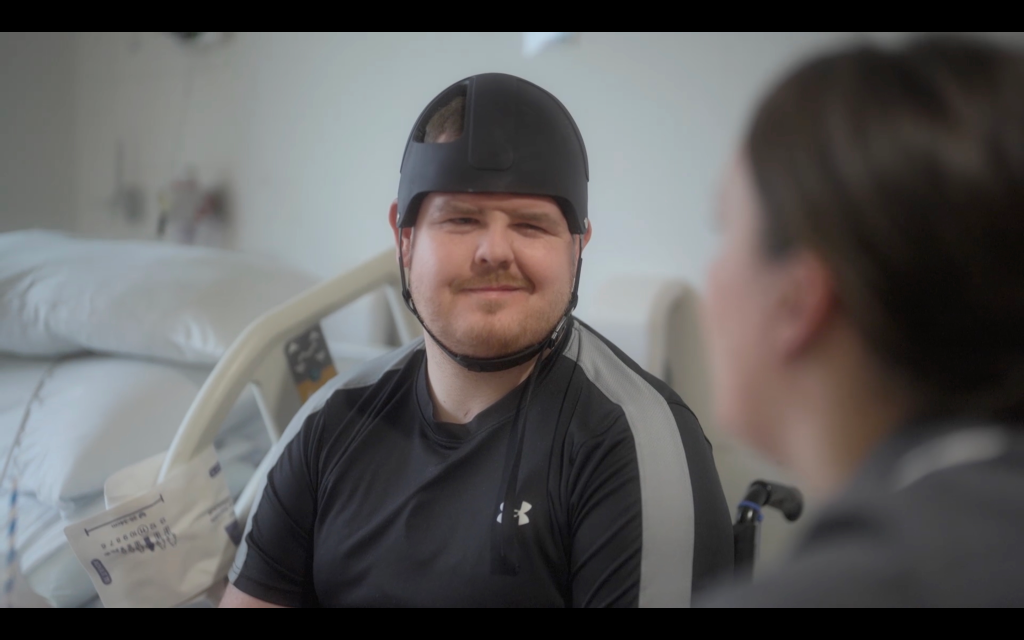
EXCLUSIVE: Channel 4 is teaming with the Stroke Association on a documentary sereis looking at young people living with the aftermath of a stroke.
Trauma: My Broken Brain follows three young survivors through the most frightening days of their lives and the grueling journey back to independence.
Every five minutes someone in the UK suffers a stroke – there are 1.4 million stroke survivors living in the UK today – but the aim of the doc is to show that this is only the beginning of recovery. Filmed over seven months with access to these young adults at the most terrifying and testing moments of their lives, the series meets Dan (28), a dancer left confined to a wheelchair, barely able to speak following emergency brain surgery; Saskia (22), a self-described social butterfly left bedbound after a brain bleed so severe her family feared she would not survive; and Dec (20), who collapsed just four months into a new relationship and spent weeks in a coma, his family and girlfriend unsure if he would survive.
Channel 4 has taken the rare step of teaming with a charity on the doc. It is being produced by Stream Media Group, which was also behind the same network’s Anna Richardson: Love, Loss and Dementia, made with the Alzheimer’s Society.
Channel 4 commissoning exec Simon Lee said: “This is an ambitious and important series that challenges perceptions and gives a voice to young people whose lives have been transformed by stroke, as they embark on the long road that begins after survival.”
Stream’s Victoria Noble added: “What struck us throughout filming was how little people understand about stroke. Survival is often seen as the end of the story, when in reality, it is only the beginning. By sharing their journeys with such honesty and courage, Dec, Dan and Saskia revealed the reality of rebuilding a life after stroke, and the truth behind the long and unforgiving journey to reclaim the right to live an independent life. Alongside the extraordinary support of their families, their stories offer a powerful insight into resilience, determination and hope. It’s been a privilege to tell their stories.”
Noble is EP with Ben Padfield and producer is Laura Hooper. Series director is Storm Theunissen and production executive is Fiona Ridgers. The show was filmed with access to The Walton Centre NHS Foundation Trust and Clatterbridge Rehabilitation Centre, and Wirral University Teaching Hospital NHS Foundation Trust.
>


Search For Canadian TV Actor Stewart McLean Now Homicide Investigation


These ’90s fashion trends are making a comeback in 2017
According to Dior Couture, this taboo fashion accessory is back
Model Jocelyn Chew’s Instagram is the best vacation you’ve ever had
Emily Ratajkowski channels back-to-school style
9 Celebrities who have spoken out about being photoshopped


Rurouni Kenshin: Hokkaido Arc Manga Takes 1-Issue Break – News


HIDIVE to Stream English Dubs for The World Is Dancing, The Forsaken Saintess and Her Foodie Roadtrip in Another World, The Dangers in My Heart: The Movie Anime – News