
Rosita Larocca, courtesy of the ‘Gia – The Shadow of Beauty’ team


Asia Argento has signed on as executive producer on Rosita Larocca’s directorial debut feature documentary Gia – The Shadow of Beauty, about late U.S. supermodel Gia Carangi (1960–1986).
The doc, a U.S.-Italy co-production unveiled earlier this year, approaches her “not as a pop-cultural icon but as a young woman navigating desire, abandonment and visibility in 1980s New York.” With international financing still open, the project is being presented to potential partners at Cannes’ Marché du Film.
“Rejecting the conventions of the celebrity biopic, the film is conceived as a subjective encounter rather than a linear reconstruction of Carangi’s life,” according to a description of the film whose logline is: “This is the story of a girl who only wanted to be seen.” “It reframes her meteoric rise and early death through the lens of an era – and an image-driven industry – ill-equipped to accommodate vulnerability, queerness and contradiction.”
The creative team is not so much interested in nostalgia but feels there is a timely urgency behind revisiting the model’s life. “In an era dominated by self-performance, aesthetic optimization and algorithmic visibility, Gia emerges as both a warning and an embrace,” highlight press notes about the project. They describe her as “a queer figure who ‘shone before there was even a name for it,’ and whose struggle resonates with younger generations confronting addiction, anxiety and the pressure to define themselves prematurely.”
Actress and filmmaker Argento will bring “mentorship and creative support” to the project. L.A.-based Italian actress and model Marta Pozzan (From Scratch) will appear in the film as a presence who “seeks” Carangi in “a posthumous dialogue combining testimonies, archival material and dreamlike visual reconstructions,” according to the creative team.
Rosita Larocca, courtesy of the ‘Gia – The Shadow of Beauty’ team
“The actress doesn’t judge Gia or explain her from the outside,” explains Larocca, signaling that the doc will reject a focus on scandal and sensationalism. “She seeks her. Talks to her. Listens to her — like an older sister walking in her shadow.” The creative team also highlights: This is not a biography, but a rebirth.”
Carangi, often referred to as one of the world’s first supermodels, was widely known simply as Gia. She burst onto the scene in the late 1970s, traveled the world, posed for famous photographers and magazines, and led campaigns for the likes of Dior and Versace. Carangi died of AIDS at the age of 26 after battling a heroin addiction. Angelina Jolie and Mila Kunis portrayed her in the 1998 HBO film Gia.
Produced by Italy’s Artex, the doc Gia – The Shadow of Beauty is U.S. executive-produced by Lizzy Harris through her banner Pool Creative (The First Monday in May). Composer Luca Tomassini will score the film, with cinematography by Italian-Greek DOP Francesca Zonars (Real, Normal, docu-series The Young Berlusconi), while editor Walter Fasano, a long-time collaborator of Luca Guadagnino (Suspiria, Call Me by Your Name), is on board to “shape its narrative rhythm,” producers said.
>

Matthew McConaughey shows off his vocal skills (and some hidden banjo talents) with his latest role in The Rivals of Amziah King.
On Friday, Lakeshore Records released the single and music video for “Quill” from the original motion picture soundtrack, performed by the Oscar-winning and co-star Ben Hardesty, also featuring Miranda Zickler, Angelina LookingGlass and Andrea Pister.
Set in the backwoods of Oklahoma, The Rivals of Amziah King follows the musically gifted Amaziah King (McConaughey) and his bluegrass-playing band of misfits while overseeing the premier honey-making operation in town. When Amaziah’s estranged foster daughter unexpectedly returns, he leaps at the chance to reconnect and create a family business. But the honey game is ruthless, and Amaziah’s rivals threaten to destroy everything he has built.
Premiering Aug. 14 in theaters, the Andrew Patterson-written-and-directed drama also stars Angelina LookingGlass, Cole Sprouse, Jake Horowitz, Tony Revolori and Kurt Russell.
Producers are David Heyman, Teddy Schwarzman, Jeffrey Clifford, Michael Heimler, James Montague and Will Greenfield.
>
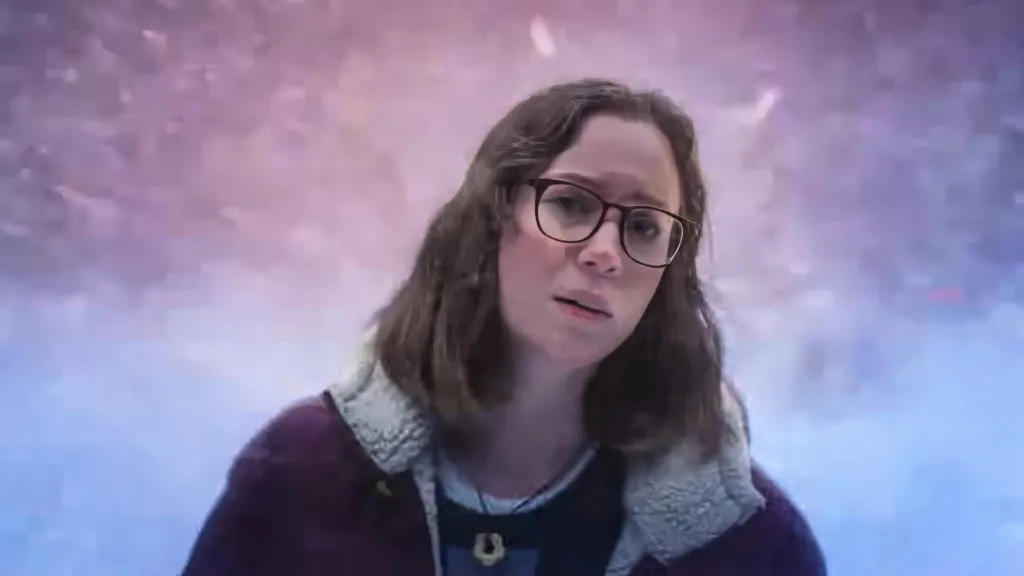
With their latest directorial outing, Jane Schoenbrun used subtle pieces of nostalgia to deconstruct the slasher genre.
The Teenage Sex and Death at Camp Miasma writer/director explained to Deadline that they wanted to create “a mindset where you can really enjoy something scary,” noting the frequent symbolism of candy and junk food as providing an atmosphere “that’s actually safe” while diving into a horror movie or exploring sexuality after trauma.
“There is this idea that if it gets too real, you can turn it off, that you’re exploring something dangerous, doing it in a way that’s actually safe,” said Schoenbrun, who is non-binary. “Which in my experience of coming into my sexual identity post-transition, kind of required some gummy candy on hand. What I mean by that is, even if we’re going to be exploring scary and vulnerable and potentially embarrassing, triggering parts of ourselves, we trust each other well enough to know that at any moment, we can be like, ‘Let’s stop, we gotta just eat some fucking gummies.’”
In Schoenbrun’s latest film, Hannah Einbinder stars as queer director Kris, who is tapped to helm a new installment of the long-running Camp Miasma horror franchise. While courting Billy Presley (Gillian Anderson), the actress who played the “final girl” in the original film, to reprise her role, the pair spirals into a psychosexual frenzy as the slasher’s killer, Little Death (Jack Haven), comes to life.
Acknowledging the problematic trans representation of horror films like Psycho (1960), Sleepaway Camp (1983), The Silence of the Lambs (1991) and Texas Chainsaw Massacre: The Next Generation (1995), Schoenbrun admitted the genre has been “catnip to me since I was 10 years old,” and they jumped at the chance to direct their own.

“So many slashers do have this sense of humor, and even if they’re not overtly meta like the Scream movies are, they’re so aware of their own tropes and the sort of rituals … And I just loved that from a young age and loved all of the little rituals within it, and so, getting to make my own is just like play and joy,” they explained.
“But it also felt like the perfect way to talk about sex and to talk about my experience as a trans person post-transition, learning how to come into a sexual identity that I could feel comfortable within, because so many of these movies are obviously deeply engaged in gender and sexual roles, and these movies have so much to say for better or for worse about deviants,” said Schoenbrun. “It is there in the DNA of the slasher genre that these movies are talking about fear and desire, gender and sexuality, normativity and deviance. And that’s all swimming in the toxic soup of the genre, so I wanted to remake it in my own language.”
Read on about Jane Schoenbrun’s love letter to the slasher genre with Teenage Sex and Death at Camp Miasma, now playing in theaters.
DEADLINE: It was really fun to see the slasher genre through your eyes. Tell me about finding inspiration in that genre and “final girls.”
JANE SCHOENBRUN: I mean, it was the easiest thing in the world because it’s just one of those genres that has been catnip to me since I was 10 years old. I just raided the horror section of the video store as a kid from an age when I really shouldn’t have been doing that, like in 5th grade, I watched in the span of about one week, every Nightmare on Elm Street movie. I think that I was always drawn to movies and really anything entertainment where it felt forbidden in some way, like the thing on the tape, how is that even allowed? And that’s the thing that I love about a lot of my favorite slashers. Don’t get me wrong, I love like brutal ones, like I love Texas Chainsaw, that’s a nasty movie at its core, and that’s what’s so special about it. But so many slashers do have this sense of humor, and even if they’re not overtly meta like the Scream movies are, they’re so aware of their own tropes and the sort of rituals of, OK, what’s the most outrageous way that like these like dumb kids can get killed? But watching it, it’s not about fear a lot of the time, it’s about joy and celebration. And I just loved that from a young age and loved all of the little rituals within it, and so, getting to make my own is just like play and joy. But it also felt like the perfect way to talk about sex and to talk about my experience as a trans person post-transition, learning how to come into a sexual identity that I could feel comfortable within, because so many of these movies are obviously deeply engaged in gender and sexual roles, and these movies have so much to say for better or for worse about deviants, whether that be Norman Bates or Buffalo Bill or Sleepway Camp or Jason, Michael Myers, Leatherface in drag. It is there in the DNA of the slasher genre that these movies are talking about fear and desire, gender and sexuality, normativity and deviance. And that’s all swimming in the toxic soup of the genre, so I wanted to remake it in my own language.

DEADLINE: I’m curious about the symbolism of all the processed junk food and the chandelier of wrappers.
SCHOENBRUN: The junk food in the movie, I forget when it found its way in there. It’s like so much of the movie is about, like I said, ritual, about being in a mindset where you can really enjoy something scary, whether that be Kris [Hannah Einbinder] in bed, with, you know, with Raisinets and the popcorn, watching a schlocky horror movie, or the two characters learning how to be present and enjoy sex after a lot of trauma. There is this idea that if it gets too real, you can turn it off, that you’re exploring something dangerous, doing it in a way that’s actually safe. Which in my experience of coming into my sexual identity post-transition, kind of required some gummy candy on hand. What I mean by that is, even if we’re going to be exploring scary and vulnerable and potentially embarrassing, triggering parts of ourselves, we trust each other well enough to know that at any moment, we can be like, “Let’s stop, we gotta just eat some fucking gummies.”
DEADLINE: And one thing I really love—I just feel like it’s a theme in your work—is how it depicts the way media and entertainment influence us. Why does that inspire you?
SCHOENBRUN: I think it comes from a fascination and sensitivity to the complex relationship between what we think of as fiction and what we think of as reality, which we tend to, as a society, think of as pointing in one direction. Like, reality dictates fiction, not vice-versa, but when you actually look at the way the world works, it’s like one echoes off the other. And I think a complicated, sometimes terrifying and sometimes beautiful way, where the fiction, the cultural norms, the things we grow up looking at on our screens, the roles that we’re told people play, they kind of inspire us to create reality. There’s something liberating when you start thinking in that way. I think it’s a way of thinking that we as a culture, could do a lot more of. To think about the idea of fiction inspiring reality just as much as reality is inspiring fiction, is a potential path to liberating us from this hellscape that they’re telling us is the only way the world can be.

DEADLINE: And I know you have the Secretary reading. Tell me what it’s been like prepping for that and why you all chose that movie.
SCHOENBRUN: I mean, that was such a huge influence on on Miasma. There just aren’t that many fun and funny movies about deviant sex. And just the way that movie is like feather light while talking about really raw and taboo things, it is just really inspiring to me. And the dynamic between those two main characters is definitely one that had a lot of influence on on Kris and Billy’s [Gillian Anderson] relationship in Miasma. And it’s already to me a very queer movie in its way, but having Gillian reading the James Spader part and Hannah reading the Maggie Gyllenhaal part, I think it’s just gonna be like a very unique joy. Honestly, we’ve been prepping a little bit, but I think it’s just gonna be about getting up there and feeling the chemistry of it all, and just letting these folks who we have all gotten to know each other really, really well, but we haven’t actually done anything wacky and creative like that in a while, like as a reunion, it’s gonna be a real blast, I think.
>
With their latest directorial outing, Jane Schoenbrun used subtle pieces of nostalgia to deconstruct the slasher genre.
The Teenage Sex and Death at Camp Miasma writer/director explained to Deadline that they wanted to create “a mindset where you can really enjoy something scary,” noting the frequent symbolism of candy and junk food as providing an atmosphere “that’s actually safe” while diving into a horror movie or exploring sexuality after trauma.
“There is this idea that if it gets too real, you can turn it off, that you’re exploring something dangerous, doing it in a way that’s actually safe,” said Schoenbrun, who is non-binary. “Which in my experience of coming into my sexual identity post-transition, kind of required some gummy candy on hand. What I mean by that is, even if we’re going to be exploring scary and vulnerable and potentially embarrassing, triggering parts of ourselves, we trust each other well enough to know that at any moment, we can be like, ‘Let’s stop, we gotta just eat some fucking gummies.’”
In Schoenbrun’s latest film, Hannah Einbinder stars as queer director Kris, who is tapped to helm a new installment of the long-running Camp Miasma horror franchise. While courting Billy Presley (Gillian Anderson), the actress who played the “final girl” in the original film, to reprise her role, the pair spirals into a psychosexual frenzy as the slasher’s killer, Little Death (Jack Haven), comes to life.
Acknowledging the problematic trans representation of horror films like Psycho (1960), Sleepaway Camp (1983), The Silence of the Lambs (1991) and Texas Chainsaw Massacre: The Next Generation (1995), Schoenbrun admitted the genre has been “catnip to me since I was 10 years old,” and they jumped at the chance to direct their own.
“So many slashers do have this sense of humor, and even if they’re not overtly meta like the Scream movies are, they’re so aware of their own tropes and the sort of rituals … And I just loved that from a young age and loved all of the little rituals within it, and so, getting to make my own is just like play and joy,” they explained.
“But it also felt like the perfect way to talk about sex and to talk about my experience as a trans person post-transition, learning how to come into a sexual identity that I could feel comfortable within, because so many of these movies are obviously deeply engaged in gender and sexual roles, and these movies have so much to say for better or for worse about deviants,” said Schoenbrun. “It is there in the DNA of the slasher genre that these movies are talking about fear and desire, gender and sexuality, normativity and deviance. And that’s all swimming in the toxic soup of the genre, so I wanted to remake it in my own language.”
Read on about Jane Schoenbrun’s love letter to the slasher genre with Teenage Sex and Death at Camp Miasma, now playing in theaters.
DEADLINE: It was really fun to see the slasher genre through your eyes. Tell me about finding inspiration in that genre and “final girls.”
JANE SCHOENBRUN: I mean, it was the easiest thing in the world because it’s just one of those genres that has been catnip to me since I was 10 years old. I just raided the horror section of the video store as a kid from an age when I really shouldn’t have been doing that, like in 5th grade, I watched in the span of about one week, every Nightmare on Elm Street movie. I think that I was always drawn to movies and really anything entertainment where it felt forbidden in some way, like the thing on the tape, how is that even allowed? And that’s the thing that I love about a lot of my favorite slashers. Don’t get me wrong, I love like brutal ones, like I love Texas Chainsaw, that’s a nasty movie at its core, and that’s what’s so special about it. But so many slashers do have this sense of humor, and even if they’re not overtly meta like the Scream movies are, they’re so aware of their own tropes and the sort of rituals of, OK, what’s the most outrageous way that like these like dumb kids can get killed? But watching it, it’s not about fear a lot of the time, it’s about joy and celebration. And I just loved that from a young age and loved all of the little rituals within it, and so, getting to make my own is just like play and joy. But it also felt like the perfect way to talk about sex and to talk about my experience as a trans person post-transition, learning how to come into a sexual identity that I could feel comfortable within, because so many of these movies are obviously deeply engaged in gender and sexual roles, and these movies have so much to say for better or for worse about deviants, whether that be Norman Bates or Buffalo Bill or Sleepway Camp or Jason, Michael Myers, Leatherface in drag. It is there in the DNA of the slasher genre that these movies are talking about fear and desire, gender and sexuality, normativity and deviance. And that’s all swimming in the toxic soup of the genre, so I wanted to remake it in my own language.
DEADLINE: I’m curious about the symbolism of all the processed junk food and the chandelier of wrappers.
SCHOENBRUN: The junk food in the movie, I forget when it found its way in there. It’s like so much of the movie is about, like I said, ritual, about being in a mindset where you can really enjoy something scary, whether that be Kris [Hannah Einbinder] in bed, with, you know, with Raisinets and the popcorn, watching a schlocky horror movie, or the two characters learning how to be present and enjoy sex after a lot of trauma. There is this idea that if it gets too real, you can turn it off, that you’re exploring something dangerous, doing it in a way that’s actually safe. Which in my experience of coming into my sexual identity post-transition, kind of required some gummy candy on hand. What I mean by that is, even if we’re going to be exploring scary and vulnerable and potentially embarrassing, triggering parts of ourselves, we trust each other well enough to know that at any moment, we can be like, “Let’s stop, we gotta just eat some fucking gummies.”
DEADLINE: And one thing I really love—I just feel like it’s a theme in your work—is how it depicts the way media and entertainment influence us. Why does that inspire you?
SCHOENBRUN: I think it comes from a fascination and sensitivity to the complex relationship between what we think of as fiction and what we think of as reality, which we tend to, as a society, think of as pointing in one direction. Like, reality dictates fiction, not vice-versa, but when you actually look at the way the world works, it’s like one echoes off the other. And I think a complicated, sometimes terrifying and sometimes beautiful way, where the fiction, the cultural norms, the things we grow up looking at on our screens, the roles that we’re told people play, they kind of inspire us to create reality. There’s something liberating when you start thinking in that way. I think it’s a way of thinking that we as a culture, could do a lot more of. To think about the idea of fiction inspiring reality just as much as reality is inspiring fiction, is a potential path to liberating us from this hellscape that they’re telling us is the only way the world can be.
DEADLINE: And I know you have the Secretary reading. Tell me what it’s been like prepping for that and why you all chose that movie.
SCHOENBRUN: I mean, that was such a huge influence on on Miasma. There just aren’t that many fun and funny movies about deviant sex. And just the way that movie is like feather light while talking about really raw and taboo things, it is just really inspiring to me. And the dynamic between those two main characters is definitely one that had a lot of influence on on Kris and Billy’s [Gillian Anderson] relationship in Miasma. And it’s already to me a very queer movie in its way, but having Gillian reading the James Spader part and Hannah reading the Maggie Gyllenhaal part, I think it’s just gonna be like a very unique joy. Honestly, we’ve been prepping a little bit, but I think it’s just gonna be about getting up there and feeling the chemistry of it all, and just letting these folks who we have all gotten to know each other really, really well, but we haven’t actually done anything wacky and creative like that in a while, like as a reunion, it’s gonna be a real blast, I think.
>


Search For Canadian TV Actor Stewart McLean Now Homicide Investigation


These ’90s fashion trends are making a comeback in 2017
According to Dior Couture, this taboo fashion accessory is back
Model Jocelyn Chew’s Instagram is the best vacation you’ve ever had
Your comprehensive guide to this fall’s biggest trends
9 Celebrities who have spoken out about being photoshopped
Emily Ratajkowski channels back-to-school style
A photo diary of the nightlife scene from LA To Ibiza
