
Sports
BBC Sounds – Page not found


>

In a standard Winnipeg offseason, August arrives and Jets fans can spare their pencil sharpeners — their home team’s opening-night lineup may as well be written in ink.
This time, the prospect of a Connor Hellebuyck trade combines with a renewed internal focus on speed and youth to create a sense of mystery. Every passing day appears to diminish the likelihood of a blockbuster, but the Jets’ depth chart could change in an instant. It’s possible forwards Noah Gregor and Cole Koepke both win jobs, taking playing time from slower veterans with more accomplished resumes. There’s even a strong possibility the undersized but brilliant Viggo Björck, the No. 8 draft pick in June, opens the season playing a prominent role.
All of this creates questions, challenges and more potential Jets lineups than is typical. Can Brad Lambert or Isak Rosén win a top-six job, breaking out as an NHL scorer for the first time? What about Morgan Barron, whose size and speed are unique in the Jets’ lineup despite a lack of high-end point production? There isn’t enough room for everybody.
Let’s review Winnipeg’s depth chart in full, position by position, from the NHL to AHL and ECHL alike as we get ready to size up the Jets’ roster options at camp next month.
Centre
| Player | 2026-27 Cap hit | Signed Through |
|---|---|---|
|
$8.5 million |
2030-31 (UFA) |
|
|
$5.0 million |
2030-31 (UFA) |
|
|
$1.85 million |
2026-27 (UFA) |
|
|
$3.0 million |
2026-27 (UFA) |
|
|
$1.075 million |
2028-29 (RFA) |
|
|
$941k |
2027-28 (RFA) |
|
|
$878k |
2026-27 (RFA) |
|
|
$958k |
2027-28 (RFA) |
One of the first things you’ll notice in this exercise is that it requires us to make choices. At centre, Mark Scheifele at No. 1 is the only easy decision to make — a 103-point veteran who plays a massive role up front.
The decision gets more challenging after that. In some cases, this means listing Adam Lowry as the No. 2 centre despite a poor 2026-27 season. Lowry is likely to play the second-biggest role, knowing the minutes he plays and Winnipeg’s historical use of his shutdown line. It’s an old-fashioned idea but it worked up until last season; the Jets will likely go back to it, believing in Lowry’s resurgence.
That’s the issue, isn’t it? It’s why we talk about second-line centres in Hellebuyck trade discussions, and why the Jets were interested in players such as Anton Lundell and Josh Norris. An idealized Jets depth chart includes someone bumping Lowry down to the third line.
Björck is the most exciting possibility of upending this depth chart. I think it’s likely he opens the year centering a nominal second line, perhaps with Cole Perfetti on his left wing. Björck will quickly pass Vladislav Namestnikov and Morgan Barron if all goes well for him. (Another option is that Barron forces his way into the discussion for second-line centre, given his size and speed.)
The whole group snaps into place if Björck can win second-line minutes while Scheifele is still chaining together elite offensive performances. It falls apart if Björck needs a couple of seasons to get going, Scheifele’s production declines or Lowry can’t re-establish himself as a shutdown centre. All told, I believe the Jets are worthy of their middle-of-the-pack ranking from colleague Harman Dayal earlier this offseason.
Left wing
| Player | 2026-27 Cap hit | Signed through |
|---|---|---|
|
$12.0 million |
2033-34 (UFA) |
|
|
$6.0 million |
2030-31 (UFA) |
|
|
$3.67 million |
2027-28 (UFA) |
|
|
$4.0 million |
2026-27 (UFA) |
|
|
$1.45 million |
2027-28 (UFA) |
|
|
$850k |
2026-27 (UFA) |
|
|
$909k |
2027-28 (RFA) |
|
|
$956k |
2028-29 (RFA) |
|
|
$933k |
2028-29 (RFA) |
“If NHL players weren’t people” is never a great way to start a sentence, but it’s August.
If NHL players weren’t people and you could mix and match their attributes like a video game, Winnipeg’s left-wing conundrum would have an easy fix. All of Alex Iafallo, Nino Niederreiter and Cole Koepke are viable bottom-six options, but the video-game version of this exercise would combine their skill sets with those of Kyle Connor and Cole Perfetti. Connor would gain Iafallo’s dogged approach to winning board battles, Perfetti would gain Koepke’s speed, and the whole group would be augmented by Niederreiter’s commitment to competing in all parts of the rink.
In real life, where Dr. Frankenstein does not perform roster surgery, the Jets usually solve their issue of too many left wings by moving Iafallo to the right side. It could work again if Perfetti, Björck and Gabriel Vilardi show chemistry. As it stands, Winnipeg has enough quality and versatility at left wing such that a team with other strengths would make the playoffs.
Much of that strength comes from Connor’s ability to get himself utterly lost in coverage, even though everybody knows he’s a threat, while Perfetti is a strong breakout candidate this season.
Right wing
| Player | 2026-27 Cap hit | Signed through |
|---|---|---|
|
$7.5 million |
2030-31 (UFA) |
|
|
$887k |
2026-27 (RFA) |
|
|
$925k |
2027-28 (RFA) |
|
|
$875k |
2027-28 (UFA) |
|
|
$813k |
2026-27 (UFA) |
|
|
$875k |
2027-28 (RFA) |
|
|
$910k |
2026-27 (RFA) |
|
|
$906k |
2026-27 (RFA) |
There isn’t a lot here unless Lambert or Rosén break out.
It’s almost an argument to move Björck to the right side to start his NHL career. It is an argument that Winnipeg’s biggest need in a Hellebuyck trade — should one actually happen at this point — is not a centre so much as another really good right wing.
Vilardi is a big, smart, skilled forward who can be counted on to produce when he plays with Connor and Scheifele. He’s a capable secondary scorer without them, too, but not so dominant that the Perfetti/Björck/Vilardi line we just mentioned is a lock to succeed. Add one more player of his caliber to this group, giving the Jets the opportunity to run Connor/Scheifele/Vilardi ahead of Perfetti/Björck/Vilardi, and things get better in a hurry.
Without such an upgrade (or breakout via Lambert or Rosén), this is a group that needs Iafallo’s help to climb up to average.
Left defence
| Player | 2026-27 Cap hit | Signed through |
|---|---|---|
|
$6.25 million |
2027-28 (UFA) |
|
|
$5.75 million |
2027-28 (UFA) |
|
|
$4.0 million |
2028-29 (UFA) |
|
|
$950k |
2026-27 (UFA) |
|
|
$850k |
2026-27 (RFA) |
|
|
$813k |
2026-27 (UFA) |
|
|
$965k |
2028-29 (RFA) |
Welcome to the single biggest source of Winnipeg’s roster strength, unless Hellebuyck and Stuart Skinner are the Jets’ tandem in goal.
The only concern one might have about a defence corps with Josh Morrissey, Dylan Samberg and Mario Ferraro occupying the top three LHD spots is that the first two have two years each left on their contracts. Morrissey, who scored 55 points in a “down” season last year, was an easy choice and painful loss for Team Canada at the Olympics. Samberg, whose injury contributed to a wobbly start to his season, is a viable shutdown defenceman who can beat top competition.
And Ferraro? He was occasionally underwater as the No. 2 defenceman on an outmatched Sharks team, but moves well enough and defends well enough to succeed in a third-pairing role. It’s a strong group — whether Haydn Fleury or Henry Thrun wins the fourth job — and would be the foundation of a Cup-contending corps if the right side had strength to match.
Right defence
| Player | Cap hit | Signed Through |
|---|---|---|
|
$7.0 million |
2030-31 (UFA) |
|
|
$4.9 million |
2027-28 (UFA) |
|
|
$865k |
2026-27 (RFA) |
|
|
$850k |
2026-27 (UFA) |
|
|
TBD |
TBD |
|
|
$1.05 million |
2027-28 (RFA) |
This is where Winnipeg needs help. Neal Pionk and Dylan DeMelo would be luxuries as No. 4 and No. 5 defencemen but play the second- and fourth-biggest roles in Winnipeg’s defence corps.
Pionk has occasionally elevated his performance for short, intense bursts of No. 2 quality, but it’s not his 82-game standard. DeMelo is a good chemistry match for Morrissey but gives up size and lateral mobility to many of the elite forwards he faces in his top-pair role. I mention Dustin Byfuglien too often because the Jets alumnus had the dominant physical attributes this group lacks. Pionk and DeMelo would excel in the roles they’d have played behind the peak version of Winnipeg’s former star.
Back to reality. Could Elias Salomonsson be the answer? Yes, but it would be difficult to push him up the depth chart even if he weren’t coming off shoulder surgery. It is not Winnipeg’s way to elevate young defencemen early — even Samberg, the poor man’s Jaccob Slavin we spoke so highly of in the previous section, was 23 when he became a full-time Jets player. Meanwhile, Garrett Brown may be looking at a full season of AHL hockey no matter how well he plays.
Jack St. Ivany, 27, will be in the mix with Haydn Fleury, Henry Thrun and perhaps even Tyrel Bauer for the No. 7 job.
Goaltender
| Player | 2026-27 cap hit | Signed through |
|---|---|---|
|
$8.5 million |
2030-31 (UFA) |
|
|
$3.75 million |
2027-28 (UFA) |
|
|
$917k |
2026-27 (RFA) |
|
|
$906k |
2026-27 (RFA) |
|
|
$850k |
2026-27 (UFA) |
Will Hellebuyck follow the Patrik Laine route as the subject of offseason trade rumours who opens the season with Winnipeg before a blockbuster trade? Will Hellebuyck repeat his own history, following departure discussion by doubling down on his commitment to the Jets? Or will he take one more swing at Jets success, re-evaluating his future pending the outcome of the 2026-27 season?
Traditionally, it is the journalist’s job to answer these questions instead of posing them rhetorically at readers. The player’s lack of comment on his future, paired with Kevin Cheveldayoff’s acknowledgment of trade discussions, allows room for interpretation. I believe Hellebuyck is likely to be traded — eventually — but it’s difficult to project the moment or the team.
If the Jets do keep Hellebuyck, they would approach the NHL’s first 84-game season with an elite goaltending tandem. While some rival clubs have responded to the NHL’s increased game density in recent years by signing three NHL veteran goaltenders, the Jets would be in a state of luxury with Hellebuyck and Skinner playing a reduced workload in a 1A/1B arrangement.
A strong performance from Skinner — perhaps as a response to working with Jets goalie coach Wade Flaherty — would go a long way toward easing long-term concerns. Winnipeg needs long-term help at the position regardless of whether Hellebuyck is traded this year.
Opening-night lineup projection
At the end of this exercise, Winnipeg’s biggest strengths are in goal (tenuous, via Hellebuyck’s situation) and on left defence (although Morrissey’s and Samberg’s next contracts loom large). The forwards need a lot of help, particularly at right wing, and could use a boost at centre too.
It is difficult to project Winnipeg’s exact lines compared to recent seasons. Here’s one opening-night possibility:
Connor — Scheifele — Vilardi
Perfetti — Björck — Lambert
Iafallo — Lowry — Niederreiter
Barron — Namestnikov — Rosén
Extras: Koepke, Gregor
Morrissey — DeMelo
Samberg — Pionk
Ferraro — St. Ivany*
(*Elias Salomonsson, if healthy)
Extras: Haydn Fleury
Connor Hellebuyck
Stuart Skinner
>
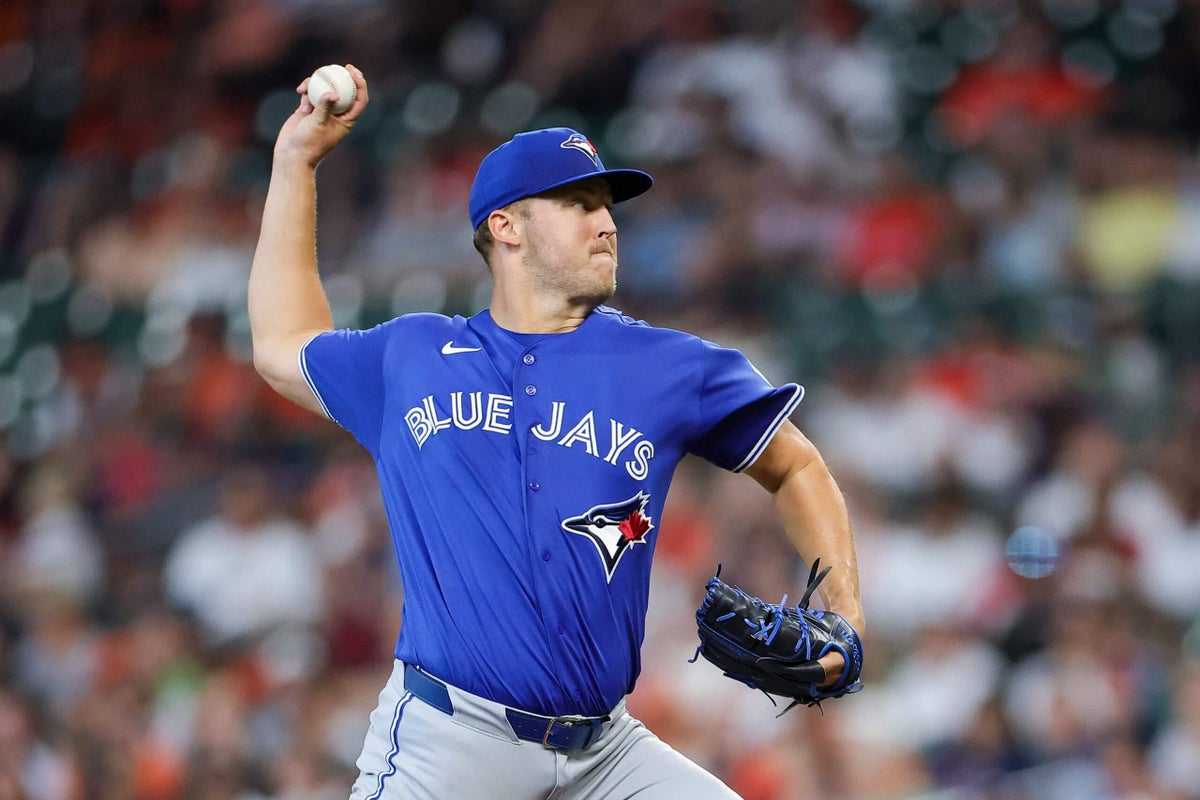
PHILADELPHIA — The Toronto Blue Jays lost 7-6 in extras Sunday, capping a slogging weekend of nearly 11 game hours and 32 innings across three games. Toronto’s series win against the Philadelphia Phillies came at the end of a three-city trip with four extra-innings games and plenty of new faces arriving after the trade deadline.
“If me and the staff are tired,” manager John Schneider said, “imagine how the players are feeling. They’re gassed. They’re leaving it all out there.”
From centre field solutions to Jameson Taillon’s adjustments and a new bullpen mix, here are three takeaways from Toronto’s post-deadline trip:
Is the Blue Jays centre-field solution already here?
The Jays might still poke around centre-field options this winter, looking to replace Daulton Varsho for 2027 and beyond, but there are some contenders already in place.
Why the Red Sox resurgence is historic
Ken Rosenthal and Johnny Sweet
Just days after Brett Bateman came over from the Chicago Cubs for Kevin Gausman, the 24-year-old was promoted to the big leagues.
He ambushed the first pitch he saw from Zack Wheeler and ripped a double to the left-field wall. In three games this weekend, Bateman notched three hits, walked twice and drove in a run in the series finale. There are still obvious areas for improvement against left-handed pitching and perhaps bunting, but Bateman flashed plus outfield defence, solid contact and impressed the Jays staff.
“The contact, the speed, the discipline, the defence, all that kind of stuff, I think is a pretty different profile than we’ve had here in a while,” Schneider said.
Bateman’s defence and speed, alone, should make him part of the Jays’ 2027 outfield mix in some fashion. His floor, as many evaluators suggested at the deadline, is a big-league fourth outfielder. The real question is whether Myles Straw will join him.
Even with some better play after the deadline, Straw still owns a .218 average and .267 wOBA on the season. His expected numbers (.257 xBA and .296 xwOBA) are much higher, a fact Straw and Toronto’s hitting coaches joke about often, but it still hasn’t been a great season for the 31-year-old. He knows, with an $8.5 million team option at the end of the season, these next seven weeks are an opportunity for Straw to earn his spot on next year’s team.
“Hopefully, things go well the next couple months,” Straw said. “I want to be able to come back here next year. However I’ve got to do that, to make someone happy up in the front office to come back, I’ll do that.”
Like Bateman, Straw has a high floor because of athleticism. He’s also one of the clubhouse’s most important characters and a leader Schneider asked to step up after veterans left at the deadline.
Maybe the Jays will look for more impact in centre next year, but the free-agent options appear bleak, and there might not be any fits on the trade market. There’s a real chance Toronto’s centre-field solution is already on the roster.
What Jameson Taillon did when he was designated for assignment
When Taillon was designated for assignment July 27, he booked a flight. The right-hander, after 15 sideways starts with the Chicago Cubs, flew down to Charlotte, N.C., looking for answers.
“I don’t want this to be a shot at anybody, but I just hadn’t really felt right for a while,” Taillon said. “We were trying everything with the Cubs, and we hit a point where it was the end of the road. Nothing was really changing. So I was like, ‘I’m gonna go take action and see if a different voice will help.’”
The 34-year-old, pausing the worst season of his MLB career, returned to his offseason workout facility, Tread Athletics. He worked on engaging his core and gaining momentum down the mound to increase velocity. He toyed with throwing his cutter harder, a pitch that has an expected slugging percentage of .801 against this year. He’s mixed in a gyro slider for a new weapon against lefties, too.
“Not having to worry about results for a week, just getting to worry about process and working on drills,” Taillon said. “I thought that was refreshing.”
Taillon still believes he has a lot left to offer an MLB pitching staff, despite his 5.92 ERA with the Cubs. He wasn’t ready to roll over and retire after 10 seasons. After three days in North Carolina, Taillon will get a chance to prove it with Toronto, acquired for future considerations a day before the deadline. His first shot came in Toronto’s 5-4 win over the Houston Astros last week.
It’s hard to say exactly how much changed after three days of drills and one start with the Jays. Taillon’s four-seam fastball velocity was up 0.7 miles per hour. His 16 harder cutters earned four whiffs on seven swings and resulted in one hard-hit ball. The gyro slider, Taillon said, wasn’t great, and his command was sporadic after 10 days without starting. He allowed three earned runs across four innings.
“I thought it was a little rusty,” Taillon said. “I thought my command was not what it is, typically, but I thought the stuff was pretty good and sharp. I just need to dial in the command going forward.”
With Trey Yesavage heading for a second opinion on his meniscus Monday and Spencer Arrighetti still working through foot problems, Taillon should get some run in Toronto’s rotation. His second chance to flash his post-DFA adjustments will come against the Boston Red Sox on Monday.
The Jeff Hoffman hole
Jeff Hoffman, at times, frustrated fans with blown saves and some well-documented homers allowed. But the righty’s deadline trade to the Minnesota Twins has left a clear hole in the Jays’ bullpen pecking order. Louis Varland still has the ninth, and Tyler Rogers should get most eighth innings, but there’s a hole in the seventh. That space has a trickle-down effect.
Even a week after the deadline, Hoffman remains second on the Jays in total batters faced in high-leverage situations (62). We’ve basically seen the entire bullpen thrust into leverage roles since the deadline, but Schneider pointed to Braydon Fisher, Mason Fluharty and Spencer Miles as the preferred options to step up.
“It’s an opportunity for different guys to step in and get some big outs,” Schneider said. “An opportunity to turn into someone like Jeff.”
All three of those options have shown flashes of being a true leverage relief option this year. Miles, as a reliever, owns a 1.93 ERA this season. In save situations this year, Fisher owns a 0.77 ERA. Fluharty has more appearances than any other reliever in baseball.
Actually filling Hoffman’s role isn’t really the Jays’ biggest challenge, though. The struggle comes when the innings that Miles, Fluharty and Fisher previously filled must be taken by somebody else. Toronto’s bullpen has elite weapons, but the depth has been up and down.
We saw the consequences of those new roles this weekend in Philadelphia, with plenty of fresh faces in leverage and stressful innings unfolding. Chase Lee took save situations, Lazaro Estrada saved a game in extras, and Brendon Little was called for big outs. That’s the sort of thing that will certainly continue. Either players embrace their new roles and succeed, or Hoffman’s absence will loom large.
>

SAN DIEGO — He had tried everything, even switching his slider grip without telling anyone. Houston Astros coaches caught it on Edgertronic cameras, corrected the error and convinced Bryan Abreu to stop seeking radical solutions to his struggles. “We don’t need to reinvent the wheel,” assistant pitching coach Ethan Katz told him.
So Abreu settled for a more subtle adjustment.
Amid the worst stretch of his eight major-league seasons, Abreu pulled up his pants and began to wear high socks. He did it at some point earlier in his Astros career, before he blossomed into one of baseball’s most dominant relievers. Bringing it back became a last-ditch effort to remain one.
“Feeling something new with the uniform,” Abreu said, “that definitely helps a lot to make me feel like I’m reset.”
Crediting high socks for a comeback is crazy, but this is baseball, a sport synonymous with superstitions that have little rhyme or reason. At his lowest point, Abreu said he “just had to switch” and try something — anything — to start anew. He exited April with a 12.54 ERA and no defined role in Houston’s bullpen or on its active roster.
“We can’t fix the past, but we can change the future,” Abreu said last week. “Everything that I’ve been doing was in the wrong direction, so we have to make something different so the future can come in the best way.”
Abreu carried that attitude across the most calamitous time of his career. Overcoming it has helped pilot Houston atop the American League West while resurrecting Abreu from the abyss.
Abreu has a 1.93 ERA since May 3, a stretch of 34 appearances that has saved his season and, perhaps, his standing as one of the best available relievers in next winter’s free-agent market.
“He’s a hard worker, not satisfied with mediocrity and wanting to be the best he can be,” closer Josh Hader said. “That’s a guy you want by your side no matter what. If you have a guy like that, it feeds the fire with everybody around.”
Abreu’s comeback coincided with Hader’s return from the injured list on June 2. Since that day, only the resurgent Boston Red Sox have a lower bullpen ERA than the Astros. Abreu and Hader have morphed back into the menacing, late-game duo Houston envisioned in spring training. The setup man and closer have combined to allow just nine earned runs across their past 48 2/3 innings.
Abreu allowed 13 earned runs in his first 11 appearances alone. The collapse ceded leverage innings to less experienced relievers and left Abreu to confront the first significant failure of his major-league career. “That can destroy you,” southpaw Steven Okert said. “You never know if they’re ever going to get back to normal or their previous self.”
“Some people who haven’t seen the struggles, it makes it harder. You don’t know how to deal with it.”
How Abreu handled it impressed those around this affable, 29-year-old right-hander, who has more riding on this season than most. This winter, Abreu is scheduled to reach free agency, where generational wealth may await. From 2022 to 2025, only four relievers were worth more wins above replacement than Abreu, according to FanGraphs: Griffin Jax, Emmanuel Clase, Edwin Diaz and Devin Williams.
Diaz and Williams have each signed free-agent contracts worth at least $48 million. Abreu does not have the closing experience of either man but matches both in performance and dominance. Paying Abreu something similar didn’t seem ludicrous, but his performance in March and April put that thought in serious peril.
“I never saw him once go, ‘Oh my God, I’m going to be a free agent,’” Katz said. “All the stuff that can really derail guys, I never thought he was thinking about those things, even though he probably was. He never let that show.
“We had some conversations to really let him know, ‘We’re going to get you back there, and we need you. If this team is going to go and this bullpen is going to go, we need to get the Bryan Abreu that’s always been there.’”
Doing so started with showing Abreu that version of him still existed. It is why coaches intervened when Abreu attempted to alter the grip on his signature slider. Reversing this spiral didn’t require a total overhaul, just tweaks to troubling trends that had begun to present themselves.
Abreu walked 16 batters in his first 11 1/3 innings. Flying open in his delivery left him misfiring with fastballs to his arm-side: up and in against right-handed hitters and away against lefties. Pitchers often get defects in their deliveries, but the way Abreu trains isn’t conducive to fixing it. He likes to throw — a lot — and most of it is on flat ground.
Katz and pitching coach Josh Miller believed it would be more beneficial for Abreu to abandon that routine and do all of his pregame work on the bullpen mound. Simulating a more game-like scenario would help Abreu feel the flaws — and fixes — in his delivery. Coaches put a stand-in dummy in the left-handed batter’s box, too, allowing Abreu to work on his pitch sequencing while implementing the adjustments in his delivery.
“That’s been the biggest part of getting him back on track,” Katz said.
The introduction of the ABS system shifted how hitters were approaching Abreu, a reliever who has always relied on chase more than command. Players around the sport are swinging less with the challenge system in place, putting Abreu in a bind.
Abreu threw just 51.7 percent of his pitches for strikes in April while generating a 20.4 percent chase rate. Abreu’s career chase rate is 27.8 percent. To throw more strikes, Abreu sacrificed some of his fastball velocity. His four-seam fastball averaged 95.1 mph in April and 94.4 mph in May. It sat 97.3 mph last season.
At the suggestion of Houston’s pitching coaches, Abreu introduced a cutter to come back inside the strike zone. It is a variation of his four-seam fastball and something that, according to Abreu, he has “the freedom to grab it and throw it through the strike zone.” Abreu’s teammate and close friend, Cristian Javier, is also experimenting with one.
“It’s a pitch that guys really trust in the zone really well, and it’s been a great add,” Katz said. “It’s kind of opened up everything.”
Abreu threw his first cutter in a June 2 outing against the Pittsburgh Pirates. In 23 appearances since, Abreu is throwing 63.6 percent of his pitches for strikes. He’s walked just eight batters across those 23 2/3 innings, during which Abreu’s four-seam fastball velocity has inched upward. He averaged 96.1 mph in both July and August.
After touching 99.1 mph in an outing this weekend against the San Diego Padres, Abreu gave a wide smile before saying, “It’s about time.”
“It’s the feeling that I’ve been looking for the whole season,” Abreu said. “To be able to have it, help the team, move forward and be able to go out there and compete, that’s an amazing feeling.”
Abreu is one of the most pleasant people in Houston’s clubhouse. That he maintained his disposition amid a disaster is of little surprise, but still impressive to a slew of veterans who wondered whether they would have been able to do so. Okert called it “incredible to watch him never get too down on himself.”
“The person never changed,” Katz said. “He’s always been a really good teammate. Guys look up to him, the way he goes about his business and I think everybody was pulling for him to get through this. Everybody has had his back and, with that, he felt the love, care and all that kind of stuff to be able to accelerate this process.”
>

Jets roster projection: Strengths, weaknesses and the pressure to make changes

Blue Jays notebook: Jameson Taillon’s adjustments, future CF options and new relief roles

How Bryan Abreu returned from the abyss and reprised his role as the Astros’ setup man
-

 movies3 months ago
Search For Canadian TV Actor Stewart McLean Now Homicide Investigation
-

 Fashion9 years ago
These ’90s fashion trends are making a comeback in 2017
-
Fashion9 years ago
According to Dior Couture, this taboo fashion accessory is back
-
Fashion9 years ago
Model Jocelyn Chew’s Instagram is the best vacation you’ve ever had
-
Fashion9 years ago
Your comprehensive guide to this fall’s biggest trends
-
Fashion9 years ago
9 Celebrities who have spoken out about being photoshopped
-
Fashion9 years ago
Emily Ratajkowski channels back-to-school style
-
Fashion9 years ago
A photo diary of the nightlife scene from LA To Ibiza