
Sports
'Dangerous' Bolton come full circle for play-off final

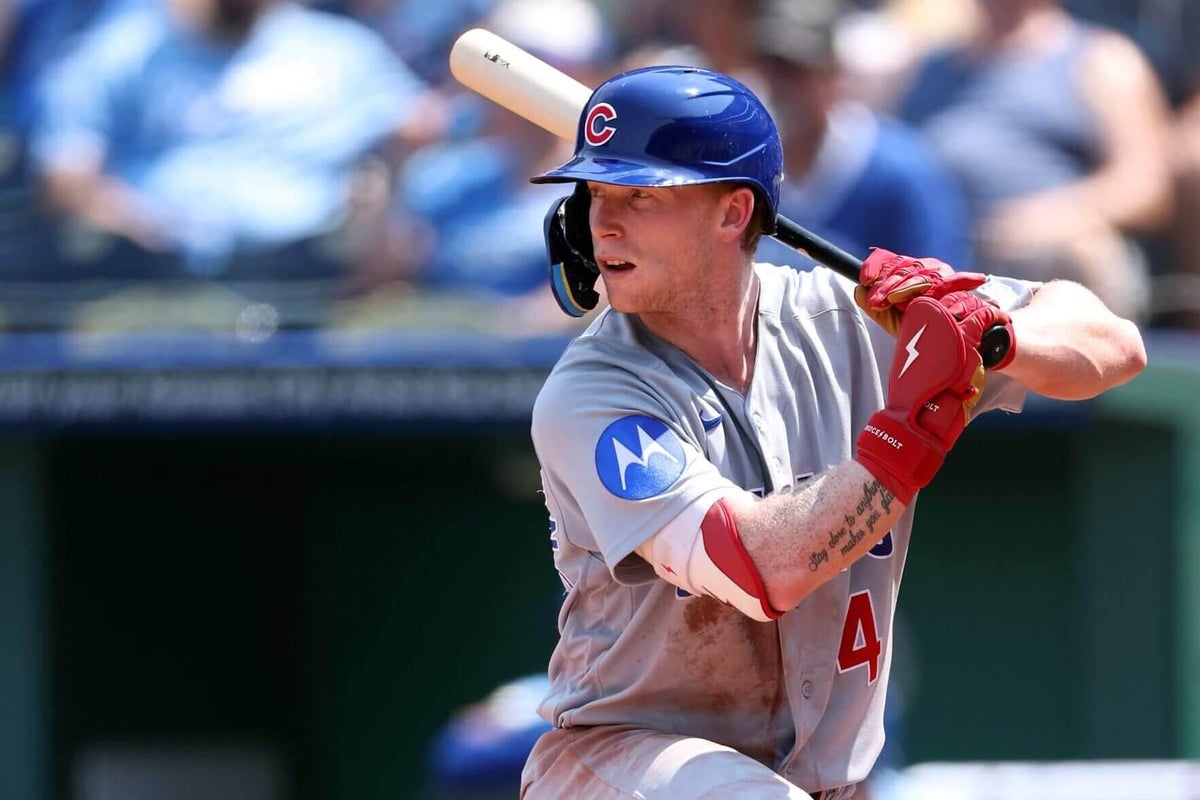
KANSAS CITY, Mo. — There was an at-bat in late June that showed everyone with the Chicago Cubs just how much Pete Crow-Armstrong had matured as a hitter. Late in a tie game against the San Diego Padres, lefty Adrian Morejon, one of the best relievers in the game, came in to face the Cubs’ leadoff man.
Crow-Armstrong worked a seven-pitch walk, at one point challenging a called strike three he rightfully felt was below the zone. Over the last few weeks, unprompted, manager Craig Counsell and team president Jed Hoyer have brought up that plate appearance to discuss Crow-Armstrong’s improvement against left-handed pitching.
“I thought his at-bat against Morejon was the best at-bat I’ve ever seen him take,” Hoyer said recently. “He battled one of the best lefties in the game and laid off a chase slider to walk. We all watched him not do that a lot of times in that situation.”
As a whole, no matter who is on the mound, Crow-Armstrong has improved his pitch recognition. It’s been especially impressive against lefties. Coming into the year, Crow-Armstrong had a 60 wRC+ against lefties. Last year, that number was 59, the sixth-worst in baseball among eligible players. This season, he’s dominated southpaws, posting a 165 wRC+, the 10th-best mark in the league.
Why the Red Sox resurgence is historic
Ken Rosenthal and Johnny Sweet
“It has completely flipped,” Counsell said. “It’s just different now.”
But even this season, it’s been a process. Though his performance in April and May against lefties was strong (114 wRC+), it’s taken off since. In June, he posted a walk rate of 18.9 percent against southpaws; in July, that number soared to 26.7 percent. Overall, his wRC+ against lefties from June 1 on is a robust 217.
Assistant hitting coach John Mallee, who worked with Crow-Armstrong when the two were at Triple-A Iowa in 2023, has been working hard with the young center fielder for years now. The veteran hitting coach said hitting lefties is hard because batters don’t face them often, and lefties have a tendency to pull off the ball and roll over when facing same-sided pitchers. Crow-Armstrong has worked hard to stop doing that this season.
“His ability to stay in and have zero fear — you watch his video from the side, you wouldn’t know if a righty or lefty is pitching,” Mallee said. “The patterns and the movements don’t change. Usually, left-on-left guys have trouble with the ball going away from them. But his strike zone discipline has improved. He has a really good plan going into the box. He knows what he’s looking for, and he’s disciplined enough now to wait for it.”
That last point is what Crow-Armstrong has said is the reason for his higher walk rate in general. Before he gets to two strikes, he’s only looking for a certain type of pitch in a certain zone. A pitch might end up being a strike, but if it’s not what he was looking for, he’s laying off.
“He moved closer to the plate against lefties, so the plate’s underneath him,” Mallee said. “When he starts to feel himself lean or back up out of the way of things, he knows that’s probably a ball. So that move has helped him.”
Along with the patience, Crow-Armstrong is also starting to display power against lefties. In the first two months of the season, Crow-Armstrong had a .120 ISO and just four extra-base hits in those situations. Since then, he’s got a .313 ISO with five home runs, two doubles and two triples.
“I had some success against lefties in the minor leagues,” Crow-Armstrong said. “I feel like I’m capable of doing damage against anybody that steps on the mound. That’s important for me to take into every at-bat. I’m proud of the success I’ve had against left-handed pitching.”
It’s rare to see these types of leaps in these specific areas, especially so quickly. But Crow-Armstrong has proved over and over he is the exception. There are few talents like Crow-Armstrong.
Taking away the option for opposing managers to just go to a lefty to shut down Crow-Armstrong has helped him reach another level. The development has taken him from a very good player to one who is emerging as the National League MVP favorite. It’s made him a more complete player and ultimately, one of the best in the game.
“I’m not surprised,” Crow-Armstrong said. “I’ve done the work, and I’ll continue to do so.”
>
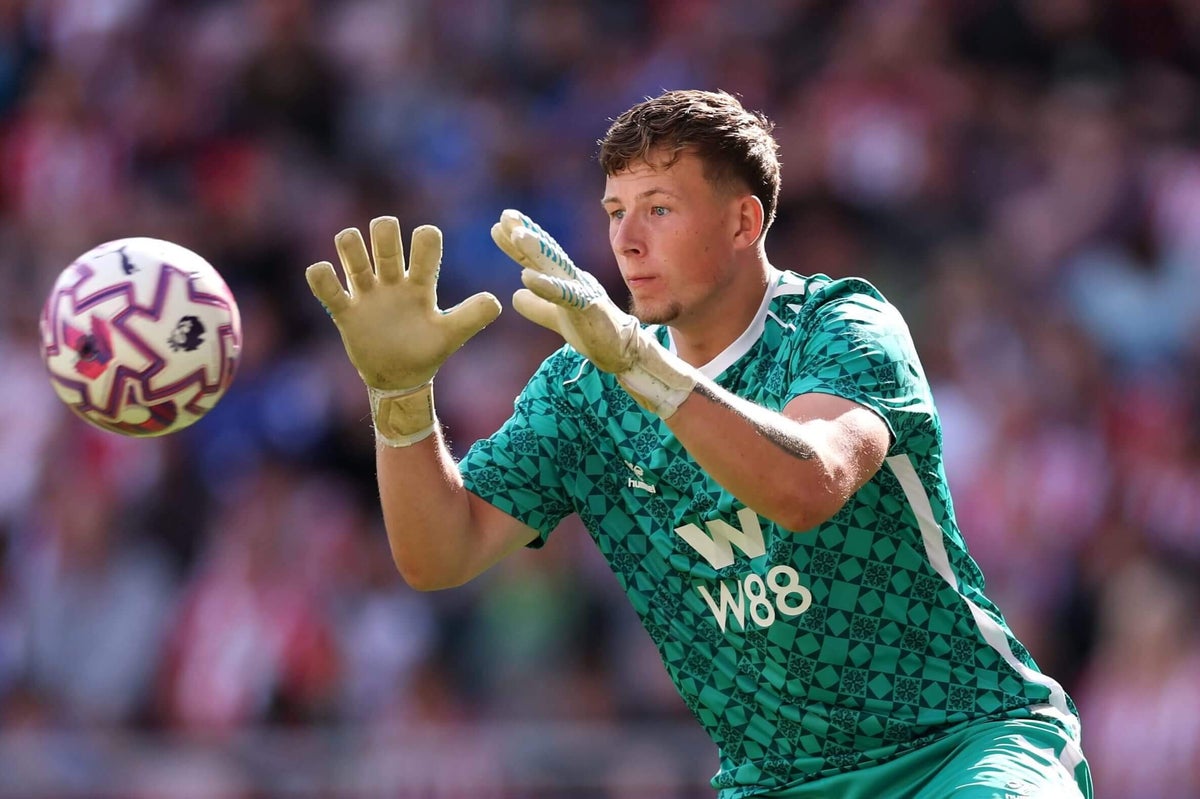
Wrexham target Anthony Patterson is expected to undergo a medical on Monday after a deal was struck with Sunderland over a potential club-record transfer.
The 26-year-old, who spent the second half of last season on loan at Millwall, was given permission to speak to the Welsh club following talks that had begun earlier in the summer.
A product of Sunderland’s academy, Patterson established himself as the club’s first choice ‘keeper in the second half of the 2021-22 campaign. He went on to play a key role in Sunderland’s 2025 promotion, including two vital saves in the play-off final victory over Sheffield United at Wembley Stadium.
However, the addition of Robin Roefs a year ago saw Paterson displaced as the Premier League club’s No 1. He came off the bench against Wrexham in the final friendly of the USA tour in Philadelphia, which was won 1-0 by Sunderland.
Providing there are no late hitches, Patterson is set to become Wrexham’s third signing of the summer after previous captures of Crystal Palace wing-back Danny Imray and Ben Whiteman, the Preston North End captain.
Millwall and Rangers have also been linked with a goalkeeper who made 16 appearances last season after moving on loan to The Den in the January window, including both play-off semi-final legs against Hull City.
Sources in the North East suggest the deal will be worth £8 million, eclipsing the previous club record £7.5 million fee paid for Nathan Broadhead a little under a year ago.
A needed defensive upgrade
No less than 17 teams in last season’s Championship boasted a better defensive record than the combined 65 goals conceded by Arthur Okonkwo and Danny Ward.
All manner of factors lay behind this less than stellar record, including early teething problems in defence and how control of midfield was ceded at times to the opposition, particularly during the absence of Matty James and Ben Sheaf between February and April.
But, amid this mitigation, there was also a sense that both ‘keepers — Okonkwo made 38 league starts in 2025-26 and Ward eight — did okay between the posts, but no more.
Both had their moments. Okonwko’s stoppage time saves in wins at Charlton Athletic and Millwall, in particular, were superb. Likewise, how Ward ensured Wrexham held on to a point at home to Sheffield Wednesday in August with a point blank save to deny Charlie McNeill in stoppage time.
But, as The Athletic wrote on June 1 in a piece titled ‘What do Wrexham need to compete for promotion next season’, “If Wrexham really are serious about making a concerted top two challenge, a goalkeeper capable of making important saves at key moments while also displaying consistently sound decision-making will be paramount.”
In Patterson, Wrexham must hope they have found that goalkeeper.
>

Congress has held more than a dozen hearings about college sports since 2020. The NCAA and the former Power 5 conferences have combined to spend more than $15 million on lobbyists. Big Ten commissioner Tony Petitti said last month he’s been to Washington, D.C., 21 times in his three-plus years on the job.
They came oh-so-close to getting an actual bill out of the Senate this week: the Protect College Sports Act. Senate Majority Leader John Thune tried his darndest to get his colleagues to hurry up and vote on it before beginning their five-week summer recess, but a predictable round of grandstanding and pork-barreling was too much to overcome. The ill-fated SCORE Act stalled out in a similar fashion in the House earlier this year.
More than six years since this never-ending legislative push began, Congress still hasn’t “saved” college sports. It’s time for university administrators, conference commissioners and NCAA president Charlie Baker to finally start formulating a Plan B.
If there is such a thing.
PCSA was the brainchild of Sens. Ted Cruz (R-Texas) and Maria Cantwell (D-Wash.) — a 171-page Frankensteinian whopper that aimed to cure everything from name, image and likeness and the transfer portal to eligibility limits and conference realignment (the latest version sought to limit conferences to 19 members). They even tried to ward off the next Lane Kiffin by declaring coaches couldn’t change jobs during the season. All of which was deemed essential to “save” an extremely popular multibillion-dollar enterprise from itself.
That’s because College Sports Inc. managed to convince politicians of all stripes that their schools will all go bankrupt if something isn’t done to rein in their escalating costs. As if some external party is forcing athletic directors to give football coaches guaranteed $90 million contracts, then give them blank checks to build a $50 million roster.
“Without this Bill, millions of young Athletes will be hurt, programs will be canceled, Women’s and Olympic Sports will go away, the fans will be robbed, and Universities will go broke,” President Donald Trump said this week while urging the Senate to pass it.
It all came to a head a few weeks ago when the Big Ten and SEC initially held out their support. The conferences finally signed off late last week when Cruz and Cantwell agreed to a revised “hard cap” that would allow schools to directly pay their athletes around $48 million, a considerable jump from the current $21.3 million “soft cap” no one follows.
Once that issue was resolved, Cruz confidently predicted the bill would fly through from there, with co-sponsor Eric Schmitt (R-Mo.) telling reporters it could get as many as 80 votes.
But nothing is ever that easy in politics. At the 11th hour, the AFL-CIO and the Congressional Black Caucus came out in opposition. Sen. Ashley Moody (R-Fla.) filed an amendment to make it easier for home-state schools Florida State and Miami to change conferences. And then the final blow: three conservative senators, most notably old friend Tommy Tuberville, claimed the bill would threaten “state laws that ban biological men in women’s sports.” (The sponsors tried to assure them it would not.)
Yes, a bill whose authors purported to be protecting women’s sports got derailed by a different set of people claiming to be protecting women’s sports.
(Note to alarmists: The number of women’s college athletes has increased by 50,000 in the last five years, according to the NCAA’s 2024-25 participation data, and the NCAA is planning to add a women’s flag football championship in 2028.)
The PCSA is not dead yet. Cruz and Schmitt issued a statement Saturday claiming they’ve “locked in a guaranteed vote” for when they return in mid-September. But Cruz has been making these sorts of rosy proclamations for at least three years. Congressional experts say the odds of a vote decrease considerably the closer things get to the midterms. And even if it does pass, the House then gets its hands on it. Representatives will have their own pet causes that will muck up that process.
In the meantime, the NCAA keeps getting sued into oblivion. Last winter, it kept losing injunction requests from geezer pro basketball players seeking waivers to return to college. It responded to that crisis by expediting a completely new eligibility process that eliminates waivers and redshirts entirely, instead giving a uniform five seasons of competition beginning no later than age 19. It passed in June to take effect in August.
So, of course, athletes who just completed their fourth seasons and had moved on with their lives began seeking injunctions to get their own fifth season of eligibility, and so far they’re all winning. Despite the NCAA’s pending appeal in a Colorado federal case, programs like Indiana, Texas and Virginia are already suiting up former players in training camps.
While each court case has its own unique circumstances, the judges’ decisions contain a recurring theme: They frown on any policy that restricts athletes’ ability to earn NIL compensation. And yet, College Sports Inc. presses on in its quest to get Congress to let them restrict the market for NIL compensation.
It’s time for Plan B. College Sports Inc. currently has no idea what that looks like, but it’s got to start with leaders finally acknowledging that we’re never going back to the old days. These are professional sports now that need to be governed accordingly. Schools need to give their athletes legitimate service contracts rather than continue pretending they’re for “NIL.” And if they truly want things like salary caps and portal restrictions, they need to stop negotiating them with legislative aides and start negotiating with — brace yourself — the athletes themselves.
That, or keep acting like Charlie Brown with the football and spend another six years wooing politicians who claim they want to “save” college sports but mostly just want to see their names in a news release.
Lobbyists and lawyers will appreciate six more years of paychecks.
>

Pete Crow-Armstrong has ‘flipped’ performance against lefties, taking game to MVP level

Wrexham closing on signing of Sunderland goalkeeper Anthony Patterson

If Congress can’t save college sports, it’s time for Plan B. Except there is no Plan B
-

 movies3 months ago
Search For Canadian TV Actor Stewart McLean Now Homicide Investigation
-

 Fashion9 years ago
These ’90s fashion trends are making a comeback in 2017
-
Fashion9 years ago
According to Dior Couture, this taboo fashion accessory is back
-
Fashion9 years ago
Model Jocelyn Chew’s Instagram is the best vacation you’ve ever had
-
Fashion9 years ago
Your comprehensive guide to this fall’s biggest trends
-
Fashion9 years ago
9 Celebrities who have spoken out about being photoshopped
-
Fashion9 years ago
Emily Ratajkowski channels back-to-school style
-
Fashion9 years ago
A photo diary of the nightlife scene from LA To Ibiza