
Sports
Giulio Pellizzari and the growing pressure to end Italy’s Giro drought


The maglia rosa changed ownership nine times and crashed into a snowbank before settling on the shoulders of an Italian. At the 2016 Giro d’Italia, as it was throughout his career, Vincenzo Nibali’s timing was perfect.
Known as the ‘Shark of Messina’, Nibali waited until the very final climb to finally make his move for pink, dropping Esteban Chaves on the ramps of the Colle della Lombarda to take his second Giro, the fourth and final Grand Tour of a Triple Crown-winning career.
Ten years ago, Nibali’s victory was just the latest chapter of Italian dominance in the country’s iconic race — a Grand Tour that had seen 69 home winners during the previous 99 editions.
Every winner of the Giro between 1997 and 2007 was Italian, and eight different men at that, while the nation of Fausto Coppi and Gino Bartali remains the most successful country in cycling history by total wins. It had taken 33 editions for the race to finally be won by a non-Italian, Swiss climber Hugo Koblet in 1950, a somewhat ethereal former baker’s boy known as The Charming Pedaller.
But Nibali’s 2016 triumph marked something of a watershed: since the Sicilian rolled into Turin wearing pink, no Italian has won the Giro — or even looked like doing so. Damiano Caruso’s second-place finish in 2021 was the last time the race even saw a home podium.
Has Italian cycling stagnated? Nibali remains the last Italian winner of the country’s two other great one-day races, Milan-Sanremo and Il Lombardia, while the country has not topped the year-end win totals since 2020, a classification it had led for 17 of the previous 20 years.

Nibali makes his race-winning move during stage 20 of the 2016 Giro d’Italia. (Luk Benies / AFP via Getty Images)
France’s 40-year wait for Bernard Hinault’s successor as a Tour de France winner has fostered the weight of yellow, a crushing expectation on the nation’s young prospects, a burden and fervor currently borne by 19-year-old Paul Seixas. The pressure of pink is only slightly behind.
On Tuesday afternoon, Lidl-Trek’s popular Giulio Ciccone took the pink jersey on bonus seconds after finishing third in that day’s sprint, the first maglia rosa of the 31-year-old’s career. Over the years, Ciccone has toyed with general classification (GC) contention without truly committing — and this year, Italy’s real hope comes from a younger man.
Ten years after Nibali’s last triumph, another Italian finds himself among the Giro favourites once again: Red Bull-BORA-hansgrohe rider Giulio Pellizzari.
To succeed, the 22-year-old will not just have to overcome the intimidating form of Jonas Vingegaard but also arrest the slump of recent Italian cycling history.

Giulio Ciccone took the maglia rosa earlier this week but is unlikely to challenge as this year’s race progresses. (Luca Bettini / AFP via Getty Images)
Before the pressure of being the next Vincenzo Nibali, there was the pressure of being the next Marco Pantani, Il Pirata, Italy’s most iconic rider of the modern era.
Despite the EPO use revealed by a 2013 French Senate report that investigated rider samples from the 1998 Tour de France, the diminutive climber from Rimini — who died from acute cocaine poisoning in February 2004 — was utterly beloved by the Italian public for the bravery and emotion of his attacks, powered by a fragility self-evident with every pedal stroke.
“My style was different, so I never quite felt the pressure of being the new Pantani,” Nibali tells The Athletic. “But the public will never forget Pantani’s achievements, and in some way I tried… not to imitate him, but to leave my own mark, winning the pink jersey and later also major Classics. I tried to be a modern rider — to attack from far out and win both stage races and Monuments.
“But there is always pressure from the Italian public, similar to that of the Tour de France. The Giro’s historical roots are deep, they connect us to figures such as Coppi, Bartali, and the post-war era. It has enormous value.”
Since his retirement, it is striking that Italy’s top riders have not been their traditional climbers, but figures such as time-trial powerhouse Filippo Ganna and sprinter Jonathan Milan, with Giulio Ciccone and Scaroni more easily classifiable as stage hunters rather than genuine GC contenders.

Marco Pantani was one of Italy’s biggest sports stars in the 1990s, winning the Giro-Tour double in 1998. (Pascal Pavania / AFP via Getty Images)
Nibali believes that a major reason behind Italy’s jammed production line is the lack of Italian WorldTour teams, with none currently competing at cycling’s top level. Previously, squads such as Lampre and Liquigas were heavyweight hitters at Grand Tour level. Before that, teams including Mapei, Saeco, and Mercatone-Uno dominated the Tour de France and one-day Classics.
Two teams now — UAE Team Emirates (Lampre’s successor) and XDS-Astana — are Italian-aligned, boasting a largely Italian staff, but neither focus on fostering young Italian talent — as a superteam built around Tadej Pogačar, UAE have just two Italian riders, down from 15 in 2017.
“They were already disappearing by 2016,” says Nibali. “The last one was Lampre, and after them, there were no more Italian WorldTour teams, and this meant there were no longer as many Italian riders at the highest level.
“There was also a knock-on effect on smaller development teams, which lost value and struggled even more to find talent. Either the talents don’t emerge, or, given how international the scene has become, many riders get lost or are not selected.
“The WorldTour now has extremely high costs. If you consider that UAE, Visma, and Lidl-Trek spend around €40million (£35m; $47m), it really shows the level of investment required from a major multinational in this sport. And this cannot be done for just one year — it requires a long-term project.”
Others agree. “Italian companies have completely lost faith in cycling,” 2004 Giro winner Damiano Cunego told Cyclist magazine in 2020. “Maybe it is because they see more opportunities in bigger sports like football; maybe it’s because our sport is tainted with its doping past. I’m not sure, but the interest in cycling in Italy is not what it once was.”
Maybe it speaks to a wider issue of interest that arguably the true successor to Pantani — as a folk hero of Italian sport in the 2000s — was not a cyclist but a MotoGP rider, Valentino Rossi.
Without a clear development system, lacking idols, and with interest waning, Italian riders have been emerging more by luck than systematic planning.
Pellizzari’s development, therefore, is a boon for Italian cycling — especially for tiny ProTeam level Bardiani-CSF, who developed the willowy climber from the Marche region, before he left for Red Bull last season.
Bursting onto the top level with impressive climbing performances at the 2024 Giro, before achieving top tens at both the Vuelta a España and Giro last year, winning a stage in Spain, the climber then took his first stage race at this year’s Tour of the Alps.

Pellizzari celebrates after winning stage 17 at last year’s Vuelta a España (Miguel Riopa/AFP via Getty Images)
“His development has been important for Italy, and steady, step by step,” says Nibali. “If he plays his cards right, I see him well placed for the podium. I’m not sure if he can beat Vingegaard, but he has already shown strong potential.”
One of the only riders to follow Vingegaard’s attack in Bulgaria on stage two, Pellizzari has not lost early time — unlike last year, when he rode in support of Primož Roglič — with his first major test against the race favourite set to take place on the Blockhaus on Friday’s stage seven.
Stay with Vingegaard, and win the sprint, and Pellizzari could even find himself in pink, a step likely to increase the eyes on him. The Italian sporting public loves a winner — but when he spoke to The Athletic at last month’s Tour of the Alps, Pellizzari played down expectations.
“I just have to do my thing,” he replied when asked if he felt the burden of Italy’s wait for a champion. “I cannot think about outside (noise). It’s too early to say if I will win a Grand Tour in my life. But we are working for that.”
There is a maturity to Pellizzari’s words, as well as his riding — what he says is considered, but honest too.
“I also understand that (whatever) you do is never good enough for the people,” he added. “Everybody is ready to give you s**t. Today, you win, you are the idol; one day after you lose, you are the s******t rider in the world.
“I learned this at the Vuelta when I won the stage. Everybody was like: ‘Really good job, the new Nibali’. Two days after, I was dropped in the last mountain stage in the Vuelta and I was reading the comments on Facebook. I shouldn’t, but I’m too curious and I remember everybody saying: ‘He’s already s***, we don’t have an Italian who is good for two days in a row’.”

Fausto Coppi remains arguably Italy’s greatest cyclist, winning the Giro five times and two Tours de France in the 1940s and 1950s. (AFP via Getty Images)
For Pellizzari, the main issue affecting Italy’s lack of rider development is not the lack of WorldTour teams — he made his way through at a second-tier ProTeam, after all — but is down to the mentality at junior level. He speaks as if, at 22 years old, he is already a veteran.
“When I saw the junior system, I understood why we don’t have great cyclists,” he explained. “Because it’s just too much, they’re taking life too hard, with the best bike, like what we have here (in the WorldTour), the best nutritionists, everything the best to win a junior race. Training more than us. And you understand, when they turn professional, they’re already on the limit.
“Not only me, but everybody was more chill. My process was perfect because when I was junior, I did normal training, I had a normal bike. One year, I was a junior, I had a Canyon, my father paid €2,000 and I was already like, ‘It’s too much’. When you crash, you break it, you’d have to buy it again. Then I went to Bardiani, it was already a ProTeam, but not the best materials and everything the best… every year has been something more and every year, I was more excited.”
There is also a third explanation. Spain has also found itself lacking general classification contenders in recent years, as has Great Britain and the Netherlands, two of the dominant cycling nations of the 2010s. Instead, the two best climbers of the 2020s are from Slovenia and Denmark, non-traditional cycling nations. Rather than the known powerhouses falling back, is this the rest of the world catching up?
Now, cycling’s wholehearted embrace of data has led to better scouting at younger ages. It means that riders from peripheral nations have a far better chance of making it. The organisation and structure of a cycling superpower had been a prerequisite for development.
Pogačar and Vingegaard’s journeys — noticed after a handful of races, signed in part due to their underlying numbers — are far more common than Pellizzari’s, slowly working his way up in regional races.
“It naturally leads to fewer Italian victories,” agrees Nibali. “And there is also the lack of a structured pathway to support young riders in smaller teams. We need a proper plan to rebuild the professional structure.”
And so as he rides onwards into the race’s second week, there is pressure on Pellizzari, and unreasonable pressure at that, not just to win the Giro, but for something wider too; to prove the system can work, to be not just the next Marco Pantani but the first Giulio Pellizzari, to be the next torchbearer for Italian climbing.
>
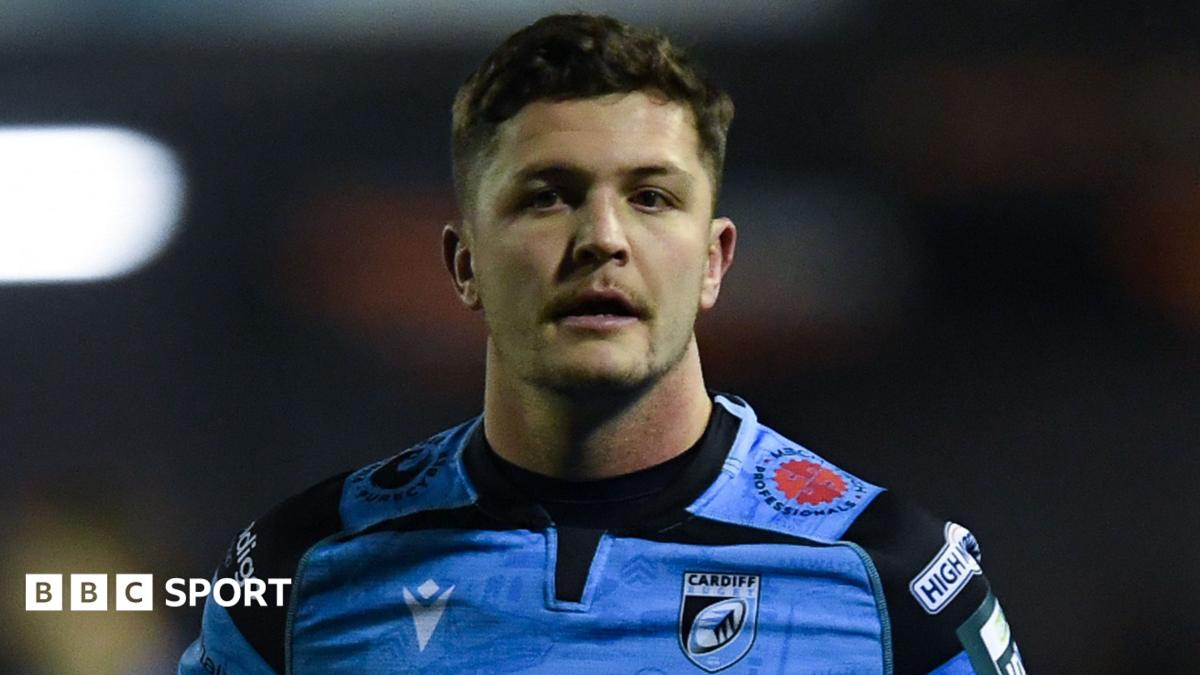
Sheedy played his part in the victory in Llanelli before being replaced in the second half by Jarrod Evans, who has returned to Cardiff from Harlequins this season.
With Ioan Lloyd, who is currently injured, also in the Cardiff ranks, head coach Corniel van Zyl has three Wales fly-halves to call on.
“All I can do as a player is try my best and perform the best I can,” said Sheedy.
“We all want to be number one, so how we go about that is going to be challenging because we’re all going to want to play.
“I’m sure it’ll be healthy competition.”
Cardiff return to the Arms Park to face Zebre on Friday night, where they lost only one home game last season.
“It does make a big difference,” said Sheedy.
“Hopefully we get a big crowd because I remember last season there were a lot of close games, and in the last 10 minutes, the crowd got us over the line.
“Corniel speaks a lot about making the Arms Park a fortress and we managed that last season.”
>
Sports
World Grand Prix Darts: Luke Humphries ‘hates’ added title pressure from Luke Littler’s shock early exit in Leicester | Darts News

Luke Humphries says he must improve if he is to challenge for a second World Grand Prix title and admits he would have preferred defending champion Luke Littler to have avoided an early exit.
Humphries – the 2023 champion and a runner-up the last two editions of the double-start major – produced a lacklustre performance during his straight-sets victory over Dave Chisnall at the Mattioli Arena.
The world No 2 hit under 27 per cent of his checkout attempts and averaged 80.41, his lowest in the tournament since 2022, although was relieved to avoid joining Littler and Michael van Gerwen in being beaten in the first round.
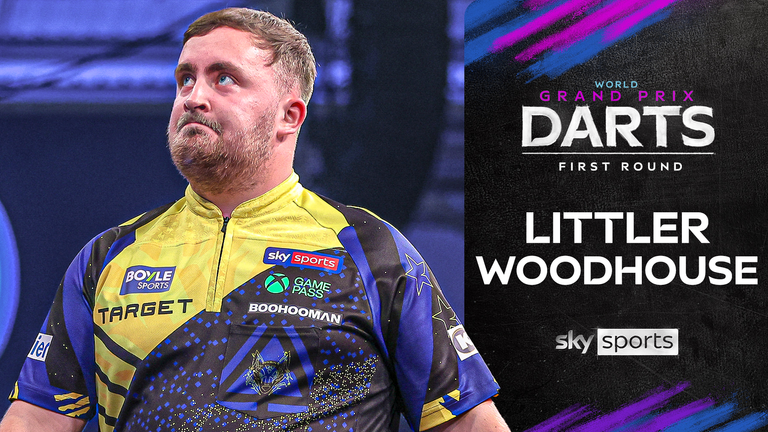
Highlights of the World Grand Prix match between Luke Littler and Luke Woodhouse, where the world No 1 made a shock exit
“That’s arguably one of the worst performances I’ve played on the World Grand Prix stage for myself,” Humphries said after the victory. “I didn’t feel comfortable throughout the whole game.
“Doubles weren’t going in at the start, the scoring was rubbish and I felt like Chizzy [Dave Chisnall] just wasn’t at his best there at all.”
“It wasn’t a good performance, but I’m through and when I play Jermaine [Wattimena] on Thursday I’m hoping you won’t see that!”
Humphries is now the favourite to lift the trophy following defending champion Luke Littler’s shock defeat to Luke Woodhouse, but admits he feels added pressure with the world No 1 no longer in the field as a title contender.
“I hate it when he loses because it always puts the pressure on myself and then everyone is like ‘this is yours to win’ and all this type of stuff,” Humphries added.
“I hate it when he loses because I want to play him in finals. I want to beat him in finals. I don’t want to lose to him in finals, but I like playing in finals because it gets me up for it.
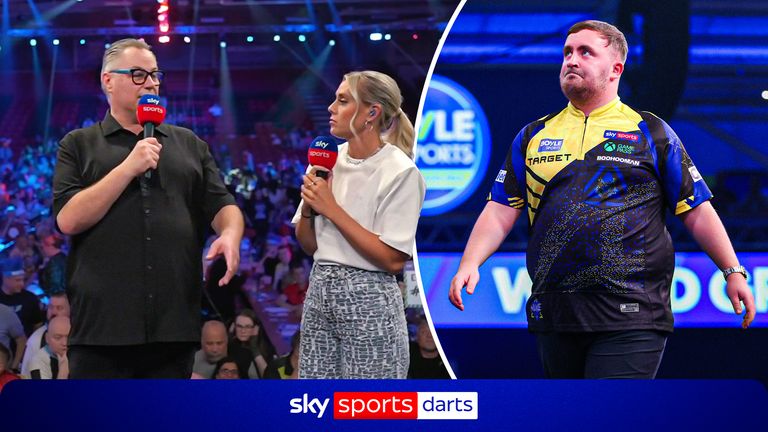
John Part reflects on Luke Littler’s early exit at the World Grand Prix and explains the possible reasons behind it
“When he loses, I’m not like jumping for joy. It puts all the pressure on myself and maybe sometimes it doesn’t help me.
“I’d rather him still be in the tournament and be the favourite and then I can just backdoor it to the final!”
Humphries’ 2023 win was his maiden PDC-ranked TV title and sparked a dominant run to end the season, but ‘Cool Hand’ has since suffered a string of runner-up finishes in major tournaments following his World Masters and Premier League triumphs last year.
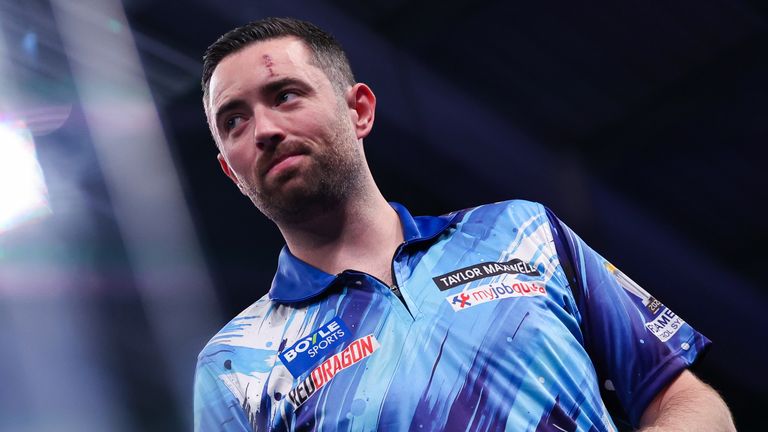
Humphries blamed an allergic reaction for the mark on his face
“I feel like I deserve a major – it’s been like six or seven I’ve lost in the final,” Humphries explained. “I played really good in the Premier League final and the World Masters final – I played 105 averages and lost, so they are tough to take.
“If you just play anybody else in the world they’re probably not going to beat you, but when you’re playing a phenom like Luke [Littler], he can beat you. I feel like I deserve one, but sometimes you don’t always get what you deserve in life.
“It’s up to me to win another four games and perform a lot better than that, because if I perform that again, I’ll be very lucky to make it to the quarters and semis.”
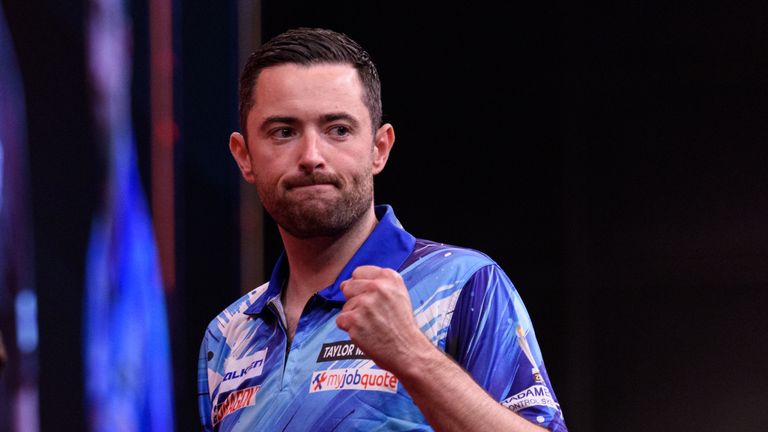
Humphries is looking to reach the World Grand Prix final for a fourth consecutive season
Humphries explains face ‘injury’: ‘I don’t have that great story!’
The former world champion sparked confusion on social media after taking to the stage with a noticeable scab on his head, but felt no ill-effects from it as he progressed to the last 16.
“I really wanted to bring up some amazing story about how I fought five guys off and they come off worse than me, but unfortunately I don’t have that great story,” Humphries said.
Humphries blamed an allergic reaction for the mark on his face
“I did Bullseye filming on Tuesday, woke up Wednesday with a massive rash on the side of my head and it just got worse and worse and then it scabbed over.
“The only thing I can think of is when you do TV shows they put make up on and all these types of things, all these creams, and I got an allergic reaction to it.
“Unfortunately there is no great story to tell, that is what I think it is but I don’t know. I haven’t seen a doctor but it just looks like I’ve had an allergic reaction to stuff they’ve put on my head and face, but I’m fully well.”
Watch the World Grand Prix throughout the week live on Sky Sports, with coverage every day up to and including the final on Sunday. Latest Sky Sports deals or stream with no contract on NOW.
>
Sports
Super League Grand Final: George Williams hoping to change course of Warrington Wolves’ history with victory in his final game | Rugby League News
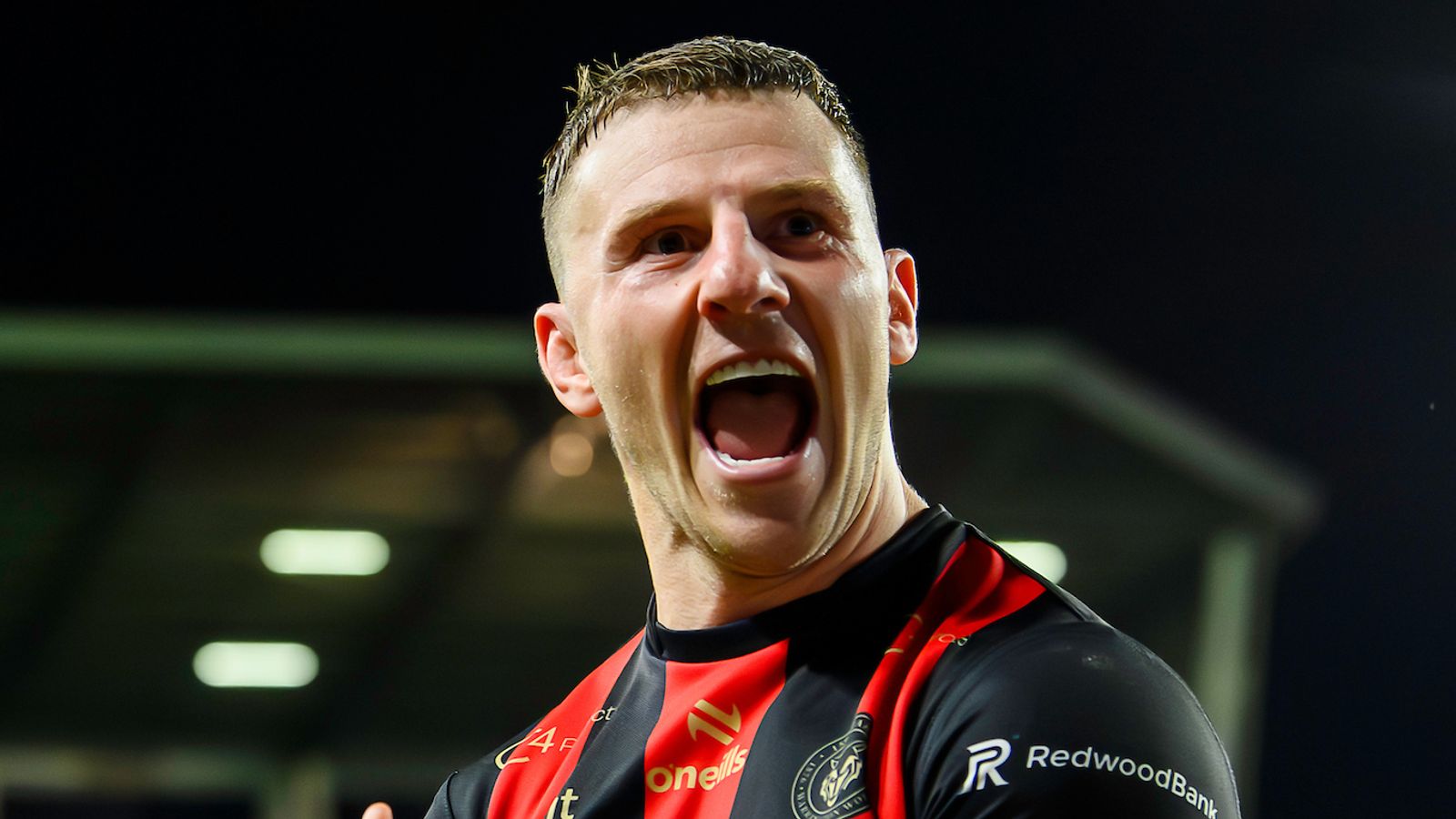
George Williams has set himself one task for when he steps out in the Super League Grand Final as Warrington Wolves skipper: Make sure he leaves the club with a trophy.
When Williams returned from the NRL in 2021, he made the bold decision to not go back to his hometown club of Wigan and instead headed to Warrington.
After five years there, he is poised to return to Australia and has one last opportunity to try and depart with a trophy.
It is set to be a pretty-evenly-matched Grand Final as third- and fourth-placed Warrington and Wakefield Trinity do battle. Two underdog teams who beat the first- and second-placed sides to make it to Old Trafford.
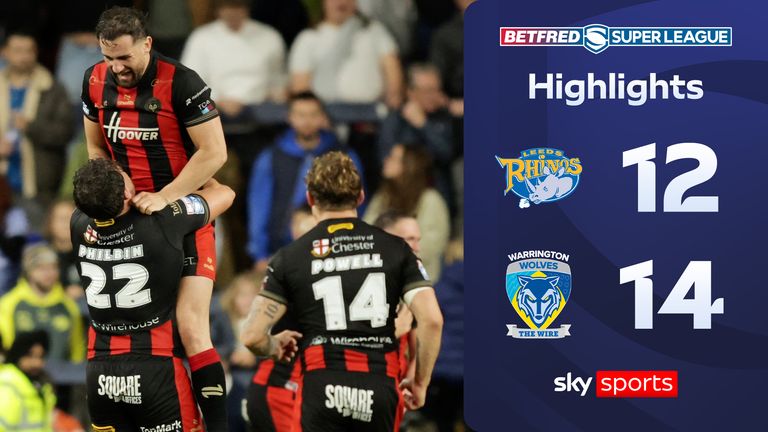
Highlights from the Super League semi-final clash between Leeds Rhinos and Warrington Wolves
It is not lost on Williams how big this match is as he could lead Warrington to their maiden Grand Final triumph to become just the sixth team in the history of the competition to lift the Super League trophy.
He has tasted that glory with Wigan as a youngster and now wants to leave the Wolves with another career highlight and change the direction of the club.
“It is crucial, there are so many different narratives that you want to get the win, but personally, I was pretty vocal, I came here to change history and win with Warrington,” Williams told Sky Sports.
“It is pretty fitting it is my last game and I’ve got the opportunity to do that. Personally, that would be brilliant, a great way to go out, but there’s a lot more different narratives we have got for the club and the town to do it.”
Warrington take on a Wakefield team who pulled off an almighty shock with their 33-6 victory over favourites Wigan in their own backyard.
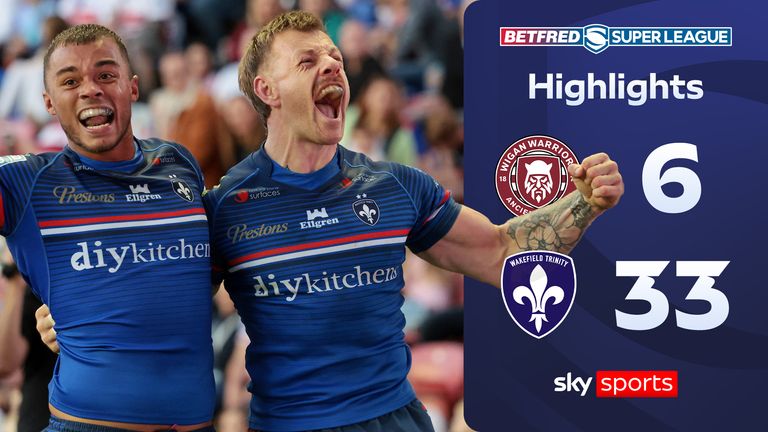
Wakefield Trinity booked their place in their first-ever Super League Grand Final as they produced a huge upset to defeat Wigan Warriors
Williams knows if Trinity turn up in that form again, Warrington will need to be on their A-game.
“We know Wakefield play a good brand of rugby, they have been posting points all year, we played them three or four weeks ago and they beat us, so we know what they’re capable of,” he added.
“I think everyone saw Wigan as favourites and we were surprised by that one.
“Both teams have been pretty consistent all year, third and fourth, I think that’s probably the word I want to use for us this year, consistent.
“Now we’ve just got to bring it one more time and are 80 minutes away from history which is the biggest key for us.”
How to watch the Super League Grand Final
The Super League Grand Final takes place at Old Trafford on Saturday October 3, live on Sky Sports Main Event and Sky Sports+.
The match will kick-off at 6pm, with coverage on Sky Sports from 5pm.
>

URC: Callum Sheedy ‘header’ goes viral as Cardiff fly-half admits surprise

The House | Dame Sally Powell’s Campaign For Free Home Care, In Memory Of Iain Coleman

World Grand Prix Darts: Luke Humphries ‘hates’ added title pressure from Luke Littler’s shock early exit in Leicester | Darts News
-

 movies4 months ago
Search For Canadian TV Actor Stewart McLean Now Homicide Investigation
-

 Fashion9 years ago
These ’90s fashion trends are making a comeback in 2017
-
Fashion9 years ago
According to Dior Couture, this taboo fashion accessory is back
-
Fashion9 years ago
Model Jocelyn Chew’s Instagram is the best vacation you’ve ever had
-
Fashion9 years ago
Emily Ratajkowski channels back-to-school style
-
Fashion9 years ago
9 Celebrities who have spoken out about being photoshopped
-

 Anime4 months ago
Rurouni Kenshin: Hokkaido Arc Manga Takes 1-Issue Break – News
-

 Anime3 months ago
HIDIVE to Stream English Dubs for The World Is Dancing, The Forsaken Saintess and Her Foodie Roadtrip in Another World, The Dangers in My Heart: The Movie Anime – News