
a Location Managers Guild International scouting trip visited Kurdistan’s Hawraman region and the local bazaar, courtesy of Kurdistan Film Commission
Courtesy of Kurdistan Film Commission


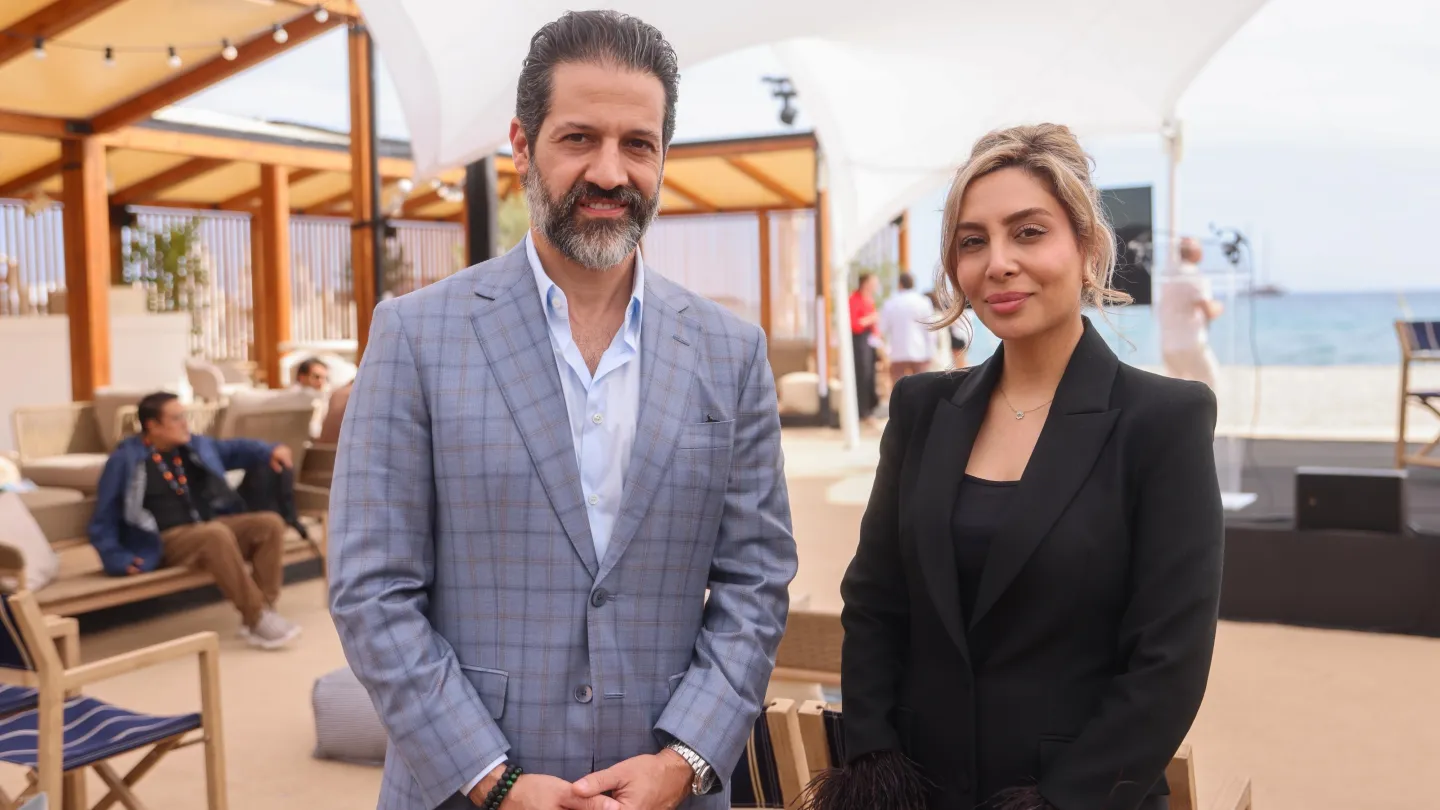
Last year marked the premiere of the Kurdistan Film Commission (initially known as the Kurdistan Film Commission Slemani before a broadening of activities) on the global film stage at Cannes. The world’s biggest film festival marked the coming-out party for the commission of the small semi-autonomous region in northern Iraq under the office of Deputy Prime Minister H.E. Qubad Talabani, who is the president of the organization. This year, he, Bavi Yassin, founder and chair of the film commission, and her team are back at Cannes for an encore.
The mission of the commission, located in the cultural hotspot city of Slemani, is to empower Kurdish creatives through training and support, bring foreign creatives to Kurdistan and establish it as a filming destination, and to help bring the region’s stories to the world.
Recruitment for staff, in Slemani, also known as “Suli,” and elsewhere, has been in full swing. For Cannes 2026, the team also packed some financial news. After last year signaling plans for a fund, the Kurdistan Film Fund was officially unveiled during a Wednesday event, entitled “Owning Our Story,” at the Cannes Marché. The fund is worth $2 million per year.
a Location Managers Guild International scouting trip visited Kurdistan’s Hawraman region and the local bazaar, courtesy of Kurdistan Film Commission
Courtesy of Kurdistan Film Commission
Talabani highlighted the uniting force of storytelling at the event, saying: “We want to show the world that despite political differences, despite regional tensions, or war, that cinema can cross those boundaries, that storytelling can unite where politics divides. This fund is not just an opportunity for Kurdistan. It’s a signal to the region that we see the momentum and that we want to be part of it, that we are willing to invest in the relationships, the collaborations, the partnerships that make this region stronger.”
The region has long considered itself a connector rather than a divider. “For centuries, Kurdistan has been a bridge between cultures, between civilizations, between worlds. That is our geography, that is our history,” he told the crowd. “We want to be a bridge, not a battlefield. We want to build, not destroy. We want to create an industry, an opportunity where there is currently division.”
The deputy prime minister also highlighted the importance of changing the narrative. “We have decided that today, Kurdistan stories will no longer be told by others on our behalf,” Talabani told the Cannes audience. “We will tell them ourselves, on our terms, with the depth and accuracy that only we can provide.”
And the film and creative sectors play a key role here. “They are essential parts, because how a nation tells its story determines how it is seen, how it is understood, how it attracts investment, talent and partnerships,” he said. “We are ready to be seen, to be understood, to be part of the global conversation, not as subjects, certainly not as victims of history, but as participants.”
Kurdistan Film Commission training session, courtesy of Kurdistan Film Commission
Courtesy of Kurdistan Film Commission
Yassin also emphasized the focus areas of her work. “Kurdish films have always relied on external support, without a solid system of their own. The fund changes that by placing the Kurdish narrative at the center, wherever it is told in the world,” she tells THR. “It is not only about financing films – it is about creating ownership, continuity, and visibility for Kurdish stories on an international level. At the same time, it is designed to open the door for global creators and producers to engage with Kurdish talent and stories through meaningful collaboration.”
The goal: “to create a structure that supports our narrative, while also encouraging international interest – and ultimately, to start bringing that attention back to Kurdistan itself.” Fund evaluations will center on artistic merit, but not solely. “Projects are assessed on their international co-production potential, their ability to circulate, and their relevance to the local ecosystem,” shares Yassin. “We are looking for films that can connect Kurdistan with global partners while also contributing to the industry’s development on the ground.”
Attracting film and TV productions has both cultural and economic benefits, both near- and long-term. “For Kurdistan, this is about diversification,” highlights Yassin. “The audiovisual sector brings immediate economic activity – jobs, services, infrastructure – but beyond that, it builds long-term value. It shapes how a region is seen globally and opens the door to cultural tourism. When people see a place on screen, they connect with it. That connection creates curiosity, and over time, it translates into real interest in visiting and engaging with that place.”
But making Kurdistan appealing to filmmakers is multi-layered, she emphasizes: “It is the combination of authenticity, access, and cost effectiveness.”
Kurdistan Film Commission at Cannes Marché 2026, courtesy of Kurdistan Film Commission
Keep in mind that the treasure trove of stories from the region hasn’t been widely seen around the globe. “There is a strong narrative identity. Kurdistan offers stories, locations, and cultural depth that have not been overexposed,” emphasizes Yassin. “For European and Asian partners, this represents originality – something audiences have not seen repeatedly.”
Such authenticity meets access when it comes to location scouting, where Kurdistan can offer something new. “I have had professionals reach out to us, saying they are tired of the overused locations that always stand in for other countries they so much need,” the commission’s chair shares with THR. “Kurdistan is in the MENA (Middle East/Northern Africa), very accessible, and yet it has four proper seasons per year, a wide range of diverse locations, from extreme greenery to drylands, waterfalls, mountains and hills, rivers, and urban cities. These locations can stand in for Syria, Afghanistan, Pakistan, Iran, and so many more.”
Some experiences with surprised visitors even provided laughs. Yassin, for example, recalls taking people to some areas, “and they said, ‘It looks precisely like Ireland!’ Can you believe that: In the heart of the MENA, there is a country with corners that look like Ireland!”
Money, of course, is also a key consideration for productions. “This industry is very expensive,” Yassin knows, highlighting that Kurdistan “offers a cost-effective filming environment.” She even sees opportunities for collaborations with producers within the region. “How many times have we seen Egyptian films seeking locations in Europe for their greenery and landscapes, and how much does it cost them?” Yassin tells THR. “They can find it all right here.”
How about that efficiency argument? “Within a very compact geography, productions can access a wide range of locations – urban, rural, mountainous – without the logistical complexity or costs found in many other countries,” she notes. “This has a direct impact on budgets and timelines.”
Kurdistan offers varied landscapes, some of which could be a stand-in for Ireland, courtesy of Kurdistan Film Commission
Courtesy of Kurdistan Film Commission
But there are also production support and soft incentives, which she describes as “often underestimated,” given a traditional focus on cash rebate percentages. “What matters in practice is the total cost of production,” Yassin emphasizes. “In Kurdistan, facilitated permits, flexible coordination, access to locations, and overall lower operational costs make it highly competitive – even without relying solely on large rebate schemes.”
To ensure local talent has what is needed, the Kurdistan Film Commission Slemani has, over the past year, had all sorts of training, education and skills development initiatives. Among the events have been a five-day Kurdistan Producers Lab for producers and directors, covering film budgeting, financing, funding applications, and marketing, in collaboration with European Audiovisual Entrepreneurs (EAVE). There was also a four-day workshop on location management and scouting, led by John Rakich, president of the Location Managers Guild International (LMGI), and Andrea Keener, a LMGI board member and senior location manager, who has worked on such TV series as Cold Case and Scandal and such feature films as Ant-Man, Captain America, and Killers of the Flower Moon.
The commission plans to continue and expand its training opportunities. “This year, we will work with top professionals around the world and highly established institutions on scriptwriting, documentaries, and more focused professional training for crews, especially below-the-line,” Yassin tells THR. “We will also start our Suli Screens programs, which are free of charge film screenings all over the city.”
For productions looking to shoot in the region, the commission is offering a database of locations, including the likes of the archaeological remains of Bazyan, an ancient Christian site estimated to date back to the 6th century, the Red Prison Museum, a site formerly known for its brutality before being abandoned and reopened in 2003 as a museum, and Tuni Baba, a gorge known for its stunning scenery.
Yassin even has news of an international project to share. “We have a Canadian film production, Daudistan, coming this year,” she tells THR. A synopsis for the drama from writer-director Ariel Nasr on Cinando reads like this: “On the eve of Kabul’s fall to the Taliban, Afghanistan’s star runner Daud Ahmadi returns from a Canadian detention center to reunite with his sister Tayiba. Together, they must confront a city in collapse and fight to reclaim their shattered dreams before everything they love is lost forever.”
Yassin mentions “a few more [projects] in the pipeline, but the unexpected war in the region has affected production, not just in Kurdistan but across the entire MENA region.” Yes, the war in Iran has been the elephant in the room in the region, adding to worries around the Gaza war.
“I appreciate this question, because it goes beyond Kurdistan – it speaks to the reality of an entire region,” the film commission chair highlights. “The truth is, many countries in our region are affected by conflicts they are not directly part of. As Kurds, this is something we have lived with for decades. We are often carried by the consequences of wars that are not ours, yet we absorb their impact – politically, economically, and culturally. One of the first sectors to suffer is film: production slows down, and, more importantly, a region’s reputation—something that takes years to build – can be affected almost overnight. But there is another reality that is often overlooked. If you look at daily life in a place like Kurdistan, it is stable, functional, and safe. There is a disconnect between perception and reality, and part of our role is to correct that.”
Kurdistan even features snowy landscapes, courtesy of Kurdistan Film Commission
Courtesy of Kurdistan Film Commission
This is why being at Cannes is important. “Our presence is a statement: that we are open, that we are building, and that we are not waiting for perfect conditions to start,” says Yassin. “In times of conflict, support for the arts is not secondary – it becomes essential. Culture is what preserves identity, what sustains people, and what allows a region to define itself rather than be defined by others.”
The Kurdistan Film Commission Slemani is also bringing filmmakers to Cannes to network and pitch their projects at the Marché du Film. And it is organizing the first-ever Kurdistan Producers Circle at its Cannes market stand. “We are selecting 10 projects,” explains Yassin. “They will have the opportunity to meet top established producers and present their work in a focused setting. This is not about visibility alone – it is about creating real connections and opening doors. …Importantly, as we reintroduce Kurdistan to the international industry, we are not limiting ourselves to the domestic market. We are selecting projects from across the wider region, not only Kurdistan. This is a deliberate choice. It reflects how we see our role: not only building locally, but positioning Kurdistan as a platform for collaboration.”
Concludes Yassin: “Ultimately, this is what we are doing – building bridges that did not exist before.”
And, she emphasizes, the commission has just barely started its work. “After one year since the official establishment of our film commission, I do not expect a mountain of productions coming our way. The fact that, in less than a year, we were contacted multiple times and considered for production gives me hope for what comes next,” Yassin tells THR. “Of course, welcoming foreign production is also my top priority, but people still don’t know us yet! All they know is stories related to sadness, war and politics. My main objective is to change people’s minds about how they see us. Once they do that, trust me, they won’t be able to resist the beauty and versatile location, and the enormous cost-effectiveness.”
>
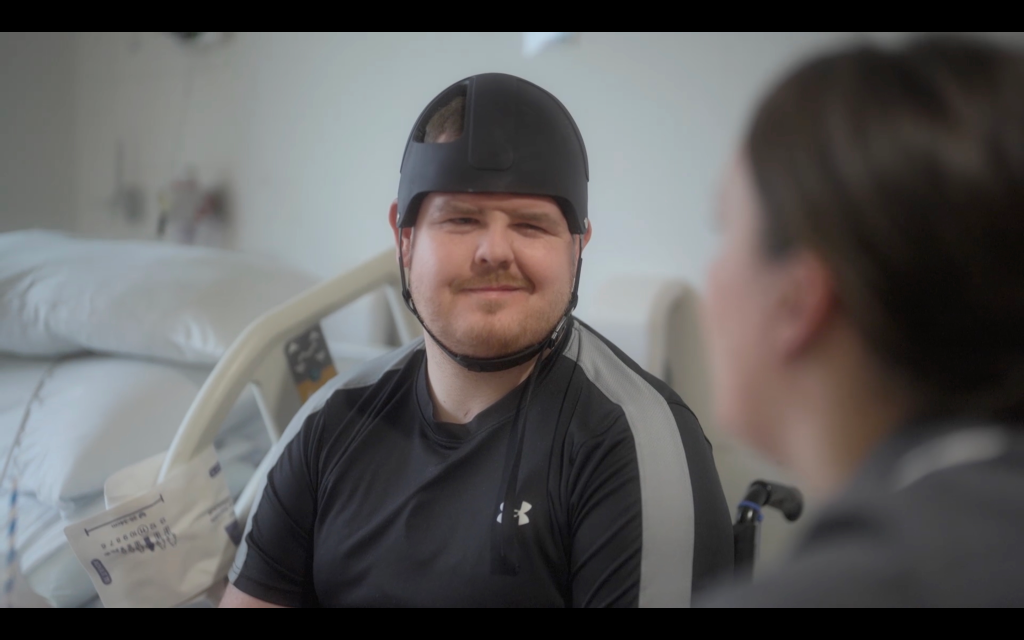
EXCLUSIVE: Channel 4 is teaming with the Stroke Association on a documentary sereis looking at young people living with the aftermath of a stroke.
Trauma: My Broken Brain follows three young survivors through the most frightening days of their lives and the grueling journey back to independence.
Every five minutes someone in the UK suffers a stroke – there are 1.4 million stroke survivors living in the UK today – but the aim of the doc is to show that this is only the beginning of recovery. Filmed over seven months with access to these young adults at the most terrifying and testing moments of their lives, the series meets Dan (28), a dancer left confined to a wheelchair, barely able to speak following emergency brain surgery; Saskia (22), a self-described social butterfly left bedbound after a brain bleed so severe her family feared she would not survive; and Dec (20), who collapsed just four months into a new relationship and spent weeks in a coma, his family and girlfriend unsure if he would survive.
Channel 4 has taken the rare step of teaming with a charity on the doc. It is being produced by Stream Media Group, which was also behind the same network’s Anna Richardson: Love, Loss and Dementia, made with the Alzheimer’s Society.
Channel 4 commissoning exec Simon Lee said: “This is an ambitious and important series that challenges perceptions and gives a voice to young people whose lives have been transformed by stroke, as they embark on the long road that begins after survival.”
Stream’s Victoria Noble added: “What struck us throughout filming was how little people understand about stroke. Survival is often seen as the end of the story, when in reality, it is only the beginning. By sharing their journeys with such honesty and courage, Dec, Dan and Saskia revealed the reality of rebuilding a life after stroke, and the truth behind the long and unforgiving journey to reclaim the right to live an independent life. Alongside the extraordinary support of their families, their stories offer a powerful insight into resilience, determination and hope. It’s been a privilege to tell their stories.”
Noble is EP with Ben Padfield and producer is Laura Hooper. Series director is Storm Theunissen and production executive is Fiona Ridgers. The show was filmed with access to The Walton Centre NHS Foundation Trust and Clatterbridge Rehabilitation Centre, and Wirral University Teaching Hospital NHS Foundation Trust.
>

EXCLUSIVE: Power Couple seller Dori Media is heading to Cannes with the largest unscripted slate in its history.
At MIPCOM, the Israeli company will debut the likes of games shows The Hive and You Should Know, docu-series My Hottest Years and primetime reality format New Love, which is from Power Couple maker Abot Hameiri.
Also on the slate is Paraiso Tropical, a doc exploring a mysterious Panamanian plane crash, and Seekers, which looks at humans’ search for meaning.
“We have been listening to our clients across the globe, many who are looking for affordable content that can help them break through with their local audiences and we are headed to MIPCOM with our largest slate of unscripted programming, a slate that features many new offerings that we believe can do just that,” said Dori Media Group CEO Nadav Palti.
Studio quiz show The Hive comes from and is from United Studios Productions and channels Kan 11 and Makan. The show’s USP is that knowing the right answer isn’t enough: Contestants need to know when to take a risk, when to block an opponent, and how to build a strategic play.
You Show Know is another quiz, this time from Shenhar Productions. Questions are tailored specifically to each contestant, drawing from their social media feeds, meaning they should, in theory, know the answers.
Doc series My Hottest Years comes from Drucker-Goren Communications and is for Kan 11, looking at what happens when women’s hormones change, while New Love is a dating reality show for Reshet 13. The format sees women live with a carefully-selected stranger for 72 hours, before they decide whether to stay for another three days or replace them with someone new.
Paraiso Tropical is a co-production from Apertura Films and Ajimolido Films in which filmmaker Abner Benaim reopens the case of a passenger plane that exploded over Panama, killing all 21 on board, including his under. Seekers, meanwhile, runs to six parts and follows the human experience through the eyes of an Amazonian chief, an Advaita monk, an African healer, a Hindu sage, a Native grandmother and a Buddhist psychologist. Édgar Ramírez, Riley Keough and Jamie-Lynn Sigler all feature.
>
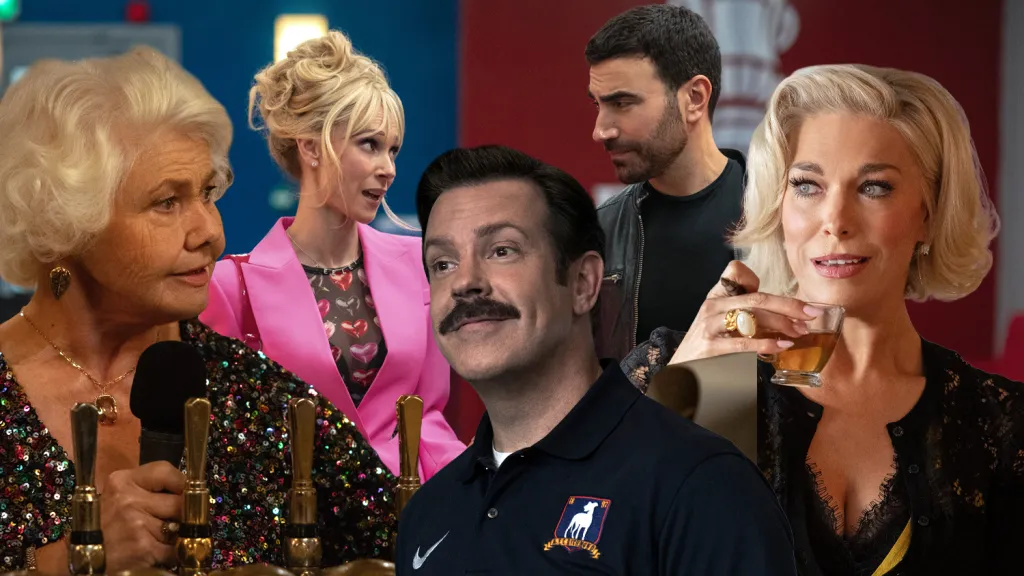
SPOILER ALERT: This post contains spoilers for Ted Lasso Season 4, Episode 9, titled “Mae Rides The Bus,” now streaming on Apple TV.
The title of the second-to-last episode of Ted Lasso Season 4 hints at a goodbye to a beloved character who has been around since the first season.
Episode 9 bids farewell to Richmond’s own Mae Green (Annette Badland) who dies doing what she loves: supporting the Lady Greyhounds at their away match against Bristol City in the stands.
“That’s what happens. You’re involved with folks, and they disappear. They go, and she loved her life,” Annette Badland told Deadline. “She made the very best of her life and really relished it. So she went, I suppose, for her, in the very best way.”
The Crown & Anchor pub owner was invited to take the team bus to the away game after she had hinted that it would be difficult for someone with her “level of seasoning” to make the two and a half hour drive. Thus, Ted (Jason Sudeikis) and Coach Beard (Brendan Hunt) invite her on the shuttle with all of the players, and they embrace Mae as one of their own on the drive.
RELATED: ‘Ted Lasso’ Episode 6 Recap: Phil Dunster Returns & New Believe Sign Debuts On New Year’s Eve
“I love the Lionesses, so I was thrilled when [Season 4] happened, and the girls are tremendous and effervescent and glorious to be around. The pub quiz scene took a couple of days to shoot, but that was like a tidal wave coming,” Badland said. “They are just so full of energy and life. So that was just something wonderful to be involved in, and just enhanced all the feelings and the camaraderie. And Mae couldn’t play football, wasn’t allowed to play football, I’m sure she’s had a lot of bad stuff in her life, but she just carries on and defies the odds and just keeps on pitching. That’s an excellent story to tell.”
In the below interview, Badland unpacks Mae’s legacy left on the series, transitioning from the men’s team dynamic of the first three seasons to the Lady Greyhounds and how Mae might come up in the finale episode.
DEADLINE: Did you know about this episode for Mae when you signed on for Season 4? How did you react when you found out what would happen for her in Episode 9?
ANNETTE BADLAND: No, I didn’t know, and I didn’t know till about, I suppose, maybe November. We were only an episode away filming that. I was shocked, but I’m very proud being in the show, and I admire Jason [Sudeikis]. I think the series is so successful because people smell it’s very genuine. The audience know it’s not made cynically. It’s not a product. It’s something Jason wants to say about the world and how we are, so you have to trust that.
I don’t know when I’ll die. You just don’t know. So, being told that it was going to happen quite close to it being filmed, you just have to go. ‘Well, that’s [that]. He told me in the storyline, so he started at the beginning [with] “I invite her to come, and blah blah, and she won’t drive, and then she comes to the grounds and she goes in the bus,” and I’m going, “Oh wow, this is…” and then “She passes.” [Gulps.] But hopefully that’s what will happen for the audience too.
DEADLINE: How did you want to approach the speech you gave in the locker room before the game? There’s the moment in the bus before where they’re like, “We’re gonna grill you about your whole life and everything you know. How did you approach those scenes with the end of the episode in mind? What you wanted to leave on the field, for lack of a better way to put that?
BADLAND: I think not giving in. She’s very outspoken. She’s a lioness who will defend you till the nth degree once you’ve got her heart and respect. Being an older woman, where you do become invisible, Mae’s never going to be invisible. She will not allow that to happen. I get ignored. You’ll stand at a counter, and people won’t bother, or they’ll walk into you. “You’ve had your time, move aside.” And Mae would not allow that, and was still in there pitching and relishing.

L-R: Jason Sudeikis and Annette Badland in Season 4 of ‘Ted Lasso’
Apple TV
DEADLINE: What does it say about her that she wants to sit in the audience stands or the supporters side versus the box with Rebecca and everyone?
BADLAND: Yeah, not her people, and she might have felt constrained. “Well, I’m not going to sit and behave myself or feel the fool because I’m sitting with you.” I’ll go where the folk that really scraped together to get the money, who are dedicated, [are sitting]. Even although it was her pub, she’s not part of a hierarchy. Everybody’s judged on how they are. Just not her style. Go and be with the real fun.
DEADLINE: There’s the hint of the shares and the battle that’s going on there. And Mae has shares, and she was like protecting her patrons at the pub. Can you tease anything about how could she could leave an impact that way too on the team?
BADLAND: Well, she had a very large pile of shares. I mean, they were about “yay high” (gestures to table height she sits at.) She uses them to good effect. Her instructions are for them to be used in a particular way that is quite good.
DEADLINE: I love her relationship with Ted’s son this season too. I was hoping you could talk about working with Grant and any wisdom she maybe has left with him?
BADLAND: He is a delight. He’s a beautiful young man, and bright. We got on terribly well, and I shall miss him. Really, it was great having that element in the pub too. Another side of her. I can’t tease you with anything, I don’t think, but he knows what he’s doing now with a tea towel.
DEADLINE: Keeley’s pregnancy is revealed in 409, and I’ve heard some people talk about the cycle of life and how someone passes and then a new life comes into the world. So I was curious if you had any thoughts on those themes for episode nine?
BADLAND: Oh yes, well it’s absolutely true, isn’t it? We move along. We’re here for a very short time, and the next wave, the next group of people comes in. I’m delighted for Keeley, just delighted, and poor old Roy.
DEADLINE: This episode felt like such a great send off for Mae, but could we still see a funeral or something in the finale?
BADLAND: You could, maybe. I guess, or it’s like, “Oh well, that’s it.” [They could forget about her.]
DEADLINE: What do you think she would want as a celebration of her life? Have you thought about that at all?
BADLAND: Oh, she’d have asked for a tremendous party at The Crown and Anchor. Everyone invited. Jason did modify some of 410. We talked after he told me about her passing, and he did, because that’s how he is. He’s responsive and collaborative. So he did change some of the stuff in 10, or incorporated what we talked about. She doesn’t just [go away]. She has, not an appearance, but she is still within the context.
DEADLINE: I’m also worried-not worried, but the pub was her thing. So I hope it’s in good hands in the future.
BADLAND: So does she. Oh yes.
DEADLINE: Anthony Head gets an acknowledgement in 409, and Rupert gets his mention too. How did that all weave together with Mae also leaving? What are your thoughts on that? You had scenes with Anthony in the past.
BADLAND: He came in the pub. The darts, and we were around. He came in more than that, but that was the main one. He was a beautiful man, and he will be much missed. He was charming and funny and generous, and we’d have naughty little sort of asides. And I had wondered why we weren’t — I assumed he would be in this last [season] and didn’t know, as I think very few people knew, he was ill and just couldn’t do it.
So we will miss him, and I respect him, and I think it’s a great honor to be in the episode that is dedicated to him.
DEADLINE: How did it feel embarking on this new chapter of the show after the previous three seasons with the men’s team, and how much do you think it meant to Mae? Could you talk about that transition and leaving the show behind?
BADLAND: Well, when we finished [Season 3], we didn’t think there would be another. Jason had said, “I’ve got a three series arc, that’ll be it.” And then to go back and to take, it’s very exciting because it’s a risk, isn’t it?
A female team [is] quite quite different, and the men have come with it. The male audience have gone with it, like they do with the genuine footballers. And there’s good stories, different stories in there, different tales to tell. So, I’m absolutely thrilled that it seems, in England, certainly, to have taken off this year. People don’t know what to do. They don’t know whether to watch it episode by episode or to binge watch it. They can’t wait to binge it. So that’s thrilling, absolutely thrilling. I’ve had a great time. I’m privileged to have been part of it, and I’ll just have to be in the stands, won’t I? And see how they progress.
Or there is a film called Wonderful Life, where an angel [comes down.]
Annette Badland in ‘Ted Lasso’ Season 4
Apple TV
DEADLINE: I could see them incorporating it. I love that movie. We watch it every Christmas. She would be such a great Clarence-esque character.
BADLAND: Yeah, popping up in someone’s conscience and tearing them off a strip or whatever. Or giving them information.
DEADLINE: I feel like Beard may need some of that for some reason. Because we don’t see his reaction, at the end of the episode. We see it’s Rebecca’s telling Ted, you don’t see the words pass, but just from his actions, you know that she’s died. But yeah, I guess curious to see what will happen with him. I love that idea. I hope you’ve pitched that and that it comes to light in the future.
BADLAND: As soon as he said she passed, I said, “Oh, can I come back as an angel?” So we did talk about it.
But he doesn’t do the predictable, does he? That’s what’s so delightful.
DEADLINE: That’s all I had, unless you wanted to add anything else about what fans come up to you and say when they recognize you from the show, or any last words before we go.
BADLAND: Ah, encountering them is terrific, and I’m very proud to have been in this because I still get messages from people saying, you know, things like “My mom’s very ill with cancer. She comes home from her treatment. We all pile on the bed. We put Ted on. We believe. We laugh.” So that’s a just tremendous thing to have in the world, and to be connected to it, and feel you’ve done that for folk. No bad thing, eh?
>


Search For Canadian TV Actor Stewart McLean Now Homicide Investigation


These ’90s fashion trends are making a comeback in 2017
According to Dior Couture, this taboo fashion accessory is back
Model Jocelyn Chew’s Instagram is the best vacation you’ve ever had
Emily Ratajkowski channels back-to-school style
9 Celebrities who have spoken out about being photoshopped


Rurouni Kenshin: Hokkaido Arc Manga Takes 1-Issue Break – News


HIDIVE to Stream English Dubs for The World Is Dancing, The Forsaken Saintess and Her Foodie Roadtrip in Another World, The Dangers in My Heart: The Movie Anime – News