
Sports
U.S. State Dept. to waive $15k visa bond for World Cup. But will it really help players and fans?

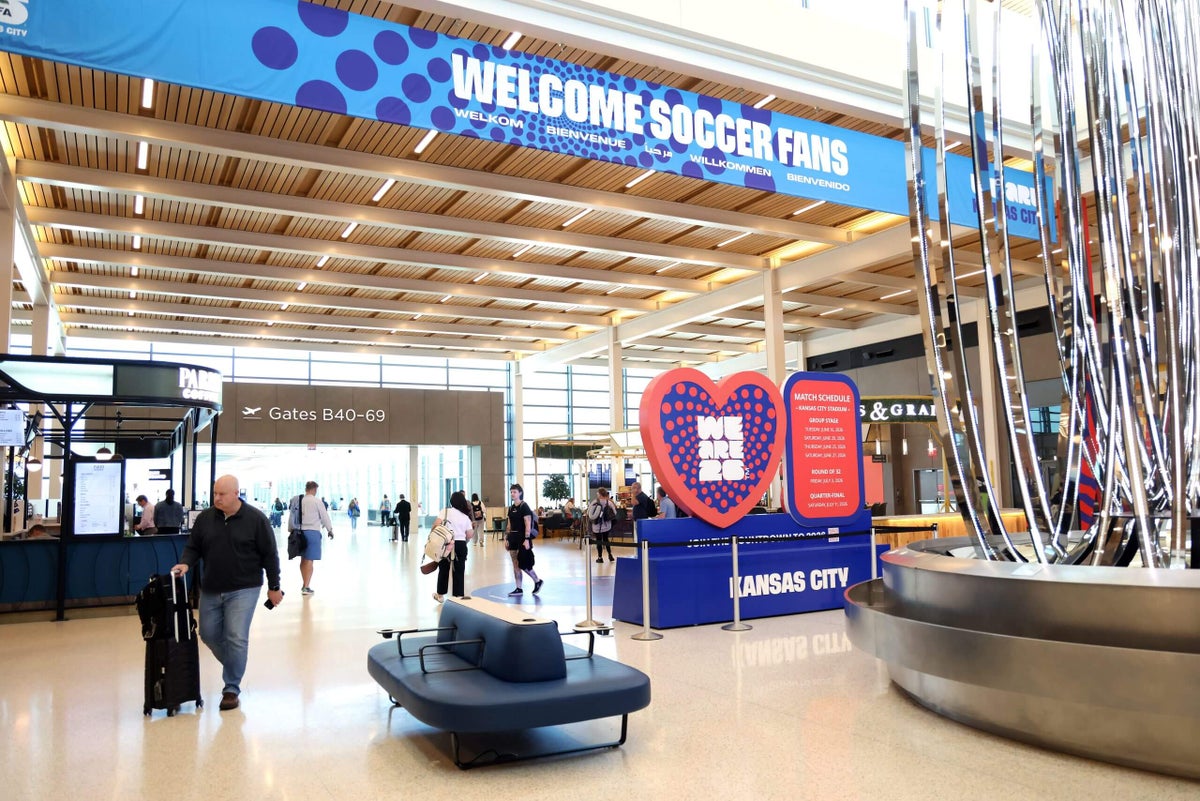
On Wednesday, the U.S. State Department announced a policy change, waiving visa bond requirements for some participants and ticket holders during this summer’s World Cup.
Due to the “Visa Bond Pilot Program” introduced by President Donald Trump’s administration, nationals from 50 countries are required to post a bond of $5,000, $10,000 or $15,000 to be granted a tourist visa to enter the United States. These payments were per person, rather than per travelling party, which means a parent travelling with two children, for example, must make three separate bond payments. The Athletic reported in March that sources familiar with the process indicated the $5,000 payments were broadly reserved for children, and $10,000 or $15,000 for adults. It threatened to impact several nations who have qualified for the World Cup.
Wednesday’s policy announcement led to a flurry of news stories. The BBC headline read: “U.S. drops $15,000 visa deposit for foreign fans with World Cup tickets.” ESPN’s headline read: “Trump administration waiving visa bonds for World Cup fans.”
The reality, however, appears to be rather more nuanced and less far-reaching than it appears at first glance. Here, The Athletic explains which five World Cup-qualified countries are impacted, who is actually benefiting from the policy change, and why the measure is unlikely to significantly help many fans.
What exactly is the Visa Bond Pilot Program?
Algeria, Cape Verde, Senegal and Ivory Coast have qualified for this summer’s World Cup, and have been impacted by the policy since January 21.
In March, World Cup participants Tunisia were among the countries added to the list, and their place in the bond scheme came into effect on April 2.

Senegal supporters were among those impacted by the visa bond scheme. (Ulrik Pedersen / NurPhoto via Getty Images)
Cape Verde — an archipelago of under 525,000 people — qualified for the men’s World Cup for the first time in its history, but nationals traveling from the country to the U.S. faced paying up to $15,000. The bond would be returned to visitors upon exiting the U.S. in a timely manner, in accordance with American laws, but to pay the bond in the first place may have been beyond the means of many people.
The bond scheme was pertinent to nationals from the impacted countries who were travelling to the U.S. on a business or tourist visa — known as B-1 and B-2 visas — which are the types of visas also required by fans and players traveling to or participating in the World Cup.
How did the policy threaten to impact World Cup participants?
There is no wording in the Visa Bond Pilot Program that grants immunity to athletes competing in major sporting events such as the World Cup. Soccer players who do not already have U.S. visas will largely apply for the B-1 or B-2 visas during the tournament, meaning they, too, could have been asked to deposit bonds.
Consular officers did have the freedom to determine whether a waiver “would advance a significant national interest or humanitarian interest based on the applicant’s purpose of travel and employment.”
Yet when contacted by The Athletic in March, neither the State Department nor FIFA took the opportunity to rule out that players from the designated countries would be required to pay the bonds.
The situation provoked significant concern among the soccer federations of designated nations. The Athletic reported in March that the matter was raised with FIFA officials at pre-World Cup preparation workshops that competing federations attended in Atlanta.
FIFA then set about attempting to convince the Trump administration to waive the bonds for official members of a competing federation’s delegation, which would include players, coaches and support staff, as well as federation executives and key personnel from sponsors.
According to a source with direct knowledge of the discussions, FIFA then attempted to help the soccer teams of designated nations circumvent the bonds by supplying invitation letters for the official delegations of national federations competing at the World Cup. FIFA wanted these letters to act as a waiver for the bonds for players, staff and federation executives, but possibly not to the immediate relatives of players, who may remain subject to the bonds.
For FIFA, it was a dicey balancing act as they sought to secure concessions but without overstepping their remit as organizers of a soccer tournament.
When The Athletic asked the State Department about FIFA seeking to influence the U.S. government’s policies, a spokesperson stressed that “rules, policies, and procedures for visa processing are set in Washington, D.C.,” before adding that the U.S. government “continues to engage robustly with FIFA in support of the largest and greatest FIFA World Cup in history.”
The policy has also become a talking point in host cities, particularly among those who are under pressure to deliver on a tourism boom that has not materialized.
Kathy Nelson, the president and CEO of Visit KC in Kansas City, described the visa bonds as one of the “headwinds” providing challenges, with the Kansas City Star reporting her saying that representatives of other World Cup cities had been in Washington lobbying for policy changes on the issue.
So, what has actually changed this week?
On Wednesday, the Department of State issued a statement, first reported upon by Associated Press.
Assistant Secretary of State for Consular Affairs Mora Namdar said that the Trump administration “has waived the visa bond requirement for qualifying team members, including players, coaches, and support staff who otherwise meet all requirements for entry into the U.S.” The State Department also confirmed to The Athletic that access will be provided for immediate relatives.
As such, FIFA secured a concession, avoiding their key participants (ie, players and coaches) from needing to post expensive bonds to compete in a soccer tournament, a requirement that would have been unprecedented at a World Cup and highly embarrassing for FIFA as the competition’s organizer.
Does the policy change help fans?
Here is the catch — it does not appear to do a huge amount for visiting fans.
Namdar added: “We are waiving visa bonds for qualified fans who bought World Cup tickets and opted in to FIFA PASS as of April 15, 2026.”
On the surface, this appears to enable fans from the impacted countries to come to the U.S. for the tournament without posting a bond.
But note the date: April 15. In further guidance, the department clarified that this means the visa bond will be waived only for those who, by April 15, had both purchased World Cup tickets and opted in to the FIFA “Priority Appointment Scheduling System” (FIFA PASS).
The FIFA PASS was established to help World Cup ticket holders to secure U.S. visa appointments within six to eight weeks in countries where wait times have often been longer. For some of the nations competing in the tournament, including many in Europe, as well as Japan, South Korea and Australia, access is easier as they are part of a visa waiver program — ESTA — to enter the U.S. However, those traveling from many other World Cup-competing nations do require visa interviews.
The April 15 cut-off date is pertinent because it appears to significantly limit the number of beneficiaries. Before April 15, many fans may have been deterred from buying tickets or signing up for the FIFA PASS system, as they were under the impression they would have to pay up to $15,000 in bonds.
Fans from Algeria, Cape Verde, Senegal and Ivory Coast have been designated on the visa bond program since January 21. Tunisia may have been a little bit different, as their place on the bond scheme came into effect from April 2.
The Athletic has seen data shared by FIFA this week that shows fewer than 17,000 people globally have signed up to the PASS system. The highest take-up of registrations onto FIFA PASS has been by nationals from Uzbekistan, China, India, Turkey, Mexico and Colombia.
This would suggest a very small number of supporter beneficiaries of the policy change from the bond-affected countries. The State Department did not respond when asked to clarify how many fans this policy change will help, or provide the number of people from those countries who had both purchased World Cup tickets and signed up to FIFA PASS by April 15.
The bond waiver is also not forward-facing, so fans from the impacted countries could not now attempt to purchase a ticket via FIFA or on a resale market and attend the World Cup, because they needed to have bought the tickets and signed up to FIFA PASS by April 15.

Ivory Coast nationals who want to support their team at the World Cup face a U.S. travel ban. (Khaled Desouki / AFP via Getty Images)
Additionally, nationals from Senegal and the Ivory Coast remain subject to travel bans in any case. A proclamation by President Trump in December suspended entry into the U.S. for nationals of Ivory Coast and Senegal, both as immigrants and non-immigrants, including in the visitor category for business and tourism, the latter of which would be required to attend the World Cup.
What else have the State Department and FIFA said?
Namdar insisted that the U.S. “is excited to organize the biggest and best FIFA World Cup in history,” before adding that the administration “remains committed to strengthening U.S. national security priorities while facilitating legitimate travel for the upcoming World Cup tournament.”
The department also insisted that every visa application, regardless of a bond waiver, is subject to rigorous screening and vetting by consular officers , ensuring the applicant meets all requirements under U.S. law.
FIFA, for its part, claimed the announcement from the U.S. State Department “further demonstrates our ongoing collaboration with the U.S. Government and the White House Task Force for the FIFA World Cup to deliver a successful, record-breaking and unforgettable global event.”
FIFA added: “We are grateful to the administration for the ongoing partnership.”
In a post on Instagram, Infantino thanked Trump and Secretary of State Marco Rubio for their role in “waiving visa bonds for fans with valid tickets travelling from 50 countries” to the U.S. for the World Cup.
His post did not mention the key detail this would only be possible for those who purchased tickets prior to April 15, at the time where fans from those countries were under the impression that they must make significant bond payments to enter the U.S..
Despite FIFA’s grateful position, and a friendly relationship between its president Gianni Infantino and Trump, four competing countries (Haiti, Iran, Ivory Coast and Senegal) remain subject to travel bans a month out from the tournament.
In 2017, one year before the U.S. joint bid won the right to host the 2026 competition, Infantino told reporters: “When it comes to FIFA competitions, any team, including the supporters and officials of that team, who qualify for a World Cup need to have access to the country, otherwise there is no World Cup.”

Despite Gianni Infantino’s assurances and his relationship with Trump, four World Cup countries are still under a travel ban (Jia Haocheng – Pool/Getty Images)
Additionally, on May 2, 2018, Trump wrote a letter to Infantino and said he was confident that “all eligible athletes, officials and fans from all countries around the world would be able to enter the United States without discrimination.”
Last year at FIFA’s annual congress in Paraguay, Infantino said, “America will welcome the world. Everyone who wants to come here to enjoy, to have fun and to celebrate the game will be able to do that.”
>
Sports
Fury vs Joshua: Anthony Joshua brings back Tyson Fury’s former trainer Ben Davison for heavyweight grudge match in Cardiff | Boxing News

Anthony Joshua has returned to trainer Ben Davison for his heavyweight super-fight with Tyson Fury in December.
Davison has the unique distinction of having trained both Joshua and Fury. The trainer, who has also coached Fabio Wardley and Moses Itauma among others, helped Fury in his comeback from a long hiatus from the sport, an unbeaten run that included his first fight with Deontay Wilder in 2018.
More recently Davison has worked with Joshua, though AJ left and brought in trainers from Oleksandr Usyk’s camp for his last two fights.
Now Joshua has reunited with Davison, who will for the first time in a fight be in the opposite corner to Fury. That has led to Fury branding him a “traitor”.
Eddie Hearn, Joshua’s promoter, revealed that AJ has maintained his links with Davison even as he changed training teams and hasn’t brought him back specifically to target Fury.

Anthony Joshua makes his predictions for his fight against Tyson Fury on December 11.
“Ben’s a great trainer. Even in the last fight and the one before, he was always working with Ben Davison behind the scenes,” Hearn told Sky Sports News.
“Obviously, Ben Davison knows Tyson Fury pretty well as well. I don’t think that’s the defining reason. But AJ just felt it would be a good addition to the camp.
“So, he’ll be the head trainer going into this fight. He’s still working with Usyk’s team and those guys as well.”
Since Rob McCracken Joshua has had a succession of different head trainers, employing Robert Garcia then Derrick James before teaming up with Davison and then Iegor Golub from Usyk’s team.
But promoter Hearn insists that it doesn’t mean Joshua’s corner is unsettled.

Watch the best bits from the Tyson Fury vs Anthony Joshua press conference.
“I think AJ knows where he is, but I don’t think he’s going to start changing things around. He just wants to tweak things and get things right from a strategy perspective,” Hearn said.
“He knows what he needs to do. And ultimately, that’s land one straight on his chin and knock him spark out. That’s the game plan.
“And we’ve got to find a way to do it efficiently and correctly. And he’ll do that studiously with Ben Davison and the team.”
Nelson ‘surprised’ at Davison decision
Former world champion and Sky Sports boxing expert Johnny Nelson believes Joshua’s decision to return to Davison will raise questions.

Jamie Moore, Barry Jones and Matthew Macklin debate who will win between Tyson Fury and Anthony Joshua when the pair meet in Cardiff on 11 December.
“Ben’s come under a lot of criticism and stick more recently for his charge over a couple of other fighters,” Nelson told Sky Sports News.
“Obviously AJ feels comfortable with whatever message Ben Davison is bringing to him. I think I saw Tyson and Shane [Fury] walking past and calling him a traitor, and he had a little smile on him.
“I’m just surprised, but this is his choice.
“I don’t agree with fighters chopping and changing trainers all the time, because you need to feel that you create a relationship, a trust, a belief in your coach.
“If he says jump, you don’t say how high, you just jump, and so I struggle to understand the chopping and changing.
“But this is AJ’s call, he’s obviously done it for a reason. It’ll be interesting.”
>
Sports
Bahrain GP in Malaysia: Kimi Antonelli fastest from Max Verstappen ahead of qualifying at Sepang International Circuit | F1 News
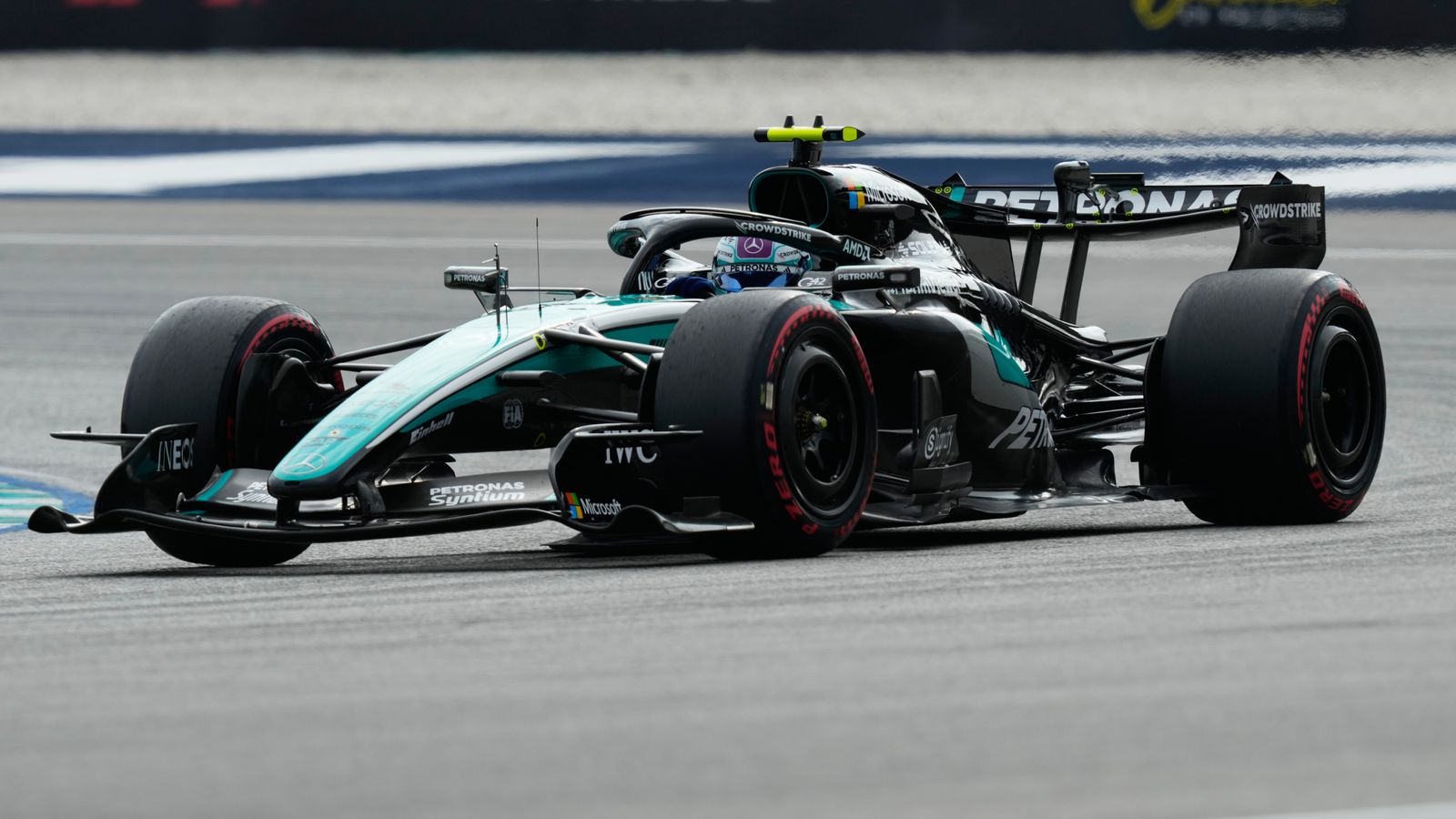
Kimi Antonelli was fastest from Max Verstappen in final practice for the Bahrain Grand Prix in Malaysia to set up a Mercedes versus Red Bull fight for pole position.
Antonelli, who leads the Drivers’ Championship by 66 points from his Mercedes team-mate George Russell, struggled on Friday but was 0.278s quicker than Verstappen.
Verstappen’s Red Bull team-mate Isack Hadjar took third ahead of Russell fourth but both drivers were more than half a second behind Antonelli, who appears to have found a nice rhythm in time for qualifying later on Saturday at 9am, live on Sky Sports F1, at the Sepang International Circuit.
Ferrari’s Charles Leclerc topped second practice but was seven tenths back in fifth while his team-mate Lewis Hamilton was sixth, despite providing positive feedback following his final practice lap.
McLaren appeared to be out of contention for pole as Lando Norris and Oscar Piastri were seventh and eighth, although the fact Norris’ best lap was done on the mediums suggested they retain room for improvement.
Tyres are a major talking point this weekend due to the extremely rough track surface coupled with the high temperatures and humidity as F1 races in Malaysia for the first time since 2017, with the country having stepped in
Alpine’s Franco Colapinto, who has a combined 15-grid place penalty for causing a collision last weekend in Baku and taking a new engine in Sepang, was ninth in final practice and Racing Bulls’ Arvid Lindblad was 10th.
There was a brief red flag after a piece of debris got stuck on Oliver Bearman’s Haas after falling onto the circuit at Turn 10, seeing the session momentarily stopped to allow for a marshal to collect it.
More to follow…
Sky Sports F1’s live schedule Bahrain GP in Malaysia
Saturday October 3
8am: Bahrain GP Qualifying build-up*
9am: BAHRAIN GP QUALIFYING*
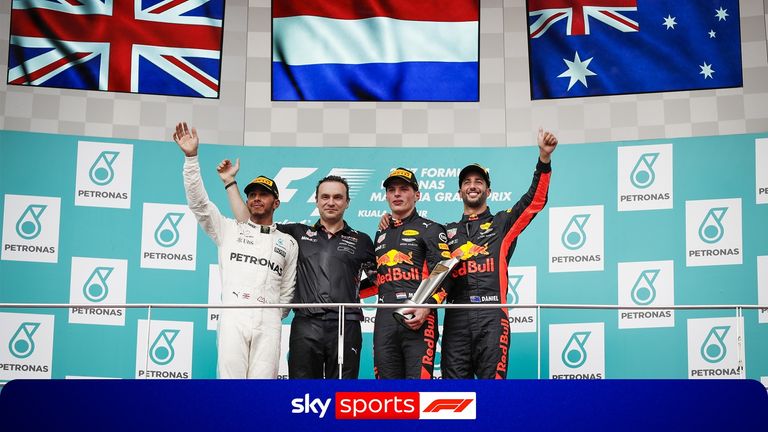
Relive the last time a Grand Prix was held in Malaysia back in 2017
Sunday October 4
6.30am: Grand Prix Sunday: Bahrain GP build-up*
8am: THE BAHRAIN GRAND PRIX*
10am: Chequered Flag: Bahrain GP reaction*
*also on Sky Sports Main Event
Formula 1 is in Malaysia for the first time since 2017 as it hosts the Bahrain Grand Prix at the Sepang International Circuit – watch Sunday’s race at 8am (build-up from 6.30am), live on Sky Sports F1. Stream Sky Sports with NOW – no contract, cancel anytime
>

Test your ball knowledge against today’s Who Am I?, Five in Five and Brainteaser.
>

The House Opinion Article | Green Councils Fight For Drug Consumption Rooms

Show Your ‘Siga’ Pride With New Goodbye, Lara Sweatshirt & T-Shirt – Interest

Fury vs Joshua: Anthony Joshua brings back Tyson Fury’s former trainer Ben Davison for heavyweight grudge match in Cardiff | Boxing News
-

 movies4 months ago
Search For Canadian TV Actor Stewart McLean Now Homicide Investigation
-

 Fashion9 years ago
These ’90s fashion trends are making a comeback in 2017
-
Fashion9 years ago
According to Dior Couture, this taboo fashion accessory is back
-
Fashion9 years ago
Model Jocelyn Chew’s Instagram is the best vacation you’ve ever had
-
Fashion9 years ago
Emily Ratajkowski channels back-to-school style
-
Fashion9 years ago
9 Celebrities who have spoken out about being photoshopped
-

 Anime4 months ago
Rurouni Kenshin: Hokkaido Arc Manga Takes 1-Issue Break – News
-

 Anime3 months ago
HIDIVE to Stream English Dubs for The World Is Dancing, The Forsaken Saintess and Her Foodie Roadtrip in Another World, The Dangers in My Heart: The Movie Anime – News