
Tech
What the jury will actually decide in the case of Elon Musk vs. Sam Altman


Nine California jurors are now deliberating over the future of OpenAI, the world-leading artificial intelligence lab.
While the trial exploring Elon Musk’s case against OpenAI’s other cofounders and Microsoft has covered territory ranging from the breakup of the founders in 2018 to Altman’s firing and rehiring in 2023, the jurors will be considering a set of fairly narrow questions.
- Breach of charitable trust — essentially, did OpenAI and cofounders Sam Altman and Greg Brockman violate a specific agreement with Musk to use his donations to OpenAI for a specific, charitable purpose and not general use by the non-profit?
- Unjust enrichment — did the defendants use Musk’s donations to enrich themselves through OpenAI’s for-profit arm, instead of for charitable purposes?
- Aiding and abetting breach of charitable trust — Did Microsoft, through its interactions with OpenAI, know that Musk had specific conditions on its donations, and play a significant role in causing harm to Musk?
OpenAI has also made three arguments in its defense that the jury will weigh:
- Statute of limitations — a legal deadline by which a lawsuit must be filed. Here, if OpenAI can prove that any harms to Musk happened before August 5, 2021 for the first count; August 5, 2022 for the second count; and November 14, 2021 for the first count, then his claims will be moot.
- Unreasonable delay — Musk, by filing his lawsuit in 2024, delayed his claim in a way that made his request for damages unreasonable.
- Unclean hands — a legal doctrine holding that Musk’s conduct related to his claims against OpenAI was unconscionable and renders them invalid.
If Musk wins out, it could mean the end of OpenAI as a for-profit company, but it’s not entirely clear what will result. Next week, the judge will begin a set of new hearings where lawyers from both sides will debate what the consequences of a verdict in favor of the plaintiffs might be. That process could be rendered moot by a negative verdict, however.
Breach of charitable trust
Musk’s attorneys say the defendants clearly understood that Musk wanted to support a non-profit that would ensure the benefits of AI to the world, and prevent it from being controlled by any one organization. In particular, they say a $10 billion investment from Microsoft in 2023 into OpenAI’s for-profit affiliate—the first to happen after the statute of limitations—was the event that turned Musk’s concern into conviction.
That deal, Musk’s lawyers say, was different from previous investments and led to OpenAI’s investors being enriched by the company’s commercial products, at the expense of the charitable mission of AI safety that Musk promoted.
OpenAI’s attorneys have asked every witness to describe specific restrictions put on Musk’s donations, and none have, including his financial adviser Jared Birchall, his chief of staff Sam Teller, or his special adviser Shivon Zilis. They say everyone involved agreed that private fundraising would be required to achieve its goals, and note that Musk himself attempted to launch an OpenAI-affiliated for-profit he would personally control, and later to merge OpenAI into his company Tesla. They also note the organization’s other donors haven’t said their charitable trust was violated.
Importantly, a forensic accountant hired by OpenAI testified that all of Musk’s donations had been used by OpenAI well before the key date of August 5, 2021. That is evidence that Musk’s donations were already used for their purpose well before he brought his lawsuit, invalidating any charitable trust that may have existed.
Mainly, they insist that the for-profit affiliate that conducts most of OpenAI’s actual activity continues to fulfill the organization’s mission, and has generated nearly $200 billion in equity value to support the non-profit foundation. Notably, Sam Altman argued that providing ChatGPT for free helps fulfill the mission of sharing the benefits of AI with the world.
Unjust enrichment
The plaintiffs point to the multibillion-dollar valuations of stakes held by OpenAI founders like Brockman and Ilya Sutskever, as well as Microsoft itself, as a sign that Musk’s donations were ultimately used for personal benefit, as opposed to supporting the mission of the charity. They argue that the work at OpenAI’s for-profit was commercially focused, while the foundation itself was left essentially dormant, without full-time employees, and, ultimately, not even in control of the for-profit.
OpenAI says all of Musk’s contributions were used by the foundation by 2020, and that equity distributions came well after he left the organization in 2018. Even beforehand, evidence shows the key players agreed that being able to compensate researchers with stock was key to developing AGI, the hypothetical form of AI capable of performing any intellectual task a human can. OpenAI executives maintain that the for-profit’s work meaningfully advanced the foundation’s mission, including safety activities. They say the non-profit board continues to control the for-profit, and instituted new governance controls following “the blip,” when Altman was fired by OpenAI’s non-profit board in 2023 for lack of candor and then rehired just days later.
Aiding and abetting
Musk’s case focused on the events of the blip, when Microsoft CEO Satya Nadella, whose company depended on OpenAI’s tech, was personally involved with helping to bring Altman back and creating a new board to govern OpenAI. They note that Microsoft executives wondered if their commercial agreement might conflict with the non-profit’s goals, and suggest that Microsoft’s commercial priorities led OpenAI away from its mission. They’ve focused attention on a clause in Microsoft’s agreement with OpenAI that gave Microsoft veto rights over major corporate decisions at OpenAI.
Microsoft’s witnesses have insisted that the company’s executives didn’t know of any specific conditions on Musk’s donations despite extensive due diligence, and never vetoed any decision by OpenAI. They note that the company’s investments and compute power allowed OpenAI to achieve its biggest triumphs.
Statute of Limitations
Musk has suggested that his skepticism of his cofounders grew over time, until in the fall of 2022 he finally decided they had betrayed him when he found out about Microsoft’s plans for a new $10 billion investment that took place in 2023. He wouldn’t file his lawsuit until mid-2024.
OpenAI’s attorneys argue that the terms of that deal were spelled out in a term sheet for a previous fundraising round in 2018, which Musk received and his advisers reviewed, but Musk said he didn’t read in detail. They also note numerous blog posts and other communications from over the years that show Musk could have known what OpenAI was doing well before he brought them to court, including tweets where Musk criticized the company years before the suit. Zilis, Musk’s adviser, even voted to approve these transactions as a member of the OpenAI board.
Ultimately, the OpenAI attorneys emphasize that Musk’s formal role in the organization ended in 2018 and his last donations took place in 2020.
Unreasonable delay
OpenAI’s attorneys say the real reason that Musk filed his suit was he realized that he was wrong about OpenAI, after its launch of ChatGPT revolutionized the business of artificial intelligence. They argue that OpenAI has operated under its current structure since its first Microsoft investment in 2018, and that forcing the organization to restructure eight years later is unreasonable.
Unclean hands
There is evidence that Musk was planning his own competing AI efforts while he was still the chair of OpenAI, and hired OpenAI employees to work on AI at Tesla. OpenAI’s attorneys argue that these efforts undermined OpenAI at a time when it was using Musk’s donations to pursue its mission. They noted that Zilis, the mother of three of Musk’s children, didn’t disclose her personal relationship to other OpenAI board members for years. And they argue that Musk withheld his donations in 2017 in an effort to win control of a planned for-profit affiliate of OpenAI. Finally, “Mr. Musk abandoned OpenAI for dead in 2018,” Bill Savitt, OpenAI’s lead attorney, told the jury.
When you purchase through links in our articles, we may earn a small commission. This doesn’t affect our editorial independence.
>

When Igor Dobrianskyi looks at a car dealership lot, he sees a wasted opportunity.
“Millions and millions of used cars are sitting on parking lots, depreciating and losing value,” Dobrianskyi said in a recent interview, adding that there are 76,000 dealerships in the United States. “At the same time, there are people who need a car for a few months, but the options are actually very limited and expensive.”
Dobrianskyi’s new startup, MyMonthlyCar, aims to connect both sides of that equation through an online platform that offers flexible month-to-month rentals from local dealerships. MyMonthlyCar was selected for the 2026 Startup Battlefield 200, a cohort of promising early-stage startups that have earned a spot to exhibit at this year’s TechCrunch Disrupt, taking place October 13 to 15 in San Francisco.
MyMonthlyCar, which is registered in Delaware and based in Florida, was co-founded by Dobrianskyi; CPO Kostiantyn Gitko; and CTO Vadym Zotov. All three are from Ukraine, said Dobrianskyi, who moved to the U.S. with his wife and young daughter after the Russia-Ukraine war began.
MyMonthlyCar does what its name suggests, with one twist: The startup only rents used cars on a month-to-month basis; no short-term options here. But it does give dealerships the chance to offer customers a rent-to-own option.
“So we don’t bring them only customers to rent on a monthly basis; we basically bring them the clients who potentially can buy this car as well,” he said.
MyMonthlyCar doesn’t charge dealerships to list cars on its website. Instead, MyMonthlyCar charges dealers 10% of each transaction. It also charges the customer a separate 10% fee.
The idea for MyMonthlyCar stems from Dobrianskyi’s previous experience in the industry. The founder owned a car rental company in Ukraine, but the lack of financing options there limited his ability to scale. In 2016, he launched a peer-to-peer car marketplace called SizeCar, where owners rent their cars to other drivers, much like Turo does today. SizeCar eventually spread to 40 European cities.
The startup has signed on seven dealerships to test the service and is working with an insurance broker to finalize its own insurance program, which will let customers choose among different types of coverage.
“Insurance is the key for this business, and you need to have your own insurance as a platform,” he said, noting that the No. 1 question from dealers was about insurance and liability coverage.
Despite its early-stage status, the founders have bullish projections for the startup. They plan to sign on 100 dealerships with 2,000 monthly rentals and $300,000 in revenue in the company’s first year of operation, which will kick off later this year once the insurance program launches. Over the next five years, the goal is to generate $42 million in revenue, Dobrianskyi said.
The startup has yet to raise venture capital and is currently bootstrapped. But Dobrianskyi said the plan is to raise a seed round, with the funds helping the company hire more developers to build out the platform, including an AI tool to help dealers identify which cars are best to rent out at any given time.
To check out MyMonthlyCar and the other startups that are part of TechCrunch’s Startup Battlefield competition (as well as to network with the folks funding them), join us next month at Disrupt.
When you purchase through links in our articles, we may earn a small commission. This doesn’t affect our editorial independence.
>
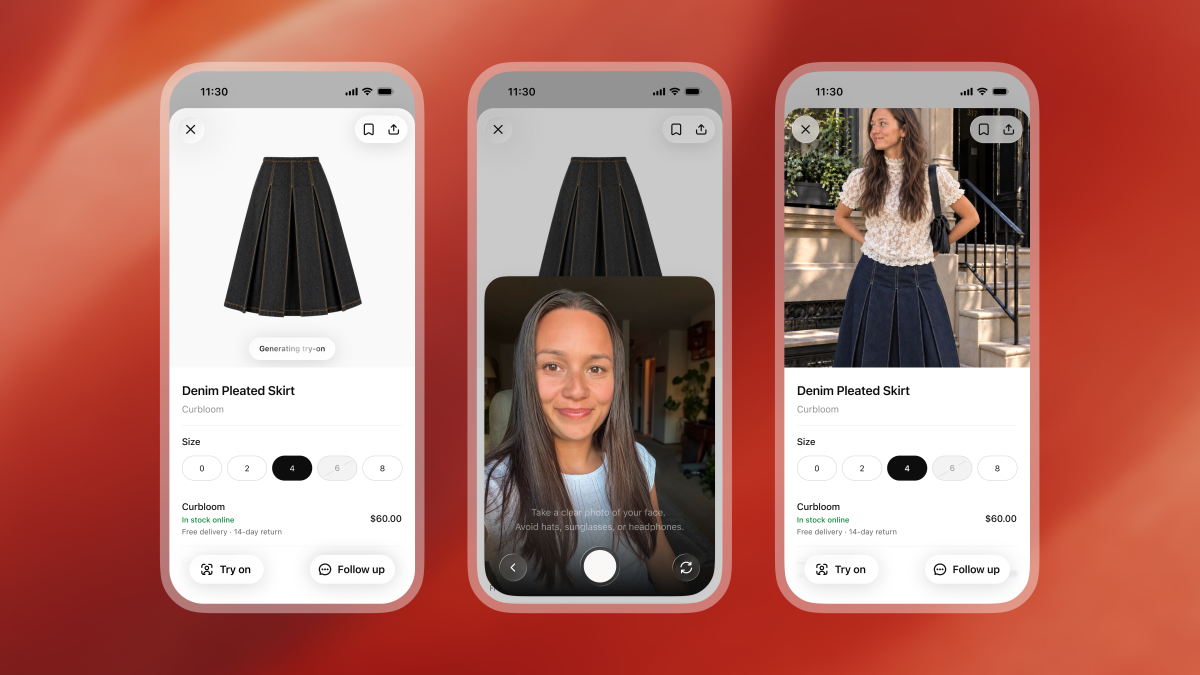
OpenAI is again experimenting with how its conversational AI assistant, ChatGPT, can help users as they shop online. On Thursday, the company announced the global launch of two new shopping features, including a way to virtually try on clothing and accessories and a new favoriting function that can help users save products they like for later reference.
The updates arrive at a time when AI assistants are exploring consumer use cases around shopping. OpenAI already had to pivot from one of its earlier ideas in this space, an instant checkout feature that ended up not performing well. More recently, agentic AI startup Instinct began pushing product recommendations to users, but some felt that the proactive recommendations were an overreach, more akin to ads than helpful suggestions.
OpenAI said its new shopping features leverage the newly launched ChatGPT Images 2.5 model, which the company claims produces more natural lighting and richer textures, follows editing instructions more reliably, and reduces image generation latency.
To start, virtual try-on allows ChatGPT users to upload a selfie or a full-body photo in order to visualize how an article of clothing or an accessory might look on them. This option will appear as a new “try on” button in ChatGPT’s shopping results. You can also upload an image of an item, like a web screenshot, and ask ChatGPT to try it on for you.
The other new option, Favorites, lets you save products you discover to a Library in the app so you can come back to them later. (These items will be saved alongside your try-on images, the company notes.)

OpenAI said that ChatGPT can help users shop in other ways, too.
For instance, you could describe a style that you’d like to try, then ask it to shop for the pieces needed to complete the look. Or, you could upload photos of celebrities’ outfits and ask it to find the items they’re wearing that are available for purchase.
The latter sees the assistant moving into areas that Pinterest and Google have dominated in recent years as sources for fashion inspiration and discovery that can convert to sales for online retailers.
Whether ChatGPT will become people’s first choice for this type of activity, however, remains to be seen — especially given that Google launched virtual try-on last year.
When you purchase through links in our articles, we may earn a small commission. This doesn’t affect our editorial independence.
>
Tech
Google thinks SpaceX’s Starship has to launch 1,600 times before space data centers get off the ground
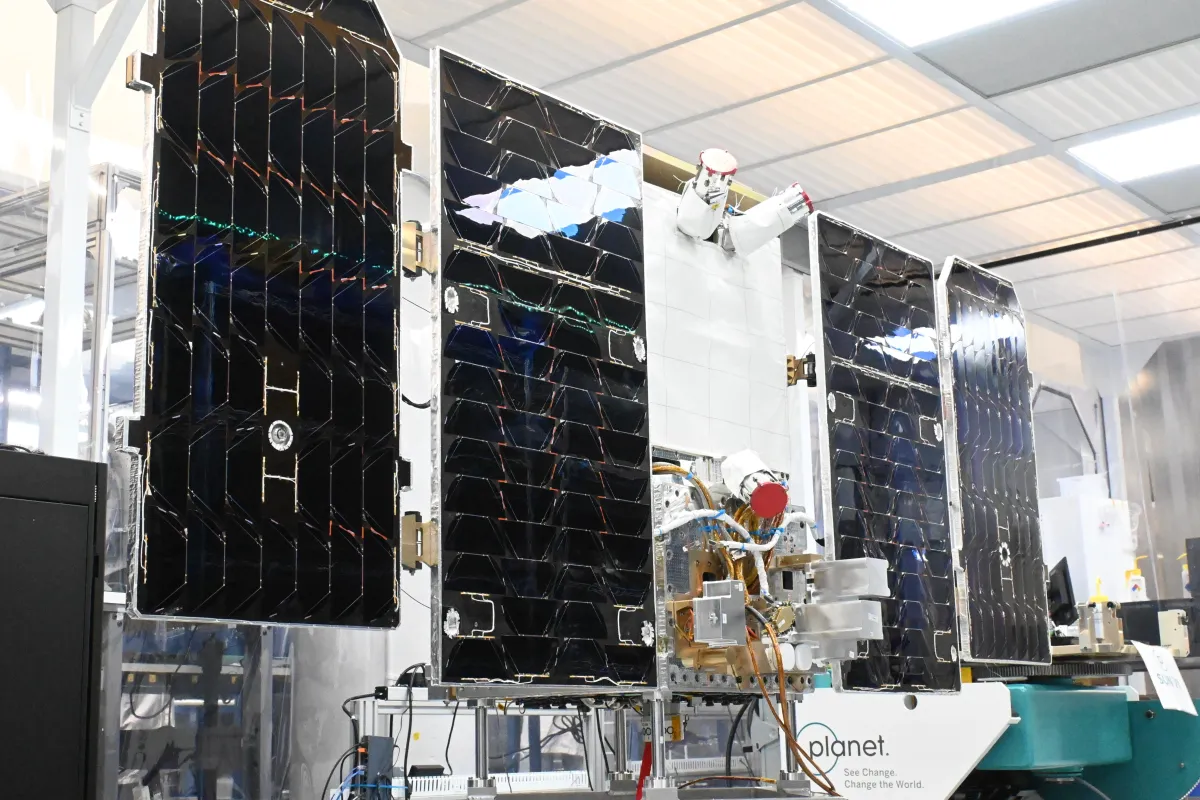
Google’s prototype of its orbital compute satellite took off today onboard a SpaceX rocket launched from California — the first time the tech giant has sent one of its advanced chips into space.
Built by Planet Labs, the satellite will prove that a Google Tensor Processing Unit, its competitor to Nvidia’s GPUs, can function in space. That means supplying a kilowatt of continuous power, cooling the chip, and running a series of models through their paces to see if anything goes wrong.
“We’ve done testing on the ground, but you know, there’s no test that’s completely as good as the real thing,” said Travis Beals, the Google executive managing Project Suncatcher, the tech giant’s plan to develop large-scale compute clusters in orbit around the Earth.
Once commissioned, the satellite will fire up its TPU in 15-minute bursts to avoid straining the satellite’s power and thermal management systems. This satellite is based on a standard platform built by Planet Labs, but the two companies are working on a demo expected to take flight next year that will see two satellites more purpose-built for advanced compute. Those future versions will attempt to collaborate via a laser communications link.
Suncatcher isn’t the only space AI payload on this SpaceX rocket, which is launching more than one hundred different payloads, including missions from Satlyt and Cowboy Space Company.
What sets the Google initiative apart from those startups (and indeed from SpaceX itself) is that it’s a long-term project.
The focus of this “long-term moonshot,” as Beals puts it, is on building for the space infrastructure and AI workloads that will exist in the future. The company envisions a network of 81 satellites flying in close formation, processing in parallel.
“The bandwidth and the latency between TPUs really, really matters when you’re trying to run a multi-rack workload…we’re trying to look ahead to not just what workloads exist today, but where they will be in five years,” Beals said. That’s largely because the rockets required to scale up orbital data centers in a cost-effective way don’t yet exist.
On Thursday, Google also released a peer-reviewed version of its white paper on orbital data centers, one of the most rigorous analyses available of how compute gets to orbit. The paper will be published in Joule.
One of the paper’s most notable aspects is how Google thinks about access to space. Although the researchers stress their analysis isn’t an economic feasibility study, it offers an interesting picture of how the company sees rockets becoming cheaper over time.
Like all data center companies, Google is looking to SpaceX to get its spacecraft off the ground. (Google is also a major investor in SpaceX.)
Arguing that Elon Musk’s rocket builders have achieved a price-reducing “learning curve” of about 20% a year since they launched the Falcon 1 rocket, the authors believe it’s reasonable to expect the company to deliver launch prices close to $200 per kilogram by 2035.
What will it take to do that? Based on the amount of payload launched by the Falcon 9, they think a similar cost-reduction trajectory will require Starship to fly 370,000 tons of payload into orbit. That’s something that would take it about 1,800 launches over the next ten years, or 180 a year—and that’s if it can fly 200 metric tons on each mission.
That’s a big ask for a vehicle that has never flown more than five times in a year. SpaceX predicts the company will be flying far more than that—Elon Musk has suggested Starship could achieve an hourly flight rate in 2029, for example, but Musk says a lot of things.
The good news, at least, in Google’s updated research is that it seems likely that its chips will survive the radiation of space. The company had to redo tests blasting the chips in a particle accelerator after they realized the configuration of the chips provided more shielding than they would actually experience. This produced slightly more errors in the chip’s logic circuitry, but the company is still confident its chips can handle large inference workloads in orbit for the five-year lifespan of a satellite.
“The error rate is very low if you’re thinking about typical inference operations, right? Like one in a million,” Beals said. “On the other hand, it was already problematic for doing, say, some mega-scale training run where you’re going to have many thousands of chips running for months.”
When you purchase through links in our articles, we may earn a small commission. This doesn’t affect our editorial independence.
>
How to watch Maryland vs. Nebraska: TV channel and streaming options for October 3

Anne Hathaway Gets Giddy Over Knicks Surprise on Fallon

Anonymous Content Plans Feature Adaptation Of James Baldwin Biography
-

 movies4 months ago
Search For Canadian TV Actor Stewart McLean Now Homicide Investigation
-

 Fashion9 years ago
These ’90s fashion trends are making a comeback in 2017
-
Fashion9 years ago
According to Dior Couture, this taboo fashion accessory is back
-
Fashion9 years ago
Model Jocelyn Chew’s Instagram is the best vacation you’ve ever had
-
Fashion9 years ago
Emily Ratajkowski channels back-to-school style
-
Fashion9 years ago
9 Celebrities who have spoken out about being photoshopped
-

 Anime4 months ago
Rurouni Kenshin: Hokkaido Arc Manga Takes 1-Issue Break – News
-

 Anime3 months ago
HIDIVE to Stream English Dubs for The World Is Dancing, The Forsaken Saintess and Her Foodie Roadtrip in Another World, The Dangers in My Heart: The Movie Anime – News