
Guillermo del Toro and the cast of ‘Pan’s Labyrinth’ at the world premiere of the film in Cannes on May 27, 2006.
Pascal Le Segretain


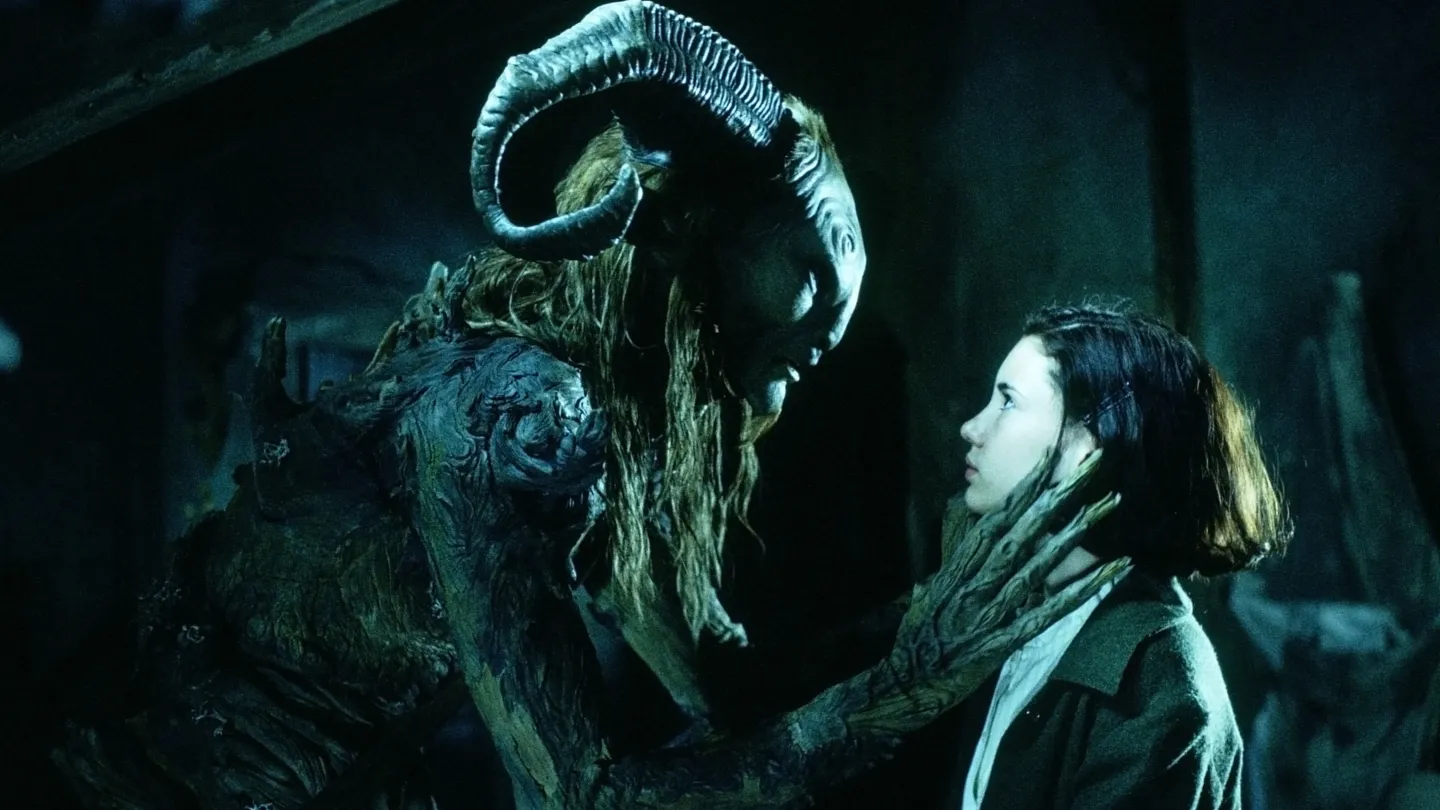
When Guillermo del Toro arrived in Cannes with Pan’s Labyrinth 20 years ago, he was not expecting a triumph. He was expecting to be ignored.
Del Toro’s dark, ravishing fantasy set in Francoist Spain — which had taken years to finance and produce, endured a brutal production and emerged from post barely in time — was the last film to screen in competition at that year’s festival. “A lot of the press was leaving,” del Toro recalls, speaking to The Hollywood Reporter in Cannes, where he returned to present a newly restored 4K version of the movie, as the opening film in the festival’s Cannes Classics selection. “I was thinking: ‘How many people are going to show up for this, on the final day?’ Then the screening was packed, packed!”
What followed is now festival legend. The film ended with what del Toro describes as “an explosion of applause that is the largest and most emotional I’ve ever had in my life” — a standing ovation that ran to 23 minutes, a Cannes record that still stands. “Twenty-three minutes is a commute,” del Toro told the audience at the Classics screening on May 12, in the Debussy Theatre. “You know, like the time to go from your office to your house.”
He was not prepared for it. “Normally Cannes is very circumspect,” he said. “You either get no sound or you get aggressive sound. But rarely do people react to the screen loudly, and then they start reacting. And then it gets more and more emotional.” Standing there, receiving the ovation, del Toro found himself unable to take it in. “In spite of my great body, I’m not used to adulation, it’s very hard for me to take in love,” he told the Cannes audience. “But Alfonso Cuarón was there with me, and he said, ‘Let it in. Let the love get in.’ ”
The journey to that moment had been, by del Toro’s account, extraordinarily difficult. “This was the second-worst filmmaking experience of my life,” he said at the screening, “the first one being making Mimic with the Weinsteins.” Preproduction had been a struggle — “nobody wanted to finance it” — and the production itself piled on additional problems. “It was very difficult in preproduction, difficult production, difficult postproduction. Everything.” They arrived at Cannes, he said, “basically just in time with the print.”
The film they brought was something unlike almost anything else in competition that year. Set in 1944 in the aftermath of the Spanish Civil War, Pan’s Labyrinth follows Ofelia, a young girl living with her pregnant mother and her new husband, a brutal Francoist captain played by Sergi López. In the labyrinthine woods near their military outpost, Ofelia encounters a faun who tells her she is a princess from an enchanted world and gives her three dangerous tasks to complete before she can return to it. Del Toro intertwines her magical quests with the real-world underground struggle of the Spanish Republicans, suggesting — as in much of his work — that imagination is a form of resistance.
Guillermo del Toro and the cast of ‘Pan’s Labyrinth’ at the world premiere of the film in Cannes on May 27, 2006.
Pascal Le Segretain
Ivana Baquero, who played Ofelia, was at the Debussy Theatre for the Cannes Classics screening.
“Ivana was about 10 or 12 when she made the movie,” Del Toro notes. “She’s now 30. And I was 100 pounds lighter.”
Looking back, he sees the 2006 competition — in which Park Chan-wook’s Old Boy also screened in competition — as a turning point for the festival itself. “Old Boy and Pan’s Labyrinth marked a big shift,” he said. “This is early days at Cannes of changing the mentality of the programming from the 10 or 20 directors that normally came to Cannes.” He noted that he had been to Cannes before, with Cronos in 1992, as had fellow Mexican director Alejandro González Iñárritu with Amores Perros, “but always in the sidebar sections, not in competition.” Pan’s Labyrinth and Old Boy were the start of Cannes embracing genre-inflected cinema from beyond Europe and the U.S.
The Cannes premiere of Pan’s Labyrinth, and the momentum it generated, set the film on a path that few could have predicted. It screened next at the New York Film Festival, “another very circumspect festival,” and received another standing ovation. Then Toronto. “It was really the beginning of people realizing there was something there,” del Toro said.
The film went on to receive six Academy Award nominations, winning three — for best cinematography, best art direction and best makeup. Made for under $20 million, it went on to gross $83 million worldwide.
Returning to the film for its 20th anniversary, del Toro found it still held up.
“I was quite taken about how beautifully physical the movie is,” he said. “Back then, just as we did with Frankenstein, I was determined that every set was going to be built. We were going to handmake this movie. We did not shoot on location except for the forest. We built every set, every prop, built every piece of furniture. I wanted it to be, as much as possible, something fabricated. Because there was a sense of design to create a juxtaposition between the imaginary world and the round, warm colors and the cool, straight lines of the captain’s world.” Seeing it again, he said, “I was very impacted, just feeling how the craftsmanship is beautiful.”
Guillermo del Toro directing ‘Pan’s Labyrinth’ stars Sergi López and Maribel Verdú.
Courtesy of Warner Bros.
That includes the film’s at-the-time groundbreaking blend of animatronics, with in-camera and digital visual effects. Del Toro has left them all untouched.
“The only film where I feel I did an effect that failed was on Blade II. There’s a digital shot in there that’s bad, and it will always be bad, because it was not well conceived and it was too ambitious. But there’s nothing I would change in Pan’s Labyrinth.”
The new restoration will release theatrically in the United States via Cineverse and Fathom Entertainment. StudioCanal acquired international rights to the film and will release the restored version theatrically in key territories — Germany, the U.K., France, Benelux, Australia — this autumn, followed by premium Collector’s Editions in those markets. Mexican exhibitor Cinépolis will lead theatrical distribution in Mexico and across Latin America. StudioCanal is handling international sales rights for the restored version.
The theatrical run launches Oct. 9 — del Toro’s birthday.
The October release will also include, for the first time, a 3D version of the film. Del Toro has been working on the conversion for months and it is, by his account, still in progress.
“My idea is, what can have people that experienced it in theaters say, ‘I want to experience it in theaters again’?” he explains. The way he shoots — heavily composed foregrounds — made him feel the material was well-suited to the format. “I always, as when I was watching it and we were placing the fairies in the digital effects, I always felt, ‘Oh, this would be so great if it had depth.’ ” He also saw a conceptual use for it: “I said, ‘Oh, I can use it as an element of depth’ — when she is in the real world, it’s a little more shallow, and when she is in the imaginary world, I can have a little more depth. And I thought it could be used expressively.”
The conversion is being handled by SDFX Studios (formerly Stereo D), the same company del Toro worked with on Pacific Rim. “For me, the best version of Pacific Rim is the Imax 3D version,” he said. “I feel you haven’t seen the movie if you haven’t seen it in Imax 3D.” Calibrating Pan’s Labyrinth to achieve a comparable result has been painstaking. “It is taking many months because it has to be very carefully calibrated. You don’t want to overdo it. You don’t want to underdo it. The separation of elements has to be really carefully done for it to pop.” The 3D, he noted, “is gonna take us a lot of many more months to finish.”
One reason the film continues to find new audiences, del Toro has come to understand, is structural rather than cultural. Unlike most of his other work, Pan’s Labyrinth does not age alongside its fans, but finds purchase with each new generation.
Ivana Baquero and Doug Jones in ‘Pan’s Labyrinth.’
Picturehouse/Courtesy Everett Collection
“If I talk to somebody that likes Hellboy or Blade, they’re 20 years older than when I launched it,” he says. “But if you talk to someone that loves Pan’s Labyrinth, most of the time you get a bunch of them are young people. For some reason it connects with the strength of being young, when the world is telling you that you’re wrong and you know that you’re right. I wanted to put it out in the world in a big way so that I can keep connecting with the spirits that remain young.”
He also has broader convictions about the value of bringing restored films back to cinemas. “I think the future of theatrical is a mixture of reissues and new movies,” he says. “The European model of the art house that exists very much enmeshed in the distribution and exhibition system — it’s such an interesting model, and it doesn’t quite get embraced outside of Europe, but I think it’s very promising.” He reaches back to his own filmgoing past: “I would see the Hammer horror films opening weekend, and then three years later they were back in a double program or something. And it was always great — you wanted to revisit them. You put Road Warrior (1981) out there on a big screen, and I’m there. You put The Devils (1971) by Ken Russell in theaters, I’m there.”
Twenty years after the longest standing ovation in Cannes history, del Toro is still making the same arguments he articulated in Pan’s Labyrinth: ghat imagination is not a luxury, and that we have to resist giving in to fascism, to fear, to the idea that human creativity is replaceable.
“We live in times where they tell us that what we are facing is so formidable that it is useless to resist, and that art can be made by a fucking app,” he told the Cannes crowd ahead of the screening. “I feel [that] like the girl Ofelia in Pan’s Labyrinth, we can hope to leave a mark. If we can put our faith against their faith, and our strength against their strength, there is hope. We have to give in to one of two forces. We can give in to love. We can give in to fear. Never, never, never give in to fear.”
>
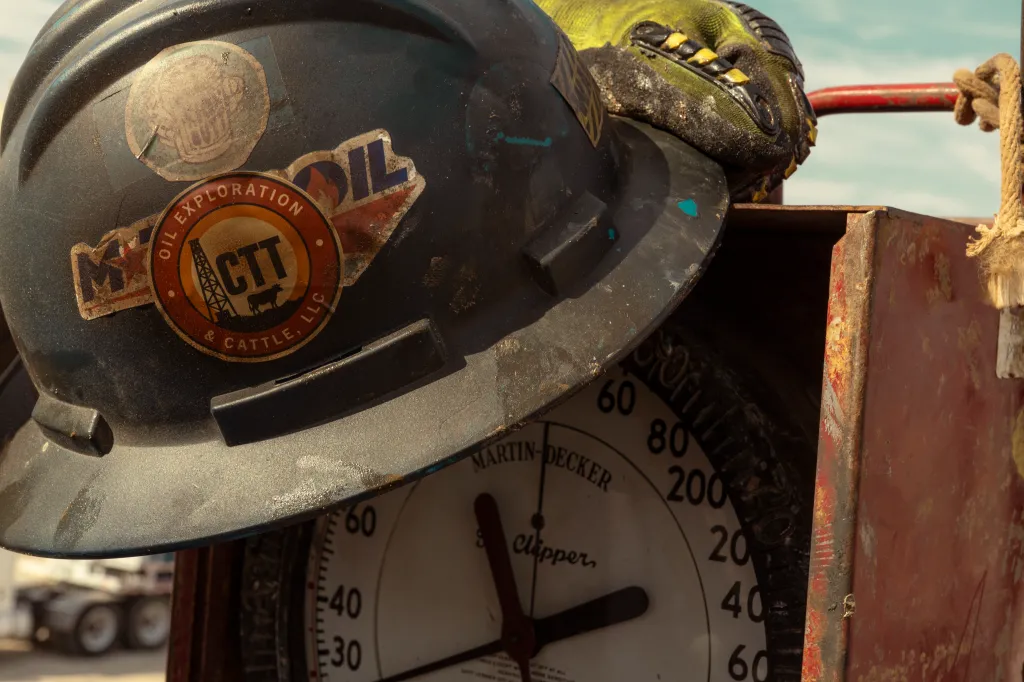
We’ll be seeing more of Colm Feore, Mustafa Speaks, Bobbi Salvor Menuez, and Francesca Xuereb in Season 3 of Landman. All four have been promoted to series regulars as Season 3 productions gets underway in Fort Worth, TX.
They join previously announced new series regular Michael Kelly in Taylor Sheridan‘s hit oil drama series.
Set in the boomtowns of West Texas, Landman is a modern tale of fortune seeking amongst roughnecks and wildcat billionaires – fueling an oil boom so big it’s reshaping the climate, the economy and geopolitics.
In Season 2, as oil rises from the earth, so do secrets – and Tommy Norris’s (Billy Bob Thornton) breaking point may be closer than he realizes. Facing mounting pressure from M-Tex Oil, Cami Miller (Demi Moore), and the shadow of his kin, survival in West Texas isn’t noble – it’s brutal. And sooner or later something’s got to break.
Details of the Season 3 storyline have yet to be revealed.
Starring Billy Bob Thornton and Demi Moore, the cast also includes Andy Garcia, Ali Larter and Sam Elliott, along with Jacob Lofland, Michelle Randolph, Paulina Chávez, Kayla Wallace, Mark Collie, and James Jordan.
Landman is executive produced by Sheridan, David C. Glasser, David Hutkin, Ron Burkle, Bob Yari, Christian Wallace, Billy Bob Thornton, Geyer Kosinski, Michael Friedman, and Stephen Kay. Dan Friedkin and Jason Hoch for Imperative Entertainment, and J.K. Nickell and Megan Creydt for Texas Monthly also executive produce.
Landman is produced by Paramount Television Studios, 101 Studios, and Sheridan’s Bosque Ranch Productions.
>
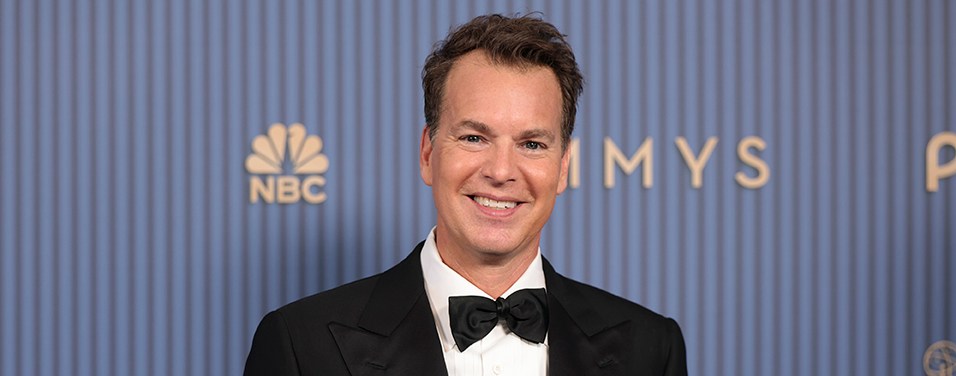
Casey Bloys, Chairman and CEO of HBO and HBO Max Content, jokingly requested some credit for not canceling his appearance at Bloomberg’s Screentime conference Thursday which came at a very awkward time. It was held two days after Paramount‘s streaming chief Cindy Holland’s exit cleared the way for Bloys to take over the combined Paramount+/HBO Max streaming operation but ahead of Paramount’s acquisition of HBO parent WBD officially closing and the merged company’s leadership structure, including Bloys’ exact position and title, being announced.
That led to a series of deflected questions, including whether HBO Max and Paramount+ will be fully merged or bundled.
But Bloys did say that Paramount CEO David Ellison “is very, very excited, very respectful of what the HBO team has done — not just in my tenure, but the entire history of HBO” and that he believes Ellison will “maintain what we’ve done.”
Bloys did address in depth the ongoing TV industry contraction — which the Paramount-WBD merger will likely be contributing to — in the aftermath of the Peak TV era that was driven by the rise of streaming.
“We are an industry in disruption, we used to compete against people who were selling cable subscription or advertising, main product was video entertainment,” he said. “We are now competing against companies that are in very different spaces, have different economics. We’re also on the backside of a bubble bursting, we went from 600 shows to 400, whatever it is. If you just think about those numbers, 200 shows and the average show, depending on how big it is, is a couple of hundred good paying jobs. That’s a catastrophe. That is very hard across the board. That is what it looks like when a bubble bursts. It’s ugly.”
Bloys did admit that the downfall was inevitable, referencing the craze at the height of the market when over 600 scripted series were being made in a year.
“People were greenlighting shows based on an idea, it was not sustainable; you couldn’t make that many shows as an industry and monetize it properly,” Bloys said. “A bubble has some benefits on the way up in terms of people learning on shows because there’s so much work. The downside is really painful.”
It was not all bleak as Bloys had a positive outlook and said that he would still recommend pursuing a career in entertainment because it’s “a lot of fun.”
“My hope is, like any industry that gets disrupted, there is mergers, there is new players coming in,” he said. “Maybe we will find some certainty, some calmness.”
>

The SCAD Savannah Film Festival’s third annual TV Sidebar is set, with four TV program screenings followed by award presentations and conversations with the stars of the series.
The fest, which runs October 24-31 in Savannah, GA will spotlight episodes of The Good Daughter, VisionQuest, Furious and The Lowdown.
Based on Karin Slaughter’s bestselling novel, The Good Daughter stars Meghann Fahy and Rose Byrne. Fahy will receive the Spotlight in Television Award on October 24 at a screening of one of the show’s episodes. In The Good Daughter, Fahy stars as Charlotte “Charlie” Quinn alongside Byrne as Samantha “Sam” Quinn. Written and executive produced by Slaughter and directed by Steph Green, the limited series premieres November 12 on Peacock.
Paul Bettany will receive the Virtuoso Award on October 26 at a screening of Marvel Television’s VisionQuest. The Disney+ series continues the story of Vision following the events of WandaVision, with Bettany returning to the role he has portrayed across the Marvel Cinematic Universe. The actor’s latest superhero installment will close out the trilogy that began with WandaVision, for which he received an Emmy nomination, and Agatha All Along.
Emmy Rossum will receive the Outstanding Achievement in Television Award on October 28 at a screening of the Hulu Original drama series Furious. Created, written and executive produced by Elizabeth Meriwether, the thriller stars Rossum as FBI agent Alice Black, who is on the hunt for a mysterious and calculating female serial killer (Lola Petticrew). The series, on which Rossum serves as an EP, also stars Quincy Tyler Bernstine and Scoot McNairy.
RELATED: ‘The Lowdown’ Gets Season 2 Release Date At FX; First Photos Of Tommy Lee Jones & Betty Gilpin
Ethan Hawke and Sterlin Harjo will receive the Outstanding Collaboration in Television Award on October 30 at a screening of their FX and Hulu series The Lowdown. Created, executive produced, written and directed by Harjo, the Tulsa-set noir series stars Hawke as Lee Raybon, a self-proclaimed “truthstorian” and citizen journalist whose relentless pursuit of the truth continually lands him in trouble.
In addition, Deadline during the fest will present “Below the Line: Scoring for the Screen with the Alliance for Women Film Composers,” a behind-the-scenes look at how today’s most innovative voices are redefining the sound of cinema. The conversation will feature members of the Alliance for Women Film Composers discuss their creative process, the challenges and triumphs of the industry, and the role composers play in bringing depth and resonance to film and television.
>


Search For Canadian TV Actor Stewart McLean Now Homicide Investigation


These ’90s fashion trends are making a comeback in 2017
According to Dior Couture, this taboo fashion accessory is back
Model Jocelyn Chew’s Instagram is the best vacation you’ve ever had
Emily Ratajkowski channels back-to-school style
9 Celebrities who have spoken out about being photoshopped


Rurouni Kenshin: Hokkaido Arc Manga Takes 1-Issue Break – News


HIDIVE to Stream English Dubs for The World Is Dancing, The Forsaken Saintess and Her Foodie Roadtrip in Another World, The Dangers in My Heart: The Movie Anime – News