
Javier Calvo and Javier Ambrossi’s ‘La Bola Negra,’ courtesy of Cannes Film Festival


Spaniards may not crowd the streets by the tens of thousands to celebrate their auteurs the way they do their futbolistas, but there has been a palpable sense of exuberance in the industry this spring about a historic moment for Spanish cinema.
“I wish we lived it like that!” director Rodrigo Sorogoyen joked on the radio about the football analogy, after the April 9 announcement that his new film, The Beloved (El Ser Querido), would join Pedro Almodóvar’s Bitter Christmas (Amarga Navidad) and Javier Calvo and Javier Ambrossi’s La Bola Negra in an unprecedented three-film representation of Spain in this year’s Official Competition at Cannes.
“There’s a certain movement in Spanish cinema,” Festival Director Thierry Frémaux affirmed at the announcement, pointing also to the French release the previous day of Spanish director Carla Simón’s Romería, a 2025 Cannes competition title. “This country has continued to produce formidable artists.”
Spanish productions and co-productions can also be found in Un Certain Regard, Cannes Première, Special Screenings, Critics’ Week and Cannes Selection. The Croisette will be well stocked with the country’s most internationally renowned talents: Javier Bardem stars in The Beloved; Penélope Cruz and Glenn Close appear in La Bola Negra; and rising actress Victoria Luengo co-stars in both Beloved and Bitter Christmas, the latter alongside Barbara Lennie, Leonardo Sbaraglia, Aitana Sánchez-Gijón and Milena Smit.
“It speaks to the great moment Spanish cinema is experiencing,” Almodóvar said following the April announcement — and he should know. He has had a hand in launching many of these talents, and his El Deseo production house co-produced La Bola Negra as well as last year’s Cannes Jury Prize winner and double Oscar nominee Sirāt.
“It’s historical,” agrees Guillermo Farré, Head of Original Films & Spanish Cinema at Movistar Plus+, which co-produced Beloved, La Bola Negra and Sirāt and also backed Bitter Christmas. He notes that while Almodóvar has ensured Spanish cinema’s presence at Cannes at least every few years, this year’s three competition titles represent three different generations of filmmakers — proof, he says, that “Spanish cinema is in a very exceptional situation right now.”
Javier Calvo and Javier Ambrossi’s ‘La Bola Negra,’ courtesy of Cannes Film Festival
Spain is “in vogue,” affirms Elisa Carbonell, CEO of Spanish foreign trade institute ICEX, pointing to the country’s heightened presence at international festivals, markets and awards shows. “We are capable of bringing together craftsmanship, which I think is a luxury now, and innovation.” Spain has proved its creativity, its originality and its reliability. “We are so successful because there is an industry and there is talent.”
“Where Talent Ignites”
That wider moment is captured in the new Where Talent Ignites campaign backed by ICEX’s Audiovisual from Spain initiative, premiering at Cannes. Rather than making claims about Spain’s creative industries, the campaign lets three new short films do the talking — each featuring established and emerging talents across different sectors.
“We wanted to make pieces that demonstrate what our industries are capable of,” Carbonell says. “The audiovisual is the common language that we’re using to talk about other industries, which are also key parts of the audiovisual sector.”
The first short, Flamenco, was unveiled in Rotterdam. Directed by Simón — who is also presiding over the Short Film and La Cinef Jury at Cannes — it features flamenco artists including Rocío Molina, Carmela Greco, Niño de Elche and Angeles Toledano. The second, La Tarara, turns its attention to Spain’s fashion sector. Directed by music video veteran Nicolás Méndez, it stars Ingrid García-Jonsson, Lennie, Rossy de Palma, Arón Piper and Eugenia Silva. The third, La Llama, is an animated short from the duo known as TURBO (Pau López and Gerardo del Hierro), highlighting contemporary designers including Jaime Hayon. All three will be available from May 17 at spainwheretalentignites.com.
“I think it’s a really beautiful initiative, to export that idea of the talent that exists, through stories — especially through short films, where we can empathize with the characters, get involved, and then reflect on what’s happening or what Spain is like,” says Simón. For Flamenco, she wanted to explore the “tension that exists between tradition and the contemporary” through a story revolving around mother and daughter flamenco artists — a theme that also feeds into her flamenco-focused feature film, currently in early development. “It seemed like a good opportunity to start working with people in that world and to try things out,” she says. “It’s been a huge learning experience… I’ve felt very much like a conductor.”
Pedro Almodóvar’s ‘Bitter Christmas,’ courtesy of Cannes Film Festival
Signs of Good Health
This is the second and expanded edition of Where Talent Ignites, following a debut short in 2024 that was viewed more than 19,000 times. The business results are measurable in “international co-productions, financing agreements, more visibility among buyers and international producers… and the international platforms, which are actually increasing their investment in Spain due to the quality,” Carbonell notes.
They can also be measured in the sector exceeding the government’s target when it launched the well-funded Audiovisual Hub in 2021: a 30 percent increase in production by 2025. Spain produced 289 feature films (376 when including co-productions) in 2024 — a 6.6 percent year-on-year increase and the highest volume in the period 2013–2024, according to the Hub’s latest annual report.
Spain also led Europe for streaming commissions, accounting for 17 percent of the total, and was among the biggest beneficiaries of streaming investment in the region between 2015 and 2024, according to the European Audiovisual Observatory. “Competition in Spain is very, very strong, especially with the American streamers,” says Farré. “And the competition starts with the talent.”
The return of local audiences to cinemas is another indicator of health. Box office revenue almost doubled between 2021 and 2024, reaching €484.6 million ($568.5m) in 2024. Cinema attendance ranks fifth in Europe by revenue and fourth by audience numbers, with 760 cinemas and 3,562 screens holding steady.
“Spain is experiencing a great moment, where new and established talents intersect and all genres are being explored,” says Antonio Saura, managing director of sales house Latido Films. Local comedies remain the dominant force at the Spanish box office — led by Santiago Segura’s parenting franchise Father There Is Only One 5 — but local drama is performing well too, with Alejandro Amenábar’s The Captive and Alauda Ruiz de Azúa’s Sundays among the next top earners. “The Spanish box office for Spanish films is another matter entirely,” Saura adds. “It’s improved as well, but like in other countries, that’s largely thanks to local comedies.”
Pegah Ahangarani’s ‘Rehearsals,’ courtesy of Cannes Film Festival
The Spanish Federation of Cinemas reported an 8 percent decline in overall moviegoers last year, but Spanish cinema maintained a healthy 19 percent market share.
Festival & Awards Bump
Spain’s auteur cinema is clearly traveling well, but Saura is candid that “the market is very complicated” for films without strong auteurs or marketing hooks. “In that sense, the support of a festival or a well-defined genre is essential.” He notes that Cannes interest is often buoyed by French sales agents and co-producers attached to Spanish films.
The festival effect is real. Ruiz de Azúa says Sundays benefited enormously from its Golden Shell win in San Sebastián. After taking five top Goya Awards in February, it was expanded to more theaters and saw a box office bump even after becoming available on Movistar Plus+. “As an independent production, we have fewer tools to give the film visibility,” she says. “Awards and festivals benefit all kinds of films, but specifically films that have fewer channels and fewer resources.”
Maria Martínez Bayona is premiering her debut feature The End of It in Cannes Première — a sci-fi story set in a future where aging and death are optional, in which a 250-year-old former artist decides she would like to die. The ambitious €8 million ($9.3 million) multi-country co-production, starring Rebecca Hall, Noomi Rapace and Gael García Bernal, took years to assemble. “It was quite a shock, finishing the film and then they called us and told us we were going to Cannes.”
For Farré, “Cannes has become the go-to place if you want to turn the launch of a movie into a cultural event.” Sirāt is his example: rather than releasing directly to Movistar’s platform, the film was given space to build an international career first. “We need the movies to have the space to connect with audiences and become relevant.” Sorogoyen’s The Beasts offers another template: after its Cannes Première, it swept the 2023 Goyas and earned a César for Best Foreign Film.
“The Envy of Europe”
While the Audiovisual Hub’s initial funds closed out in 2025, Carbonell says the money was spent “intelligently,” citing an estimated return of €9 per euro invested. She points to the new Spanish Technological Transformation Society (SETT) investment fund as the next vehicle for mobilizing capital and attracting foreign and private investment.
‘The End of It,’ courtesy of Cannes Film Festival
“Spain is the envy of Europe,” says Adrià Monés, CEO of Fasten Films, which co-produced three films from female directors at this year’s Cannes: Bayona’s The End of It; Laïla Marrakchi’s Spain-set immigrant tale La Más Dulce in Un Certain Regard; and Iranian director Pegah Ahangarani’s Rehearsals for a Revolution in Special Screenings. Monés points to Spain’s incentives, subsidies, platform investment, film school talent and strong technical crews as the pillars of what he calls “the perfect ecosystem, not too fragile despite all its problems.” He acknowledges that things could shift with changes in political support, but says the foundation is solid. “We’re attracting so many international productions to Spain, it’s very fertile ground for training young people. It’s a fabric, a foundation of growth.”
Carbonell agrees: “The audiovisual sector in Spain has transformed itself. Institutions understand that this is a key sector… I think we laid the base for something that’s going to scale, and we’re very happy.”
>

Matthew McConaughey shows off his vocal skills (and some hidden banjo talents) with his latest role in The Rivals of Amziah King.
On Friday, Lakeshore Records released the single and music video for “Quill” from the original motion picture soundtrack, performed by the Oscar-winning and co-star Ben Hardesty, also featuring Miranda Zickler, Angelina LookingGlass and Andrea Pister.
Set in the backwoods of Oklahoma, The Rivals of Amziah King follows the musically gifted Amaziah King (McConaughey) and his bluegrass-playing band of misfits while overseeing the premier honey-making operation in town. When Amaziah’s estranged foster daughter unexpectedly returns, he leaps at the chance to reconnect and create a family business. But the honey game is ruthless, and Amaziah’s rivals threaten to destroy everything he has built.
Premiering Aug. 14 in theaters, the Andrew Patterson-written-and-directed drama also stars Angelina LookingGlass, Cole Sprouse, Jake Horowitz, Tony Revolori and Kurt Russell.
Producers are David Heyman, Teddy Schwarzman, Jeffrey Clifford, Michael Heimler, James Montague and Will Greenfield.
>
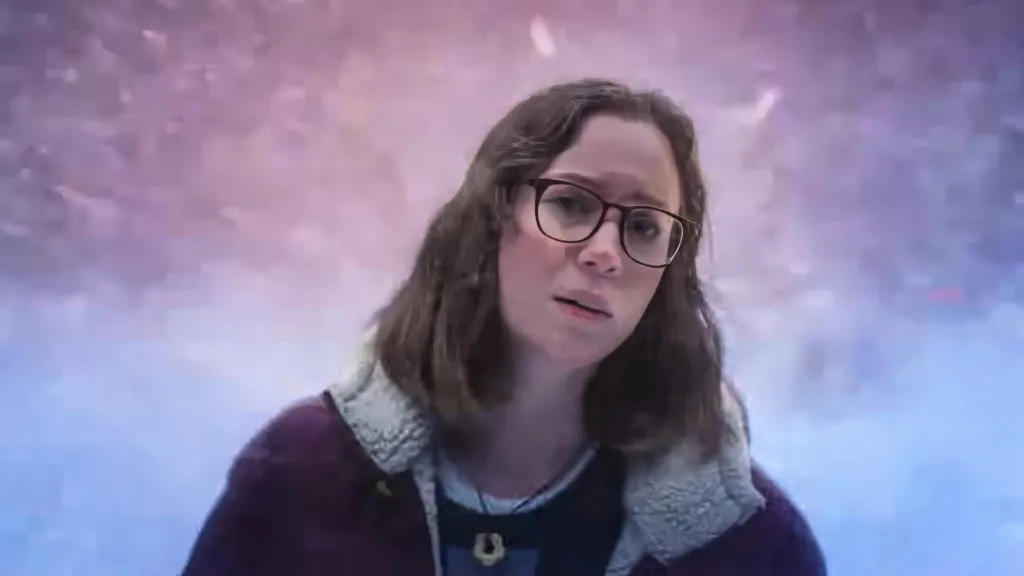
With their latest directorial outing, Jane Schoenbrun used subtle pieces of nostalgia to deconstruct the slasher genre.
The Teenage Sex and Death at Camp Miasma writer/director explained to Deadline that they wanted to create “a mindset where you can really enjoy something scary,” noting the frequent symbolism of candy and junk food as providing an atmosphere “that’s actually safe” while diving into a horror movie or exploring sexuality after trauma.
“There is this idea that if it gets too real, you can turn it off, that you’re exploring something dangerous, doing it in a way that’s actually safe,” said Schoenbrun, who is non-binary. “Which in my experience of coming into my sexual identity post-transition, kind of required some gummy candy on hand. What I mean by that is, even if we’re going to be exploring scary and vulnerable and potentially embarrassing, triggering parts of ourselves, we trust each other well enough to know that at any moment, we can be like, ‘Let’s stop, we gotta just eat some fucking gummies.’”
In Schoenbrun’s latest film, Hannah Einbinder stars as queer director Kris, who is tapped to helm a new installment of the long-running Camp Miasma horror franchise. While courting Billy Presley (Gillian Anderson), the actress who played the “final girl” in the original film, to reprise her role, the pair spirals into a psychosexual frenzy as the slasher’s killer, Little Death (Jack Haven), comes to life.
Acknowledging the problematic trans representation of horror films like Psycho (1960), Sleepaway Camp (1983), The Silence of the Lambs (1991) and Texas Chainsaw Massacre: The Next Generation (1995), Schoenbrun admitted the genre has been “catnip to me since I was 10 years old,” and they jumped at the chance to direct their own.

“So many slashers do have this sense of humor, and even if they’re not overtly meta like the Scream movies are, they’re so aware of their own tropes and the sort of rituals … And I just loved that from a young age and loved all of the little rituals within it, and so, getting to make my own is just like play and joy,” they explained.
“But it also felt like the perfect way to talk about sex and to talk about my experience as a trans person post-transition, learning how to come into a sexual identity that I could feel comfortable within, because so many of these movies are obviously deeply engaged in gender and sexual roles, and these movies have so much to say for better or for worse about deviants,” said Schoenbrun. “It is there in the DNA of the slasher genre that these movies are talking about fear and desire, gender and sexuality, normativity and deviance. And that’s all swimming in the toxic soup of the genre, so I wanted to remake it in my own language.”
Read on about Jane Schoenbrun’s love letter to the slasher genre with Teenage Sex and Death at Camp Miasma, now playing in theaters.
DEADLINE: It was really fun to see the slasher genre through your eyes. Tell me about finding inspiration in that genre and “final girls.”
JANE SCHOENBRUN: I mean, it was the easiest thing in the world because it’s just one of those genres that has been catnip to me since I was 10 years old. I just raided the horror section of the video store as a kid from an age when I really shouldn’t have been doing that, like in 5th grade, I watched in the span of about one week, every Nightmare on Elm Street movie. I think that I was always drawn to movies and really anything entertainment where it felt forbidden in some way, like the thing on the tape, how is that even allowed? And that’s the thing that I love about a lot of my favorite slashers. Don’t get me wrong, I love like brutal ones, like I love Texas Chainsaw, that’s a nasty movie at its core, and that’s what’s so special about it. But so many slashers do have this sense of humor, and even if they’re not overtly meta like the Scream movies are, they’re so aware of their own tropes and the sort of rituals of, OK, what’s the most outrageous way that like these like dumb kids can get killed? But watching it, it’s not about fear a lot of the time, it’s about joy and celebration. And I just loved that from a young age and loved all of the little rituals within it, and so, getting to make my own is just like play and joy. But it also felt like the perfect way to talk about sex and to talk about my experience as a trans person post-transition, learning how to come into a sexual identity that I could feel comfortable within, because so many of these movies are obviously deeply engaged in gender and sexual roles, and these movies have so much to say for better or for worse about deviants, whether that be Norman Bates or Buffalo Bill or Sleepway Camp or Jason, Michael Myers, Leatherface in drag. It is there in the DNA of the slasher genre that these movies are talking about fear and desire, gender and sexuality, normativity and deviance. And that’s all swimming in the toxic soup of the genre, so I wanted to remake it in my own language.

DEADLINE: I’m curious about the symbolism of all the processed junk food and the chandelier of wrappers.
SCHOENBRUN: The junk food in the movie, I forget when it found its way in there. It’s like so much of the movie is about, like I said, ritual, about being in a mindset where you can really enjoy something scary, whether that be Kris [Hannah Einbinder] in bed, with, you know, with Raisinets and the popcorn, watching a schlocky horror movie, or the two characters learning how to be present and enjoy sex after a lot of trauma. There is this idea that if it gets too real, you can turn it off, that you’re exploring something dangerous, doing it in a way that’s actually safe. Which in my experience of coming into my sexual identity post-transition, kind of required some gummy candy on hand. What I mean by that is, even if we’re going to be exploring scary and vulnerable and potentially embarrassing, triggering parts of ourselves, we trust each other well enough to know that at any moment, we can be like, “Let’s stop, we gotta just eat some fucking gummies.”
DEADLINE: And one thing I really love—I just feel like it’s a theme in your work—is how it depicts the way media and entertainment influence us. Why does that inspire you?
SCHOENBRUN: I think it comes from a fascination and sensitivity to the complex relationship between what we think of as fiction and what we think of as reality, which we tend to, as a society, think of as pointing in one direction. Like, reality dictates fiction, not vice-versa, but when you actually look at the way the world works, it’s like one echoes off the other. And I think a complicated, sometimes terrifying and sometimes beautiful way, where the fiction, the cultural norms, the things we grow up looking at on our screens, the roles that we’re told people play, they kind of inspire us to create reality. There’s something liberating when you start thinking in that way. I think it’s a way of thinking that we as a culture, could do a lot more of. To think about the idea of fiction inspiring reality just as much as reality is inspiring fiction, is a potential path to liberating us from this hellscape that they’re telling us is the only way the world can be.

DEADLINE: And I know you have the Secretary reading. Tell me what it’s been like prepping for that and why you all chose that movie.
SCHOENBRUN: I mean, that was such a huge influence on on Miasma. There just aren’t that many fun and funny movies about deviant sex. And just the way that movie is like feather light while talking about really raw and taboo things, it is just really inspiring to me. And the dynamic between those two main characters is definitely one that had a lot of influence on on Kris and Billy’s [Gillian Anderson] relationship in Miasma. And it’s already to me a very queer movie in its way, but having Gillian reading the James Spader part and Hannah reading the Maggie Gyllenhaal part, I think it’s just gonna be like a very unique joy. Honestly, we’ve been prepping a little bit, but I think it’s just gonna be about getting up there and feeling the chemistry of it all, and just letting these folks who we have all gotten to know each other really, really well, but we haven’t actually done anything wacky and creative like that in a while, like as a reunion, it’s gonna be a real blast, I think.
>
With their latest directorial outing, Jane Schoenbrun used subtle pieces of nostalgia to deconstruct the slasher genre.
The Teenage Sex and Death at Camp Miasma writer/director explained to Deadline that they wanted to create “a mindset where you can really enjoy something scary,” noting the frequent symbolism of candy and junk food as providing an atmosphere “that’s actually safe” while diving into a horror movie or exploring sexuality after trauma.
“There is this idea that if it gets too real, you can turn it off, that you’re exploring something dangerous, doing it in a way that’s actually safe,” said Schoenbrun, who is non-binary. “Which in my experience of coming into my sexual identity post-transition, kind of required some gummy candy on hand. What I mean by that is, even if we’re going to be exploring scary and vulnerable and potentially embarrassing, triggering parts of ourselves, we trust each other well enough to know that at any moment, we can be like, ‘Let’s stop, we gotta just eat some fucking gummies.’”
In Schoenbrun’s latest film, Hannah Einbinder stars as queer director Kris, who is tapped to helm a new installment of the long-running Camp Miasma horror franchise. While courting Billy Presley (Gillian Anderson), the actress who played the “final girl” in the original film, to reprise her role, the pair spirals into a psychosexual frenzy as the slasher’s killer, Little Death (Jack Haven), comes to life.
Acknowledging the problematic trans representation of horror films like Psycho (1960), Sleepaway Camp (1983), The Silence of the Lambs (1991) and Texas Chainsaw Massacre: The Next Generation (1995), Schoenbrun admitted the genre has been “catnip to me since I was 10 years old,” and they jumped at the chance to direct their own.
“So many slashers do have this sense of humor, and even if they’re not overtly meta like the Scream movies are, they’re so aware of their own tropes and the sort of rituals … And I just loved that from a young age and loved all of the little rituals within it, and so, getting to make my own is just like play and joy,” they explained.
“But it also felt like the perfect way to talk about sex and to talk about my experience as a trans person post-transition, learning how to come into a sexual identity that I could feel comfortable within, because so many of these movies are obviously deeply engaged in gender and sexual roles, and these movies have so much to say for better or for worse about deviants,” said Schoenbrun. “It is there in the DNA of the slasher genre that these movies are talking about fear and desire, gender and sexuality, normativity and deviance. And that’s all swimming in the toxic soup of the genre, so I wanted to remake it in my own language.”
Read on about Jane Schoenbrun’s love letter to the slasher genre with Teenage Sex and Death at Camp Miasma, now playing in theaters.
DEADLINE: It was really fun to see the slasher genre through your eyes. Tell me about finding inspiration in that genre and “final girls.”
JANE SCHOENBRUN: I mean, it was the easiest thing in the world because it’s just one of those genres that has been catnip to me since I was 10 years old. I just raided the horror section of the video store as a kid from an age when I really shouldn’t have been doing that, like in 5th grade, I watched in the span of about one week, every Nightmare on Elm Street movie. I think that I was always drawn to movies and really anything entertainment where it felt forbidden in some way, like the thing on the tape, how is that even allowed? And that’s the thing that I love about a lot of my favorite slashers. Don’t get me wrong, I love like brutal ones, like I love Texas Chainsaw, that’s a nasty movie at its core, and that’s what’s so special about it. But so many slashers do have this sense of humor, and even if they’re not overtly meta like the Scream movies are, they’re so aware of their own tropes and the sort of rituals of, OK, what’s the most outrageous way that like these like dumb kids can get killed? But watching it, it’s not about fear a lot of the time, it’s about joy and celebration. And I just loved that from a young age and loved all of the little rituals within it, and so, getting to make my own is just like play and joy. But it also felt like the perfect way to talk about sex and to talk about my experience as a trans person post-transition, learning how to come into a sexual identity that I could feel comfortable within, because so many of these movies are obviously deeply engaged in gender and sexual roles, and these movies have so much to say for better or for worse about deviants, whether that be Norman Bates or Buffalo Bill or Sleepway Camp or Jason, Michael Myers, Leatherface in drag. It is there in the DNA of the slasher genre that these movies are talking about fear and desire, gender and sexuality, normativity and deviance. And that’s all swimming in the toxic soup of the genre, so I wanted to remake it in my own language.
DEADLINE: I’m curious about the symbolism of all the processed junk food and the chandelier of wrappers.
SCHOENBRUN: The junk food in the movie, I forget when it found its way in there. It’s like so much of the movie is about, like I said, ritual, about being in a mindset where you can really enjoy something scary, whether that be Kris [Hannah Einbinder] in bed, with, you know, with Raisinets and the popcorn, watching a schlocky horror movie, or the two characters learning how to be present and enjoy sex after a lot of trauma. There is this idea that if it gets too real, you can turn it off, that you’re exploring something dangerous, doing it in a way that’s actually safe. Which in my experience of coming into my sexual identity post-transition, kind of required some gummy candy on hand. What I mean by that is, even if we’re going to be exploring scary and vulnerable and potentially embarrassing, triggering parts of ourselves, we trust each other well enough to know that at any moment, we can be like, “Let’s stop, we gotta just eat some fucking gummies.”
DEADLINE: And one thing I really love—I just feel like it’s a theme in your work—is how it depicts the way media and entertainment influence us. Why does that inspire you?
SCHOENBRUN: I think it comes from a fascination and sensitivity to the complex relationship between what we think of as fiction and what we think of as reality, which we tend to, as a society, think of as pointing in one direction. Like, reality dictates fiction, not vice-versa, but when you actually look at the way the world works, it’s like one echoes off the other. And I think a complicated, sometimes terrifying and sometimes beautiful way, where the fiction, the cultural norms, the things we grow up looking at on our screens, the roles that we’re told people play, they kind of inspire us to create reality. There’s something liberating when you start thinking in that way. I think it’s a way of thinking that we as a culture, could do a lot more of. To think about the idea of fiction inspiring reality just as much as reality is inspiring fiction, is a potential path to liberating us from this hellscape that they’re telling us is the only way the world can be.
DEADLINE: And I know you have the Secretary reading. Tell me what it’s been like prepping for that and why you all chose that movie.
SCHOENBRUN: I mean, that was such a huge influence on on Miasma. There just aren’t that many fun and funny movies about deviant sex. And just the way that movie is like feather light while talking about really raw and taboo things, it is just really inspiring to me. And the dynamic between those two main characters is definitely one that had a lot of influence on on Kris and Billy’s [Gillian Anderson] relationship in Miasma. And it’s already to me a very queer movie in its way, but having Gillian reading the James Spader part and Hannah reading the Maggie Gyllenhaal part, I think it’s just gonna be like a very unique joy. Honestly, we’ve been prepping a little bit, but I think it’s just gonna be about getting up there and feeling the chemistry of it all, and just letting these folks who we have all gotten to know each other really, really well, but we haven’t actually done anything wacky and creative like that in a while, like as a reunion, it’s gonna be a real blast, I think.
>


Search For Canadian TV Actor Stewart McLean Now Homicide Investigation


These ’90s fashion trends are making a comeback in 2017
According to Dior Couture, this taboo fashion accessory is back
Model Jocelyn Chew’s Instagram is the best vacation you’ve ever had
Your comprehensive guide to this fall’s biggest trends
9 Celebrities who have spoken out about being photoshopped
Emily Ratajkowski channels back-to-school style
A photo diary of the nightlife scene from LA To Ibiza
