
movies
‘Bitter Christmas’ Review: Pedro Almodóvar Reflects on Art and Ethics


Pedro Almodóvar’s 2019 drama Pain and Glory is a late-career knockout that’s among the great Spanish iconoclast’s most introspective, emotionally candid work. It casts a never-better Antonio Banderas as a surrogate for the director, exploring creativity, physical suffering, addiction and memory with startling vulnerability and poignancy that stings. In Bitter Christmas (Amarga Navidad), Almodóvar again draws from a highly personal well, but this time dilutes the pathos by splitting his proxy in two — a director wrestling with a script and the fictional filmmaker intended to be its subject.
A return to Spanish-language cinema after his first feature in English, The Room Next Door, Almodóvar’s new movie is a customarily elegant exercise. It’s intricately structured over two timelines two decades apart that fit together like a puzzle; beautifully acted by a cast of both regulars and newcomers; dripping in visual style; and surging with intense melodrama, enveloped in a sumptuously turbulent score by the director’s indispensable longtime composer Alberto Iglesias.
Bitter Christmas
The Bottom Line
More pain, less glory.
Venue: Cannes Film Festival (Competition)
Cast: Bárbara Lennie, Leonardo Sbaraglia, Aitana Sánchez-Gijón, Victoria Luengo, Patrick Criado, Milena Smit, Quim Gutiérrez, Rossy de Palma, Carmen Machi, Gloria Muñoz, Amaia Romero
Director-screenwriter: Pedro Almodóvar
Rated R,
1 hour, 52 minutes
Perhaps fittingly, however, given the frequent appearance onscreen of text in bold red letters, much of it to be deleted or rewritten, the material sometimes seems stuck to the page. The feeling emerges that while it presumably is cathartic for Almodóvar, an artist reflecting on his work and its emotional cost — to the people closest to him even more than himself — it stays somewhat at a distance for the audience, compelling but seldom affecting.
For many of us, even mid-tier Almodóvar is superior to a lot of filmmakers’ peak work, so there are always going to be rewards. In this case, one of the biggest is Antxón Gómez’s aesthetically intoxicating production design (there’s not a single home in this film I wouldn’t kill to live in). Together with Paco Delgado’s stylish costumes, the splashes of eye-popping color and eccentric décor hint at sides the characters tend to keep hidden.
There’s also understated humor and even an extended display of glistening male pulchritude that seem like winking signals from an auteur whose appetite for pleasure has not been extinguished by the anxieties clearly plaguing him. But despite moments of fun, Bitter Christmas is a downbeat film.
It feels confessional in its portrait of a director fearing that his creative tank is running low on ideas and interrogating himself about an artist’s right to feed off the troubles of his friends, like a trauma vampire. But that internal conflict doesn’t offer much for the audience to latch onto, though that’s no fault of Leonardo Sbaraglia, the charismatic Argentinian actor playing Almodóvar’s immediate stand-in, Raúl.
Sbaraglia brings warmth and empathy to a double-edged character who gives off an air of practiced contentment but has sealed himself off in a bubble. He lives in an airy villa flanked by a Hockney-esque swimming pool where his devoted younger partner, Santi (Quim Gutiérrez), swims laps, though his main confidante is his friend and longtime assistant Mónica (Aitana Sánchez-Gijón). She routinely reels off a list of invites to accept honorary awards at international film festivals, sometimes with a generous fee attached, all of which Raúl routinely declines.
The protagonist of his screenplay, set in 2004, is Elsa (Bárbara Lennie), who rolls her eyes at being called a “cult director,” quickly clarifying that she made two unsuccessful movies that have a small but ardent fanbase and now directs commercials. An early scene in which Elsa and her devoted younger partner Beau (Patrick Criado) explain what a cult director is to a curious hospital doctor (delightful Carmen Machi) is a welcome shot of humor.
The doctor recognizes Elsa but also hunky Beau, the latter from his slutty routine at a bachelorette party. Beau, whose real name is Bonifacio, is a fireman who sidelines as a stripper — Almodóvar treats us to a full performance at the club where he works, driving a bridal party to paroxysms of squealing excitement as he sheds clothes and gyrates to Grace Jones singing “I’ve Seen That Face Before.” The act that follows Beau strips to the Amanda Lear disco banger “Run Baby Run,” leaving no doubt that this is still very much an Almodóvar joint. The melodrama at times bleeds into moroseness, but it’s great to see he hasn’t forsaken his flair for retro camp.
Like Raúl, and Almodóvar before him, Elsa is still mourning the loss of her mother. She suffers from acute migraines and panic attacks, and Beau could not be more attentive to her care. In one lovely interlude he takes her to the swanky home of her friend Gabriela, played by Rossy de Palma, a glorious callback to vintage Almodóvar. Like a madrileña Auntie Mame, Gabriela is busy hosting what seems like one of an endless series of fabulous parties, but she pauses long enough to give Elsa half her stash of heavy-duty prescription painkillers and insist that she rest in a quiet bedroom while they take effect.
A favorite Almodóvarian muse is the late Mexican singer Chavela Vargas, whose raw rancheras have often been used in his work to heighten emotions. (The movie takes its title from one of them.) That happens twice here — first when a party guest (popular singer Amaia Romero) visits Elsa in Gabriela’s bedroom, crooning “Las Simples Cosas” (“Love is simple / And the simple things are devoured by time”); and soon after when Elsa visits her friend Patrizia (Victoria Luengo), who plays a raspy late-in-life Chavela performance of “La Llorona” on the stereo.
But the ravishing melancholy of those rancheras doesn’t correspond to a similar depth of feeling in the narrative(s). A change of setting when Elsa takes Patrizia to stay in a luxury rental on the volcanic island of Lanzarote brings different visual textures — DP Pau Esteve Birba takes full advantage of the black lava fields patterned by the wind — but the movie’s parallel-plotline scheme becomes more mechanical as Elsa, too, starts working on a screenplay.
One of the better scenes happens when Patrizia, who believes her husband is cheating on her, bristles at being used as fodder for Elsa’s script. Even more so when Elsa gives a scorching assessment of her marriage. Patrizia’s angry departure makes way for the arrival of Natalia (Milena Smit), another depressed friend who retreated to her childhood pueblo with her mother following a devastating loss.
Almodóvar and editor Teresa Font handle the transitions between the two time periods with graceful fluidity. But the overlap between life and art yields a disappointingly muted payoff. That’s despite invigorating fireworks when Mónica — after leaving to care for her ailing partner, Elena, taking a draft of Raúl’s screenplay with her to read — returns enraged by his insensitivity.
Mónica lets him have it for using Elena’s tragic circumstances as dramatic fuel. He responds defensively, insisting it’s pure fiction and that she’s overreacting, which triggers her to eviscerate him over the laziness behind his creative crisis. She even lashes into him about Santi, of whom she feels protective, while Raúl treats him the same way Elsa treats Beau — as a person with no identity beyond that of adoring companion.
Sánchez-Gijón (along with Smit, a standout in Parallel Mothers) is magnificent in these fierce scenes, which ripple with the blunt honesty of a director reassessing some of the work that made him famous. But Bitter Christmas feels like a tortured analysis construct, in which Almodóvar — normally the most generous of artists — is working things out in his own head rather than coaxing his audience in to share the experience.
>

Matthew McConaughey shows off his vocal skills (and some hidden banjo talents) with his latest role in The Rivals of Amziah King.
On Friday, Lakeshore Records released the single and music video for “Quill” from the original motion picture soundtrack, performed by the Oscar-winning and co-star Ben Hardesty, also featuring Miranda Zickler, Angelina LookingGlass and Andrea Pister.
Set in the backwoods of Oklahoma, The Rivals of Amziah King follows the musically gifted Amaziah King (McConaughey) and his bluegrass-playing band of misfits while overseeing the premier honey-making operation in town. When Amaziah’s estranged foster daughter unexpectedly returns, he leaps at the chance to reconnect and create a family business. But the honey game is ruthless, and Amaziah’s rivals threaten to destroy everything he has built.

Premiering Aug. 14 in theaters, the Andrew Patterson-written-and-directed drama also stars Angelina LookingGlass, Cole Sprouse, Jake Horowitz, Tony Revolori and Kurt Russell.
Producers are David Heyman, Teddy Schwarzman, Jeffrey Clifford, Michael Heimler, James Montague and Will Greenfield.
>
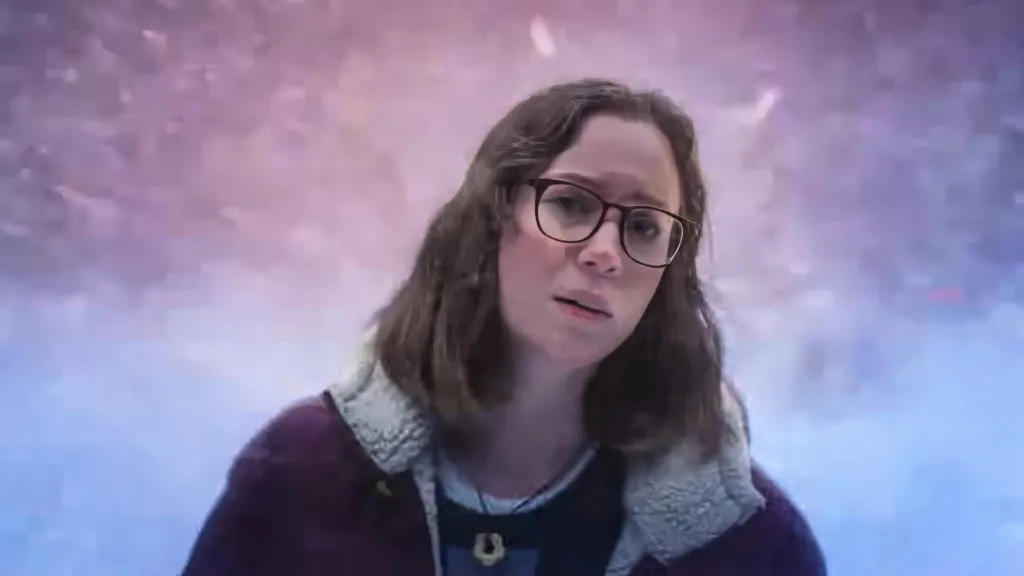
With their latest directorial outing, Jane Schoenbrun used subtle pieces of nostalgia to deconstruct the slasher genre.
The Teenage Sex and Death at Camp Miasma writer/director explained to Deadline that they wanted to create “a mindset where you can really enjoy something scary,” noting the frequent symbolism of candy and junk food as providing an atmosphere “that’s actually safe” while diving into a horror movie or exploring sexuality after trauma.
“There is this idea that if it gets too real, you can turn it off, that you’re exploring something dangerous, doing it in a way that’s actually safe,” said Schoenbrun, who is non-binary. “Which in my experience of coming into my sexual identity post-transition, kind of required some gummy candy on hand. What I mean by that is, even if we’re going to be exploring scary and vulnerable and potentially embarrassing, triggering parts of ourselves, we trust each other well enough to know that at any moment, we can be like, ‘Let’s stop, we gotta just eat some fucking gummies.’”
In Schoenbrun’s latest film, Hannah Einbinder stars as queer director Kris, who is tapped to helm a new installment of the long-running Camp Miasma horror franchise. While courting Billy Presley (Gillian Anderson), the actress who played the “final girl” in the original film, to reprise her role, the pair spirals into a psychosexual frenzy as the slasher’s killer, Little Death (Jack Haven), comes to life.
Acknowledging the problematic trans representation of horror films like Psycho (1960), Sleepaway Camp (1983), The Silence of the Lambs (1991) and Texas Chainsaw Massacre: The Next Generation (1995), Schoenbrun admitted the genre has been “catnip to me since I was 10 years old,” and they jumped at the chance to direct their own.

“So many slashers do have this sense of humor, and even if they’re not overtly meta like the Scream movies are, they’re so aware of their own tropes and the sort of rituals … And I just loved that from a young age and loved all of the little rituals within it, and so, getting to make my own is just like play and joy,” they explained.
“But it also felt like the perfect way to talk about sex and to talk about my experience as a trans person post-transition, learning how to come into a sexual identity that I could feel comfortable within, because so many of these movies are obviously deeply engaged in gender and sexual roles, and these movies have so much to say for better or for worse about deviants,” said Schoenbrun. “It is there in the DNA of the slasher genre that these movies are talking about fear and desire, gender and sexuality, normativity and deviance. And that’s all swimming in the toxic soup of the genre, so I wanted to remake it in my own language.”
Read on about Jane Schoenbrun’s love letter to the slasher genre with Teenage Sex and Death at Camp Miasma, now playing in theaters.
DEADLINE: It was really fun to see the slasher genre through your eyes. Tell me about finding inspiration in that genre and “final girls.”
JANE SCHOENBRUN: I mean, it was the easiest thing in the world because it’s just one of those genres that has been catnip to me since I was 10 years old. I just raided the horror section of the video store as a kid from an age when I really shouldn’t have been doing that, like in 5th grade, I watched in the span of about one week, every Nightmare on Elm Street movie. I think that I was always drawn to movies and really anything entertainment where it felt forbidden in some way, like the thing on the tape, how is that even allowed? And that’s the thing that I love about a lot of my favorite slashers. Don’t get me wrong, I love like brutal ones, like I love Texas Chainsaw, that’s a nasty movie at its core, and that’s what’s so special about it. But so many slashers do have this sense of humor, and even if they’re not overtly meta like the Scream movies are, they’re so aware of their own tropes and the sort of rituals of, OK, what’s the most outrageous way that like these like dumb kids can get killed? But watching it, it’s not about fear a lot of the time, it’s about joy and celebration. And I just loved that from a young age and loved all of the little rituals within it, and so, getting to make my own is just like play and joy. But it also felt like the perfect way to talk about sex and to talk about my experience as a trans person post-transition, learning how to come into a sexual identity that I could feel comfortable within, because so many of these movies are obviously deeply engaged in gender and sexual roles, and these movies have so much to say for better or for worse about deviants, whether that be Norman Bates or Buffalo Bill or Sleepway Camp or Jason, Michael Myers, Leatherface in drag. It is there in the DNA of the slasher genre that these movies are talking about fear and desire, gender and sexuality, normativity and deviance. And that’s all swimming in the toxic soup of the genre, so I wanted to remake it in my own language.

DEADLINE: I’m curious about the symbolism of all the processed junk food and the chandelier of wrappers.
SCHOENBRUN: The junk food in the movie, I forget when it found its way in there. It’s like so much of the movie is about, like I said, ritual, about being in a mindset where you can really enjoy something scary, whether that be Kris [Hannah Einbinder] in bed, with, you know, with Raisinets and the popcorn, watching a schlocky horror movie, or the two characters learning how to be present and enjoy sex after a lot of trauma. There is this idea that if it gets too real, you can turn it off, that you’re exploring something dangerous, doing it in a way that’s actually safe. Which in my experience of coming into my sexual identity post-transition, kind of required some gummy candy on hand. What I mean by that is, even if we’re going to be exploring scary and vulnerable and potentially embarrassing, triggering parts of ourselves, we trust each other well enough to know that at any moment, we can be like, “Let’s stop, we gotta just eat some fucking gummies.”
DEADLINE: And one thing I really love—I just feel like it’s a theme in your work—is how it depicts the way media and entertainment influence us. Why does that inspire you?
SCHOENBRUN: I think it comes from a fascination and sensitivity to the complex relationship between what we think of as fiction and what we think of as reality, which we tend to, as a society, think of as pointing in one direction. Like, reality dictates fiction, not vice-versa, but when you actually look at the way the world works, it’s like one echoes off the other. And I think a complicated, sometimes terrifying and sometimes beautiful way, where the fiction, the cultural norms, the things we grow up looking at on our screens, the roles that we’re told people play, they kind of inspire us to create reality. There’s something liberating when you start thinking in that way. I think it’s a way of thinking that we as a culture, could do a lot more of. To think about the idea of fiction inspiring reality just as much as reality is inspiring fiction, is a potential path to liberating us from this hellscape that they’re telling us is the only way the world can be.

DEADLINE: And I know you have the Secretary reading. Tell me what it’s been like prepping for that and why you all chose that movie.
SCHOENBRUN: I mean, that was such a huge influence on on Miasma. There just aren’t that many fun and funny movies about deviant sex. And just the way that movie is like feather light while talking about really raw and taboo things, it is just really inspiring to me. And the dynamic between those two main characters is definitely one that had a lot of influence on on Kris and Billy’s [Gillian Anderson] relationship in Miasma. And it’s already to me a very queer movie in its way, but having Gillian reading the James Spader part and Hannah reading the Maggie Gyllenhaal part, I think it’s just gonna be like a very unique joy. Honestly, we’ve been prepping a little bit, but I think it’s just gonna be about getting up there and feeling the chemistry of it all, and just letting these folks who we have all gotten to know each other really, really well, but we haven’t actually done anything wacky and creative like that in a while, like as a reunion, it’s gonna be a real blast, I think.
>
With their latest directorial outing, Jane Schoenbrun used subtle pieces of nostalgia to deconstruct the slasher genre.
The Teenage Sex and Death at Camp Miasma writer/director explained to Deadline that they wanted to create “a mindset where you can really enjoy something scary,” noting the frequent symbolism of candy and junk food as providing an atmosphere “that’s actually safe” while diving into a horror movie or exploring sexuality after trauma.
“There is this idea that if it gets too real, you can turn it off, that you’re exploring something dangerous, doing it in a way that’s actually safe,” said Schoenbrun, who is non-binary. “Which in my experience of coming into my sexual identity post-transition, kind of required some gummy candy on hand. What I mean by that is, even if we’re going to be exploring scary and vulnerable and potentially embarrassing, triggering parts of ourselves, we trust each other well enough to know that at any moment, we can be like, ‘Let’s stop, we gotta just eat some fucking gummies.’”
In Schoenbrun’s latest film, Hannah Einbinder stars as queer director Kris, who is tapped to helm a new installment of the long-running Camp Miasma horror franchise. While courting Billy Presley (Gillian Anderson), the actress who played the “final girl” in the original film, to reprise her role, the pair spirals into a psychosexual frenzy as the slasher’s killer, Little Death (Jack Haven), comes to life.
Acknowledging the problematic trans representation of horror films like Psycho (1960), Sleepaway Camp (1983), The Silence of the Lambs (1991) and Texas Chainsaw Massacre: The Next Generation (1995), Schoenbrun admitted the genre has been “catnip to me since I was 10 years old,” and they jumped at the chance to direct their own.
“So many slashers do have this sense of humor, and even if they’re not overtly meta like the Scream movies are, they’re so aware of their own tropes and the sort of rituals … And I just loved that from a young age and loved all of the little rituals within it, and so, getting to make my own is just like play and joy,” they explained.
“But it also felt like the perfect way to talk about sex and to talk about my experience as a trans person post-transition, learning how to come into a sexual identity that I could feel comfortable within, because so many of these movies are obviously deeply engaged in gender and sexual roles, and these movies have so much to say for better or for worse about deviants,” said Schoenbrun. “It is there in the DNA of the slasher genre that these movies are talking about fear and desire, gender and sexuality, normativity and deviance. And that’s all swimming in the toxic soup of the genre, so I wanted to remake it in my own language.”
Read on about Jane Schoenbrun’s love letter to the slasher genre with Teenage Sex and Death at Camp Miasma, now playing in theaters.
DEADLINE: It was really fun to see the slasher genre through your eyes. Tell me about finding inspiration in that genre and “final girls.”
JANE SCHOENBRUN: I mean, it was the easiest thing in the world because it’s just one of those genres that has been catnip to me since I was 10 years old. I just raided the horror section of the video store as a kid from an age when I really shouldn’t have been doing that, like in 5th grade, I watched in the span of about one week, every Nightmare on Elm Street movie. I think that I was always drawn to movies and really anything entertainment where it felt forbidden in some way, like the thing on the tape, how is that even allowed? And that’s the thing that I love about a lot of my favorite slashers. Don’t get me wrong, I love like brutal ones, like I love Texas Chainsaw, that’s a nasty movie at its core, and that’s what’s so special about it. But so many slashers do have this sense of humor, and even if they’re not overtly meta like the Scream movies are, they’re so aware of their own tropes and the sort of rituals of, OK, what’s the most outrageous way that like these like dumb kids can get killed? But watching it, it’s not about fear a lot of the time, it’s about joy and celebration. And I just loved that from a young age and loved all of the little rituals within it, and so, getting to make my own is just like play and joy. But it also felt like the perfect way to talk about sex and to talk about my experience as a trans person post-transition, learning how to come into a sexual identity that I could feel comfortable within, because so many of these movies are obviously deeply engaged in gender and sexual roles, and these movies have so much to say for better or for worse about deviants, whether that be Norman Bates or Buffalo Bill or Sleepway Camp or Jason, Michael Myers, Leatherface in drag. It is there in the DNA of the slasher genre that these movies are talking about fear and desire, gender and sexuality, normativity and deviance. And that’s all swimming in the toxic soup of the genre, so I wanted to remake it in my own language.
DEADLINE: I’m curious about the symbolism of all the processed junk food and the chandelier of wrappers.
SCHOENBRUN: The junk food in the movie, I forget when it found its way in there. It’s like so much of the movie is about, like I said, ritual, about being in a mindset where you can really enjoy something scary, whether that be Kris [Hannah Einbinder] in bed, with, you know, with Raisinets and the popcorn, watching a schlocky horror movie, or the two characters learning how to be present and enjoy sex after a lot of trauma. There is this idea that if it gets too real, you can turn it off, that you’re exploring something dangerous, doing it in a way that’s actually safe. Which in my experience of coming into my sexual identity post-transition, kind of required some gummy candy on hand. What I mean by that is, even if we’re going to be exploring scary and vulnerable and potentially embarrassing, triggering parts of ourselves, we trust each other well enough to know that at any moment, we can be like, “Let’s stop, we gotta just eat some fucking gummies.”
DEADLINE: And one thing I really love—I just feel like it’s a theme in your work—is how it depicts the way media and entertainment influence us. Why does that inspire you?
SCHOENBRUN: I think it comes from a fascination and sensitivity to the complex relationship between what we think of as fiction and what we think of as reality, which we tend to, as a society, think of as pointing in one direction. Like, reality dictates fiction, not vice-versa, but when you actually look at the way the world works, it’s like one echoes off the other. And I think a complicated, sometimes terrifying and sometimes beautiful way, where the fiction, the cultural norms, the things we grow up looking at on our screens, the roles that we’re told people play, they kind of inspire us to create reality. There’s something liberating when you start thinking in that way. I think it’s a way of thinking that we as a culture, could do a lot more of. To think about the idea of fiction inspiring reality just as much as reality is inspiring fiction, is a potential path to liberating us from this hellscape that they’re telling us is the only way the world can be.
DEADLINE: And I know you have the Secretary reading. Tell me what it’s been like prepping for that and why you all chose that movie.
SCHOENBRUN: I mean, that was such a huge influence on on Miasma. There just aren’t that many fun and funny movies about deviant sex. And just the way that movie is like feather light while talking about really raw and taboo things, it is just really inspiring to me. And the dynamic between those two main characters is definitely one that had a lot of influence on on Kris and Billy’s [Gillian Anderson] relationship in Miasma. And it’s already to me a very queer movie in its way, but having Gillian reading the James Spader part and Hannah reading the Maggie Gyllenhaal part, I think it’s just gonna be like a very unique joy. Honestly, we’ve been prepping a little bit, but I think it’s just gonna be about getting up there and feeling the chemistry of it all, and just letting these folks who we have all gotten to know each other really, really well, but we haven’t actually done anything wacky and creative like that in a while, like as a reunion, it’s gonna be a real blast, I think.
>

WNBA commissioner stresses integrity, respect on topic of transgender athletes in league-wide memo

Argentina 10-17 South Africa: Springboks win Buenos Aires thriller but Siya Kolisi suffers injury ahead of New Zealand series | Rugby Union News

Valencia 1-2 Newcastle: Yoane Wissa’s double gives Matthias Jaissle winning start as Anthony Elanga stretchered off | Football News
-

 movies3 months ago
Search For Canadian TV Actor Stewart McLean Now Homicide Investigation
-

 Fashion9 years ago
These ’90s fashion trends are making a comeback in 2017
-
Fashion9 years ago
According to Dior Couture, this taboo fashion accessory is back
-
Fashion9 years ago
Model Jocelyn Chew’s Instagram is the best vacation you’ve ever had
-
Fashion9 years ago
Your comprehensive guide to this fall’s biggest trends
-
Fashion9 years ago
9 Celebrities who have spoken out about being photoshopped
-
Fashion9 years ago
Emily Ratajkowski channels back-to-school style
-
Fashion9 years ago
A photo diary of the nightlife scene from LA To Ibiza