

movies
‘Diamond’ Review: Andy Garcia’s homage to film noir hits Cannes Fest


You think you know what Andy Garcia‘s Diamond is going to be right from the opening scenes as we meet 40’s style, fedora-wearing private eye Joe Diamond (Garcia) who looks, talks, and walks like he is in a film noir, the kind of B&W Bogart and Mitchum regularly gravitated to. He’s all business in his aging L.A. office with his secretary, Elizabeth (LaTanya Richardson Jackson), but as he emerges into the daylight to his 1940’s convertible, a Waymo drives right by in front of him. Suddenly Diamond has fooled us.
Garcia wrote, directed, stars in , and composed the music with Arturo Sandoval for this wonderfully atmospheric, nostalgic and entertaining contemporary noir with Joe Diamond a guy who seems to have stepped in from a different era, but talented enough in solving crimes that the LAPD and District Attorney learn not to ignore him even if on the surface he looks and sounds like he might be a little loony. No, this isn’t Chinatown, Jake. It is current day Los Angeles and Diamond is on a new case, commissioned by the wealthy widow, Sharon Cobbs (Vicki Krieps), whose husband has mysteriously turned up dead and Diamond has to solve it.
Traveling across the City of Angels (there were 52 locations shot in just 25 days on a small indie budget), we see the various reactions Joe Diamond gets along the way , along with the regulars he deals with including legal eagle ‘Danny Boy’ McVicar (Brendan Fraser), bartender Jimbo (Bill Murray) who is well connected while serving up martinis, the coroner Dr. Harry Kleiman (A very funny Dustin Hoffman) with a thing for chinese food, a slippery gardner named Alberto Echevarria (Demian Bichir), the Cobbs butler (Yul Vazquez), and mystery woman, Angel (Rosemary DeWitt) among others in the large cast Garcia scraped together with the help of his veteran casting director Cathy Sandrich, and a few favors.
Another actor in the cast playing Bruce Tannenbaum is none other than Danny Huston, son of John Huston who directed 1942’s classic noir The Maltese Falcon, a sly touch as that was just one of many influences on the look and style of this one even if it was set in San Francisco. Diamond in fact also serves as a shimmering love letter to Los Angeles. The various locations are dreamlike in suggesting an L.A. that itself starred in so many of these noirs made decades ago, and with the help of ace production designer Clay A. Griffith, Cinematographer Tim Suhrstedt, and costume designer Deborah L. Scott we feel like the city has stopped in time as Garcia has found vintage areas and landmarks of the city to shoot in and let this gumshoe detective do his thing in style. In fact I kept thinking it would be great if Joe Diamond appeared in black and white while everyone else was in color, but that would suggest that this film was really just a gimmicky tribute to a bygone era and it is much more than that, as Joe Diamond is a man with his own complicated traumatic and very emotional past. As the story develops it is also given great heart and gravitas because this is a three dimensional character Garcia’s playing, , thus Diamond works on multiple levels.
The all-star cast makes this a lot of fun to watch unfold. Garcia makes the title character more than a one joke premise, and really evokes a time when these gumshoes walked the streets of L.A. He himself has dreamed of bringing it to fruition for 15 years, even initially coming up with a shell of the idea when helping his daughter (who is in the film) with a homework assignment. Adding strong contributions are Krieps as the femme fatale who sparks the investigation, DeWitt who is quite touching here, and fun if too brief, appearances of Hoffman, Murray, Fraser, and Bichir. There are many more, but still this is Garcia’s show both on the screen and behind it including a beautiful score he and Sandoval cooked up, an homage as well in some ways to what Jerry Goldsmith did in Chinatown.
With L.A. production, or lack of it, in the headlines a lot now, here is a movie waving the flag for it in ways that should be noticed. Garcia knew you can’t fake L.A. in a movie like this one It has to be authentic, and Diamond is that and more.
Producers are Garcia, Frank Mancuso Jr., Paul Soriano, Jai Stefan. It had its World Premiere tonight as part of the Cannes Film Festival Official Selection.
Title: Diamond
Festival: Cannes – Out Of Competition.
Director/Screenplay: Andy Garcia
Cast: Andy Garcia, Rosemary DeWitt, Brendan Fraser, Dustin Hoffman, Danny Huston, Bill Murray, Vicki Krieps, Robert Patrick, Rachel Ticotin, Yul Vazquez, LaTanya Richardson Jackson, Demian Bichir.
Running Time: 1 hour and 58 minutesS
Sales Agent: CAA Media Finance -North America; The Veterans – International
>
Continue Reading
This year’s Denver Film Festival has fallen into view.
Denver Film today unveiled the roster of movies and boldfaced name honorees that will make up the 49th edition of the Colorado capital city’s marquee film event, which is scheduled for Oct. 22-Nov. 1. In all, 129 features, documentaries and shorts will hit screens inside the Sie FilmCenter, Ellie Caulkins Opera House, MCA Denver at the Holiday Theater, and the Denver Museum of Nature & Science.
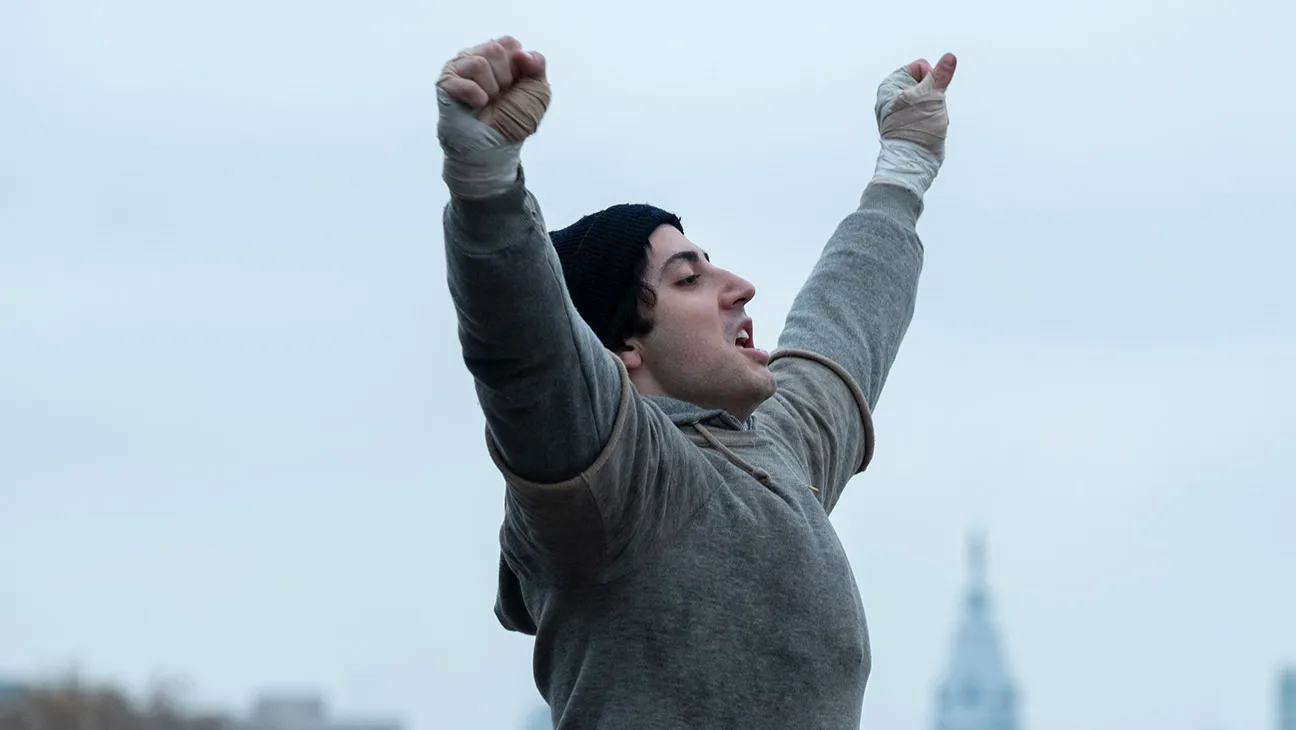
The fest will open with Peter Farrelly’s I Play Rocky starring Anthony Ippolito (as Sylvester Stallone) at Ellie Caulkins Opera House (with writer Peter Gamble in attendance and participating in a later conversation), and close with James Gray‘s Paper Tiger starring Adam Driver, Scarlett Johansson and Miles Teller at the MCA Denver at the Holiday Theater. Centerpiece picks in between include Danny Boyle’s Ink starring Jack O’Connell, Guy Pearce and Claire Foy, and Tony Gilroy‘s Behemoth! starring Pedro Pascal as a gifted cellist.

Paper Tiger
Cannes Film Festival
The special presentations section features many standout films from the fall festival circuit and beyond. Those selections include (in alphabetical order) Stephanie Ahn’s Bedford Park, Siân Heder’s Being Heumann, Pedro Almodóvar’s Bitter Christmas, Jordan Firstman’s Club Kid, Jesse Eisenberg’s The Debut, Simon Stone’s Elsinore, Marie Kreutzer’s Gentle Monster, Beth de Araújo’s Josephine, Guy Nattiv’s The Liberation, Andrew Haigh’s A Long Winter, Noah Segan’s The Only Living Pickpocket in New York, Brad Bird’s animated Ray Gunn, Liz Sargent’s Take Me Home, Anton Corbijn’s A Talent for Murder, Leah Nelson’s animated Tangles, Eleanor Wilson and Alex Huston Fisher’s Wicker, and Martin McDonagh’s Wild Horse Nine.
Club Kid
A24
It’s worth noting that the showings of Josephine and Take Me Home are being co-presented with the Sundance Film Festival, which is heading to Denver Film Festival’s backyard in Boulder, Colorado in 2027. Also notable: Other picks include standout international films like TIFF’s People Choice Award winner La Bola Negra from Netflix, Ryusuke Hamaguchi’s All of a Sudden, and Andrey Zvyagintsev’s Minotaur which won a Grand Prix in Cannes.
Speaking of awards, Denver Film will dole out a few during the fest’s run. Carrie Coon has been tapped to receive an excellence in acting award for her thus far critically acclaimed work in The Liberation as a woman who stuns her family by joining a cult led by Lily James. John Cho will be feted with an Outlaw Award for work opposite Mahershala Ali in Your Mother Your Mother Your Mother.
Sargent will take a spin in the spotlight as breakthrough director for Take Me Home, which was based on her short film of the same name about a woman caring for her aging parents. Fred Hechinger, who broke out in The White Lotus and Gladiator II, will receive a rising star prize after a screening of his latest, A Long Winter. Others set to receive awards include Benedetta Porcaroli with a Maglione Italian Film Award for The Kidnapping of Arabella, David Acord with an excellence in sound design for Behemoth!, and experimental filmmaker Michael Gitlin will accept an annual Stan Brakhage Award, presented along with a retrospective of his work.
Carrie Coon in The Liberation
Courtesy Bleecker Street
Some other notable titles among this year’s selections are Ron Howard’s Avedon, Nanette Burstein’s Carl Sagan: We Are Made of Star Stuff, Lukas Dhont’s Coward, Paweł Pawlikowski’s Fatherland, Petra Volpe’s Frank & Louis, Rachel J. Morrison’s Joybubbles, Ken Russell’s The Devils, Lee Chang-dong’s Possible Love, Markus Schleinzer’s Rose starring Sandra Hüller, Mike Leigh’s Tender Loving Care, Barbara Kopple’s Union Town, Dawn Porter’s When a Witness Recants, and Eleanor Wilson and Alex Huston Fisher’s Wicker.
“This year’s program highlights the remarkable ways cinema captures human connection and resilience, and it delivers a lineup that is as entertaining as it is thought-provoking,” explained Denver Film Festival artistic director Matthew Campbell. “From sharp, high-altitude Colorado comedies to award-winning festival circuit fare, captivating documentaries and stories born here in our own community, these films demonstrate the pure joy and impact of great storytelling. We’re looking forward to welcoming our audiences to experience this dynamic mix of bold international cinema, new voices and brilliant local talent.”
Added Denver Film CEO Kevin Smith: “Forty-nine years in, the Denver Film Festival is still driven by what has always mattered most: bringing our community together around great movies and the people who make them. We’re incredibly proud to be a long-standing part of Denver’s vibrant arts and cultural landscape and I can’t imagine a better way to open our 49th Festival than with I Play Rocky, an underdog story that captures the determination, creativity and spirit of independent film we celebrate every year.”
The film festival is funded by the Colorado Office of Film and Television, Bonfils Stanton Foundation, Denver Arts & Venues and SCFD (Scientific and Cultural Facilities District) with media sponsors CBS Colorado, Axios, City Cast Denver, Colorado Public Radio, Denverse, Metromode, Rocky Mountain Public Media, and marquee sponsors William LaBahn, Epicurean, Next50, Amazon, AOR, Halcyon, Sheila K. O’Brien, Crusonia Wealth Advisors, Dormer Harpring, LLC, Anna and John Sie Foundation, Betsy Mordecai Heyman and Gareth Heyman, Julie Mordecai, Mercedes-Benz of Denver, and HW Home.
The full lineup — including documentaries, shorts and more — can be found here, including intel on tickets. Fun fact: The Denver Arts & Venues and the 2026 Arts Complex Creates grant program makes it so that all three public screenings at the Ellie Caulkins Opera House will be offered with an allotment of sliding-scale “Pay-What-You-Can” admissions.
Pedro Pascal in Behemoth!
Courtesy of Searchlight Pictures
>
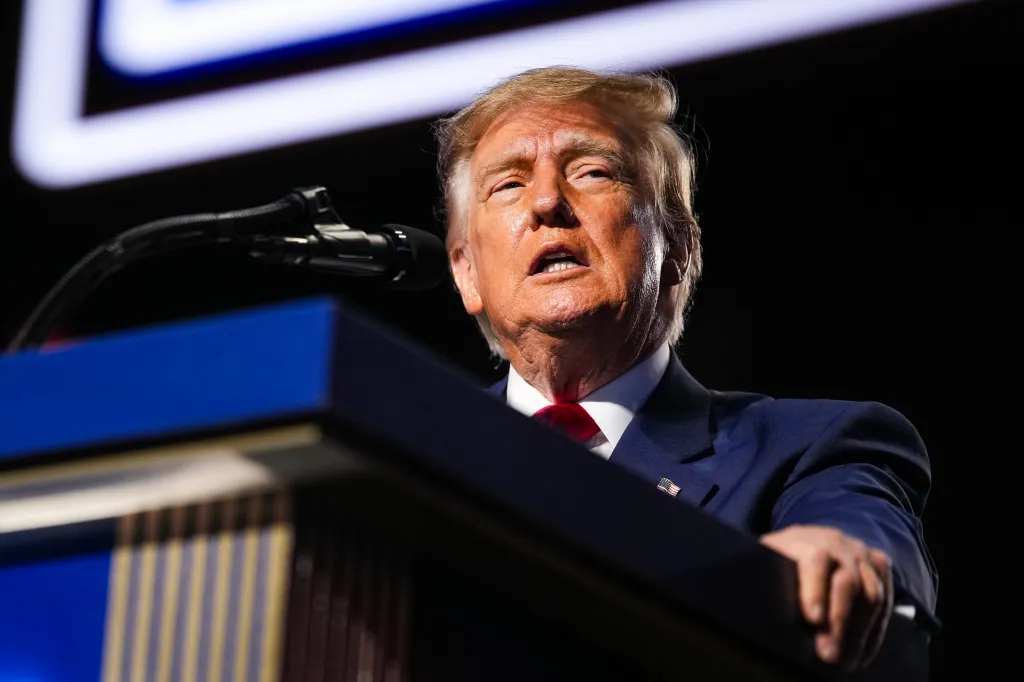
The Justice Department argued that Donald Trump can legally ban CNN, MS NOW and Politico from the White House because he determined that they didn’t meet the “minimum requirements of professionalism.”
Last month, a federal judge granted the three outlets a temporary restraining order that forced the White House to reinstate dozens of their reporters’ hard passes. The outlets are now asking the judge to extend that 14-day order for a longer term via a preliminary injunction, claiming that Trump’s ban is a violation of their First and Fifth amendment rights.
U.S. District Judge Timothy Kelly, a Trump appointee, has said that he is bound by the precedent set in In a 1977 D.C. Circuit opinion, Sherrill vs. Knight, in which the judges ruled that “the protection afforded newsgathering under the First Amendment guarantee of freedom of the press requires that this access not be denied arbitrarily or for less than compelling reasons.”
In a court filing on Friday, the DOJ claimed that the Sherrill case still would allow for the president to restrict the three outlets from accessing the White House grounds because the White House has a “compelling interest.”
The DOJ lawyers claimed that the Sherrill decision does not “prevent the President from concluding that bona fide journalists would identify sources instead of relying on anonymous sources, commit to factual accuracy, and provide the White House an opportunity to comment, rather than ‘perform their duties in a way that … interfere[s] with the White House’s daily operations.’ …At a bare minimum, it is a significant violation of decorum to publish classified and sensitive national security information.”
The news outlets’ legal team has rejected that assertion, writing in a filing earlier this week that Trump’s “statements also make clear he implemented the ban to coerce more favorable coverage from CNN, MS NOW, and Politico, and to deter other journalists and news organizations from newsgathering and reporting that the President might view as negative. And his administration has continued to retaliate against Plaintiffs even after the temporary restraining order, only underscoring that Defendants’ motive is to punish and chill journalism they dislike.”
Even as access to the White House grounds has been reinstated, the White House has continued to restrict CNN from coverage of TV pool assignments, including travel with Trump on Air Force One.
The outlets’ lawyers, led by Theodore Boutrous Jr., also noted that Trump and other White House officials “overlooked that the First Amendment protects reporting on matters affecting national security.”
Kelly has set a hearing for Thursday on the news outlets’ motion for a preliminary injunction.
In granting a TRO, Kelly concluded that the White House failed to provide due process to the news outlets.
The DOJ has pointed to letters sent to the outlets as evidence that they were given due process. But those letters were sent on Sept. 22, four days after Trump’s ban was started.
The judge also has noted that some of the objectionable stories cited by the DOJ do not have to do with national security. Kelly wrote in his order that “even the justifications provided to Plaintiffs after this case was filed are ambiguous about the true purpose of the revocations: while Defendants’ letters to Plaintiffs mention national security concerns, they purport to identify reporting that ‘threatened national security and/or spread falsehoods’ leaving open the possibility that all the stories fall into the later bucket, rather than the former.”
>
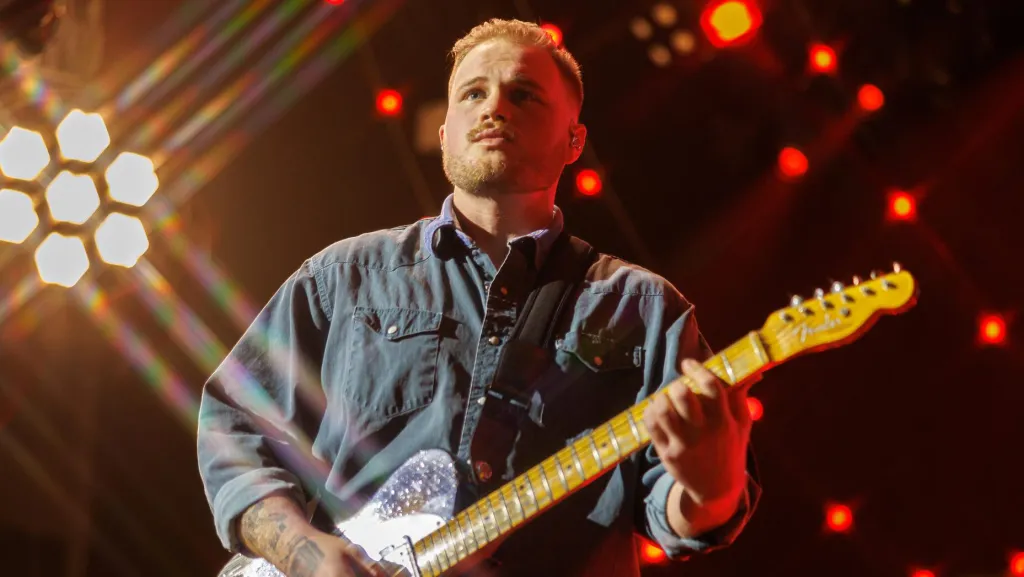
Following Robert Kraft‘s campaign against Macklemore, Zach Bryan made a statement with his performance at Gillette Stadium.
During Friday’s stop at the Kraft-owned venue for his With Heaven on Tour, the Grammy winner stepped onto the stage with a “Free Palestine” shirt after Kraft and other venue owners pressured Ed Sheeran to drop Macklemore from his tour over his outspoken support for Palestinians.
With another performance scheduled at the Massachusetts venue on Saturday night, it remains to be seen if Kraft will pull the plug.
The show comes after Ed Sheeran was forced to cancel his Gillette Stadium shows last weekend amid a nor’easter headed for Boston, despite caving to Kraft’s demands.
Sheeran dropped Macklemore from his tour last month amid an outcry around the opener’s “Free Palestine” onstage remarks. Opting to remain publicly neutral on the issue, Sheeran subsequently released a statement saying it was the “promoter’s decision” after Kraft assembled several of the tour venues to give him an ultimatum.
Following the statement, fellow tour openers Finneas, Aaron Rowe and Lukas Graham dropped out of the tour, along with Sheeran’s backing band Beoga.
Meanwhile, Macklemore announced the Free Palestine Tour last week, which is “supporting the Palestinian people and movement,” running 10/26-10/30 in Dublin, Paris and London. He since gave an update that the tour “sold out immediately.”
>

Anime4 minutes ago
Light Novel ‘Kochira, Shuumatsu Teitai Iinkai’ Gets TV Anime
Sports4 minutes ago
The hidden reason behind the Yankees choosing Gerrit Cole to start Game 1 of the ALDS

Anime10 minutes ago
Light Novel ‘Soshiki no Shukuteki to Kekkon shitara Mecha Amai’ Gets TV Anime
-

 movies4 months ago
Search For Canadian TV Actor Stewart McLean Now Homicide Investigation
-

 Fashion9 years ago
These ’90s fashion trends are making a comeback in 2017
-
Fashion9 years ago
According to Dior Couture, this taboo fashion accessory is back
-
Fashion9 years ago
Model Jocelyn Chew’s Instagram is the best vacation you’ve ever had
-
Fashion9 years ago
Emily Ratajkowski channels back-to-school style
-
Fashion9 years ago
9 Celebrities who have spoken out about being photoshopped
-

 Anime4 months ago
Rurouni Kenshin: Hokkaido Arc Manga Takes 1-Issue Break – News
-

 Anime3 months ago
HIDIVE to Stream English Dubs for The World Is Dancing, The Forsaken Saintess and Her Foodie Roadtrip in Another World, The Dangers in My Heart: The Movie Anime – News